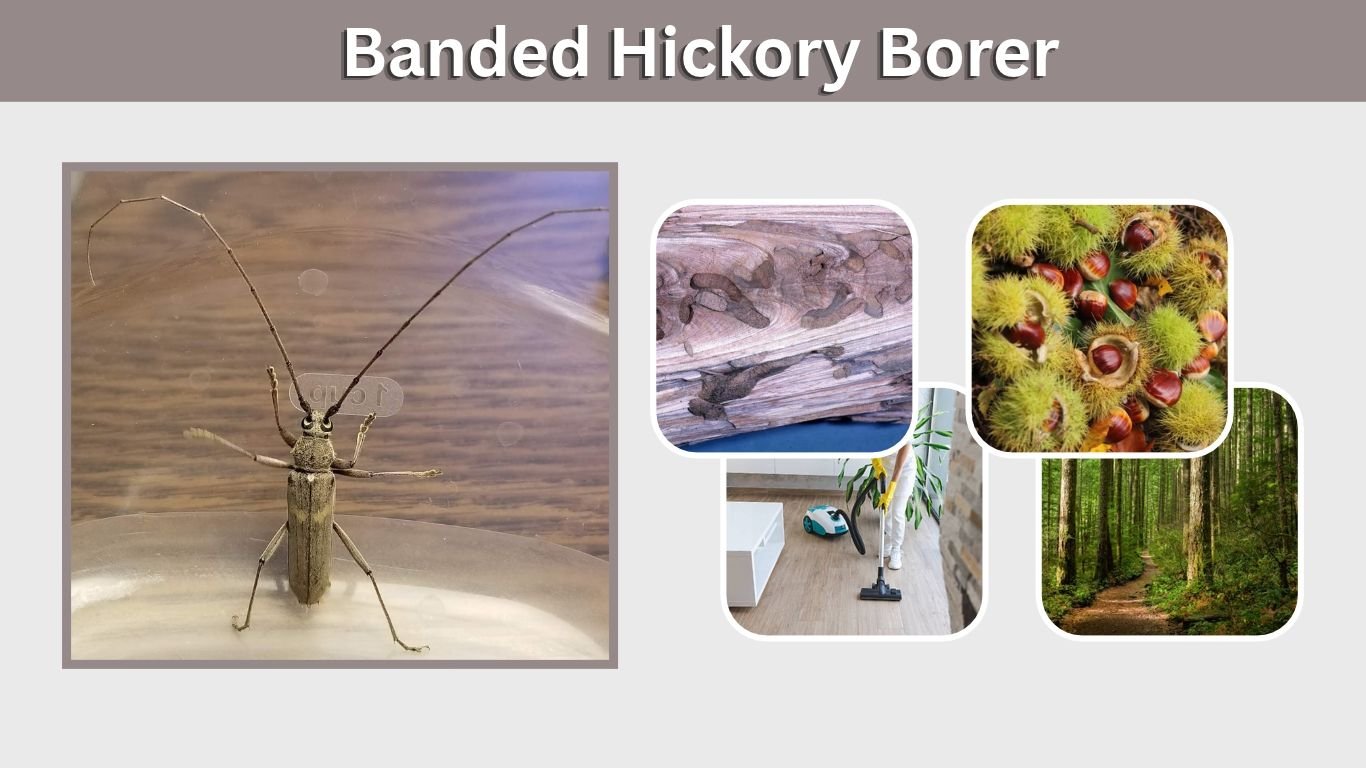
The banded hickory borer (Knulliana cincta) is a longhorn beetle found in parts of North America, particularly the eastern and southern United States. This wood-boring insect has an elongated brown body, long antennae, and pale yellow markings across its wing covers. Its larvae develop inside dead or dying hardwood trees, including hickory, oak, and walnut. Although the beetle is generally harmless to humans, its tunneling activity can damage logs and firewood. Understanding its identification, habitat, life cycle, and control methods can help homeowners recognize this unusual beetle.
What Is a Banded Hickory Borer?
The banded hickory borer is a wood-boring beetle belonging to the family Cerambycidae, commonly called longhorn beetles. Its scientific name is Knulliana cincta.
This species is native to North America and develops primarily in dead or recently cut hardwood.
Adult beetles are recognizable by their elongated bodies, long antennae, and subtle yellowish markings. Unlike many destructive tree borers, banded hickory borers generally target wood that is already dead or dying.
Their larvae contribute to the natural decomposition of hardwood materials.
What Does a Banded Hickory Borer Look Like?
Banded hickory borers have elongated, somewhat cylindrical bodies covered with fine grayish hairs. Their overall coloration ranges from dark brown to grayish brown.
A distinctive pale yellow spot on each wing cover often creates the appearance of a band across the back.
Banded Hickory Borer Identification
- Scientific Name: Knulliana cincta
- Family: Cerambycidae
- Body Length: Approximately 15–35 millimeters
- Body Color: Dark brown to grayish brown
- Wing Markings: Pale yellowish spots that may resemble a band
- Antennae: Long, segmented, and often longer than the body
- Thorax: Small, sharp projections along the sides
- Legs: Six relatively long legs adapted for gripping wood
The markings vary among individuals and subspecies. Some southwestern populations may lack the noticeable band.
Where Do Banded Hickory Borers Live?
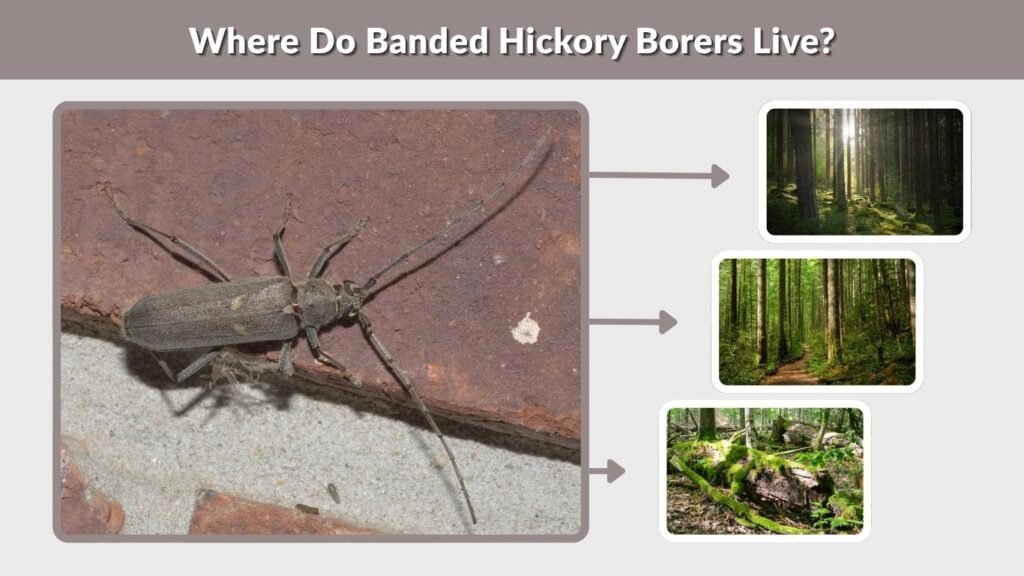
Banded hickory borers inhabit forests, woodlands, and areas containing dead hardwood trees.
They are associated with fallen branches, recently cut logs, and dying trees that provide suitable conditions for larval development.
Geographic Distribution
The species occurs across parts of the eastern United States, extending southward to Florida and westward through Texas.
Different subspecies also inhabit parts of Arizona, northern Mexico, and the Bahamas.
Banded hickory borers may be encountered in woodlands, suburban yards, lumber storage areas, and places where hardwood firewood is stacked.
Adults can fly and may occasionally appear around outdoor lights.
Banded Hickory Borer vs. Painted Hickory Borer
The banded hickory borer and painted hickory borer are separate longhorn beetle species. Their similar names and association with hardwood often cause confusion.
However, their coloration and body patterns are noticeably different.
Banded Hickory Borer
The banded hickory borer (Knulliana cincta) has a predominantly grayish-brown body with relatively subtle yellowish wing markings.
Its larvae develop inside dead hardwood branches and trunks. Its life cycle probably requires about two years.
Painted Hickory Borer
The painted hickory borer (Megacyllene caryae) has a black body decorated with conspicuous yellow and white bands.
It often resembles a wasp and has reddish legs. Adults usually emerge during early spring.
Painted hickory borers commonly develop in recently dead hickory and other hardwoods. Their life cycle typically takes approximately one year.
What Do Banded Hickory Borer Larvae Eat?
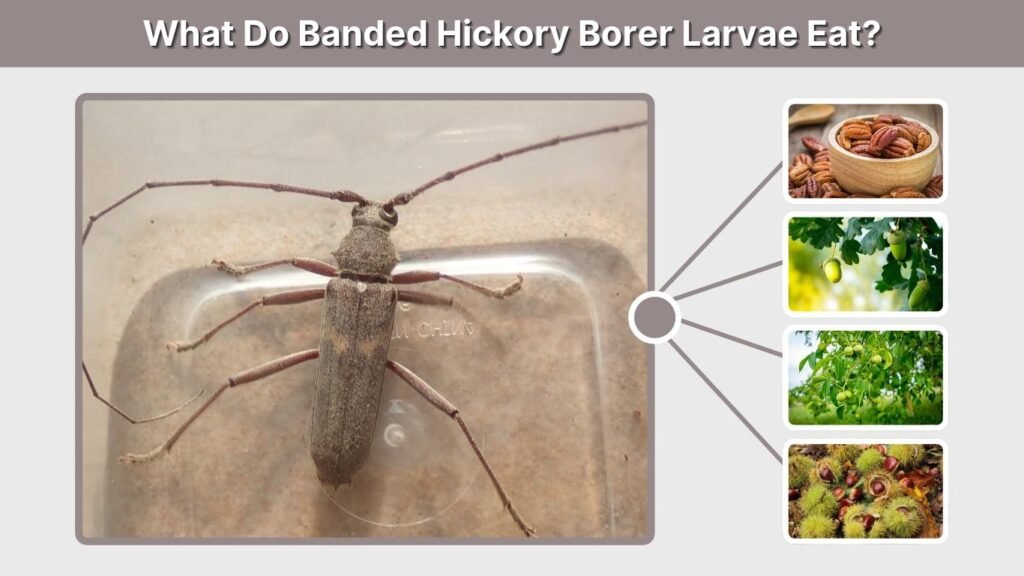
Banded hickory borer larvae feed on woody tissues inside dead, dying, or recently cut hardwood trees.
They initially develop beneath the bark before tunneling deeper into the wood.
Common Host Trees
- Hickory: One of the preferred host trees.
- Oak: Dead branches and trunks provide suitable breeding material.
- Pecan: Closely related to hickory and occasionally attacked.
- Walnut: Dead or weakened hardwood can support larvae.
- Chestnut: Fallen or dying wood provides feeding opportunities.
- Hackberry: Dead branches can support larval development.
- Willow: Suitable deadwood may also be used.
Other recorded hosts include apple, pear, plum, and mesquite.
Banded Hickory Borer Life Cycle
Banded hickory borers undergo complete metamorphosis through four developmental stages: egg, larva, pupa, and adult.
Their development occurs mostly inside hardwood, where the larvae remain protected from predators and unfavorable weather.
Four Stages of Development
- Egg Stage: Females deposit eggs beneath bark or directly onto exposed wood of dead, dying, or recently cut trees.
- Larval Stage: Newly hatched larvae feed beneath the bark before tunneling deeper into hardwood.
- Pupal Stage: Mature larvae form protected chambers inside their tunnels, where they transform into pupae.
- Adult Stage: Developed beetles emerge from the wood, fly to suitable habitats, mate, and reproduce.
The complete life cycle is believed to take approximately two years, although development varies with environmental conditions.
What Damage Do Banded Hickory Borers Cause?
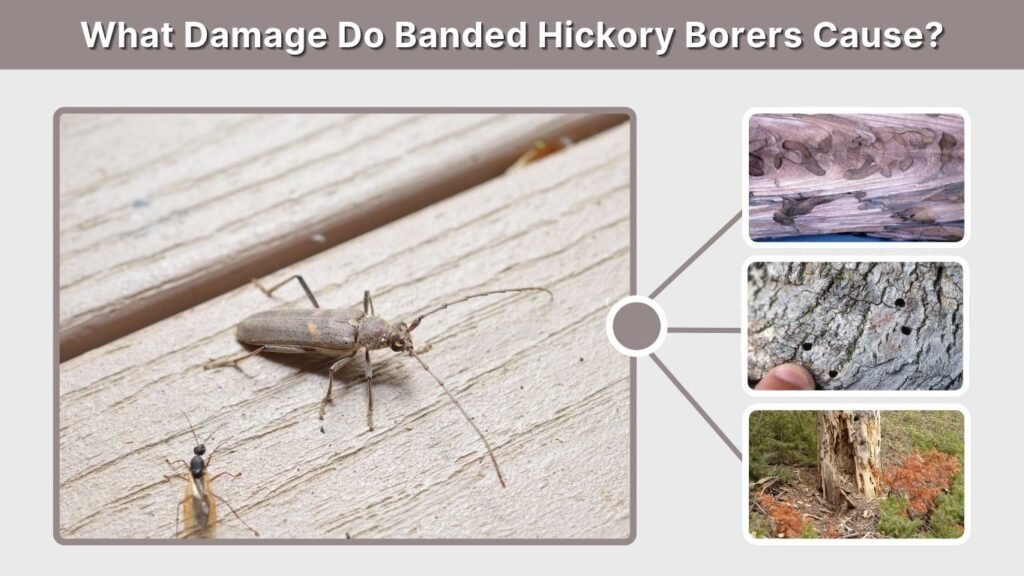
Banded hickory borers primarily damage dead or recently cut hardwood rather than healthy, living trees.
Larvae create feeding galleries beneath bark and inside wood. These tunnels can reduce the quality of logs, rustic wood products, and stored firewood.
Signs of Hickory Borer Damage
- Wood Tunnels: Irregular galleries beneath bark or inside hardwood.
- Boring Dust: Fine wood particles and insect waste near openings.
- Exit Holes: Openings where mature beetles emerge.
- Damaged Logs: Internal feeding tunnels that reduce wood quality.
- Adult Beetles: Longhorn beetles appearing near stored hardwood.
An infestation in deadwood does not automatically indicate that nearby living trees are threatened.
Are Banded Hickory Borers Dangerous or Poisonous?
Banded hickory borers are not poisonous or venomous. They do not have stingers and are not considered dangerous to humans.
However, they possess chewing mouthparts and may deliver a minor pinch if roughly handled.
They do not actively attack people or feed on human blood.
Their primary concern is damage to deadwood and occasional nuisance appearances around homes.
Why Are Hickory Borers Found Inside Houses?
Hickory borer beetles sometimes enter houses through infested firewood.
When logs containing developing larvae or pupae are brought indoors, warmer temperatures can stimulate adult emergence.
Beetles may then appear around windows, lamps, or fireplaces.
These insects generally do not establish infestations in finished furniture, dry structural lumber, or household walls.
Removing the infested firewood usually eliminates the source of the problem.
How to Get Rid of Banded and Painted Hickory Borers
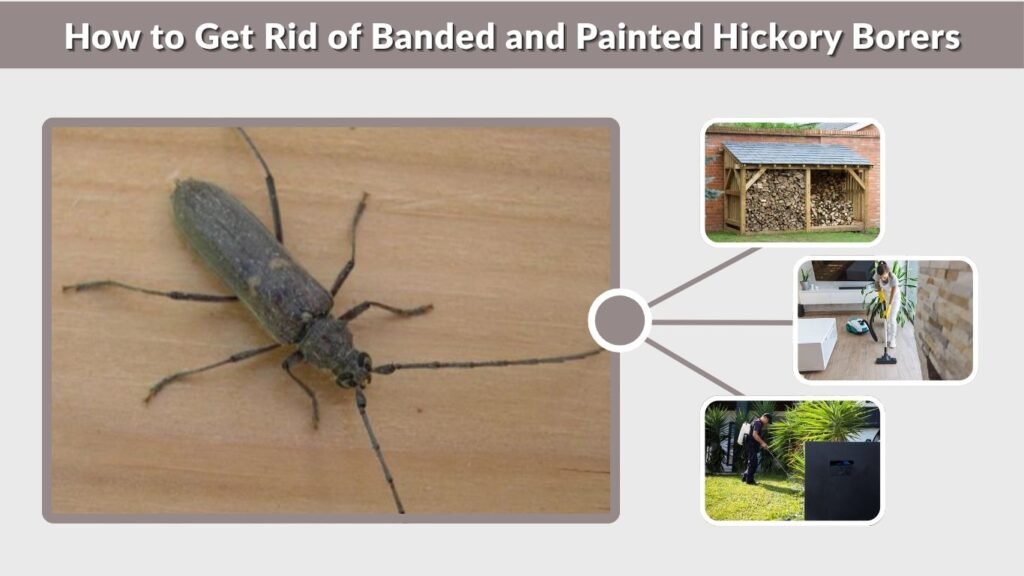
Controlling hickory borers usually involves properly managing deadwood, firewood, and recently cut hardwood.
Because larvae develop inside wood, spraying visible adult beetles does little to eliminate the original infestation.
Hickory Borer Control Methods
- Inspect Firewood: Check hardwood logs for exit holes and boring dust.
- Store Wood Outdoors: Keep firewood away from houses until needed.
- Remove Infested Logs: Relocate or appropriately dispose of heavily infested wood.
- Vacuum Indoor Beetles: Remove adults that emerge inside the house.
- Avoid Long-Term Indoor Storage: Bring inside only enough firewood for immediate use.
- Maintain Tree Health: Remove hazardous dead branches and manage weakened trees appropriately.
- Seek Professional Advice: Consult an arborist if living trees show unexplained damage.
Avoid applying insecticides directly to firewood, particularly wood intended for indoor burning.
FAQs
1. Do Banded Hickory Borer Beetles Bite?
Banded hickory borers are not aggressive toward humans, but they may pinch with their mouthparts if handled roughly. They have no venomous sting and are not considered medically dangerous. Avoid handling them with bare hands.
2. Are Painted Hickory Borers Dangerous?
Painted hickory borers are generally harmless to people. They occasionally emerge from firewood stored indoors, but they do not normally infest finished structural lumber. Their larvae primarily develop in recently dead or severely weakened hardwood.
3. Do Hickory Borers Kill Trees?
Banded and painted hickory borers primarily develop in dead, dying, or recently cut hardwood. They generally do not kill healthy trees. However, their larval tunnels can damage wood and reduce the quality of logs.
4. How Do You Get Rid of Hickory Borers in Firewood?
Store infested firewood outdoors and avoid keeping large amounts inside the house. Remove emerging adult beetles with a vacuum or container. Do not spray firewood with insecticides because chemical residues may create hazards when the wood is burned.
5. What Is the Difference Between a Hickory Borer and a Locust Borer?
Painted hickory borers resemble locust borers because both display yellow-and-black markings. Painted hickory borers emerge mainly in spring and breed in dead hardwood, while locust borers are commonly active in late summer and attack living black locust trees.