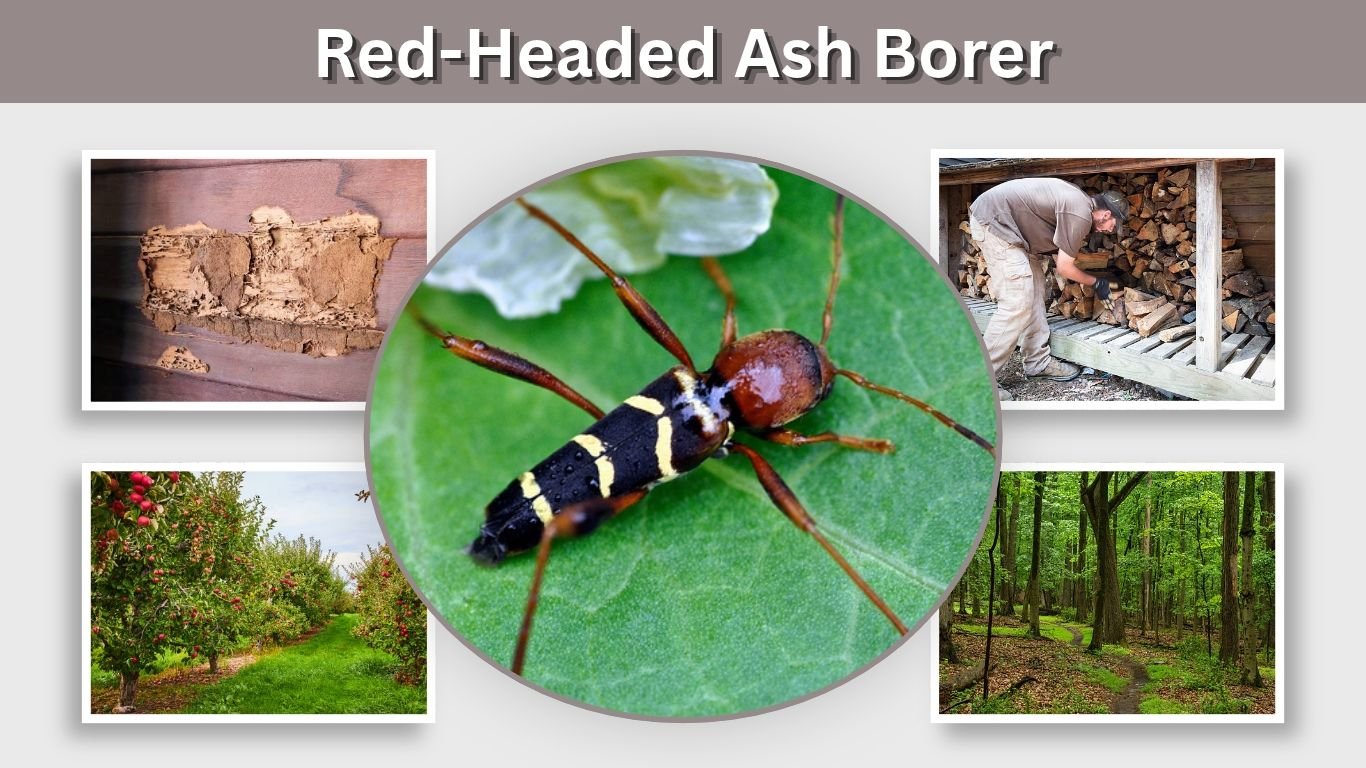
The Red-Headed Ash Borer (Neoclytus acuminatus) is a wood-boring beetle recognized by its reddish-brown head, slender body, and distinctive yellow bands. Native to North America, this beetle commonly inhabits dead, dying, or weakened hardwood trees, including ash, oak, and hickory. Its larvae tunnel through wood, sometimes damaging lumber, firewood, and stressed trees. Although adults resemble wasps, they are generally harmless to humans. Understanding their appearance, behavior, and feeding habits helps prevent unnecessary concern. This guide explains Red-Headed Ash Borer identification, life cycle, damage, treatment, and prevention.
What Is a Red-Headed Ash Borer?
The Red-Headed Ash Borer is a longhorn beetle belonging to the Cerambycidae family. Its scientific name is Neoclytus acuminatus, and it is commonly found throughout much of the United States and parts of Canada.
Although its name suggests that it attacks only ash trees, this beetle develops in various hardwood species. Its larvae primarily feed on weakened, recently dead, or freshly cut wood.
Red-Headed Ash Borer Facts
- Scientific name: Neoclytus acuminatus
- Family: Cerambycidae
- Order: Coleoptera
- Body length: Approximately 4–16 mm
- Head color: Reddish-brown
- Wing color: Dark brown with yellow bands
- Larval color: Creamy-white
- Primary hosts: Ash, oak, hickory, and hackberry
- Native range: North America
- Adult activity: Primarily spring through summer
- Main concern: Damage to weakened trees and cut hardwood
Red-Headed Ash Borer Identification
Identifying the Red-Headed Ash Borer is relatively easy because of its distinctive reddish coloration and yellow-striped wing covers. Its slender body and long legs give it a wasp-like appearance. However, unlike wasps, it possesses hardened wing covers and cannot sting.
What Does a Red-Headed Ash Borer Look Like?
Adult beetles have reddish-brown heads, thoraxes, and legs. Their elongated wing covers are dark brown or nearly black, crossed by four narrow yellow bands.
Two of these bands form noticeable V-shaped patterns.
The antennae are relatively short for a longhorn beetle, usually measuring around half the body length. Their tips are slightly thickened.
The middle and hind legs are noticeably longer than the front legs.
Red-Headed Ash Borer Larvae Identification
Red-Headed Ash Borer larvae are creamy-white, soft-bodied grubs with small, dark heads.
Their bodies are cylindrical and slightly enlarged near the front. Mature larvae may reach approximately 10–22 mm long.
They develop beneath bark and inside wood, where their feeding creates tunnels filled with fine wood particles.
Red-Headed Ash Borer Habitat and Range
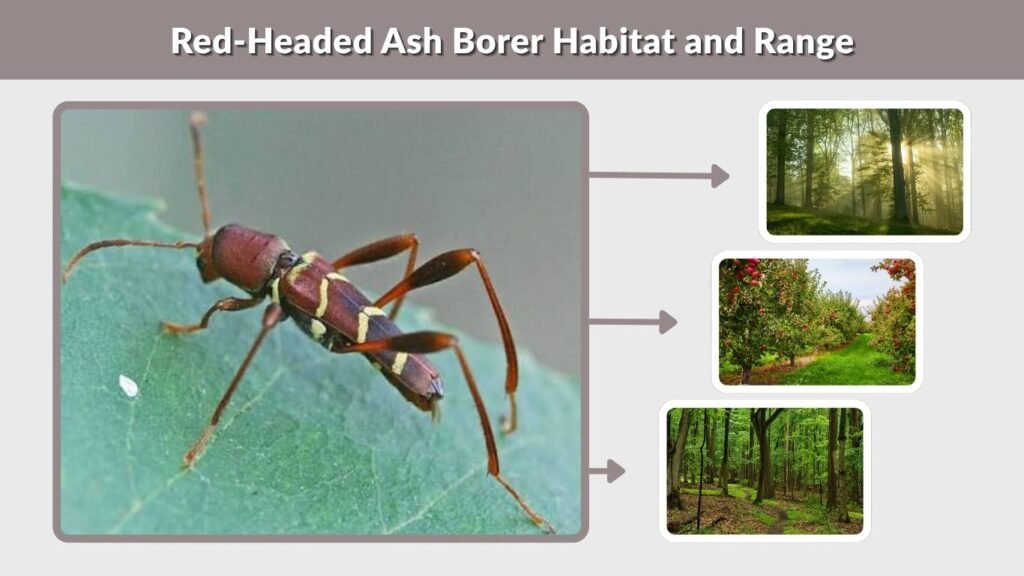
Red-Headed Ash Borers inhabit forests, woodlands, orchards, and landscapes containing suitable hardwood trees. They are especially attracted to freshly cut logs and weakened trees because these provide favorable breeding conditions.
Where Are Red-Headed Ash Borers Found?
This beetle is native to North America and occurs throughout much of the continental United States and eastern Canada.
It has been recorded in Missouri, Texas, Minnesota, Utah, Colorado, and numerous other states.
The species has also been introduced into parts of Europe.
What Trees Do Red-Headed Ash Borers Attack?
Red-Headed Ash Borers commonly develop in ash, oak, hickory, hackberry, persimmon, and other hardwoods.
They may also infest certain fruit trees and grapevines.
Although maple and other hardwoods can host various borers, finding damage on a particular tree does not confirm Red-Headed Ash Borer activity.
Red-Headed Ash Borer Life Cycle
The Red-Headed Ash Borer undergoes complete metamorphosis through egg, larval, pupal, and adult stages. Its development varies with temperature, geographic location, and wood conditions.
Warmer regions may support several generations annually, while cooler areas generally have fewer.
Eggs and Larval Development
Females deposit eggs in small openings or crevices within the bark of suitable host trees.
After hatching, larvae begin feeding beneath the bark before tunneling deeper into the sapwood.
They continue growing inside the wood, creating galleries as they consume plant material.
Pupae and Adult Emergence
Mature larvae form protected pupal chambers within the wood.
Adults emerge through small, rounded openings, generally during warmer months.
Depending on location, the insects may overwinter as mature larvae or pupae before emerging when conditions become favorable.
Red-Headed Ash Borer Damage

Red-Headed Ash Borer damage occurs when developing larvae tunnel through wood. These galleries can reduce timber quality and weaken branches of stressed trees.
The species is particularly troublesome in freshly cut hardwood intended for lumber or firewood.
Signs of Red-Headed Ash Borer Infestation
- Round exit holes: Small openings appear when adult beetles emerge.
- Internal galleries: Larvae create winding tunnels through wood.
- Wood frass: Fine sawdust-like particles accumulate inside galleries.
- Damaged lumber: Extensive tunneling reduces the quality of hardwood.
- Weakened branches: Severe infestations may increase breakage risks.
- Adult beetles: Repeated emergence from logs may indicate existing infestation.
Can Red-Headed Ash Borers Kill Trees?
Red-Headed Ash Borers primarily attack weakened, dying, or recently dead trees rather than vigorous, healthy ones.
However, infestations in young or stressed living trees may contribute to decline.
Their tunnels can also weaken branches, increasing the possibility of breakage during storms.
Red-Headed Ash Borer in the House
Finding Red-Headed Ash Borers indoors can be concerning, especially when several adults appear near windows or firewood storage areas.
However, these beetles usually enter homes indirectly through infested wood.
Why Are Red-Headed Ash Borers in My House?
Adults may emerge from firewood brought indoors during winter.
Warm indoor temperatures can stimulate beetles already developing inside logs to emerge earlier than they would outdoors.
These beetles are nuisance insects and do not normally infest dry, finished structural lumber or household furniture.
How to Remove Red-Headed Ash Borers Indoors
Individual beetles can be collected with a vacuum or carefully captured and removed.
Inspect stored firewood and keep remaining logs outdoors until they are needed.
Indoor insecticide applications are generally unnecessary because emerging adults cannot establish a continuing household infestation in ordinary finished wood.
Are Red-Headed Ash Borers Poisonous or Dangerous?
Red-Headed Ash Borers are not poisonous or venomous to humans. Although their yellow bands and elongated bodies resemble wasps, they do not possess stingers.
They are generally harmless when left undisturbed.
Do Red-Headed Ash Borers Bite or Sting?
Red-Headed Ash Borers do not sting, and they are not aggressive toward humans.
Like other beetles with chewing mouthparts, an individual might pinch defensively when squeezed or handled roughly.
Avoid unnecessary handling, particularly when identifying unfamiliar insects.
Red-Headed Ash Borer vs. Emerald Ash Borer
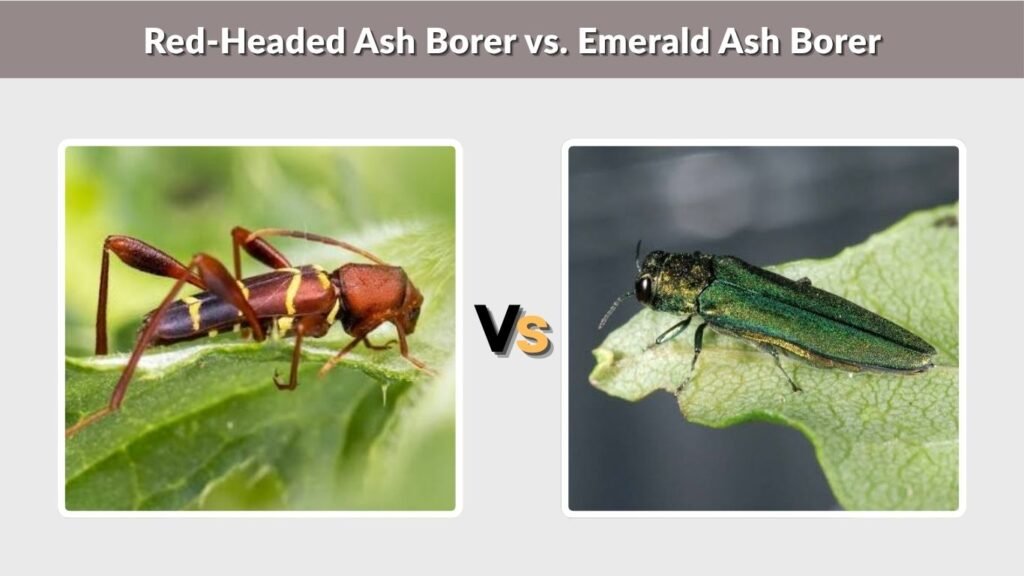
The Red-Headed Ash Borer and Emerald Ash Borer attack ash trees, but they belong to different beetle families and have different biological characteristics.
Key Differences Between These Beetles
The Red-Headed Ash Borer (Neoclytus acuminatus) is a native North American longhorn beetle with reddish-brown coloration and yellow bands.
The Emerald Ash Borer (Agrilus planipennis) is an invasive metallic-green beetle that attacks living ash trees and can kill otherwise healthy trees.
Red-Headed Ash Borers typically create rounded exit holes and tunnels extending into the wood. Emerald Ash Borers produce D-shaped exit holes and winding galleries beneath the bark.
How to Get Rid of Red-Headed Ash Borers
Controlling Red-Headed Ash Borers requires proper wood management, early detection, and maintaining healthy trees. Because larvae live inside wood, surface treatments generally cannot eliminate insects already protected deep within their tunnels.
Effective Red-Headed Ash Borer Control Methods
- Inspect affected trees: Look for exit holes, weakened branches, and internal wood damage.
- Remove dead branches: Prune heavily damaged or dying limbs when appropriate.
- Manage firewood: Store freshly cut logs outdoors and use them promptly.
- Debark susceptible logs: Removing bark can reduce opportunities for egg laying.
- Maintain tree health: Water stressed trees and provide appropriate growing conditions.
- Consult an arborist: Seek professional evaluation when living trees show extensive damage.
Red-Headed Ash Borer Insecticide Treatment
Preventive insecticides may help protect vulnerable living trees when applied at the appropriate time.
However, larvae already deep inside the wood are difficult to control chemically.
Treatment decisions should follow current local extension recommendations and pesticide labels. Routine spraying of indoor rooms or firewood piles is generally unnecessary.
How to Prevent Red-Headed Ash Borer Infestations
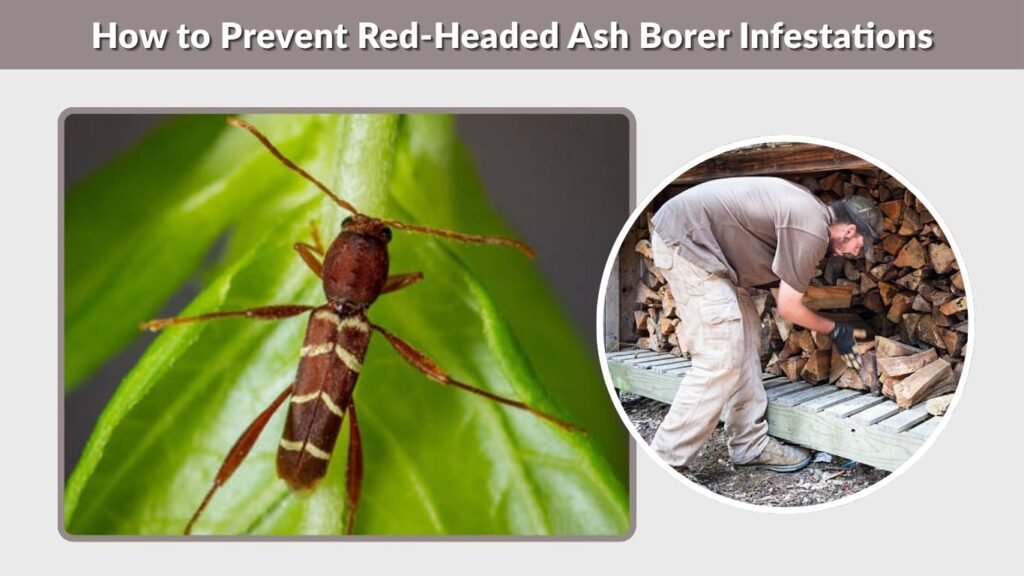
Prevention focuses on reducing tree stress and limiting access to suitable breeding materials. Freshly cut hardwood with bark attached is particularly attractive to egg-laying females.
Red-Headed Ash Borer Prevention Tips
- Maintain healthy trees: Provide adequate moisture during dry periods.
- Avoid unnecessary injuries: Protect trunks from lawn equipment.
- Remove weakened limbs: Properly dispose of severely damaged branches.
- Store firewood outdoors: Bring inside only the amount needed soon.
- Process fresh logs promptly: Avoid leaving unseasoned hardwood exposed for extended periods.
- Inspect new trees: Check nursery stock for damage before planting.
FAQs
1. Are Red-Headed Ash Borers Dangerous?
Red-Headed Ash Borers are generally harmless to humans. They do not sting or inject venom. Their main concern is damage caused by larvae tunneling through weakened trees, freshly cut logs, and hardwood intended for lumber or firewood.
2. Do Red-Headed Ash Borers Bite Humans?
Red-Headed Ash Borers are not aggressive toward humans and rarely bite. They have chewing mouthparts and may pinch defensively if restrained. However, they do not possess venomous bites or stingers and are not considered medically significant pests.
3. How Do You Get Rid of Red-Headed Ash Borers?
Remove heavily infested wood, store firewood outdoors, and maintain healthy trees. Preventive treatments may be appropriate for vulnerable living trees, but larvae deep inside wood are difficult to eliminate. Professional identification helps determine whether treatment is necessary.
4. Can Red-Headed Ash Borers Damage Houses?
Red-Headed Ash Borers may emerge from infested firewood brought indoors. However, they do not normally attack dry, finished structural wood or establish continuing infestations inside houses. Removing emerging adults and managing stored firewood usually resolves the problem.
5. Are Red-Headed Ash Borers Invasive?
Red-Headed Ash Borers are native to North America, so they are not considered invasive within their native range. However, the species has been introduced to parts of Europe. Its potential environmental impact depends on location and local conditions.