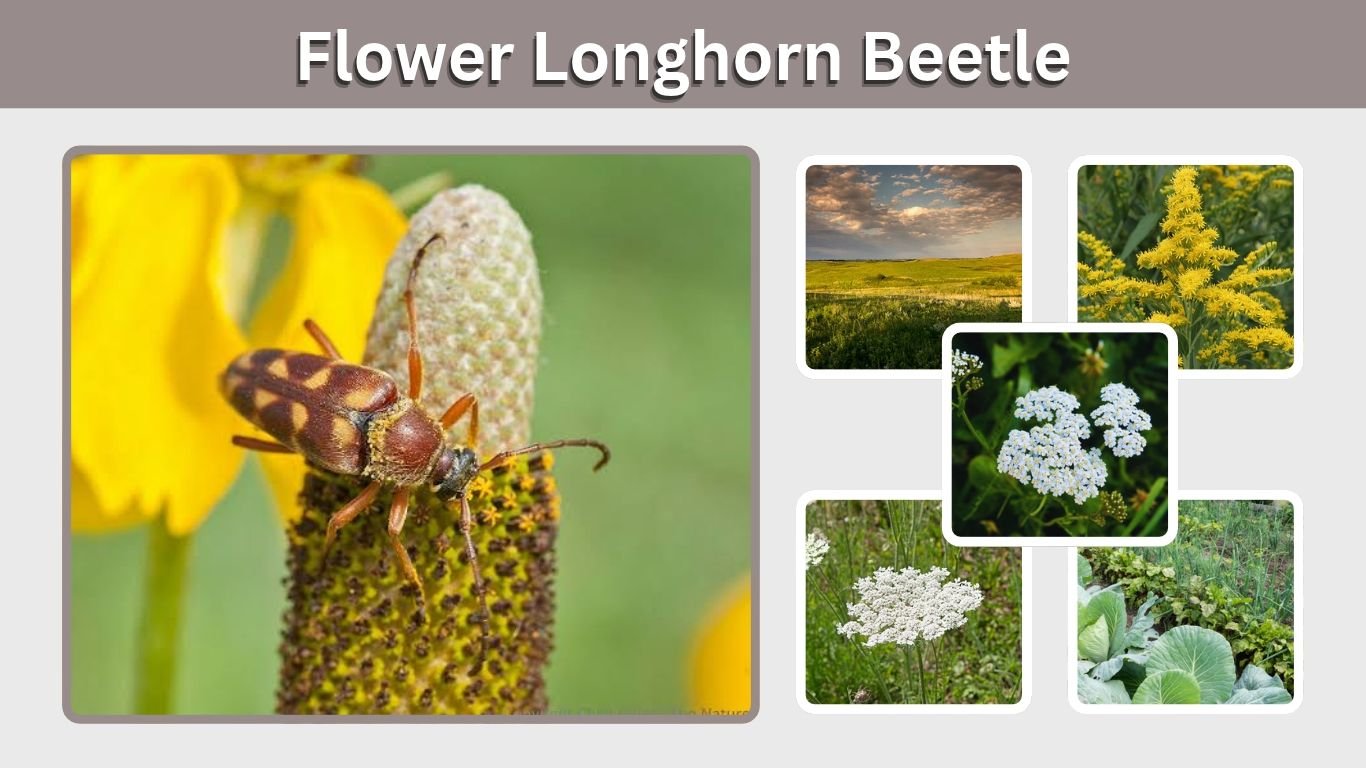
The flower longhorn beetle is a fascinating insect recognized for its elongated body, long antennae, and colorful markings. Commonly found on wildflowers, garden plants, and woodland edges, these beetles are important visitors to flowering vegetation. Many species have yellow, black, orange, or reddish patterns that resemble bees and wasps. Despite their intimidating appearance, most flower longhorn beetles are harmless to humans and beneficial to natural ecosystems. Understanding their identification, different species, habitat, feeding habits, reproduction, and pollination activities helps explain why these distinctive beetles deserve attention.
What Is a Flower Longhorn Beetle?
Flower longhorn beetles are members of the longhorn beetle family Cerambycidae. Most species described as flower longhorns belong to the subfamily Lepturinae, although the common name is also applied to certain beetles from other subfamilies.
Unlike many wood-boring beetles, adult flower longhorns frequently visit flowers to feed on pollen and nectar. Their larvae typically develop inside dead or decaying wood, making them important participants in natural decomposition.
Flower Longhorn Beetle Scientific Name
Flower longhorn beetle is a general name rather than the scientific name of a single species. The group includes several genera, including Typocerus, Strangalia, and Leptura.
For example, the banded flower longhorn beetle is scientifically known as Typocerus velutinus, while the bicolored flower longhorn beetle is Strangalia bicolor.
Flower Longhorn Beetle Identification and Appearance
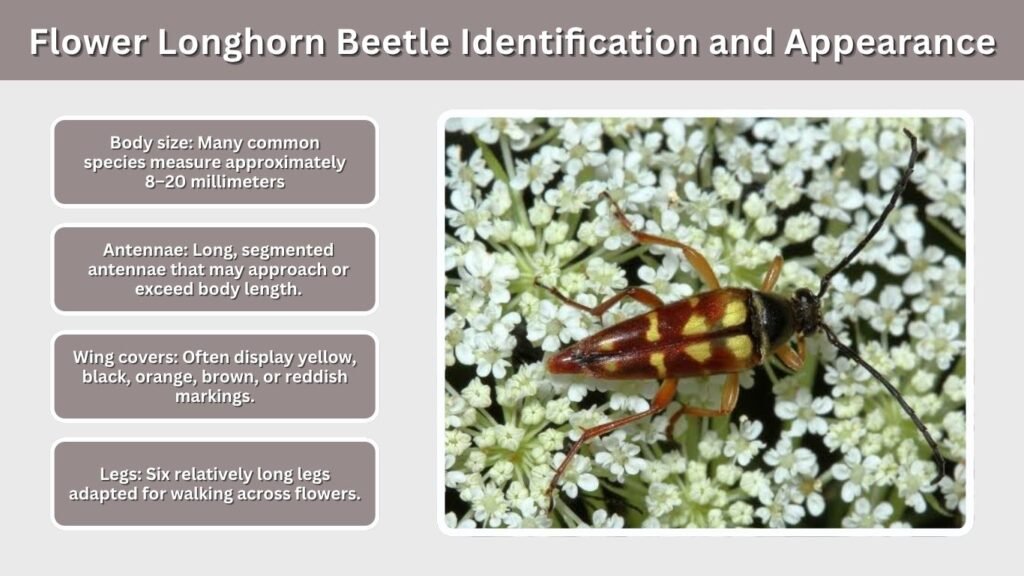
Flower longhorn beetles are usually slender insects with noticeable antennae and distinctive color patterns. Many have narrow bodies resembling wasps, while others display broader wing covers and contrasting bands. Their appearance varies between species, but several shared characteristics can help identify them in gardens and natural habitats.
Key Identification Features
- Body size: Many common species measure approximately 8–20 millimeters, although some grow larger.
- Antennae: Long, segmented antennae that may approach or exceed body length.
- Body shape: Usually elongated and slender, sometimes narrowing toward the abdomen.
- Wing covers: Often display yellow, black, orange, brown, or reddish markings.
- Legs: Six relatively long legs adapted for walking across flowers.
- Head: Distinct head with chewing mouthparts and prominent antennae.
- Wings: Functional flight wings protected beneath hardened wing covers.
- Habitat: Commonly observed on flowers near meadows, forests, and woodland edges.
Male vs. Female Flower Longhorn Beetles
Male and female flower longhorn beetles often share similar coloration, making identification challenging.
In some species, males have longer antennae and slimmer bodies, while females possess broader abdomens.
However, these differences vary by species. Body proportions, antenna length, and reproductive structures may be necessary for accurate identification.
Common Types of Flower Longhorn Beetles
Several flower longhorn beetle species occur across North America and other parts of the world. Although many share similar behaviors, their markings, sizes, and geographical distributions differ. Some species have distinct black-and-yellow bands, while others display reddish bodies or unusual antenna coloration.
Popular Flower Longhorn Beetle Species
- Notch-Tipped Flower Longhorn Beetle (Typocerus sinuatus): A yellow-and-black species recognized by its patterned wing covers and distinctive tips. Adults visit flowers for nectar and pollen.
- Bicolored Flower Longhorn Beetle (Strangalia bicolor): A narrow beetle with an orange or reddish front section and dark wing covers. It occurs in eastern North America.
- Slender Flower Longhorn Beetle (Strangalia famelica): Recognized by its especially slender body and dark markings. Its larvae develop in dead hardwood, including oak and birch.
- Yellow-Horned Flower Longhorn Beetle (Strangalia luteicornis): A relatively small species with yellowish antennae and contrasting body markings, found in parts of eastern North America.
- Banded Flower Longhorn Beetle (Typocerus velutinus): A familiar species with rusty-colored wing covers, broad yellow bands, and dark antennae.
- Zebra Flower Longhorn Beetle (Typocerus zebra): A striking North American beetle with contrasting striped markings that help distinguish it from similar species.
Red Flower Longhorn Beetles
Some flower-visiting longhorn beetles display reddish or orange coloration rather than black-and-yellow bands.
Their appearance varies by species, and the phrase “red flower longhorn beetle” does not always refer to one particular insect.
Accurate identification requires examining the wing covers, antennae, body structure, and geographical location.
Flower Longhorn Beetle Habitat and Distribution
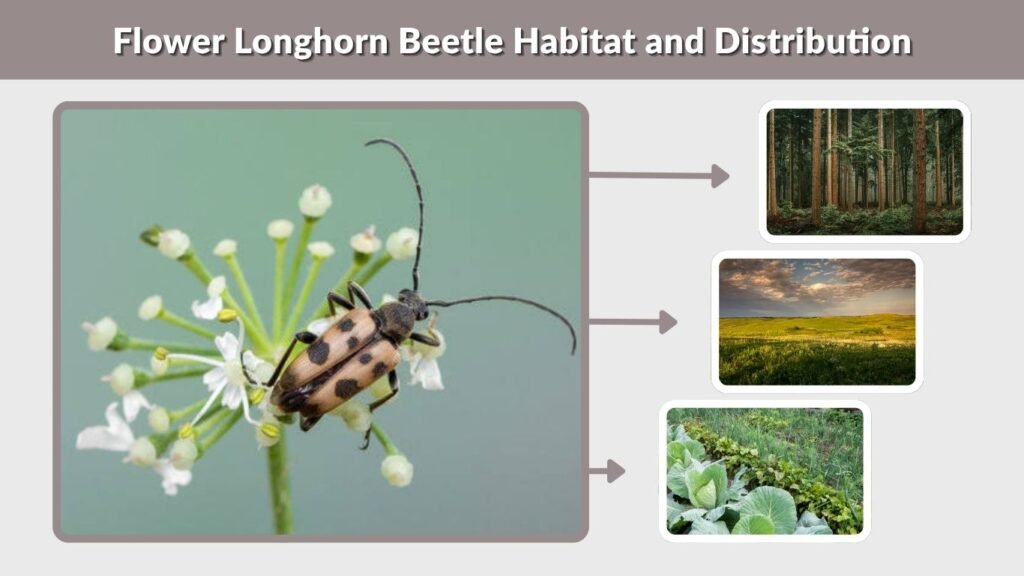
Flower longhorn beetles inhabit forests, grasslands, woodland edges, and gardens where flowering plants and suitable breeding wood are available. Their distribution depends on the species, local climate, and habitat conditions. Adults are especially noticeable during warmer months when flowering vegetation provides abundant food.
Flower Longhorn Beetles in North America
Different species occur throughout the United States and Canada.
In Louisiana and South Carolina, flower longhorn beetles may be observed in woodland margins, meadows, and flowering gardens.
Oregon and Utah also support various longhorn beetles, although the species present differ from those commonly encountered in eastern states.
Some flower longhorns prefer humid forests, while others inhabit relatively dry, open environments.
Flower Longhorn Beetles in New Zealand
New Zealand contains distinctive flower longhorn beetles belonging to the genus Zorion.
These small, colorful beetles are native to New Zealand and belong to the subfamily Cerambycinae rather than Lepturinae.
Adults frequently visit flowers, while their larvae develop in woody plant material.
Their presence illustrates that the common name flower longhorn beetle applies to more than one evolutionary group.
What Do Flower Longhorn Beetles Eat?
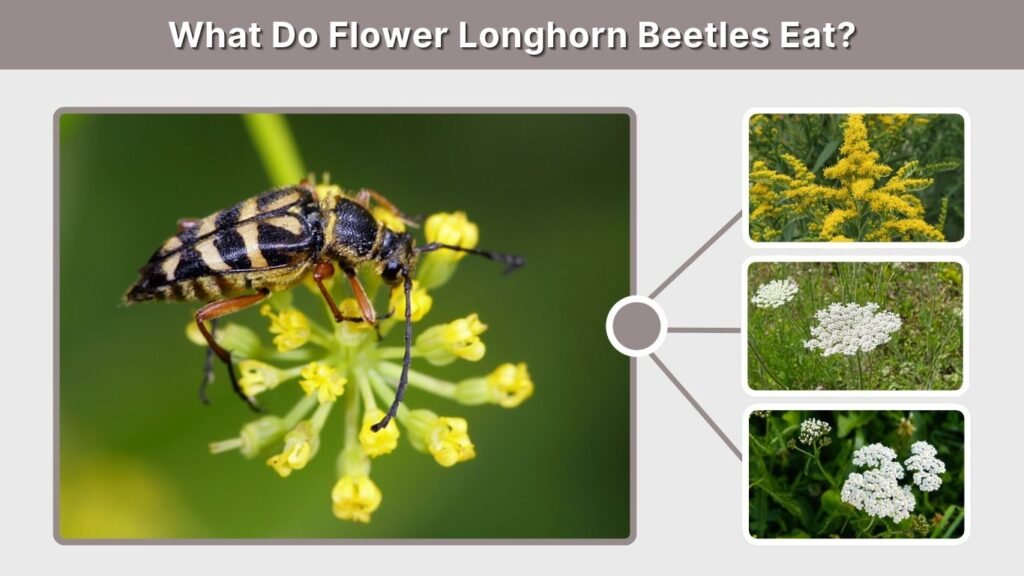
Flower longhorn beetles have different feeding habits during their adult and larval stages. Adults commonly consume pollen and nectar, while larvae develop within dead or decaying wood. These dietary differences allow them to contribute to both flower visitation and the breakdown of organic material.
Adult Feeding Habits
Adults are often found visiting goldenrod, wild carrot, yarrow, and other flowering plants.
They use their mouthparts to consume pollen or access nectar while moving across blossoms.
Some species prefer open flowers where food is easily accessible. Flower availability strongly influences their seasonal activity.
Larval Feeding Habits
Flower longhorn beetle larvae generally feed within dead branches, rotting logs, or deteriorating tree trunks.
Depending on the species, host material may include oak, maple, birch, or hickory.
Their feeding tunnels contribute to wood decomposition and create opportunities for other organisms involved in nutrient recycling.
Flower Longhorn Beetle Life Cycle
Flower longhorn beetles undergo complete metamorphosis, developing through egg, larva, pupa, and adult stages. Most of their life cycle occurs within wood, where larvae remain protected while feeding and growing. The adult stage is usually much shorter and primarily involves locating food, mating, and reproduction.
Four Stages of Development
- Egg: Female beetles deposit eggs on or near suitable dead or decaying wood.
- Larva: Young larvae hatch and begin tunneling through woody material.
- Pupa: Mature larvae form pupal chambers where their bodies transform.
- Adult: Fully developed beetles emerge, fly to flowering plants, and search for mates.
How Long Do Flower Longhorn Beetles Live?
Their lifespan varies considerably between species.
Some larvae require one or more years to complete development, especially when growing in dense hardwood.
Adults may survive only several weeks, although this depends on environmental conditions and the particular species.
Are Flower Longhorn Beetles Beneficial Pollinators?
Flower longhorn beetles can contribute to pollination because adults frequently move between blossoms while feeding. Pollen grains may attach to their bodies and transfer to other flowers. However, pollination effectiveness differs among beetle species and the plants they visit.
What Flowers Do Longhorn Beetles Pollinate?
Flower longhorn beetles visit numerous flowering plants, including goldenrod, wild roses, wild carrot, and other accessible blossoms.
Their bodies may collect pollen while they walk across flowers.
Although they can provide pollination services, not every flower visit results in successful pollination. Some species may be more effective pollinators than others.
Why Are These Beetles Beneficial?
Flower longhorn beetles support ecosystems in two important ways.
Adults participate in flower visitation and potential pollen transfer, while their wood-feeding larvae help recycle dead plant material.
This combination makes many species valuable members of woodland and meadow communities.
Do Flower Longhorn Beetles Bite Humans?
Flower longhorn beetles are generally harmless to humans and are not aggressive insects. Although they possess chewing mouthparts, they do not seek people as food sources or deliberately attack them.
Can a Flower Longhorn Beetle Bite?
A flower longhorn beetle may occasionally pinch if tightly restrained or handled roughly.
However, bites are uncommon and generally not medically significant.
These beetles do not possess venomous stingers, even when their appearance resembles a wasp.
Avoid unnecessary handling and allow the beetle to move freely whenever possible.
How to Attract Flower Longhorn Beetles to Your Garden
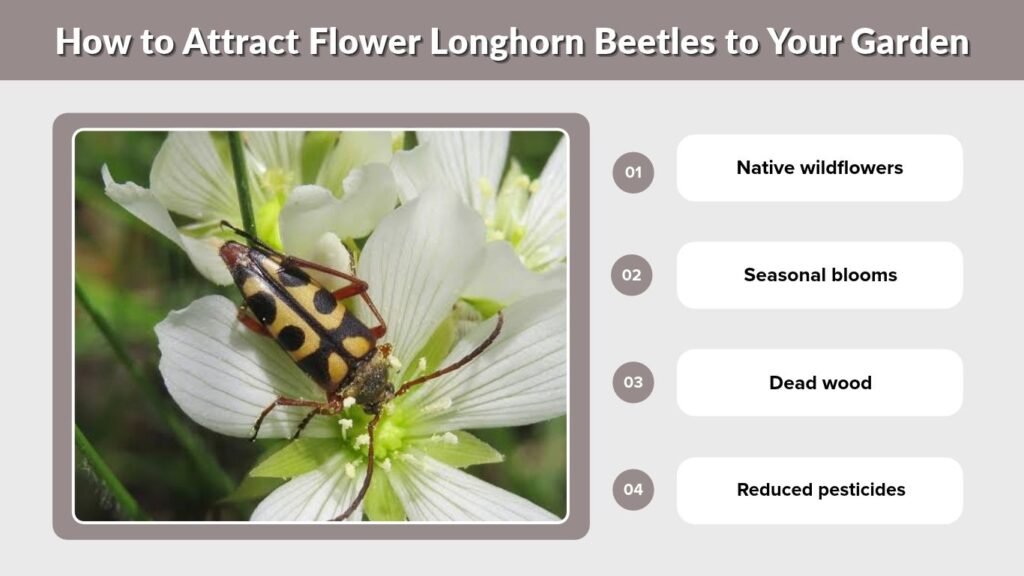
Creating suitable habitat can encourage flower longhorn beetles and other beneficial insects to visit your garden. These beetles need flowering plants for adult feeding and suitable dead wood for larval development. A combination of native vegetation, reduced chemical exposure, and undisturbed habitat supports their populations.
Garden Features That Attract Them
- Native wildflowers: Grow regionally appropriate flowering plants that provide pollen and nectar.
- Seasonal blooms: Include species that flower at different times throughout spring and summer.
- Dead wood: Retain safe logs or branches in suitable garden areas.
- Reduced pesticides: Avoid unnecessary insecticide applications around flowering plants.
- Natural borders: Maintain vegetation along woodland edges and garden boundaries.
- Habitat diversity: Combine shrubs, flowers, and small trees to provide shelter.
Should You Remove Flower Longhorn Beetles?
Removing flower longhorn beetles is generally unnecessary.
Most flower-visiting species do not threaten healthy garden plants or household structures. Their larvae usually develop in wood that is already dead or decaying.
If one enters your house, gently relocate it outdoors rather than applying pesticides.
FAQs
1. Are Flower Longhorn Beetles Dangerous?
Flower longhorn beetles are generally harmless to humans and pets. They do not sting and rarely bite unless handled roughly. Despite their resemblance to wasps, most species are peaceful flower visitors that contribute to pollination and natural wood decomposition.
2. Are Flower Longhorn Beetles Good for Gardens?
Yes, many flower longhorn beetles are beneficial garden insects. Adults visit flowers for pollen and nectar, potentially transferring pollen between blossoms. Their larvae also help break down dead wood, supporting nutrient recycling and maintaining healthy woodland ecosystems.
3. Can Flower Longhorn Beetles Fly?
Yes, adult flower longhorn beetles have functional wings and can fly between flowers and suitable habitats. Their hardened wing covers protect the flight wings when resting. Flying activity is generally more noticeable during warm weather and flowering seasons.
4. What Is the Difference Between Flower Longhorn Beetles and Wasps?
Flower longhorn beetles have hardened wing covers, chewing mouthparts, and long antennae. Wasps have membranous wings and different body structures. Although some beetles mimic wasp coloration, they cannot sting and belong to a completely different insect order.
5. Where Are Flower Longhorn Beetles Most Common?
Flower longhorn beetles occur in many regions worldwide, including North America, Europe, and New Zealand. They are frequently encountered in forests, meadows, woodland edges, and flowering gardens. Their abundance depends on species distribution, seasonal conditions, and suitable breeding habitat.