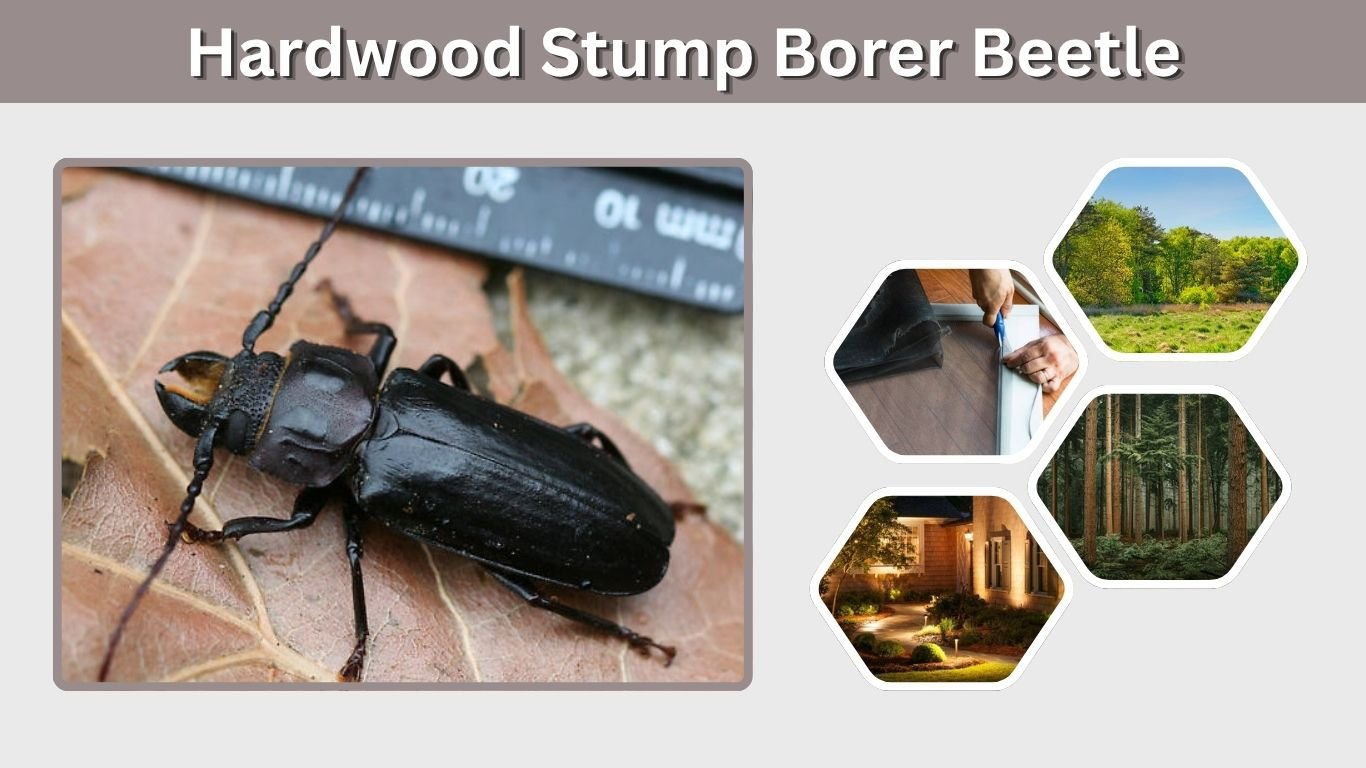
The hardwood stump borer (Mallodon dasystomus) is a large, dark-brown longhorn beetle found in forests, gardens, and wooded areas across the southern United States. Known for its powerful jaws and impressive size, this beetle often attracts attention when it appears near outdoor lights or enters homes. Although adults are generally harmless unless handled, their larvae can cause significant damage by tunneling into hardwood trees. Understanding hardwood stump borer identification, bite risks, habitat, life cycle, and control methods helps homeowners recognize these insects and protect valuable trees.
What Is a Hardwood Stump Borer?
The hardwood stump borer is a wood-boring beetle belonging to the family Cerambycidae, subfamily Prioninae, and order Coleoptera. Its scientific name is Mallodon dasystomus.
This species is native to North America and is particularly associated with hardwood forests in the southern United States.
Unlike beetles that feed only on decaying wood, hardwood stump borer larvae can tunnel into the heartwood of living trees, especially those with injuries or weakened sections.
Adults are primarily nocturnal and are frequently attracted to artificial lighting during warmer months.
Hardwood Stump Borer Beetle Identification
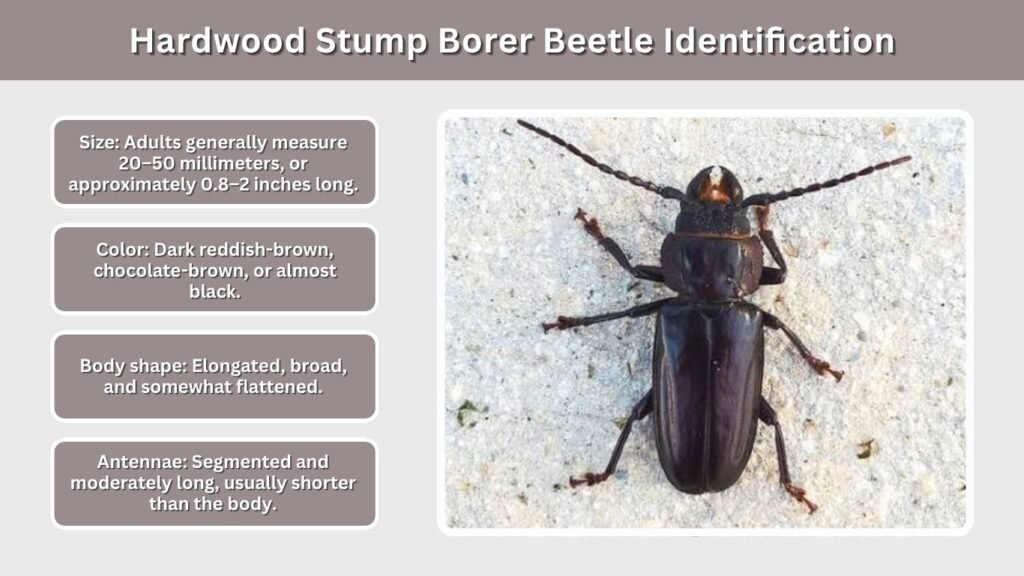
Hardwood stump borer beetles have a distinctive appearance, characterized by their large bodies, dark coloring, powerful mandibles, and prominent thoracic structures. Their intimidating appearance sometimes causes homeowners to mistake them for dangerous insects.
However, several physical characteristics make identification relatively straightforward.
Physical Characteristics
- Size: Adults generally measure 20–50 millimeters, or approximately 0.8–2 inches long.
- Color: Dark reddish-brown, chocolate-brown, or almost black.
- Body shape: Elongated, broad, and somewhat flattened.
- Antennae: Segmented and moderately long, usually shorter than the body.
- Mandibles: Large, powerful jaws extending forward from the head.
- Thorax: Broad, textured, and bordered by small lateral projections.
- Wings: Hardened outer wing covers protect functional flying wings.
- Legs: Six sturdy legs adapted for gripping bark and wooden surfaces.
Male vs. Female Hardwood Stump Borers
Male hardwood stump borers generally possess larger, more elongated mandibles than females. Their jaws can appear particularly impressive when viewed from above.
Females usually have shorter, less exaggerated mandibles and may have broader abdomens.
Both sexes have similar dark coloring and elongated bodies. Their differences are most noticeable when examining the head and jaw structures.
Where Do Hardwood Stump Borer Beetles Live?
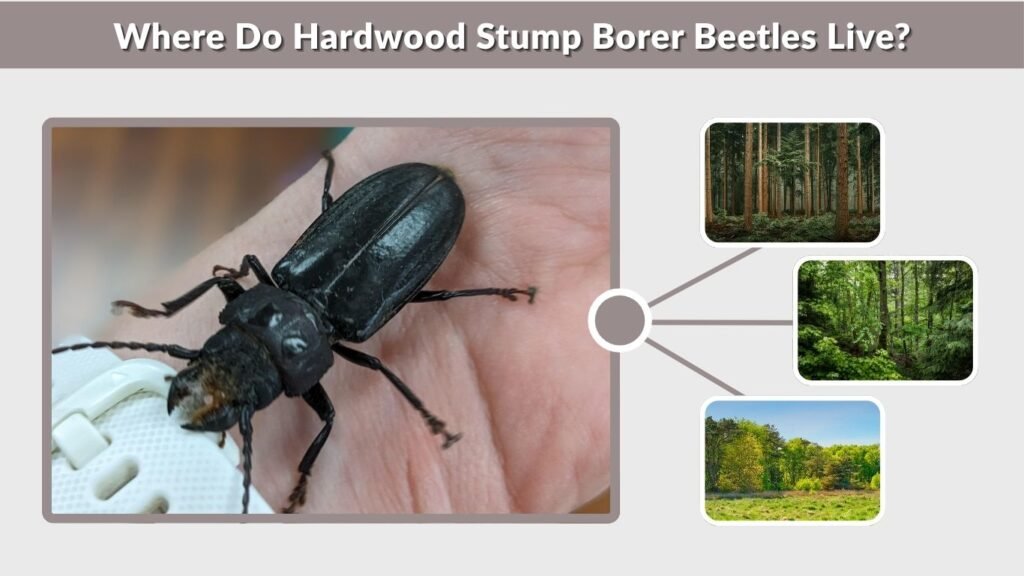
Hardwood stump borers primarily inhabit deciduous forests, wooded landscapes, and areas containing suitable hardwood trees.
They are particularly common in warmer regions where mature trees, fallen branches, and injured trunks provide opportunities for larval development.
Adults may also appear in residential neighborhoods near forests, parks, and established trees.
Hardwood Stump Borer Range
The species occurs across the southeastern United States and extends westward into Arizona and southward beyond the United States.
Documented locations include Texas, Florida, North Carolina, South Carolina, Georgia, Alabama, Louisiana, and Oklahoma.
In Florida and Texas, adults may be encountered around wooded properties and outdoor lighting during warm evenings.
Preferred Habitat
Hardwood stump borers are associated with hardwood trees, especially those containing wounds, weakened sections, or suitable heartwood for larval development.
Common host trees include oak, elm, maple, willow, pecan, and sycamore.
Some infestations also occur in avocado trees, particularly in southern Florida.
What Do Hardwood Stump Borer Beetles Eat?
The feeding behavior of hardwood stump borers changes significantly between the larval and adult stages.
Larvae are responsible for most wood damage because they tunnel inside trees for extended periods. Adult feeding habits are less thoroughly documented.
Hardwood Stump Borer Larvae Diet
Hardwood stump borer larvae consume woody material while excavating tunnels through the heartwood of host trees.
Their feeding activities may continue for several years, gradually creating extensive galleries inside the trunk or larger branches.
Unlike many decomposer beetles, these larvae can develop within living trees, especially around previously damaged areas.
What Do Adult Hardwood Stump Borers Eat?
Adult hardwood stump borers are not known for causing substantial feeding damage to foliage or crops.
Their main activities include dispersing, locating suitable habitats, finding mates, and reproducing.
Although their powerful mandibles are conspicuous, adult feeding behavior is not as well documented as larval wood-boring activity.
Hardwood Stump Borer Beetle Life Cycle
Hardwood stump borers undergo complete metamorphosis, passing through egg, larva, pupa, and adult stages.
Their development is relatively slow compared with many other beetles. The complete life cycle can take approximately three to four years, depending on environmental conditions.
Four Stages of Development
- Egg stage: Females deposit eggs around wounds or suitable openings in hardwood trees, often near the base of the trunk.
- Larval stage: Newly hatched larvae enter the wood and develop inside internal galleries. They feed for an extended period, gradually increasing in size.
- Pupal stage: Mature larvae transform into pupae within protected chambers inside the wood. Adult structures develop during this stage.
- Adult stage: Fully developed beetles emerge from the tree, disperse, locate mates, and reproduce.
Hardwood Stump Borer Larvae Appearance
Hardwood stump borer larvae are pale, elongated, grub-like insects with well-developed chewing mouthparts.
Their bodies are relatively soft, allowing them to move through internal wood tunnels.
Because larvae remain concealed within heartwood, homeowners rarely notice them until obvious damage appears or an adult beetle emerges.
Do Hardwood Stump Borer Beetles Bite?
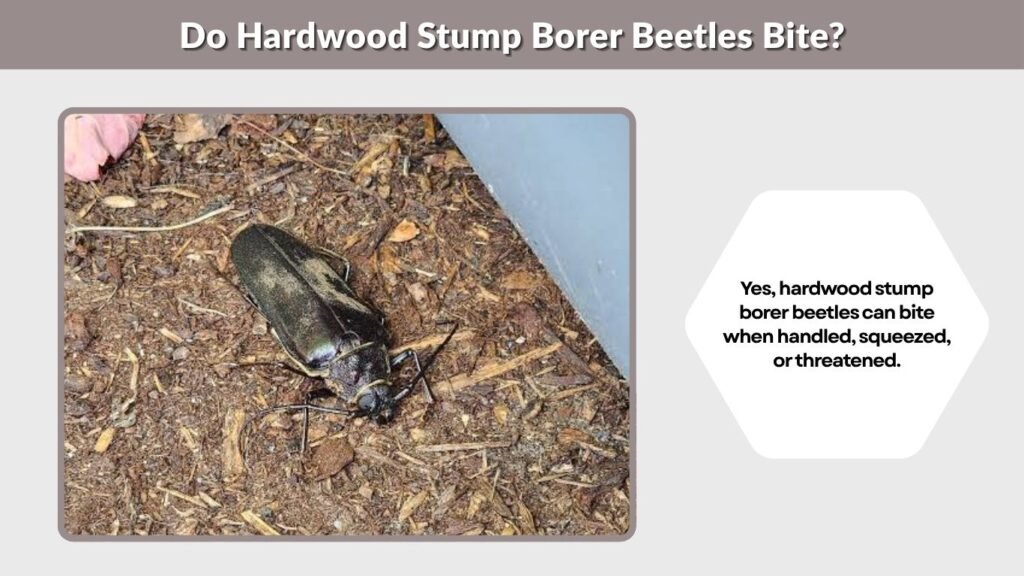
Yes, hardwood stump borer beetles can bite when handled, squeezed, or threatened.
Their powerful mandibles can deliver a painful pinch and may occasionally break human skin.
However, these insects are not aggressive and do not actively attack people. Most encounters occur when a beetle is accidentally disturbed or picked up.
Is a Hardwood Stump Borer Bite Dangerous?
Hardwood stump borer beetles are not venomous or poisonous.
A defensive bite may cause temporary pain, redness, or minor swelling. Most minor injuries can be managed by cleaning the affected area with soap and water.
Medical attention may be necessary if signs of infection, severe swelling, or an unusual allergic reaction develop.
Avoid handling these beetles directly, especially around their jaws.
Why Is a Hardwood Stump Borer Beetle in My House?
Hardwood stump borers occasionally enter houses because adults are attracted to artificial lights.
They are primarily outdoor beetles, so discovering one indoors does not necessarily indicate an infestation.
Open windows, damaged screens, and exterior doors provide easy entry points during nighttime activity.
Can Hardwood Stump Borers Infest Homes?
Hardwood stump borers are not typical household pests. Their larvae primarily develop in suitable hardwood trees rather than dry furniture, carpets, or household materials.
However, beetles may occasionally emerge from infested wood brought onto a property.
Repeated sightings around deteriorating wooden structures or large hardwood timbers warrant closer inspection to identify the source.
Hardwood Stump Borer Beetle Damage to Trees

The most significant damage comes from larvae tunneling into the heartwood of hardwood trees.
These tunnels can gradually weaken internal wood and reduce the structural stability of affected trunks or branches.
Trees with existing wounds may be especially vulnerable because females commonly deposit eggs near injured areas.
Signs of Hardwood Stump Borer Damage
- Large exit holes: Openings may appear where adult beetles emerge.
- Internal tunnels: Larvae produce galleries within woody tissues.
- Wood debris: Frass or wood fragments may occur around damaged areas.
- Weak branches: Extensive internal tunneling can compromise structural strength.
- Declining tree condition: Heavily affected trees may show reduced vigor, sometimes alongside other stresses.
- Repeated beetle emergence: Multiple adults appearing from the same tree may indicate established larval development.
Do Hardwood Stump Borers Damage Healthy Trees?
Hardwood stump borers can attack living hardwood trees, but wounds and injured sections are especially attractive egg-laying sites.
Damage is particularly concerning when larvae tunnel deeply into the trunk or structural branches.
Infestations have also been documented in avocado orchards in southern Florida, where concealed feeding can create extensive internal galleries.
Hardwood Stump Borer vs. Brown Prionid Beetle
Hardwood stump borers are sometimes confused with brown prionid beetles because both are large, dark-colored members of the longhorn beetle family.
However, their appearance, larval habitats, and potential damage differ.
| Feature | Hardwood Stump Borer | Brown Prionid Beetle |
| Scientific name | Mallodon dasystomus | Orthosoma brunneum |
| Adult size | 0.8–2 inches | Approximately 1–2 inches |
| Color | Dark brown to blackish | Reddish-brown |
| Mandibles | Very prominent, especially in males | Strong but less exaggerated |
| Larval habitat | Heartwood of living hardwood trees | Primarily decaying wood |
| Main concern | Internal tree damage | Usually decomposition or nuisance |
| Biting ability | Can deliver a defensive bite | Can deliver a defensive bite |
The enlarged forward-pointing jaws and broad, textured thorax are especially useful for recognizing hardwood stump borers.
Can Hardwood Stump Borers Be Detected by Sound?
Hardwood stump borer larvae create vibrations and sounds while feeding and moving inside wood.
Specialized acoustic equipment can detect these activities, even when larvae remain concealed.
A scientific study conducted in Florida demonstrated that acoustic monitoring could help identify hardwood stump borer infestations in avocado branch stumps.
However, ordinary household microphones and casual listening cannot reliably confirm an infestation. Acoustic detection generally requires specialized equipment and trained interpretation.
How to Get Rid of Hardwood Stump Borer Beetles
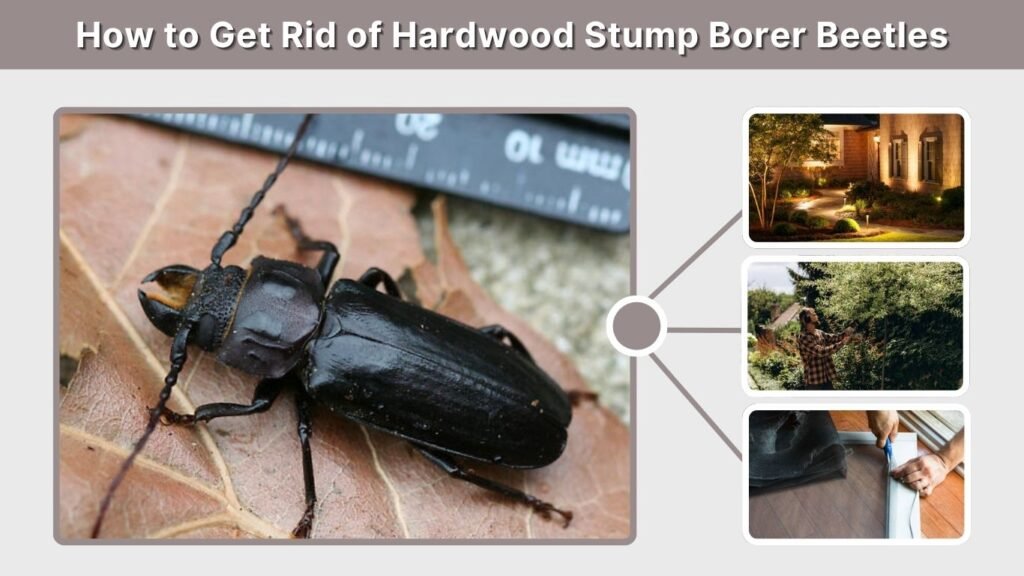
Effective hardwood stump borer control focuses on protecting valuable trees, reducing injuries, and detecting larval infestations before extensive damage develops.
Because larvae remain hidden inside wood, eliminating established infestations can be difficult.
Natural Prevention and Control Methods
- Maintain tree health: Provide appropriate irrigation, nutrition, and care to reduce unnecessary stress.
- Prevent trunk injuries: Avoid damaging bark with lawn equipment or careless pruning.
- Inspect damaged trees: Check wounds, exposed wood, and suspicious openings for signs of boring activity.
- Remove severely damaged wood: Consult a qualified arborist before removing infested limbs or structurally compromised trees.
- Manage infested material: Dispose of affected wood appropriately rather than storing it near healthy trees.
- Reduce outdoor lighting: Limit unnecessary nighttime lighting to reduce adult beetle attraction.
- Seal home entry points: Repair screens and close openings around doors and windows.
Chemical Hardwood Stump Borer Control
Chemical treatments are challenging because larvae remain protected deep inside the heartwood.
Ordinary surface sprays may not reach established infestations, and applying insecticides without confirming the pest can waste resources.
A certified arborist or qualified pest professional can evaluate valuable trees and determine whether any locally registered treatment is appropriate.
Trees with extensive internal damage may require pruning or removal for safety.
FAQs
1. Are Hardwood Stump Borer Beetles Poisonous?
No, hardwood stump borer beetles are not poisonous or venomous. However, they possess powerful jaws capable of delivering a painful defensive bite. They generally avoid human contact and are not considered dangerous unless handled carelessly or threatened.
2. Can Hardwood Stump Borer Beetles Fly?
Yes, adult hardwood stump borers can fly using functional wings beneath their hardened wing covers. They are commonly active at night and may be attracted to artificial lighting. Their large bodies can make their flight appear heavy or awkward.
3. Are Hardwood Stump Borers Common in Florida?
Yes, hardwood stump borers occur naturally in Florida, especially around wooded habitats and hardwood trees. They have also been documented damaging avocado trees in southern Florida. Adult beetles may appear near outdoor lights during warmer months.
4. Do Hardwood Stump Borers Kill Trees?
Hardwood stump borer larvae can cause substantial internal damage by tunneling through the heartwood of living trees. Severe infestations may weaken trunks or branches. However, an infestation does not automatically mean the tree will die, and professional assessment is recommended.
5. How Long Do Hardwood Stump Borers Live?
Hardwood stump borers may require approximately three to four years to complete development. Much of this period is spent inside wood as larvae. Adults live for a considerably shorter period, during which they disperse, mate, and reproduce.