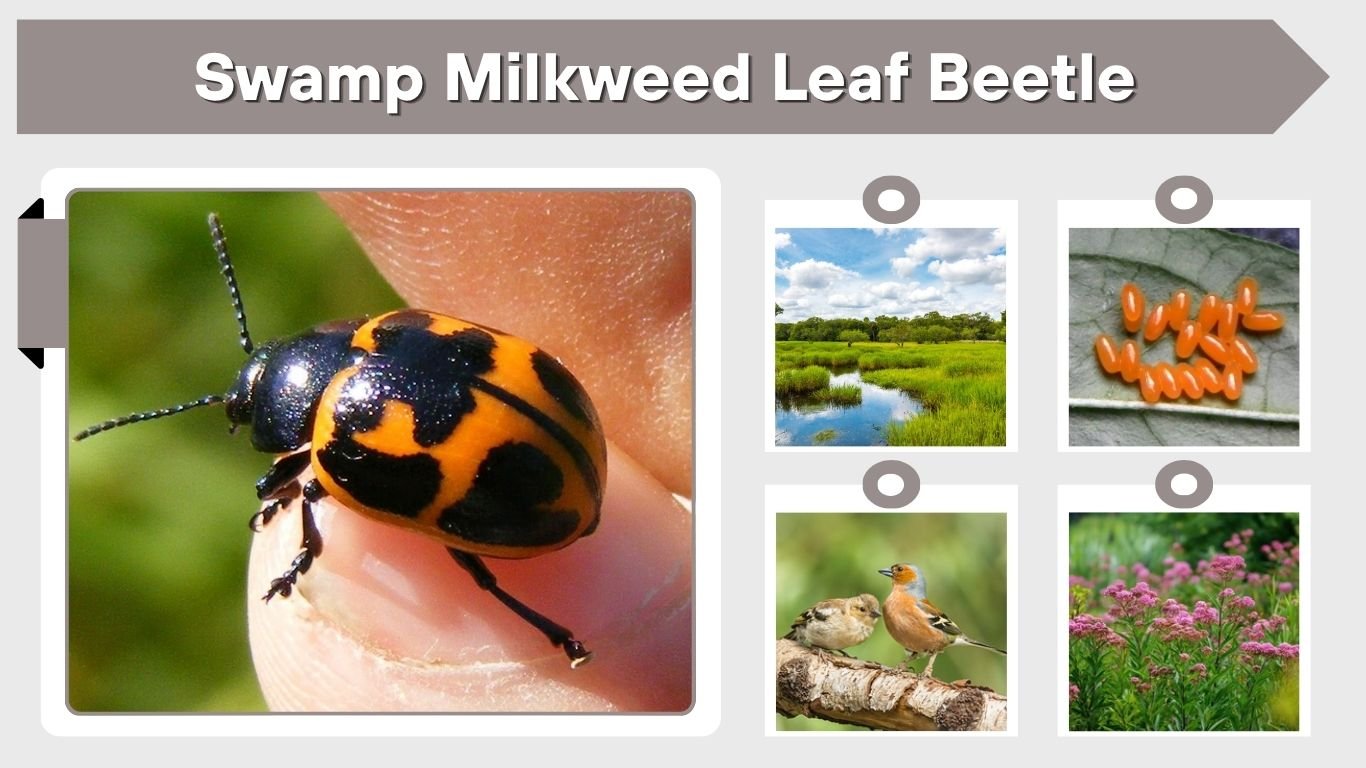
The swamp milkweed leaf beetle (Labidomera clivicollis) is a colorful insect commonly found on milkweed plants throughout eastern North America. Recognized by its orange-and-black body, this beetle feeds primarily on swamp milkweed leaves. Although it is a natural part of the ecosystem, large populations can damage milkweed plants and compete for foliage used by monarch caterpillars. Understanding swamp milkweed leaf beetle identification, eggs, larvae, life cycle, feeding habits, and natural control methods can help gardeners protect their plants while maintaining a healthy environment for beneficial insects.
What Is a Swamp Milkweed Leaf Beetle?
The swamp milkweed leaf beetle is a native North American beetle belonging to the family Chrysomelidae. Its scientific name is Labidomera clivicollis. Unlike ladybugs, which often feed on aphids, this beetle consumes plant foliage. Both adults and larvae are specialized plant feeders commonly associated with milkweed.
Swamp Milkweed Leaf Beetle Identification
You can recognize a swamp milkweed leaf beetle by examining these characteristics:
- Scientific name: Labidomera clivicollis
- Family: Chrysomelidae
- Size: Approximately 8–13 millimeters long.
- Body shape: Rounded, oval, and dome-shaped.
- Body color: Orange or yellow with irregular black markings.
- Head: Usually glossy black.
- Legs: Dark or metallic blue.
- Habitat: Milkweed plants, wetlands, and meadows.
The beetle’s orange-and-black pattern varies between individuals. Its rounded appearance sometimes causes people to mistake it for a large ladybug.
Where Do Swamp Milkweed Leaf Beetles Live?
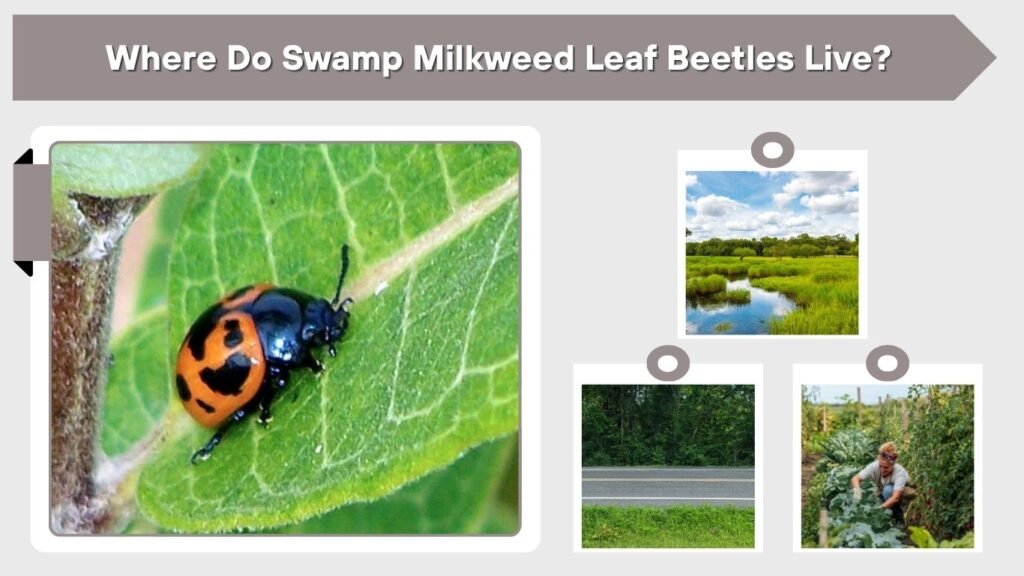
Swamp milkweed leaf beetles are native to North America and occur primarily east of the Rocky Mountains. Their distribution includes many parts of the eastern United States and southern Canada. They are usually found wherever suitable milkweed plants provide food and breeding opportunities.
Swamp Milkweed Leaf Beetle Native Range
The beetle occurs across much of eastern and central North America, extending into parts of northern Mexico.
Swamp milkweed leaf beetles are particularly associated with moist habitats, although they can also inhabit dry areas containing suitable host plants. Their distribution depends heavily on the availability of milkweed.
Swamp Milkweed Leaf Beetle in Illinois
Swamp milkweed leaf beetles are native insects found in Illinois.
They commonly inhabit prairies, wetlands, roadsides, and gardens where swamp milkweed or other milkweed species grow.
Gardeners may notice adults resting on leaves or larvae feeding together during warmer months.
What Do Swamp Milkweed Leaf Beetles Eat?

Swamp milkweed leaf beetles are specialized herbivores that feed primarily on milkweed foliage. Their preferred host is swamp milkweed (Asclepias incarnata), but they also consume several related plants. Both adults and larvae eat leaves, sometimes leaving noticeable holes and damaged edges.
Common Host Plants
Their food plants include:
- Swamp milkweed (Asclepias incarnata)
- Common milkweed (Asclepias syriaca)
- Butterfly weed (Asclepias tuberosa)
- Other compatible milkweed species
- Certain related plants in the dogbane family
Swamp milkweed is their preferred host in many regions, although feeding preferences can vary geographically.
How Do They Eat Milkweed Leaves?
Milkweed plants contain sticky white latex and defensive chemicals that discourage many herbivores.
Swamp milkweed leaf beetles have developed a special feeding strategy. Before eating, they often cut leaf veins to reduce the flow of sticky latex into their feeding area.
This allows them to consume foliage while limiting exposure to the plant’s defensive sap.
Swamp Milkweed Leaf Beetle Eggs and Larvae
The swamp milkweed leaf beetle passes through several developmental stages before becoming an adult. Its eggs and larvae are typically found on milkweed foliage, making them relatively easy to observe. Learning to identify these immature stages helps gardeners distinguish beetles from other insects living on milkweed.
Swamp Milkweed Leaf Beetle Eggs
Female swamp milkweed leaf beetles lay elongated, orange eggs in clusters on the undersides of leaves.
A female may produce up to approximately 300 eggs, often depositing them in groups of 30–60.
The eggs eventually hatch into small larvae that begin feeding on the surrounding foliage.
Swamp Milkweed Leaf Beetle Larvae
Swamp milkweed leaf beetle larvae have rounded, fleshy bodies that are usually grayish or orange.
Their distinguishing features include a dark head region and rows of small black spots along the sides.
Young larvae often feed together before dispersing as they grow. They pass through four larval stages before pupation.
Swamp Milkweed Leaf Beetle Life Cycle

The swamp milkweed leaf beetle undergoes complete metamorphosis, which includes egg, larva, pupa, and adult stages. Its development depends on temperature, food availability, and geographic location. In northern regions, the species generally produces one generation annually, while warmer southern areas may support additional generations.
Four Stages of the Life Cycle
- Egg: Females attach clusters of orange eggs to milkweed leaves.
- Larva: Newly hatched larvae feed on foliage and grow through four developmental stages.
- Pupa: Mature larvae drop to the ground and pupate in the soil.
- Adult: Newly emerged beetles return to host plants to feed and reproduce.
How Do Swamp Milkweed Leaf Beetles Survive Winter?
Adult swamp milkweed leaf beetles generally survive winter in sheltered locations.
They may hide beneath fallen leaves or inside dense basal leaf rosettes of plants such as mullein.
When temperatures rise, surviving adults become active and begin feeding and reproducing.
Are Swamp Milkweed Leaf Beetles Good or Bad?
Swamp milkweed leaf beetles are neither entirely beneficial nor universally harmful. They are native insects that contribute to natural food webs, but their feeding can damage milkweed plants. Whether control is necessary depends on beetle abundance, plant condition, and the purpose of the milkweed planting.
Are Swamp Milkweed Leaf Beetles Harmful?
Both adults and larvae remove foliage while feeding.
Large populations may cause substantial leaf loss, potentially weakening smaller plants.
However, established milkweed plants can often tolerate modest feeding damage without serious consequences. Occasional beetles generally do not require treatment.
Do Swamp Milkweed Leaf Beetles Harm Monarch Butterflies?
Swamp milkweed leaf beetles do not normally attack monarch butterflies or their caterpillars.
However, they consume the same milkweed leaves monarch caterpillars need for development.
Heavy beetle feeding may reduce available foliage on small plants, creating indirect competition.
Maintaining multiple healthy milkweed plants can help support different native insect species.
Swamp Milkweed Leaf Beetle Larvae vs. Colorado Potato Beetle Larvae

Swamp milkweed leaf beetle larvae are sometimes confused with Colorado potato beetle larvae because both have rounded bodies and dark spots. They also belong to the same beetle family. However, the plants they feed on provide an important identification clue.
Physical Differences
Swamp milkweed leaf beetle larvae are typically grayish to orange with dark markings and a black collar behind the head.
Colorado potato beetle larvae are usually reddish-orange with two rows of black spots along each side.
Their appearance can overlap, especially during early development, so color alone is not always reliable.
Differences in Feeding Habits
Swamp milkweed leaf beetle larvae primarily feed on milkweed plants.
Colorado potato beetle larvae usually feed on potatoes and other plants in the nightshade family.
Finding larvae on milkweed rather than potato foliage is therefore a useful identification clue.
How to Control Swamp Milkweed Leaf Beetles
Swamp milkweed leaf beetle control is usually unnecessary when only a few insects are present. However, large populations may damage young or limited milkweed plantings. Natural management methods are generally preferable, especially in gardens designed to support monarch butterflies and other pollinators.
Natural Control Methods
Consider these methods when beetle populations become excessive:
- Hand removal: Collect adult beetles and larvae from heavily infested plants.
- Inspect leaves: Check undersides for clusters of orange beetle eggs.
- Remove excess eggs: Carefully remove positively identified beetle egg clusters when necessary.
- Monitor damage: Examine plants regularly for increasing leaf loss.
- Grow additional milkweed: Provide more foliage to support both beetles and monarch caterpillars.
Before removing eggs, distinguish beetle clusters from monarch eggs, which are generally laid individually.
Should You Use Insecticides?
Broad-spectrum insecticides are generally discouraged on milkweed because they can harm monarch caterpillars and other beneficial insects.
If severe damage occurs, consult a local extension specialist about suitable management options.
Manual removal and careful monitoring are typically better choices for small residential gardens.
What Eats Swamp Milkweed Leaf Beetles?
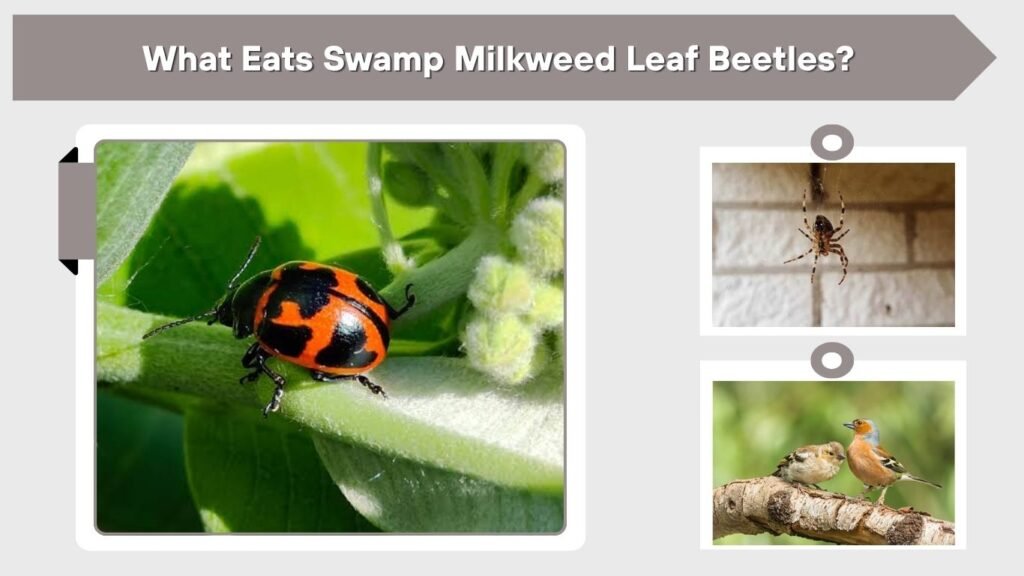
Swamp milkweed leaf beetles have several natural enemies. Although their bright coloration may warn predators, some insects and other animals can still consume them. These predators help regulate beetle populations naturally.
Natural Predators
Known predators and natural enemies include:
- Predatory stink bugs
- Damsel bugs
- Hoverfly larvae
- Certain spiders
- Some birds
- Parasitoid flies
These organisms contribute to the ecological balance of habitats where milkweed grows.
FAQs
1. Are Swamp Milkweed Leaf Beetles Dangerous to Humans?
Swamp milkweed leaf beetles are not considered dangerous to humans. They do not possess venomous stingers and are not known for biting people. Their bright coloration mainly serves as a warning to potential predators rather than indicating aggression.
2. Can Swamp Milkweed Leaf Beetles Fly?
Yes, adult swamp milkweed leaf beetles have wings and can fly. However, they often move between nearby plants by walking. Their movement patterns depend on environmental conditions, host plant availability, and the need to find mates.
3. Are Swamp Milkweed Leaf Beetles Beneficial?
Swamp milkweed leaf beetles are native insects that provide food for certain predators and contribute to natural ecosystems. However, they are plant-feeding insects rather than beneficial predators. Their presence is generally acceptable unless excessive foliage damage develops.
4. Do Swamp Milkweed Leaf Beetles Eat Monarch Eggs?
Swamp milkweed leaf beetles mainly consume milkweed foliage rather than monarch eggs. They are not considered typical monarch predators. However, their feeding can reduce foliage available to monarch caterpillars, particularly when milkweed plants are small.
5. How Do You Get Rid of Swamp Milkweed Leaf Beetles Naturally?
You can reduce swamp milkweed leaf beetle populations by manually collecting adults, larvae, and correctly identified egg clusters. Monitor damaged plants and avoid broad-spectrum insecticides. Maintaining additional healthy milkweed plants can also reduce competition for limited foliage.