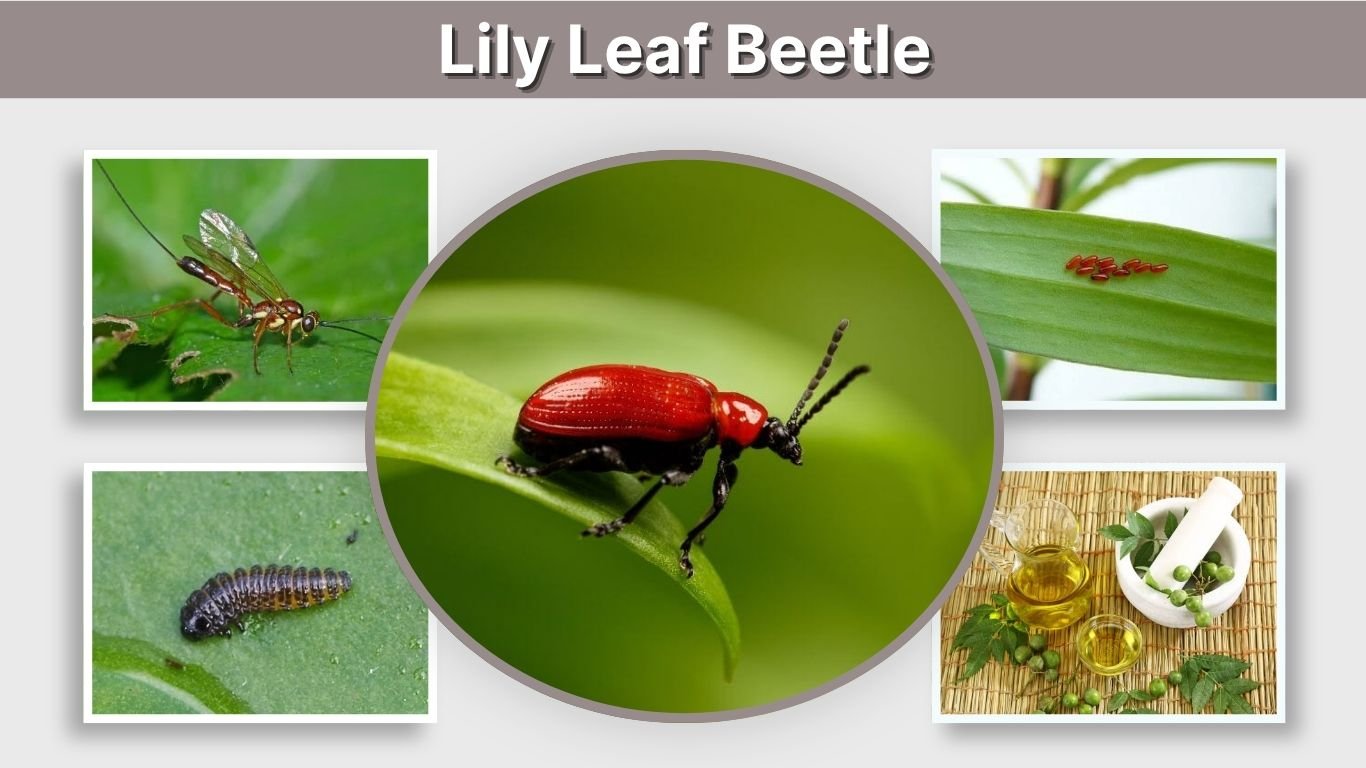
The lily leaf beetle is a destructive garden pest that attacks ornamental lilies, damaging their leaves, stems, and flower buds. These bright red beetles may look attractive, but their feeding habits can seriously weaken lily plants. Both adults and larvae consume plant tissues, sometimes leaving entire stems without foliage. Understanding their appearance, life cycle, and feeding behavior is essential for protecting your garden. This guide explains how to identify lily leaf beetles, recognize infestation signs, and control them using natural methods and appropriate insecticide treatments.
What Is a Lily Leaf Beetle?
The lily leaf beetle (Lilioceris lilii), also called the red lily beetle or scarlet lily beetle, belongs to the leaf beetle family Chrysomelidae. Originally native to Europe and Asia, this species has spread into several regions of North America.
These insects primarily attack true lilies (Lilium) and fritillaries (Fritillaria). They are particularly troublesome because both adults and larvae feed on plant tissues.
What Do Lily Leaf Beetles Look Like?
Adult lily leaf beetles have bright scarlet-red wing covers, black heads, and black legs. Their bodies are elongated and approximately 6–8 millimeters long.
Important identification features include:
- Body color: Bright red wing covers and thorax.
- Head: Small, black, and clearly visible.
- Legs: Six slender black legs.
- Antennae: Long, segmented, and black.
- Body shape: Narrow, oval, and slightly elongated.
When disturbed, adults often drop from plants and land upside down, making their dark undersides difficult to spot against soil.
What Plants Do Lily Leaf Beetles Eat?
Lily leaf beetles mainly feed on Asiatic lilies, Oriental lilies, and other true lilies. They also attack fritillaries, including crown imperial plants.
Although adults occasionally feed on other plants, successful larval development occurs primarily on their preferred hosts. Daylilies are generally not suitable hosts for this beetle.
Lily Leaf Beetle Eggs and Larvae Identification
Recognizing lily leaf beetle eggs and larvae helps gardeners identify infestations before severe damage occurs. These early developmental stages are commonly found on the undersides of lily leaves during spring and summer.
Lily Leaf Beetle Eggs
Female beetles lay elongated, orange-red eggs in irregular rows on leaf undersides. The eggs are small but become easier to recognize when several appear together.
Fresh eggs are usually orange, gradually darkening before hatching. Under favorable temperatures, they hatch within approximately four to ten days.
Lily Leaf Beetle Larvae
Lily leaf beetle larvae are soft-bodied, yellowish-orange grubs with dark heads. Their most distinctive characteristic is a covering of their own excrement, called frass.
This dark, sticky coating makes larvae resemble small piles of debris. It provides some protection against predators and makes them unpleasant to handle.
Larvae feed aggressively on leaves and flower buds, often causing more damage than adult beetles.
Lily Leaf Beetle Life Cycle
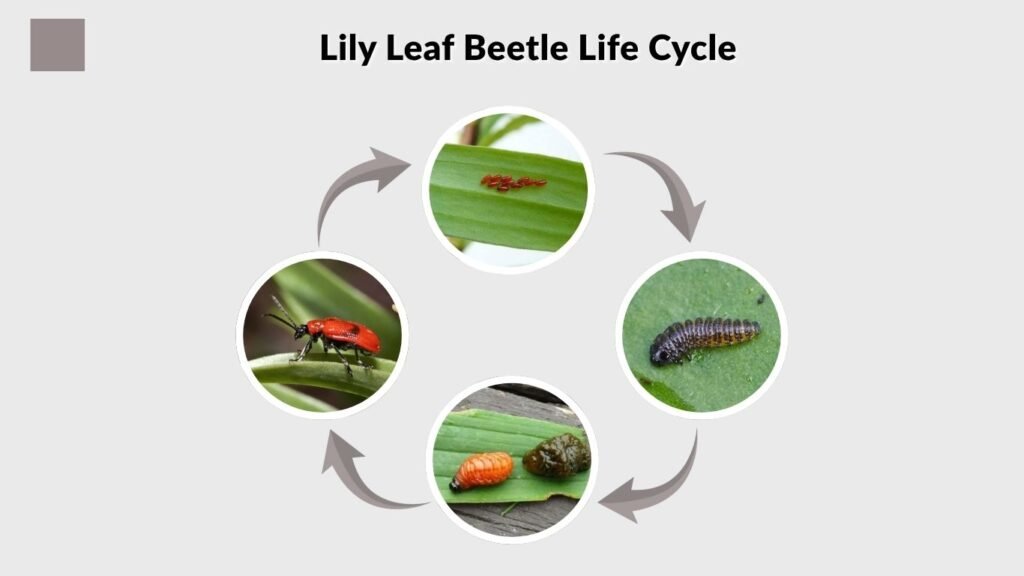
Understanding the lily leaf beetle life cycle helps gardeners determine when treatments will be most effective. These insects undergo complete metamorphosis and generally produce one generation annually.
Four Stages of Development
The life cycle includes four developmental stages:
- Egg: Females deposit orange-red eggs beneath lily leaves during spring.
- Larva: Eggs hatch into soft-bodied larvae that feed heavily for approximately two to three weeks.
- Pupa: Mature larvae enter the soil and develop into pupae.
- Adult: New beetles emerge, feed on plants, and eventually seek overwintering shelters.
Adult beetles survive winter in protected locations, including soil, leaf litter, and garden debris.
They emerge during spring as temperatures rise and lily shoots begin developing. After feeding and mating, females lay eggs, beginning another reproductive cycle.
What Damage Do Lily Leaf Beetles Cause?
Lily leaf beetles damage plants by consuming foliage, flower buds, and occasionally stems. Heavy infestations can completely strip lilies of their leaves, reducing their ability to produce energy through photosynthesis.
Common Signs of Lily Leaf Beetle Damage
Several symptoms indicate that lily leaf beetles may be feeding on your plants:
- Irregular holes: Adults chew noticeable holes in leaves.
- Damaged leaf edges: Larvae consume large sections of foliage.
- Dark sticky deposits: Larvae covered in frass appear on affected leaves.
- Damaged flower buds: Feeding may prevent flowers from opening normally.
- Bare stems: Severe infestations can remove nearly all foliage.
- Reduced flowering: Repeated damage weakens bulbs and limits future growth.
Established lilies may recover from occasional feeding. However, repeated defoliation can weaken bulbs and reduce flowering during subsequent growing seasons.
How to Get Rid of Lily Leaf Beetles
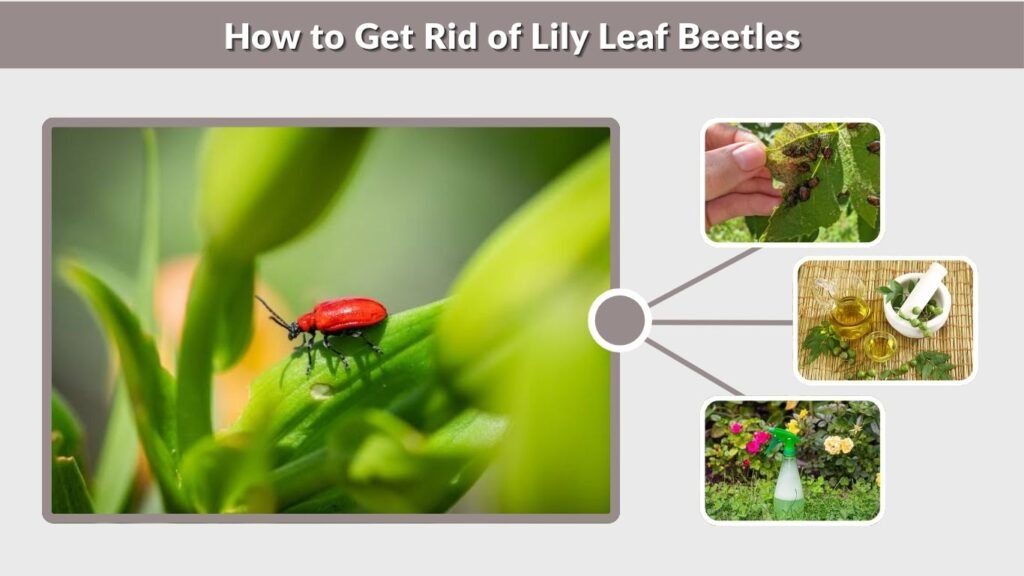
Controlling lily leaf beetles requires early detection and consistent treatment. Physical removal is usually effective for small infestations, while larger populations may require selective insecticides.
Remove Adult Beetles by Hand
Handpicking is one of the simplest natural control methods. Inspect lily plants regularly, particularly during early spring when overwintered adults become active.
Hold a container of soapy water beneath affected leaves and carefully knock beetles into it.
Because adults frequently drop when disturbed, positioning the container underneath them helps prevent escape.
Remove Eggs and Larvae
Check leaf undersides for orange-red egg clusters. Crush or wipe away the eggs using gloved fingers.
Remove visible larvae manually, paying particular attention to dark, sticky masses on damaged foliage.
Regular removal prevents larvae from developing into adults and reduces subsequent plant damage.
Apply Neem Oil
Neem-based insecticides may help control lily leaf beetle larvae, particularly during their early developmental stages.
Apply a product labeled for ornamental lilies, following the manufacturer’s directions.
Cover affected foliage carefully, including leaf undersides. Avoid spraying during intense sunlight or when pollinators are actively visiting flowers.
Use Spinosad or Insecticidal Soap
Spinosad can provide effective control of actively feeding lily leaf beetle larvae when used according to the product label.
Commercial insecticidal soap may also control exposed young larvae through direct contact.
However, older larvae covered in protective frass may be harder to treat.
Spinosad can harm pollinators, so avoid applying it to flowers or when bees are active.
How to Prevent Lily Leaf Beetle Infestations
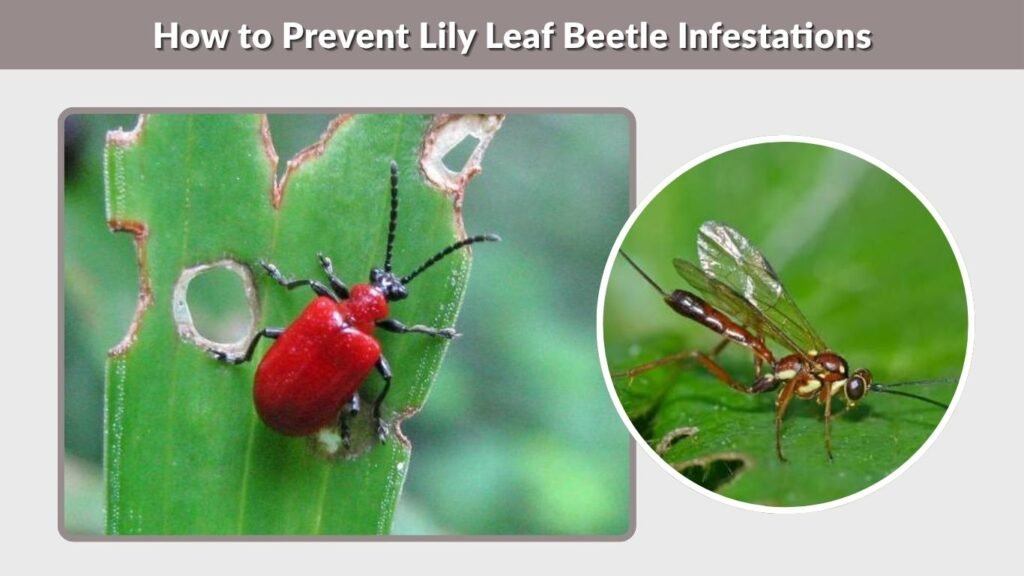
Preventing infestations requires regular monitoring and proper garden maintenance. Although adult beetles can fly into gardens, early intervention helps prevent populations from becoming established.
Inspect Lilies During Spring
Begin inspecting plants as soon as new lily shoots emerge. Overwintered beetles often appear early in the growing season.
Check stems and leaf undersides for adults, eggs, and newly hatched larvae.
Maintain Garden Cleanliness
Remove excessive plant debris and dead foliage around lily beds. This reduces some sheltered locations where adult beetles may overwinter.
However, sanitation alone cannot eliminate infestations because beetles can arrive from surrounding gardens.
Protect Beneficial Insects
Certain parasitic wasps attack lily leaf beetle larvae and contribute to biological control.
Avoid unnecessary broad-spectrum insecticides that could harm beneficial insects.
Maintaining diverse flowering plants nearby may support natural enemies, although companion planting alone cannot reliably prevent beetle infestations.
FAQs
1. What Kills Lily Leaf Beetles?
Handpicking, removing eggs and larvae, and applying appropriately labeled insecticides can control lily leaf beetles. Neem-based products and spinosad may help suppress larvae. Early treatment generally provides better results than waiting until plants become severely damaged.
2. Does Neem Oil Kill Lily Leaf Beetle Larvae?
Neem-based insecticides can suppress young lily leaf beetle larvae by interfering with feeding and development. Effectiveness varies with formulation and application timing. Repeated inspections and physical removal remain important for successful control.
3. Do Lily Leaf Beetles Bite Humans?
Lily leaf beetles are plant-feeding insects and are not considered dangerous to humans. They do not normally bite people. Their primary impact is damage to ornamental lilies and other suitable host plants.
4. Can Lily Leaf Beetles Kill Lilies?
Severe infestations can completely defoliate lilies and weaken their underground bulbs. Established plants may survive isolated attacks, but repeated damage can reduce flowering and eventually threaten plant survival.
5. Are Water Lily Leaf Beetles the Same?
No. Water lily leaf beetles are different insects that feed on aquatic plants. Scarlet lily leaf beetles primarily attack terrestrial lilies and fritillaries. Their identification, habitats, and management requirements are different.