Asparagus beetles are common garden pests that feed on young asparagus spears and delicate foliage. These small insects can damage developing shoots, weaken established plants, and reduce future harvests when infestations become severe. Both common and spotted asparagus beetles attack asparagus, although their appearance and feeding habits differ. Fortunately, gardeners can control these pests through regular inspection, natural predators, proper sanitation, and targeted treatments. This guide explains how to identify asparagus beetles, recognize their eggs and larvae, understand their life cycle, and get rid of them effectively.
What Are Asparagus Beetles?
Asparagus beetles are small leaf beetles belonging to the family Chrysomelidae. They primarily feed on asparagus plants and are especially active during the growing season. Two species commonly affect garden asparagus: the common asparagus beetle and the spotted asparagus beetle.
Common Asparagus Beetle
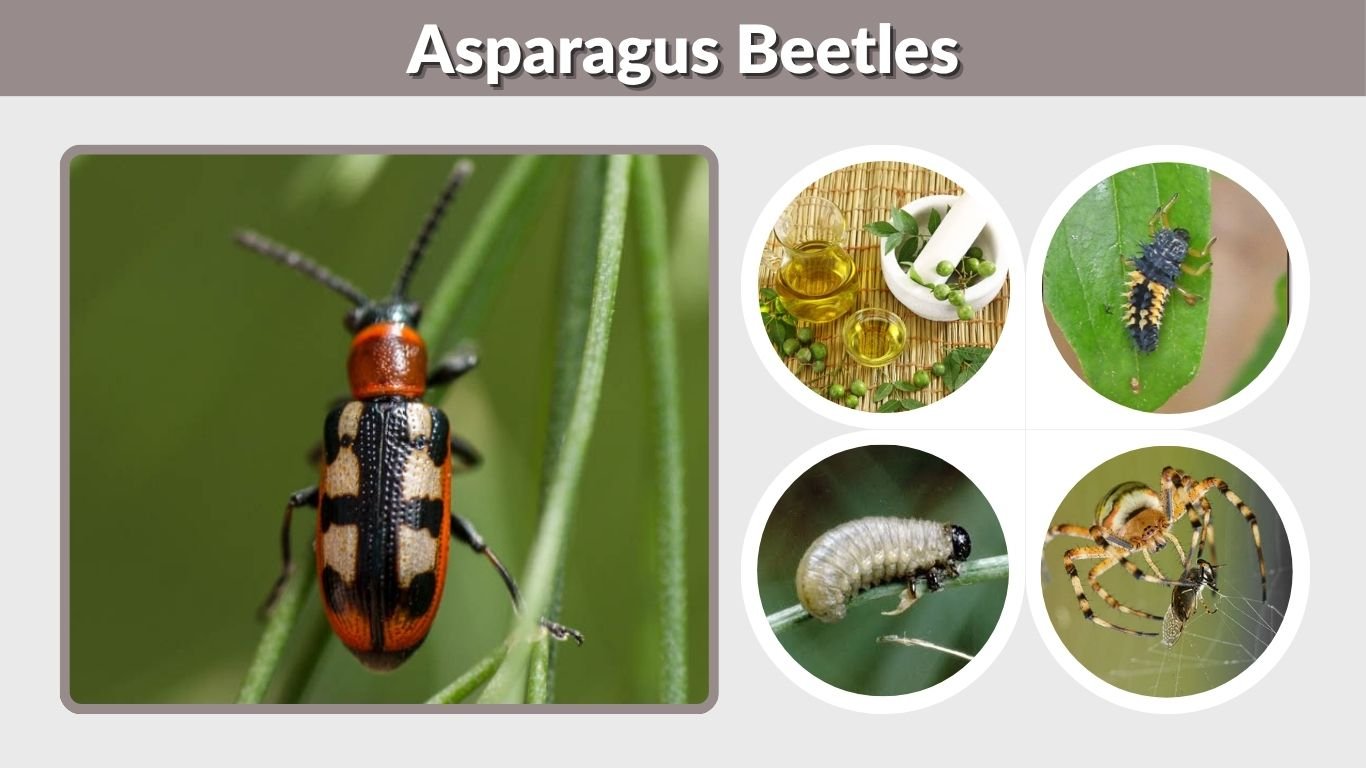
The common asparagus beetle (Crioceris asparagi) is generally the more destructive species. Adults measure approximately ¼ inch long and have distinctive blue-black wing covers with cream-colored markings and reddish edges.
These beetles feed on tender asparagus spears and mature foliage. Their larvae also consume foliage, sometimes causing substantial damage to heavily infested plants.
Spotted Asparagus Beetle
The spotted asparagus beetle (Crioceris duodecimpunctata) has a reddish-orange body with 12 prominent black spots.
Adults feed on asparagus foliage and shoots, but their larvae primarily develop inside asparagus berries. Consequently, spotted asparagus beetles usually cause less damage than common asparagus beetles.
What Do Asparagus Beetle Eggs and Larvae Look Like?
Recognizing asparagus beetle eggs and larvae helps gardeners detect infestations before serious damage develops. Different life stages appear on spears, stems, foliage, and berries.
Asparagus Beetle Eggs
Common asparagus beetle eggs are tiny, elongated, and dark brown to nearly black. Females attach them individually or in rows to asparagus spears and foliage.
The eggs stand upright from the plant surface and are particularly noticeable on young green spears.
Asparagus Beetle Larvae
Common asparagus beetle larvae are soft-bodied, grayish, slug-like insects with dark heads. They feed on asparagus foliage and may cause extensive damage when populations become large.
Spotted asparagus beetle larvae are typically orange and develop inside asparagus berries rather than feeding extensively on foliage.
Asparagus Beetle Life Cycle
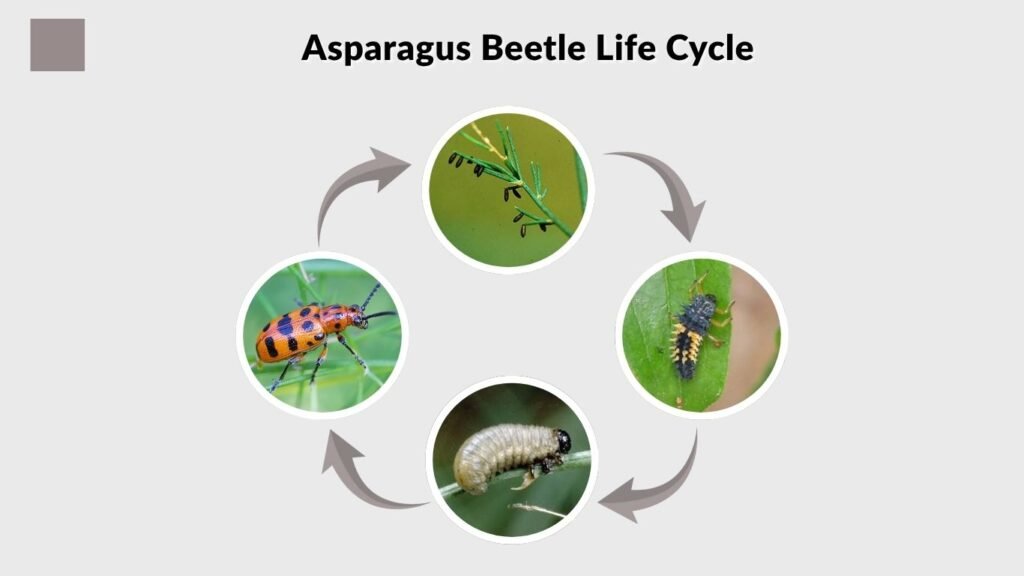
Understanding the asparagus beetle life cycle helps gardeners determine when control methods will be most effective. These insects pass through four developmental stages: egg, larva, pupa, and adult.
Adult beetles survive winter in protected places, including old asparagus stems, leaf litter, and nearby garden debris.
During spring, adults emerge and begin feeding on developing asparagus shoots. Females lay eggs on suitable plant surfaces.
Common asparagus beetle eggs generally hatch within three to eight days. The larvae feed for approximately two weeks before dropping to the soil to pupate.
New adults emerge and continue feeding and reproducing. Depending on climate and growing conditions, several generations may develop during one season.
What Damage Do Asparagus Beetles Cause?
Asparagus beetle damage can affect both the appearance of harvested spears and the overall health of asparagus plants. Heavy infestations are particularly concerning in young or weakened asparagus beds.
Common signs of asparagus beetle damage include:
- Brown scars and feeding marks on young spears.
- Bent, distorted, or poorly developed asparagus shoots.
- Small dark eggs attached to edible spears.
- Yellowing or browning of damaged foliage.
- Reduced fern growth following severe feeding.
Repeated foliage damage reduces the plant’s ability to store energy in its crown and roots. This can weaken plants and affect asparagus production during the following growing season.
How to Get Rid of Asparagus Beetles
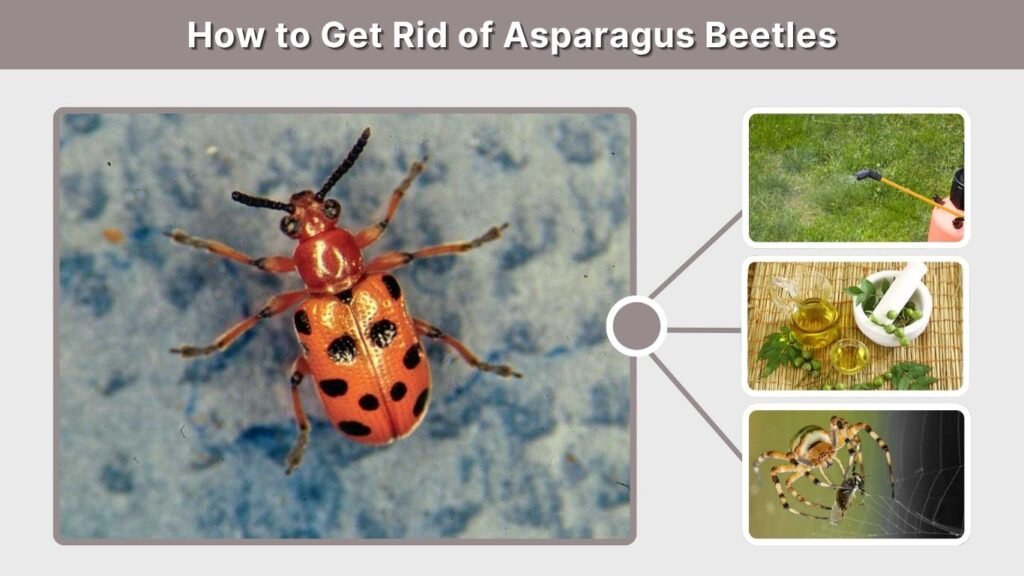
Effective asparagus beetle control combines physical removal, proper harvesting, biological control, and selective insecticides when necessary. Gardeners should begin with low-impact methods before considering chemical treatments.
1. Remove Asparagus Beetles by Hand
Handpicking is one of the easiest methods for controlling asparagus beetles in small gardens.
Inspect asparagus plants regularly, particularly during warm afternoons when adult beetles are active.
Carefully remove visible beetles and larvae, dropping them into a container of soapy water.
Repeat this process every few days while beetles remain active. Regular removal helps prevent adults from laying additional eggs.
2. Remove Eggs and Harvest Spears Regularly
Inspect young asparagus spears for dark eggs and remove them by gently rubbing or brushing the affected surfaces.
Harvest edible spears promptly rather than leaving mature shoots standing unnecessarily during harvest season.
Frequent harvesting removes potential egg-laying sites and reduces opportunities for beetle populations to increase.
3. Spray Beetles Off With Water
A firm stream of water can knock adult beetles, larvae, and some eggs off asparagus plants.
Direct the spray toward infested stems and foliage while avoiding damage to delicate shoots.
This method works best for small infestations and may need repeating because displaced adult beetles can return.
4. Use Neem Oil for Asparagus Beetle Control
Neem-based insecticides are an organic control option for asparagus beetles. Some products interfere with insect feeding and development.
Select a neem product specifically labeled for use on asparagus and follow its application directions.
Thorough coverage may improve effectiveness, especially against young larvae. Avoid spraying during hot conditions or when pollinators are actively visiting flowers.
5. Apply Insecticidal Soap
Commercial insecticidal soaps labeled for asparagus can help control exposed, soft-bodied larvae.
These products work through direct contact, making thorough application important.
Avoid substituting ordinary household dish detergent, which can damage plant tissues.
A homemade spray is not necessarily safer or more effective than a properly formulated insecticidal soap.
6. Consider Targeted Insecticides
When asparagus beetle infestations become severe, insecticides may be necessary.
Depending on local registration and product labeling, options may include pyrethrins, neem-based products, or other approved insecticides.
Choose products specifically registered for asparagus and the target pest.
Always check the pre-harvest interval, which specifies how long to wait between application and harvesting edible spears.
Treat only affected areas when practical, and avoid unnecessary spraying that could harm beneficial insects.
7. Encourage Natural Predators
Beneficial insects naturally help reduce asparagus beetle populations.
A small parasitic wasp called Tetrastichus asparagi attacks common asparagus beetle eggs.
Lady beetle larvae and other predatory insects can consume beetle eggs and young larvae.
Avoiding unnecessary broad-spectrum insecticides helps preserve these natural enemies and supports long-term biological control.
How to Prevent Asparagus Beetles
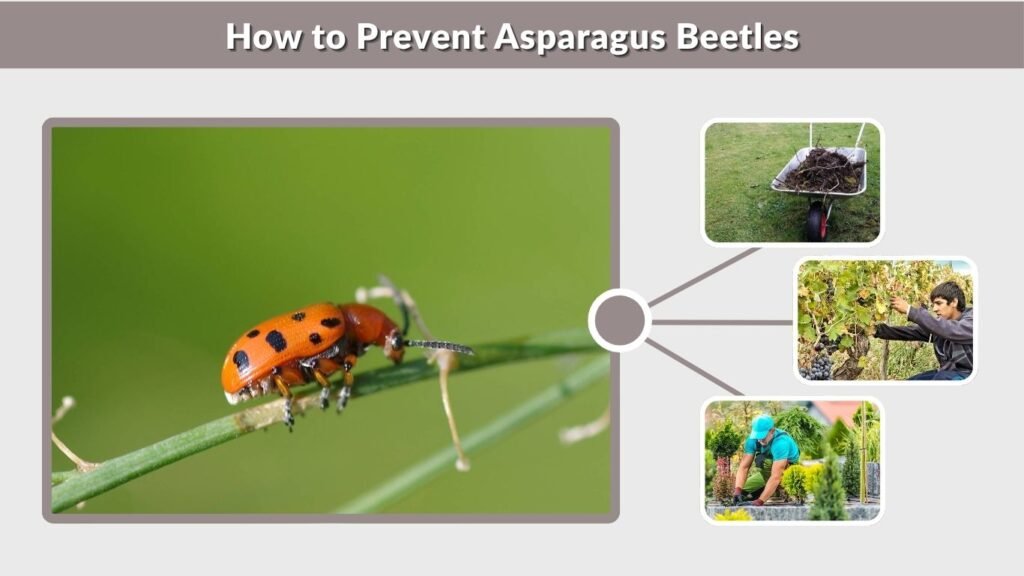
Preventing beetle infestations is often easier than controlling established populations. Good garden sanitation and early monitoring can significantly reduce pest pressure.
Use these preventive practices:
- Remove old asparagus ferns: Cut back completely dead foliage and remove it from the growing area.
- Clear plant debris: Remove discarded stems and other materials where adult beetles may overwinter.
- Inspect emerging spears: Begin monitoring as soon as asparagus appears in spring.
- Harvest regularly: Collect mature spears promptly during the harvesting season.
- Maintain healthy plants: Provide appropriate moisture, nutrients, and growing conditions.
- Protect young beds: Consider properly installed floating row covers early in spring where practical.
Some gardeners use companion planting with flowers or aromatic herbs. However, reliable evidence that particular companion plants consistently repel asparagus beetles is limited.
FAQs
1. Are Asparagus Beetles Harmful to Humans?
Asparagus beetles are primarily plant-feeding insects and are not considered dangerous to humans. Their main concern is the damage they cause to asparagus spears and foliage. They are not significant biting pests.
2. Are Asparagus Beetle Eggs Safe to Eat?
Asparagus beetle eggs are not known to be poisonous, but they are unwanted contaminants on harvested asparagus. Remove visible eggs and wash the spears thoroughly before cooking. Discard severely damaged or spoiled portions.
3. Does Neem Oil Kill Asparagus Beetles?
Neem-based insecticides can help suppress asparagus beetles, particularly during vulnerable developmental stages. Their effectiveness depends on the formulation, application, and pest population. Always follow the product label.
4. Will Diatomaceous Earth Kill Asparagus Beetles?
Diatomaceous earth can injure susceptible insects through contact, but it is not a consistently reliable asparagus beetle control method. Moisture reduces its effectiveness, and it may also affect beneficial insects.
5. Do Ladybugs Eat Asparagus Beetles?
Yes. Lady beetle larvae can feed on asparagus beetle eggs and young larvae. Preserving lady beetles and other natural predators can help reduce pest populations without relying entirely on insecticides.