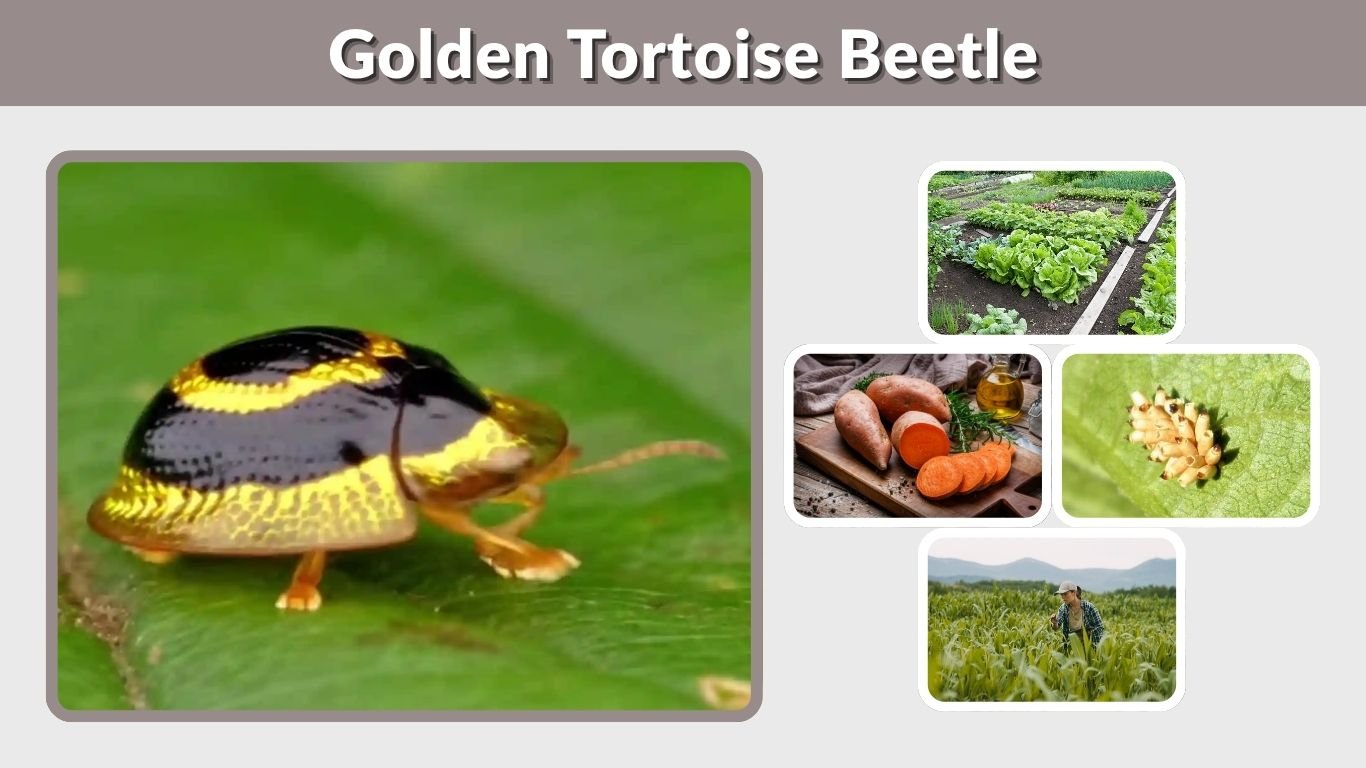
The golden tortoise beetle is a fascinating insect known for its brilliant metallic gold appearance and unusual ability to change color. This tiny beetle resembles a miniature golden shield and commonly lives on morning glory, sweet potato, and related plants. Although its shiny appearance may seem unusual, it is a real insect found throughout many parts of the Americas. Understanding its habitat, feeding habits, and life cycle helps gardeners recognize this remarkable species. This guide covers golden tortoise beetle identification, eggs, larvae, color changes, and garden control.
What Is a Golden Tortoise Beetle?
The golden tortoise beetle (Charidotella sexpunctata) is a small leaf beetle belonging to the family Chrysomelidae. It is recognized by its rounded body, transparent outer margins, and reflective golden coloration.
Unlike many ordinary beetles, its shieldlike body helps protect its legs and head. The metallic appearance can change depending on the beetle’s condition and surrounding environment.
Golden tortoise beetles occur across much of North America and extend into Central and South America.
How to Identify a Golden Tortoise Beetle
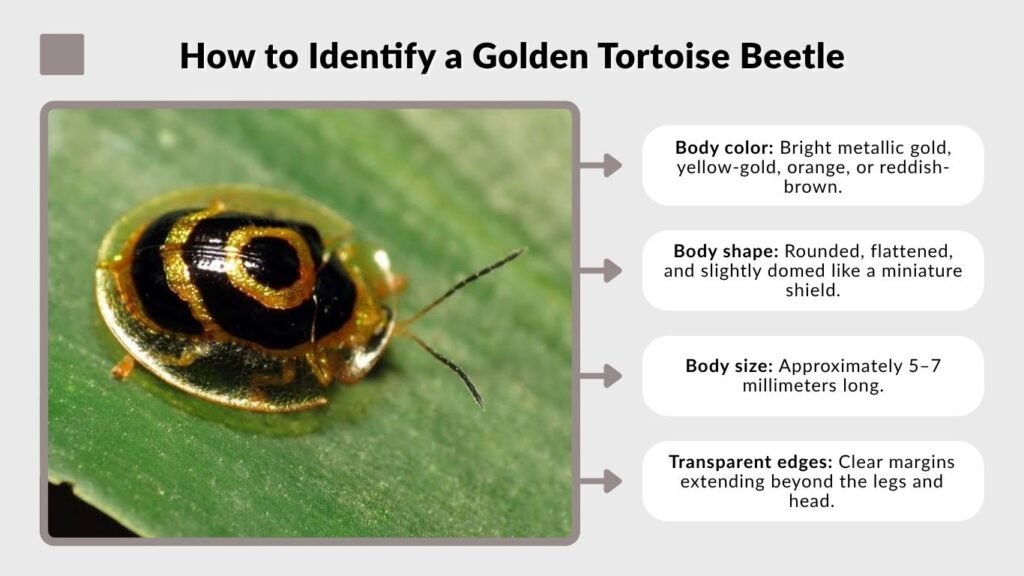
Golden tortoise beetles are relatively easy to recognize because of their unusual body shape and metallic appearance. Adults are typically about 5–7 millimeters long, making them similar in size to small lady beetles.
However, their transparent margins and remarkable reflective coloration distinguish them from most other garden insects.
Golden Tortoise Beetle Identification Features
- Body color: Bright metallic gold, yellow-gold, orange, or reddish-brown.
- Body shape: Rounded, flattened, and slightly domed like a miniature shield.
- Body size: Approximately 5–7 millimeters long.
- Transparent edges: Clear margins extending beyond the legs and head.
- Wing covers: Smooth, reflective surfaces that sometimes display dark spots.
- Antennae: Short, segmented structures extending from beneath the shield.
- Color changes: Adults may lose their golden shine when disturbed.
These features help distinguish golden tortoise beetles from ladybugs and other small leaf beetles.
Why Do Golden Tortoise Beetles Change Color?
Golden tortoise beetles can change from brilliant metallic gold to reddish-brown or orange. This remarkable ability is associated with structural coloration rather than ordinary yellow or gold pigment.
Their reflective appearance comes from microscopic structures within the outer body covering that interact with light.
How Does the Color Change Work?
Research indicates that fluid-filled microscopic structures contribute to the metallic coloration of golden tortoise beetles.
In closely related species, changes in the fluid within these structures alter how light reflects from the body. The exact mechanism in Charidotella sexpunctata has not been fully established.
When disturbed, the beetle may temporarily lose its golden shine and reveal reddish or darker markings.
The metallic coloration also commonly disappears after death as the insect dries.
Where Do Golden Tortoise Beetles Live?
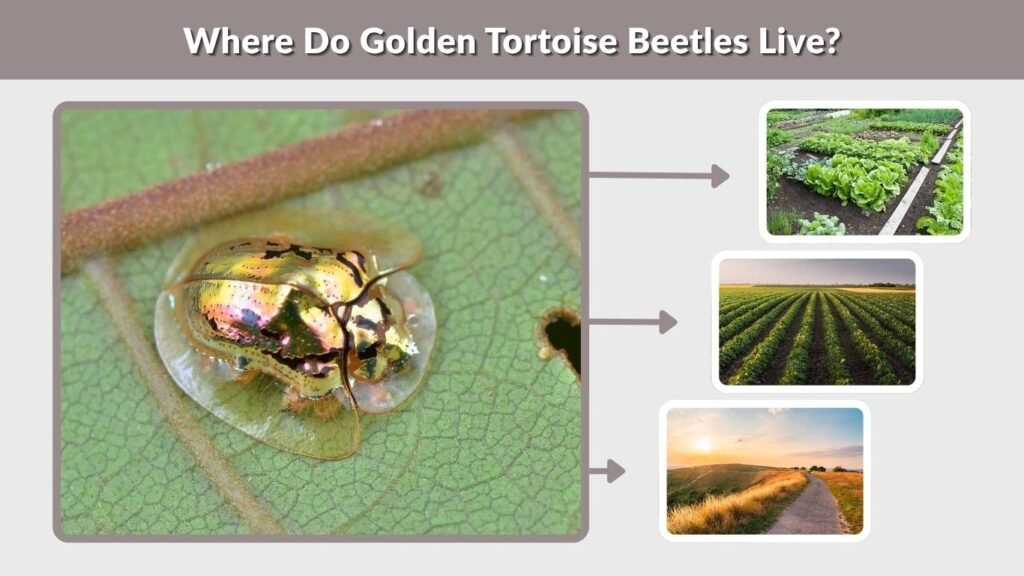
Golden tortoise beetles inhabit gardens, fields, roadsides, and other areas where suitable host plants grow. Their distribution includes extensive portions of eastern North America, parts of western North America, and regions farther south.
They are frequently observed on the undersides of leaves, where they feed and shelter from predators.
Golden Tortoise Beetles in Virginia
Golden tortoise beetles occur naturally in Virginia, where they can be found on morning glory, bindweed, and related vegetation.
They are most noticeable during warmer months when adults and larvae are active on host plants.
Their presence does not necessarily indicate a serious pest infestation. Small populations usually cause limited plant damage.
The species also occurs in states such as Texas, Florida, Maryland, and Colorado.
What Do Golden Tortoise Beetles Eat?
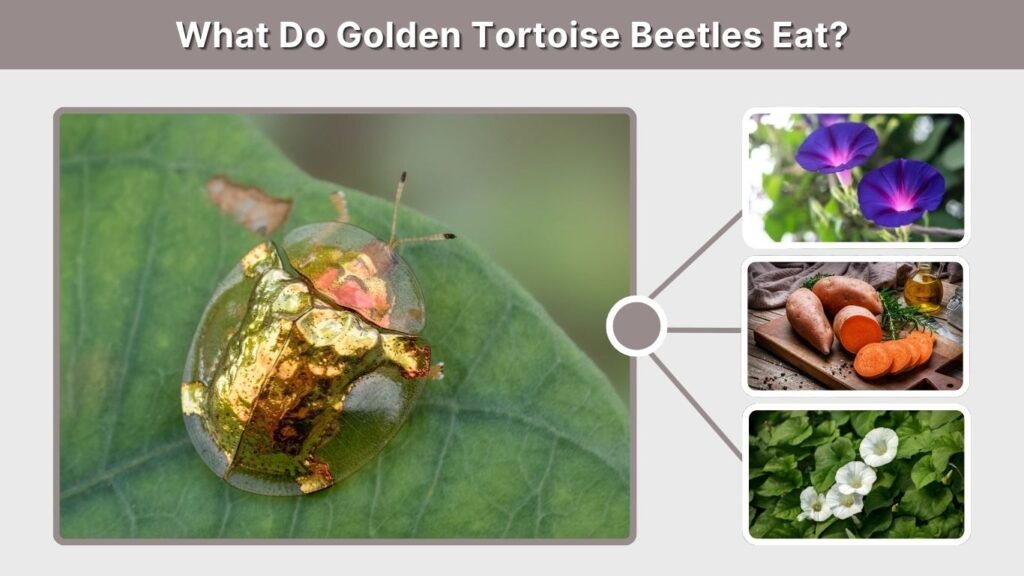
Golden tortoise beetles are plant-feeding insects that primarily consume leaves from the morning glory family, Convolvulaceae.
Both adults and larvae feed on suitable host plants, creating small holes or damaged patches in the leaves.
Common Golden Tortoise Beetle Host Plants
- Morning glory: A common host plant where adults feed and reproduce.
- Sweet potato: Leaves provide food for both adults and larvae.
- Bindweed: Wild bindweed supports golden tortoise beetle populations.
- Wild morning glory relatives: Other suitable members of the Convolvulaceae family serve as hosts.
Their feeding usually causes minor cosmetic damage. However, larger populations may create numerous holes in affected leaves.
Golden Tortoise Beetle Life Cycle
Golden tortoise beetles undergo complete metamorphosis, passing through four developmental stages: egg, larva, pupa, and adult.
Their development depends on temperature, host plant availability, and environmental conditions. Adults commonly overwinter and become active when suitable conditions return.
Four Stages of the Golden Tortoise Beetle Life Cycle
- Egg stage: Females deposit small eggs on host plants, often on leaf undersides. The eggs typically hatch within several days under favorable conditions.
- Larval stage: Newly hatched larvae feed on leaves. Their flattened, spiny bodies often carry protective material made from shed skins and waste.
- Pupal stage: Mature larvae attach themselves to vegetation and transform into pupae. During this stage, their bodies reorganize into adult beetles.
- Adult stage: Emerging adults develop hardened wing covers and begin feeding. Mature beetles can reproduce and continue the population’s life cycle.
The overall development period varies with environmental conditions.
Golden Tortoise Beetle Eggs and Larvae
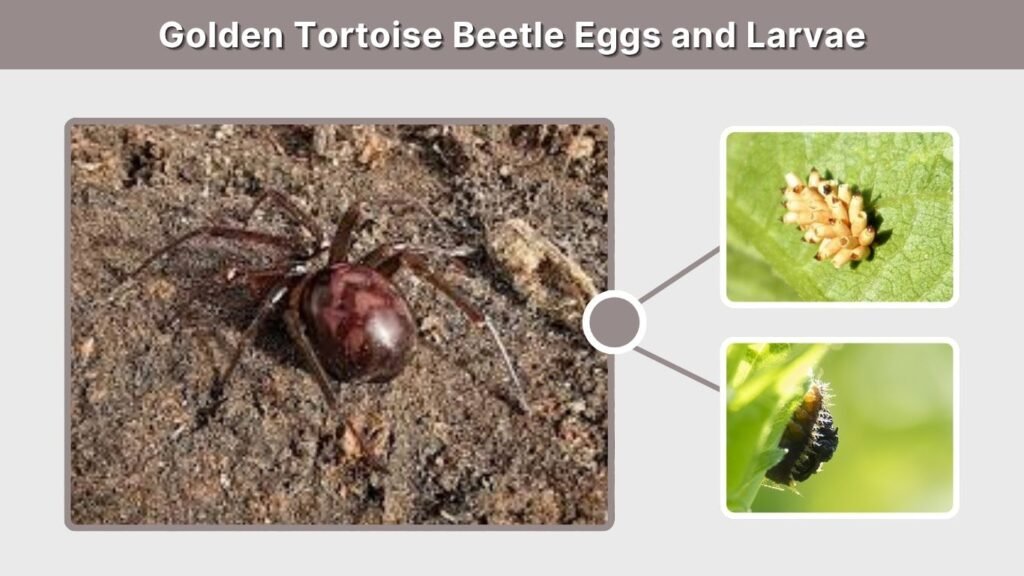
Golden tortoise beetle eggs and larvae look considerably different from the shiny adults. Their immature stages usually remain closely associated with the leaves of suitable host plants.
What Do Golden Tortoise Beetle Larvae Look Like?
Golden tortoise beetle larvae have flattened, somewhat spiny bodies that may appear yellowish, brown, or reddish.
One of their most remarkable features is a protective structure called a fecal shield.
Larvae collect waste material and shed skins on a forked structure at the rear of their bodies. They can hold this shield over themselves to discourage certain predators.
This unusual defense helps protect vulnerable larvae while they feed on leaves.
Are Golden Tortoise Beetles Harmful?
Golden tortoise beetles are generally harmless to humans and household pets. They are not aggressive, do not sting, and are not considered poisonous to people.
Although they feed on leaves, small populations rarely cause serious damage to established garden plants.
Do Golden Tortoise Beetles Bite?
Golden tortoise beetles do not normally bite humans. They primarily defend themselves by pressing their shieldlike bodies against leaf surfaces.
Their small size and feeding behavior make them unlikely to cause injury.
Handling them gently is recommended because their bodies are delicate.
How to Get Rid of Golden Tortoise Beetles
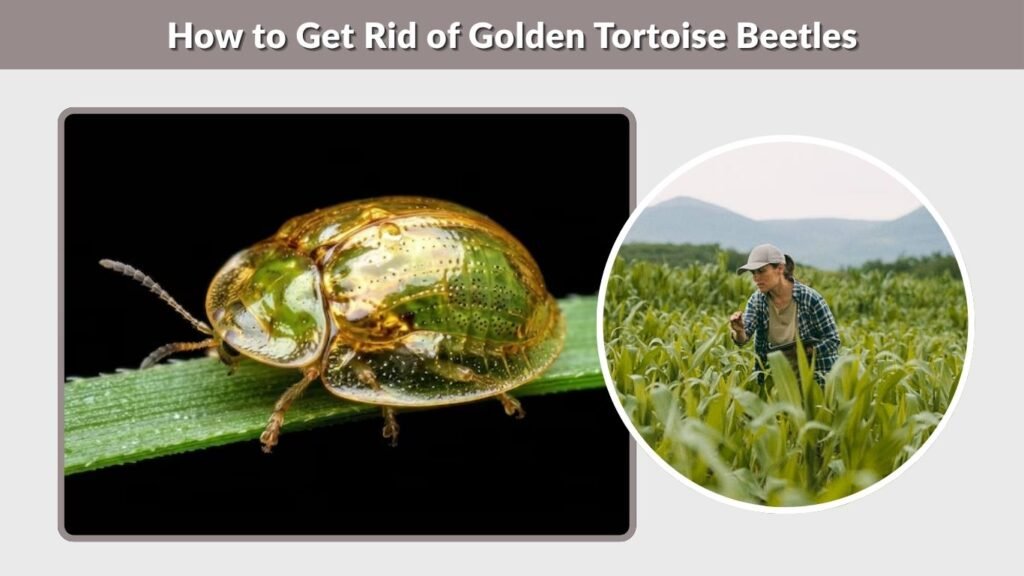
Golden tortoise beetles usually require little intervention in home gardens. Their feeding damage is often limited, and healthy plants can generally tolerate small populations.
However, gardeners may want to control larger populations when repeated feeding affects ornamental plants or sweet potato foliage.
Golden Tortoise Beetle Control Methods
- Hand removal: Carefully collect adults and larvae from affected leaves.
- Leaf inspection: Check the undersides of leaves for eggs and feeding larvae.
- Weed management: Reduce unwanted bindweed near vulnerable crops when practical.
- Plant monitoring: Watch for increasing leaf damage before choosing treatment.
- Natural predators: Encourage beneficial insects by avoiding unnecessary broad-spectrum insecticides.
Chemical control is rarely necessary for minor infestations. Use only products specifically labeled for the affected plants and pests.
FAQs
1. Are Golden Tortoise Beetles Rare?
Golden tortoise beetles are not generally considered rare, although their appearance can make them seem unusual. They occur throughout many parts of North America. Their small size, seasonal activity, and preference for leaf undersides make them easy to overlook.
2. Are Golden Tortoise Beetles Poisonous?
Golden tortoise beetles are not considered poisonous to humans. They do not sting and rarely cause problems when encountered. Their primary defenses involve their protective body shape and color changes rather than venom or aggressive behavior toward people.
3. Can Golden Tortoise Beetles Fly?
Yes, adult golden tortoise beetles can fly. They have functional wings beneath their hardened wing covers. Flying allows them to move between host plants, locate suitable feeding areas, and find mates during their active season.
4. Why Do Golden Tortoise Beetles Turn Red?
Golden tortoise beetles may turn reddish-brown when disturbed or stressed. Changes in their reflective body structures alter their visible coloration. Their brilliant metallic gold appearance can also fade after death, revealing underlying orange, reddish, or darker markings.
5. Are Golden Tortoise Beetles Good or Bad?
Golden tortoise beetles are generally harmless to humans but can cause minor leaf damage. They feed on morning glory, bindweed, and sweet potato plants. Small populations rarely require control, making them more of an interesting garden visitor than a serious pest.