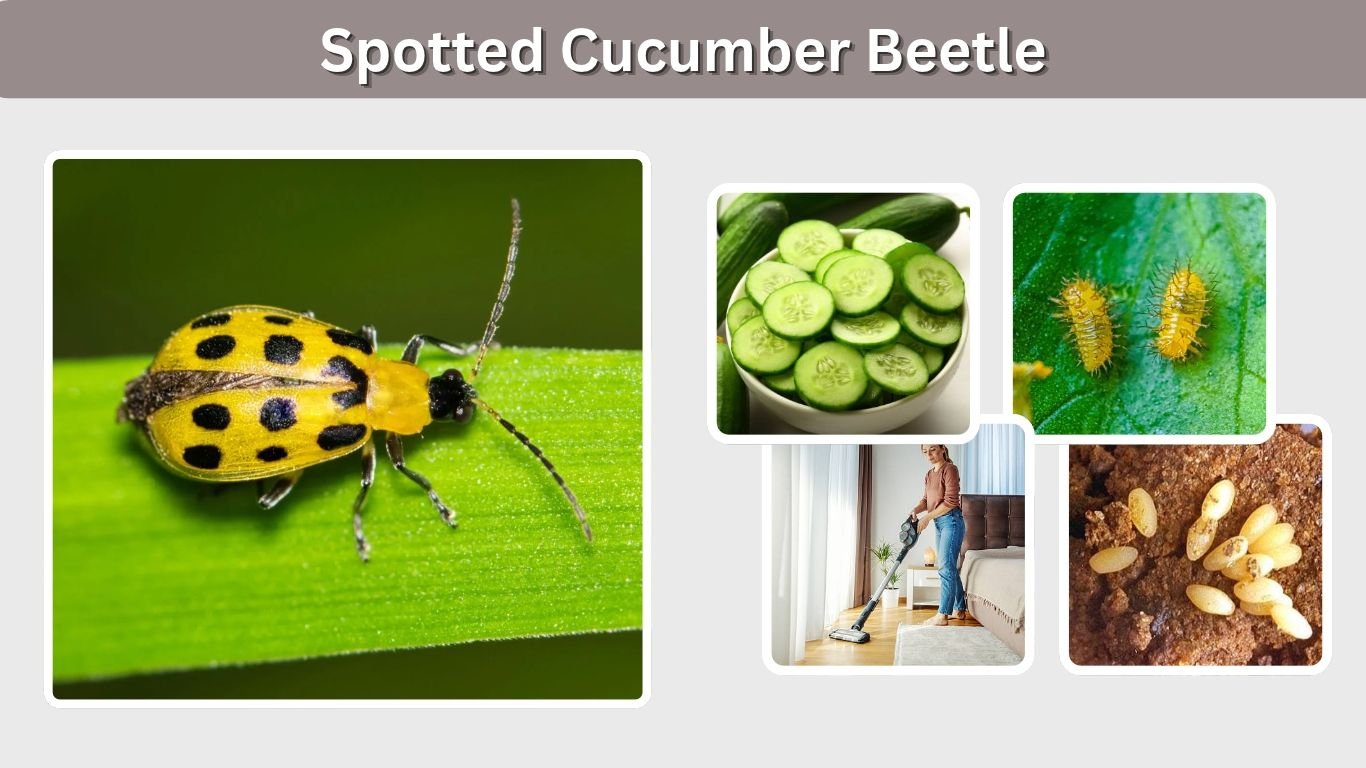
The spotted cucumber beetle is a common garden pest known for its yellow-green body and distinctive black spots. Scientifically called Diabrotica undecimpunctata, this small beetle feeds on cucumbers, squash, melons, and various other plants. Although its colorful appearance resembles a ladybug, it can cause serious agricultural damage by feeding on leaves, flowers, and developing fruits. Spotted cucumber beetles can also spread harmful plant diseases. Understanding their identification, life cycle, feeding habits, and effective control methods helps gardeners protect their crops and manage infestations naturally.
What Is a Spotted Cucumber Beetle?
The spotted cucumber beetle (Diabrotica undecimpunctata) is a plant-feeding insect belonging to the leaf beetle family, Chrysomelidae. It is native to North America and commonly occurs in vegetable gardens, agricultural fields, and areas containing suitable host plants.
The southern spotted cucumber beetle, Diabrotica undecimpunctata howardi, is also associated with the name southern corn rootworm, particularly during its larval stage.
Unlike beneficial ladybugs, spotted cucumber beetles are agricultural pests. Both adults and larvae feed on plants, although they usually attack different plant parts.
Their ability to fly allows adults to move between gardens and fields, making infestations difficult to prevent.
Spotted Cucumber Beetle Identification and Appearance
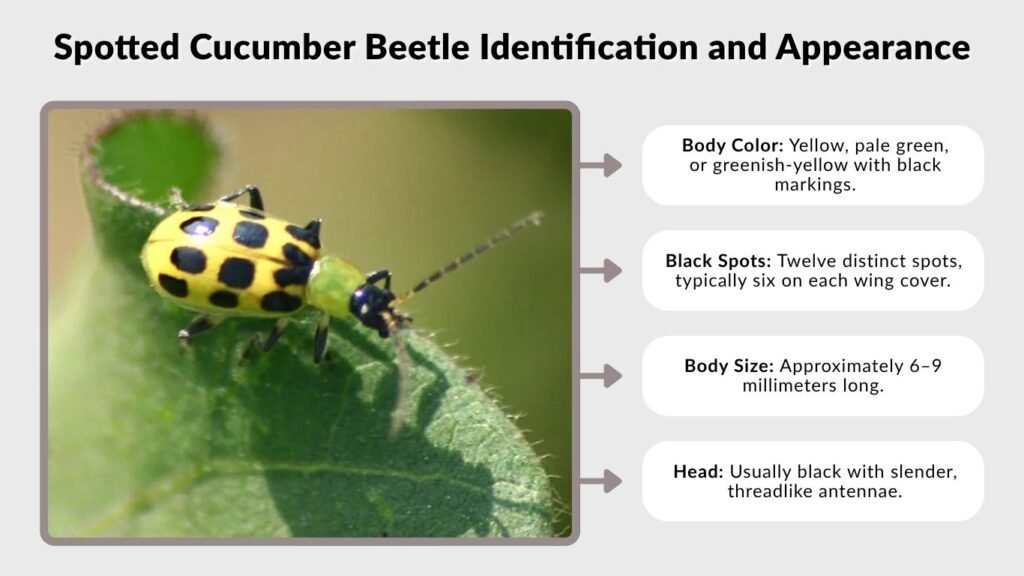
Adult spotted cucumber beetles are small, oval-shaped insects with yellow or greenish-yellow wing covers. Their most recognizable feature is a pattern of twelve black spots distributed across their backs.
They generally measure approximately 6–9 millimeters long and have slender antennae and dark-colored legs.
Key Identification Features
- Body Color: Yellow, pale green, or greenish-yellow with black markings.
- Black Spots: Twelve distinct spots, typically six on each wing cover.
- Body Size: Approximately 6–9 millimeters long.
- Head: Usually black with slender, threadlike antennae.
- Wings: Hardened outer wing covers protecting functional flying wings.
- Larvae: Cream-colored, wormlike bodies with darker heads and three pairs of small legs.
The green spotted cucumber beetle and yellow spotted cucumber beetle are generally color descriptions rather than separate species.
Where Do Spotted Cucumber Beetles Live?
Spotted cucumber beetles occur throughout much of North America, including the United States and parts of Canada.
The western spotted cucumber beetle is particularly common in California and other western regions, while the southern subspecies occurs across many eastern and central states.
These beetles inhabit vegetable gardens, agricultural fields, grasslands, and areas containing flowering plants.
Adults commonly spend time on leaves, flowers, and stems, while developing larvae remain underground.
Their activity usually increases during warm weather, although seasonal populations vary depending on climate and location.
What Do Spotted Cucumber Beetles Eat?
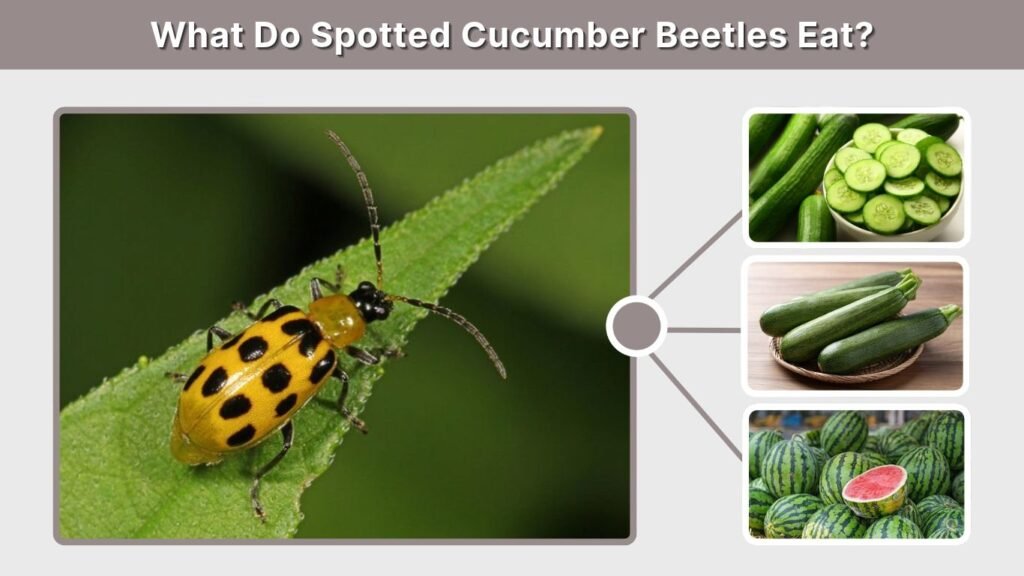
Spotted cucumber beetles have a broad diet compared with many other leaf beetles. Adults consume foliage, pollen, flowers, and soft fruit from numerous cultivated and wild plants.
Common Host Plants
- Cucumbers: Adults chew leaves, blossoms, and developing fruits.
- Squash and Pumpkins: Feeding damages foliage and flowers.
- Melons: Beetles attack blossoms and may scar fruit surfaces.
- Corn: Larvae feed on roots, while adults consume pollen and foliage.
- Beans and Eggplants: Adults may damage leaves and flowers.
- Roses and Other Ornamentals: Beetles sometimes feed on petals and pollen.
Spotted cucumber beetles may also visit spinach and other leafy vegetables. Their wide host range makes them capable of moving between crops as growing conditions change.
Spotted Cucumber Beetle Damage to Plants
Spotted cucumber beetles can damage plants through direct feeding and disease transmission.
Young cucumber seedlings are particularly vulnerable because even moderate feeding can weaken developing leaves and stems.
Common Signs of Spotted Cucumber Beetle Damage
- Holes in Leaves: Adults chew irregular holes in foliage, reducing healthy leaf tissue.
- Damaged Flowers: Beetles feed on petals and pollen, potentially affecting fruit development.
- Scarred Fruits: Feeding may leave shallow marks on cucumbers, melons, and other fruits.
- Root Damage: Underground larvae feed on roots of corn, grasses, and other host plants.
- Wilting Plants: Severe infestations and insect-transmitted diseases may cause plants to wilt or decline.
Spotted Cucumber Beetles and Bacterial Wilt
One major concern is bacterial wilt, a disease caused by Erwinia tracheiphila.
Cucumber beetles can transmit this bacterium to susceptible plants. However, spotted cucumber beetles are generally less important carriers than striped cucumber beetles.
Infected cucumber and muskmelon plants may suddenly wilt despite adequate soil moisture. Severely affected plants can eventually die, and there is no cure once a plant develops systemic bacterial wilt.
Spotted Cucumber Beetle Life Cycle
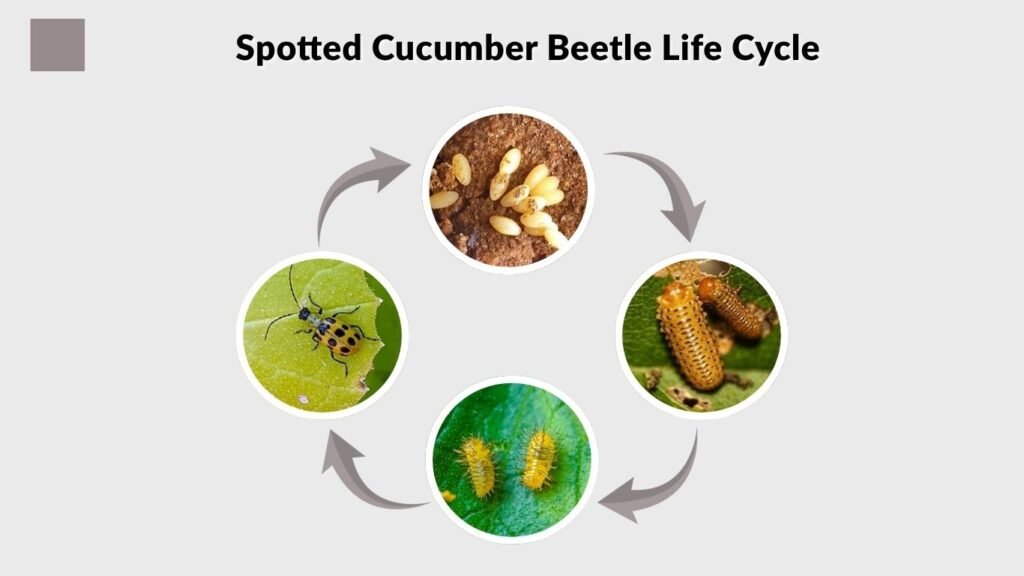
Spotted cucumber beetles undergo complete metamorphosis, passing through four developmental stages: egg, larva, pupa, and adult.
Their life cycle typically takes several weeks during favorable temperatures, and multiple generations may develop within a growing season.
1. Egg Stage
Female beetles lay small, yellowish-orange eggs in moist soil near host plants.
The eggs remain protected underground until hatching. Their development depends on soil temperature and moisture.
2. Larval Stage
Newly hatched larvae begin feeding on plant roots. They have slender, whitish bodies with dark heads.
Spotted cucumber beetle larvae are particularly associated with corn, grasses, and other underground plant roots.
3. Pupal Stage
After completing larval development, the insects form pupae within the soil.
During this stage, their bodies gradually transform into adult beetles.
4. Adult Stage
Adults emerge from the soil and begin feeding on leaves, flowers, and pollen.
They mate, reproduce, and move between suitable host plants. Their active lifespan varies with environmental conditions.
How to Get Rid of Spotted Cucumber Beetles
Effective spotted cucumber beetle control combines regular monitoring, physical barriers, and appropriate pest management.
Early prevention is especially important because young vegetable plants are highly vulnerable to feeding damage.
Organic Spotted Cucumber Beetle Control Methods
- Floating Row Covers: Protect young cucumbers, squash, and melons with lightweight insect netting. Remove covers when flowers require insect pollination.
- Hand Removal: Collect visible beetles and place them in soapy water. Early-morning inspections can make collection easier.
- Yellow Sticky Traps: Use traps to monitor beetle activity, although they rarely eliminate an established infestation.
- Garden Sanitation: Remove old crop debris and unwanted vegetation that may shelter overwintering adults.
- Regular Monitoring: Inspect young plants several times weekly, checking flowers, stems, and leaf undersides.
These methods work best when combined rather than used individually.
Does Neem Oil Kill Spotted Cucumber Beetles?
Neem oil products may help suppress spotted cucumber beetles, particularly when applied according to label directions during early infestations.
However, neem oil is not always effective against large adult populations, and repeat treatment may be necessary.
Avoid spraying open flowers or when pollinators are actively visiting plants. Always confirm that the product is approved for edible crops and follow its application instructions.
Chemical Control for Spotted Cucumber Beetles
When infestations become severe, insecticides labeled for cucumber beetles on the affected crop may provide additional control.
Treatment should target vulnerable crop stages and active adults. Avoid unnecessary applications because many insecticides can harm bees and other beneficial insects.
Follow local extension recommendations, pesticide labels, and harvest waiting periods.
Spotted vs. Striped Cucumber Beetles
Spotted and striped cucumber beetles look similar in body shape and size, but their markings are different.
The spotted cucumber beetle has twelve black spots across its yellow-green wing covers. The striped cucumber beetle has three dark longitudinal stripes running along its back.
Both species feed on cucurbit plants and can transmit diseases, although striped cucumber beetles are generally more significant vectors of bacterial wilt.
Spotted cucumber beetle larvae also feed on a wider variety of plant roots, especially corn and grasses.
Spotted Cucumber Beetle vs. Ladybug
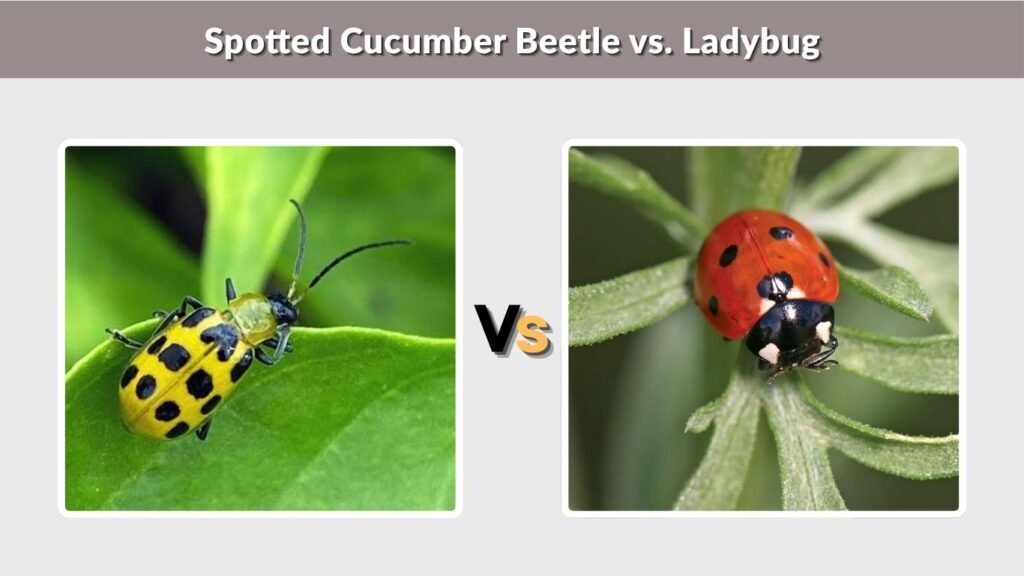
Spotted cucumber beetles are sometimes mistaken for ladybugs because both have rounded bodies with dark spots.
However, ladybugs generally have shorter antennae and more strongly dome-shaped bodies.
Most common garden ladybugs are beneficial predators that consume aphids and other small pests. Spotted cucumber beetles primarily feed on plant material and can damage crops.
Correct identification helps gardeners avoid accidentally removing beneficial insects.
Do Spotted Cucumber Beetles Bite?
Spotted cucumber beetles are not aggressive toward humans and do not normally bite people.
Their chewing mouthparts are designed for consuming plant tissues rather than attacking animals.
Although a beetle might occasionally pinch when handled roughly, bites are not considered a significant health concern.
Are Spotted Cucumber Beetles Poisonous?
Spotted cucumber beetles are not considered poisonous or dangerous to humans during ordinary contact.
They do not have venomous stingers and are primarily agricultural pests rather than household health threats.
Nevertheless, avoid deliberately handling or consuming unknown insects, and wash garden vegetables before eating them.
Why Are Spotted Cucumber Beetles in My House?
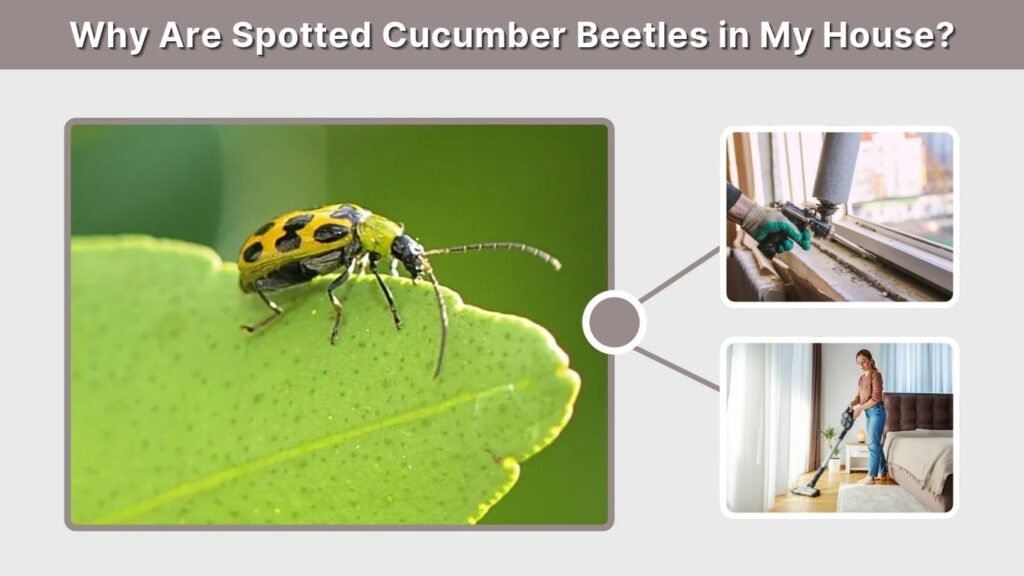
Spotted cucumber beetles sometimes enter homes accidentally through open windows, doors, or gaps around screens.
They may be attracted to indoor lighting or enter while searching for shelter.
However, they do not normally reproduce indoors or infest furniture, clothing, or stored household materials.
Simply remove them using a container or vacuum and seal potential entry points to prevent additional visitors.
FAQs
1. Are Spotted Cucumber Beetles Bad for Gardens?
Yes, spotted cucumber beetles can damage gardens by feeding on cucumber leaves, flowers, and developing fruits. Heavy infestations weaken young plants and reduce productivity. They may also transmit plant diseases, making early detection and appropriate pest management particularly important.
2. Can Spotted Cucumber Beetles Fly?
Yes, spotted cucumber beetles are capable of flying between plants, gardens, and agricultural fields. Their functional wings remain protected beneath hardened wing covers. Flying allows adults to locate food, reproduce, and spread to new areas where suitable host plants grow.
3. How Long Do Spotted Cucumber Beetles Live?
Adult spotted cucumber beetles may survive for several weeks or longer, depending on temperature, food availability, and environmental conditions. Their complete development from egg to adult generally takes several weeks, allowing multiple generations during a favorable growing season.
4. Are Spotted Cucumber Beetles Invasive in California?
The western spotted cucumber beetle is native to western North America, including California, rather than an introduced invasive species. Nevertheless, it can become a significant agricultural pest, damaging vegetables, ornamental plants, and fruit crops when populations increase under favorable conditions.
5. What Is the Best Natural Spotted Cucumber Beetle Killer?
There is no single natural treatment that reliably eliminates every spotted cucumber beetle. Handpicking adults into soapy water helps reduce small infestations, while protective row covers prevent feeding. Neem-based products may provide additional suppression when used correctly on labeled crops.