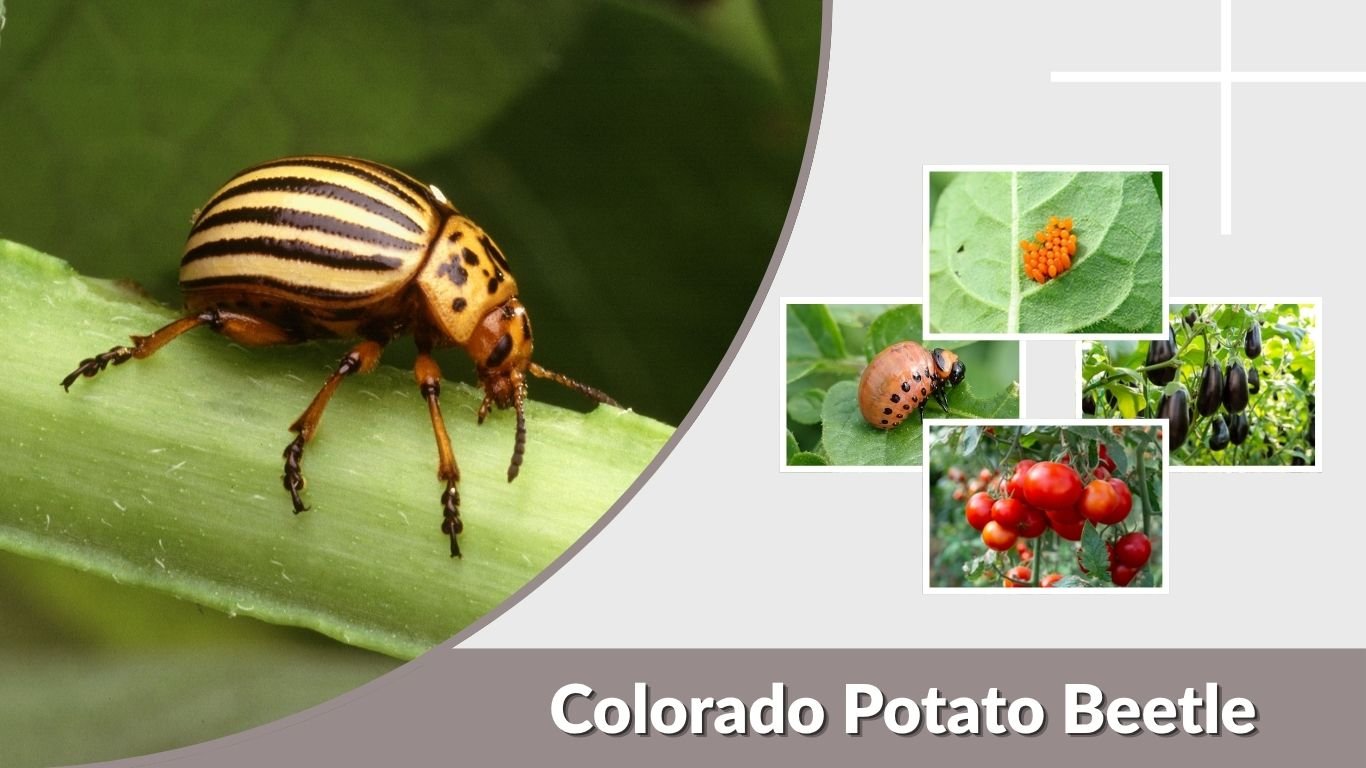
The Colorado potato beetle is one of the most destructive pests affecting potato plants in North America and many other agricultural regions. Recognized by its yellowish body and distinctive black stripes, this beetle feeds on potato leaves and can cause severe damage when populations increase. Both adults and larvae consume foliage, potentially reducing plant growth and crop yields. Fortunately, several natural, organic, and conventional methods can help manage infestations. Understanding Colorado potato beetle identification, eggs, larvae, life cycle, and control methods is essential for protecting potato gardens and agricultural crops.
What Is a Colorado Potato Beetle?
The Colorado potato beetle (Leptinotarsa decemlineata) is a leaf beetle belonging to the family Chrysomelidae. It is native to North America but has spread into Europe and parts of Asia, where it has become a serious agricultural pest.
Although potatoes are its preferred food source, this beetle also feeds on several related plants belonging to the nightshade family.
Colorado Potato Beetle Scientific Classification
- Common Name: Colorado Potato Beetle
- Scientific Name: Leptinotarsa decemlineata
- Family: Chrysomelidae
- Order: Coleoptera
- Class: Insecta
- Primary Host: Potato plants
Its ability to reproduce quickly and develop resistance to insecticides makes it particularly challenging for farmers and gardeners.
What Does a Colorado Potato Beetle Look Like?
Colorado potato beetles have distinctive physical characteristics that make them relatively easy to identify. Their bright coloration, striped wing covers, and oval body shape distinguish them from many other garden insects.
Adults, larvae, and eggs look completely different, making it important to recognize each developmental stage.
Adult Colorado Potato Beetle Identification
Adult beetles are approximately 9–10 millimeters long with rounded, convex bodies.
Their most recognizable feature is the presence of ten black stripes running lengthwise along their yellowish or cream-colored wing covers.
The head and thorax are yellow-orange with irregular black markings. Adults have six legs, segmented antennae, and strong chewing mouthparts.
Colorado Potato Beetle Larvae
Colorado potato beetle larvae are soft-bodied, reddish-orange insects with dark heads and two rows of black spots along each side.
Their bodies become swollen and humpbacked as they grow, eventually reaching approximately 12–13 millimeters long.
Young larvae often feed together near their original egg clusters, while older larvae spread throughout the plant.
Colorado Potato Beetle Eggs
Female beetles lay clusters of small, oval, yellow-orange eggs, usually on the undersides of potato leaves.
Each cluster commonly contains approximately 20–60 eggs.
Their bright color makes them noticeable during regular plant inspections.
Removing these egg clusters before hatching can significantly reduce the number of larvae feeding on potato plants.
Colorado Potato Beetle Life Cycle
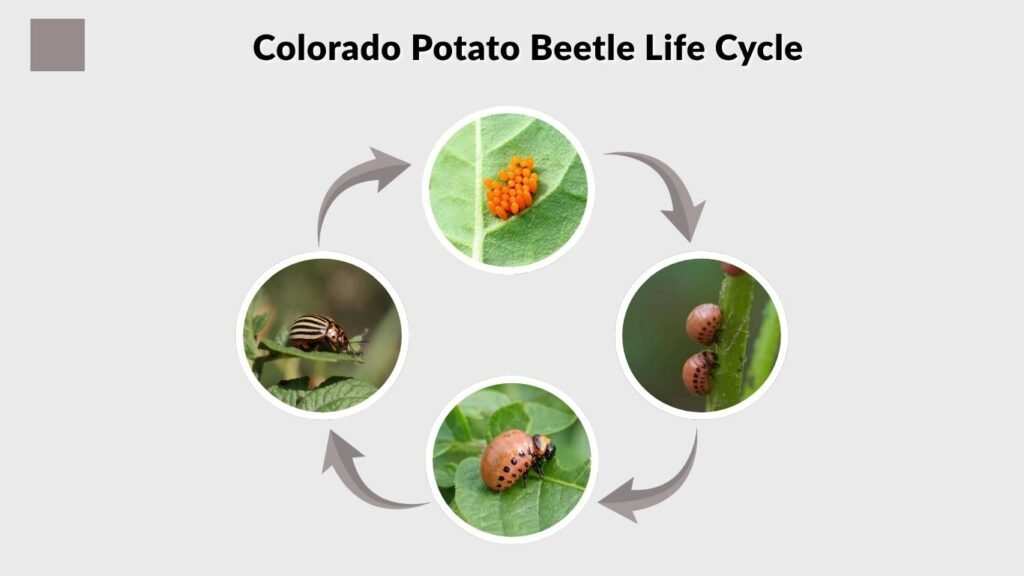
The Colorado potato beetle life cycle consists of four stages: egg, larva, pupa, and adult. This process is called complete metamorphosis.
Adult beetles typically survive winter beneath the soil and emerge during spring when temperatures rise and suitable host plants become available.
After feeding and mating, females begin laying eggs.
Four Life Cycle Stages
- Egg Stage: Eggs generally hatch within 4–10 days, depending on temperature and environmental conditions.
- Larval Stage: Larvae pass through four growth stages over approximately two to three weeks while feeding on leaves.
- Pupal Stage: Mature larvae enter the soil and transform into pupae, usually remaining there for approximately 5–10 days.
- Adult Stage: Newly emerged beetles feed, reproduce, and may produce additional generations during the growing season.
The complete development from egg to adult may take around 30–40 days under favorable conditions.
Depending on the climate, one to three generations may occur annually.
What Do Colorado Potato Beetles Eat?
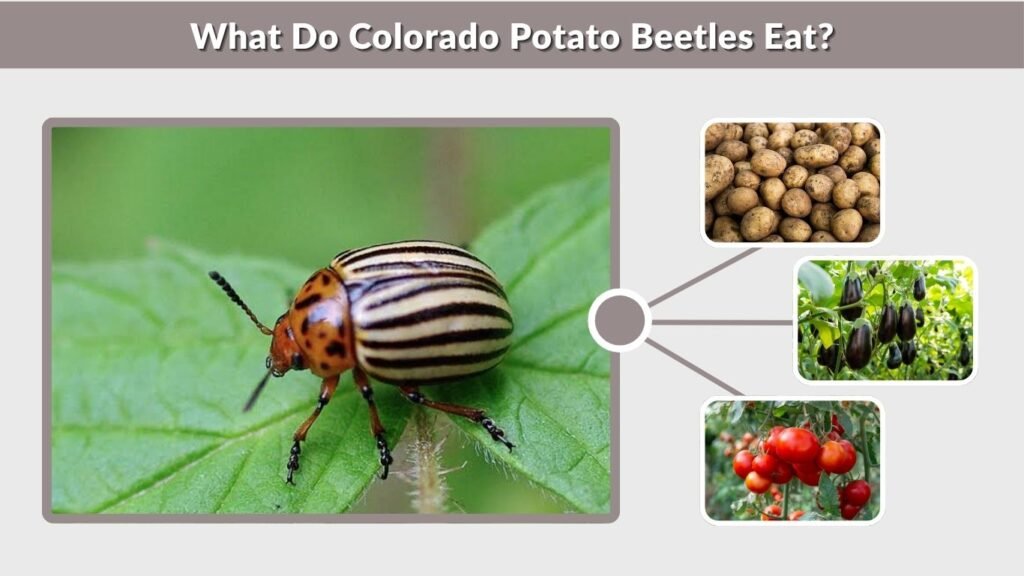
Colorado potato beetles primarily feed on potato leaves, although they also consume other plants belonging to the family Solanaceae.
Both larvae and adults use their chewing mouthparts to remove leaf tissue.
Common Host Plants
- Potatoes: The preferred host and most frequently damaged crop.
- Eggplants: Another suitable host that can support beetle development.
- Tomatoes: Beetles occasionally feed on tomato foliage.
- Nightshade Weeds: Several wild nightshade species serve as alternative hosts.
- Other Solanaceous Plants: Certain related plants may also provide food.
Although beetles occasionally feed on other vegetation, their strongest association is with potato and related crops.
What Damage Do Colorado Potato Beetles Cause?
Colorado potato beetle damage occurs when adults and larvae consume potato foliage.
Small infestations may produce scattered holes, but heavy infestations can destroy entire leaves and leave behind only major veins.
This process, known as defoliation, reduces the plant’s ability to produce energy through photosynthesis.
Common Signs of Infestation
- Irregular holes in potato leaves.
- Large sections of missing foliage.
- Reddish-orange larvae feeding on leaves.
- Yellow-orange egg clusters beneath leaves.
- Adult striped beetles crawling on plants.
- Severe defoliation during heavy infestations.
Older larvae are responsible for a large proportion of feeding damage.
Potato plants are especially sensitive to defoliation when tubers begin developing and increasing in size.
Severe infestations during this period can significantly reduce potato yields.
Colorado Potato Beetle vs. False Potato Beetle
The false potato beetle (Leptinotarsa juncta) closely resembles the Colorado potato beetle, but several characteristics help distinguish them.
Both species have oval bodies and striped wing covers.
However, the false potato beetle has a distinctive stripe pattern in which two dark stripes connect toward the rear of each wing cover, creating a broader marking.
Its larvae are generally paler and have one row of dark spots on each side, compared with the two rows found on Colorado potato beetle larvae.
False potato beetles usually feed on wild nightshade relatives and are not considered major potato pests.
How to Get Rid of Colorado Potato Beetles

Colorado potato beetle control works best when several management methods are combined. Because these insects can develop resistance to pesticides, relying on a single treatment is often ineffective.
Early detection, physical removal, crop management, and carefully selected insecticides can help reduce populations.
1. Handpick Adult Beetles and Larvae
Handpicking is one of the simplest methods for controlling Colorado potato beetles in small gardens.
Inspect potato plants regularly, especially during spring when overwintered adults begin appearing.
Remove beetles, larvae, and egg clusters by hand. Drop collected insects into a container of soapy water.
This method is particularly useful when beetle numbers are still low.
2. Use Neem-Based Products
Neem-derived products containing azadirachtin can help suppress young Colorado potato beetle larvae by disrupting feeding and development.
However, neem oil products differ in their active ingredients and effectiveness.
Choose a product specifically labeled for Colorado potato beetles and edible crops.
Apply according to the manufacturer’s instructions, preferably when larvae are small.
Neem-based treatments may provide limited results against large larvae or established populations.
3. Use Row Covers
Lightweight floating row covers create a physical barrier that prevents adult beetles from reaching potato plants and laying eggs.
Install covers before beetles become active and secure the edges properly.
Row covers work best when potatoes are planted in a different location from the previous season.
Monitor temperature and humidity beneath the covers because excessive moisture can encourage plant diseases.
4. Apply Biological Insecticides
Certain biological insecticides can help control Colorado potato beetle larvae.
Products containing Bacillus thuringiensis subsp. tenebrionis target susceptible beetle larvae, while spinosad products can provide additional control where resistance has not developed.
Not all Bt formulations control this pest.
Treatments are generally most effective against newly hatched larvae before major damage occurs.
Always use products registered and labeled for the crop and pest.
5. Rotate Potato Crops
Crop rotation helps reduce recurring Colorado potato beetle infestations.
Because overwintering adults emerge from soil near previous host plants, moving potatoes to a different growing area can delay or reduce early attacks.
Greater separation between new and previously infested potato fields provides better protection.
Avoid planting potatoes, eggplants, and related host crops repeatedly in the same location.
6. Use Insecticides Carefully
When infestations become severe, registered Colorado potato beetle insecticides may be necessary.
However, populations have developed resistance to numerous chemical insecticides, making product selection important.
Choose an insecticide approved for potatoes in your location, target vulnerable larval stages, and rotate products with different modes of action.
Newer RNA-interference technology, including ledprona-based products, is also registered for certain agricultural uses.
Follow all label directions, protective precautions, and preharvest intervals.
How to Prevent Colorado Potato Beetle Infestations
Preventing an infestation is often easier than controlling a large population.
Begin monitoring potato plants soon after they emerge in spring.
Inspect leaf undersides for eggs and remove early beetles before they reproduce.
Remove nearby nightshade weeds that provide alternative food sources.
Suitable crop rotation, careful garden sanitation, and early-maturing potato varieties can also help reduce pest pressure.
Encouraging beneficial insects, including predatory stink bugs and lady beetles, may provide additional suppression, although natural enemies rarely eliminate serious infestations alone.
FAQs
1. Are Colorado Potato Beetles Poisonous?
Colorado potato beetles are not considered poisonous to humans through ordinary contact. They are primarily agricultural pests and do not pose a significant direct health threat to people.
2. Do Colorado Potato Beetles Bite?
Colorado potato beetles have chewing mouthparts, but they do not normally bite humans. Their jaws are mainly used to consume plant foliage.
3. Can Colorado Potato Beetles Fly?
Yes, adult Colorado potato beetles can fly. Flight allows them to disperse between potato fields and locate suitable host plants, particularly during warm weather.
4. What Kills Colorado Potato Beetles Naturally?
Handpicking, removing egg clusters, using properly timed biological insecticides, and protecting plants with row covers can help control Colorado potato beetles without conventional synthetic insecticides.
5. Are Colorado Potato Beetles Invasive?
Colorado potato beetles are native to North America but have spread into Europe and parts of Asia, where they are invasive agricultural pests that can cause significant potato crop damage.