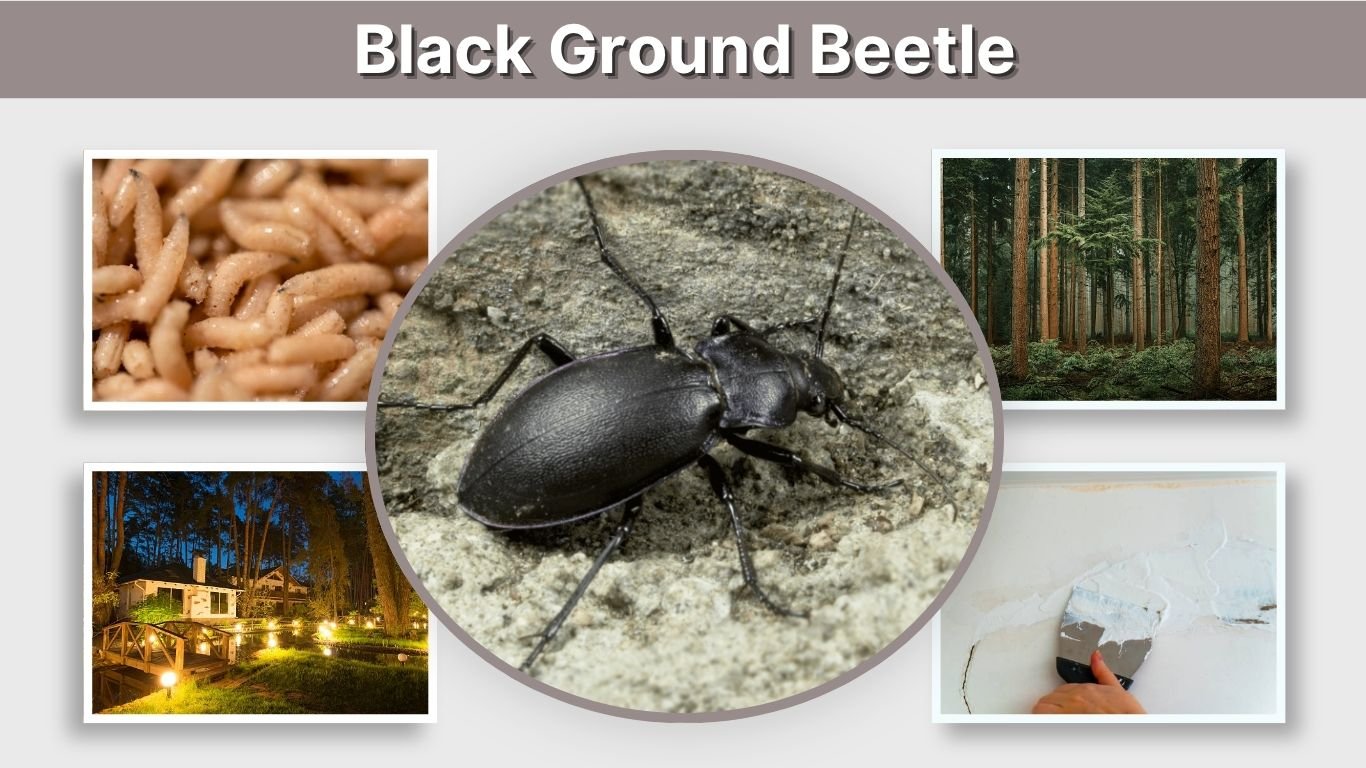
Black ground beetles are common insects recognized by their dark, shiny bodies, long legs, and fast movements across the ground. Belonging to the Carabidae family, these beetles inhabit gardens, forests, agricultural fields, and areas around homes. Although their appearance can seem intimidating, most black ground beetles are harmless to humans and beneficial because they feed on garden pests. Understanding black ground beetle identification, size, diet, habitat, larvae, and behavior can help you recognize these insects and manage them safely when they enter your house.
What Is a Black Ground Beetle?
A black ground beetle is any of several dark-colored beetle species belonging to the family Carabidae. These insects are widely distributed throughout North America, Europe, and other regions.
Many species are active predators that hunt insects and small invertebrates. They typically remain hidden during daylight hours and become active at night, using their strong legs and jaws to capture prey.
Black Ground Beetle Facts
- Scientific family: Carabidae
- Order: Coleoptera
- Color: Black, dark brown, or occasionally metallic
- Size: Commonly 3–25 mm, depending on species
- Diet: Insects, larvae, worms, slugs, and sometimes seeds
- Habitat: Gardens, woodlands, grasslands, and agricultural fields
- Activity: Mostly nocturnal
- Lifespan: Varies by species; some adults survive multiple seasons
Black ground beetles play an important role in natural pest control and maintaining healthy ecosystems.
Black Ground Beetle Identification and Appearance
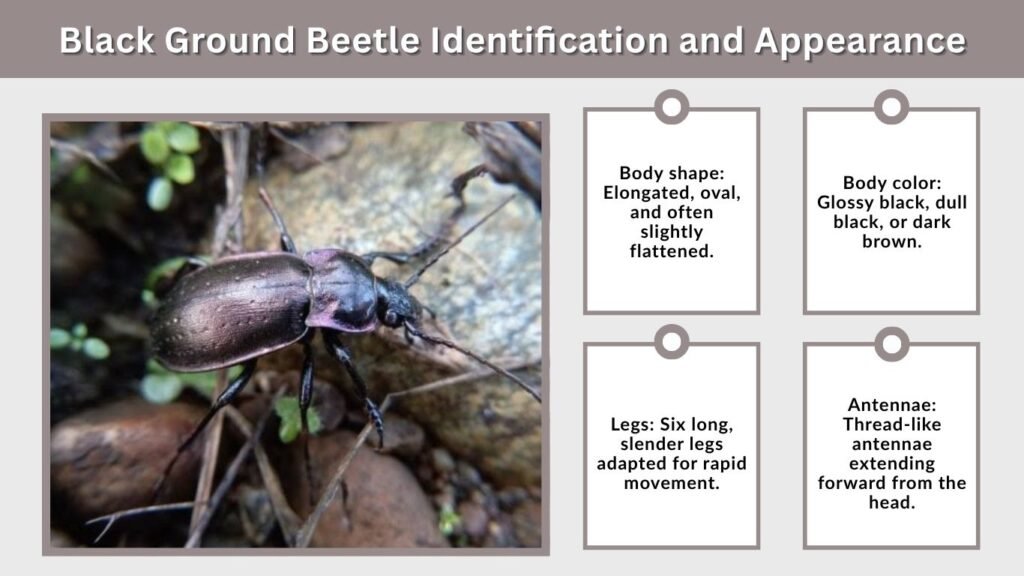
Black ground beetles can be identified by their elongated bodies, hard wing covers, and strong running legs. However, many different species share these features, making exact identification challenging without close examination.
Physical Characteristics
- Body shape: Elongated, oval, and often slightly flattened.
- Body color: Glossy black, dull black, or dark brown.
- Wing covers: Hardened outer wings, sometimes featuring parallel grooves.
- Legs: Six long, slender legs adapted for rapid movement.
- Antennae: Thread-like antennae extending forward from the head.
- Mandibles: Strong jaws used for capturing and chewing prey.
Black Ground Beetle Size
Black ground beetles vary considerably in size. Small species may measure only a few millimeters, while large species can reach approximately 25–35 mm or more.
One common example, Pterostichus melanarius, measures approximately 13–17 mm long. Its entirely black body and grooved wing covers are useful identification features.
Large black ground beetles are often mistaken for other insects because of their prominent jaws and rapid movements.
Common Types of Black Ground Beetles
Several black ground beetle species are frequently found in gardens, woodlands, and agricultural environments. Their appearance and distribution vary, but many share similar feeding habits.
1. Common Black Ground Beetle
The common black ground beetle (Pterostichus melanarius) is widespread in parts of Europe and has become established in North America. It has a glossy black body, grooved wing cases, and strong running legs. This predatory species commonly inhabits gardens and agricultural fields.
2. Black Clock Beetle
The black clock beetle (Pterostichus madidus) is a familiar ground beetle in the UK. It generally measures 15–20 mm long and is recognized by its shiny black body. Some individuals have reddish legs, while others are entirely black.
3. Large Black Ground Beetle
The large black ground beetle (Abax parallelepipedus) is a robust European species commonly found in woodlands. It has a broad, dark body and prominent grooves along its wing covers. It usually shelters beneath stones, fallen leaves, and decaying wood.
Where Do Black Ground Beetles Live?
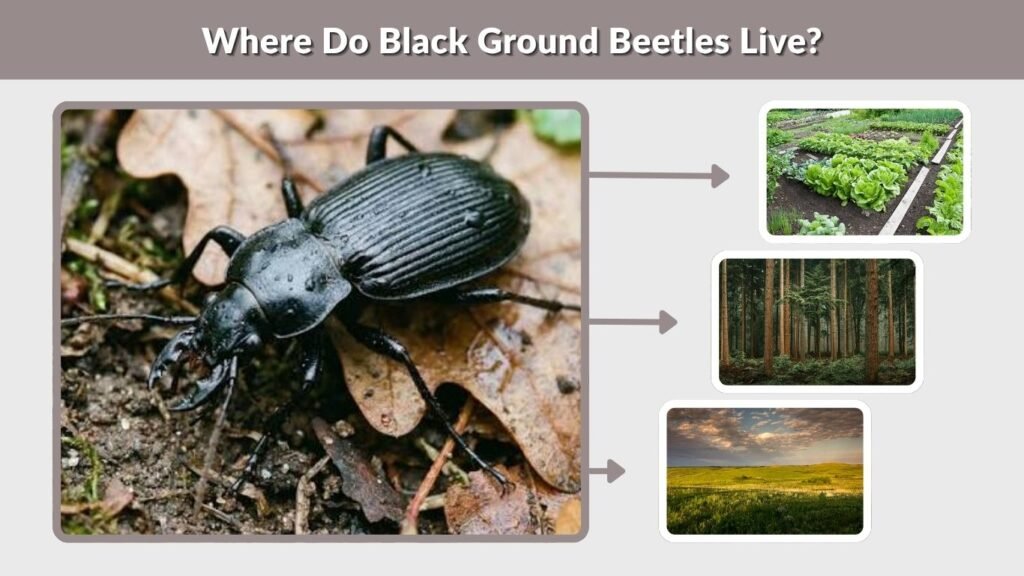
Black ground beetles inhabit various environments, including gardens, forests, grasslands, and farmland. They generally prefer sheltered locations where moisture is available and prey is abundant.
During daylight hours, these insects hide beneath stones, logs, mulch, fallen leaves, and other ground debris. They become more active at night when temperatures are suitable and exposure to predators is reduced.
In the United States, black ground beetles occur in states such as Texas, Florida, Michigan, and California, although the species differ between regions.
They are also widespread throughout the UK, where several species are regularly encountered in gardens and woodland habitats.
What Do Black Ground Beetles Eat?
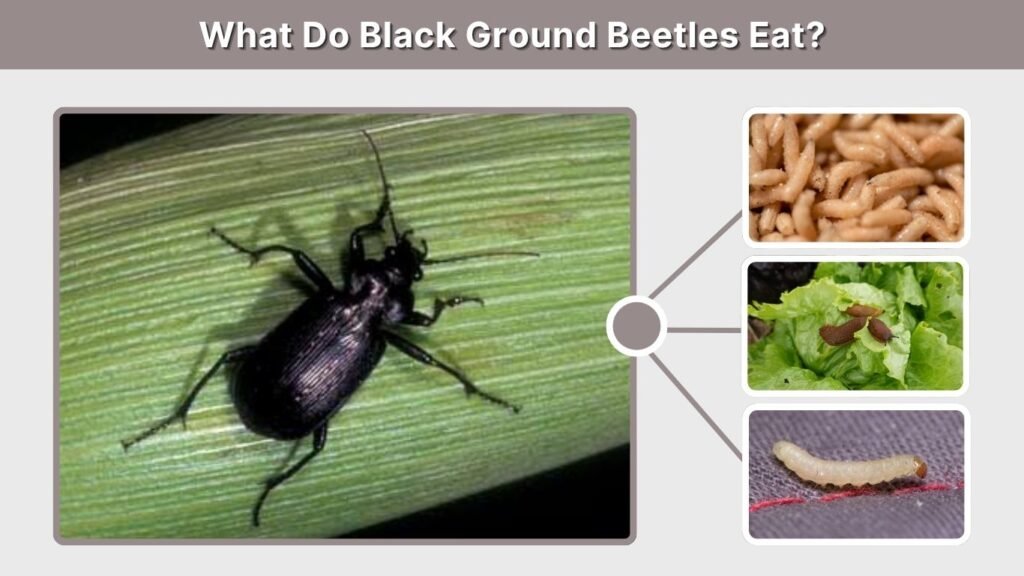
Most black ground beetles are carnivorous predators that feed on smaller insects and invertebrates. Their strong mandibles allow them to capture and consume soft-bodied animals.
Common prey includes caterpillars, insect larvae, maggots, slugs, and small worms. Some species also feed on insect eggs and other organisms living near the soil surface.
Not all ground beetles are exclusively carnivorous. Certain species consume seeds, while others have mixed diets that include both plant and animal material.
These feeding habits make many black ground beetles beneficial for gardeners and farmers because they naturally reduce populations of some agricultural pests.
Are Black Ground Beetles Dangerous?
Black ground beetles are generally harmless to humans and pets. Although they have powerful jaws, they do not normally attack people or seek opportunities to bite.
Do Black Ground Beetles Bite?
Black ground beetles can occasionally pinch human skin when handled roughly or trapped against the body. Larger species may deliver a slightly painful bite because of their stronger mandibles.
However, serious injuries are uncommon, and most encounters do not result in bites.
Are Black Ground Beetles Poisonous?
Black ground beetles are not considered poisonous or venomous to humans. Some species can release unpleasant-smelling defensive chemicals when threatened.
These secretions may irritate sensitive skin or eyes, so unnecessary handling should be avoided.
Most species prefer running away rather than defending themselves aggressively.
Why Are Black Ground Beetles in My House?
Finding a black ground beetle indoors is relatively common, particularly during warmer months. These insects may accidentally enter homes while searching for shelter or moving through surrounding outdoor habitats.
Ground beetles sometimes gather around exterior lighting and enter through small openings near doors, windows, or foundations.
They may appear in basements, garages, laundry rooms, and other ground-level areas where conditions are relatively dark and sheltered.
Unlike carpet beetles, black ground beetles do not feed on household fabrics or stored clothing. They also do not normally reproduce indoors or establish permanent household infestations.
How to Get Rid of Black Ground Beetles in Your House
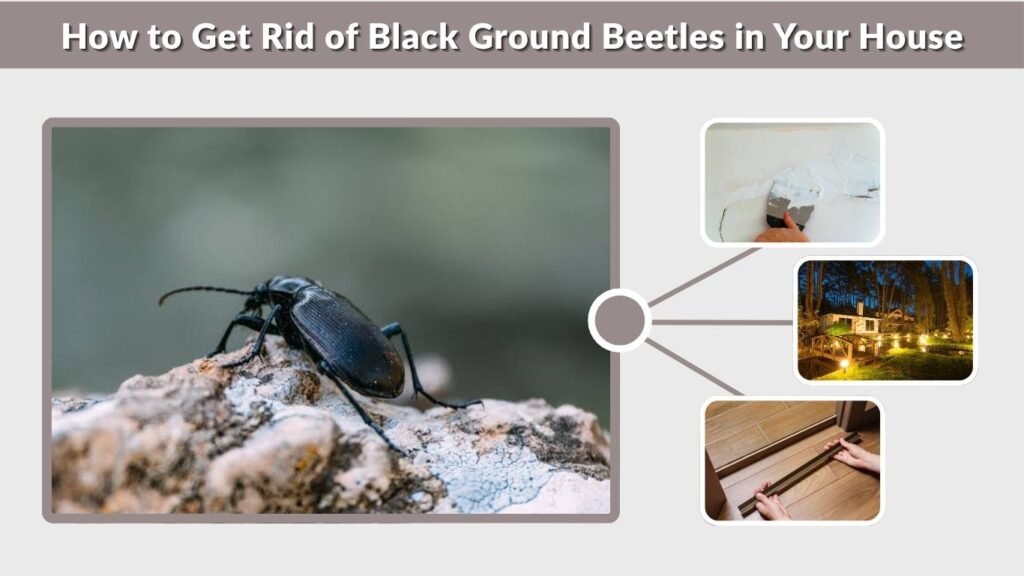
Black ground beetle control usually involves preventing accidental entry rather than eliminating outdoor populations. Because these insects benefit gardens, nonchemical methods are generally preferable.
Effective Black Ground Beetle Control Methods
- Seal entry points: Repair cracks around foundations, windows, doors, and utility openings to prevent beetles from entering.
- Reduce outdoor lighting: Turn off unnecessary exterior lights or use warm-colored bulbs that attract fewer insects.
- Remove nearby debris: Clear unnecessary piles of leaves, stones, and wood directly beside foundations.
- Install door sweeps: Use properly fitted sweeps and window screens to block gaps.
- Relocate beetles: Capture individual beetles using a container and release them outdoors.
- Manage excess moisture: Repair leaks and address damp conditions that may attract ground-dwelling insects.
Chemical treatments are rarely necessary for occasional indoor visitors. Preventing entry is usually more effective than repeatedly spraying beetles.
Black Ground Beetle Larvae and Life Cycle
Black ground beetles undergo complete metamorphosis, developing through egg, larval, pupal, and adult stages. The timing of their development depends on species, temperature, and environmental conditions.
What Do Black Ground Beetle Larvae Look Like?
Ground beetle larvae typically have elongated, segmented bodies with relatively hard heads and prominent jaws. Their coloration ranges from pale brown to dark brown or black, depending on the species.
They possess three pairs of legs near the front of their bodies and are commonly found within soil, leaf litter, or decaying vegetation.
Black Ground Beetle Life Cycle
Female ground beetles generally deposit eggs in soil or damp organic material. After hatching, larvae begin feeding on small insects and other suitable food sources.
They grow through several molts before entering the pupal stage, usually within the soil. Adult beetles eventually emerge and continue hunting.
Some species overwinter as larvae, while others survive colder seasons as adults.
Black Ground Beetle vs. Black Carpet Beetle
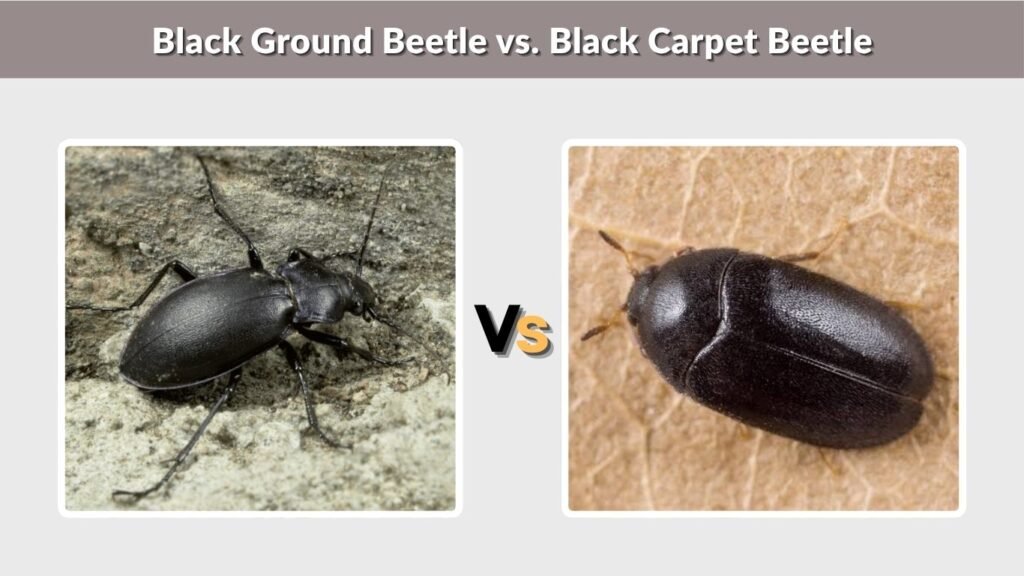
Black ground beetles and black carpet beetles are different insects, despite their similar coloring.
Black ground beetles usually have elongated bodies, long running legs, and prominent jaws. They are primarily outdoor insects that feed on other invertebrates.
Black carpet beetles (Attagenus unicolor) are smaller, more rounded insects belonging to the Dermestidae family. Their larvae may damage wool, fur, feathers, and other animal-derived materials.
Correct identification is important because carpet beetles can become indoor pests, while ground beetles are usually accidental visitors.
FAQs
1. Are Black Ground Beetles Harmful to Humans?
Black ground beetles are generally harmless to humans. They do not spread diseases or damage household structures. Although larger species may pinch when handled roughly, most avoid human contact. These beneficial insects primarily hunt smaller invertebrates in outdoor environments.
2. Can Black Ground Beetles Fly?
Some black ground beetles can fly, while others have reduced or nonfunctional wings. Even species capable of flying usually spend most of their time running across the ground. Their long legs allow them to move quickly while searching for food.
3. What Attracts Black Ground Beetles to Houses?
Black ground beetles may approach houses because of outdoor lighting, nearby vegetation, moisture, and suitable hiding places. They often enter accidentally through gaps around doors or foundations. Reducing exterior lights and sealing openings can help prevent unwanted indoor encounters.
4. Are Black Ground Beetles Good for Gardens?
Yes, many black ground beetles are beneficial garden insects. They consume caterpillars, slugs, insect larvae, and other potential pests. Their natural hunting activities help maintain ecological balance and may reduce the need for chemical pest control in gardens.
5. How Long Do Black Ground Beetles Live?
Black ground beetle lifespans vary depending on species and environmental conditions. Some complete their development within a year, while others survive for several years. Food availability, seasonal temperatures, suitable shelter, and predators influence how long individual beetles can survive.