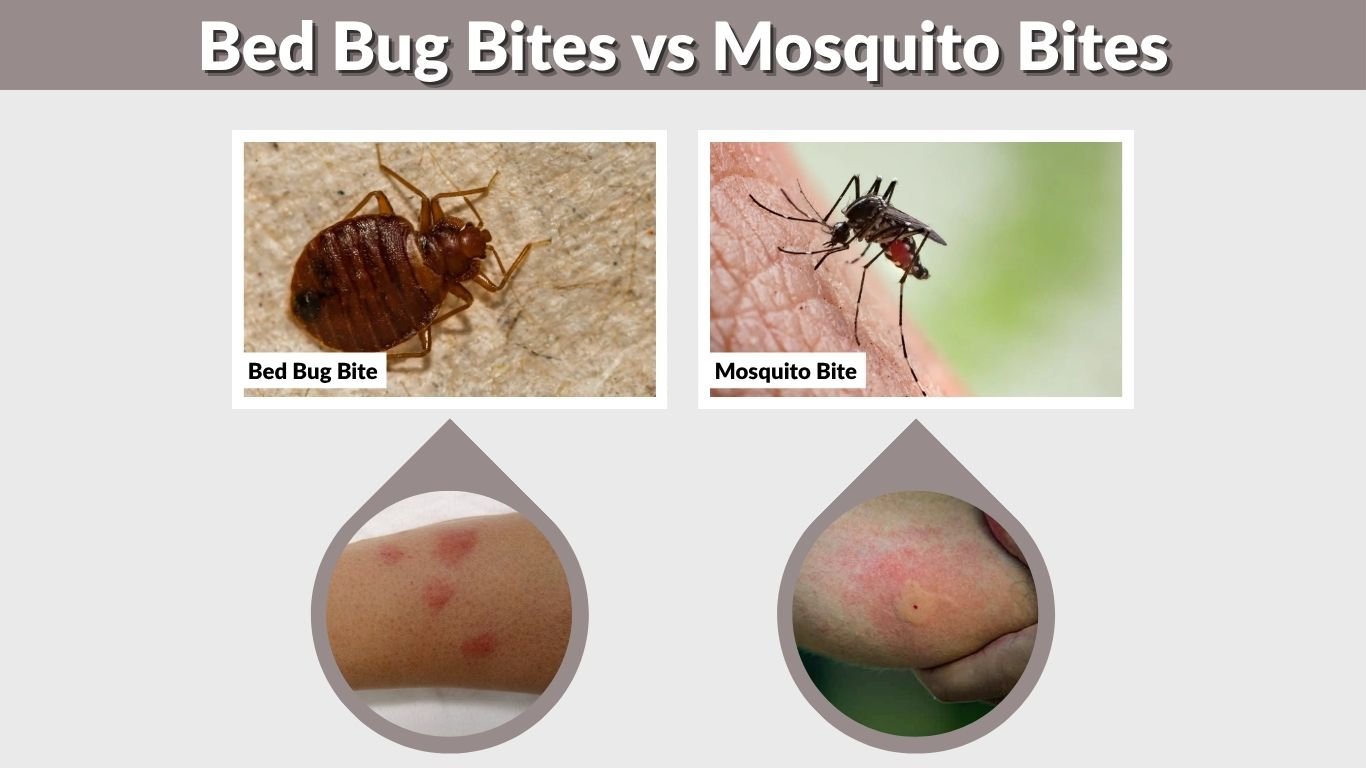
Noticed itchy red bumps on your skin but aren’t sure what caused them? Comparing bed bug bites vs mosquito bites can help you understand the possible differences. Both insects leave irritating marks, but their feeding habits, bite patterns, and symptom timing can offer useful clues. Bed bug bites sometimes appear in clusters after sleeping, while mosquito bites often develop shortly after exposure. Knowing what to look for helps you respond appropriately and avoid mistaking one insect for another.
Bed Bug Bites vs Mosquito Bites: Key Differences
Bed bug and mosquito bites can look remarkably similar, especially during the early stages of a skin reaction. Both may produce raised bumps, itching, and swelling. However, bite distribution, exposure history, and when symptoms develop can help distinguish them. These clues are useful, although skin appearance alone cannot reliably identify the insect responsible.
| Feature | Bed Bug Bites | Mosquito Bites |
| Appearance | Small bumps or swollen welts | Puffy, raised bumps |
| Bite pattern | Sometimes clusters or lines | Often scattered |
| Bite timing | Usually while resting or sleeping | Day or night, depending on species |
| Symptom onset | Hours to days later | Often within minutes or hours |
| Common locations | Exposed skin during sleep | Any exposed skin |
| Itching | Mild to intense | Mild to intense |
| Typical healing | Several days to 1–2 weeks | Usually several days |
| Disease concerns | Not known to transmit human diseases | Some species transmit diseases |
Comparison based on CDC guidance on bed bugs and mosquitoes.
What Do Bed Bug Bites Look Like vs Mosquito Bites?
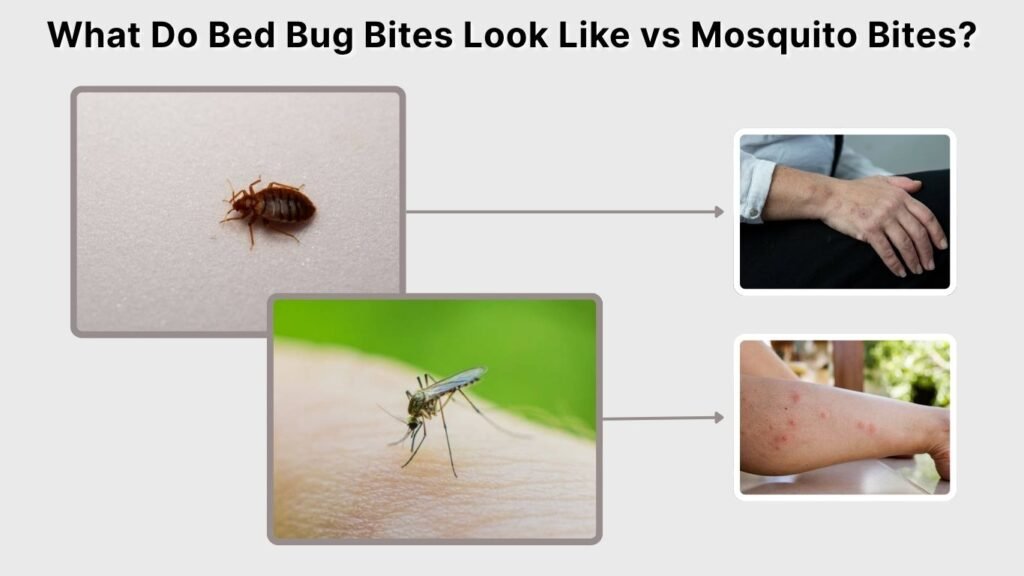
Both bites can produce itchy, swollen bumps, but their appearance may differ. Bed bug bites sometimes develop into groups of small welts, whereas mosquito bites frequently create round, puffy swellings. Their color, size, and severity depend on individual skin reactions, making visual identification helpful but not definitive.
Appearance of Bed Bug Bites
Bed bug bites commonly appear as slightly raised bumps. They may occur individually or form clusters and zigzag patterns.
Typical features include:
- Small, itchy bumps or welts
- Red, pink, or darker discoloration
- Several bites appearing close together
- Occasional blisters or larger swollen areas
Some individuals experience no visible reaction, even after multiple bites.
Appearance of Mosquito Bites
Mosquito bites often produce soft, rounded swellings that become itchy shortly after feeding. The swelling may have a small central puncture mark.
Mosquito bites can also produce delayed bumps, larger swollen patches, or small blisters. Their appearance depends on the person’s immune response.
Unlike bed bugs, mosquitoes can fly and bite during outdoor activities or inside homes.
Bed Bug Bites vs Mosquito Bites on Black Skin
On Black and brown skin, insect bites may appear purple, dark brown, or slightly darker than the surrounding skin rather than bright red.
Both types of bites may cause raised bumps and temporary discoloration. Scratching can also contribute to post-inflammatory hyperpigmentation.
Because redness is sometimes less visible on darker skin, pay attention to swelling, itching, bite distribution, and possible insect exposure.
How to Tell Bed Bug Bites vs Mosquito Bites
The circumstances surrounding the bites often provide better clues than their appearance. Consider when the bumps developed, whether they appeared after sleeping, and whether mosquitoes were present nearby. Bed bugs usually feed around sleeping areas, while mosquitoes can bite in many different environments throughout the day or night.
Bed Bug Bite Patterns and Timing
Bed bugs generally feed while people sleep, although they can bite at other times.
Their bites may develop in lines, clusters, or random arrangements. Repeatedly discovering new bumps after sleeping can raise suspicion of bed bugs.
However, reactions may take several days to appear, so morning symptoms do not prove that bites occurred overnight.
Mosquito Bite Patterns and Timing
Mosquito bites frequently appear as scattered bumps on exposed skin. Some mosquito species prefer daylight, while others feed around dusk or during nighttime.
A person may notice swelling within minutes after being bitten. Other reactions develop hours or a day later.
A recent outdoor exposure, especially near mosquitoes, provides an additional identification clue.
Bed Bug Bites vs Flea Bites vs Mosquito Bites
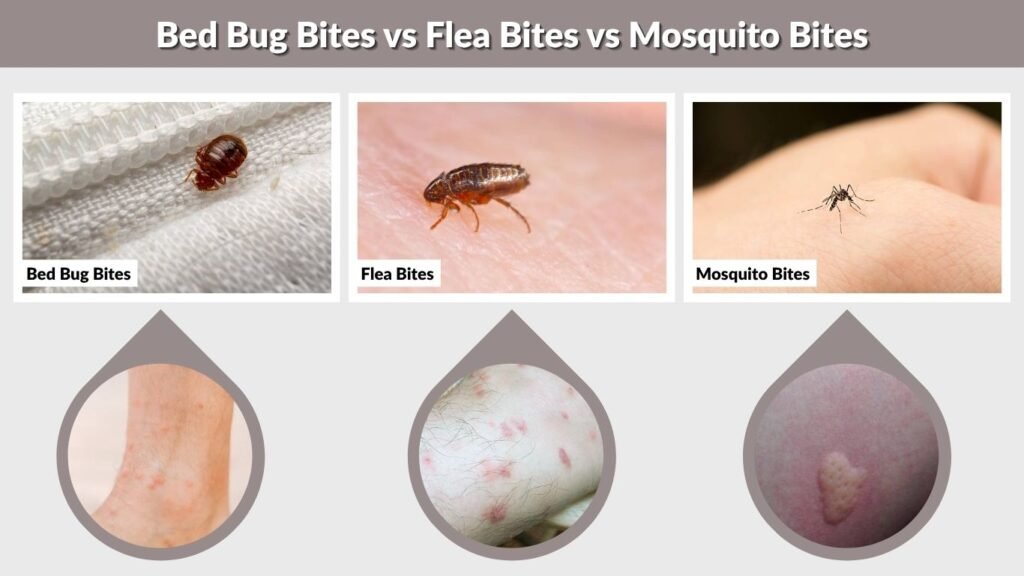
Flea bites are another common source of confusion. All three insects feed on blood and may produce similar itchy skin reactions. However, flea bites frequently affect the ankles and lower legs, while bed bugs commonly target exposed skin during sleep. Mosquito bites can occur wherever mosquitoes reach uncovered skin.
How Flea Bites Differ
Flea bites often appear as small, intensely itchy bumps grouped around the feet, ankles, and lower legs.
People with flea-infested pets or carpets may experience repeated bites indoors.
Bed bug bites may appear on the arms, neck, face, or legs, while mosquito bites are less predictable in location. None of these patterns alone establishes the cause.
How to Confirm Whether You Have Bed Bugs
Although bite appearance provides useful clues, finding physical evidence is more reliable. Bed bugs hide in narrow spaces near sleeping areas, making them difficult to detect during the daytime. Careful inspection can help determine whether unexplained bites are associated with an infestation rather than mosquitoes or other insects.
Signs of Bed Bugs in Your Bedroom
Look for the following evidence:
- Live, flat, reddish-brown bed bugs
- Tiny black or dark fecal spots
- Rust-colored stains on bedding
- Shed insect skins and pale eggs
- Insects hiding in mattress seams or bed frames
The Environmental Protection Agency advises that skin bites alone are poor evidence of an infestation.
How to Treat Bed Bug and Mosquito Bites
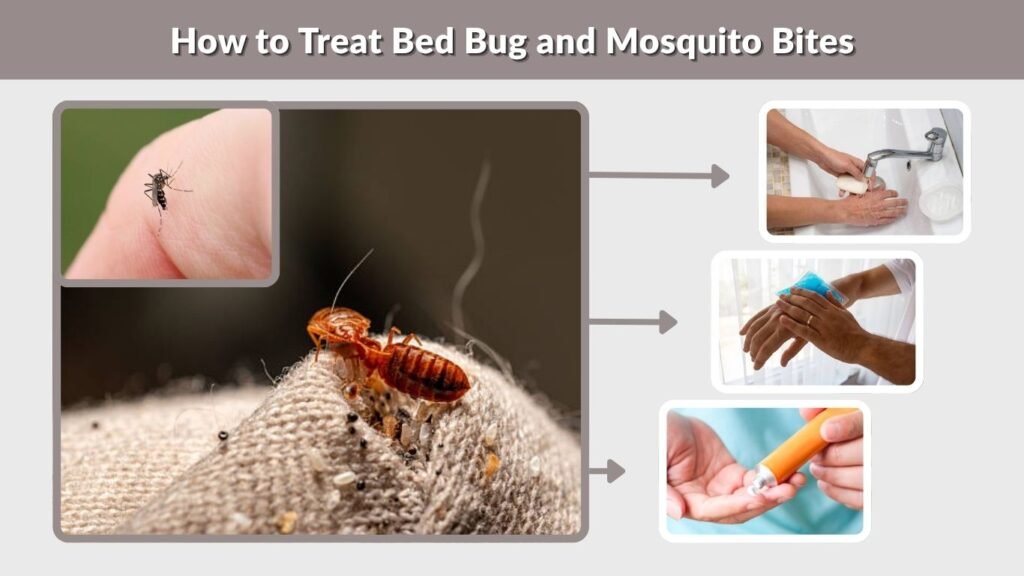
Most uncomplicated bed bug and mosquito bites heal without specialized medical treatment. Both can cause uncomfortable itching and swelling, which often improve with basic skin care. Treatment focuses on relieving irritation and preventing scratching-related infections rather than immediately determining which insect caused every mark.
Simple Ways to Relieve Itching
- Clean the skin: Wash affected areas gently with soap and water.
- Apply a cold compress: Use a cool, damp cloth to reduce swelling and discomfort.
- Try anti-itch cream: Over-the-counter hydrocortisone may help relieve inflammation when used as directed.
- Avoid scratching: Scratching can damage the skin and increase infection risk.
- Consider antihistamines: Ask a healthcare professional or pharmacist whether these are suitable for persistent itching.
Seek medical attention for spreading inflammation, pus, fever, or unusually severe reactions. Difficulty breathing or swelling of the throat requires emergency care.
FAQs
1. Are Bed Bug Bites Itchier Than Mosquito Bites?
Not necessarily. Both can cause mild or severe itching depending on individual sensitivity. Neither insect consistently produces stronger itching in everyone.
2. Can Bed Bug Bites Look Exactly Like Mosquito Bites?
Yes. Both may produce nearly identical itchy bumps. Bite marks alone cannot reliably confirm the insect responsible.
3. Do Bed Bug Bites Always Appear in a Straight Line?
No. Although bed bug bites sometimes form lines or clusters, they may also appear randomly or individually.
4. How Long Do Bed Bug Bites vs Mosquito Bites Last?
Mosquito bites often improve within several days, while bed bug bites may take one or two weeks to disappear. Healing time varies with the reaction.
5. Can Mosquito Bites Appear Overnight Like Bed Bug Bites?
Yes. Some mosquitoes feed at night and may bite people while they sleep. Overnight bites do not automatically indicate bed bugs.