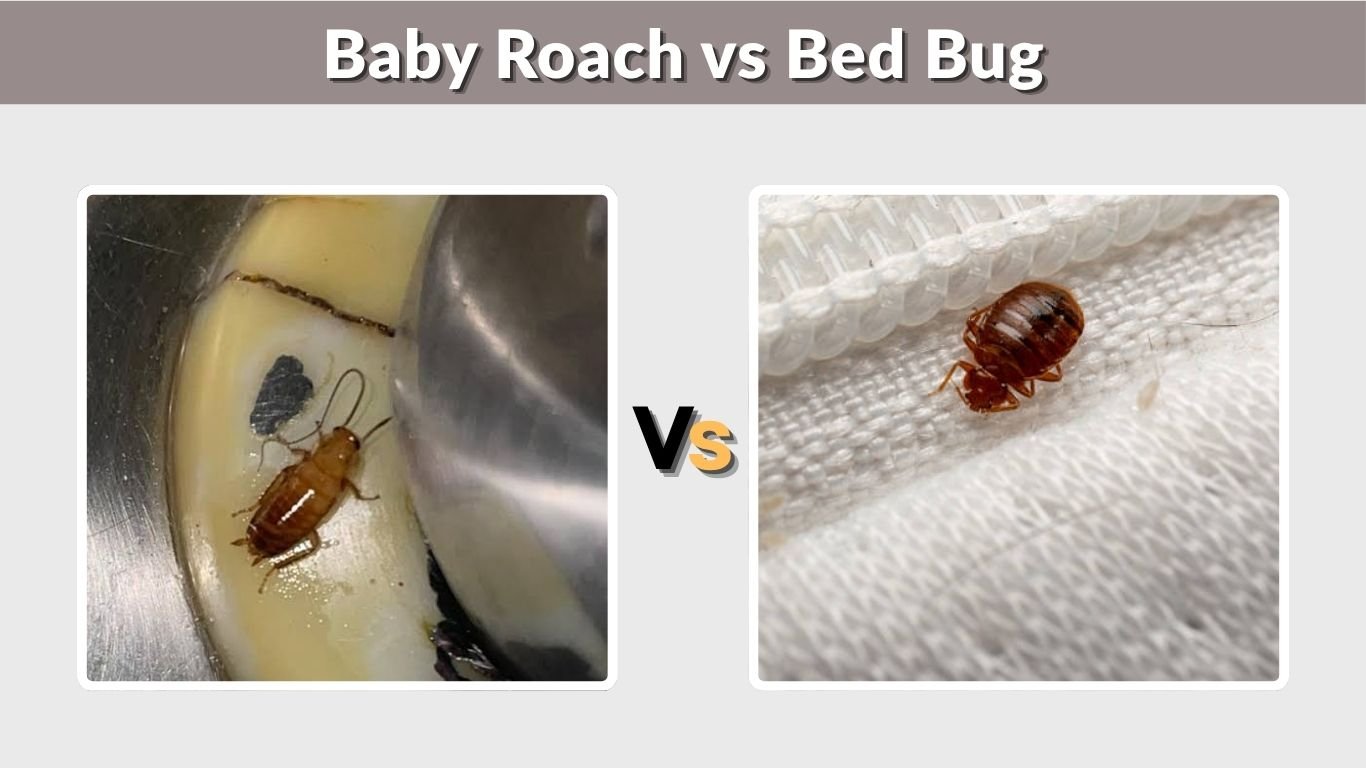
A baby roach vs. bed bug comparison can be confusing because both insects are small, oval-shaped, and commonly found inside homes. However, their body structures, colors, feeding habits, and hiding places are different. Baby cockroaches usually have long antennae and spiny legs, while bed bugs have broader bodies and feed on blood. Correctly identifying these insects is important because they require different pest control methods. This guide explains their appearance, behavior, infestation signs, and the easiest ways to tell them apart.
Baby Roach vs. Bed Bug: Quick Comparison
Baby cockroaches, also called nymphs, are young versions of adult roaches. Bed bugs also have nymph stages, although people sometimes compare baby cockroaches with adult bed bugs. Both insects have six legs and flattened bodies, but they differ in antenna length, feeding habits, body markings, and preferred environments. A close inspection can reveal these differences.
8 Key Differences Between Baby Roaches and Bed Bugs
| Feature | Baby Roach | Bed Bug |
| Body shape | Often elongated or oval | Broadly oval and flattened when unfed |
| Size | Varies by species and age | Nymphs 1.5–4.5 mm; adults 5–7 mm |
| Color | Brown, dark brown, or blackish | Pale nymphs; reddish-brown adults |
| Antennae | Usually very long | Relatively short |
| Legs | Long, typically spiny | Shorter-looking, less conspicuously spiny |
| Rear appendages | Two cerci | No cerci |
| Food | Crumbs, grease, and organic matter | Blood |
| Hiding places | Kitchens, bathrooms, and appliances | Mattresses, bed frames, and furniture |
Which Feature Is the Most Reliable?
Antenna length, body shape, and rear appendages provide useful identification clues.
Young cockroaches generally have two visible cerci extending from the rear. Bed bugs lack these appendages and usually have a wider, rounded abdomen.
A magnifying glass can help reveal these structures, particularly when identifying tiny insects.
What Do Baby Roaches and Bed Bugs Look Like?
The physical appearance of baby roaches and bed bugs changes as they grow. Newly hatched cockroaches can be surprisingly small, while young bed bugs may appear almost transparent before feeding. Although color can help with identification, it should not be used alone. Body proportions, antennae, legs, and visible markings offer more dependable clues.
Baby Roach Appearance
Baby cockroaches resemble smaller versions of their parents but do not have fully developed wings.
German cockroach nymphs are commonly dark brown or nearly black, with a pale stripe running along the back. Brown-banded cockroach nymphs often have lighter transverse bands.
Their long antennae, spiny legs, and elongated bodies make them relatively distinctive under magnification.
Baby Bed Bug Appearance
Baby bed bugs are called nymphs. Newly hatched individuals measure approximately 1.5 millimeters and usually appear pale yellow or almost transparent.
Their bodies are flattened, oval, and divided into visible abdominal segments.
After feeding on blood, the abdomen becomes fuller and may appear bright red or reddish-brown.
Differences in Size and Color
A newly hatched bed bug is approximately 1.5 millimeters long, while an adult commonly measures 5–7 millimeters.
Baby cockroach sizes depend on their species and developmental stage. Small German cockroach nymphs may be only a few millimeters long.
Color is not conclusive because both insects change appearance during development. Recently molted cockroaches can also appear unusually pale.
Antennae, Legs, and Wings
Cockroach nymphs possess long, slender antennae and prominent spiny legs adapted for rapid movement.
Bed bugs have shorter antennae and legs that generally appear less spiny.
Neither baby roaches nor bed bug nymphs possess fully developed functional wings. Adult bed bugs also cannot fly, while wing development and flight ability vary among adult cockroach species.
Where Do Baby Roaches and Bed Bugs Hide?
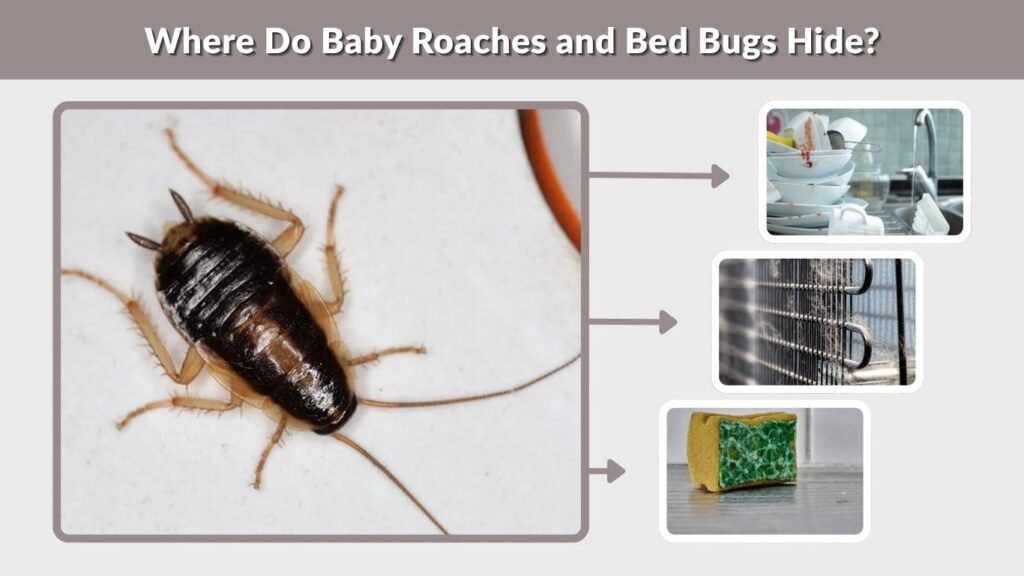
Location is another useful clue when distinguishing these insects. Both prefer protected spaces, but their preferred habitats differ because of their feeding requirements. Cockroaches generally search for food, moisture, and warmth, while bed bugs remain close to sleeping or resting hosts. Nevertheless, either insect may occasionally appear outside its usual hiding places.
Common Baby Roach Hiding Places
Baby cockroaches often hide beneath kitchen sinks, behind refrigerators, near dishwashers, and inside cabinet cracks.
They prefer protected locations with accessible food and water. German cockroaches are especially associated with warm, humid indoor environments.
Finding several small roaches near appliances may indicate a developing cockroach infestation.
Common Bed Bug Hiding Places
Bed bugs commonly hide in mattress seams, box springs, headboards, bed frames, and upholstered furniture.
They may also occupy cracks along baseboards or nearby wall fixtures.
Because bed bugs feed on people, they frequently remain within convenient traveling distance of beds and seating areas.
However, finding a small insect on a mattress does not automatically mean it is a bed bug.
Other Insects That Look Like Baby Bed Bugs
Several household arthropods are commonly mistaken for bed bugs. These include baby stink bugs, ticks, fleas, booklice, and certain beetles. Although some share a similar size or color, their anatomical features and movement patterns differ. Comparing multiple characteristics is more accurate than relying on one feature, particularly when examining insects smaller than a grain of rice.
Baby Stink Bug vs. Bed Bug
Young stink bugs often have rounded or oval bodies with colorful patterns that vary by species.
They are commonly associated with plants and feed using piercing-sucking mouthparts, usually on plant tissues.
Bed bugs have a more consistently flattened shape and feed on blood.
Finding the insect on vegetation rather than around bedding can provide an additional clue.
Baby Tick vs. Bed Bug
Ticks are arachnids rather than insects. Tick nymphs and adults have eight legs, while newly hatched tick larvae have six.
Bed bugs have six legs throughout their active life stages, along with visible antennae.
Ticks also lack antennae and may attach firmly to a host during feeding. Bed bugs normally feed and then retreat to hiding places.
Baby Fleas and Booklice vs. Bed Bugs
Fleas have narrow bodies flattened from side to side and enlarged hind legs that allow them to jump.
Bed bugs cannot jump.
Booklice are tiny, often pale insects with relatively large heads and long antennae. They are frequently associated with damp environments.
Their appearance may resemble young bed bugs at first glance, but their body proportions are different.
Do Baby Roaches and Bed Bugs Bite?
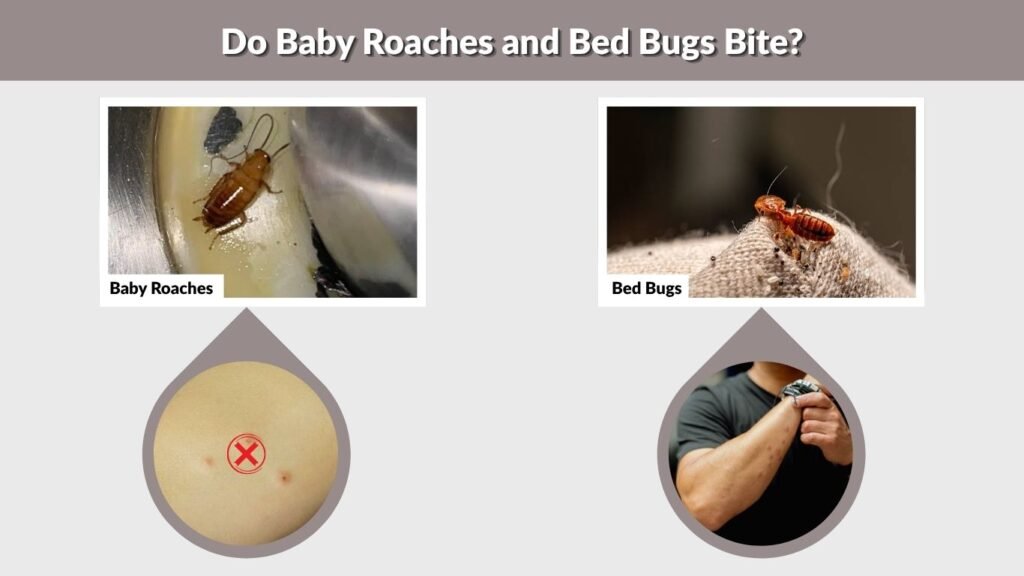
Feeding behavior provides an important distinction between these insects. Bed bugs depend on blood meals to survive and develop, while cockroaches generally consume various organic materials. Their interactions with people therefore differ significantly. Understanding these behaviors helps explain why bed bugs cause recurring bite complaints, while cockroaches are more commonly associated with food contamination and indoor allergens.
Do Baby Bed Bugs Bite Humans?
Yes. Bed bug nymphs must feed on blood to progress through their developmental stages.
Their bites may cause itchy red bumps or raised welts, although some people experience no visible reaction.
Bite marks alone cannot identify bed bugs because several insects and skin conditions produce similar reactions.
Do Baby Cockroaches Bite?
Baby cockroaches do not normally bite people. Their mouthparts are primarily used for chewing food and organic material.
Cockroach-related concerns generally involve food contamination and allergens rather than bites.
Cockroach allergens can contribute to asthma and allergic reactions in susceptible people.
How to Identify a Baby Roach or Bed Bug in Your Home
Accurate identification requires examining the insect and its surroundings. Since these pests are small and often active at night, a flashlight and magnifying glass can be helpful. Identifying the insect before using pesticides prevents unnecessary treatments and allows you to choose appropriate control methods.
Step-by-Step Identification Checklist
Use these steps when examining a suspicious insect:
- Check the antennae: Very long antennae favor a cockroach identification.
- Examine the body: A broad, oval abdomen may indicate a bed bug.
- Look for cerci: Two small rear appendages suggest a cockroach.
- Observe markings: Dark nymphs with pale stripes may be young German cockroaches.
- Check the location: Kitchen appliances suggest roaches, while mattress seams raise suspicion of bed bugs.
- Inspect nearby evidence: Look for bed bug fecal spots, shed skins, cockroach droppings, or egg cases.
No single clue guarantees identification, so consider multiple characteristics together.
What If You Cannot Identify the Insect?
Capture the insect in a sealed container or take a clear, well-lit photograph showing its back and antennae.
A local cooperative extension service, entomologist, or qualified pest management professional may be able to identify it.
Avoid applying insecticides until the insect has been correctly identified.
How to Get Rid of Baby Roaches vs. Bed Bugs
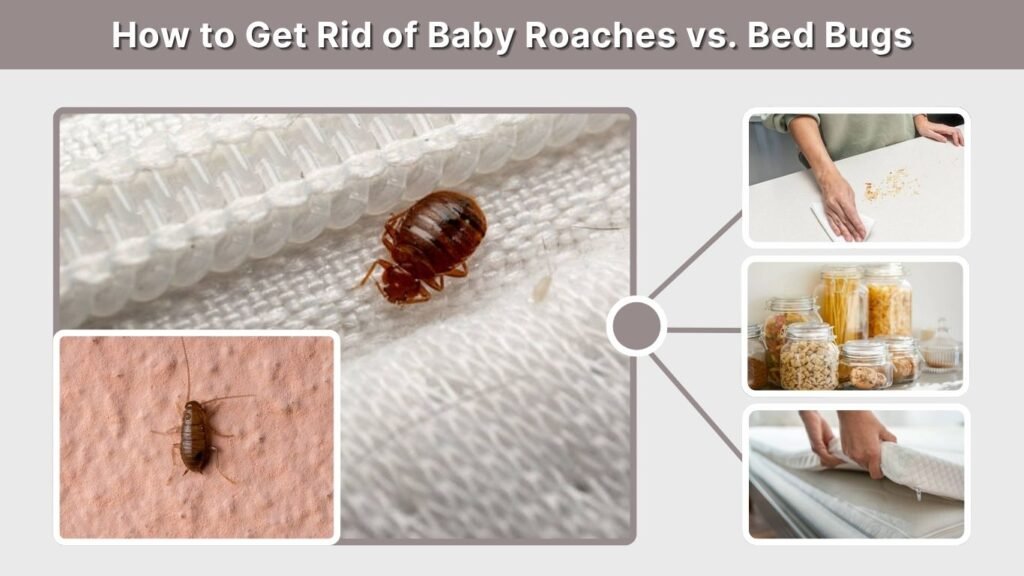
Baby cockroaches and bed bugs require different treatment strategies because their feeding habits and hiding places differ. Cockroach control emphasizes sanitation, moisture reduction, exclusion, and suitable baits. Bed bug management relies on thorough inspection, appropriate heat treatment, targeted pest control, and continued monitoring. Identifying which insect is present is essential before beginning treatment.
How to Control Baby Cockroaches
Reduce access to food and moisture by cleaning crumbs, storing food in sealed containers, and repairing plumbing leaks.
Seal cracks around cabinets and plumbing openings.
Sticky monitoring traps can help identify areas of activity. For established indoor cockroach infestations, appropriately labeled cockroach baits are often useful.
How to Control Bed Bugs
Carefully inspect mattresses, bed frames, headboards, and nearby furniture.
Suitable bedding and clothing can be treated in a clothes dryer on high heat for at least 30 minutes.
Use bed bug-proof mattress encasements and appropriate monitoring devices.
Because bed bugs hide in small cracks and can be difficult to eliminate, professional treatment is often advisable.
FAQs
Baby cockroaches and bed bugs may look similar at first, especially when they are extremely small. These common questions address the differences people most often notice during household inspections.
1. Can baby roaches look exactly like bed bugs?
They can appear similar without magnification, but their antennae, legs, rear appendages, and body proportions differ.
2. Are baby cockroaches smaller than bed bugs?
Some newly hatched cockroaches are smaller than adult bed bugs. However, their sizes overlap with young bed bug nymphs, making size alone unreliable.
3. Do baby roaches live in mattresses?
Cockroaches can occasionally enter bedrooms and furniture, but they generally prefer environments with food, water, and shelter. Bed bugs are more closely associated with sleeping areas.
4. Do baby bed bugs move as fast as baby roaches?
Both insects can crawl quickly, but cockroach nymphs commonly move very rapidly when disturbed. Movement alone cannot confirm identification.
5. Which is more dangerous, baby roaches or bed bugs?
Both create household concerns in different ways. Bed bugs cause bites and sleep disruption, while cockroaches can contaminate food and produce allergens. Neither should be identified solely by its appearance in a particular room.