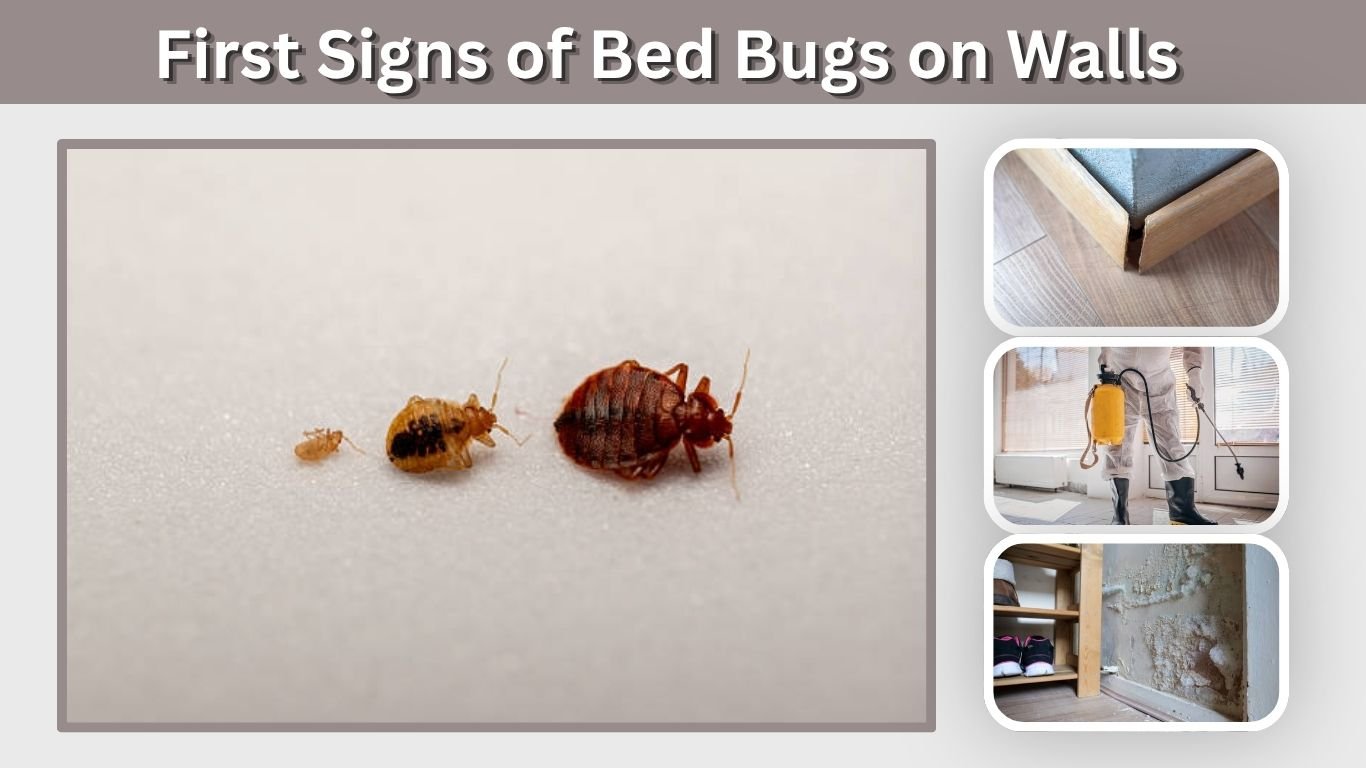
The first signs of bed bugs on walls often include tiny black spots, reddish-brown stains, shed skins, and insects hiding inside cracks. These early warning signs can be difficult to recognize because bed bugs are small and usually remain hidden during daylight. Although mattresses and bed frames are common hiding places, walls can also provide shelter, especially near sleeping areas. Learning how to identify these clues can help you detect an infestation before it spreads. This guide explains where to look, what to check, and how to respond.
What Are the First Signs of Bed Bugs on Walls?
Bed bugs are small, wingless insects that feed on human blood, usually while people sleep. They commonly hide near beds but can also shelter in wall cracks, baseboards, and behind loose wallpaper. During an early infestation, physical evidence may be limited to a few tiny marks. Recognizing these signs requires close inspection rather than relying on unexplained skin bites.
7 Early Warning Signs of Bed Bugs on Walls
Common signs include:
- Tiny black spots: Small dark fecal marks resembling ink dots along cracks or wall edges.
- Reddish-brown stains: Occasional stains associated with crushed or recently fed bed bugs.
- Shed skins: Pale yellow, translucent coverings left behind as young bed bugs grow.
- Small white eggs: Approximately 1 mm long, usually attached inside protected cracks.
- Live bed bugs: Flattened, oval, reddish-brown insects hiding in narrow spaces.
- Empty eggshells: Tiny whitish shells left behind after eggs hatch.
- Musty odor: A sweet, unpleasant smell sometimes associated with established infestations.
An unusual odor is not a reliable early sign. Physical evidence provides stronger confirmation.
What Do Bed Bug Marks on Walls Look Like?
Bed bug fecal marks often appear as tiny dark brown or black dots clustered near hiding places.
On porous surfaces, the marks may soak into the material and resemble permanent ink stains.
However, ordinary dirt, mold, and other insect droppings can look similar. Finding live bed bugs or several types of evidence is more convincing than identifying stains alone.
Where Do Bed Bugs Hide in Walls?
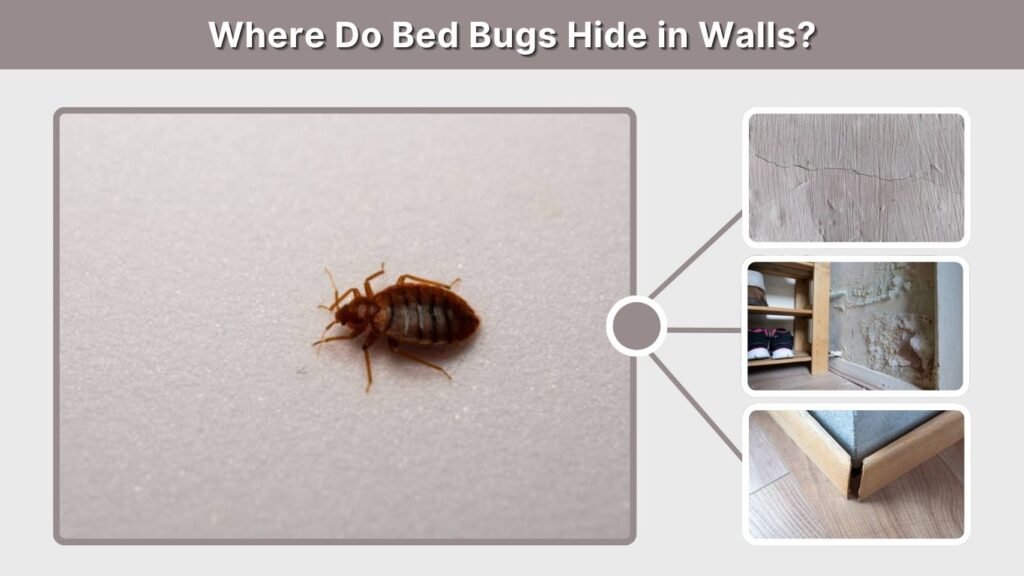
Bed bugs prefer narrow, protected spaces where they can remain undisturbed between blood meals. Although mattresses and bed frames are common hiding places, wall structures offer additional shelter. These insects can squeeze into extremely small openings, making them difficult to locate during routine cleaning. Areas close to beds are particularly important because bed bugs generally remain near their food source.
Cracks, Baseboards, and Wallpaper
Small cracks in plaster, damaged paint, gaps around baseboards, and loose wallpaper can provide hiding places.
Bed bugs may also collect behind wall-mounted headboards, picture frames, and decorative panels.
As an infestation grows, insects can occupy more distant locations, including wall-ceiling junctions and adjoining rooms.
Can Bed Bugs Hide Behind Electrical Outlets?
Yes. Bed bugs can shelter in gaps around electrical outlet covers, switch plates, and nearby wall openings.
In apartment buildings, wall voids and utility openings may provide routes between connected spaces.
Do not insert tools, liquids, or insecticide sprays into electrical outlets. Ask a qualified pest professional to inspect these locations safely.
How to Check Walls for Bed Bugs
Inspecting walls for bed bugs requires good lighting and careful attention to small openings. A quick glance at a painted surface may reveal nothing, even when insects are nearby. Focus first on the area surrounding the bed before examining other parts of the room. Using a flashlight and documenting suspicious findings can improve identification and guide professional treatment.
Step-by-Step Wall Inspection
Follow these steps:
- Start behind the bed: Examine the wall near the headboard and sleeping area.
- Check baseboards: Look along gaps where walls meet the floor.
- Inspect wall cracks: Search for dark spots, shed skins, or insects.
- Examine picture frames: Inspect edges and spaces behind wall decorations.
- Check loose wallpaper: Look around lifted edges without unnecessarily disturbing potential hiding places.
- Use a flashlight: Illuminate dark corners and narrow openings.
- Document evidence: Photograph suspicious marks and safely collect an insect specimen when possible.
Avoid spreading insects by moving potentially infested belongings between rooms.
Can You See Bed Bugs Crawling on Walls?
Yes. Adult bed bugs are visible without magnification and typically measure approximately 4–7 mm long.
They may crawl across walls while searching for food or hiding places, although they spend much of their time concealed.
Young bed bugs, called nymphs, are smaller and can be harder to recognize. Unlike flies, bed bugs cannot fly or jump.
Are Black Spots on Walls Always Bed Bugs?
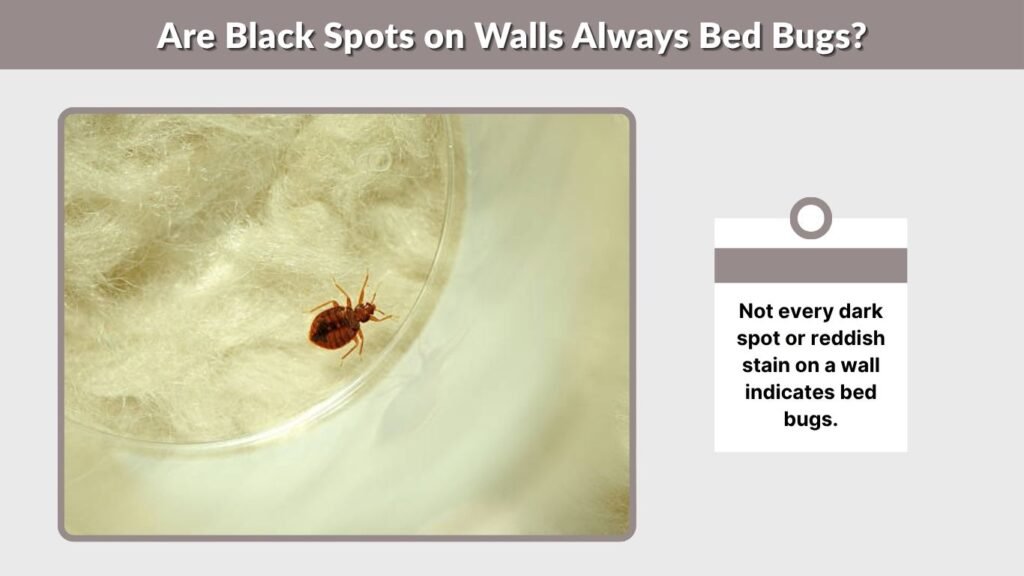
Not every dark spot or reddish stain on a wall indicates bed bugs. Household walls can accumulate dust, dirt, mold, and droppings from various insects. Because these materials sometimes resemble bed bug fecal markings, identification should involve more than appearance alone. Examining where the marks occur and searching for accompanying evidence can help determine whether an infestation is likely.
Bed Bug Stains vs. Mold and Dirt
Bed bug fecal spots tend to occur around insect hiding places and may appear clustered in cracks or seams.
Mold often develops in damp environments and may form larger irregular patches.
Dirt and scuff marks are also common along baseboards. If the source remains uncertain, professional inspection is more reliable than attempting identification from stains alone.
Can Bed Bugs Be Present Without Wall Signs?
Yes. Early infestations may produce no noticeable marks on walls because most insects remain hidden around mattresses or furniture.
Some people notice unexplained skin reactions before finding physical evidence.
However, bite marks alone cannot confirm bed bugs because mosquitoes, fleas, and certain skin conditions cause similar symptoms.
First Signs of Bed Bugs on Mattresses and Sheets
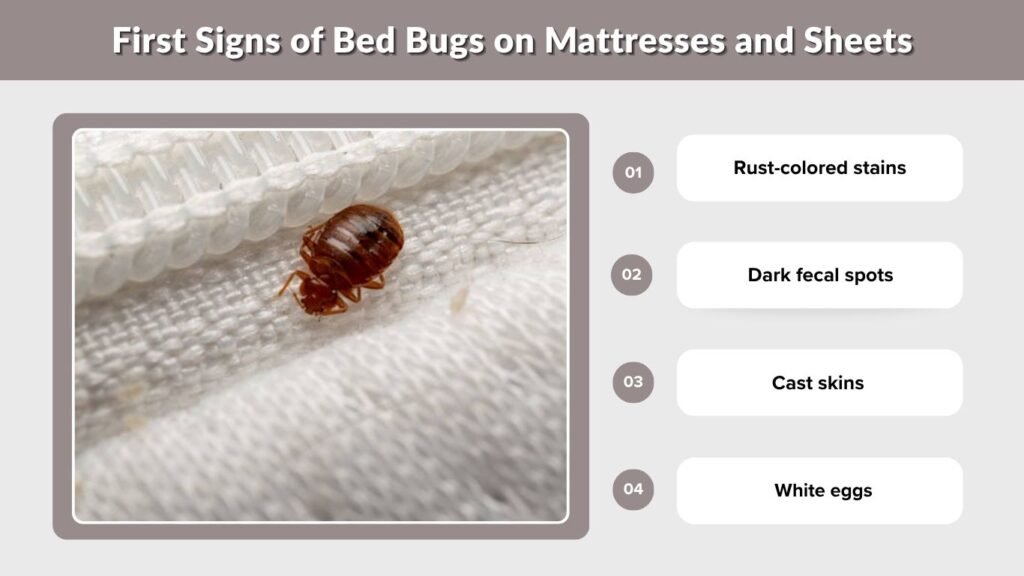
Bed bugs frequently leave evidence around sleeping areas before noticeable signs appear on walls. Their hiding behavior makes mattress seams, box springs, and bed frames important inspection locations. Finding several types of evidence near the bed strengthens the possibility of infestation. However, even a clean-looking mattress cannot completely rule out bed bugs hiding elsewhere in the room.
Early Signs on Bedding and Mattresses
Look for the following clues:
- Rust-colored stains: Small marks on sheets or mattresses caused by crushed bed bugs.
- Dark fecal spots: Tiny dots near seams, labels, or stitched edges.
- Cast skins: Empty outer coverings left behind after bed bugs molt.
- White eggs: Small eggs hidden inside mattress seams or protected joints.
- Live insects: Bed bugs concealed beneath fabric folds or around the bed frame.
Inspect the mattress and surrounding furniture together rather than examining only the sleeping surface.
What Do the First Bed Bug Bites Look Like?
Bed bug bites may develop into itchy, raised bumps on exposed skin, including the arms, neck, face, and legs.
Some bites appear clustered or arranged in lines, but this pattern is not unique to bed bugs.
Reactions can take several days to appear, and some individuals develop no visible symptoms at all.
What to Do When You Find Bed Bugs on Walls
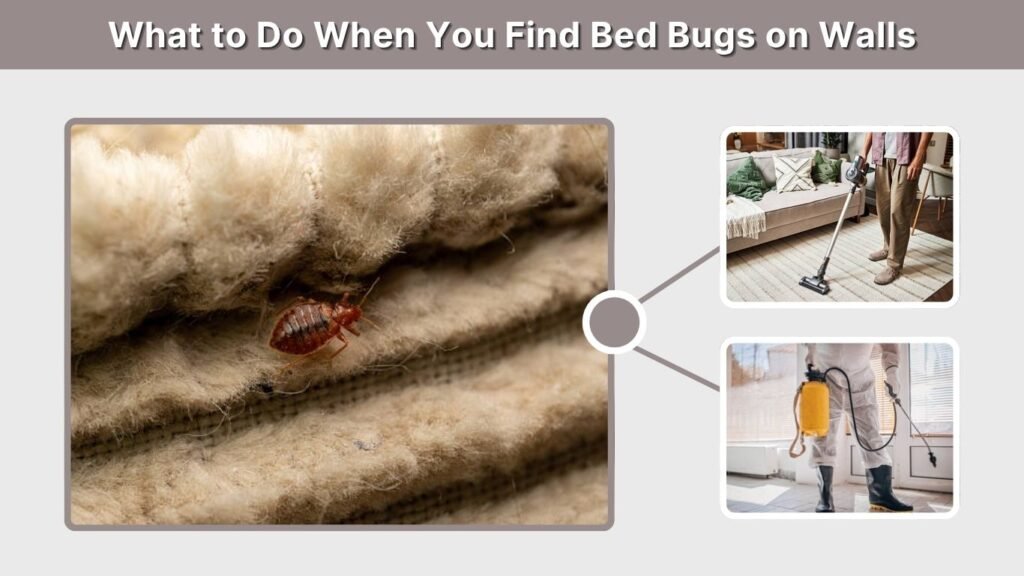
Discovering bed bugs on walls requires prompt action because infestations can spread through furniture, belongings, and structural openings. However, immediately spraying chemicals or moving infested objects may worsen the problem. Effective control begins with confirming identification, limiting movement of affected belongings, and selecting appropriate treatment. Professional pest management is particularly valuable when insects occupy wall voids or multiple rooms.
Immediate Steps to Take
If you suspect bed bugs:
- Confirm the insect: Capture a specimen safely for identification.
- Avoid moving belongings: Keep potentially infested items from spreading into other rooms.
- Reduce clutter: Remove unnecessary hiding places without scattering insects.
- Treat washable fabrics: Use a clothes dryer on high heat for 30 minutes when materials permit.
- Vacuum carefully: Clean accessible cracks and furniture, then seal and dispose of vacuum contents.
- Seek professional treatment: Contact a qualified pest control company if an infestation is confirmed.
Never use rubbing alcohol, outdoor pesticides, or unapproved chemical treatments inside wall openings.
How Are Bed Bugs Removed From Walls?
Professional treatment may combine targeted insecticides, controlled heat, vacuuming, and monitoring.
The most suitable method depends on infestation severity and building conditions.
Sealing cracks can reduce future hiding places, but it should be coordinated with treatment rather than used as the only control method.
FAQs
Bed bugs can be difficult to detect during the earliest stages of infestation, especially when they remain hidden in walls or furniture. Homeowners often mistake ordinary stains for insect evidence or assume that unexplained bites confirm bed bugs. Understanding the difference between reliable physical signs and uncertain clues helps guide inspections. These common questions address early detection, hiding places, and prevention.
1. What Is the Very First Sign of Bed Bugs?
Tiny fecal spots, live insects, or shed skins are among the earliest detectable signs. There is no single sign that always appears first.
2. Do Bed Bugs Leave Black Spots on Walls?
Yes. Bed bug fecal material can leave small dark brown or black markings, particularly around cracks and hiding places.
3. Can Bed Bugs Live Inside Walls?
Yes. Bed bugs can hide in narrow wall openings and voids, especially around baseboards, electrical fittings, and structural gaps.
4. Can You Have Bed Bugs Without Seeing Them?
Yes. Small infestations may remain unnoticed because bed bugs spend much of their time hidden in protected spaces.
5. Should I Paint Over Bed Bug Stains?
Painting over stains does not eliminate bed bugs. Confirm and address the infestation before cleaning, repairing, or repainting affected surfaces.