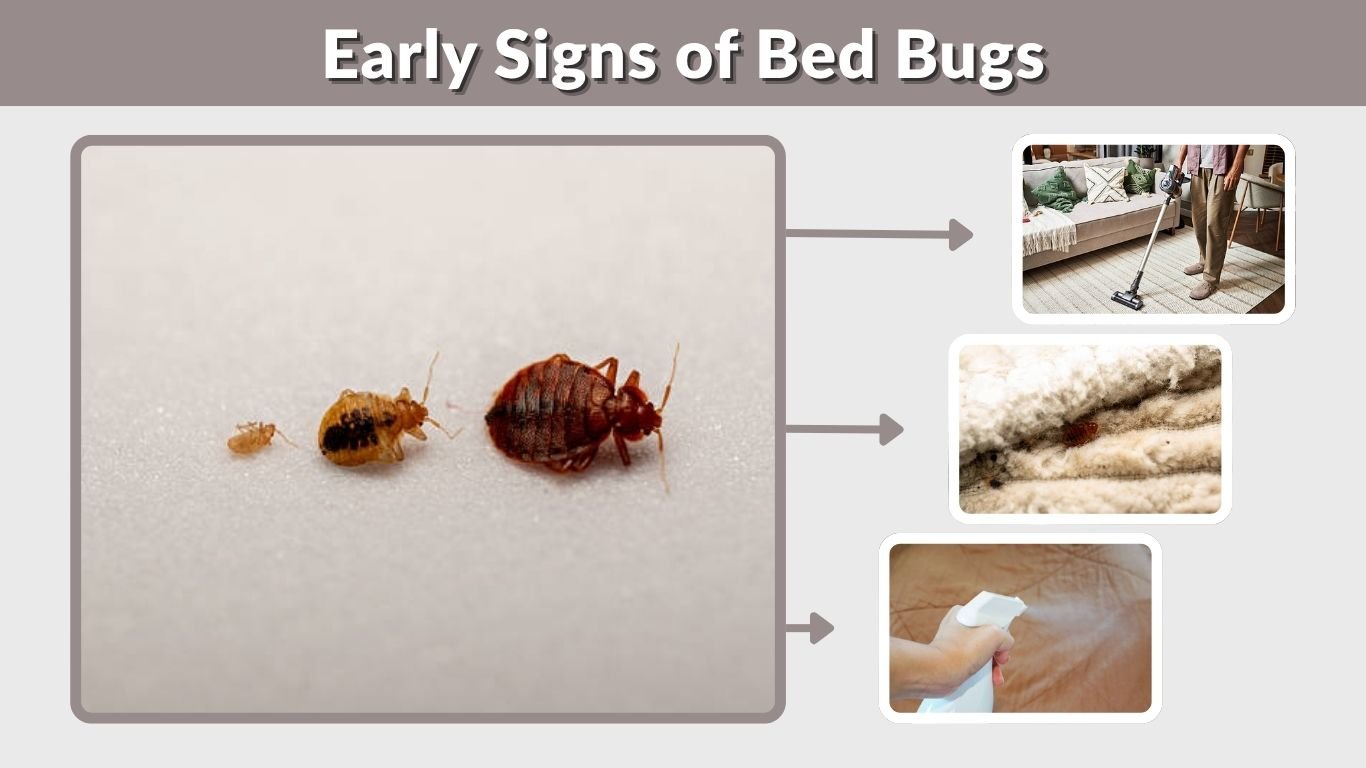
The early signs of bed bugs are often subtle, especially when only a few insects are present. You may notice tiny dark spots on sheets, rusty stains on a mattress, shed skins, small pale eggs, or unexplained itchy marks after sleeping. Bed bugs usually hide close to where people rest, including mattress seams, bed frames, couches, and nearby cracks. Recognizing these warning signs early can make an infestation easier to confirm and control before the insects spread throughout the home.
What Are the First Early Signs of Bed Bugs?
A small infestation may be surprisingly difficult to detect because bed bugs are flat, secretive insects that hide in narrow cracks during the day. Bites alone cannot confirm their presence because other insects and skin conditions can produce similar marks. Physical evidence around sleeping areas provides much stronger clues when checking for an early infestation.
7 Early Warning Signs to Look For
- Dark fecal spots: Tiny black or dark-brown dots may appear on mattresses, sheets, bed frames, or nearby furniture.
- Rusty or reddish stains: Crushed bed bugs can leave small blood-colored marks on bedding.
- Shed skins: Growing nymphs shed pale, translucent exoskeletons.
- Tiny eggs: Bed bug eggs are approximately 1 mm long and pale or whitish.
- Live bugs: Adults are flat, wingless, reddish-brown insects roughly comparable to an apple seed in general appearance.
- Possible bites: Itchy red bumps may occur after sleeping, although some people develop no visible reaction.
- Musty odor: A sweet, musty smell can occur, particularly as an infestation becomes more substantial.
Skin Early Signs of Bed Bugs
Skin marks are often what initially make someone suspect bed bugs, but they are one of the least reliable ways to confirm an infestation. People’s reactions differ significantly. Some develop itchy bumps, while others show little or no reaction. Marks may also take several days to appear after the actual feeding event.
What Do Early Bed Bug Bites Look Like?
Bed bug bites can appear as slightly swollen, reddish areas that may itch. They sometimes appear in groups or lines, but no specific bite arrangement proves that bed bugs caused them.
Mosquito bites, flea bites, hives, eczema, and other skin problems can look similar. Because of this, the EPA recommends looking for physical evidence—such as fecal spots, eggs, shed skins, or live insects—rather than diagnosing a bed bug problem from skin marks alone.
Severe swelling, signs of infection, or an unusual allergic reaction should be discussed with a healthcare professional.
Mattress and Sheet Early Signs of Bed Bugs
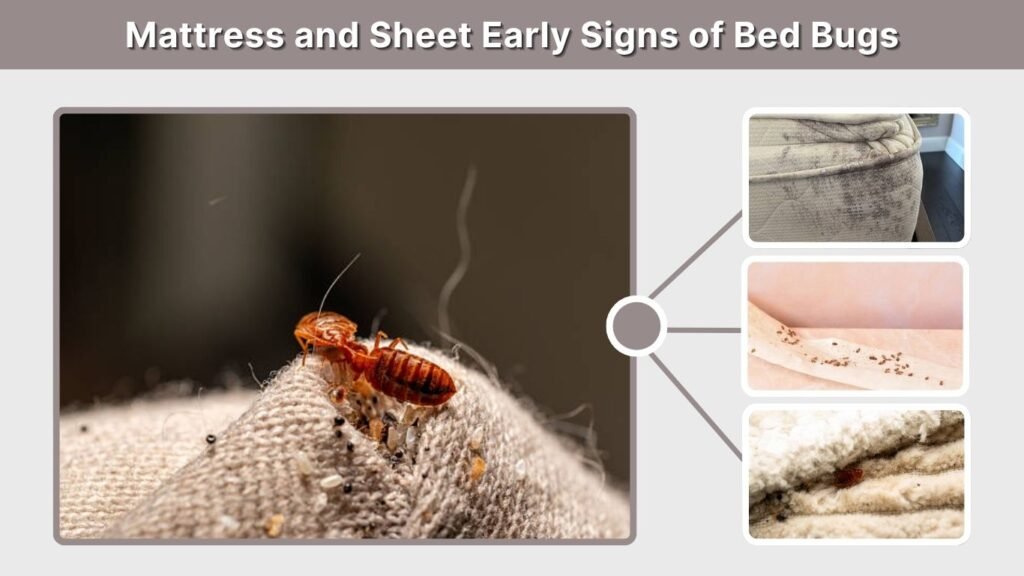
The mattress and surrounding bed structure are among the first places worth inspecting because bed bugs tend to establish hiding areas close to sleeping hosts. They can squeeze into seams, piping, labels, joints, cracks, and the interior structure of box springs. Early evidence may be extremely small, so a flashlight can make inspection easier.
Signs to Check on a Mattress and Sheets
Look carefully for:
- Tiny black or dark-brown spots along mattress seams
- Small reddish or rusty stains on sheets
- Pale shed skins caught in folds or stitching
- Tiny whitish eggs attached near cracks or seams
- Live reddish-brown adults or pale young nymphs
- Groups of signs around mattress tags, piping, or corners
- Evidence underneath the mattress and around the box spring
Dark fecal spots can sometimes resemble ink marks and may soak into fabric rather than sitting loosely on the surface.
Early Signs of Bed Bugs on a Couch
Beds are not the only places where infestations occur. A couch or upholstered chair can support bed bugs when people regularly sit, rest, or sleep there. The insects prefer narrow, protected hiding spaces, and upholstered furniture contains many seams, folds, gaps, and joints that can provide suitable shelter.
Where to Inspect a Couch
Remove cushions and inspect:
- Cushion seams and zippers
- Fabric folds and piping
- Spaces beneath cushions
- Stapled fabric underneath the couch
- Wooden frame joints and screw holes
- Cracks where fabric meets the frame
- Nearby baseboards and furniture
Finding a few dark spots does not automatically mean bed bugs are present. Look for several types of evidence together, especially live insects, characteristic shed skins, eggs, or repeated fecal spotting.
Bed Bug Eggs, Shed Skins, and Black Spots
Some of the most useful early evidence is much smaller than the adult insect itself. Bed bugs pass through several immature stages and shed their outer skins while growing. Females also deposit tiny eggs in protected hiding areas, so inspecting cracks and seams closely can reveal evidence before large numbers of adult bugs become obvious.
What Early Bed Bug Eggs Look Like
Bed bug eggs are tiny, roughly 1 mm long, pale or whitish, and attached to surfaces. They may occur around mattress seams, furniture joints, cracks, or established hiding sites.
Shed skins are usually pale or translucent and resemble an empty bed bug-shaped shell. Dark fecal spots are different: they consist of digested blood and often look like tiny black or dark reddish-brown ink marks.
Old or dried eggshells alone may not prove that an infestation is currently active, particularly if they are found with no fresh spotting or live insects. Multiple recent signs provide stronger evidence.
Early Signs on Walls, Carpet, and Around the House
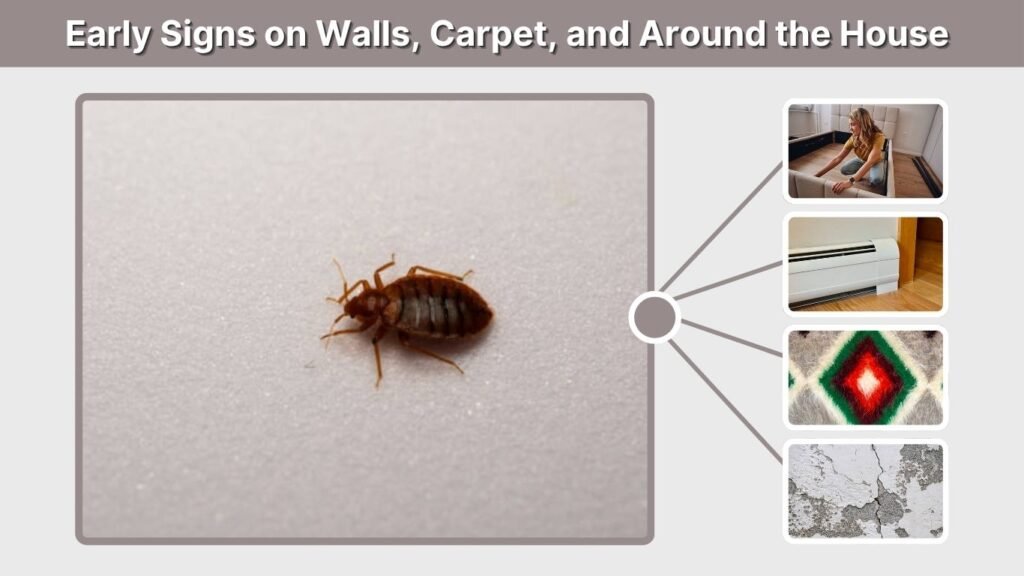
Bed bugs initially tend to stay close to areas where people sleep or spend long periods resting. As an infestation becomes established, however, evidence may also occur in furniture, baseboards, carpeting, curtains, drawers, wall cracks, and other protected spaces. Their flattened bodies allow them to enter remarkably narrow gaps.
Other Places Worth Checking
Inspect around:
- Bed frames and headboards
- Nightstands and drawer joints
- Baseboards
- Carpet edges
- Behind pictures and wall hangings
- Curtain seams and folds
- Cracks and crevices near beds
- Upholstered chairs and couches
- Loose wallpaper near sleeping areas
Seeing a bed bug walking on a wall during the day is possible, particularly when insects are hungry or hiding places have been disturbed. Daytime activity alone does not indicate a specific infestation size.
What to Do When You Find Early Signs of Bed Bugs
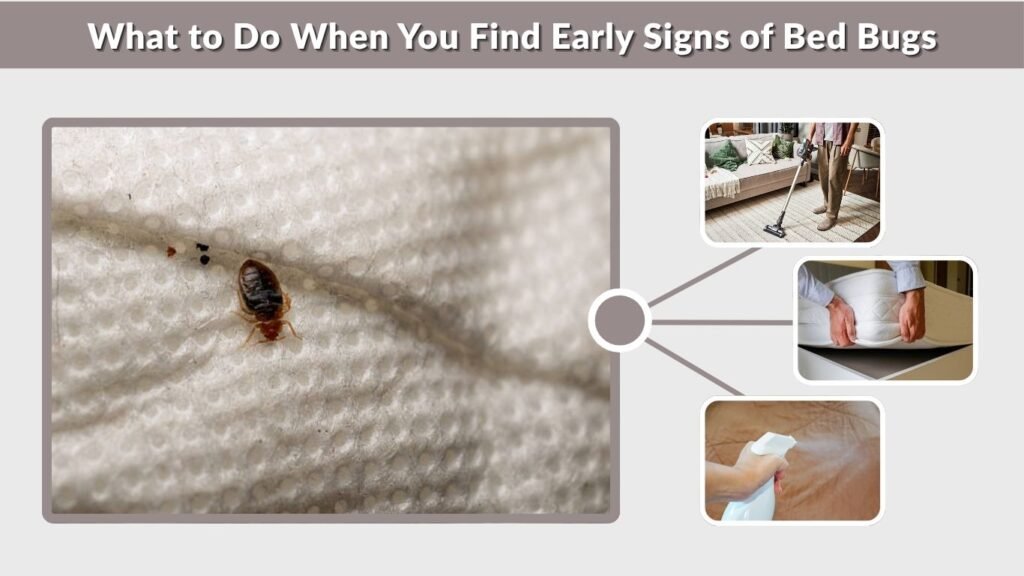
Catching an infestation early is valuable because a small, localized problem is generally easier to manage than one that has spread through several rooms. Avoid immediately throwing away mattresses or furniture, because unnecessary disposal can be costly and may spread bugs while items are being moved. Confirming the pest correctly should come first.
First Steps After Finding Suspicious Signs
- Capture a suspected bug safely for identification if possible.
- Inspect the mattress, box spring, frame, and headboard thoroughly.
- Check nearby couches and upholstered furniture.
- Reduce clutter around sleeping areas.
- Vacuum suspected hiding areas carefully.
- Consider bed bug-proof mattress and box-spring encasements.
- Avoid moving potentially infested belongings into unaffected rooms.
- Use only pesticides labeled for bed bugs and follow all label directions.
- Consider an experienced pest-management professional if evidence confirms an infestation.
FAQs
Early bed bug infestations create uncertainty because many warning signs resemble stains, bites, or evidence from other household insects. Confirmation usually requires examining several clues together rather than depending on one symptom. The following questions address common concerns about very early infestations, bedding stains, eggs, smell, and the best places to inspect first.
1. What Is Usually the Very First Sign of Bed Bugs?
There is no single first sign for everyone. Some people notice bites, while others first discover dark fecal spots, rusty stains, shed skins, eggs, or a live bug. Physical evidence around the sleeping area is more reliable than bites alone.
2. What Do Early Bed Bug Stains on Sheets Look Like?
You may see small reddish or rusty marks from crushed bugs and tiny dark spots produced by bed bug fecal material. Dark spotting can resemble dots made by a fine marker.
3. Can You Have Bed Bugs Without Seeing Any Bugs?
Yes. Low-level infestations can be difficult to detect because bed bugs hide in extremely narrow spaces. You may find eggs, fecal spots, shed skins, or stains before seeing a live adult.
4. Do Early Bed Bug Infestations Smell?
A sweet or musty odor is associated with bed bugs, but odor is generally more noticeable with heavier infestations. Absence of an obvious smell does not rule out an early infestation.
5. Where Should I Check First for Bed Bugs?
Start with the place where you sleep. Inspect mattress seams, piping, labels, the box spring, bed-frame joints, and headboard. Then expand the inspection to nearby furniture, couch seams, baseboards, carpet edges, and cracks if necessary.