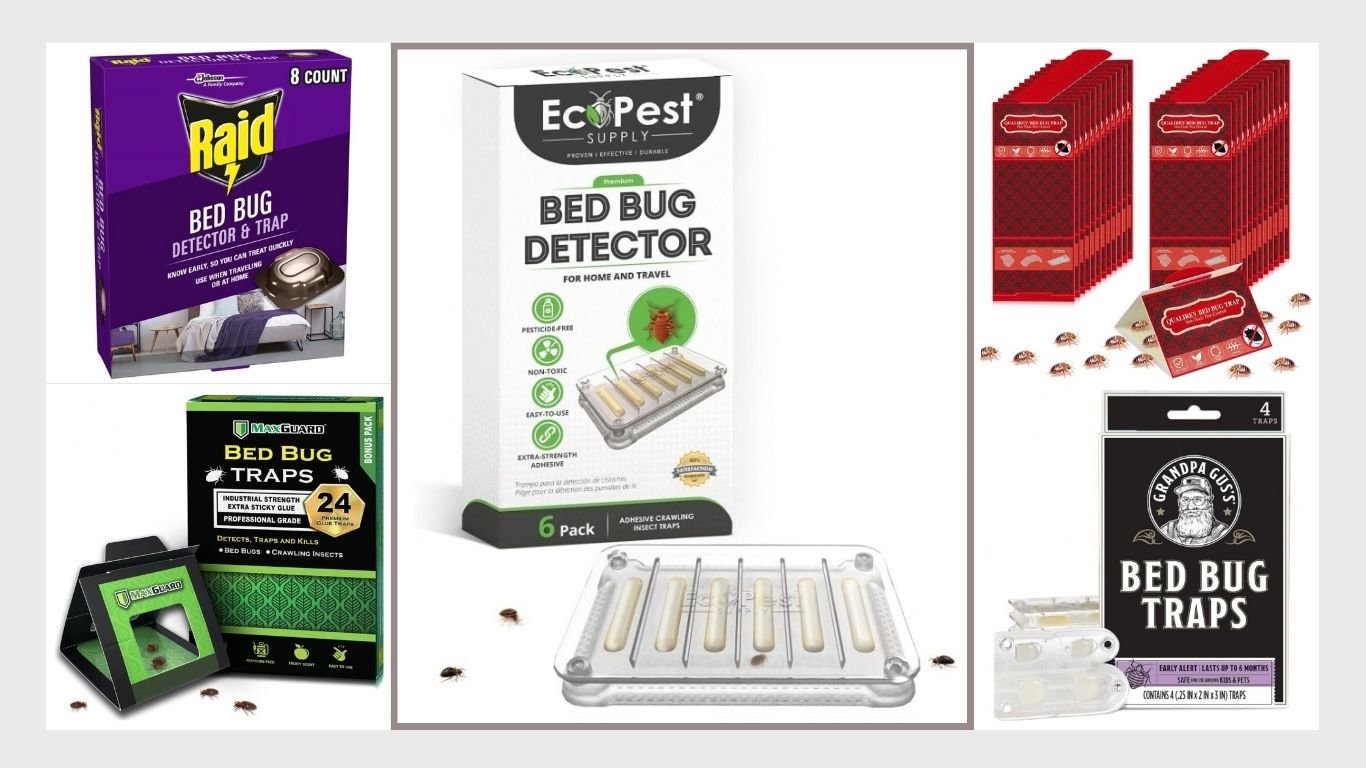
Bed bug traps can help detect activity early, monitor problem areas, and reduce the number of insects reaching beds or furniture. The best options include interceptor cups, glue traps, detector monitors, and pesticide-free designs that work around bed legs, sofas, and other common hiding areas. Some traps are better for early detection, while others are designed for continuous monitoring. In this guide, we review 14 of the best bed bug traps based on design, ease of use, placement options, durability, and overall usefulness for home bed bug management.
1. MaxGuard Bed Bug Detection & Crawling Insect Traps
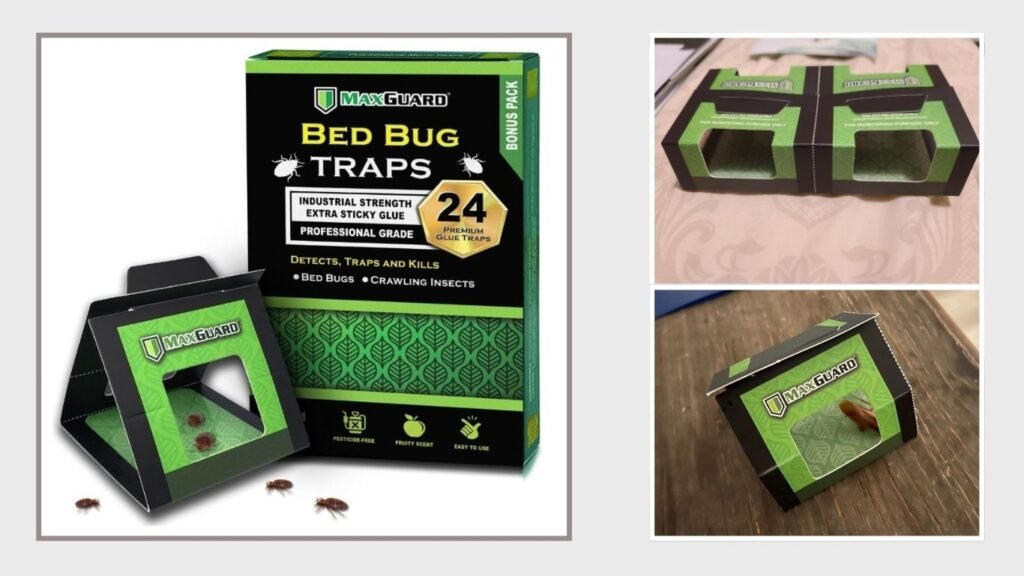
MaxGuard Bed Bug Detection & Crawling Insect Traps are designed for simple, pesticide-free monitoring around beds, furniture, baseboards, and other areas where bed bugs may travel. Their adhesive-based design helps capture crawling insects while giving homeowners a clearer idea of where activity is occurring. This makes them especially useful for early detection, routine monitoring, or supporting a broader bed bug control plan.
Key Features
- Adhesive trap design for crawling insects
- Suitable for bed bug detection and monitoring
- Pesticide-free trapping method
- Easy to place around beds and furniture
- Useful near baseboards, walls, and suspected travel routes
- Helps monitor pest activity over time
- Disposable design for convenient cleanup
Why It’s Best for Early Bed Bug Detection
One of the biggest advantages of MaxGuard traps is their simplicity. Bed bugs often remain hidden during the day, making it difficult to confirm activity until bites or other signs become noticeable. Placing adhesive traps near likely travel routes can provide an additional way to monitor the situation.
They are particularly helpful for bedrooms, guest rooms, apartments, and rental properties where early detection can make pest management easier. Because no spraying or mixing is required, setup is also straightforward for users who want a low-maintenance monitoring option.
Performance & Placement Flexibility
These traps can be positioned near bed frames, beneath furniture, beside baseboards, or close to other suspected bed bug pathways. Their flat design makes them easy to use in tighter spaces where larger interceptor cups may not fit.
Regular inspection is important because traps work primarily as monitoring tools. Checking them frequently can help reveal whether insect activity is increasing, decreasing, or shifting to another part of the room.
Overall Verdict
MaxGuard Bed Bug Detection Traps are a practical choice for users who want an easy, pesticide-free way to monitor bed bug activity. Their simple adhesive design, flexible placement options, and disposable format make them especially suitable for early detection and ongoing observation. They work best as part of a broader management approach that may include cleaning, encasements, interceptors, and professional treatment when infestations are established.
2. Bed Bug Interceptor Traps for Bed Legs
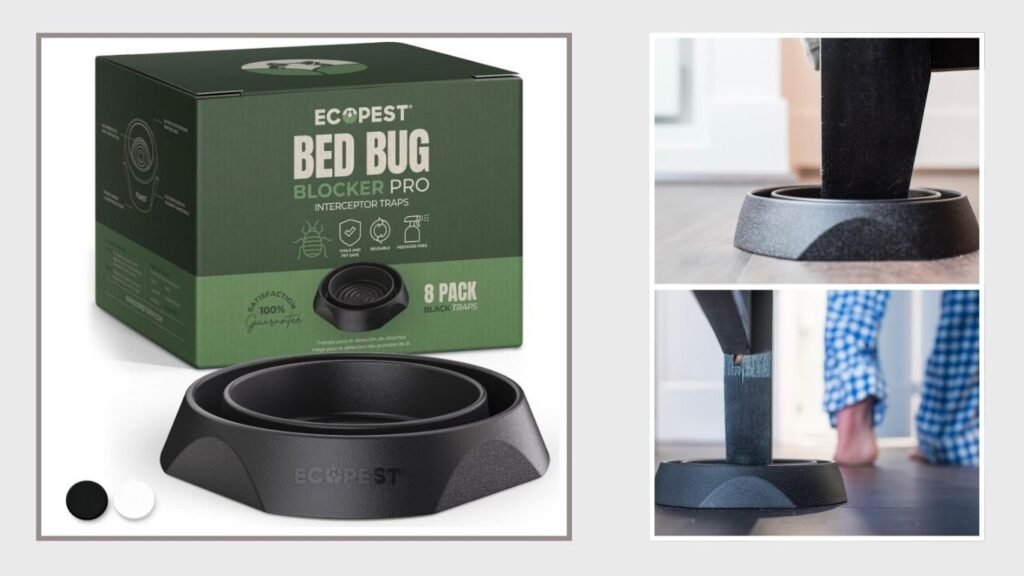
Bed Bug Interceptor Traps for Bed Legs are designed to create a simple physical barrier between crawling bed bugs and sleeping areas. Positioned beneath bed or furniture legs, these traps help capture insects attempting to climb up or down. Their pesticide-free design makes them particularly useful for long-term monitoring, helping homeowners detect activity while reducing the chance of bed bugs reaching beds and upholstered furniture.
Key Features
- Interceptor-style trap design
- Fits beneath bed and furniture legs
- Pesticide-free operation
- Helps detect crawling bed bugs
- Can monitor insects moving toward or away from furniture
- Reusable design
- Suitable for bedrooms and living areas
Why It’s Best for Bed Leg Protection
The biggest advantage of interceptor traps is that they take advantage of natural bed bug movement. Bed bugs commonly crawl toward sleeping hosts, so placing interceptors underneath bed legs can create a difficult barrier they must cross.
This setup is especially helpful when a bed has been moved slightly away from walls and bedding is kept from touching the floor. In that arrangement, the furniture legs become primary access points, allowing interceptors to provide more useful monitoring.
Performance & Everyday Monitoring
Unlike adhesive traps, interceptor cups do not depend on sticky surfaces that can collect dust. Their smooth-sided design helps prevent trapped insects from climbing back out.
Regular inspection is still important. Checking the cups every few days can help users identify activity early and determine whether additional treatment is needed.
Overall Verdict
These bed bug interceptor traps are a practical choice for anyone wanting pesticide-free protection around bed and furniture legs. Their reusable design and passive operation make them especially useful for continuous monitoring and early detection.
3. Harris Early Detection Bed Bug Traps – 20 Pack
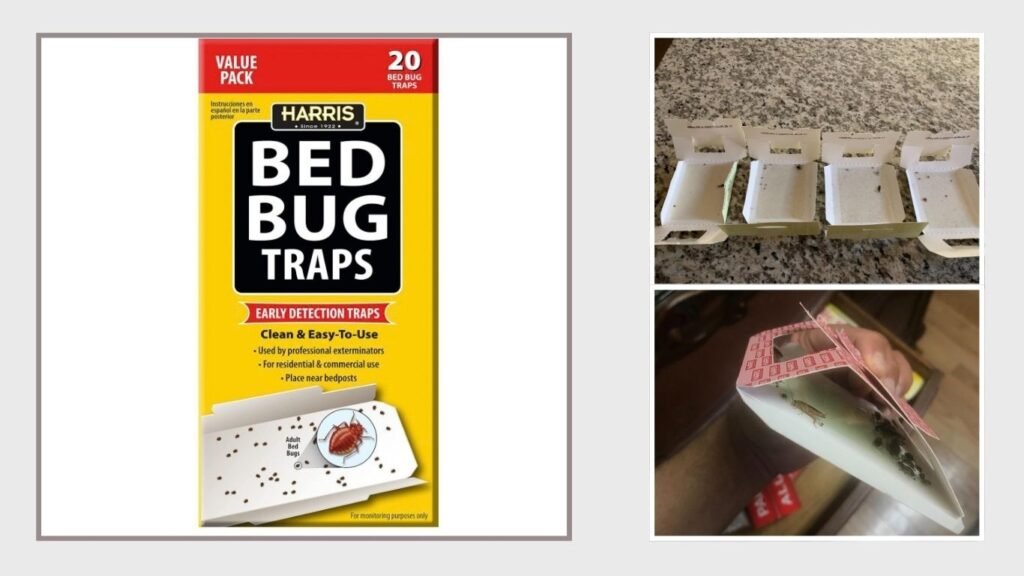
Harris Early Detection Bed Bug Traps are compact adhesive monitors designed to help homeowners detect bed bug activity before an infestation becomes more difficult to manage. The 20-pack provides enough traps for several bedrooms, furniture areas, or suspected problem locations. Their low-profile design makes them easy to place beneath beds, near baseboards, behind furniture, and around other common bed bug travel routes.
Key Features
- 20 traps per package
- Adhesive monitoring surface
- Designed for early bed bug detection
- Compact and discreet construction
- Pesticide-free trapping method
- Easy to place in multiple rooms
- Disposable for simple cleanup
Why It’s Best for Whole-Room Monitoring
The larger number of traps makes Harris particularly useful when monitoring multiple locations at once. Instead of relying on a single trap, users can place several around a room to get a better picture of where bed bugs may be traveling.
This can be especially helpful in apartments, hotels, guest bedrooms, or homes where activity has been noticed but the exact hiding location remains unclear.
Detection Performance & Placement
These traps are most useful when positioned close to likely bed bug pathways. Areas beside bed frames, beneath furniture, behind nightstands, and along baseboards are common monitoring locations.
Because glue traps are mainly detection tools, they should be checked regularly and replaced when dirty, full, or no longer sticky.
Overall Verdict
Harris Early Detection Traps are a convenient option for users who want broad monitoring coverage at an affordable scale. The 20-pack makes it easy to place several traps throughout a room, improving the chances of detecting low-level activity early.
4. Raid Bed Bug Detector & Trap
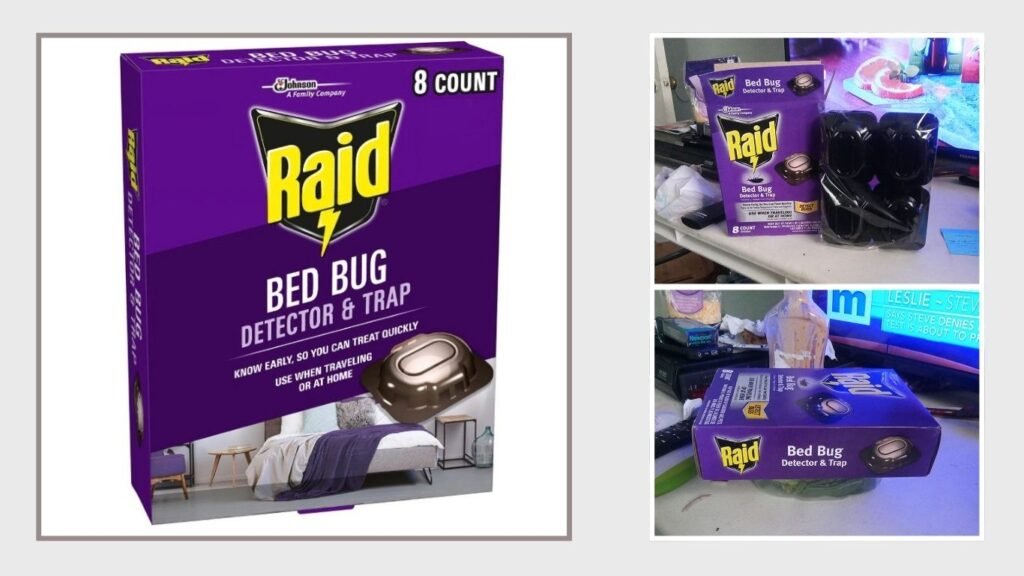
Raid Bed Bug Detector & Trap provides a straightforward way to monitor suspected bed bug activity without complicated installation. Its compact trap design is intended for placement near beds, furniture, and other areas where bed bugs may travel. It can be particularly useful for homeowners who suspect an infestation but want visible evidence before moving forward with more extensive treatment.
Key Features
- Designed specifically for bed bug detection
- Compact monitoring design
- Easy placement around sleeping areas
- No complicated setup required
- Useful for early activity detection
- Discreet appearance
- Suitable for routine inspection
Why It’s Best for Simple Detection
Raid’s main strength is convenience. Users do not need to move heavy furniture or install large devices. The trap can simply be placed in strategic locations and checked periodically.
This makes it particularly useful for guest rooms, hotel stays, apartments, or areas where bed bug exposure may be a concern. Early identification can make it easier to respond before the problem spreads further.
Performance & Ease of Use
Placement has a major impact on effectiveness. Traps should be positioned close to beds, furniture legs, baseboards, or other likely travel routes.
Checking the detector regularly can provide useful information about whether activity is present. However, like most monitoring traps, it should not be considered a complete treatment for an established infestation.
Overall Verdict
Raid Bed Bug Detector & Trap is best suited to homeowners who want a simple, recognizable monitoring option. Its compact size and straightforward setup make it convenient for detecting potential bed bug activity without creating clutter around sleeping areas.
5. Bed Bug Interceptors for Furniture Protection
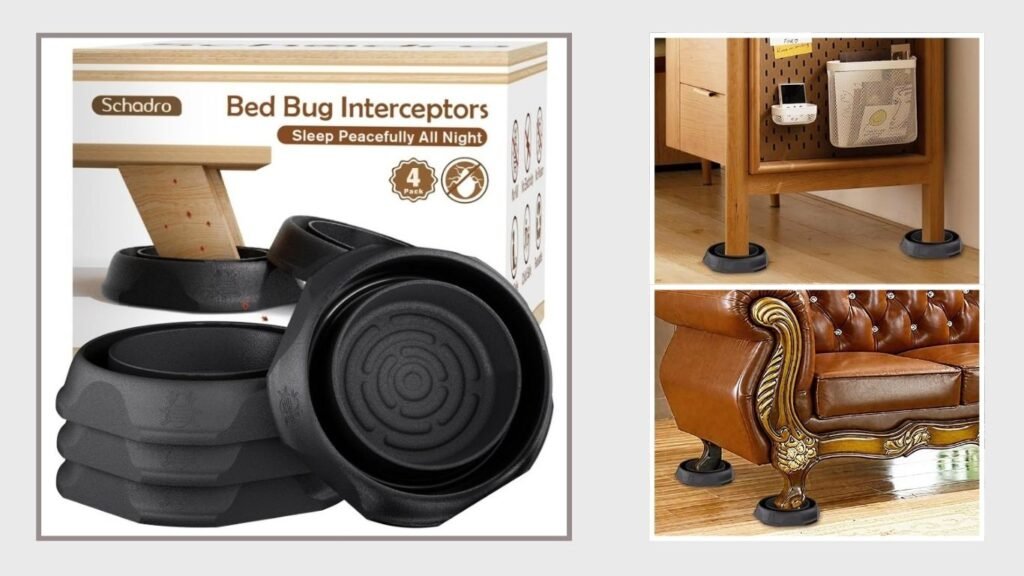
These Bed Bug Interceptors are designed to fit beneath furniture legs, creating a passive trapping zone that helps stop crawling bed bugs from reaching beds, sofas, and other elevated furniture. The durable cup-style design works without pesticides or electricity, making it suitable for long-term monitoring. It can also help homeowners determine whether bed bugs are approaching furniture from elsewhere in the room.
Key Features
- Cup-style interceptor design
- Designed for beds and furniture legs
- Pesticide-free trapping method
- Reusable construction
- Helps monitor crawling bed bugs
- Suitable for beds, sofas, and chairs
- Works continuously once positioned
Why It’s Best for Furniture Isolation
Furniture isolation is one of the most useful applications for interceptor traps. By placing one underneath each leg, users create defined monitoring points that bed bugs must cross before reaching sleeping or resting areas.
This strategy works particularly well when beds or sofas are kept away from walls and blankets are prevented from touching the floor. Doing so reduces alternative routes and makes the interceptors more effective as monitoring tools.
Durability & Long-Term Performance
Unlike disposable glue traps, interceptor cups can usually remain in place for extended periods. They require little maintenance beyond periodic inspection and cleaning.
Their passive design means there are no batteries, chemicals, or replacement adhesive strips to manage. This can make them especially convenient for long-term monitoring after treatment.
Overall Verdict
These furniture interceptors are a practical choice for homeowners who want durable, reusable bed bug monitoring around beds and sofas. Their simple design and continuous operation make them especially useful for furniture isolation and post-treatment observation.
6. Trapper Insect Glue Traps
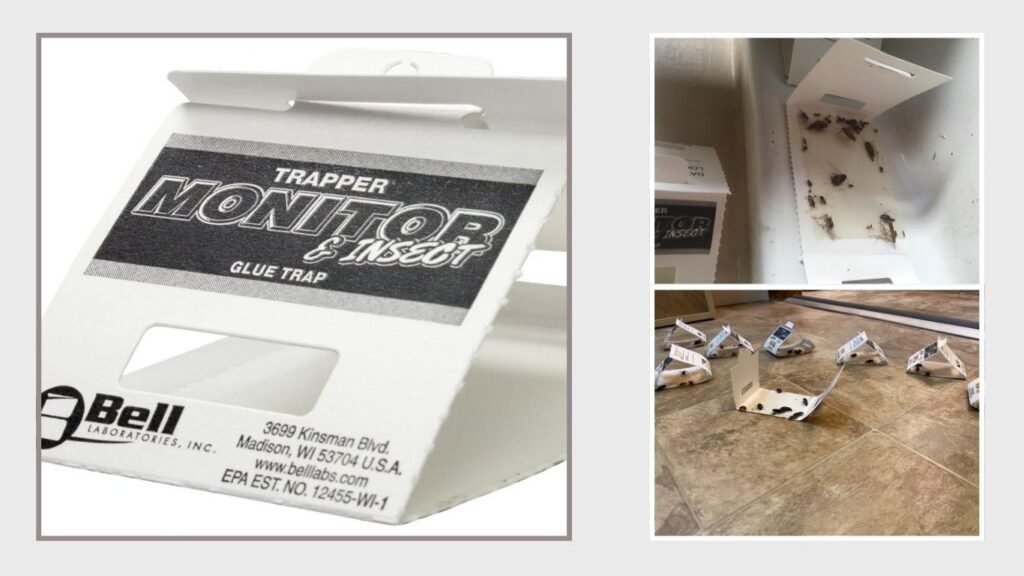
Trapper Insect Glue Traps are multipurpose adhesive boards designed to capture a range of crawling insects, including bed bugs when properly positioned. Their larger sticky surface offers flexible placement beneath furniture, along walls, inside closets, or near other suspected travel areas. Although they are not exclusively designed for bed bugs, their versatility makes them useful for broader household pest monitoring.
Key Features
- Large adhesive trapping surface
- Designed for multiple crawling insects
- Pesticide-free monitoring method
- Flexible flat or folded placement
- Useful beneath furniture and along walls
- Disposable after use
- Suitable for general household pest detection
Why It’s Best for Multi-Pest Monitoring
One advantage of Trapper Glue Traps is that they can capture more than one type of crawling pest. This can help homeowners determine whether suspected activity is actually from bed bugs, cockroaches, spiders, or another household insect.
The larger trapping surface also gives users more flexibility than some compact bed bug detectors, particularly in locations with wider insect travel paths.
Performance & Placement Flexibility
These traps can be positioned flat beneath furniture or folded into a covered shape depending on the location. Placing them near wall edges, behind nightstands, or close to suspected bed bug hiding areas can improve monitoring effectiveness.
As with other adhesive traps, dust and debris can reduce stickiness, so traps should be inspected and replaced when necessary.
Overall Verdict
Trapper Insect Glue Traps are best for homeowners who want a versatile monitoring solution rather than a bed-bug-only product. Their large adhesive surface, flexible placement, and ability to capture multiple crawling insects make them especially useful for identifying broader pest activity around the home.
7. Bed Bug Trap Interceptors for Furniture Legs
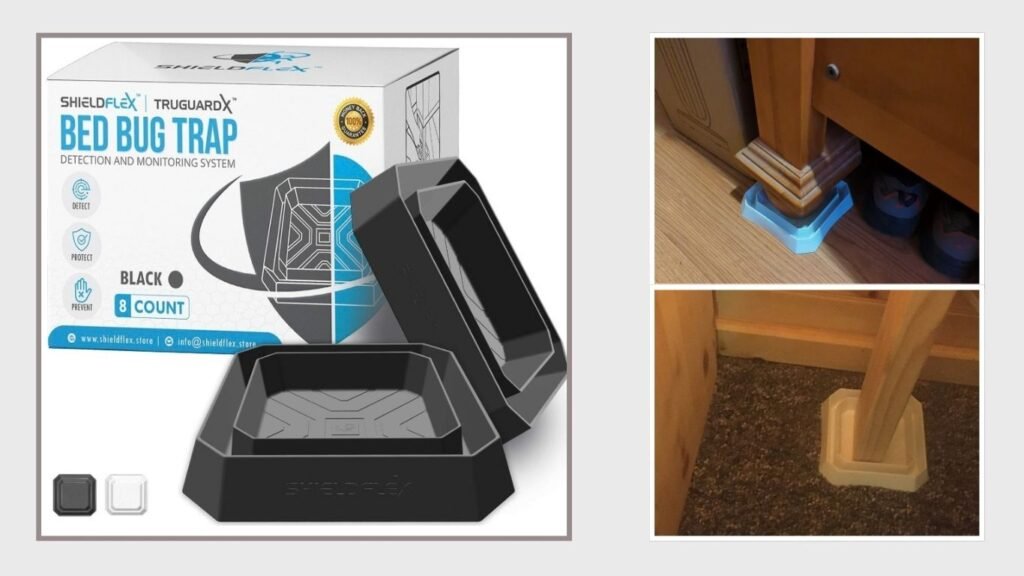
These Bed Bug Trap Interceptors are designed to sit beneath bed, sofa, or chair legs and capture crawling bed bugs before they reach the furniture. Their cup-style construction provides a pesticide-free way to monitor activity while helping isolate sleeping and resting areas. Because they work passively once installed, they are especially useful for continuous monitoring in bedrooms, apartments, guest rooms, and other areas where bed bug activity is a concern.
Key Features
- Interceptor-style cup design
- Fits beneath furniture and bed legs
- Pesticide-free monitoring method
- Reusable construction
- Helps detect crawling bed bugs
- Suitable for beds, sofas, and chairs
- Works continuously without electricity
Why It’s Best for Long-Term Monitoring
The main advantage of interceptor traps is their ability to remain in place for extended periods. Instead of relying on sprays or adhesive surfaces, they create a physical barrier that bed bugs must cross when moving toward or away from furniture.
This makes them particularly useful after treatment, when homeowners want to monitor whether activity is continuing. They can also help reveal low-level infestations that may otherwise go unnoticed.
Performance & Practical Setup
For best results, each furniture leg should sit securely inside an interceptor. Beds should also be positioned away from walls, and blankets should not touch the floor, since these can create alternative access routes.
Regular inspection helps users track whether bed bug activity is increasing or decreasing over time.
Overall Verdict
These interceptor traps are a practical option for anyone who wants simple, reusable, pesticide-free monitoring. Their passive design and ability to isolate furniture make them particularly suitable for continuous bedroom protection and post-treatment observation.
8. Pesticide-Free Bed Bug Interceptor Traps
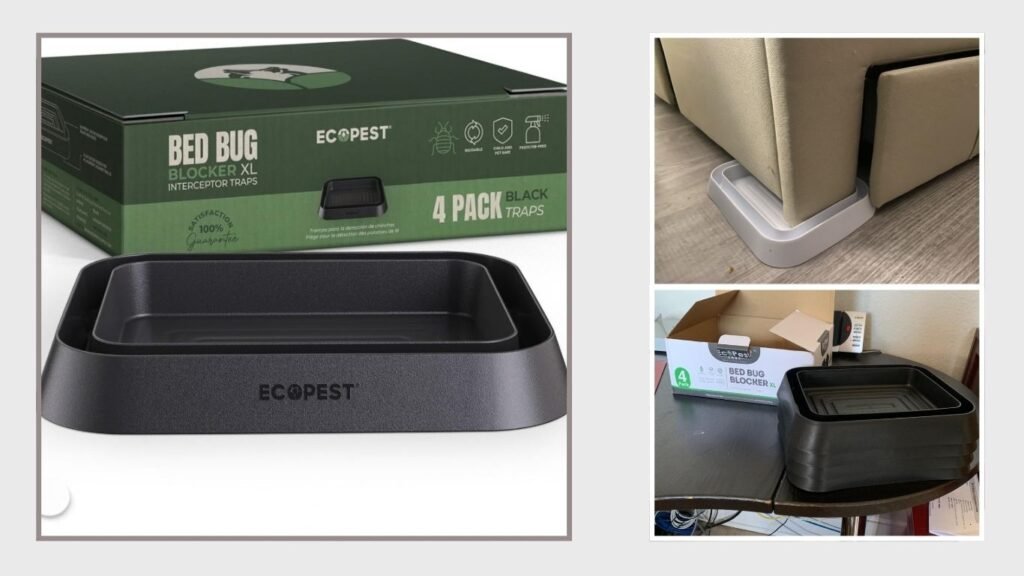
Pesticide-Free Bed Bug Interceptor Traps offer a straightforward way to monitor and capture bed bugs around furniture legs without using chemical treatments. Their smooth-walled design helps trap insects attempting to climb toward beds or sofas, while the reusable format makes them suitable for long-term use. They work especially well as part of a broader bed bug management plan focused on detection, isolation, and continued monitoring.
Key Features
- Pesticide-free interceptor design
- Designed for furniture legs
- Reusable and easy to inspect
- Helps monitor bed bug movement
- No sprays, batteries, or electricity required
- Suitable for bedrooms and living spaces
- Useful after treatment for continued monitoring
Why It’s Best for Chemical-Free Monitoring
For households that want to limit unnecessary chemical applications, interceptor cups offer a purely mechanical trapping method. Bed bugs climb into the trap while attempting to reach furniture and may have difficulty escaping the smooth interior walls.
This makes interceptors especially useful for families who want a low-maintenance monitoring tool that can remain in place without releasing odors or residues.
Performance & Everyday Use
The traps work best when furniture is properly isolated. Keeping beds several inches away from walls and ensuring sheets or blankets do not touch the floor can force bed bugs to approach through the furniture legs.
Because the traps are reusable, they can be cleaned and returned to position after inspection, making them economical for longer monitoring periods.
Overall Verdict
These pesticide-free interceptors are a strong choice for users seeking a simple physical barrier rather than another disposable product. Their reusable design and continuous operation make them especially practical for long-term bed bug detection and furniture isolation.
9. Grandpa Gus’s Bed Bug Glue Traps
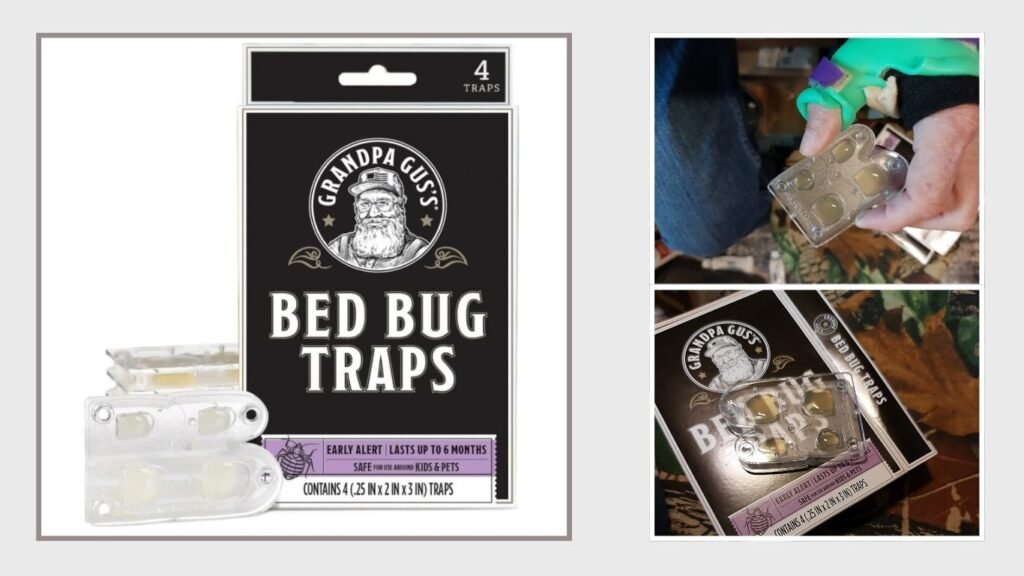
Grandpa Gus’s Bed Bug Glue Traps are designed for quick and convenient monitoring in areas where bed bugs may be traveling. Their adhesive surface captures crawling insects that cross the trap, providing visible evidence of pest activity. The compact design makes them easy to place beneath beds, near nightstands, beside walls, or around upholstered furniture without taking up much space.
Key Features
- Adhesive glue-trap construction
- Designed for bed bug monitoring
- Compact and discreet size
- Easy placement around sleeping areas
- Pesticide-free trapping method
- Disposable after use
- Useful for early detection
Why It’s Best for Quick Spot Checks
Grandpa Gus’s traps are especially useful when homeowners want to monitor several small areas without installing larger interceptor cups. Their low-profile construction allows them to fit in narrow spaces where bed bugs may travel.
They can also be useful when checking guest rooms, rental units, or recently treated bedrooms for signs of renewed activity.
Detection Performance & Placement
Placement is critical with adhesive traps. Positioning them along baseboards, beneath beds, or close to furniture edges can improve the likelihood of intercepting bed bugs as they move through the room.
Because the adhesive surface can become dusty, users should inspect traps regularly and replace them when they lose stickiness.
Overall Verdict
Grandpa Gus’s Bed Bug Glue Traps are a convenient option for targeted monitoring and early detection. Their compact design and easy setup make them especially appealing for users who want a simple disposable trap for checking specific high-risk areas.
10. Qualirey Bed Bug Detector Interceptors
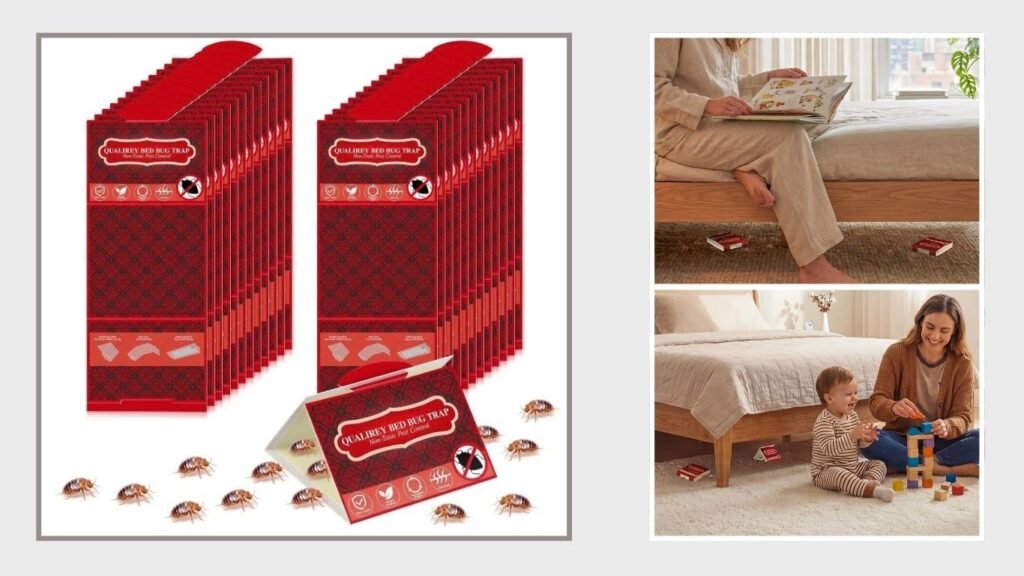
Qualirey Bed Bug Detector Interceptors are designed to help homeowners identify bed bug activity around beds and furniture while providing a physical trapping barrier. Their interceptor-style construction allows crawling insects to enter while making it difficult for them to escape. They are particularly useful for households that want continuous monitoring without relying on sprays, electricity, or complicated equipment.
Key Features
- Interceptor-style bed bug detector
- Designed for use around furniture legs
- Pesticide-free operation
- Reusable construction
- Helps monitor insect activity
- Easy to inspect visually
- Suitable for beds and upholstered furniture
Why It’s Best for Continuous Detection
Qualirey interceptors are well suited to long-term monitoring because they can stay in position without requiring daily maintenance. This is especially helpful after professional treatment or when a homeowner wants to confirm whether bed bugs are still active.
The design also allows users to see captured insects clearly, making ongoing inspection more straightforward.
Performance & Setup Convenience
These traps work best when used under every furniture leg rather than only one or two. Proper furniture isolation can improve the monitoring process by limiting alternative routes.
The reusable design also makes them practical for extended use, since users can clean the traps and reposition them as needed.
Overall Verdict
Qualirey Bed Bug Detector Interceptors are a solid choice for users who want simple, reusable, pesticide-free monitoring. Their physical barrier design makes them particularly useful for long-term observation around beds and other furniture.
11. Bed Bug Detector & Detection Monitor Traps
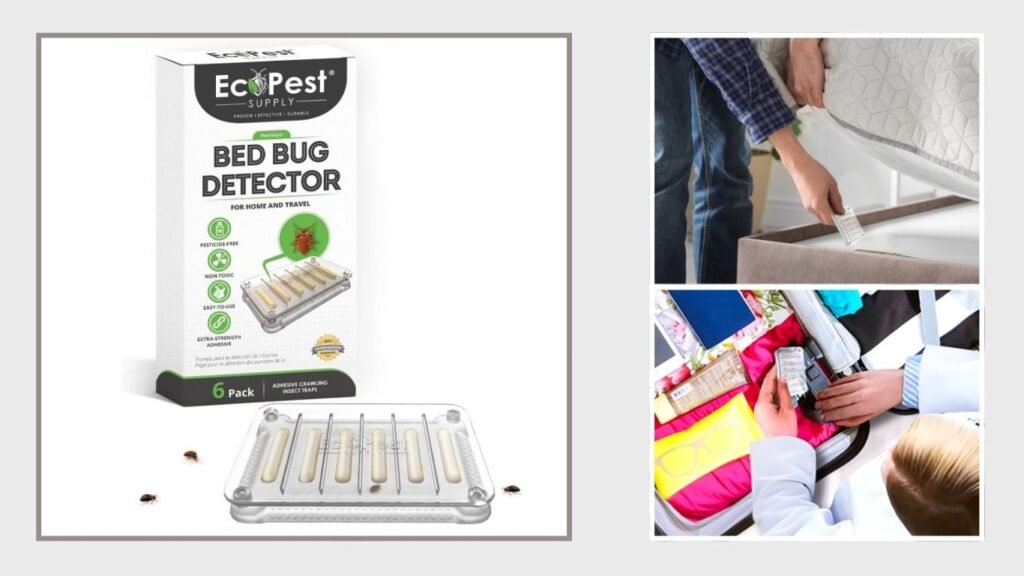
Bed Bug Detector & Detection Monitor Traps are designed to help identify hidden bed bug activity around sleeping areas before the problem becomes more severe. Their compact monitoring format makes them suitable for bedrooms, apartments, hotels, and guest rooms where discreet detection is important. They can be placed near furniture, baseboards, and other suspected travel routes to provide ongoing evidence of insect activity.
Key Features
- Designed specifically for bed bug monitoring
- Compact detector format
- Suitable for discreet placement
- Useful around beds and furniture
- Helps identify early activity
- Easy to inspect and replace
- Supports ongoing infestation monitoring
Why It’s Best for Discreet Detection
These detector traps are particularly appealing when users want a monitoring method that does not noticeably change the appearance of a room. Their compact size allows them to remain hidden near beds, nightstands, or furniture edges.
This makes them useful in guest rooms, hotels, rental properties, or any setting where visible pest-control equipment would be inconvenient.
Performance & Monitoring Value
The traps should be positioned where bed bugs are most likely to travel, including beside furniture legs, along baseboards, or close to sleeping areas. Regular inspection can help users spot activity before it becomes obvious elsewhere in the room.
Like most monitors, they are best used as part of a larger strategy rather than as the sole solution for an established infestation.
Overall Verdict
These Bed Bug Detector & Detection Monitor Traps are a practical choice for subtle, ongoing monitoring. Their compact design, easy placement, and focus on early detection make them useful for homeowners who want to watch for bed bug activity without relying on large or highly visible devices.
12. BugMD Bed Bug Traps
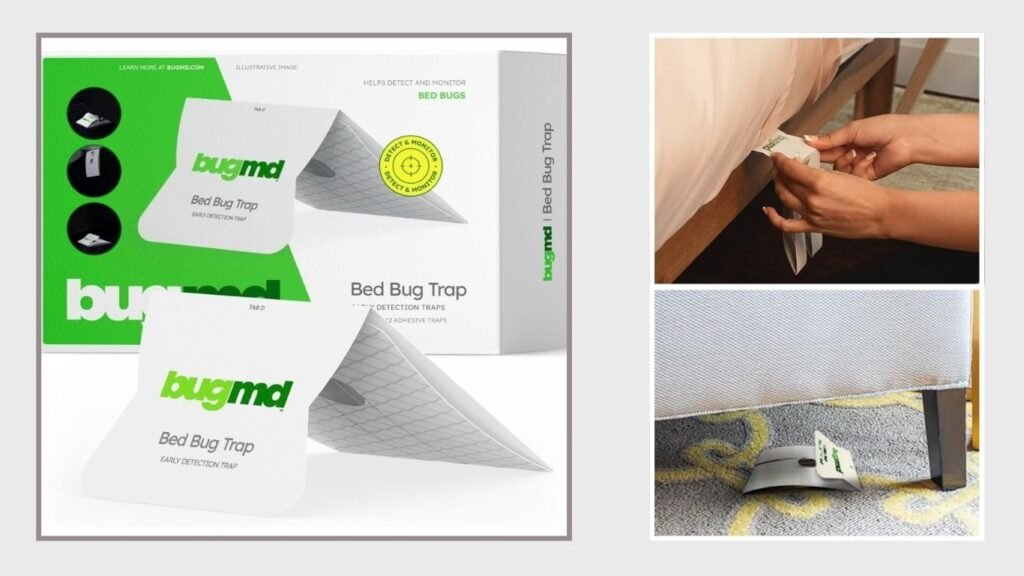
BugMD Bed Bug Traps are adhesive monitoring devices designed to help detect bed bugs around beds, furniture, mattresses, and floors. Each box contains 12 traps, and their foldable design allows them to be configured for several different placement locations. They use BugMD’s sticky PermaGlue surface rather than sprays or pesticides, making them particularly useful for ongoing indoor detection and monitoring.
Key Features
- 12 traps included per box
- Ultra-sticky PermaGlue adhesive
- No pesticide spray required
- Foldable for different placement positions
- Works around furniture legs and bed frames
- Can be placed between a mattress and box spring
- Suitable along floors, walls, and baseboards
- Manufacturer states an opened trap may last up to 90 days depending on conditions
Why It’s Best for Flexible Placement
The standout advantage of BugMD traps is their adaptable construction. Instead of being limited to furniture legs, they can be folded and positioned beneath furniture, between a mattress and box spring, or along walls where bed bugs may travel.
This flexibility is especially helpful when users are unsure exactly where activity is occurring. Several traps can be distributed around a bedroom to provide broader monitoring without installing bulky equipment.
Performance & Detection Convenience
Once the protective sheet is removed, the adhesive surface captures bed bugs that crawl across it. BugMD recommends checking traps regularly and replacing them when the sticky surface becomes filled or ineffective.
The traps are primarily detection and monitoring tools, so an established infestation generally requires additional control measures.
Overall Verdict
BugMD Bed Bug Traps are particularly appealing for users who want flexible placement rather than traditional furniture-leg interceptors. The 12-pack, foldable design, strong adhesive surface, and pesticide-free operation make them convenient for monitoring multiple locations around a bedroom.
13. ClimbUp Original Bed Bug Interceptor Trap
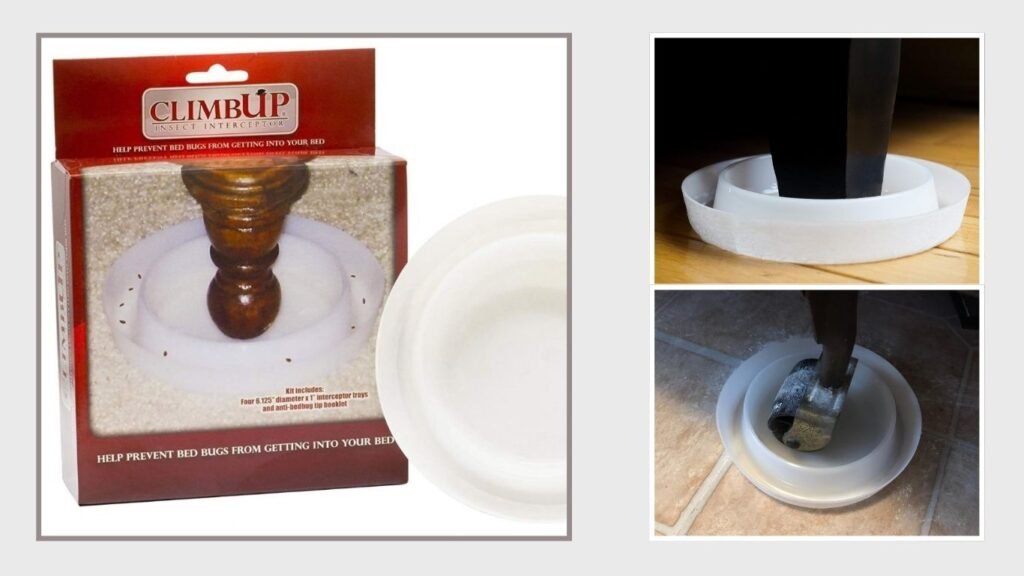
ClimbUp Original is one of the more established interceptor-style bed bug monitors. The trap sits beneath a bed or furniture leg and uses a pitfall design to capture bed bugs moving toward or away from furniture. Its dual-well construction can also help indicate the direction insects are traveling, providing useful information when monitoring an infestation or checking the effectiveness of treatment.
Key Features
- Original interceptor-style bed bug monitor
- Pesticide-free physical trapping system
- Dual-well design
- Fits beneath compatible furniture legs
- Helps monitor insects traveling toward or away from furniture
- Reusable construction
- Four interceptors in the referenced package
- Designed for early detection and post-treatment monitoring
Why It’s Best for Proven Interceptor Monitoring
ClimbUp focuses specifically on the behavior that makes interceptor traps useful. Bed bugs approaching furniture can fall into the outer well, while insects leaving furniture can become trapped in the other section.
That directional information can help users determine whether activity may be originating from furniture or elsewhere in the room. This provides more monitoring value than simply knowing that a bed bug has been captured.
Performance & Long-Term Use
The manufacturer describes ClimbUp primarily as a monitoring device rather than a standalone bed bug control method. It can be used proactively for early detection or after treatment to assess whether bed bug activity continues.
Furniture legs must fit properly inside the center section, and bedding should not create alternate pathways by touching floors or walls.
Overall Verdict
ClimbUp Original is a particularly strong option for homeowners who prioritize reusable, furniture-based monitoring. Its dual-well construction, pesticide-free operation, and ability to reveal bed bug movement make it useful both before and after an infestation is treated.
14. ECOPEST Bed Bug Glue Traps – 12 Pack
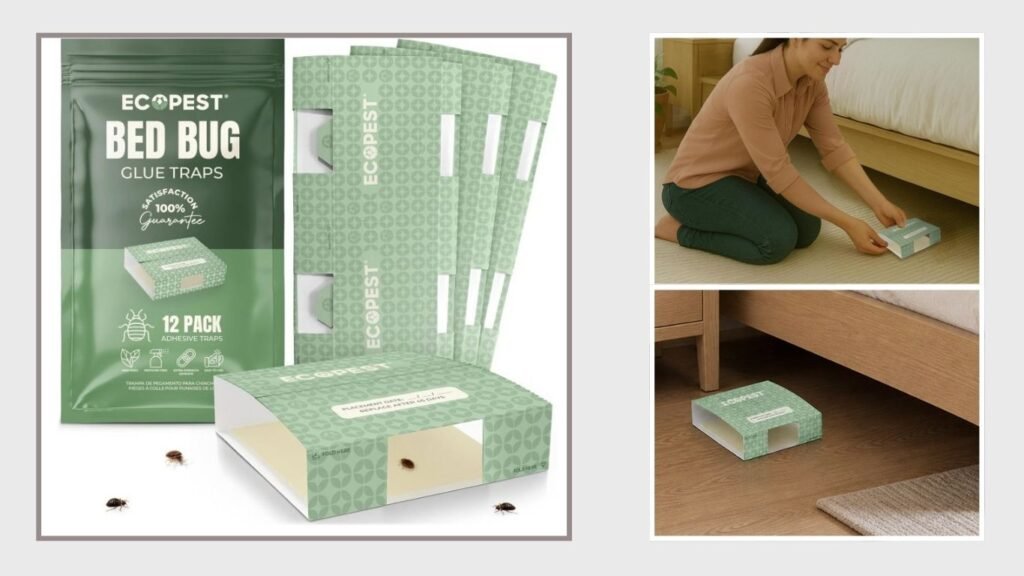
ECOPEST Bed Bug Glue Traps provide a straightforward adhesive-based method for monitoring crawling bed bugs around sleeping and furniture areas. The package contains 12 traps that can be positioned near bed legs, furniture posts, walls, or other places where activity has been observed. Their compact, non-electric design makes them particularly convenient for distributing several monitoring points throughout a bedroom.
Key Features
- 12 adhesive traps per pack
- Designed for bed bug monitoring
- No electricity required
- Sticky crawling-insect trapping surface
- Suitable near beds and furniture
- Can be positioned along walls
- Compact design for discreet monitoring
- Also capable of capturing other crawling insects that cross the adhesive
Why It’s Best for Multiple Monitoring Points
The 12-pack format is particularly useful when users want more than one trap in a room. Bed bugs may travel through different routes, so placing monitors near several furniture legs, along walls, and around sleeping areas can provide better coverage than relying on a single trap.
This also makes the product useful for guest rooms, apartments, dormitories, or other locations where regular inspection is important.
Adhesive Performance & Easy Setup
ECOPEST uses a simple glue-trap format that requires no mixing, charging, or furniture-leg installation. Once positioned near a likely travel path, it remains ready to capture insects that cross the adhesive surface. The product is marketed specifically as a trap, monitor, and detector for bed bugs and other crawling pests.
As with other glue traps, dust and debris can gradually reduce adhesive effectiveness, so regular inspection is important.
Overall Verdict
ECOPEST Bed Bug Glue Traps offer a practical combination of quantity, simplicity, and flexible positioning. The 12-pack is especially useful for homeowners who want to monitor several locations simultaneously without using large interceptor cups. For discreet detection around beds, furniture, and walls, they provide a convenient addition to a broader bed bug management strategy.
FAQs
Bed bug traps are most useful for detecting activity, monitoring treatment progress, and intercepting insects as they travel. They can provide valuable evidence of an infestation, but traps alone may not eliminate bed bugs hiding inside mattresses, furniture, wall voids, or other protected locations.
1. Do bed bug traps actually work?
Yes, properly positioned traps can capture and monitor bed bugs. Interceptor cups are particularly useful beneath furniture legs, while adhesive traps can monitor travel routes around beds, walls, and furniture. However, effectiveness depends heavily on correct placement and the type of trap being used.
2. Where is the best place to put bed bug traps?
Good locations include beneath bed legs, beside furniture, along baseboards, near headboards, and close to areas where bed bug activity is suspected. Some adhesive designs can also be positioned between mattresses and box springs when their instructions permit it.
3. Are interceptor traps better than glue traps?
They serve somewhat different purposes. Interceptors are especially useful beneath bed and furniture legs for long-term monitoring, while glue traps provide greater placement flexibility. Using the appropriate type depends on furniture design, available space, and where activity has been noticed.
4. Can bed bug traps eliminate an infestation?
Bed bug traps should generally be considered monitoring and interception tools rather than complete infestation treatments. Even ClimbUp’s instructions describe its interceptor primarily as a monitor rather than a standalone control measure. Established infestations may require a comprehensive treatment strategy.
5. How often should bed bug traps be checked?
Check traps regularly, particularly when investigating a suspected infestation or monitoring after treatment. Adhesive traps should be replaced when they become full, dirty, or lose their stickiness, while reusable interceptors can be inspected, carefully cleaned, and maintained according to their instructions.