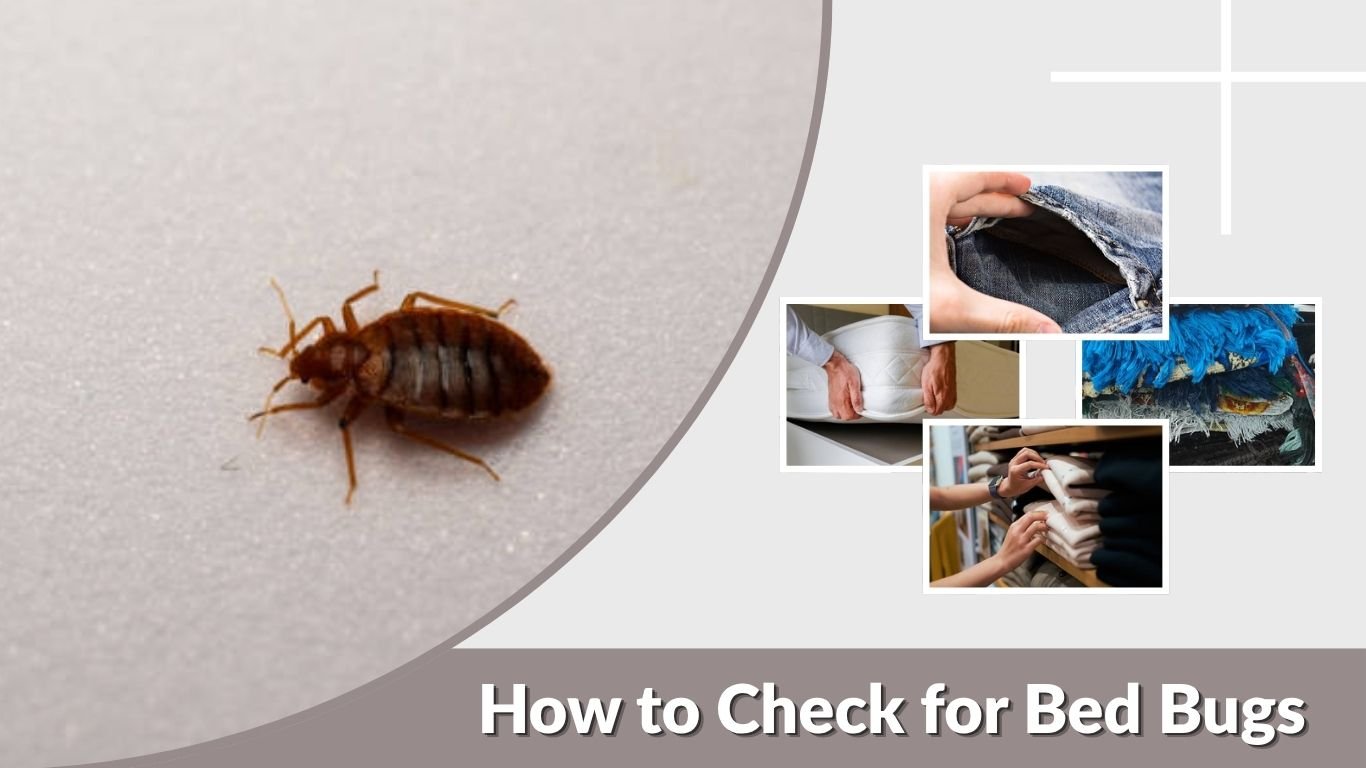
Knowing how to check for bed bugs can help you spot an infestation before it becomes difficult to control. These small insects hide in mattresses, bed frames, couches, furniture, luggage, and narrow cracks close to sleeping areas. Because bed bugs often remain hidden during the day, finding them requires careful inspection rather than simply looking across the room. This guide explains where to search, what signs to recognize, and how to check beds, hotel rooms, furniture, clothes, and luggage effectively.
What to Look for When Checking for Bed Bugs
A proper bed bug inspection involves looking for more than live insects. Bed bugs spend much of their time hidden in narrow spaces, so indirect evidence can sometimes be easier to find. Concentrate on places close to where people sleep or rest, particularly seams, cracks, joints, folds, and protected spaces where insects can remain undisturbed.
Common Signs of Bed Bugs
Look carefully for:
- Live reddish-brown bed bugs
- Tiny pale or whitish eggs
- Shed insect skins
- Small dark fecal spots
- Reddish or rusty stains on bedding
- Bed bugs hiding along seams and cracks
- Clusters of signs around mattress edges
- Unexplained bites combined with physical evidence
Adult bed bugs are relatively flat and oval when unfed. After feeding, their bodies become more swollen and elongated.
Can You Identify Bed Bugs From Bites?
Bites alone cannot reliably confirm bed bugs. Skin reactions differ considerably between people, and bites from mosquitoes, fleas, or other insects can appear similar.
Some people develop itchy red bumps, while others show little or no visible reaction. Therefore, checking the sleeping environment for insects, eggs, shed skins, and fecal spotting provides stronger evidence than relying only on skin symptoms.
How to Check Your Mattress for Bed Bugs
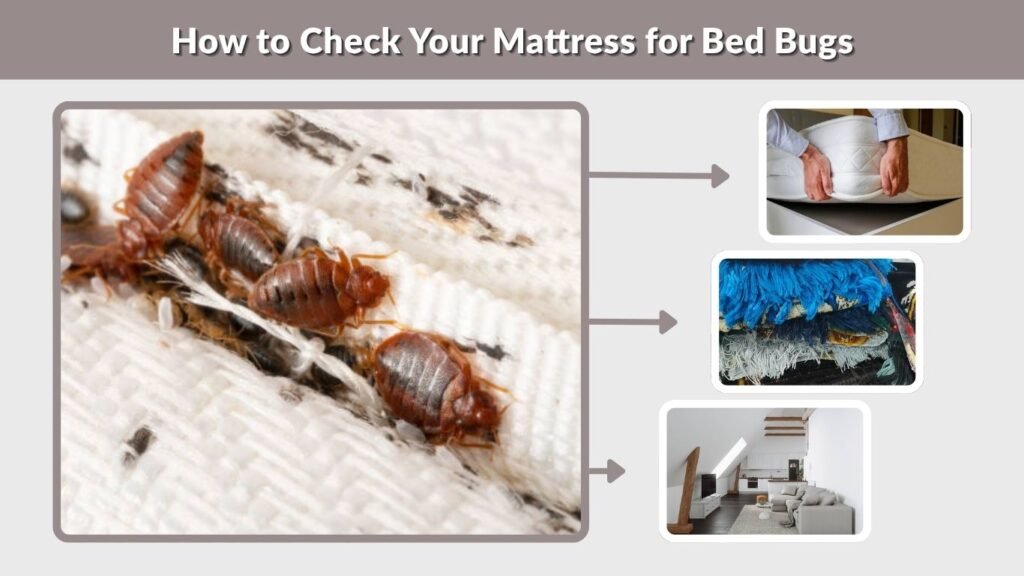
The mattress is one of the first places to inspect because bed bugs generally remain relatively close to their food source. However, they are more likely to hide along protected edges than across the open sleeping surface. Remove bedding slowly and inspect the mattress systematically instead of quickly checking only the top.
Areas of the Mattress to Inspect
Pay particular attention to:
- Mattress seams
- Piping around the edges
- Labels and tags
- Tufts and folds
- Stitching
- Handles
- Corners
- The underside of the mattress
A flashlight can make tiny stains, eggs, insects, and shed skins easier to see.
Check the Box Spring
Do not stop after examining the mattress. A box spring offers numerous dark cracks and protected spaces that can provide excellent hiding locations.
Inspect the fabric edges, seams, corners, staples, wooden framework, and areas where material meets the frame. If there is a thin dust cover underneath, examine its edges and any tears or openings carefully.
Inspect the Bed Frame and Headboard
Bed bugs can hide in surprisingly narrow openings in a frame or headboard.
Examine screw holes, joints, cracks, decorative grooves, brackets, and spaces between the headboard and wall. Wooden frames containing multiple joints can provide numerous hiding places that are easy to overlook.
How to Check a Hotel Room for Bed Bugs
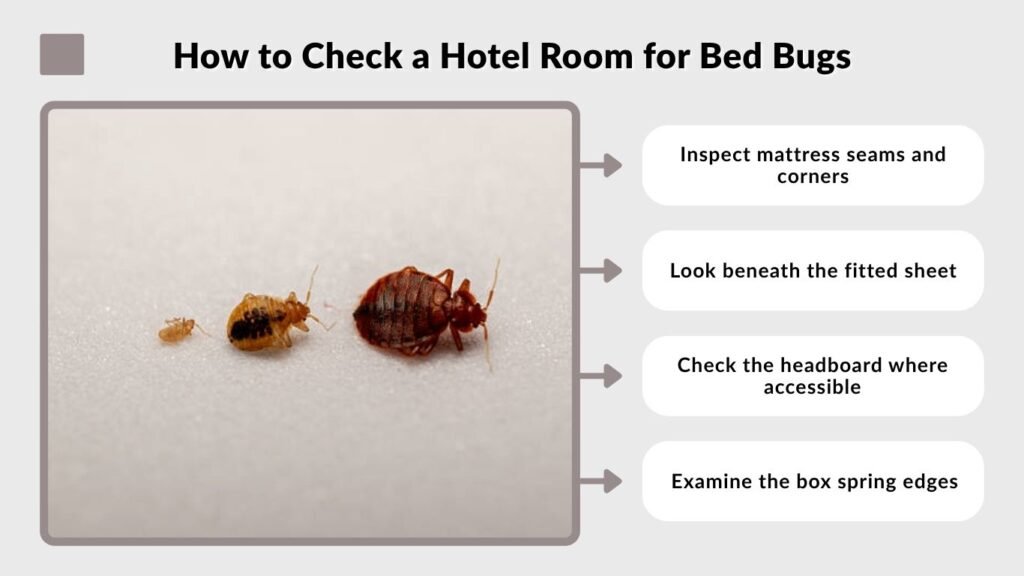
Checking a hotel room before settling in may reduce the chance of accidentally carrying bed bugs home in your belongings. The inspection does not need to take long, but it should focus on the bed and nearby furniture. Keep luggage away from the bed while checking, especially before you have examined the primary sleeping area.
Hotel Bed Bug Inspection Checklist
Before unpacking:
- Inspect mattress seams and corners
- Look beneath the fitted sheet
- Check the headboard where accessible
- Examine the box spring edges
- Look around bedside furniture
- Check upholstered chairs near the bed
- Watch for dark spots or shed skins
- Keep luggage away from upholstered surfaces
Using a flashlight can help when inspecting dark seams and gaps.
Where Should You Put Your Luggage?
Avoid immediately placing your suitcase on the bed or upholstered furniture.
A luggage rack can be preferable, especially when positioned away from walls and beds. Inspect the rack before using it. Keeping clothes inside luggage until the room has been checked also reduces unnecessary exposure to potential hiding areas.
What If You Find Signs in a Hotel?
If you find an insect or convincing physical evidence, avoid moving belongings around the room unnecessarily. Notify hotel staff and request assistance.
When changing rooms, remember that a nearby room could potentially share structural spaces with the affected area. Carefully inspect any replacement room before unpacking.
How to Check Couches and Furniture for Bed Bugs
Beds receive most attention, but couches and upholstered furniture can also harbor bed bugs, particularly when people regularly sleep or spend long periods resting on them. Their numerous seams, folds, cushions, and structural gaps create protected hiding areas. Used furniture deserves especially careful inspection before it is brought into a home.
Checking a Couch for Bed Bugs
Inspect:
- Cushion seams
- Zippers and folds
- Underneath removable cushions
- Armrest seams
- Fabric around the back
- The underside of the couch
- Wooden or metal joints
- Stapled fabric edges
Use a flashlight to examine deep crevices where normal room lighting cannot reach.
Inspect Other Furniture
Nightstands, chairs, dressers, and nearby furniture should also be examined when bed bugs are suspected.
Pay particular attention to joints, screw holes, drawer corners, undersides, and cracks. Bed bugs usually favor narrow protected spaces rather than broad exposed surfaces, so a detailed inspection is more useful than simply looking over the exterior.
How to Check Clothes and Luggage for Bed Bugs
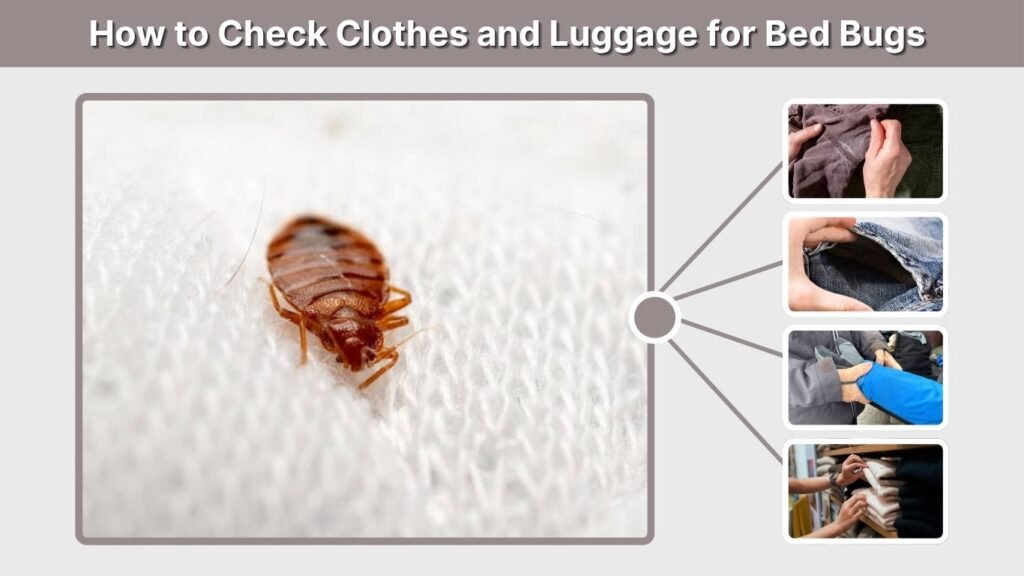
Bed bugs do not normally live on people like lice, but they can hide in belongings and be transported between locations. Clothing, suitcases, backpacks, and travel bags can provide temporary hiding places. Checking these items is especially worthwhile after travel or when belongings have been stored near a suspected infestation.
Check Clothes for Bed Bugs
When inspecting clothing:
- Examine seams and folds
- Check pockets
- Inspect cuffs and collars
- Look inside folded clothing
- Check laundry bags or baskets
- Watch for insects or dark spotting
Finding a suspicious mark on clothing does not automatically prove bed bugs are present, so look for additional physical evidence.
Check Your Suitcase
Place luggage in a well-lit location and inspect seams, zippers, pockets, handles, lining, and folds.
A hard-sided suitcase may have fewer fabric hiding areas, but insects can still enter gaps around zippers, wheels, handles, and internal compartments. Inspect both the inside and outside carefully.
How to Check Your Home for Bed Bugs
When checking an entire home, begin where people sleep and gradually expand outward. Randomly searching every room can waste time because bed bugs tend to concentrate around locations where hosts remain still for extended periods. Begin with beds, then inspect nearby furniture, couches, and other resting areas.
A Room-by-Room Inspection
Start with the bedroom and inspect the mattress, box spring, bed frame, headboard, nightstands, baseboards, and nearby upholstered furniture.
Next, inspect couches, recliners, and other places where people frequently rest. If evidence appears farther from the sleeping area, expand your inspection to wall cracks, furniture joints, curtains, and other protected spaces.
Can You Check During the Day?
Yes. Bed bugs may be more active during darker periods, but you do not need to wait until night to inspect them.
During daylight hours, they are often hidden in cracks, seams, joints, and folds. A flashlight and systematic inspection can reveal live insects and other evidence even when the bugs themselves are inactive.
What to Do If You Find Bed Bugs
Finding one suspected bed bug deserves careful attention, especially when accompanied by eggs, spotting, or shed skins. Avoid immediately moving furniture or belongings into other rooms because doing so may spread insects to additional areas.
If possible, capture the suspected insect in a sealed container or clear bag for identification. Thorough inspection helps determine how widely signs are distributed. For established or uncertain infestations, a qualified pest-control professional can help confirm the insect and recommend an appropriate treatment strategy.
FAQs
1. What is the easiest way to check for bed bugs?
Begin with the mattress seams, box spring, bed frame, and headboard using a bright flashlight. Look for live insects, eggs, shed skins, and dark fecal spots.
2. Where do bed bugs usually hide first?
They commonly hide near sleeping and resting areas, including mattress seams, box springs, bed-frame joints, headboards, couch seams, and cracks in nearby furniture.
3. Can I see bed bugs with the naked eye?
Adult bed bugs are visible without magnification. Eggs and young nymphs are much smaller and can be more difficult to notice, especially on light-colored surfaces.
4. How do I check a hotel mattress for bed bugs?
Pull back the bedding and carefully examine mattress seams, piping, corners, and the area around the headboard. Also inspect the box spring and nearby furniture before unpacking your luggage.
5. Does finding bites mean I definitely have bed bugs?
No. Bites alone cannot confirm a bed bug infestation because reactions may resemble bites from mosquitoes, fleas, and other insects. Finding physical evidence in the sleeping environment provides much stronger confirmation.