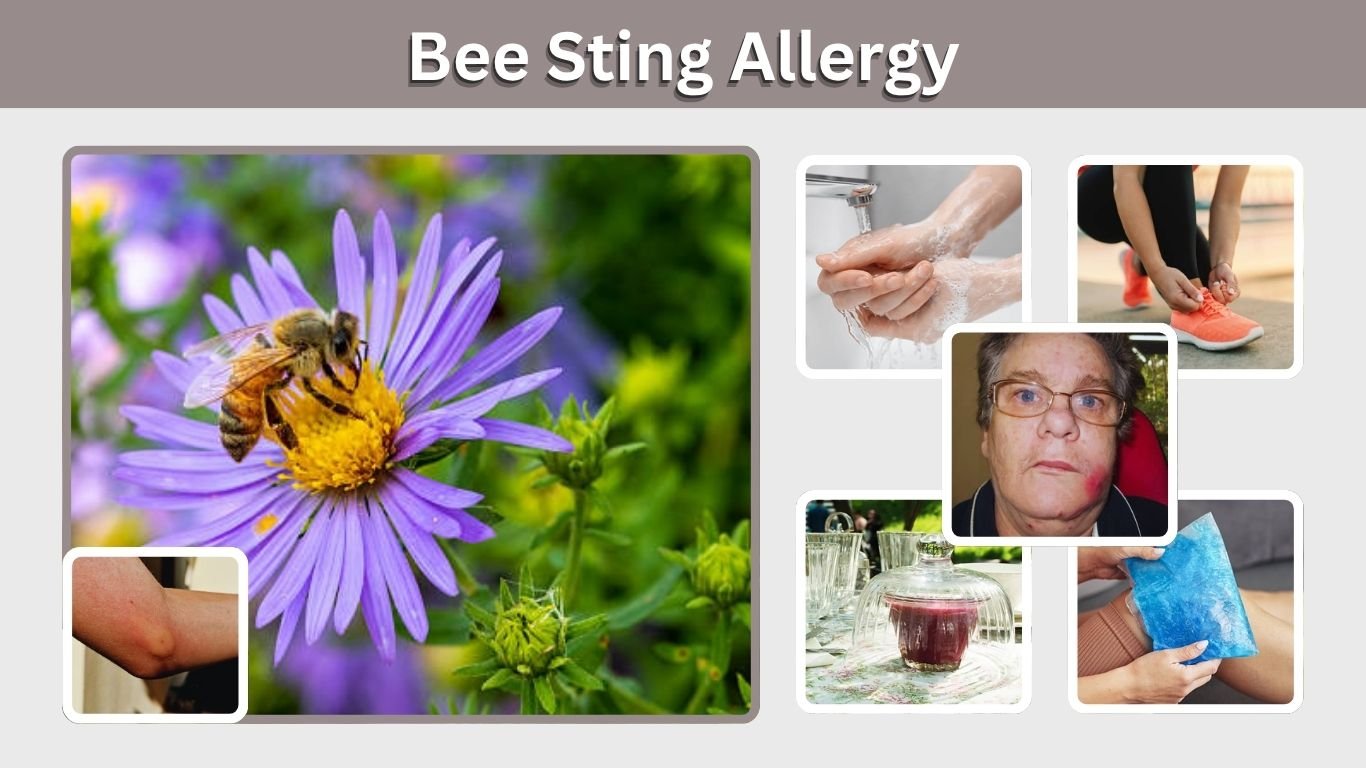
A bee sting allergy can cause symptoms ranging from mild swelling and itching to a life-threatening reaction called anaphylaxis. While most bee stings cause only temporary pain and redness, people allergic to bee venom may develop symptoms affecting the skin, breathing, digestion, or circulation. Knowing the early signs of bee sting allergy and how treatment differs from normal sting care can be lifesaving. This guide explains symptoms, reaction timing, first aid, epinephrine, antihistamines, allergy testing, and long-term prevention.
What Is a Bee Sting Allergy?
A bee sting allergy occurs when the immune system reacts excessively to proteins in bee venom. A small amount of redness, pain, and swelling around the sting is common and does not necessarily mean someone is allergic. Allergic reactions are more concerning when symptoms spread beyond the sting site or affect breathing, circulation, or several body systems.
Normal Reaction vs Bee Sting Allergy
A normal bee sting often causes immediate burning pain, redness, a welt, and localized swelling. In some people, swelling becomes much larger over the following one or two days and may persist for several days. This is known as a large local reaction and is different from anaphylaxis.
A systemic allergic reaction involves areas of the body away from the sting. Hives across the body, facial swelling, breathing difficulty, throat symptoms, dizziness, or a sudden fall in blood pressure are more concerning signs.
Common Bee Sting Allergy Symptoms
Symptoms can vary from one person to another. Watch for:
- Widespread hives, itching, or flushing
- Swelling of the lips, tongue, face, or throat
- Wheezing or trouble breathing
- Tightness in the throat or chest
- Difficulty swallowing
- Nausea, vomiting, diarrhea, or abdominal symptoms
- Dizziness, fainting, confusion, or weakness
- A weak or rapid pulse
A combination of respiratory or cardiovascular symptoms after a sting can indicate anaphylaxis and requires emergency treatment.
When Is a Bee Sting Allergy an Emergency?
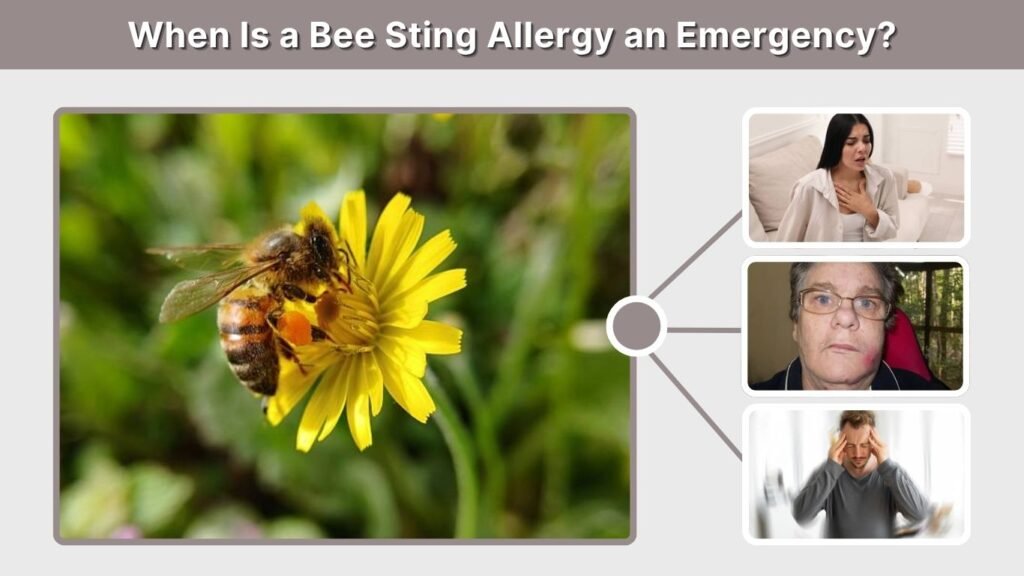
Severe bee sting allergy can progress quickly. Anaphylaxis is a potentially life-threatening systemic allergic reaction that may affect the airway, breathing, blood pressure, skin, and digestive system. Mayo Clinic notes that severe bee-sting reactions often occur within about 15 minutes to an hour, although allergic symptoms should be taken seriously whenever they develop after a sting.
Warning Signs of Anaphylaxis
Seek emergency medical care immediately if a sting is followed by:
- Trouble breathing or wheezing
- Throat, tongue, or significant facial swelling
- Difficulty swallowing or speaking
- Widespread hives with other systemic symptoms
- Severe dizziness or fainting
- Weak, rapid pulse
- Confusion or loss of consciousness
- Significant vomiting or diarrhea along with other allergic symptoms
If a person has prescribed emergency epinephrine for sting allergy, it should be used as directed without delaying emergency care. Epinephrine is the first-line emergency treatment for anaphylaxis; antihistamines should not replace it.
How Quickly Can Symptoms Appear?
Anaphylaxis commonly develops within minutes after exposure. A previous mild reaction also does not guarantee that every future sting will produce the same response. Anyone who has experienced a systemic reaction should discuss future risk and an emergency plan with an allergist or other qualified healthcare professional.
Bee Sting Allergy Treatment and First Aid
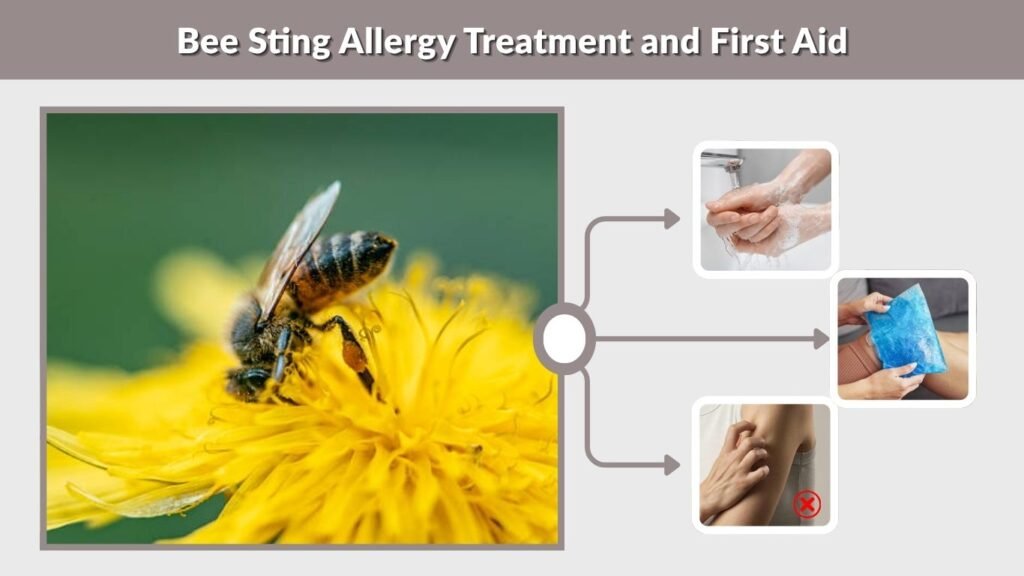
Treatment depends on whether the reaction is confined to the sting site or involves the whole body. Minor reactions can often be managed at home, while suspected anaphylaxis needs immediate epinephrine and emergency medical assessment. People with a known venom allergy should follow the personalized action plan provided by their healthcare professional rather than relying on home remedies alone.
First Aid for a Mild Bee Sting
For a mild localized reaction:
- Move away from the area to prevent additional stings.
- Remove a visible honeybee stinger as quickly as possible.
- Wash the area with soap and water.
- Remove rings or tight items before swelling increases.
- Apply a cold compress for about 10–20 minutes at a time.
- Elevate an affected arm or leg when practical.
- Avoid scratching the sting site.
Cold treatment, appropriate pain relievers, and anti-itch treatments may reduce discomfort from uncomplicated local reactions.
Epinephrine for Bee Sting Allergy
People with a history of serious sting reactions may be prescribed an epinephrine autoinjector. It should be carried as instructed, kept within its expiration date, and used promptly when signs of anaphylaxis occur according to the person’s emergency plan.
After using emergency epinephrine, the person still needs urgent medical evaluation because symptoms can persist or recur and additional treatment may be necessary.
Do Antihistamines Help?
Antihistamines may help itching, hives, or other skin symptoms, and clinicians may use them as additional treatment. However, medicines such as diphenhydramine or other antihistamines do not treat the dangerous airway and cardiovascular effects of anaphylaxis and must not delay epinephrine.
For medication selection and dosing, especially for children or people taking other medicines, follow a clinician’s or product-label guidance rather than guessing a dose.
Bee Sting Allergy Testing and Immunotherapy
People who experience a systemic allergic reaction after a bee sting should consider evaluation by an allergist. Diagnosis is based on the reaction history along with appropriate testing. Testing without a relevant history can be misleading because some people have detectable venom-specific antibodies without ever developing a serious sting reaction.
How Is Bee Sting Allergy Tested?
An allergist may use a skin test in which a controlled amount of venom allergen is introduced into the skin. Blood testing can also measure venom-specific immune responses. Testing may include honeybee venom and, depending on the history, venom from wasps, hornets, or yellow jackets.
There is no reliable do-it-yourself home test that can safely establish the severity of a bee venom allergy. A previous systemic reaction deserves professional assessment.
Venom Immunotherapy
Venom immunotherapy involves carefully controlled allergy injections using insect venom. It is an established preventive treatment for appropriately selected people with systemic sting reactions and confirmed venom-specific allergy. AAAAI guidance recommends considering venom immunotherapy for patients with systemic allergic reactions and appropriate positive allergy testing.
Treatment is supervised by an allergy specialist and usually continues over an extended period. Its purpose is to make the immune system substantially less reactive if another sting occurs.
Preventing Future Bee Sting Allergic Reactions
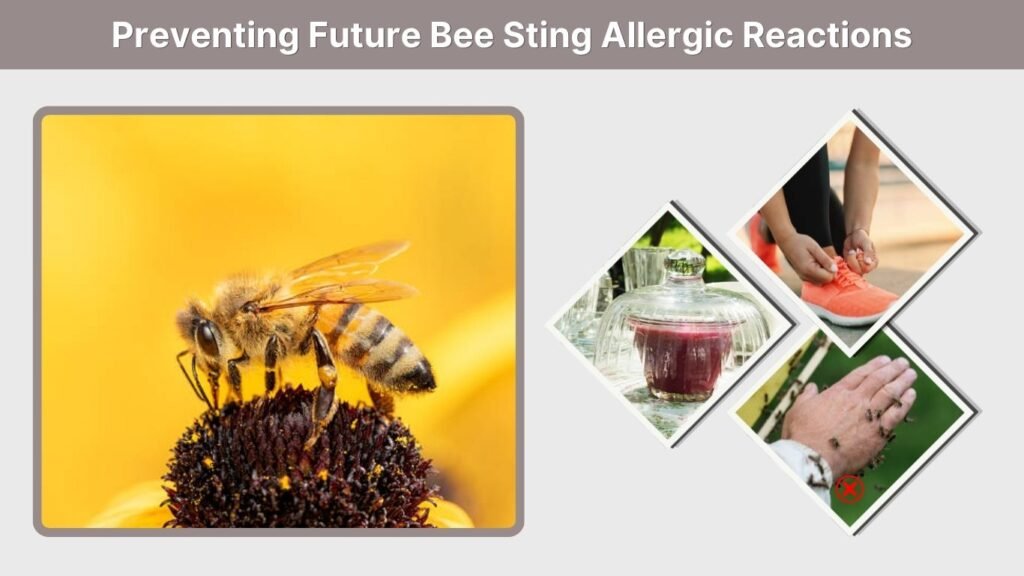
Someone with a diagnosed bee sting allergy needs both sting-avoidance strategies and an emergency action plan. Avoidance cannot eliminate every sting, so preparation is particularly important for people who have previously developed anaphylaxis. Carrying prescribed epinephrine, knowing how to use it, and making family or coworkers aware of the allergy can improve readiness for an unexpected exposure.
Practical Safety Steps
- Carry prescribed epinephrine as directed.
- Check its expiration date regularly.
- Consider medical identification jewelry.
- Keep food and sweet drinks covered outdoors.
- Be cautious around nests, flowering areas, and garbage containers.
- Wear shoes outdoors and protective clothing when appropriate.
- Avoid swatting at bees or disturbing nests.
- Ask an allergist whether venom immunotherapy is appropriate.
People with a previous systemic sting reaction should also have a written emergency plan that clearly explains when and how to use their prescribed medication.
Can a Bee Sting Allergy Develop Later in Life?
Yes. A person’s response to one sting does not perfectly predict future reactions. Someone who previously experienced only a mild sting reaction can later develop a different response, although this does not mean each subsequent sting automatically becomes more severe. New systemic symptoms after any sting warrant medical attention and may justify allergy evaluation.
FAQs
This section addresses several common concerns about reaction timing, testing, medicines, and related bee products. Individual allergy risk varies considerably, so a previous serious reaction should be discussed with an allergist rather than managed solely through general online advice.
1. How long does a bee sting allergy reaction last?
A mild local reaction may improve within hours, while larger local swelling can worsen over one or two days and may last several days. Severe systemic reactions require immediate treatment regardless of how long symptoms have been present.
2. Can you be allergic on your first known bee sting?
An allergic reaction can appear after what seems to be a person’s first remembered sting because previous unnoticed exposure or cross-sensitization may have occurred. The reaction itself and medical history are more useful than assuming a first remembered sting cannot cause allergy.
3. Does Benadryl treat a severe bee sting allergy?
An antihistamine may reduce itching or hives, but it is not a substitute for epinephrine during anaphylaxis. Suspected anaphylaxis requires prompt epinephrine when prescribed and emergency medical attention.
4. Is bee sting allergy the same as beeswax allergy?
No. Bee sting allergy is generally a reaction to venom proteins delivered during a sting. Beeswax or propolis-related allergy more often involves contact dermatitis or other contact reactions to substances in bee-derived products. They are different allergy problems and may require different testing.
5. Can bee sting allergy be treated permanently?
There is no simple home cure for bee venom allergy. However, venom immunotherapy can greatly reduce sensitivity and the risk of serious reactions in appropriately selected patients. An allergist can determine whether testing and immunotherapy are suitable based on the person’s previous reaction and test results.