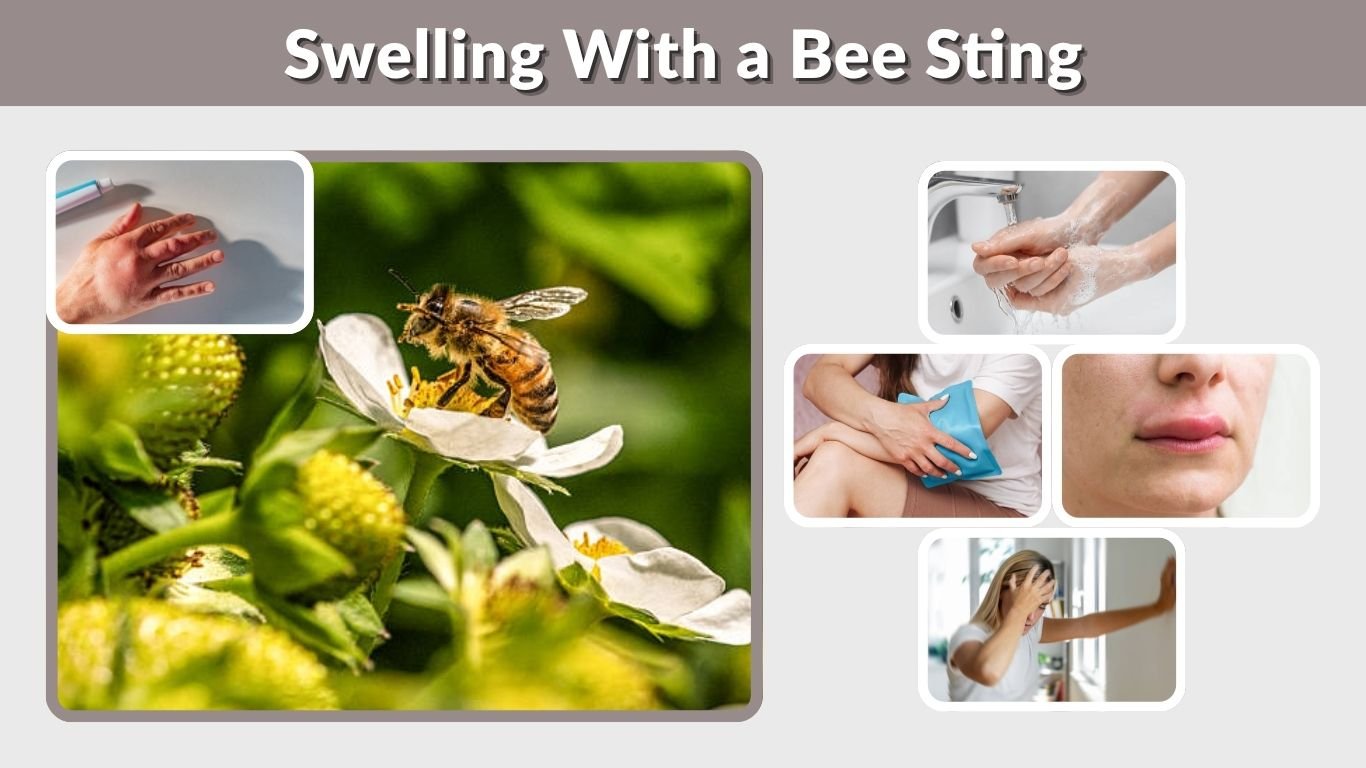
Swelling with a bee sting is a common reaction to venom injected into the skin. A typical sting may cause immediate pain, redness, warmth, itching, and a swollen area around the sting site. For some people, however, swelling becomes larger over the following day or two before gradually improving. Knowing how much swelling is normal, what you can do at home, and which symptoms indicate a serious allergic reaction can help you respond appropriately and avoid unnecessary worry after being stung.
How Much Swelling Is Normal With a Bee Sting?
Swelling is part of the body’s inflammatory response to bee venom. A mild reaction usually remains close to the sting and improves relatively quickly. Some people develop a larger local reaction that can spread well beyond the original spot. Large local swelling can look alarming without necessarily being the same as a life-threatening allergic reaction.
Typical Local Swelling
A mild bee-sting reaction commonly includes:
- Sharp or burning pain at the sting site
- A raised welt
- Redness around the sting
- Mild to moderate swelling
- Itching or tenderness
For many people, the pain and swelling begin improving within several hours.
Large Local Reactions
Sometimes swelling becomes much larger. For example, a sting on the hand may cause much of the hand or forearm to swell.
A stronger local reaction may continue increasing during the first one or two days and can persist for several days. Mayo Clinic notes that moderate reactions may last up to about seven days.
Large local swelling does not automatically mean anaphylaxis. The most important distinction is whether symptoms remain localized or begin affecting breathing, the mouth or throat, circulation, or other parts of the body.
What to Do With Bee Sting Swelling
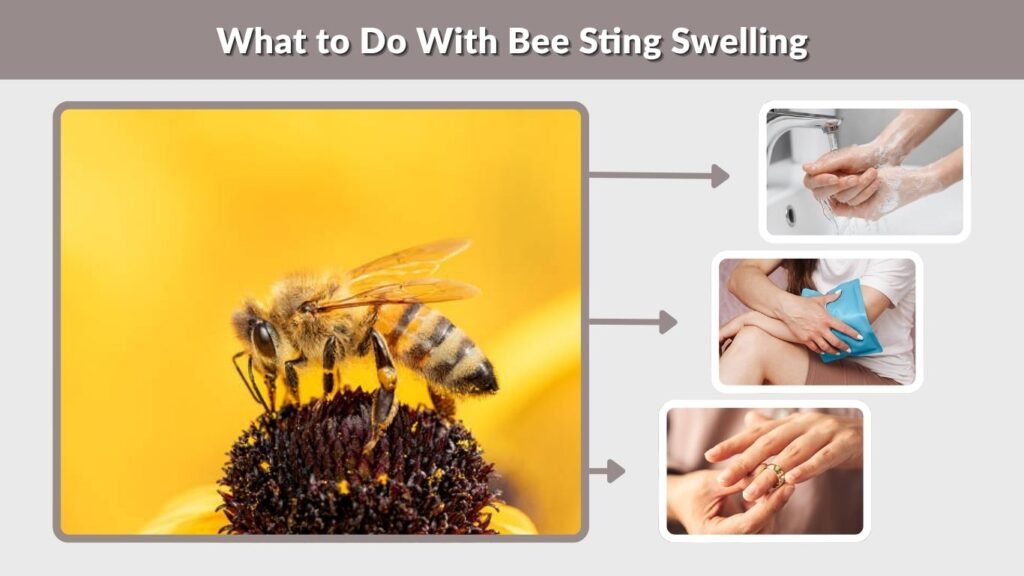
Most mild or moderate bee stings can be managed at home. Treatment focuses on limiting swelling, relieving pain and itching, and keeping the area clean. If a honeybee stinger remains in the skin, removing it promptly is important because venom can continue entering the tissue for a short period.
First Steps After Being Stung
For an uncomplicated sting:
- Move away from the area to avoid additional stings.
- Remove a visible stinger as soon as possible.
- Wash the area gently with soap and water.
- Remove rings or tight jewelry if the sting is on a hand or finger.
- Apply a cold compress for about 10–20 minutes.
- Elevate an affected arm or leg when possible.
Removing rings early is particularly important because finger or hand swelling may make jewelry difficult to remove later.
Why Cold Compresses Help
Cold reduces local blood flow and can temporarily decrease pain and swelling.
Wrap ice or a cold pack in a thin cloth instead of applying ice directly to bare skin. Keep it on for approximately 10–20 minutes, then remove it before repeating as needed.
What Helps With Swelling From a Bee Sting?
There is no instant way to make the body’s reaction disappear, but several measures can make the swelling considerably more comfortable while it resolves. The best approach depends on whether pain, itching, or swelling is the dominant symptom and whether the reaction remains confined to the area surrounding the sting.
Options That May Reduce Discomfort
Common approaches include:
- Cold compresses
- Elevating the affected limb
- Hydrocortisone cream for itching and inflammation
- Calamine lotion for itching
- An appropriate oral antihistamine
- An over-the-counter pain reliever when needed
- Avoiding scratching the area
Mayo Clinic lists medicines such as cetirizine, loratadine, fexofenadine, and diphenhydramine among antihistamine options that may help itching associated with insect stings. Use medicines only if they are appropriate for you and follow the product label or advice from a healthcare professional.
Will Benadryl Help With Bee Sting Swelling?
Diphenhydramine, commonly sold as Benadryl, is an antihistamine and may help reduce bothersome itching associated with an allergic local reaction. It may also help some of the histamine-related swelling.
However, antihistamines are not substitutes for epinephrine when someone is experiencing anaphylaxis.
Diphenhydramine can also cause significant drowsiness in some people. Other antihistamines may be less sedating. A pharmacist or healthcare professional can help determine which product is appropriate based on age, medical conditions, pregnancy, and other medications.
How Long Does Swelling Last With a Bee Sting?
The duration of swelling depends on how strongly your immune system reacts to bee venom. A small local reaction may improve within hours, whereas a larger local reaction can worsen temporarily before getting better. Watching the direction of symptoms is more useful than expecting every sting to follow exactly the same timetable.
Mild Bee Sting Swelling
With a mild reaction, pain and swelling often begin settling within several hours.
A small amount of redness, tenderness, or itching may remain after the initial swelling has decreased.
Moderate or Large Swelling
A larger local reaction can continue becoming more swollen during the next day or two. It may then gradually decrease over several days, with some moderate reactions lasting up to approximately seven days.
This delayed increase can surprise people who expect the sting to look worst immediately.
However, swelling that continues worsening without improvement, becomes extremely painful, or develops signs suggesting infection deserves medical evaluation.
Bee Sting Swelling vs Allergic Reaction
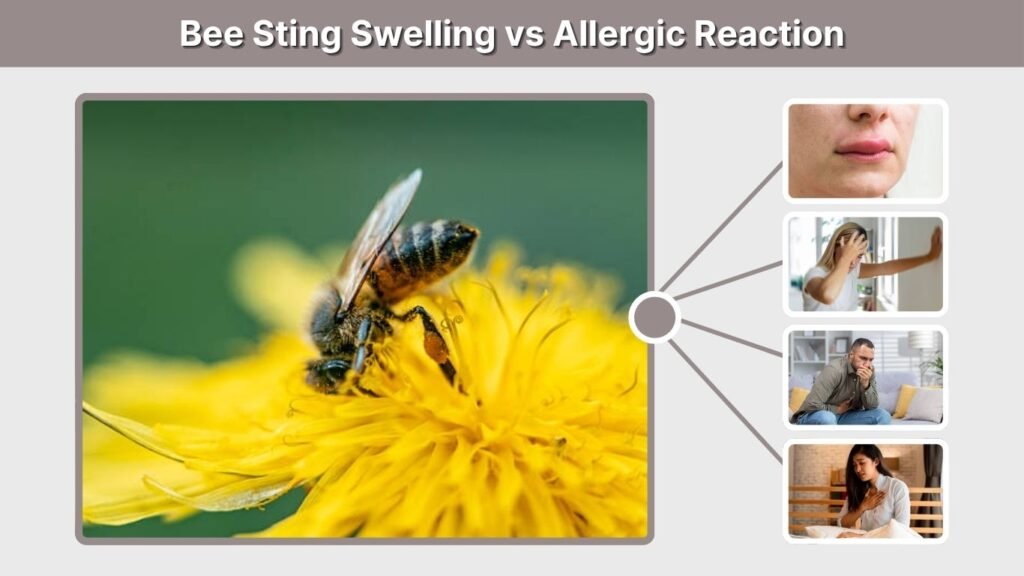
Local swelling occurs around the place where the bee stung you. Anaphylaxis is different because it involves a serious whole-body allergic reaction. It can develop rapidly after an insect sting and requires immediate emergency treatment. Do not rely on antihistamines alone if symptoms suggest anaphylaxis.
Warning Signs of Anaphylaxis
Get emergency medical help immediately for symptoms such as:
- Trouble breathing or wheezing
- Swelling of the tongue, lips, mouth, or throat
- Difficulty swallowing
- Widespread hives
- Dizziness or fainting
- Weak or rapid pulse
- Vomiting or diarrhea with other allergic symptoms
- Sudden severe weakness or loss of consciousness
If the person has been prescribed an epinephrine auto-injector for severe allergies, it should be used promptly according to their emergency plan, followed by emergency medical care.
Local Swelling Is Different
A swollen hand following a sting on a finger can still represent a large local reaction rather than anaphylaxis.
What makes anaphylaxis particularly concerning is the development of symptoms away from the sting site or symptoms involving breathing, swallowing, circulation, or multiple body systems.
When Should Bee Sting Swelling Be Checked?
Although most reactions settle without professional treatment, some situations deserve additional attention. Location matters as well. Swelling around the mouth, throat, or eye can create greater concern than the same amount of swelling elsewhere because nearby structures can be affected.
Contact a Healthcare Professional If
Seek medical advice when:
- Symptoms continue getting worse instead of improving.
- Swelling remains significant for several days.
- The sting is near the eye, inside the mouth, or in the throat.
- The area becomes increasingly hot or painful.
- Pus or drainage develops.
- You develop fever or swollen glands.
- You received multiple stings.
- You previously had a serious reaction to an insect sting.
Increasing redness and warmth can sometimes occur from inflammation alone, but infection becomes a concern when symptoms progressively worsen or drainage, fever, or other signs develop.
How to Avoid Making Bee Sting Swelling Worse
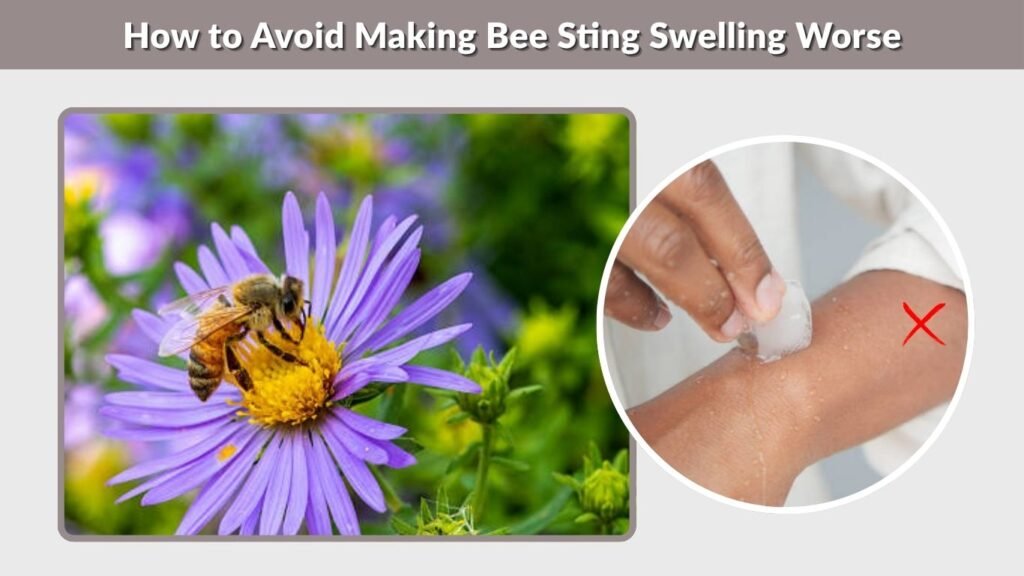
Good aftercare is mostly about allowing the inflammatory response to settle while protecting the skin. Scratching can damage the skin and increase irritation, potentially allowing bacteria to enter. Tight jewelry can also become problematic when swelling occurs around a finger, wrist, ankle, or other confined area.
Things to Avoid After a Sting
Try to avoid:
- Scratching or picking at the sting
- Applying ice directly to bare skin
- Leaving tight rings on a swelling finger
- Repeatedly squeezing the sting site
- Using unfamiliar home remedies that irritate the skin
- Ignoring breathing or throat symptoms
Gentle cleaning, cooling, elevation, and appropriate symptom relief are generally more useful than aggressive treatment.
FAQs
1. How long does swelling last with a bee sting?
Mild swelling may improve within several hours. A stronger local reaction may become worse over the first one or two days and can sometimes last up to about seven days.
2. What helps with swelling from a bee sting?
Removing a remaining stinger promptly, washing the area, applying a cold compress for 10–20 minutes, and elevating the affected limb can help. Hydrocortisone, calamine, or an appropriate antihistamine may help itching and inflammation.
3. How much swelling is normal after a bee sting?
A small swollen area around the sting is common, but some people develop a large local reaction involving much more of the nearby limb. Large swelling can still be localized; breathing difficulty, throat swelling, faintness, or widespread allergic symptoms are more concerning.
4. Will Benadryl help with swelling from a bee sting?
Diphenhydramine (Benadryl) can help itching and some histamine-related symptoms, although it can cause drowsiness. It does not replace epinephrine or emergency medical treatment for anaphylaxis.
5. When should I worry about swelling from a bee sting?
Seek emergency help for breathing problems, swelling of the tongue or throat, difficulty swallowing, dizziness, fainting, or other signs of anaphylaxis. Medical advice is also appropriate when localized symptoms keep worsening, show signs of infection, or do not begin resolving as expected.