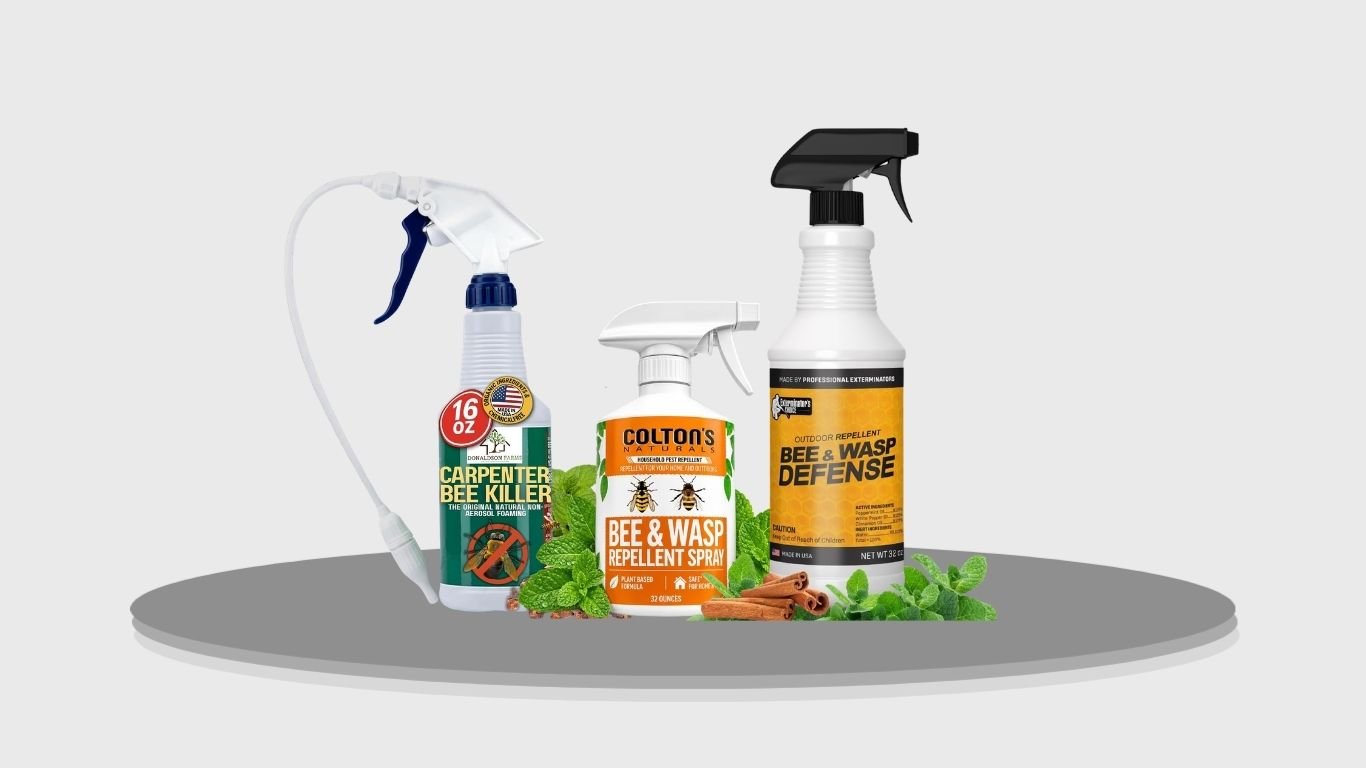
Bees can become a concern when they nest near decks, porches, sheds, fences, or other frequently used outdoor areas. The best bee sprays are designed to help deter, repel, or target unwanted bee activity while offering convenient application around problem spots. Some products use foaming formulas for carpenter bee holes, while others rely on essential oils or plant-based ingredients for broader outdoor use. In this guide, we review six bee sprays that offer practical options for managing bee activity around homes, gardens, patios, and other outdoor spaces.
1. Donaldson Farms Carpenter Bee Foaming Spray
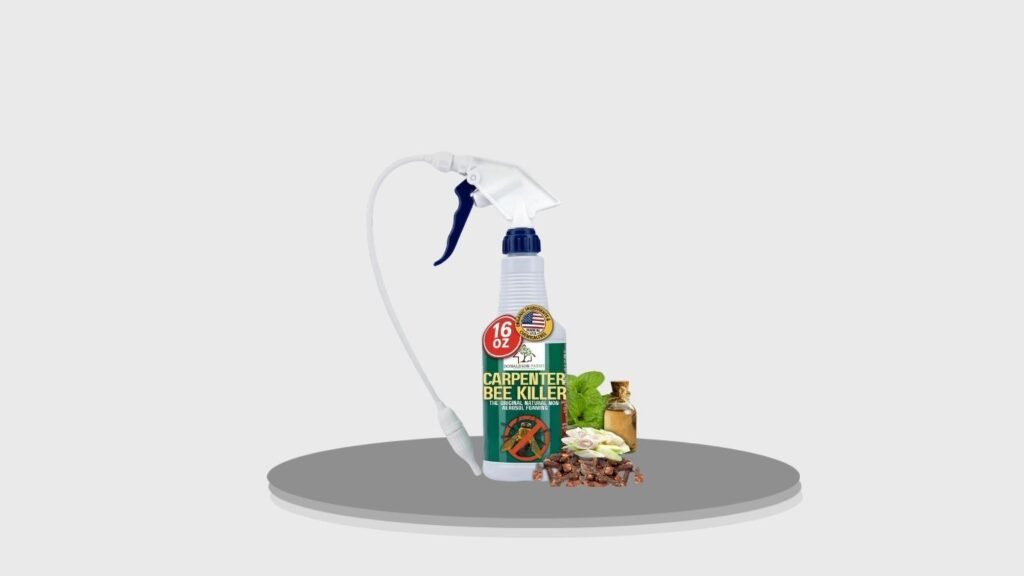
The Donaldson Farms Carpenter Bee Foaming Spray is designed for homeowners who want a targeted way to address carpenter bee activity around decks, fences, sheds, fascia boards, and other exposed wood surfaces. Its foaming format helps the product stay in contact with treated areas longer than a thin liquid spray, making it especially useful around visible carpenter bee holes and frequently visited nesting spots.
Key Features
- Foaming formula for targeted application
- Designed for carpenter bee problem areas
- Useful around wood surfaces and nesting holes
- Helps reach cracks, gaps, and entry points
- Suitable for decks, fences, sheds, and similar structures
- Easy-to-direct spray format
- Intended for localized outdoor treatment
Why It Is Best for Carpenter Bee Holes
The main advantage of this spray is its foaming consistency. Carpenter bees often create round entrance holes in exposed wood, and a foam can cling more effectively around these openings than a fast-running liquid.
That makes the product especially practical when the goal is to treat a specific nesting area rather than spray a large section of the yard. Its focused application can also help reduce unnecessary product use by concentrating treatment where bee activity is most noticeable.
Application and Outdoor Performance
For best results, the spray should be applied directly to visible problem areas according to the product label. Deck rails, eaves, pergolas, fences, and unfinished wooden structures are common places where carpenter bees may investigate or nest.
The foaming action can help coat irregular surfaces, cracks, and small cavities, which is useful when dealing with localized activity. Treatment may need to be repeated depending on weather exposure and whether bees continue returning to the area.
Overall Convenience and Value
Donaldson Farms Carpenter Bee Foaming Spray is a strong choice for users who want a more precise approach to carpenter bee control. Its foam format makes it easier to target individual holes and wood surfaces without relying on broad-area spraying.
For homeowners dealing with recurring carpenter bee activity around outdoor wooden structures, this type of targeted product can be a practical addition to a wider prevention strategy that also includes sealing old holes and maintaining exposed wood.
2. Colton’s Naturals Bee & Wasp Repellent Spray
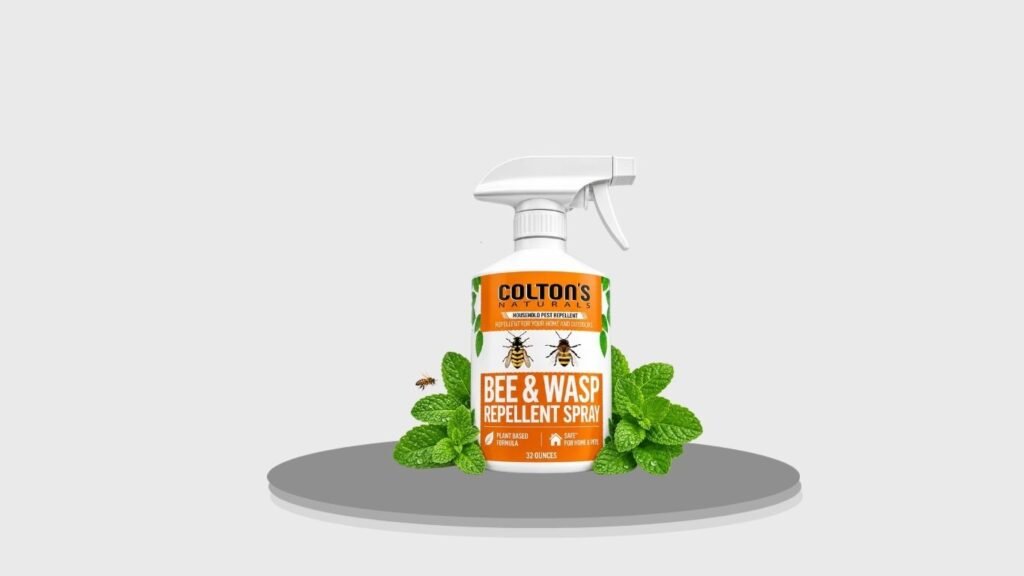
The Colton’s Naturals Bee & Wasp Repellent Spray is designed for people who prefer a plant-based approach to discouraging bees and wasps around frequently used outdoor areas. Its spray format makes it convenient for treating patios, porches, fences, decks, sheds, and other locations where unwanted stinging insects tend to return.
Key Features
- Plant-based repellent formula
- Designed for bees and wasps
- Ready-to-use spray bottle
- Suitable for targeted outdoor application
- Useful around patios, decks, and entry areas
- Easy to apply to problem locations
- Intended as a deterrent rather than a trap
Why It Is Best for Routine Outdoor Deterrence
This product is particularly useful when the goal is to discourage bees from repeatedly visiting certain areas rather than treating a large nest directly. The spray can be applied around common activity zones such as railings, outdoor furniture, fence lines, sheds, and structural edges.
Its ready-to-use format also eliminates mixing or measuring, which makes regular spot treatment more convenient.
Application and Everyday Performance
Repellent sprays generally perform best when applied to the locations insects frequently investigate. Focusing treatment around gaps, corners, protected overhangs, and other potential nesting areas can help create a less attractive environment.
Outdoor exposure to rain and sunlight may gradually reduce residual performance, so occasional reapplication may be necessary. Following the product label is especially important when treating surfaces near pets, children, plants, or food-preparation areas.
Overall Convenience and Value
Colton’s Naturals is well suited to homeowners looking for an easy-to-apply spray that can become part of routine outdoor maintenance. Its targeted format allows users to focus on problem areas without treating an entire yard.
For patios, porches, garden structures, and other regularly occupied spaces, it offers a straightforward way to discourage recurring bee and wasp activity.
3. Exterminators Choice Natural Bee Repellent Spray
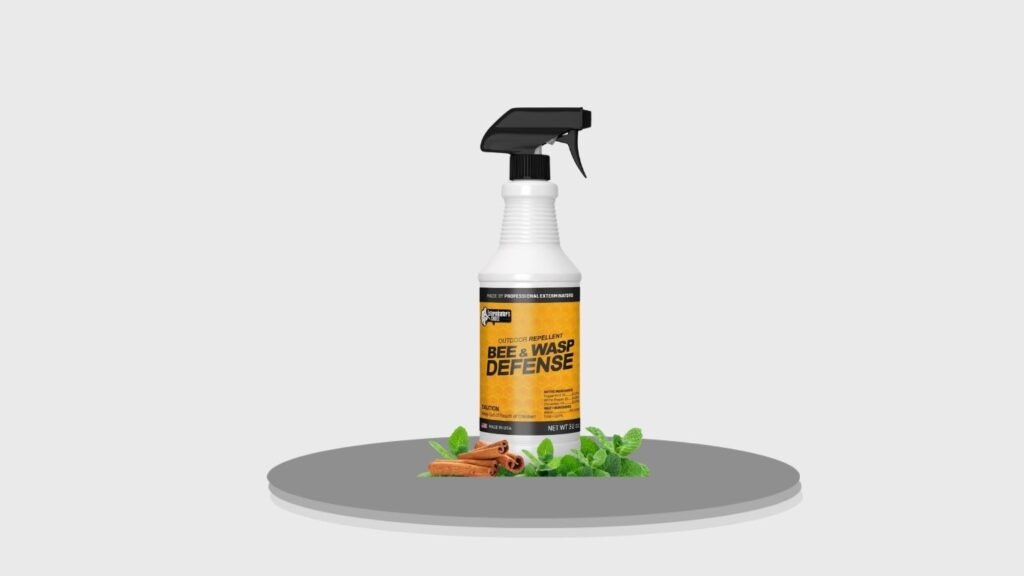
The Exterminators Choice Natural Bee Repellent Spray offers a ready-to-use approach for discouraging bees around homes and outdoor living spaces. Its natural-style formulation is aimed at users who prefer a repellent rather than a conventional broad-spectrum insecticide. The spray bottle also makes it practical for treating small, specific areas where bee activity is repeatedly noticed.
Key Features
- Natural-style repellent formula
- Designed for bee deterrence
- Ready-to-use spray application
- Suitable for targeted outdoor treatment
- Useful around decks, patios, and structures
- Convenient for repeat spot applications
- No complicated mixing required
Why It Is Best for Targeted Bee Deterrence
The strength of this product is precision. Instead of treating large surfaces unnecessarily, users can focus the spray on specific areas where bees tend to investigate.
This can include porch corners, wooden railings, shed edges, fence posts, or other sheltered locations that may attract nesting activity. For homeowners dealing with recurring but localized bee visits, that targeted approach can be easier to manage.
Outdoor Performance and Practical Use
A spray format provides good control over where the formula is applied. This is helpful when certain surfaces need treatment while nearby plants, furniture, or other areas should remain untouched.
Because outdoor conditions can wash away or weaken repellents over time, checking treated areas periodically is worthwhile. If bees continue returning, additional applications may be necessary according to label directions.
Overall Convenience and Value
Exterminators Choice is a practical option for people who want a simple spray that fits into regular property maintenance. It is especially useful for smaller problem zones rather than large-scale infestations.
When combined with sealing cracks, maintaining exposed wood, and removing attractive nesting spots, the spray can support a broader strategy for reducing unwanted bee activity near living spaces.
4. Natural Essential Oil Outdoor Bee Repellent Spray
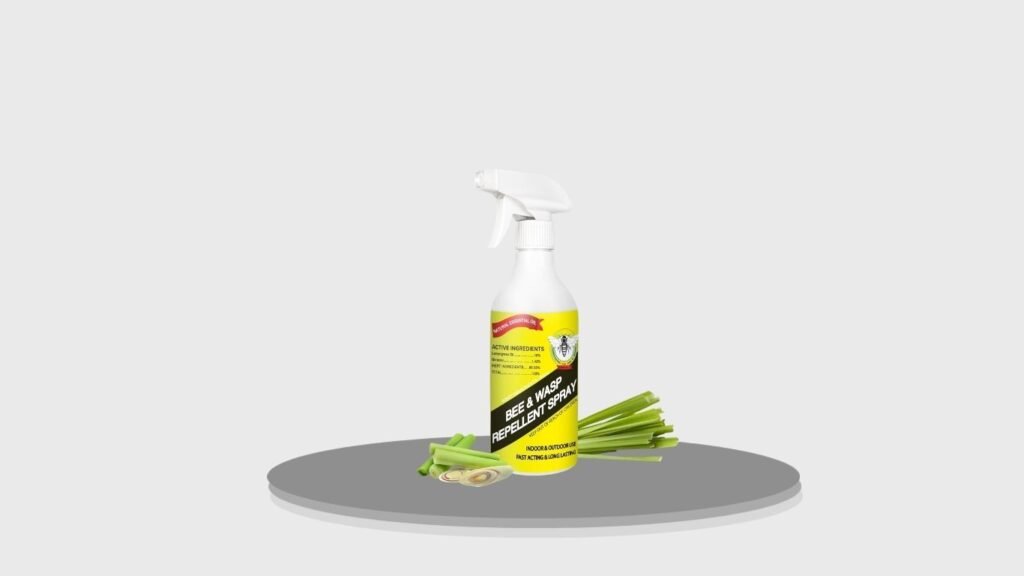
The Natural Essential Oil Outdoor Bee Repellent Spray is intended for users who prefer a scent-based deterrent around gardens, patios, decks, and other exterior spaces. Its essential-oil-style formulation focuses on making treated areas less attractive to bees rather than relying on mechanical traps or electrical devices.
Key Features
- Essential-oil-based repellent concept
- Designed for outdoor bee deterrence
- Ready-to-use spray format
- Suitable for patios and garden areas
- Easy spot application
- No plug-in device required
- Useful around frequently visited outdoor spaces
Why It Is Best for Garden and Patio Areas
This type of repellent is particularly convenient around outdoor seating areas where users may not want bulky traps or electronic devices. The spray can be directed toward structural surfaces, borders, and other areas where bees tend to linger.
Its portable bottle also makes it easy to carry between different parts of the yard, which is helpful when activity shifts during the season.
Scent-Based Performance and Application
Essential-oil repellents generally rely on strong plant-derived scents to discourage insects from staying in treated areas. Performance can vary depending on the formula, weather, airflow, and the intensity of bee activity.
Users should avoid spraying directly on flowering plants that are actively visited by beneficial pollinators unless the label specifically permits it. Applying the product to nearby structural surfaces can often provide a more targeted approach.
Overall Convenience and Value
This natural essential oil spray is best suited to users who want a lightweight, flexible option for routine outdoor use. It requires little setup and can be applied exactly where bee activity becomes noticeable.
For gardens, patios, porches, and similar areas, it can serve as a convenient deterrent when combined with good property maintenance and careful identification of any nearby nests.
5. Peppermint Bee Repellent Patio Spray
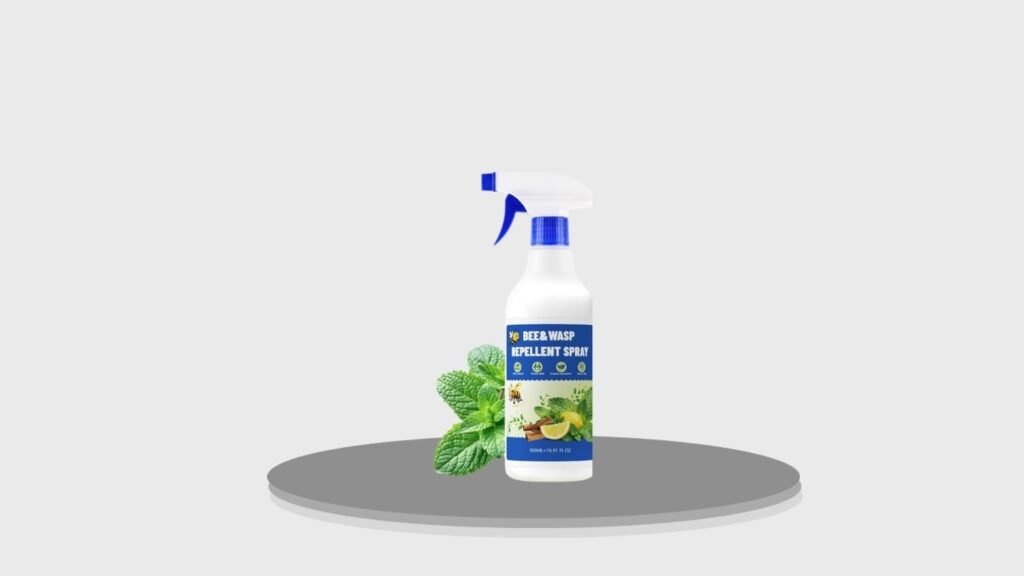
The Peppermint Bee Repellent Patio Spray uses a peppermint-based scent approach for discouraging bees around patios and other outdoor living areas. Its ready-to-use design is particularly appealing for homeowners who want a simple product that can be applied around seating areas, decks, porches, and similar spaces before or during periods of increased bee activity.
Key Features
- Peppermint-based repellent formula
- Designed for patios and outdoor spaces
- Ready-to-use spray bottle
- Convenient for spot treatment
- No mixing required
- Portable and easy to store
- Suitable for repeated seasonal use
Why It Is Best for Outdoor Living Spaces
Patios and decks are common places where bee activity becomes especially frustrating because people spend extended time eating, relaxing, or entertaining nearby.
A peppermint-based spray allows users to treat targeted structural areas around the space without setting up traps or electrical devices. This can be useful near railings, table areas, fencing, or sheltered corners where insects repeatedly appear.
Peppermint Scent and Field Performance
The strong peppermint aroma is intended to make treated areas less appealing to certain insects. However, scent-based repellents generally work best as part of a broader prevention strategy rather than as the only response to an active nest.
Outdoor weather can also reduce how long the scent remains noticeable. Reapplication may therefore be necessary after rain or extended exposure, depending on the product instructions.
Overall Convenience and Value
For homeowners who want something easy to use around a patio or porch, this peppermint spray offers a convenient format. Its portable bottle and targeted application make it simple to keep nearby during warmer months.
It is most useful for discouraging occasional or recurring bee visits around living spaces rather than handling large established colonies.
6. Natural Bee, Wasp & Hornet Repellent Spray
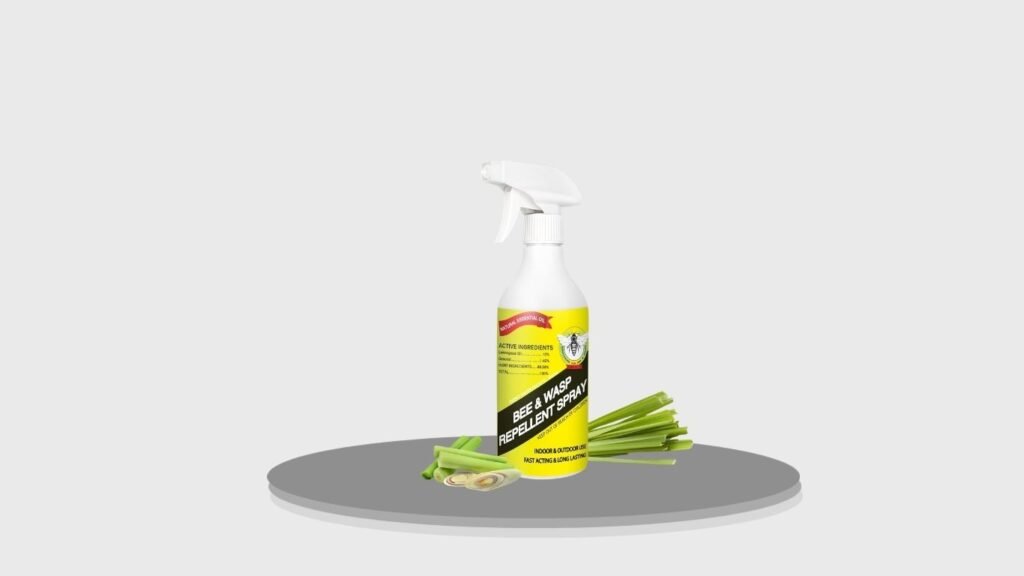
The Natural Bee, Wasp & Hornet Repellent Spray is designed as a broader outdoor deterrent for several common stinging insects. Its multi-pest focus can be useful for homeowners who are not always sure whether activity around a porch, shed, fence, or roofline is coming from bees, wasps, or hornets.
Key Features
- Designed for bees, wasps, and hornets
- Natural-style repellent formula
- Ready-to-use spray application
- Suitable for outdoor problem areas
- Useful around structures and entry points
- Portable bottle design
- No mixing or additional equipment required
Why It Is Best for Broader Stinging-Insect Control
One advantage of a multi-insect formula is flexibility. Outdoor areas may attract different stinging insects throughout the season, and using one product designed to deter several types can simplify routine maintenance.
The spray can be applied to selected surfaces around sheds, patios, fences, decks, and other locations where insects commonly investigate for shelter or nesting sites.
Application and Outdoor Performance
Targeted application is generally more efficient than spraying large areas unnecessarily. Paying attention to eaves, corners, structural gaps, and sheltered surfaces can help users concentrate the product where insects are most likely to return.
As with other outdoor repellents, weather conditions can reduce residual performance. Regular inspection and label-directed reapplication can help maintain coverage.
Overall Convenience and Value
This spray is a practical choice for users dealing with mixed bee, wasp, or hornet activity around a property. Its broader target range makes it more versatile than products intended for only one insect group.
For routine prevention around outdoor structures, it offers an easy way to treat problem areas without installing permanent equipment. Established nests, especially hornet or wasp nests, may still require professional removal.
FAQs
1. What type of bee spray works best for carpenter bees?
Foaming sprays are often useful for carpenter bee holes because the foam can cling around openings and enter small cavities more effectively than a thin liquid. Products specifically labeled for carpenter bee use are preferable.
2. Can bee repellent spray prevent bees from nesting?
Repellent sprays may discourage bees from investigating or returning to certain treated areas, but they cannot guarantee that nesting will not occur. Sealing cracks, protecting exposed wood, and removing suitable nesting sites can improve prevention.
3. How often should outdoor bee spray be reapplied?
Reapplication frequency depends on the formula, weather exposure, and product label. Rain, sunlight, and repeated surface contact can reduce residual effectiveness, so outdoor areas may need periodic retreatment.
4. Are essential-oil bee sprays effective?
Essential-oil sprays may help discourage bee activity through strong scents, but performance varies widely by formulation and conditions. They are generally best used for light or preventive applications rather than as the only solution for an established nest.
5. Should I spray an active bee nest myself?
Approaching an active nest can be risky, particularly with wasps, hornets, or anyone who has a history of severe sting reactions. Large, hidden, or difficult-to-reach nests are generally safer to have assessed and removed by a pest-control professional.