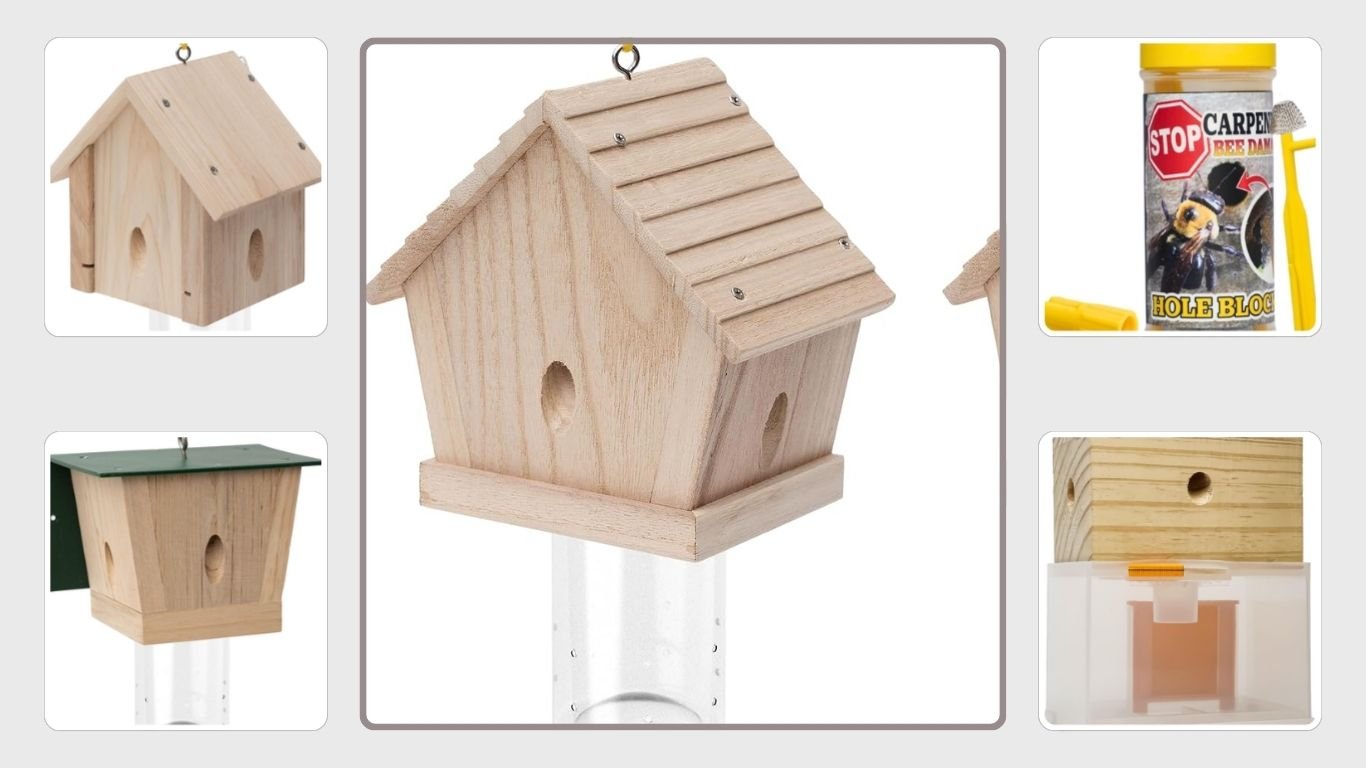
Carpenter bees can damage decks, fences, sheds, and other exposed wood by boring nesting tunnels over time. A well-designed carpenter bee trap can help reduce activity around vulnerable areas without requiring constant monitoring. The best options typically use wooden lure blocks, removable catch chambers, sticky surfaces, or reusable designs that simplify maintenance. In this guide, we review 10 carpenter bee traps suited for porches, barns, patios, garages, and outdoor structures, making it easier to compare their construction, ease of use, and overall practicality.
1. Best Bee Trap Green Pentroof Carpenter Bee Trap
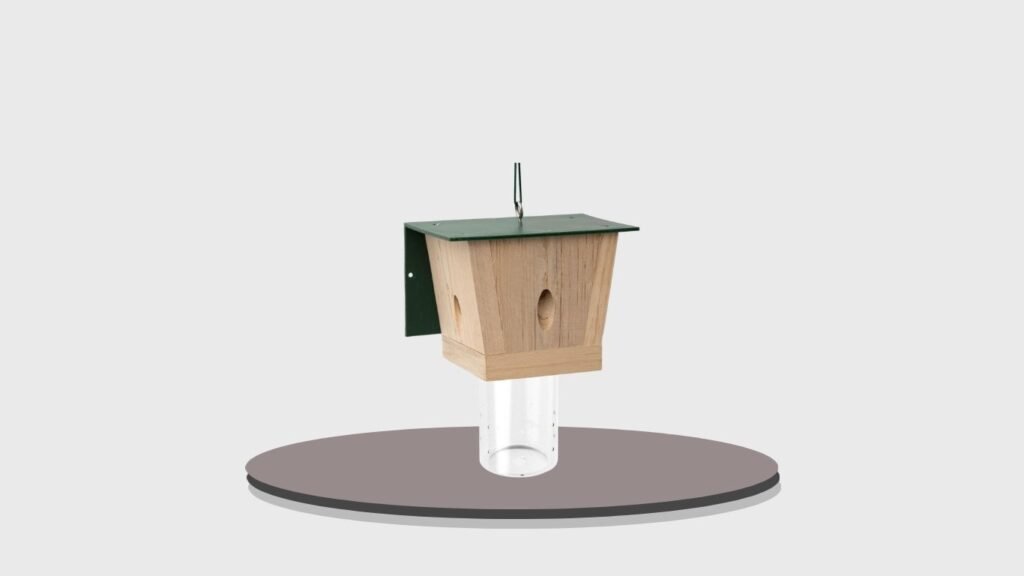
The Best Bee Trap Green Pentroof model combines a natural wooden trap body with a removable collection vault, creating a simple setup for protecting decks, eaves, porches, sheds, and other exposed wood. Its patented design uses pre-drilled entry holes rather than pesticides or electricity. The green pentroof styling also gives it a more decorative appearance than many basic carpenter bee traps.
Key Features
- Natural wood construction
- Green pentroof shed-style design
- Removable collection vault
- Patented trap design
- No electricity required
- No spray application needed
- Reinforced with screws and nails
- Designed for outdoor wooden structures
- Suitable for eaves, patios, and decks
Why It’s Best for Decorative Outdoor Placement
Many carpenter bee traps are purely functional, but this model has a small shed-like appearance that blends more naturally with gardens, porches, cabins, and wooden structures. That makes it especially useful for homeowners who want pest control without hanging an obvious plastic device near a visible patio.
The natural wood construction is also appropriate for carpenter bees because they naturally investigate holes in wood when searching for nesting locations.
Its removable lower vault makes monitoring easier. Instead of replacing the entire wooden trap after insects enter, users can access the collection section when necessary.
Outdoor Performance and Placement
The manufacturer recommends hanging the trap roughly 5–7 feet above the ground around carpenter-bee activity, with sunny south- or southwest-facing locations suggested when possible. The listing also describes the wooden body as reinforced and weather resistant.
For better results, placement should be close to existing boring activity rather than randomly positioned across a large yard. Eaves, fascia boards, porch roofs, pergolas, deck framing, and sheds are logical locations.
Like most passive carpenter bee traps, it may take time for bees to investigate the entry holes.
Overall Verdict
The Best Bee Trap Green Pentroof model is particularly attractive for users who want a traditional wooden trap that does not look overly industrial. Its removable vault, natural construction, decorative roof, and pesticide-free operation make it suitable for repeated seasonal use around wooden structures.
For homeowners dealing with carpenter bees around porches, decks, sheds, or cabins, its combination of appearance and straightforward operation gives it strong everyday practicality.
2. Generic Cedar Wood Carpenter Bee Trap
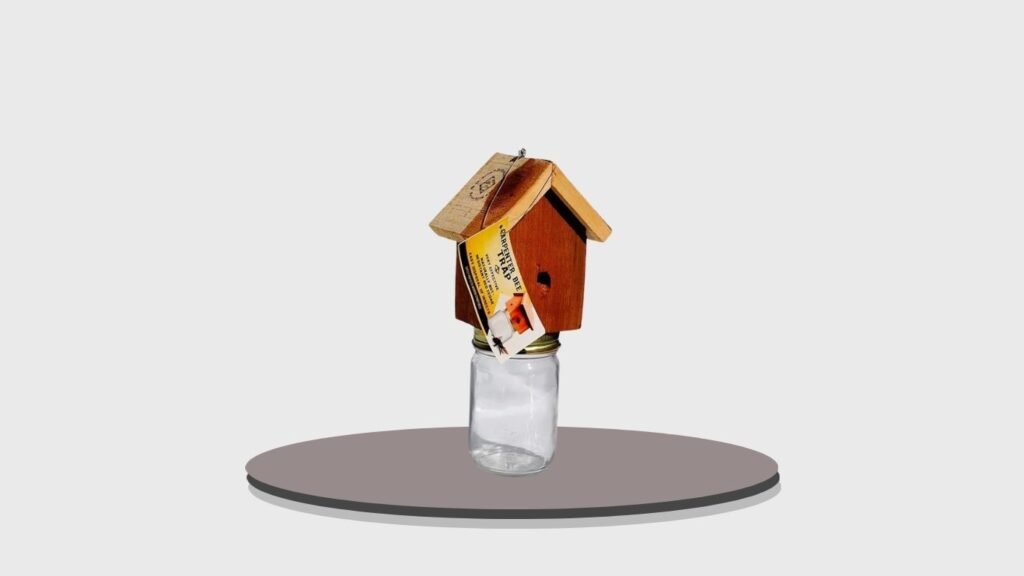
The Generic BT-GL2421 Carpenter Bee Trap is a classic cedar-wood design intended to help intercept carpenter bees around structures before additional boring damage occurs. The current listing identifies natural cedar construction, a manual power-free design, and a two-count configuration. It requires no complicated installation, electrical connection, or chemical treatment, which makes it particularly easy to position around common carpenter-bee activity areas.
Key Features
- Natural cedar wood construction
- Two-count configuration
- Approximately 4.5 x 3.25 x 10 inches
- Manual, electricity-free operation
- Chemical-free trap design
- Pre-drilled carpenter bee entry holes
- Classic wooden appearance
- Designed for decks, eaves, and patios
- No complicated installation required
Why It’s Best for Natural Cedar Construction
Cedar gives this trap a more traditional appearance than plastic pest-control devices and allows it to blend naturally with fences, decks, gazebos, barns, and other outdoor wooden structures.
The two-count format also provides useful placement flexibility. Instead of depending on one trap to cover several areas of activity, users can position traps at different sides of a porch, deck, or shed.
The listing states that its design mimics a natural carpenter bee nesting location and is intended to attract carpenter bees without intentionally attracting honeybees.
Setup and Everyday Performance
No electrical components, replaceable batteries, or chemical attractants are required. Users simply hang the traps around areas where carpenter bees are already investigating or boring into wood.
Good placement is particularly important with passive wooden traps. Installing them near existing carpenter-bee holes, wooden eaves, railings, deck framing, or sunny sides of structures gives bees a greater chance of encountering them.
The cedar body also makes the trap visually compatible with outdoor timber rather than standing out like brightly colored pest-control equipment.
Overall Verdict
The Generic Cedar Wood Carpenter Bee Trap is a practical choice for people who prefer a straightforward and natural-looking trap. Its cedar construction, two-trap configuration, chemical-free operation, and simple hanging design make it suitable for residential properties with several carpenter-bee activity points.
It is especially appealing for decks, wooden fences, sheds, barns, and cabins where a rustic trap can blend into the structure while providing passive seasonal control.
3. Bee Warehouse Catch & Release Carpenter Bee Trap
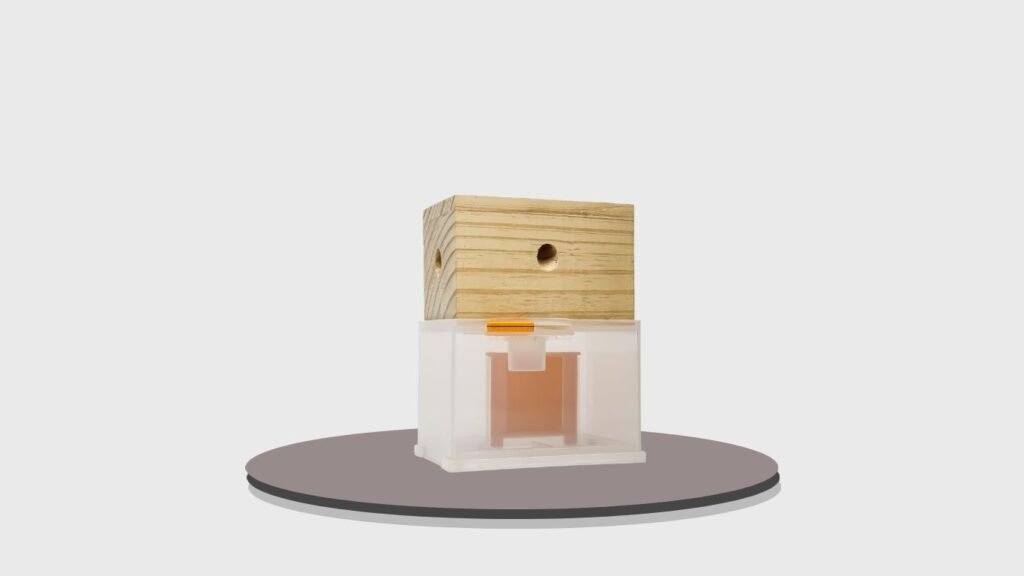
Bee Warehouse offers one of the more distinctive designs in this roundup because it gives users the option to capture and relocate carpenter bees rather than relying only on a conventional closed collection jar. Its wood-and-plastic construction includes a large catch chamber, hanging hardware, and a controllable latch. The package also includes five Bee Dams for use as part of the trapping setup.
Key Features
- Wood and plastic construction
- Catch-and-release design
- Large collection chamber
- Chamber latch for transport
- Easy-access release door
- Hanging hardware included
- Five Bee Dams included
- No sticky glue required
- No electronic components
- Manufacturer-stated 5–15-foot effective range
Why It’s Best for Catch-and-Release Use
The catch-and-release chamber is the feature that separates Bee Warehouse from most standard carpenter bee traps. Once carpenter bees enter the collection area, the latch can be closed before moving the trap to another location. The chamber can then be opened to release the captured bees.
This approach may appeal to property owners who want to discourage nesting around buildings while preferring relocation over leaving insects permanently inside the trap.
The large chamber is another practical advantage because it reduces how often the collection area needs attention.
Capacity and Outdoor Performance
Bee Warehouse states that its extra-large chamber may need emptying only infrequently under normal conditions. The company also markets an effective trapping range of approximately 5–15 feet and says its pre-drilled entry holes are specifically designed around carpenter bee behavior.
Because no bait trays, electronic zappers, or sticky compounds are required, maintenance remains relatively simple.
For the strongest practical setup, the trap should be positioned close to existing carpenter bee activity on eaves, fascia, decks, barns, pergolas, or other exposed wooden structures.
Overall Verdict
Bee Warehouse is one of the most specialized choices for users interested in carpenter bee relocation. The catch-and-release latch, large chamber, included hardware, and Bee Dams give it considerably more functionality than a basic wooden jar trap.
Its design makes particular sense around properties where carpenter bee activity is concentrated near valuable wood but the user prefers a reusable trapping system with a relocation option.
4. RESCUE! TrapStik for Carpenter Bees, Wasps & Mud Daubers
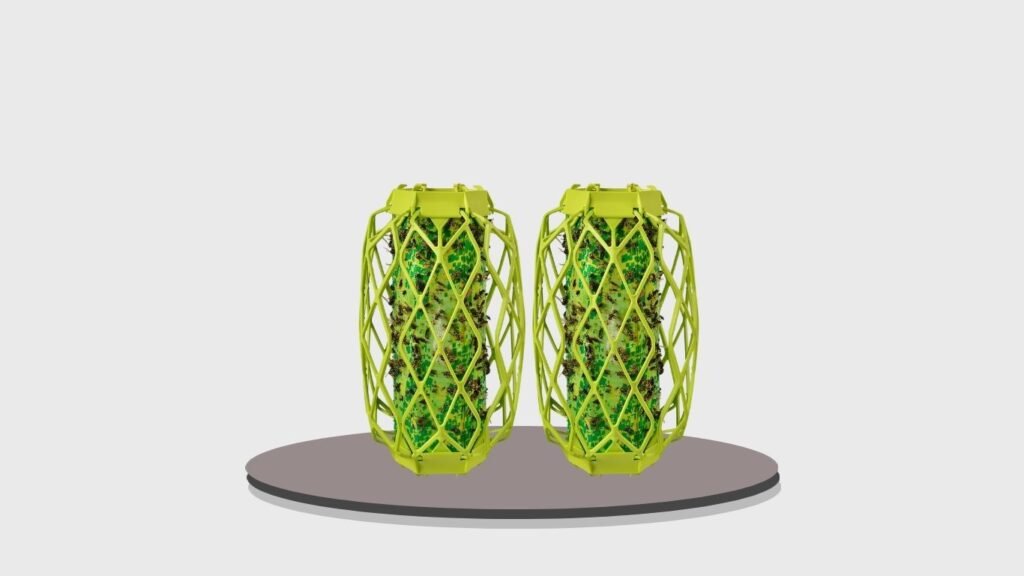
The RESCUE! TrapStik takes a completely different approach from wooden carpenter bee traps. Instead of relying on nesting holes and a collection container, it uses a weather-resistant adhesive surface combined with the company’s VisiLure visual pattern. Carpenter bees, paper wasps, and mud daubers are attracted visually and become trapped on the sticky exterior. Bird guards help reduce accidental contact with non-target wildlife.
Key Features
- VisiLure visual attraction technology
- Strong adhesive trapping surface
- Targets carpenter bees, wasps, and mud daubers
- Pesticide-free operation
- Odor-free design
- Weather-resistant construction
- Built-in glue guards
- Designed for outdoor use
- No bait or refill chemicals required
Why It’s Best for Multi-Pest Control
RESCUE! is especially useful when carpenter bees are not the only flying insects causing problems. Its design also targets paper wasps and mud daubers, making it more versatile around garages, sheds, decks, fences, and other structures where several wood-associated insects may appear.
Unlike wooden traps, the TrapStik does not depend on insects entering small holes. Its colored pattern serves as the visual lure, while the adhesive captures insects after they land.
The pesticide-free approach is also convenient for people who do not want to spray insecticide around outdoor seating areas.
Placement and Trapping Performance
RESCUE! recommends installing the TrapStik close to visible insect activity. Appropriate locations include eaves, garages, sheds, wooden railings, fences, and beneath decks. The company also recommends horizontal hanging when specifically targeting carpenter bees.
Its adhesive withstands outdoor heat and rain, although placing it in a somewhat sheltered location can extend usable life.
Because the surface is extremely sticky, it should remain away from children, pets, and areas with frequent bird activity.
Overall Verdict
RESCUE! TrapStik is the most distinctive option among the first five because it combines carpenter bee control with wasp and mud-dauber trapping. Its visual lure, pesticide-free construction, weather-resistant glue, and wildlife guards make it useful around structures with several flying-pest problems.
For users who prefer a ready-to-hang trap without wooden chambers, bait, or collection jars, the TrapStik provides an exceptionally simple alternative.
5. Best Bee Trap Shed-Style Carpenter Bee Trap
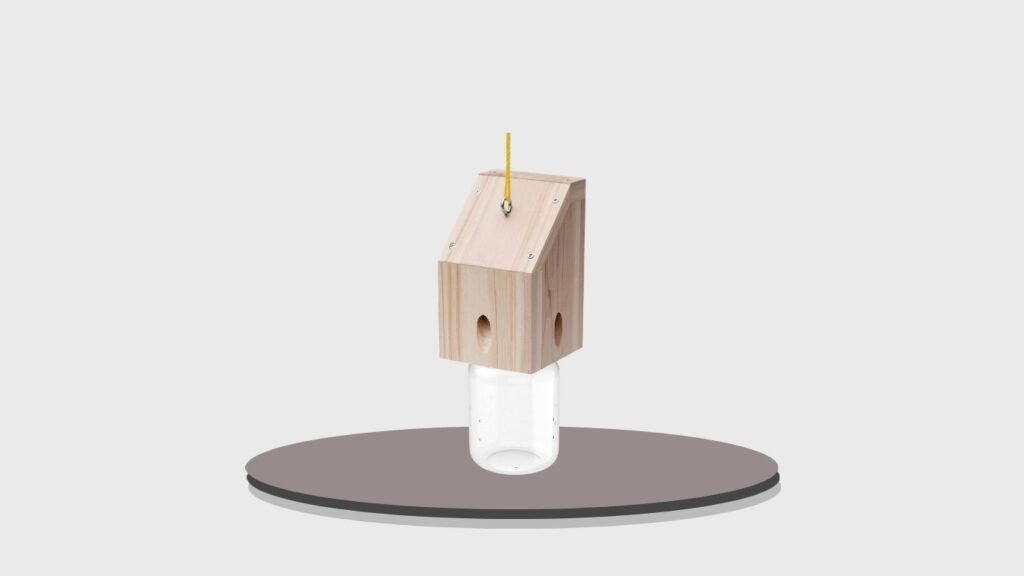
The Best Bee Trap Shed-Style model uses a natural wooden body with a removable plastic Bee Vault underneath. The design resembles a miniature shed and relies on pre-drilled entry holes to encourage carpenter bees to enter. Once inside, bees move toward the transparent lower collection chamber. Its weather-resistant construction and passive operation make it suitable for porches, eaves, decks, sheds, and other outdoor wooden structures.
Key Features
- Natural wooden trap body
- Shed-style outdoor design
- Removable plastic Bee Vault
- Patented trap construction
- Reinforced with screws and nails
- Weather-resistant design
- No batteries or electricity
- No spray application required
- Available in multiple pack sizes
Why It’s Best for Easy Collection Monitoring
The transparent removable vault is one of the most useful features of this model. Users can quickly check whether carpenter bees have entered without opening or dismantling the wooden portion of the trap.
Its shed-style construction also gives it a decorative appearance suitable for visible outdoor locations. Instead of looking like industrial pest-control equipment, it resembles a small wooden outdoor ornament.
The current listing offers one-, two-, and four-pack configurations, which makes it easier to scale coverage for different property sizes.
Durability and Strategic Placement
The manufacturer describes the trap as built from natural wood reinforced with screws and nails for improved outdoor durability. Recommended placement is approximately 5–7 feet above the ground, particularly around sunny wood structures where carpenter bees are already active.
Decks, patio roofs, eaves, sheds, pergolas, barns, and wooden siding are natural installation points.
For best practical performance, the trap should be moved if carpenter bees repeatedly ignore it. Positioning close to existing holes or active nesting sites is generally more logical than hanging it far from the damaged wood.
Overall Verdict
The Best Bee Trap Shed-Style model provides an effective combination of simple operation, decorative wooden construction, and easy monitoring. Its removable transparent collection vault eliminates much of the guesswork associated with enclosed wooden traps.
For homeowners who want a reusable-looking trap that blends naturally with outdoor structures, this model offers a particularly convenient balance of appearance, durability, and straightforward maintenance.
6. GRTRE Wood Carpenter Bee Trap
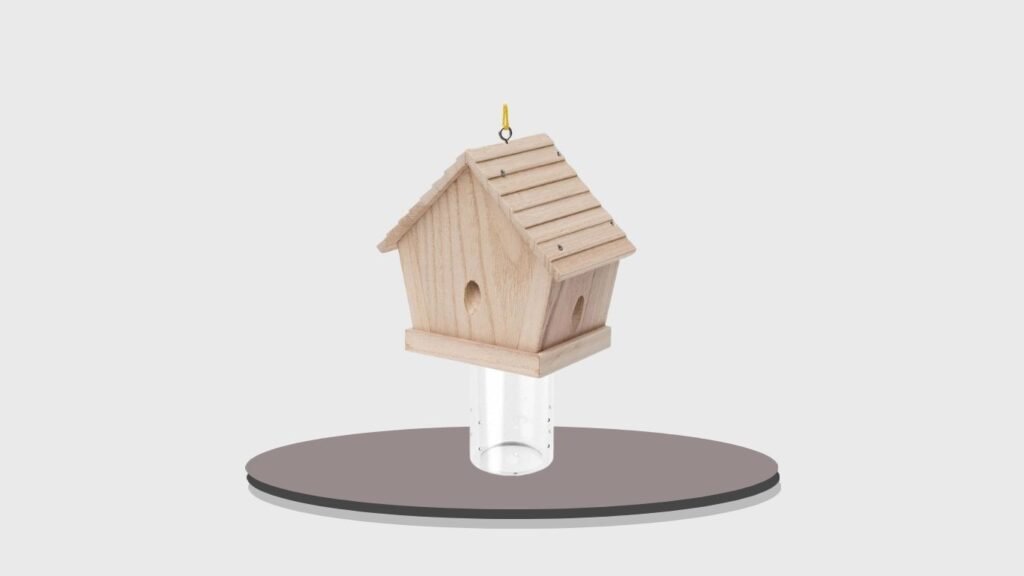
The GRTRE Wood Carpenter Bee Trap uses a traditional wooden nesting-style design intended for outdoor structures where carpenter bees are actively drilling. Its natural cedar construction and shed-like appearance allow it to blend easily with porches, decks, fences, sheds, and cabins. Because it works passively without electricity or routine chemical spraying, it offers a straightforward approach for homeowners who want low-maintenance carpenter bee control.
Key Features
- Natural cedar construction
- Shed-style wooden design
- Designed for outdoor carpenter bee activity
- No electricity required
- Passive trapping operation
- Suitable for decks and patios
- Can be positioned near eaves and wooden siding
- Decorative rustic appearance
- Low-maintenance setup
Why It’s Best for Rustic Outdoor Structures
GRTRE is particularly suitable for properties where a plastic trap would look out of place. Natural wood allows the trap to blend with cabins, fences, pergolas, barns, and timber decks rather than standing out as obvious pest-control equipment.
The trap’s wooden design also resembles the type of material carpenter bees naturally investigate when looking for nesting locations.
This makes strategic placement especially important. Hanging it near current drilling activity, old nesting holes, or frequently visited wooden areas gives carpenter bees a better chance of encountering the trap.
Construction and Outdoor Performance
GRTRE describes its carpenter bee traps as natural cedar designs built for placement around eaves, patios, decks, and other active areas. The company emphasizes simple installation without complicated equipment.
Cedar is also a sensible material for outdoor use because of its familiar rustic appearance and suitability around wooden structures.
Passive traps do not instantly eliminate carpenter bee activity across an entire property, however. Their performance depends strongly on location. Checking several likely nesting areas and repositioning the trap when necessary can improve practical results.
Overall Verdict
The GRTRE Wood Carpenter Bee Trap is a strong match for users who want a simple, natural-looking option without electronics or sprays. Its cedar body and shed-style appearance work particularly well around cabins, decks, fences, and porches.
For properties where visual appearance matters almost as much as functionality, this trap provides an appealing combination of passive control, straightforward installation, and outdoor-friendly styling.
7. Cabin-Style Carpenter Bee Trap with Removable Vault
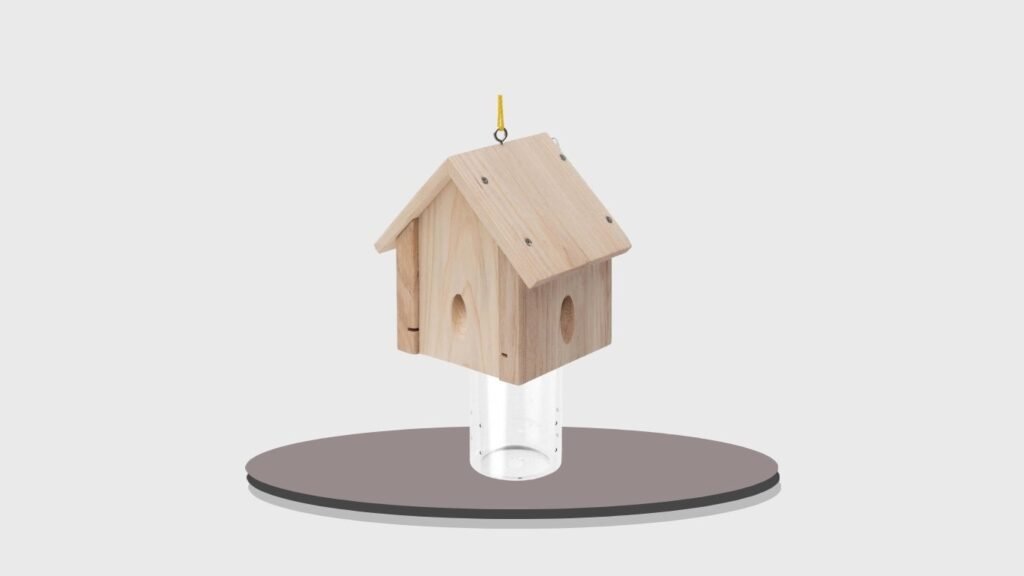
This Cabin-Style Carpenter Bee Trap combines a natural fir body with a removable lower collection vault, allowing users to monitor captured carpenter bees without dismantling the entire trap. The patented design is intended for installation around decks, patios, eaves, and other wooden structures where active boring has been observed. Reinforced construction helps make it suitable for repeated outdoor use.
Key Features
- Natural fir construction
- Cabin-style design
- Removable collection vault
- Patented trap design
- Reinforced with screws and nails
- Weather-resistant construction
- Passive operation
- No electrical connection required
- Suitable for decks, patios, and eaves
Why It’s Best for Easy Trap Monitoring
The removable vault is the most practical feature of this model. A clear or accessible collection chamber makes it easier to see whether the trap is working without opening the wooden body.
That is useful for homeowners managing several problem areas around a property because they can quickly inspect each trap during routine yard maintenance.
The cabin styling also helps the trap blend naturally with wooden architecture. Rather than looking like industrial pest-control equipment, it resembles a small rustic outdoor ornament.
Placement and Outdoor Performance
The product guidance recommends positioning the trap approximately 5–7 feet above ground and, when possible, facing sunny south or southwest exposures where carpenter bees are active. Natural fir is reinforced with screws and nails to improve outdoor durability.
Existing nesting areas are usually the most logical installation points. Placing the trap near damaged fascia boards, porch ceilings, railings, or pergolas gives bees a reason to encounter it during normal nesting behavior.
If activity continues elsewhere, moving the trap closer to newly drilled holes may improve results.
Overall Verdict
This Cabin-Style Carpenter Bee Trap offers a useful balance of easy monitoring and traditional wooden construction. The removable vault reduces maintenance hassle, while the natural fir body fits naturally around porches, sheds, decks, and cabins.
For homeowners who want a reusable-looking trap with straightforward inspection rather than a disposable sticky surface, this design provides excellent everyday convenience.
8. Carpenter Bee Blocker Pro BBPRO30
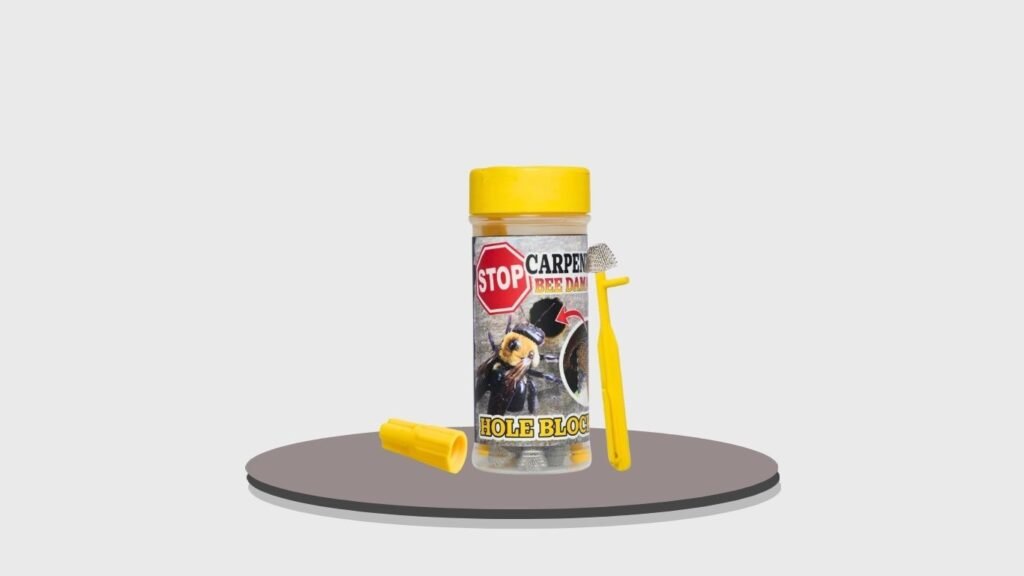
Carpenter Bee Blocker Pro BBPRO30 is technically different from a conventional catching trap. Instead of luring bees into a container, it uses small 304 stainless-steel screens to block existing carpenter bee nesting holes and prevent re-entry. The 30-count kit is designed for decks, fascia boards, fences, barns, sheds, siding, and other wood surfaces where carpenter bees have already drilled openings.
Key Features
- 30 stainless-steel blockers
- 304 hardened stainless steel
- Designed to seal carpenter bee holes
- Corrosion-resistant construction
- Weather-resistant design
- Patented exclusion system
- Extension-pole installation adapter
- No chemical application required
- Helps discourage repeat nesting
- Suitable for many outdoor wood surfaces
Why It’s Best for Blocking Existing Nest Holes
The BBPRO30 stands out because it addresses carpenter bee access directly rather than waiting for bees to enter a trap.
Carpenter bees frequently return to established nesting holes, and offspring may reuse the same areas in later seasons. Blocking access can therefore be useful after appropriate management of an existing nest.
The stainless-steel design also provides a more permanent-looking solution than temporary corks or soft fillers. It is particularly useful on fascia boards and other higher locations where repeated maintenance would be inconvenient.
Durability and Installation
The manufacturer uses 304 stainless steel, which is intended to resist corrosion and avoid rust staining on wood. The kit also includes an installation tool and extension-pole adapter designed to reach elevated areas without requiring direct ladder access in some situations.
However, existing holes should not simply be sealed when live bees or developing brood may still be trapped inside. Timing and proper nest management matter when using exclusion devices.
Once appropriately installed, the metal screens require very little routine maintenance.
Overall Verdict
Carpenter Bee Blocker Pro BBPRO30 is an excellent complement to traditional carpenter bee traps when the main problem is repeated use of established holes. Its stainless-steel construction, 30-piece quantity, and pole-compatible installation system make it particularly suitable for homes with multiple previous nesting sites.
Users who want long-term exclusion rather than another collection container may find this design especially practical.
9. Amish-Made Rustic Cedar Carpenter Bee Trap
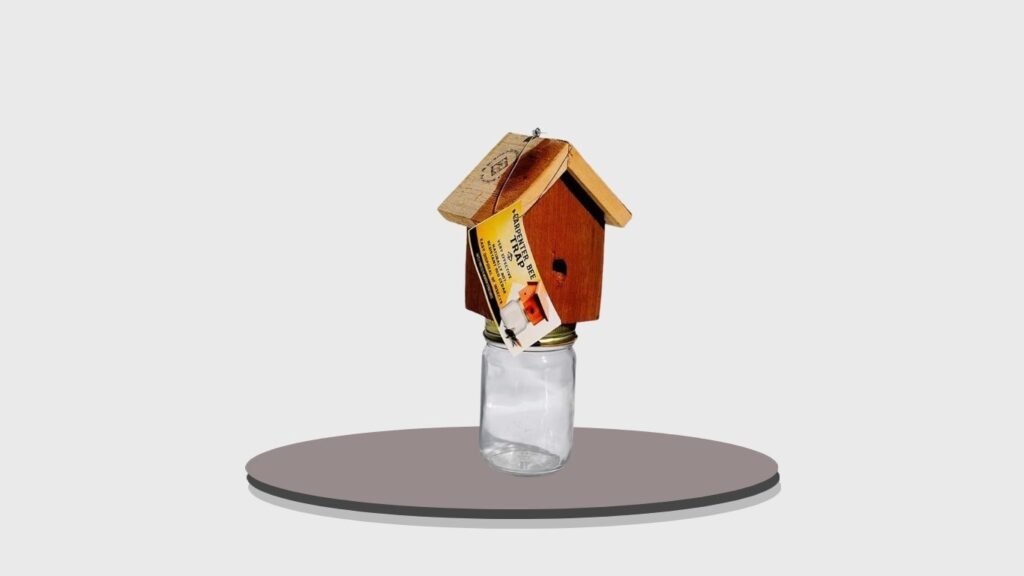
The Amish-Made Rustic Carpenter Bee Trap uses natural cedar and a classic wooden nesting-style design to help capture carpenter bees around homes and outbuildings. The trap is chemical-free, requires no electrical power, and is designed to resemble a natural carpenter bee nesting site. Its handcrafted rustic appearance makes it particularly attractive for cabins, barns, porches, and traditional wood-sided properties.
Key Features
- Natural cedar wood
- Rustic handcrafted appearance
- Chemical-free operation
- No electricity required
- Designed specifically for carpenter bees
- Mimics a natural nesting location
- Intended not to attract honey bees
- Suitable for decks and porches
- Can be hung near wooden outbuildings
Why It’s Best for Traditional Wood Homes
The rustic cedar appearance is the biggest advantage of this trap. It looks more like a small piece of outdoor woodwork than a pest-control device, which makes it appropriate for visible locations around cabins, porches, decks, and barns.
Cedar also fits naturally alongside the type of wooden surfaces carpenter bees commonly investigate.
The manufacturer describes the design as specifically targeting carpenter bees rather than attracting honey bees, an important distinction for homeowners who want to minimize interference with beneficial pollinators.
Setup and Passive Performance
Installation is straightforward: hang the trap near areas where carpenter bee activity is already visible. No wiring, batteries, spraying, or complicated assembly is required.
Passive wooden traps tend to perform best close to existing nesting activity. Look for perfectly round entry holes, fresh sawdust-like material, or repeated bee flight around eaves and railings.
Because the trap is chemical-free, maintenance mainly involves monitoring the trap and checking the collection area as needed.
Overall Verdict
The Amish-Made Rustic Cedar Carpenter Bee Trap is particularly appealing for homeowners who want a natural-looking, low-tech solution. Cedar construction, chemical-free operation, and a design focused specifically on carpenter bees make it well suited to wooden homes, barns, sheds, and cabins.
Its strongest advantage is the way it combines functional pest management with an appearance that complements traditional outdoor structures.
10. Outdoor Carpenter Bee Trap with Removable Collection Container

This Outdoor Carpenter Bee Trap follows the familiar wooden-block-and-collection-container approach used by many successful carpenter bee trap designs. It is intended for placement near active nesting areas on decks, porches, pergolas, fences, sheds, and other exposed wooden structures. The removable bottom container simplifies monitoring and cleanup, while passive operation eliminates the need for electricity or routine pesticide spraying.
Key Features
- Wooden carpenter bee trap body
- Removable collection container
- Designed for outdoor use
- Passive trapping system
- No electricity required
- No batteries needed
- Suitable for decks and porches
- Can be placed near existing nesting holes
- Easy visual monitoring
- Reusable-style construction
Why It’s Best for Simple Seasonal Control
This trap’s biggest advantage is simplicity. There are no charging cables, electronic components, or adhesive panels to replace. Once positioned near an active carpenter bee area, the trap can remain in place while users periodically check the bottom chamber.
The removable collection container also makes seasonal maintenance more convenient than sealed wooden traps.
This type of design works particularly well for homeowners who want to place several traps around known problem spots rather than relying on one complicated control device.
Placement and Practical Performance
Carpenter bee traps generally perform best when placed close to active nesting areas rather than randomly around the yard. Eaves, deck joists, railings, fascia boards, pergolas, sheds, and unfinished wooden surfaces are common locations to investigate.
Watching carpenter bee flight patterns for several minutes can help identify where they repeatedly return.
Traps should also be monitored periodically. If one receives no activity while bees continue boring elsewhere, moving it closer to the nesting zone is often more practical than leaving it in the same location indefinitely.
Overall Verdict
This Outdoor Carpenter Bee Trap is a straightforward option for users who value simple construction and easy monitoring. The removable catch container and power-free operation keep maintenance manageable, while its wooden design is well suited to areas where carpenter bees naturally search for nesting sites.
For seasonal protection around decks, sheds, fences, and porches, it provides a practical no-frills solution.
FAQs
1. Do Carpenter Bee Traps Really Work?
Carpenter bee traps can help capture bees around structures when they are placed correctly, particularly near active nesting areas. Performance varies with trap design, location, existing nests, and seasonal activity. Independent testing has found that carpenter bee traps can be useful for protecting wood, although no trap should be expected to solve a large infestation instantly.
2. Where Is the Best Place to Hang a Carpenter Bee Trap?
Hang traps close to visible carpenter bee activity, such as round nesting holes, porch ceilings, fascia boards, deck framing, sheds, pergolas, or railings. Some manufacturers recommend roughly 5–7 feet above ground in sunny south- or southwest-facing locations. Exact placement should follow the instructions for the specific trap being used.
3. When Should I Put Out Carpenter Bee Traps?
Install traps before or during peak carpenter bee activity in spring, when adults begin searching for nesting locations. Leaving traps available through the active season can also help intercept later activity. Timing varies by climate, so observing when carpenter bees first appear around wooden structures is a useful guide.
4. Do Carpenter Bee Traps Attract Honey Bees?
Carpenter bee traps are generally designed around carpenter bee nesting behavior rather than nectar or floral scents. Some manufacturers specifically state that their wooden traps are designed not to attract honey bees. Nevertheless, any trap should be monitored for unintended captures, particularly around properties with active pollinators.
5. How Can I Prevent Carpenter Bees From Returning?
Trapping works best alongside preventive wood maintenance. After nesting activity has ended and any occupied tunnels have been properly addressed, damaged holes can be repaired or appropriately blocked. Painting or sealing exposed wood may also make surfaces less attractive for future nesting. Exclusion products such as stainless-steel hole blockers are another option for preventing reuse of established nesting openings.