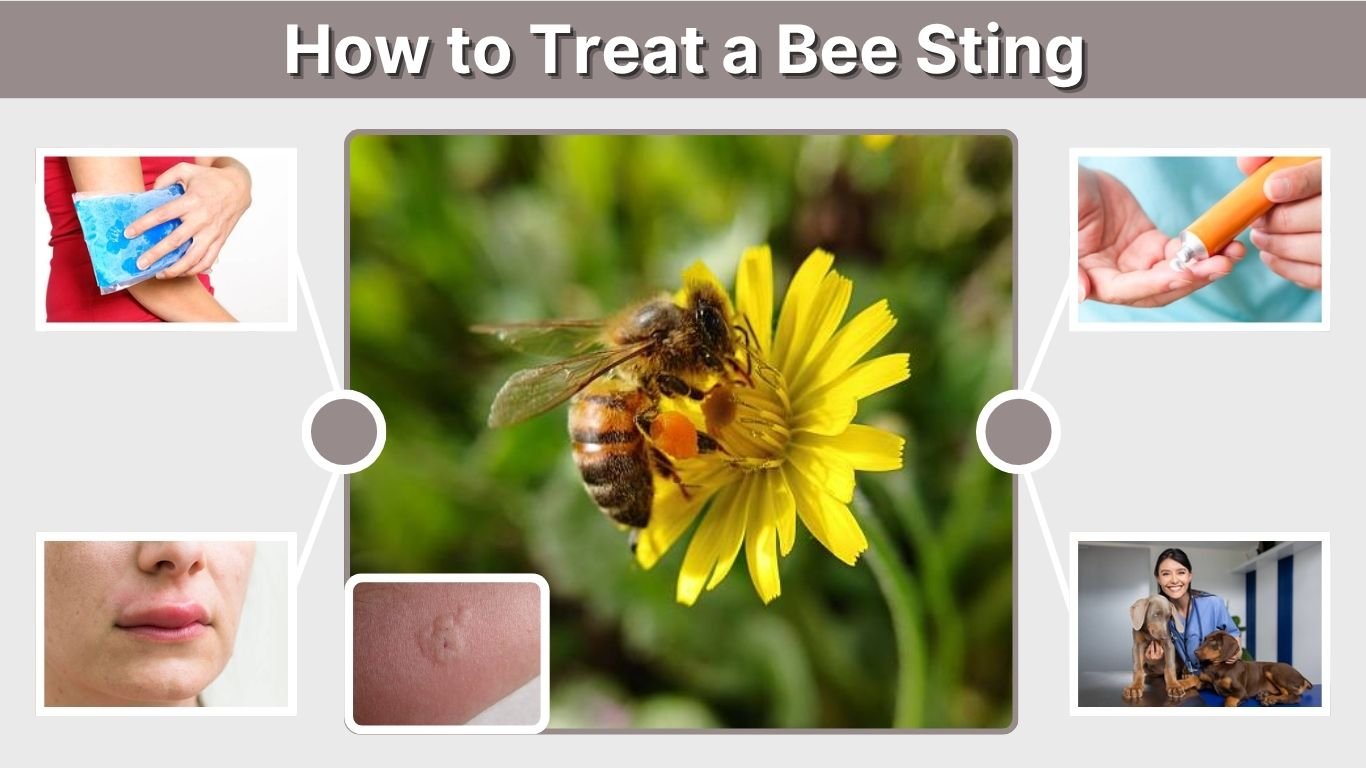
Knowing how to treat a bee sting can quickly reduce pain, itching, and swelling while helping you recognize when the reaction is more serious. Most bee stings cause only temporary discomfort and can be managed at home with prompt stinger removal, washing, cold compresses, and appropriate over-the-counter treatment. However, some people develop severe allergic reactions that require immediate emergency care. This guide explains bee sting first aid, home treatment, swelling relief, natural-care options, special sting locations, and what to do if a dog is stung.
How to Treat a Bee Sting Immediately
Most uncomplicated bee stings can be treated at home. Acting quickly is useful because a honey bee may leave its barbed stinger in the skin, where venom can continue entering the tissue. After removing it, basic wound care and cooling usually control mild symptoms. Wasps, hornets, and yellow jackets generally do not leave their stingers behind and may sting repeatedly.
Bee Sting First Aid Steps
- Move away from the area to avoid additional stings.
- Check for a stinger and remove it promptly if present.
- Scrape it away with a fingernail or firm straight edge if convenient.
- Wash the area thoroughly with soap and water.
- Apply a cold pack wrapped in cloth for 10–15 minutes.
- Elevate a stung hand, foot, arm, or leg if swelling develops.
- Remove rings or tight jewelry before significant swelling begins.
- Avoid scratching the area because broken skin can increase infection risk.
Prompt stinger removal is more important than spending time worrying about the perfect technique. Afterward, continue monitoring the sting for worsening symptoms.
How to Treat Bee Sting Swelling and Itching
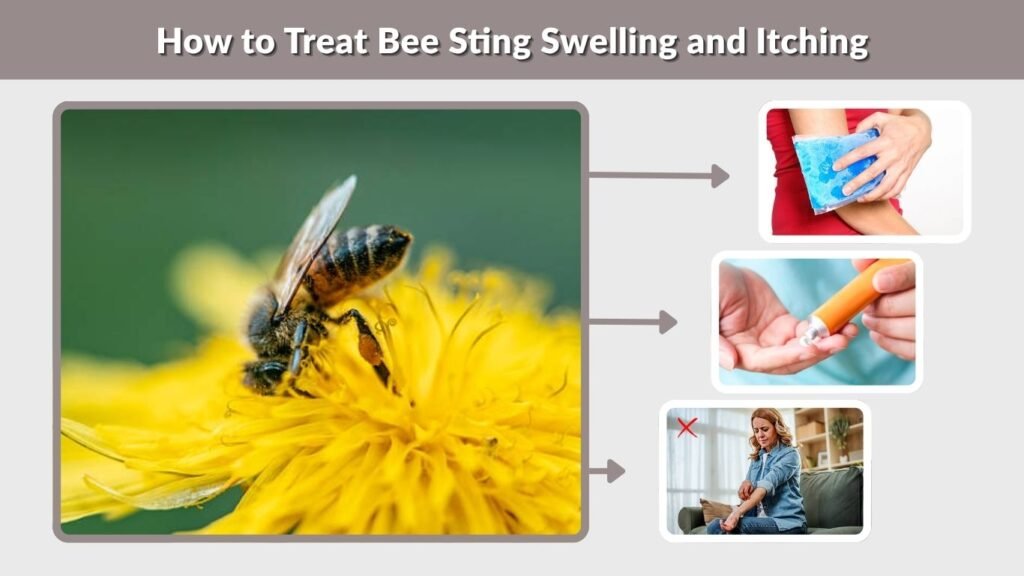
Redness, pain, itching, and localized swelling are normal after many bee stings. Mild reactions often improve within hours, although stronger local reactions can increase during the next day or two and sometimes persist for several days. Treatment focuses on controlling discomfort and preventing scratching while the body’s inflammatory response settles.
Ways to Reduce Swelling and Itching
- Apply a cold compress several times during the first day.
- Elevate the affected hand, arm, foot, or leg when practical.
- Consider an oral antihistamine if appropriate for you and used according to the label.
- Apply 1% hydrocortisone cream or calamine lotion for itching.
- An over-the-counter pain reliever such as acetaminophen or ibuprofen may help pain if you can normally take it safely.
- Avoid scratching, squeezing, or repeatedly rubbing the sting.
Cold therapy is one of the simplest methods for reducing local discomfort. Hydrocortisone, calamine, antihistamines, and common pain relievers may also help mild symptoms.
Treating a Bee Sting at Home Naturally
Home care does not need to be complicated. For most minor stings, removing the stinger, cleaning the skin, applying a cold compress, resting the affected area, and allowing time for inflammation to settle are the most useful measures. These methods have clearer medical support than many popular household remedies.
Do Baking Soda and Other Home Remedies Work?
Baking soda pastes, vinegar, honey, toothpaste, tobacco, and various essential oils are frequently suggested online for bee stings. However, evidence that these remedies meaningfully neutralize venom or speed recovery is limited. They can also irritate sensitive or damaged skin.
If you prefer a minimal-treatment approach, stick with soap and water, cold compresses, elevation, and avoiding scratching. Seek medical advice if swelling continues expanding, pain becomes increasingly severe, or the skin begins showing possible signs of infection.
When a Bee Sting Is an Emergency
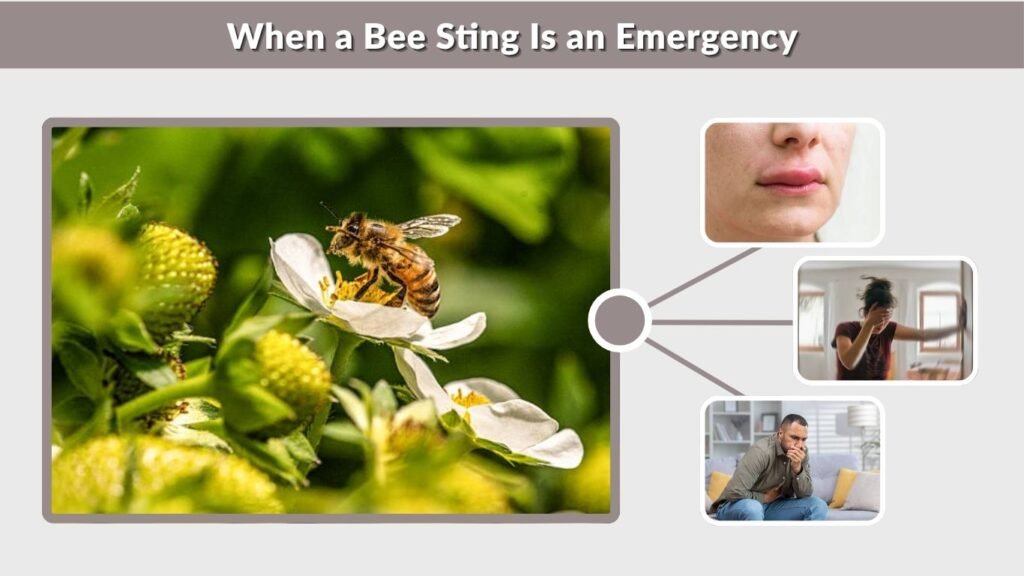
A bee sting can occasionally trigger anaphylaxis, a potentially life-threatening allergic reaction that may develop rapidly. Someone can experience a severe reaction even if previous stings were mild. If prescribed an epinephrine auto-injector for insect-sting allergy, use it immediately as directed when symptoms of anaphylaxis occur, then seek emergency medical care.
Signs That Need Immediate Medical Help
Seek emergency assistance for:
- Difficulty breathing, wheezing, or chest tightness
- Swelling of the tongue, throat, lips, or face
- Difficulty swallowing or speaking
- Widespread hives
- Dizziness, fainting, weakness, or confusion
- A weak, rapid pulse
- Repeated vomiting, diarrhea, or severe abdominal symptoms
- Loss of consciousness
Stings inside the mouth or throat deserve urgent evaluation because swelling in these areas can threaten the airway. Multiple stings can also cause serious illness even without a typical allergy.
Bee Stings on the Face, Foot, Hand, or Eye Area
The same basic first aid applies to most sting locations, but certain areas can swell dramatically. Hands, fingers, feet, and toes may become uncomfortable because swelling occurs in confined tissue, while the face and eyelids can look particularly swollen even after a localized reaction.
Treating Stings in Sensitive Locations
For a sting on a hand, finger, foot, or ankle, remove jewelry promptly and use cold compresses and elevation. A facial sting should be monitored carefully for spreading swelling or breathing problems.
A sting directly in or very close to the eye should receive medical evaluation rather than trying to remove deeply embedded material yourself. A sting to the tongue, mouth, or throat requires urgent medical attention because even localized swelling can obstruct breathing.
How to Treat a Bee Sting on a Dog
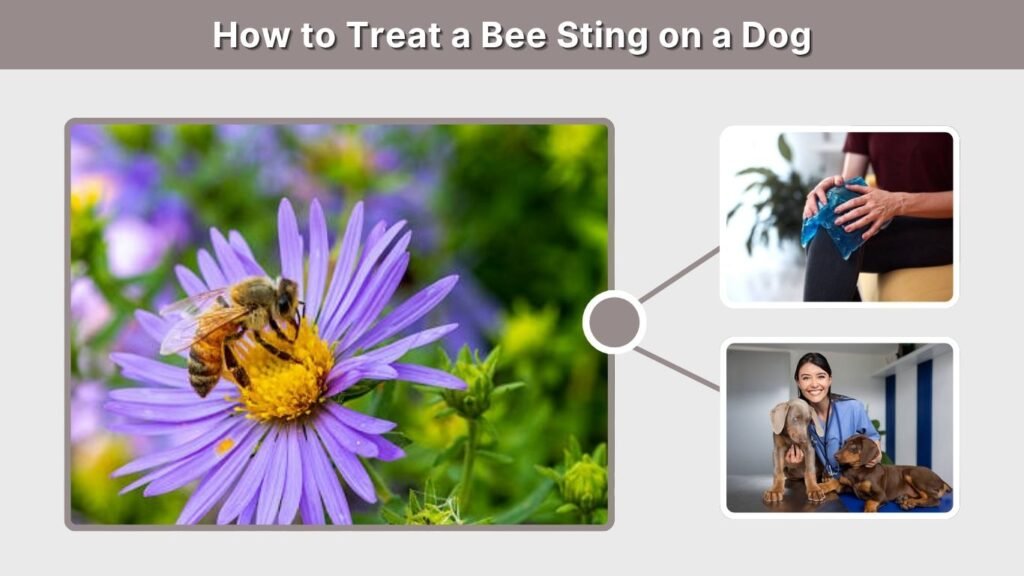
Dogs commonly investigate insects with their nose or paws, so stings frequently occur on the face, mouth, or feet. Many dogs develop only temporary pain and swelling, but allergic reactions can progress rapidly. Monitor your dog closely after any sting, especially when swelling develops around the muzzle or neck.
Bee Sting First Aid for Dogs
- Move your dog away from additional bees or wasps.
- Look for a visible stinger and remove it carefully.
- Apply a wrapped cold pack for about 10 minutes.
- Prevent excessive licking or scratching.
- Contact your veterinarian before giving human antihistamines or other medications.
- Seek veterinary help for substantial facial swelling, vomiting, diarrhea, weakness, breathing difficulty, collapse, or multiple stings.
Stings inside a dog’s mouth deserve particular attention because swelling may interfere with breathing or eating. Severe allergic reactions in dogs are veterinary emergencies and may require epinephrine, oxygen, IV fluids, or other treatment.
FAQs
Most bee sting questions involve how long symptoms should last and when swelling becomes abnormal. A small amount of pain, redness, and swelling is expected, while spreading whole-body symptoms deserve much more attention. The following answers address common concerns after the initial first-aid steps have been completed.
1. How Long Does a Bee Sting Stay Swollen?
Mild swelling may improve within several hours or a few days. A larger local reaction can worsen during the first one or two days and may take up to about a week to completely resolve.
2. How Do You Treat a Bee Sting the Next Day?
Continue cold compresses as needed and avoid scratching. Hydrocortisone, calamine, or an appropriate antihistamine may help persistent itching. Seek medical advice if redness, swelling, warmth, or pain keeps worsening instead of gradually improving.
3. What Is the Fastest Way to Reduce Bee Sting Swelling?
Remove any remaining stinger promptly and apply a wrapped cold pack for about 10–15 minutes at a time. Elevating an affected arm or leg can also help limit swelling.
4. Can a Bee Sting Become Infected?
Yes, although infection is less common than inflammation from venom. Scratching can damage the skin and increase infection risk. Increasing pain, warmth, redness, drainage, or worsening symptoms after several days should be evaluated by a healthcare professional.
5. What Is the Difference Between a Bee and Wasp Sting?
Honey bees commonly leave a barbed stinger behind and generally sting once. Wasps, hornets, and yellow jackets usually retain their stingers and may sting repeatedly. First aid is otherwise similar: clean the area, cool it, manage mild symptoms, and watch carefully for allergic reactions.