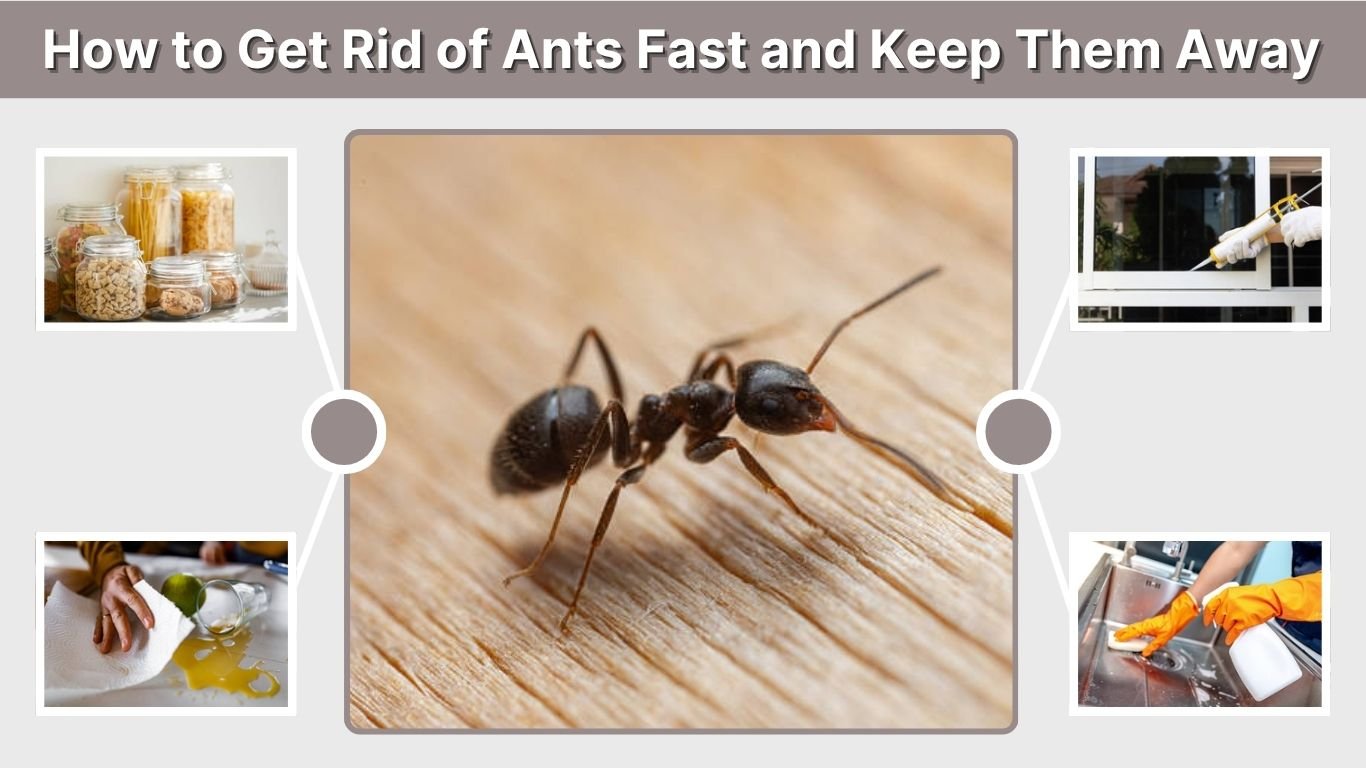
Ants can quickly become a frustrating problem when they discover food, water, or a suitable nesting area around your home. If you want to know how to get rid of ants, the most effective approach is to remove their food sources, follow their trails, use properly labeled ant baits, and prevent them from returning. Different ants may require slightly different treatment, especially carpenter ants and fire ants. This guide explains how to eliminate indoor and outdoor ants quickly while creating longer-lasting control.
How to Get Rid of Ants in the House
Getting rid of ants indoors requires more than killing the workers you can see. Those ants usually represent only a small part of a colony hidden inside walls, outdoors, or beneath floors. Effective control focuses on locating trails, removing attractants, and allowing properly placed bait to reach the colony instead of simply spraying every visible ant.
Start With Food and Water Sources
Before using any ant-control product, make your home less attractive to ants.
- Store sugar, cereal, snacks, and pet food in sealed containers.
- Clean crumbs and grease from counters and floors.
- Wipe up sweet drinks immediately.
- Empty garbage regularly.
- Repair dripping faucets and plumbing leaks.
- Avoid leaving dirty dishes overnight.
- Rinse recyclable food containers before storage.
Even tiny amounts of sugar or grease can keep ants returning to a kitchen.
Follow the Ant Trail
Watch where ants are traveling instead of immediately wiping them all away. Worker ants often follow chemical trails between food and their nest.
Tracking them may reveal entry points near windows, cabinets, plumbing lines, baseboards, doors, or wall cracks. Knowing where they enter makes bait placement and later sealing much more effective.
Use Ant Baits Correctly
Ant bait is often more useful for colony control than repeatedly spraying exposed workers. Foraging ants collect bait and can carry it back toward other members of the colony.
Place commercially prepared bait near active trails while following the label directions. Avoid spraying insecticide directly around bait because repellent products may prevent ants from feeding on it.
How to Get Rid of Ants in the Kitchen
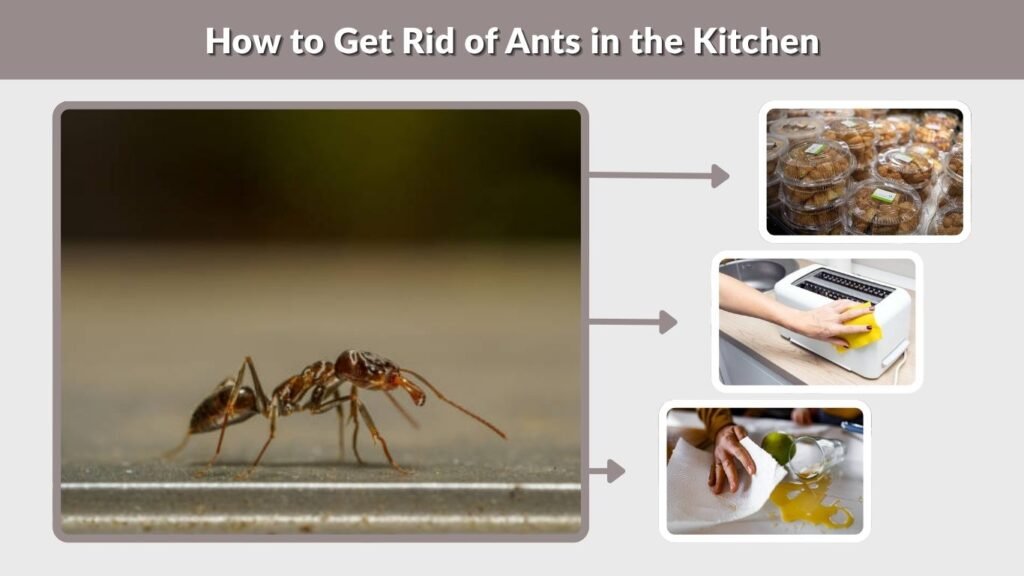
Kitchens provide nearly everything ants need: food, moisture, warmth, and hiding places. Sugar ants and other small household ants frequently appear around sinks, cabinets, appliances, and food-storage areas. Eliminating kitchen ants requires excellent sanitation combined with targeted control, especially because spraying food-preparation surfaces indiscriminately can create unnecessary exposure without solving the hidden colony.
How to Get Rid of Sugar Ants
“Sugar ant” is a common informal name used for several small ants attracted to sweet foods.
To reduce them:
- Remove syrup, honey, juice, and sugary residues.
- Clean underneath toasters and appliances.
- Store sweet foods in airtight containers.
- Place labeled indoor ant bait near active trails.
- Keep bait away from children and pets.
- Continue sanitation even when activity decreases.
Do not expect every ant to disappear immediately. Baits may require time to affect more of the colony.
Tiny Ants Around the Sink
Tiny ants around a kitchen sink may be searching for both water and food.
Dry wet counters at night, repair leaks, clean drain areas, and inspect gaps around plumbing pipes. If ants repeatedly emerge from the same wall opening, place appropriate bait nearby rather than constantly disturbing the trail.
Once activity stops, sealing obvious gaps may help prevent future entry.
How to Get Rid of Ants Permanently
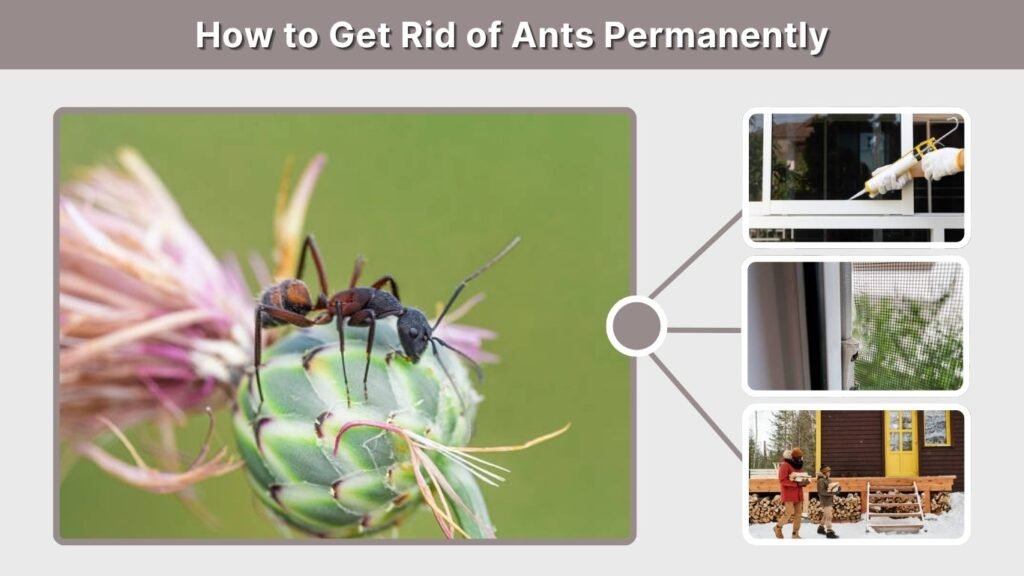
There is no single treatment that guarantees ants will never return, because new colonies can eventually move into suitable areas. However, combining sanitation, exclusion, moisture control, and colony-focused treatment can dramatically reduce recurring infestations. Permanent-looking control comes from removing the conditions that attracted ants rather than relying only on sprays.
Seal Ant Entry Points
After you have controlled active trails, inspect common entry areas.
Important locations include:
- Gaps around doors
- Damaged window seals
- Cracks along foundations
- Openings around utility lines
- Plumbing penetrations
- Gaps beneath siding
- Broken screens
Use appropriate sealants or repairs to close accessible openings.
Reduce Outdoor Attraction
Vegetation touching the house can provide pathways indoors. Keep branches and shrubs from resting directly against exterior walls.
Move firewood away from the structure, clean overflowing garbage containers, and avoid allowing piles of decaying organic material to remain close to the foundation.
These steps reduce shelter and food sources that encourage colonies near the home.
How to Get Rid of Carpenter Ants
Carpenter ants deserve special attention because they can establish nests in damp or damaged wood. Unlike termites, carpenter ants do not eat wood; they excavate galleries in it to create nesting space. Seeing occasional large ants does not automatically mean structural damage, but repeated indoor activity can justify a closer inspection.
Signs of Carpenter Ant Activity
Possible warning signs include:
- Large black or dark-colored ants indoors
- Ants repeatedly appearing from woodwork
- Sawdust-like material near cracks
- Activity around moisture-damaged wood
- Winged ants emerging indoors
Carpenter ants often prefer wood affected by moisture, so leaking roofs, windows, plumbing, or poorly ventilated areas can contribute to infestations.
Controlling Carpenter Ants
Successful treatment depends on finding the nest or understanding where ants are traveling.
Correct moisture problems first and replace severely damaged wood where appropriate. Baiting or targeted treatment may help, but extensive activity inside walls or structural wood is a good reason to contact a qualified pest-management professional.
Randomly spraying visible workers may leave the main nest untouched.
How to Get Rid of Ants Outside and in the Yard
Outdoor ants are a natural part of many ecosystems, so treatment is usually most useful when colonies invade buildings, damage specific areas, or create a stinging hazard. Yard-wide insecticide use is rarely necessary for every ant. Targeting troublesome nests reduces unnecessary pesticide exposure and preserves beneficial insects.
Ant Hills in the Yard
If an ant mound creates a genuine problem:
- Identify the ant when possible.
- Keep food and garbage sources controlled.
- Use a product specifically labeled for outdoor ants.
- Treat individual nests according to label instructions.
- Avoid disturbing bait before ants carry it into the colony.
- Keep children and pets away as directed by the product label.
Repeatedly destroying only the visible mound may not eliminate a colony located deeper underground.
How to Get Rid of Fire Ants
Fire ants can aggressively defend their nests and deliver painful stings. Avoid standing directly on or disturbing active mounds.
Use fire-ant bait or mound treatments specifically labeled for the species and setting. Follow application rates and safety directions carefully. Large properties or severe infestations may require a broader professional treatment strategy.
Natural Ways to Reduce Ants
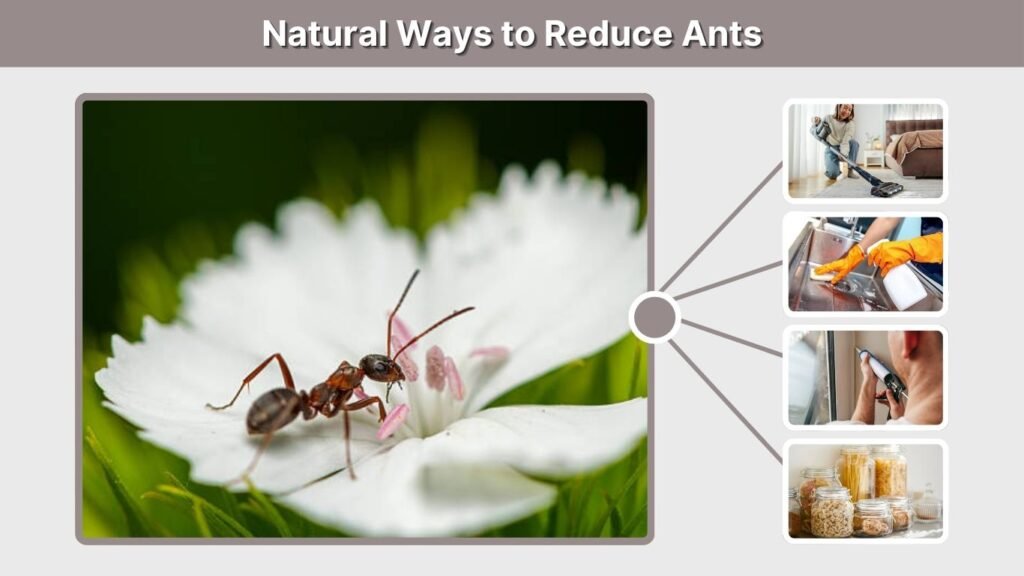
Many people prefer to begin with non-chemical methods. Natural control is most effective when it focuses on sanitation and exclusion instead of relying on strong-smelling household substances. Vinegar, essential oils, and similar remedies may disrupt trails temporarily, but they often do not eliminate the colony responsible for recurring ants.
Non-Chemical Ant Control
Useful approaches include:
- Vacuuming visible ants and disposing of the contents.
- Cleaning food residues with soap and water.
- Removing standing moisture.
- Sealing cracks after activity declines.
- Keeping outdoor vegetation away from walls.
- Storing food in sealed containers.
These measures can significantly reduce ant pressure, especially when infestations are minor.
Should You Use Homemade Borax Ant Bait?
Borax-based homemade mixtures are frequently discussed online, but concentration matters. A mixture that is too strong may kill workers before they distribute it, while improper placement can create risks for children or pets.
For predictable dosing and clear safety instructions, a commercially prepared ant bait with a product label is generally easier to use correctly.
Why Ants Keep Coming Back
Ants usually return because the colony remains active or the property continues to provide food, moisture, and entry routes. Killing the ants walking across a counter may provide immediate satisfaction, but it does not necessarily affect the queen or developing ants inside the nest.
Breaking the Ant Cycle
Long-term control comes from combining cleaning, moisture management, baiting when appropriate, and exclusion.
You may also be dealing with more than one colony. If ant activity disappears and then returns from a different location, inspect for new trails instead of assuming the original treatment failed.
Persistent carpenter ants, widespread indoor colonies, or difficult species such as some pharaoh ants may require professional identification and treatment.
FAQs
Ant problems vary depending on species, nest location, available food, and whether the colony is indoors or outdoors. The following questions cover some of the most common concerns about eliminating ants quickly, permanently, and safely around homes.
What is the fastest way to get rid of ants?
Remove accessible food, clean active trails, and place an appropriately labeled ant bait near areas where ants are foraging. Killing visible ants alone may provide faster cosmetic results but usually does less to control the colony.
How do I get rid of ants overnight?
You can greatly reduce visible activity overnight by cleaning food residues, drying sinks, removing garbage, and setting suitable bait. Complete colony elimination may take longer, so overnight disappearance should not be treated as proof that the infestation is gone.
How do I permanently get rid of ants in my house?
Combine colony control with prevention. Remove food and water sources, seal entry points after activity decreases, repair moisture problems, keep vegetation away from the building, and address nests close to the structure.
Why do I suddenly have tiny ants in my kitchen?
Tiny ants may have discovered a new food or water source or changed their foraging pattern because of weather. Check for crumbs, sweet spills, pet food, leaking plumbing, and gaps around windows or pipes.
Should I spray ants or use bait?
For many household ant problems, bait can provide better colony-level control because workers carry it away from the feeding location. Spraying may kill exposed ants but can leave the nest unaffected. Always choose products labeled for the ant and location you are treating.