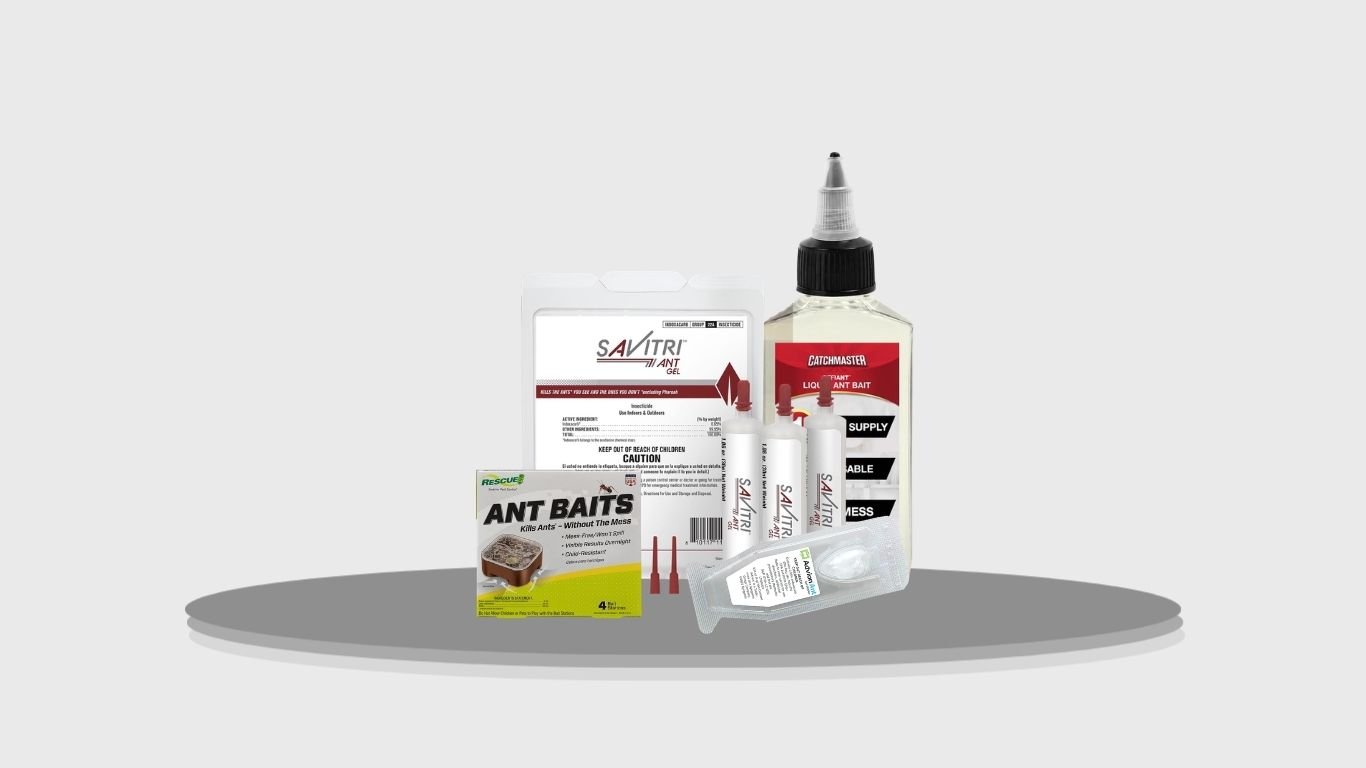
Indoor ant problems can quickly spread through kitchens, bathrooms, pantries, and other areas where food or moisture is available. A reliable ant bait trap can help control the problem by attracting worker ants and allowing them to carry the bait back to the colony. The best indoor ant bait traps are easy to place, effective against common household ants, and designed for convenient, low-mess use. In this guide, we review eight of the best ant bait traps for indoor use based on effectiveness, design, ease of use, and overall value.
1. TERRO T334B Multi-Surface Liquid Ant Bait Stations
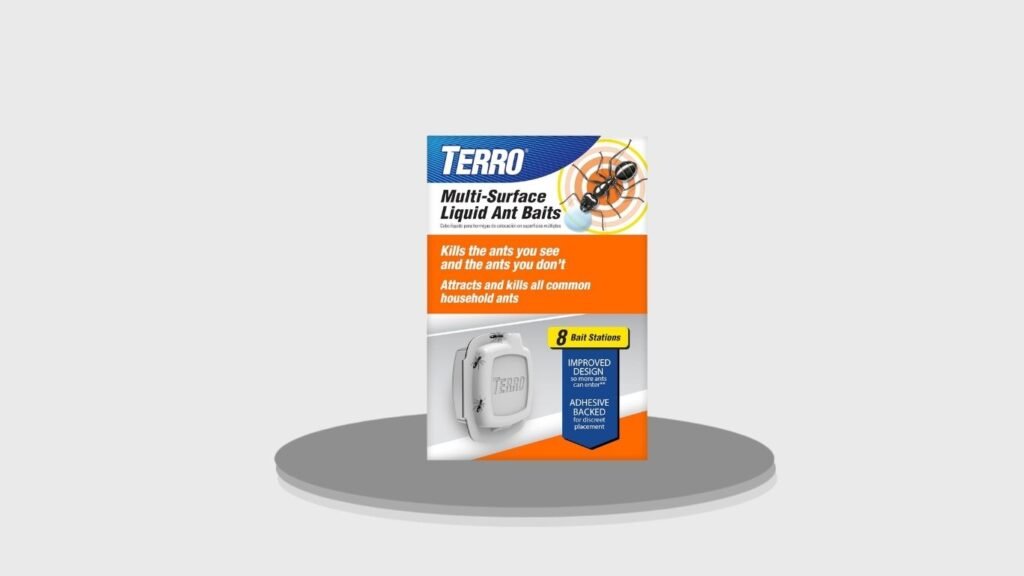
The TERRO T334B Multi-Surface Liquid Ant Bait Stations are designed for homeowners who want targeted ant control without placing bulky traps in visible areas. These pre-filled stations can sit flat or attach to walls, cabinets, and other surfaces using the included adhesive strips. Worker ants consume the liquid bait and carry it back to the colony, helping reach ants that never appear in the open.
Key Features
- Four pre-filled liquid ant bait stations
- Multi-surface placement design
- Included adhesive strips
- Can be placed flat or vertically
- Targets many common household ants
- Stay-fresh twist-tab opening
- Two-color design for discreet placement
- Suitable for counters, cabinets, walls, and baseboards
Why It’s Best for Flexible Indoor Placement
The biggest advantage of the T334B is placement versatility. Standard bait stations usually need to remain on a horizontal surface, but these traps can also attach beneath cabinets, along walls, or near other ant travel routes. This makes them especially practical in kitchens where counter space is limited.
The two-color exterior also helps the stations blend more naturally with light or dark household surfaces. TERRO specifically recommends placement near ant trails, entry points, counters, appliances, floors, and cabinets.
Colony-Control Performance
TERRO uses a slow-acting bait strategy. Worker ants are allowed enough time to feed and return to their nest, where the bait can be shared with other colony members. Because of this behavior, users may initially notice increased ant activity around the station.
That temporary activity can actually indicate that ants have located the bait. Leaving the trail undisturbed gives workers an opportunity to continue carrying bait toward the colony.
Ease of Use and Overall Value
Each station arrives pre-filled, so there is no gel syringe or liquid bottle to measure. Users simply twist off the tab, place or attach the station, and allow ants access to the bait.
For kitchens, bathrooms, pantries, and other indoor areas where discreet placement matters, the TERRO T334B combines simple setup with a colony-focused baiting method. Its ability to mount on multiple surfaces gives it an especially useful advantage over conventional floor-only ant stations.
2. Savitri Ant Gel Bait by Atticus
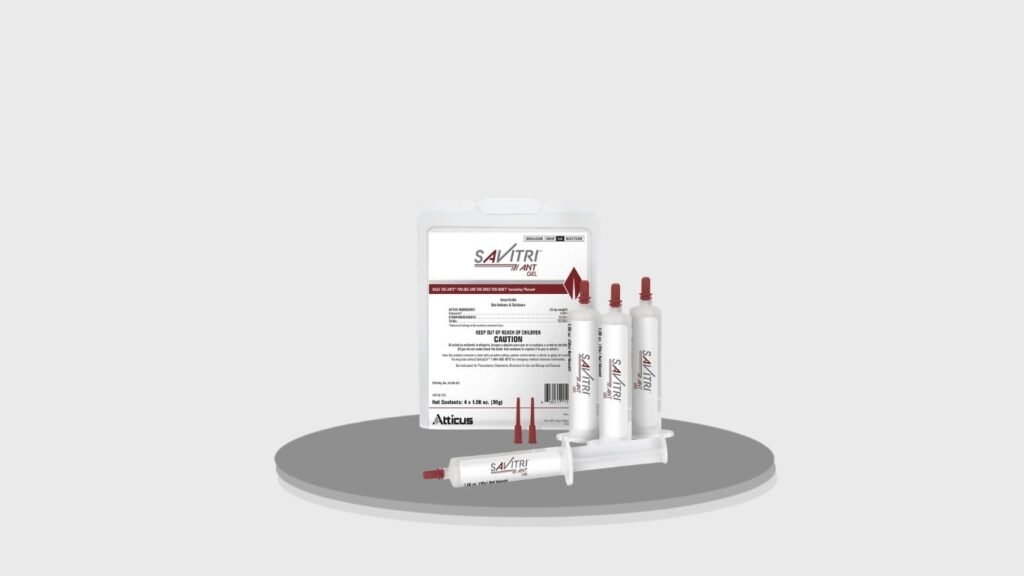
Savitri Ant Gel Bait is a professional-style bait option for users who want precise application in cracks, crevices, corners, and other locations where a conventional bait station may not fit. The formulation contains 0.05% indoxacarb and is labeled for control of numerous ant species. Because the gel can be applied in small targeted placements, it works particularly well around ant trails and hidden indoor entry points.
Key Features
- 0.05% indoxacarb active ingredient
- Gel-based ant bait formulation
- Controls more than 17 ant species
- Suitable for indoor and outdoor use
- Ready-to-use syringe application
- Designed for precise spot placement
- Odorless formulation
- Non-staining when used according to the label
- Intended for colony-level ant control
Why It’s Best for Cracks and Hard-to-Reach Areas
Unlike enclosed bait stations, Savitri can be applied directly where ants travel. This provides much greater flexibility around baseboards, narrow crevices, cabinet areas, utility openings, and other locations where a plastic station might not fit comfortably.
The syringe format also lets users control how much bait is placed and where it goes. That makes Savitri especially useful when ant activity appears in several small, separated areas rather than around one obvious trail.
Attraction and Colony-Control Performance
Atticus states that Savitri combines indoxacarb with food-grade inert carriers, carbohydrates, and attractants. The product is designed so foraging ants consume the bait and have time to transport it back toward the colony before the active ingredient takes effect. The manufacturer says control can begin within approximately 24 hours.
This delayed-action approach is more useful for colony control than simply killing individual ants immediately on contact.
Application and Overall Value
The precision syringe is one of Savitri’s strongest features because users can place small amounts directly along known ant travel routes. This makes it particularly useful for more targeted infestations or areas where conventional stations are visually intrusive.
Because it is an insecticide gel rather than an enclosed trap, careful label-directed placement is important, particularly in homes with children or pets. For users comfortable with precise bait application, Savitri provides a versatile, professional-style approach to indoor ant control.
3. Catchmaster DEFIANT Premium Ant Bait System
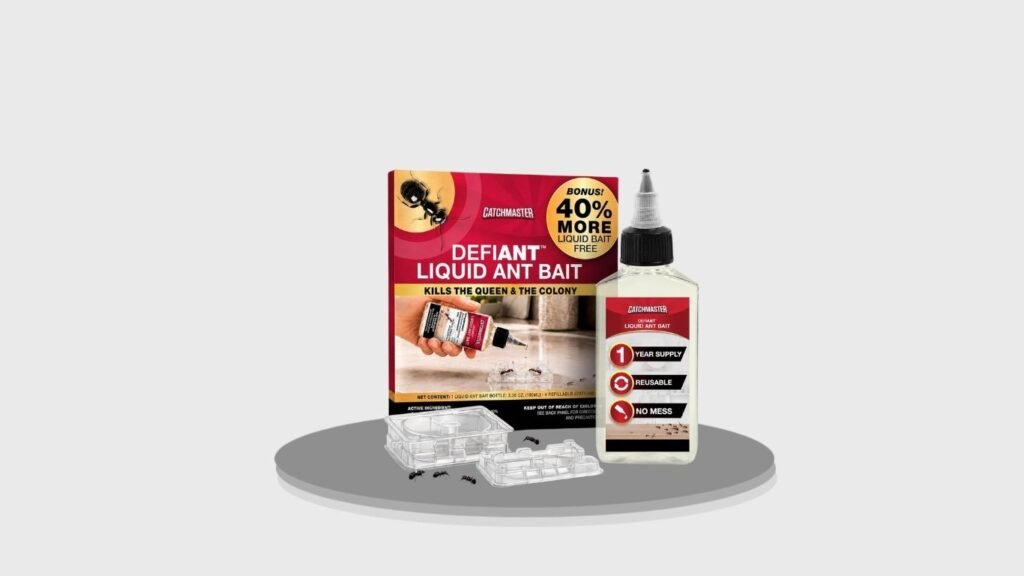
The Catchmaster DEFIANT system is designed for users who prefer reusable ant bait stations rather than disposable traps. Its sturdy plastic stations hold liquid ant bait while allowing worker ants to enter, feed, and return to the colony. Catchmaster offers DEFIANT configurations for indoor and outdoor use, with transparent, refillable stations that make it easier to monitor bait levels and ongoing ant activity.
Key Features
- Reusable liquid ant bait stations
- Durable plastic construction
- Multiple ant entry openings
- Transparent design for bait monitoring
- Refillable after bait is consumed
- Suitable for indoor placement
- Can be positioned along ant trails
- Designed to support colony-level control
- Compatible with liquid ant bait
Why It’s Best for Reusable Ant Control
The strongest advantage of the DEFIANT system is reusability. Instead of throwing away the entire station whenever the bait is depleted, the housing can be cleaned and refilled.
Catchmaster’s standard reusable stations feature multiple openings to provide workers with easier access to the liquid bait. The company also recommends locations such as countertops, baseboards, windows, doors, and areas beneath cabinets or appliances.
Bait Access and Colony Performance
Liquid bait works by attracting foraging worker ants rather than attempting to kill them instantly. Once workers locate the bait, they can return to the nest and contribute to bait distribution within the colony.
Seeing more ants shortly after placement is therefore not necessarily a sign that the station has failed. Catchmaster explains that worker ants can establish pheromone trails that bring additional ants to the bait, increasing the amount transported toward the colony.
Durability and Overall Value
The sturdy plastic housing provides a clear durability advantage over disposable cardboard or single-use designs. Transparent sections also make it easier to check whether ants are feeding and whether more bait is required.
For households dealing with recurring ant problems, a refillable system can be more practical than continually replacing complete bait stations. The Catchmaster DEFIANT combines reusable construction, flexible placement, and colony-focused liquid baiting, making it particularly appealing for users who want a more adaptable long-term indoor ant-control setup.
4. STEM Liquid Ant Bait Colony Killer Indoor Stations
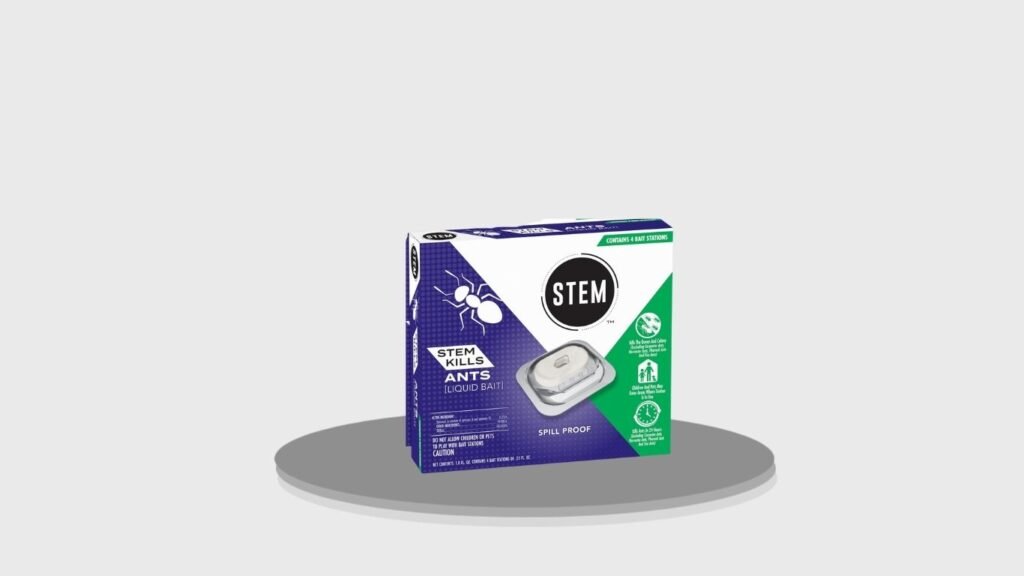
STEM Liquid Ant Bait Stations are designed for homeowners who want a simple, contained method for treating common indoor ants. Each station holds liquid bait inside a spill-resistant housing, allowing worker ants to enter, feed, and transport the bait back to the colony. The system is particularly convenient for kitchens, bathrooms, baseboards, windowsills, and areas around appliances where ant trails frequently appear. STEM states that its bait works against the queen and colony for listed ant species.
Key Features
- Pre-filled liquid ant bait stations
- Spill-resistant enclosed design
- Uses spinosad as the active ingredient
- Designed for indoor ant control
- Worker ants carry bait back to the colony
- Simple peel-and-place activation
- Suitable near baseboards and appliances
- No gel syringe or manual bait filling required
Why It’s Best for Clean Indoor Placement
The enclosed station is one of STEM’s strongest advantages. Liquid bait can be highly attractive to ants, but an open bait container may become messy if disturbed. STEM keeps the bait contained inside the station, making placement around frequently used household areas more convenient.
Activation is also straightforward. Users remove the protective film and place the station where ants are already traveling instead of trying to force ants toward a new location.
Colony-Control Performance
STEM uses a bait-transfer approach rather than relying on immediate contact killing. Foraging ants take the bait into the colony, where it can be shared with other ants and the queen. STEM’s current product information lists spinosad as the active ingredient and says noticeable control can begin within about 24 hours for listed species.
Because ants must carry the bait back, avoiding sprays directly around the stations can help prevent disruption of the baiting process.
Ease of Use and Overall Value
There is very little preparation involved. Stations arrive filled and ready for activation, making them approachable even for users unfamiliar with gel or professional-style ant baits.
For common indoor infestations where cleanliness, simple placement, and colony-focused control are priorities, STEM provides an appealing combination of convenience and contained liquid bait.
5. Syngenta Optigard Ant Gel Bait
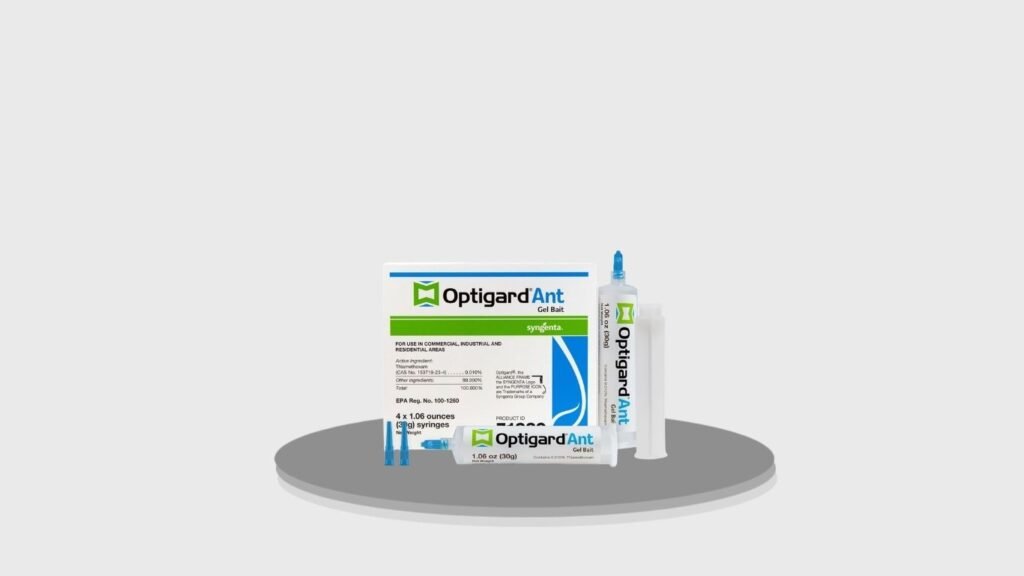
Syngenta Optigard Ant Gel Bait is a professional-style option for homeowners who need precise control around cracks, crevices, baseboards, cabinets, and other narrow ant travel routes. Its active ingredient is thiamethoxam, and the gel is formulated so ants can consume it and transfer it through the colony. Syngenta labels Optigard for indoor and outdoor control of many structure-invading ants, although certain species are excluded from its U.S. label.
Key Features
- Thiamethoxam active ingredient
- Ready-to-use gel formulation
- Precise crack-and-crevice application
- Suitable for residential indoor use
- Can also be used in labeled outdoor locations
- Transferable bait formulation
- Useful around baseboards and cabinets
- Professional-style syringe application
Why It’s Best for Precision Bait Placement
Unlike enclosed stations, Optigard allows bait to be applied directly where ants are active. Small gel placements can fit into narrow cracks, behind appliances, around utility openings, or along baseboards where larger traps may be difficult to position.
This flexibility is particularly useful when several separate ant trails appear throughout a kitchen or bathroom. Instead of moving one station repeatedly, small placements can be made at multiple strategic locations.
Bait Transfer and Colony Performance
Optigard’s bait is designed to be eaten by foraging ants and transferred within the colony. Syngenta identifies it as a thiamethoxam-based Group 4A insecticide and specifically highlights indoor and outdoor crack-and-crevice applications and colony control among its intended uses.
Delayed bait action is valuable because worker ants need enough time to return to the colony before being affected.
Application and Overall Value
The syringe format provides more control than pre-filled stations, but it also requires careful label-directed application. Bait should be positioned where ants can access it while keeping treated locations appropriately managed around children, pets, food, and frequently touched surfaces.
For users who want professional-style precision rather than fixed plastic traps, Optigard provides a versatile approach to targeted indoor ant baiting.
6. RESCUE! Ant Bait Stations
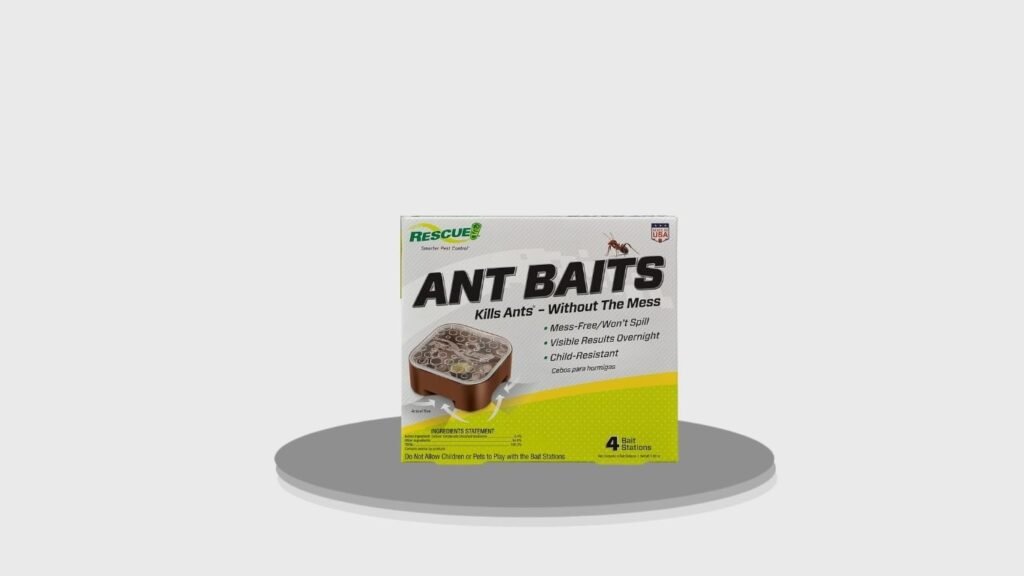
RESCUE! Ant Bait Stations are designed for households that prefer a compact, ready-to-use bait format without dealing with loose liquids or gel syringes. The brand emphasizes a child-resistant, mess-free station design, making these traps especially appealing for indoor locations where convenience and discreet placement matter. They can be positioned near ant trails, along walls, and around common household entry points to encourage worker ants to interact with the bait.
Key Features
- Ready-to-use ant bait stations
- Child-resistant station construction
- Enclosed, mess-reducing design
- Designed for indoor ant problems
- Compact placement around household areas
- No bait mixing required
- Suitable along ant travel routes
- Disposable after treatment
Why It’s Best for Simple Household Use
The main appeal of RESCUE! is convenience. Users who do not want to handle syringes or apply small gel dots around cabinets may find enclosed stations considerably easier to manage.
The low-profile format also allows bait stations to be placed near walls, under furniture, or close to areas where ants have already established trails. RESCUE! specifically promotes its ant baits as child-resistant and designed to avoid messy liquid handling.
Practical Ant-Control Performance
Bait stations work differently from contact sprays because ants need to find and feed from the bait. This makes correct placement critical. Putting stations directly beside active ant trails or likely entry points generally gives worker ants a better opportunity to discover them.
After bait is found, leaving the trail relatively undisturbed can help maintain feeding activity instead of causing ants to relocate.
Convenience and Overall Value
The self-contained design reduces preparation and cleanup. There is no need to measure bait, refill a reservoir, or spread gel onto exposed surfaces.
For households looking for uncomplicated indoor ant treatment, particularly in kitchens, utility rooms, or other frequently used spaces, RESCUE! provides a practical combination of compact design, simple deployment, and reduced mess.
7. Syngenta Advion Singular Tube Ant Gel Bait
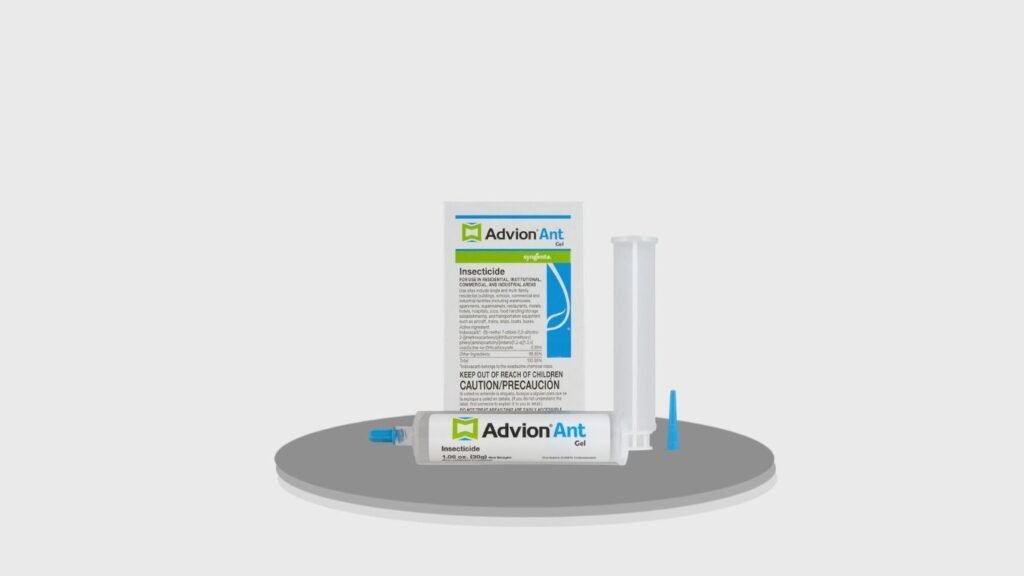
Syngenta Advion Singular Tube Ant Gel Bait is a concentrated professional-style option for users who want highly flexible placement. This version provides a 30-gram tube of gel that can be applied in small spots along ant trails, cracks, crevices, and hidden entry points. Advion contains indoxacarb, an active ingredient designed to delay mortality long enough for exposed ants to contribute to horizontal transfer within the colony.
Key Features
- 30-gram gel bait tube
- Contains indoxacarb
- Group 22 insecticide
- Precise spot application
- Suitable for labeled indoor and outdoor areas
- Targets major household ant species
- Designed for colony transfer
- Useful for cracks and crevices
Why It’s Best for Targeted Professional-Style Treatment
Advion’s tube format provides excellent placement control. Instead of being limited to the size and shape of a plastic bait station, users can apply small amounts around cabinet corners, baseboards, plumbing penetrations, door frames, and other hidden ant routes.
This makes it particularly useful for infestations where ants emerge from narrow cracks or multiple locations throughout a room.
Indoxacarb and Colony-Level Performance
Syngenta states that Advion’s indoxacarb formulation delays mortality, allowing ants time to move bait through the colony by horizontal transfer. The U.S. EPA label confirms indoxacarb as the active ingredient and lists numerous household ants, including Argentine, carpenter, ghost, little black, odorous house, pavement, and Pharaoh ants.
This colony-oriented mechanism distinguishes gel bait from products designed primarily to kill visible ants immediately.
Application and Overall Value
A single tube can provide many small bait placements, making it particularly useful for targeted treatment. However, proper application matters. The EPA label cautions against treating areas easily accessible to children and pets.
For users comfortable following pesticide-label directions, the Advion Singular Tube offers precise placement, broad ant targeting, and a professional-style colony-control strategy.
8. Syngenta Advion Ant Gel Bait Stations
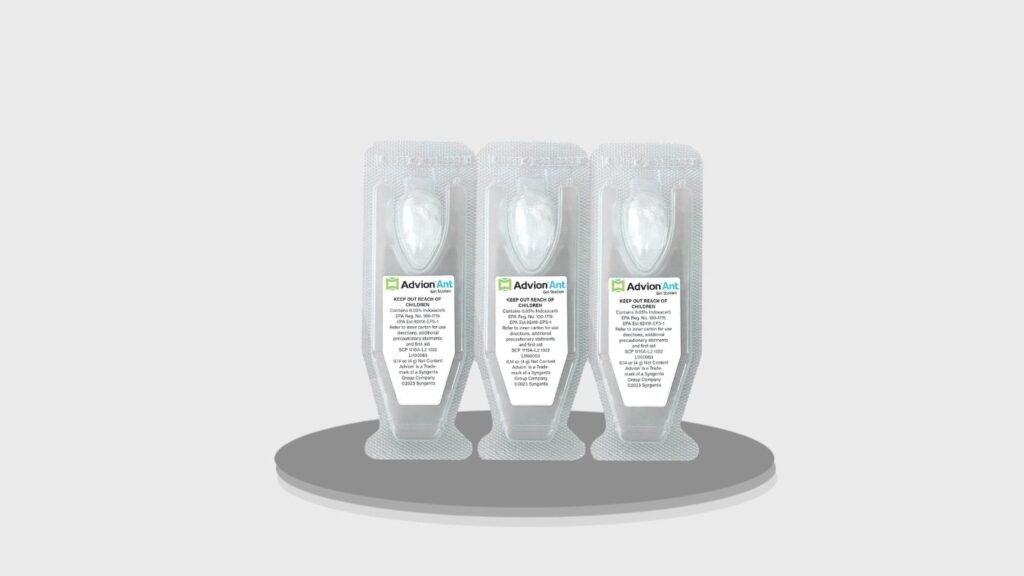
Syngenta Advion Ant Gel Bait Stations provide the colony-control technology of Advion gel in a convenient pre-filled station. Unlike the singular tube version, this product does not require users to dispense gel directly onto household surfaces. The Amazon configuration associated with this listing contains six boxes with 18 total stations, making it particularly suitable for treating several indoor ant activity zones at the same time.
Key Features
- 18 ready-to-use bait stations in this configuration
- Pre-filled Advion gel
- Indoxacarb active ingredient
- Self-contained, low-mess design
- Suitable for labeled indoor and outdoor areas
- Targets many common ant species
- Designed for colony-level transfer
- Easy placement and disposal
Why It’s Best for No-Mess Advion Treatment
This version is ideal for users attracted to Advion’s formulation but who prefer not to dispense insecticide gel manually. Each station arrives ready to position, eliminating the need to determine individual gel-dot size or place exposed bait on surfaces.
That design is particularly useful for busy kitchens, utility spaces, apartments, or multiple-room infestations where several stations may need to be distributed around the home.
Bait Performance and Colony Control
The stations contain Advion gel with 0.05% indoxacarb. Syngenta describes the ready-to-use station as a broad-spectrum ant-control system and states that its self-contained design supports easy placement and disposal.
Ants enter the station, consume the gel, and can contribute to transfer of the active ingredient through the colony. This makes the bait useful beyond simply killing the individual workers seen around the house.
Convenience and Overall Value
The biggest advantage is the balance between professional bait chemistry and consumer-friendly application. Users gain the convenience of enclosed stations without abandoning a colony-focused gel formulation.
For households needing several treatment points, the 18-station configuration provides ample placement flexibility. It is particularly attractive for users who want Advion’s indoxacarb-based bait but prefer a cleaner, ready-to-use format over syringe application.
FAQs
1. How do indoor ant bait traps work?
Ant bait traps attract worker ants with a food-based bait containing a slow-acting insecticide. Workers consume the bait and return to the nest, where it can be shared with other colony members. This allows bait products to target more than just the ants visible around a kitchen or bathroom.
2. Where should I place ant bait traps indoors?
Place bait near active ant trails, baseboards, windowsills, cabinet corners, appliance edges, and other locations where ants regularly travel. Avoid randomly placing stations far away from activity. Always follow the specific product label, especially when bait is being used around kitchens, children, or pets.
3. Why are there more ants after I put out bait?
Seeing more ants shortly after bait placement can happen because foraging workers have discovered the food source and recruited additional ants to it. Avoid spraying those ants immediately, since workers need time to collect the bait and carry it back toward the colony.
4. Are ant gel baits better than bait stations?
Both can be effective. Gel bait provides more precise placement inside cracks and other narrow locations, while enclosed stations are generally cleaner and easier to handle. Gel may suit targeted infestations, whereas stations are convenient for users who want quick, pre-measured placement.
5. How long should I leave indoor ant bait out?
Leave bait available as long as ants are actively feeding and according to the product’s label directions. Some infestations may show improvement within several days, while larger or established colonies can require longer treatment. Replace depleted, dried, contaminated, or expired bait as directed by the manufacturer.