Mosquito bites usually cause small, itchy, swollen bumps that improve on their own within a few days. Still, intense itching, redness, or swelling can make even a simple bite uncomfortable. The best mosquito bites treatment focuses on cleaning the skin, reducing inflammation, controlling itching, and preventing scratching that could lead to infection. Cold compresses, hydrocortisone cream, calamine lotion, and certain oral antihistamines can provide relief. More severe swelling, allergic reactions, infection, or illness after a mosquito bite may require medical attention.
What Is the Best Treatment for Mosquito Bites?
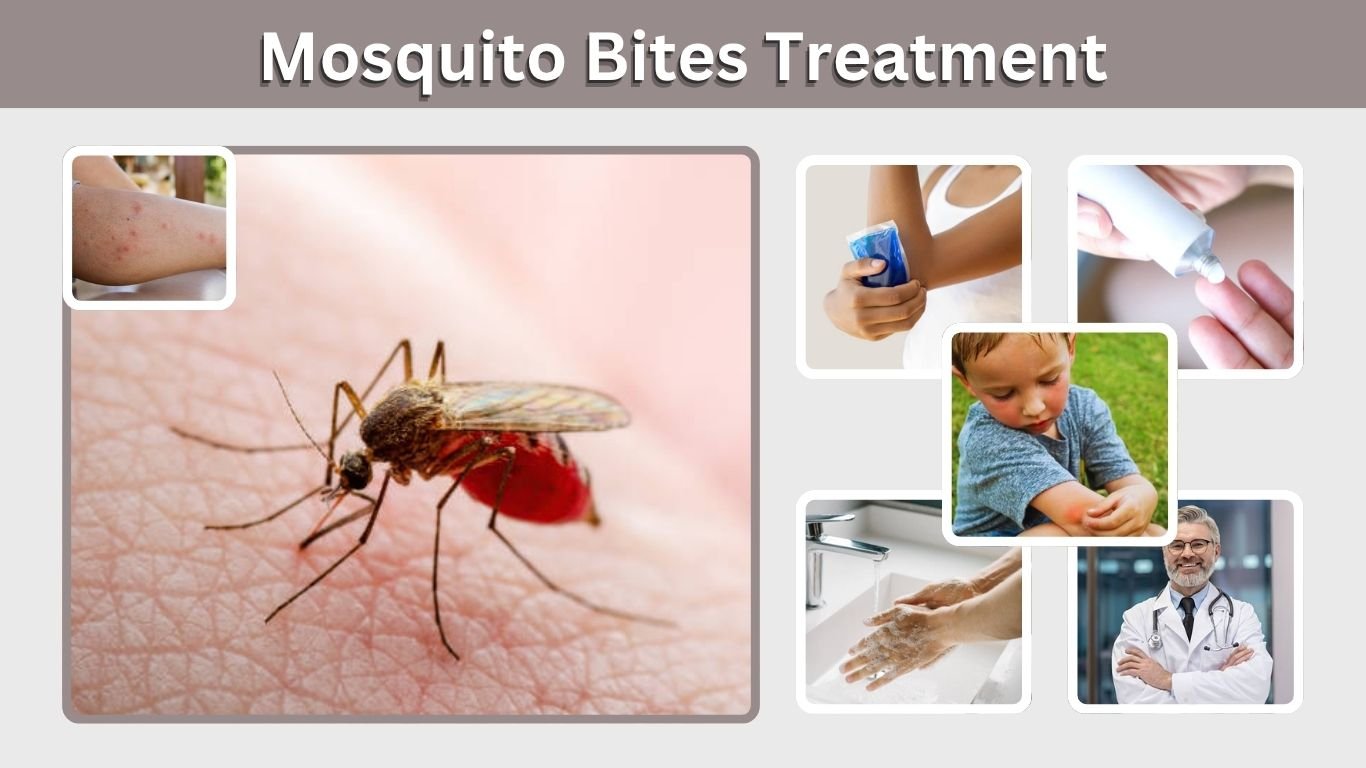
For most uncomplicated mosquito bites, treatment is simple and can be done at home. The CDC recommends washing the bite and surrounding skin with soap and water and applying an ice pack for about 10 minutes to reduce itching and swelling. The ice can be reapplied when needed.
A practical mosquito bite treatment routine is:
- Wash the bite gently with soap and water.
- Apply a wrapped cold pack for 10–20 minutes.
- Use calamine lotion or an appropriate hydrocortisone cream for itching.
- Consider a nonprescription oral antihistamine for stronger itching or swelling when appropriate.
- Avoid scratching, picking, or breaking the skin.
Mayo Clinic notes that most mosquito bites resolve naturally within several days. Calamine, nonprescription corticosteroid creams, cold treatment, and oral antihistamines such as cetirizine or loratadine may help control symptoms.
Mosquito Bites Treatment for Itching
Itching occurs because your immune system reacts to proteins in mosquito saliva. The reaction may begin shortly after the bite or become more noticeable several hours later.
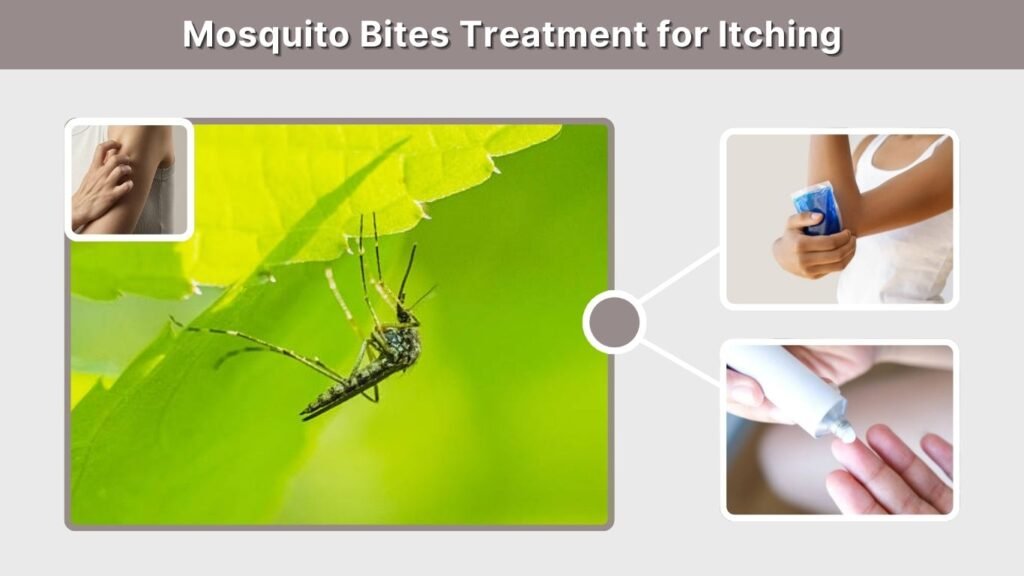
A cold compress is one of the easiest anti-itch treatments. Cooling the skin can temporarily decrease inflammation and make the area feel less irritated.
Hydrocortisone cream is another common topical treatment for mosquito bites. It is a mild corticosteroid that reduces inflammation, itching, and swelling associated with insect-bite reactions. Follow the package directions and ask a pharmacist or healthcare professional when treating young children or sensitive areas.
Calamine lotion may also provide soothing relief. For stronger reactions, a nonsedating oral antihistamine such as cetirizine or loratadine may be helpful for some people.
Most importantly, resist scratching. Repeated scratching can break the skin and create an opportunity for bacteria to enter.
Mosquito Bites Swelling Treatment
Some swelling immediately around a mosquito bite is normal. A cold pack wrapped in cloth can reduce swelling and discomfort. Keeping a swollen arm or leg elevated may also help when practical.
A mild hydrocortisone cream can reduce local inflammation. Oral antihistamines may be considered when the swelling is associated with a stronger allergic-type response.
However, very large areas of swelling may represent a stronger reaction known as Skeeter syndrome. This condition causes pronounced redness, warmth, itching, pain, and swelling around the bite and is more common in children. Symptoms typically begin within hours and can last several days.
Large swelling does not automatically mean the bite is infected. Skeeter syndrome can sometimes resemble a bacterial skin infection, which is why persistent or severe reactions are worth discussing with a healthcare professional.
Natural and Home Treatment for Mosquito Bites
For people searching for natural mosquito bites treatment, the safest starting point is usually simple physical care rather than complicated homemade mixtures.
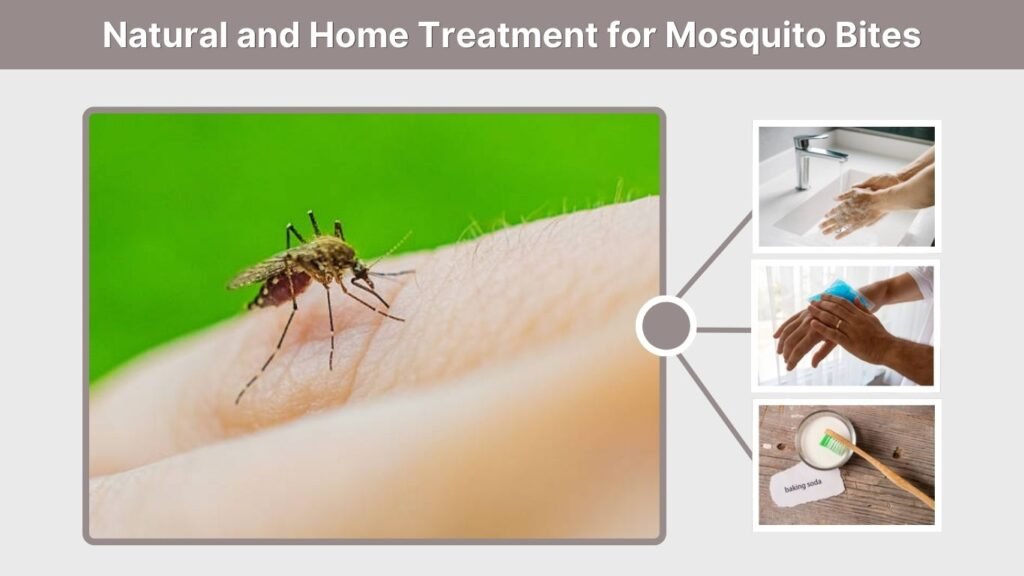
Washing the area and applying a cold compress requires no medication and can substantially reduce discomfort. Mayo Clinic also recommends avoiding scratching and notes that applying pressure briefly to an itchy bite may provide temporary relief.
The CDC includes a baking-soda-and-water paste among its suggestions for relieving mosquito-bite itching. However, recommendations on homemade remedies vary among health authorities, and the NHS advises against relying on home remedies such as bicarbonate of soda for insect bites. For that reason, cold treatment and established over-the-counter therapies are generally simpler choices when available.
Avoid experimenting with strongly scented essential oils, harsh chemicals, concentrated vinegar, alcohol, or irritating substances on already inflamed skin. “Natural” does not automatically mean gentle or medically proven.
Best Topical Treatment for Mosquito Bites
Topical products are useful when itching and inflammation are limited to a small area.
Hydrocortisone cream is among the most established choices. It acts locally to reduce inflammation and may help with redness, swelling, and itching.
Calamine lotion can provide additional soothing relief. Whichever product you use, follow the package directions and avoid applying medication to broken or infected skin unless a healthcare professional recommends it.
Extra caution is appropriate around the eyes, mouth, genital area, and large areas of skin. Infants, very young children, pregnant people, or anyone taking other medications should check with a pharmacist or clinician when uncertain about an OTC medicine.
Treatment for an Allergic Reaction to Mosquito Bites
Some people develop much stronger reactions than the typical small bump. Large localized swelling, warmth, redness, hard areas, and intense itching can occur with Skeeter syndrome. Treatment can include oral antihistamines and hydrocortisone or other anti-itch creams. Severe cases may require prescription corticosteroids under medical supervision.
A severe whole-body allergic reaction is rare but requires emergency care.
Seek emergency medical attention for difficulty breathing or swallowing, swelling of the face, mouth, tongue, or throat, widespread hives accompanied by systemic symptoms, severe dizziness, or weakness.
These symptoms should not be treated as an ordinary mosquito bite at home.
Infected Mosquito Bites Treatment
Mosquito bites themselves are not usually bacterial infections, but scratching can break the protective skin barrier.
Signs that may suggest infection include worsening redness, increasing warmth or pain, pus or drainage, or a red streak spreading away from the bite. The CDC recommends seeing a healthcare provider if symptoms worsen or infection is suspected.
Do not repeatedly squeeze or scratch the area. Keep it clean and seek medical advice if infection appears to be developing.
Antibiotics should not be taken simply because a bite is swollen. Large allergic reactions and bacterial infections can sometimes look similar, so correct diagnosis matters. Antibiotics are appropriate only when a healthcare professional determines that bacterial infection is present.
Treatment for Severe or Multiple Mosquito Bites
Several bites at once may produce much more itching and overall discomfort than a single bite. The same basic treatments—cooling, topical anti-inflammatory treatment, and appropriate antihistamines—can help.
Medical advice becomes more important when swelling is extensive, symptoms interfere with normal activities, reactions repeatedly become unusually severe, or a person develops fever or generalized symptoms.
Cleveland Clinic notes that severe Skeeter syndrome sometimes requires oral or injected corticosteroids prescribed by a healthcare professional.
Importantly, fever after mosquito exposure should not always be assumed to be an allergic reaction. Mosquitoes can transmit illnesses including dengue, malaria, West Nile virus, Zika, and others depending on geographic location.
Mosquito Bites Treatment for Toddlers and Infants
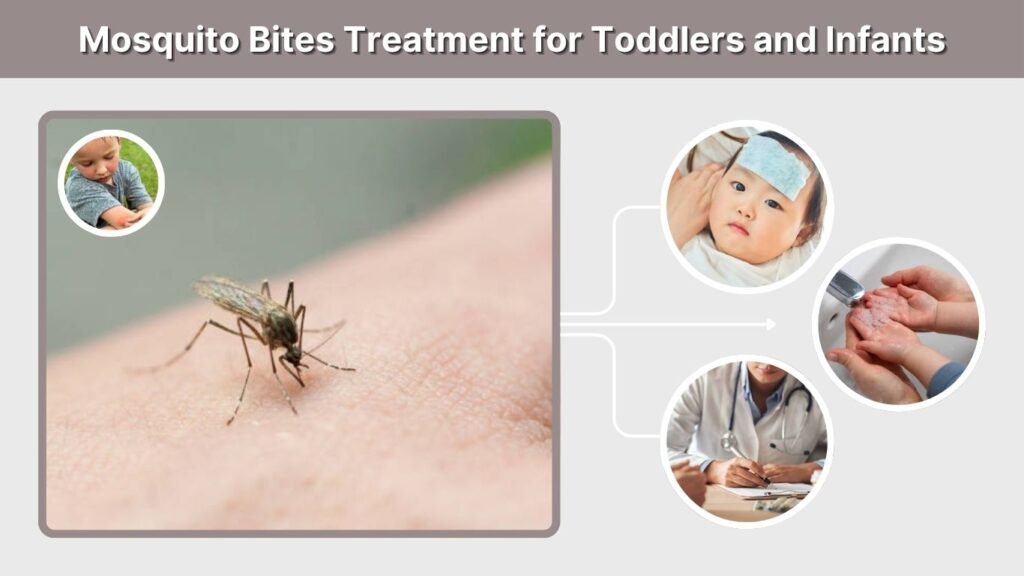
Children can experience larger mosquito-bite reactions than adults. Mayo Clinic notes that pronounced swelling and inflammation are particularly common in children.
For a mild bite, gently wash the area and use a cool compress. Keeping children’s fingernails short can help reduce skin damage from scratching.
Medication choices require more care in infants and toddlers because age restrictions and dosing differ among products. Parents should follow pediatric labeling and ask a pediatrician or pharmacist before using antihistamines, steroid creams, or other medications when the child’s age is not clearly covered by the label.
Seek prompt medical care for breathing problems, facial or throat swelling, widespread hives, unusual sleepiness, significant fever, or rapidly worsening symptoms.
Mosquito Bites During Pregnancy
Most uncomplicated mosquito bites during pregnancy can be managed initially with washing and a cold compress.
Before taking oral antihistamines or applying medicated creams during pregnancy, check the specific product with a doctor, midwife, or pharmacist, especially if frequent treatment is needed.
Prevention is particularly important when traveling or living where mosquito-borne diseases circulate. Mosquito bites can transmit infections, so symptoms such as fever, severe headache, body aches, or significant illness after mosquito exposure deserve medical evaluation.
What About Mosquito Bites on Dogs?
Dogs can also be bitten by mosquitoes, particularly around areas with less fur. Because dogs may lick topical products, do not automatically apply human mosquito-bite creams, essential oils, antihistamines, or other medications to a pet.
Mild bites may simply need monitoring, but marked swelling, persistent scratching, breathing problems, facial swelling, skin injury, or signs of illness warrant veterinary advice. A veterinarian can determine whether medication is needed and choose a product and dose appropriate for the dog.
A separate article targeting “mosquito bites on dogs treatment” would be worthwhile because its treatment intent is different from human mosquito-bite care.
How Long Do Mosquito Bites Last?
Ordinary mosquito bites generally improve within a few days. Larger allergic reactions may last longer. Skeeter syndrome symptoms can persist for approximately three to 10 days.
A bite that continues worsening instead of gradually improving deserves closer attention, especially when it becomes increasingly painful, hot, swollen, or begins draining fluid.
When Should You See a Doctor?
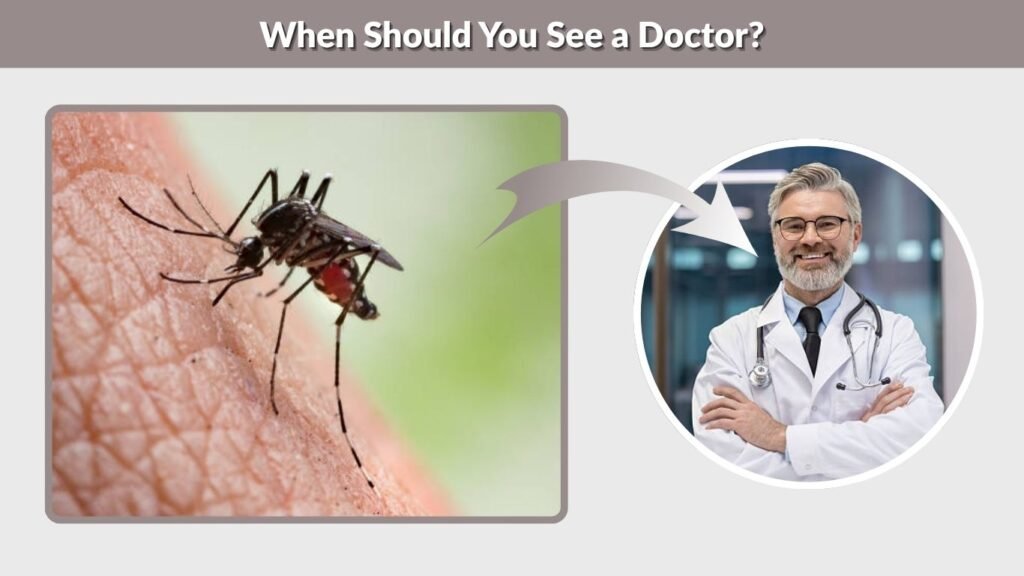
Most mosquito bites need no professional treatment. Contact a healthcare provider when swelling is unusually large, symptoms are worsening rather than improving, there are signs of bacterial infection, or fever and other systemic symptoms develop.
Emergency treatment is necessary for difficulty breathing or swallowing or significant swelling involving the face, tongue, mouth, or throat.
Also seek medical advice when fever, severe headache, body aches, or other significant illness develops after mosquito exposure, especially following travel to an area where mosquito-borne disease occurs.
How to Prevent More Mosquito Bites
Treatment solves the current itch, but prevention reduces the chance of repeating the problem. The CDC recommends using an EPA-registered insect repellent, wearing loose-fitting long sleeves and long pants, controlling mosquitoes around the home, and reducing exposure to breeding sites such as standing water.
People who repeatedly develop large allergic reactions should be especially careful about prevention. Protective clothing, properly used repellents, intact window screens, and mosquito nets where appropriate can substantially reduce exposure.
FAQs
1. What is the fastest way to treat a mosquito bite?
For quick relief, wash the bite with soap and water and apply a cold compress for about 10 minutes. Calamine lotion or a suitable hydrocortisone cream can help reduce itching and swelling. An oral antihistamine may also help when itching is more intense.
2. What is the best treatment for itchy mosquito bites?
The best treatment usually includes cooling the skin, avoiding scratching, and using an anti-itch product such as calamine lotion or hydrocortisone cream. Some people may also benefit from a nonprescription antihistamine, depending on their age, health, and other medications.
3. How do you reduce mosquito bite swelling?
Apply a wrapped ice pack or cold compress to the swollen area for 10–20 minutes at a time. Elevating the affected arm or leg may also help. Large or rapidly increasing swelling should be evaluated by a healthcare professional, especially if it is painful or accompanied by other symptoms.
4. Can mosquito bites become infected?
Yes. Scratching can break the skin and allow bacteria to enter. Warning signs include worsening redness, increasing warmth, pain, pus, drainage, or redness spreading away from the bite. A suspected infection should be checked by a healthcare provider.
5. When should I worry about a mosquito bite?
Seek medical attention if the bite causes unusually severe swelling, persistent worsening symptoms, fever, severe headache, or signs of infection. Emergency care is needed for difficulty breathing or swallowing or swelling of the face, tongue, mouth, or throat.