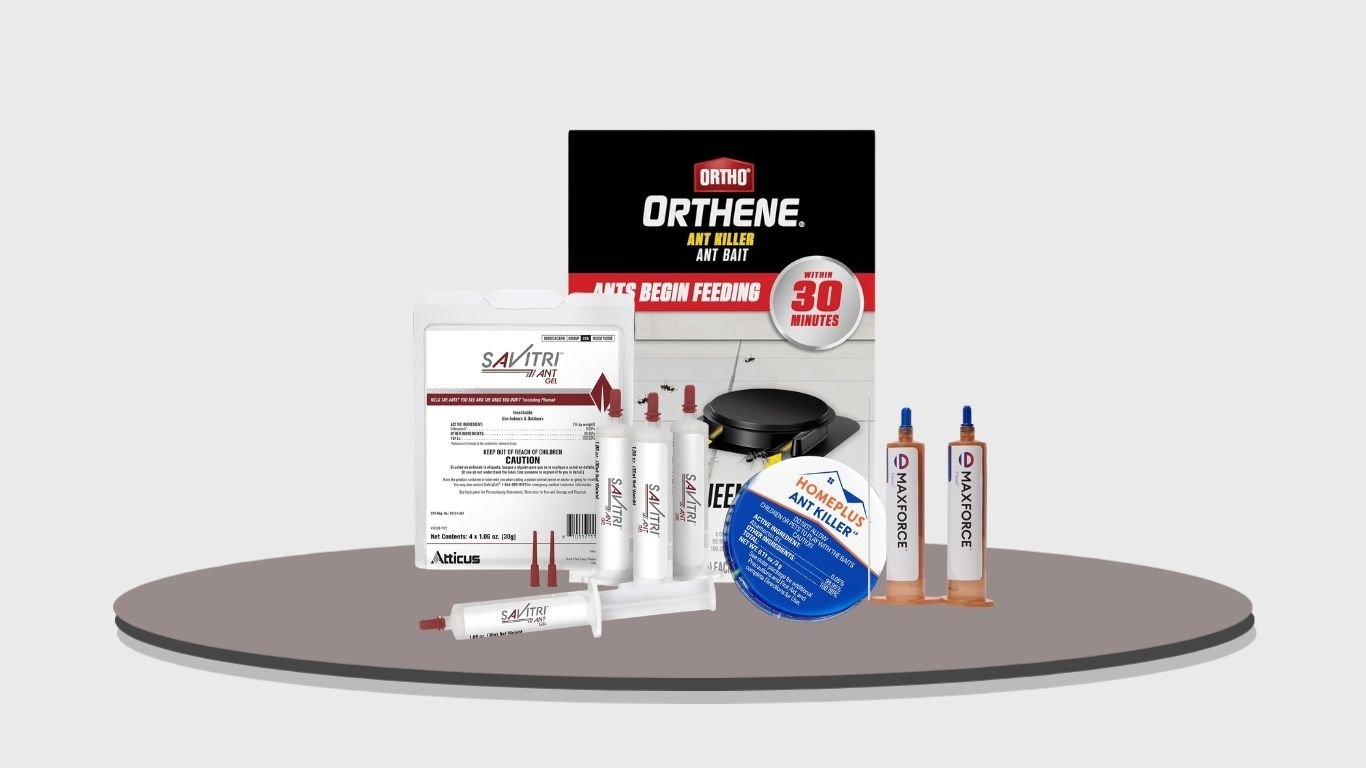
Carpenter ants can be difficult to eliminate because visible workers may represent only a small part of a much larger colony hidden inside walls, wood, or other protected areas. A well-chosen bait station can help by attracting foraging ants and allowing them to carry bait back toward the nest. In this guide, we review 9 of the best carpenter ant bait stations and gel options, comparing their bait type, placement flexibility, ease of use, and overall suitability for indoor or outdoor ant control.
1. Savitri Ant Gel Bait by Atticus
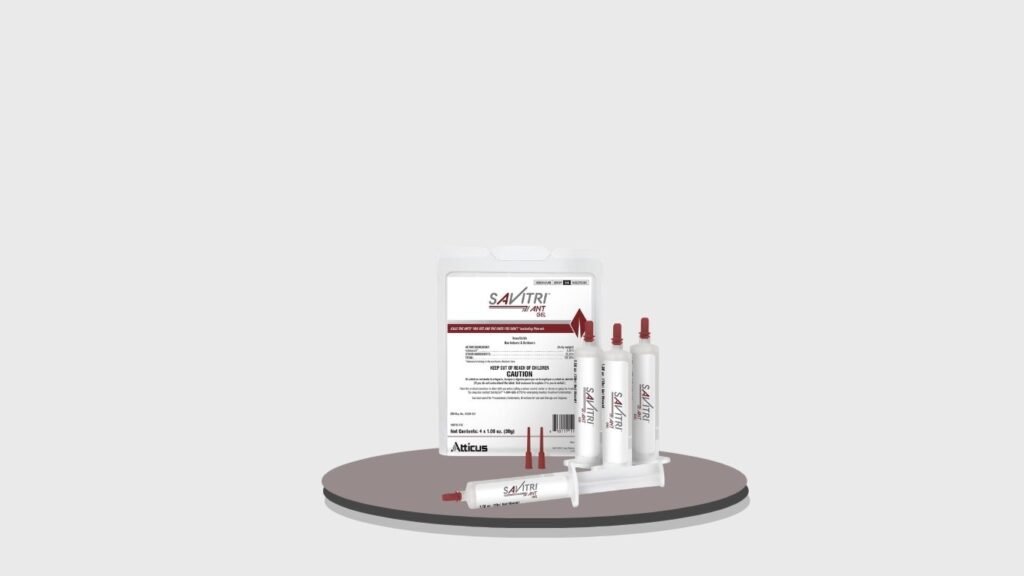
Savitri Ant Gel Bait by Atticus is a professional-style gel bait formulated for carpenter ants and many other common pest ants. Rather than being a pre-filled station itself, the gel can be applied directly in labeled cracks and crevices or placed inside compatible refillable bait stations. Its 0.05% indoxacarb formula is designed to give foraging ants time to consume the bait and return toward the colony.
Key Features
- Contains 0.05% indoxacarb
- Specifically labeled for carpenter ants
- Suitable for indoor and outdoor applications
- Ready-to-use syringe-style gel
- Can be used in compatible refillable bait stations
- Suitable for spots, small beads, cracks, and crevices
- Designed for placement near active trails and nesting areas
- Also targets Argentine, ghost, pavement, odorous house, and several other ant species
Why It’s Best For Carpenter Ant Control
Savitri stands out because carpenter ants are specifically included on its product label. The gel format also gives homeowners greater placement flexibility than fixed bait stations. It can be positioned close to active trails, behind baseboards, beneath appliances, around wall openings, or inside compatible stations where ants are already foraging.
This targeted approach is valuable with carpenter ants because their nests can be hidden inside structural voids or other difficult-to-reach locations.
Performance & Durability
The delayed-action bait formulation allows workers to continue foraging after feeding, helping expose additional ants within the colony. Atticus states that Savitri begins controlling ants within about 24 hours.
Gel placements should be inspected regularly and refreshed when consumed or when new ant activity develops. Very high surface temperatures can cause the gel to liquefy and reduce effectiveness, so sheltered placement is preferable.
Pros & Cons and Overall Verdict
Pros: Specifically labeled for carpenter ants, professional-style indoxacarb formula, precise application, indoor/outdoor versatility, and compatibility with refillable bait stations.
Cons: It is a gel rather than a ready-made enclosed station, so users must apply it carefully. Exposed bait can also require periodic replacement.
Overall Verdict: The Savitri Ant Gel Bait earns the #1 position for its carpenter-ant labeling, flexible placement, and colony-oriented baiting approach. It is particularly useful when you need to position bait close to concealed carpenter ant travel routes rather than relying only on conventional fixed stations.
2. Slow-Acting Carpenter Ant Bait Stations

These Slow-Acting Carpenter Ant Bait Stations are marketed as a colony-focused solution for carpenter ants and other household ants. The delayed-action concept is important with carpenter ants because killing only visible foragers may leave the nest unaffected. According to the Amazon listing supplied for this product, the stations are intended for locations such as kitchens, bathrooms, and other areas where ants are actively traveling. Because detailed manufacturer documentation is limited, users should verify the current package label before application.
Key Features
- Marketed specifically for carpenter ant control
- Slow-acting bait approach
- Enclosed bait-station format
- Designed for household use
- Suitable for placement near active ant trails
- Convenient alternative to exposed gel
- Intended to let foragers return toward the colony
- Requires no loose bait handling
Why It’s Best For Simple Colony Baiting
The main advantage is simplicity. Instead of dispensing gel into cracks or maintaining refillable stations, users can position an enclosed station close to a carpenter ant trail.
A slower-acting bait can be useful because carpenter ant workers normally forage away from their nesting location. Giving them time to feed and travel back toward the nest is generally more useful for colony-oriented baiting than immediately killing every worker at the feeding point.
Performance & Durability
Performance will depend heavily on whether the ants accept the bait. Carpenter ants may change feeding preferences between carbohydrates and proteins, so even a properly positioned station may receive limited attention at certain times.
Keep stations near established trails and avoid applying repellent sprays directly around them. Replace units according to the product label when bait is depleted or no longer attractive.
Pros & Cons and Overall Verdict
Pros: Enclosed design, minimal setup, slow-action concept, and listing specifically aimed at carpenter ants.
Cons: Public manufacturer and active-ingredient information for this specific Amazon listing is limited, so label verification is particularly important.
Overall Verdict: The Slow-Acting Carpenter Ant Bait earns the #2 position as a convenient enclosed option, but its current label should be checked carefully before relying on it for a structural carpenter ant problem.
3. Maxforce Fleet Ant Bait Gel
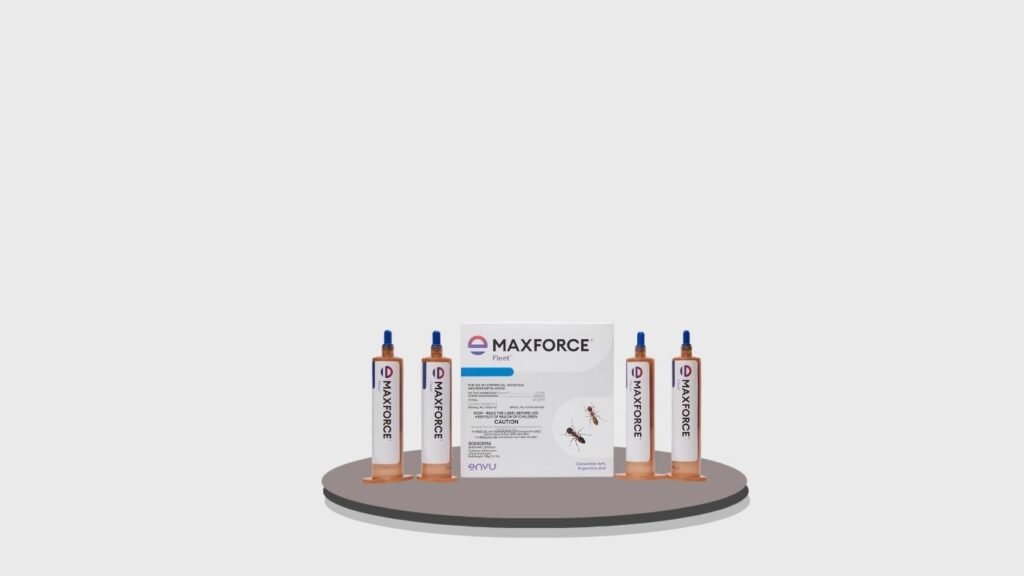
Maxforce Fleet is one of the strongest carpenter-ant-specific choices in this lineup. Made by Envu, it contains 0.001% fipronil and is officially labeled for carpenter ants along with Argentine, odorous house, pavement, pharaoh, and several other ants. Its thick gel formulation can be applied in small spots near active trails, cracks, crevices, and other labeled locations indoors or outdoors.
Key Features
- Contains 0.001% fipronil
- Officially labeled for carpenter ants
- Four 27-gram tubes in the listed package
- Thick gel consistency
- Suitable for labeled indoor and outdoor applications
- Can stay in place on some vertical surfaces
- Designed around ant food-sharing behavior
- Professional pest-control formulation
Why It’s Best For Serious Carpenter Ant Problems
Maxforce Fleet stands out because carpenter ants are explicitly included on its current pest list. Envu states that the bait is formulated so foraging ants can return to their colony and transfer food to other ants, including larvae and queens.
The syringe-style gel is also valuable when carpenter ants are traveling through cracks, around windows, wall void entrances, plumbing penetrations, decks, or other narrow locations where conventional stations may not fit.
Performance & Durability
The current label describes fast colony control while keeping the action slow enough for ants to return to the nest. It notes that population reduction can become apparent within several days, although actual control time depends on colony size, placement, and bait acceptance.
Its thicker consistency also helps the gel remain where it is applied. Follow-up inspections are still necessary because consumed or dried placements may require renewal.
Pros & Cons and Overall Verdict
Pros: Specifically labeled for carpenter ants, professional fipronil formulation, precise application, indoor/outdoor versatility, and colony-transfer design.
Cons: Exposed gel requires careful placement and should be kept away from children, pets, food, and routinely washed surfaces as directed by the label.
Overall Verdict: The Maxforce Fleet Ant Bait Gel ranks #3, but technically it is one of the strongest carpenter-ant-specific products in this entire list.
4. Long-Lasting Carpenter Ant Gel Bait Stations

This 80-pack of Ant Bait Gel Stations is marketed for common household ants, including carpenter ants, and provides considerably more individual placements than most standard bait packages. The ready-to-use enclosed format is intended for indoor and outdoor locations such as kitchens, gardens, entry points, and areas with repeated ant activity.
Key Features
- Large 80-station package
- Marketed for carpenter ants
- Ready-to-use gel bait stations
- Indoor and outdoor positioning
- Enclosed, low-mess design
- Useful for treating multiple activity zones
- Suitable for kitchens, home perimeters, and garden areas
- Designed for colony-oriented baiting
Why It’s Best For Large Properties
The biggest advantage is quantity. Carpenter ant infestations may involve several foraging trails or even satellite colonies located away from the main nest.
Having 80 individual stations makes it easier to place bait near multiple suspected travel routes rather than concentrating treatment in one room. This can be useful for larger homes, garages, decks, sheds, and exterior perimeter areas.
Performance & Durability
Enclosed gel is generally easier to manage than exposed drops because the housing offers some protection against accidental contact and contamination.
However, detailed public documentation about the active ingredient and exact carpenter-ant label for this Amazon listing is limited. Before using it specifically against carpenter ants, check the actual pesticide label supplied with the product and follow its placement instructions.
Pros & Cons and Overall Verdict
Pros: Large station count, convenient ready-to-use design, broad placement coverage, and listing specifically markets the product for carpenter ants.
Cons: Less transparent technical documentation than major professional pest-control brands.
Overall Verdict: The 80-Pack Carpenter Ant Gel Bait Stations rank #4 for coverage and convenience. They make the most sense when you need many individual bait locations, provided the current label confirms carpenter-ant use.
5. Ortho Orthene Ant Killer Indoor Bait Stations
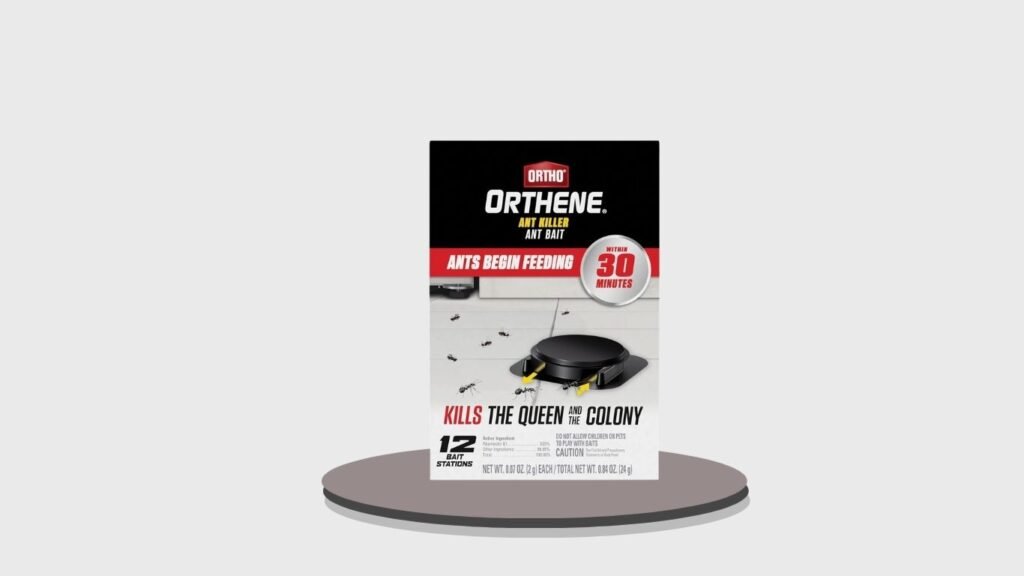
Ortho Orthene Ant Killer Ant Bait is a convenient indoor station designed to let worker ants carry bait back toward the queen and colony. However, there is an important issue for this particular article: the product is specifically not labeled for carpenter ants. It targets other indoor ants, making it useful as a general ant station but not an appropriate recommendation when carpenter ants have been positively identified.
Key Features
- Ready-to-use indoor bait stations
- Listed package contains two 12-station packs
- Designed to target queen and colony
- Easy break-apart station design
- Suitable along baseboards and room corners
- Can be positioned around pipes and doorways
- Manufacturer indicates fewer listed ants may be seen in 3–7 days
- Not labeled for carpenter ants
Why It’s Better For Other Household Ants
The strength of Ortho Orthene is convenience. Individual stations can be distributed in kitchens, pantries, around plumbing, along baseboards, and near indoor ant trails without handling exposed gel.
For common ants covered by its label, workers feed on the bait and distribute it within the colony.
For carpenter ants, however, this is not the product to select. The manufacturer’s product information specifically excludes fire, carpenter, and harvester ants.
Performance & Durability
Each enclosed station keeps bait contained and makes monitoring straightforward. The product is designed to remain in position while ants forage.
For listed species, the company indicates that reductions may become noticeable within several days. Treatment duration will still depend on infestation size and placement.
Pros & Cons and Overall Verdict
Pros: Easy setup, enclosed stations, large package quantity, and colony-oriented action for listed household ants.
Cons: Not labeled for carpenter ants, which is a major disadvantage in a carpenter-ant-specific roundup.
Overall Verdict: The Ortho Orthene station is #5 on the supplied list, but it should not be presented as a carpenter ant bait. Choose a product whose current label explicitly includes carpenter ants instead.
6. Mysora Reusable Round Ant Bait Stations
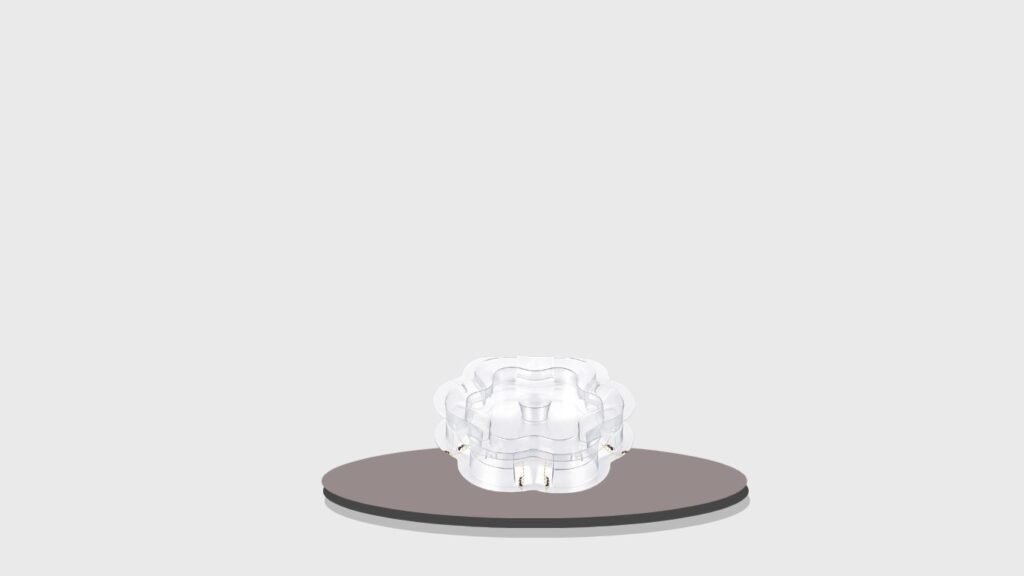
Mysora Reusable Round Ant Bait Stations are empty bait housings rather than pesticide products themselves. This design allows you to add an appropriately labeled liquid or gel bait separately. For carpenter ant treatment, that flexibility can be useful because you can pair the station with a bait whose current label specifically includes carpenter ants.
Key Features
- Reusable round bait stations
- Bait purchased separately
- Refillable construction
- Enclosed bait placement
- Multiple ant access points
- Suitable for repeated monitoring
- Useful with compatible liquid or gel bait
- Can help protect bait from direct disturbance
Why It’s Best For Custom Bait Selection
The biggest advantage is that the station does not lock you into one bait formulation. Carpenter ants may change food preferences, and using a refillable station gives you the option to select an appropriate product based on current ant activity.
This also allows the station housing to remain in a known foraging location while the bait inside is inspected and refreshed.
Performance & Durability
Performance comes from the bait you put inside—not the Mysora station itself. For carpenter ants, choose only a pesticide bait whose label specifically allows carpenter-ant treatment and bait-station use.
The reusable housing can offer better long-term value than repeatedly discarding pre-filled stations. Place outdoor units in protected locations where heavy rain or irrigation will not flood or dilute the bait.
Pros & Cons and Overall Verdict
Pros: Reusable, refillable, adaptable to different compatible baits, and useful for maintaining permanent monitoring points.
Cons: Contains no insecticide or attractant on its own. Purchasing and correctly selecting bait adds an extra step.
Overall Verdict: The Mysora Reusable Round Stations rank #6 as a good housing system rather than a complete carpenter-ant treatment. Their value depends on pairing them with a properly labeled carpenter ant bait.
7. Home Plus Metal Ant Bait Stations
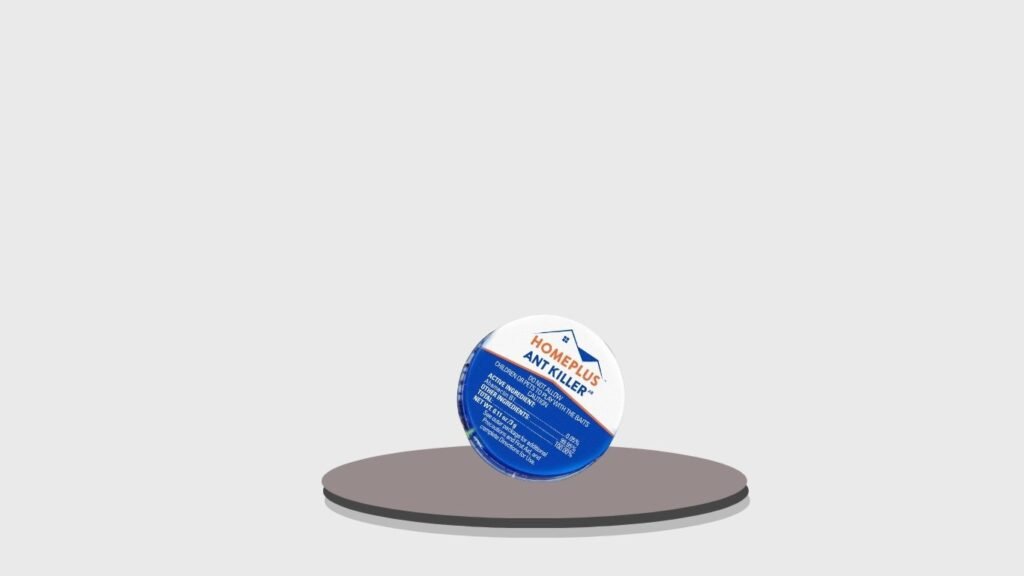
Home Plus uses enclosed metal bait stations containing abamectin B1. The bait employs multiple food attractants, and workers are intended to carry and share bait with other ants in the colony. The stations can be used indoors and outdoors for numerous listed household ants. However, available product information lists species such as odorous house, pavement, ghost, thief, and little black ants without specifically identifying carpenter ants.
Key Features
- Metal enclosed bait stations
- Contains abamectin B1
- Uses four food attractant sources
- Indoor and outdoor placement
- Child-resistant housing
- Ready-to-use format
- Designed for bait transfer through the colony
- Targets numerous common household ant species
Why It’s Best For General Household Ant Control
Home Plus is convenient when several common ant species are entering a property. The multiple attractant sources are intended to improve the likelihood that workers will investigate and feed.
The durable metal casing is also useful around kitchens, wall openings, drains, garbage areas, and protected outdoor locations.
However, because the available species list does not clearly include carpenter ants, it should not automatically be assumed to be suitable for them.
Performance & Durability
Product information states that worker ants can begin being affected within about 24 hours, with fewer ants appearing over the following days.
The metal housing offers a sturdier enclosure than many lightweight plastic stations and makes the bait easy to place without direct handling.
Pros & Cons and Overall Verdict
Pros: Abamectin B1, multiple attractants, durable metal construction, ready-to-use convenience, and indoor/outdoor versatility.
Cons: Carpenter ants are not clearly included in the available product species list.
Overall Verdict: The Home Plus Metal Ant Bait ranks #7, but for a confirmed carpenter ant infestation, a product specifically labeled for carpenter ants—such as Maxforce Fleet—is a more defensible choice.
8. STEM Liquid Ant Bait Stations
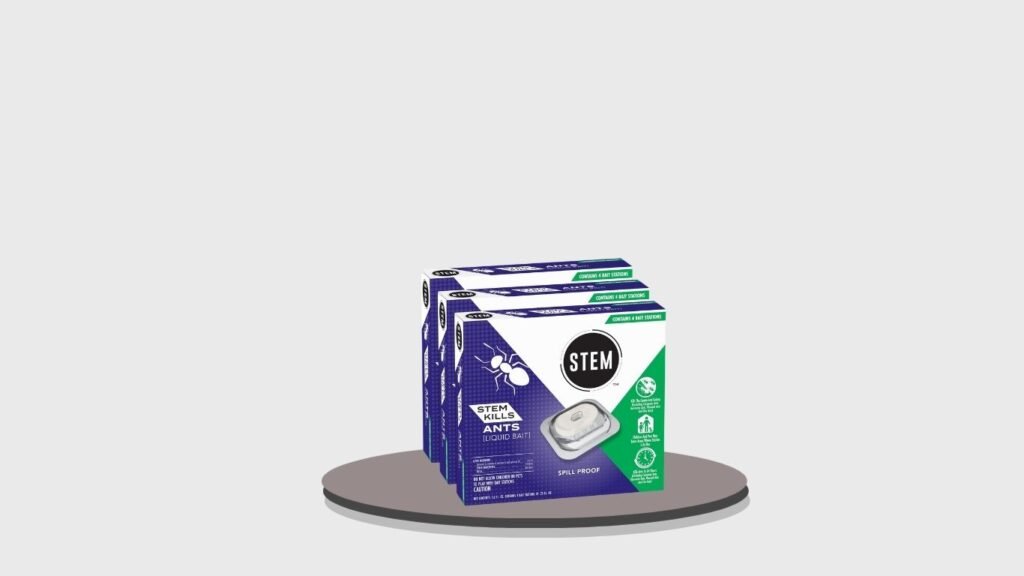
STEM Liquid Ant Bait is a spill-resistant indoor station containing a water-based spinosad formulation. Workers carry the liquid bait back toward the colony, and the ready-to-use station keeps application simple. However, STEM’s own current product information explicitly states that its liquid bait excludes carpenter ants, along with fire, harvester, and pharaoh ants.
Key Features
- Pre-filled liquid bait stations
- Active ingredient: 0.016% spinosad
- Spill-resistant housing
- Indoor use
- Ready to use
- Designed for placement near active trails
- Colony-oriented bait transfer
- Carpenter ants are specifically excluded
Why It’s Best For Other Indoor Ants
For ants actually covered by its label, STEM has several appealing characteristics. Its liquid remains enclosed, setup requires removing the activation film, and stations can be placed along baseboards, behind appliances, and close to common indoor trails.
STEM states that worker ants take the bait into the colony and distribute it to other colony members.
But that mechanism should not be interpreted as carpenter-ant suitability. The manufacturer clearly excludes carpenter ants.
Performance & Durability
The manufacturer recommends horizontal placement away from direct sunlight, which can accelerate evaporation. Depending on the market and label version, stations may be replaced when depleted or after the recommended service period.
The enclosed design is clean and practical for indoor use.
Pros & Cons and Overall Verdict
Pros: Spill-proof design, pre-filled liquid, straightforward setup, spinosad active ingredient, and good convenience for labeled indoor ants.
Cons: Not labeled for carpenter ants.
Overall Verdict: Although listed here at #8, STEM Liquid Ant Bait should be removed from a strict “best carpenter ant bait” shortlist. It is better suited to other ant species explicitly covered by its label.
9. Maggie’s Farm No Spill Ant Kill Bait Station
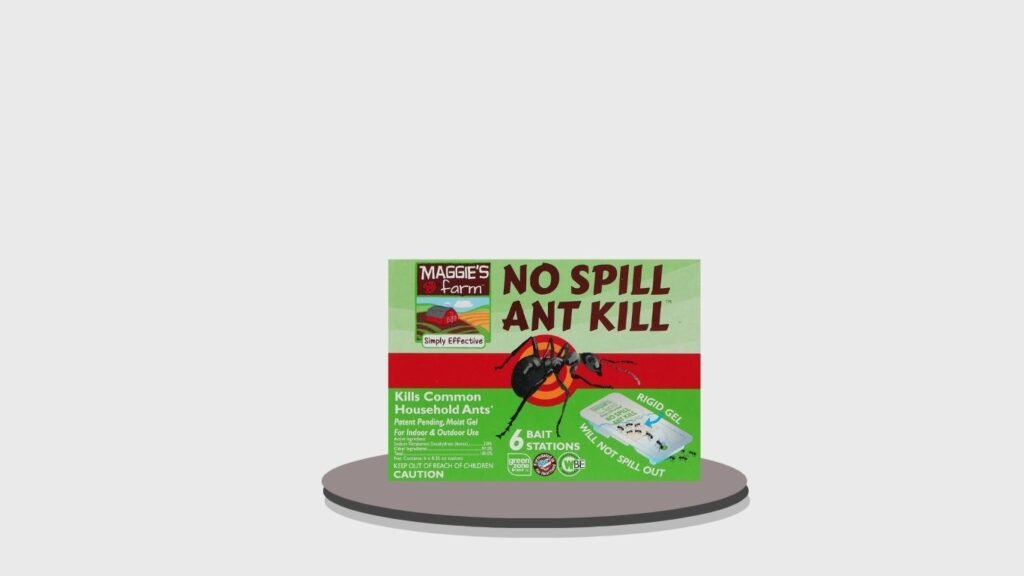
Maggie’s Farm No Spill Ant Kill uses a moist, rigid borax gel inside an enclosed station. The design provides the moisture advantages of liquid bait without a free-flowing liquid that can easily spill. It is an attractive general household-ant option, but the manufacturer explicitly states that carpenter ants are excluded from the species the product is intended to kill.
Key Features
- Moist rigid-gel bait
- Borax active ingredient
- Enclosed no-spill station
- Sweet bait formulation
- Multiple ants can feed simultaneously
- Designed for colony transfer
- Moist gel can remain usable for an extended period
- Does not target carpenter ants
Why It’s Best For No-Spill Household Baiting
The rigid gel is the most interesting feature. Maggie’s Farm explains that ants can feed over the bait surface without the leakage associated with conventional liquid formulations.
This makes the stations attractive for locations where mess is a concern, including along baseboards, window sills, under cabinets, and near plumbing.
However, carpenter ant infestations require another product because the manufacturer specifically excludes them.
Performance & Durability
Maggie’s Farm recommends placing stations close to ant activity and avoiding insecticide sprays around the bait. The manufacturer says the gel can remain moist for roughly 60–90 days under appropriate conditions, although replacement depends on consumption and drying.
The station’s enclosed design also reduces accidental disturbance compared with exposed bait.
Pros & Cons and Overall Verdict
Pros: No-spill moist gel, borax formulation, clean indoor placement, long bait-moisture period, and easy setup.
Cons: Not intended for carpenter ants, fire ants, or harvester ants.
Overall Verdict: The Maggie’s Farm station ranks #9 on the supplied list, but it is not a true carpenter-ant bait. It is better treated as an alternative for common sweet-feeding household ants.
FAQs
1. Do bait stations really kill carpenter ant colonies?
They can help when the bait is specifically labeled for carpenter ants and workers readily accept it. Foraging ants consume the bait and may transfer it to colony members through food sharing. However, large carpenter ant infestations can involve a parent colony and multiple satellite nests, so baiting may need to be combined with locating and correcting the moisture or damaged-wood conditions supporting the infestation.
2. Where should I place carpenter ant bait?
Place bait as directed by its label near active foraging trails and areas where carpenter ants repeatedly appear. Common locations can include wall edges, window and door frames, plumbing penetrations, decks, wood piles, and protected areas close to suspected nest routes. Avoid placing bait where it can contaminate food or be reached by children or pets.
3. How long does carpenter ant bait take to work?
Time varies significantly by product and colony size. Some labeled gel baits can produce noticeable population reductions within several days, while eliminating a large or complex colony may take longer. Maxforce Fleet, for example, is designed to combine relatively fast action with enough delay for workers to carry bait back toward the colony.
4. Should I spray carpenter ants while using bait stations?
Avoid spraying repellent insecticides directly on or immediately around active bait unless the pesticide labels specifically permit the combination. Repellent residues can discourage ants from approaching and feeding on the bait. Instead, allow workers to forage naturally so they have an opportunity to carry the bait back toward the nest.
5. What is the best bait station from this list specifically for carpenter ants?
For a confirmed carpenter ant infestation, Maxforce Fleet Ant Bait Gel is one of the strongest choices from this list because its current manufacturer information specifically includes carpenter ants and identifies fipronil as the active ingredient. Savitri Ant Gel from the first review is another option specifically labeled for carpenter ants. Products such as Ortho Orthene Indoor Ant Bait, STEM Liquid Ant Bait, and Maggie’s Farm No Spill Ant Kill should not be described as carpenter-ant baits, because their available product information excludes carpenter ants.