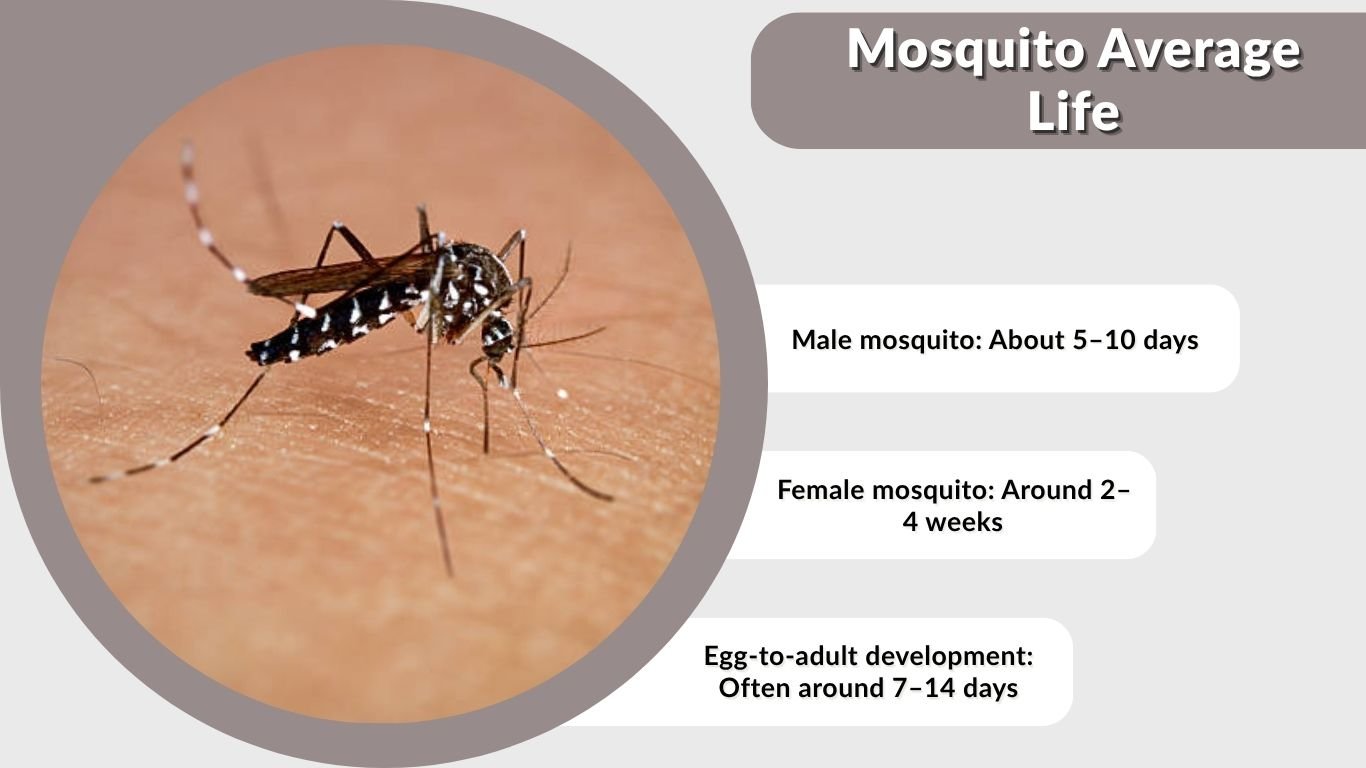
The average life of a mosquito is surprisingly short, but the exact lifespan depends on its species, sex, temperature, food availability, and environment. Many adult mosquitoes survive only a few days to several weeks, while certain females can live considerably longer under favorable conditions. Male mosquitoes generally have shorter lives than females. Understanding the average mosquito life span also requires looking at the complete life cycle, from egg to larva, pupa, and adult. Here is a detailed look at how long mosquitoes live and what affects their survival.
What Is the Average Life of a Mosquito?
When people ask, “What is the average life of a mosquito?”, they are usually referring to the adult insect. Most adult mosquitoes live for roughly 1 to 4 weeks, although lifespan varies considerably among species. Females usually survive longer because they need additional time to feed, mate, obtain nutrients, and produce eggs.
Average Mosquito Lifespan in Days
A general estimate is:
- Male mosquito: About 5–10 days
- Female mosquito: Around 2–4 weeks
- Some female mosquitoes: More than a month in favorable conditions
- Overwintering females: Potentially several months
- Egg-to-adult development: Often around 7–14 days in warm conditions
These numbers are averages rather than fixed limits.
Male vs. Female Mosquito Life Expectancy
Male mosquitoes usually have a much shorter average life expectancy than females. Their main biological role is mating, and many males die shortly after reproduction.
Females often live longer because they must complete several reproductive cycles. After mating, a female typically searches for suitable food and, in many species, a blood meal that provides nutrients needed for egg development.
A female may lay several batches of eggs during her lifetime if conditions remain suitable.
Why Mosquito Lifespan Varies
There is no single lifespan that applies to every mosquito. The thousands of mosquito species found around the world live in different habitats and climates.
Warm temperatures may accelerate development, while extreme heat, cold, lack of water, predators, pesticides, and food shortages can reduce survival.
Average Duration of the Mosquito Life Cycle
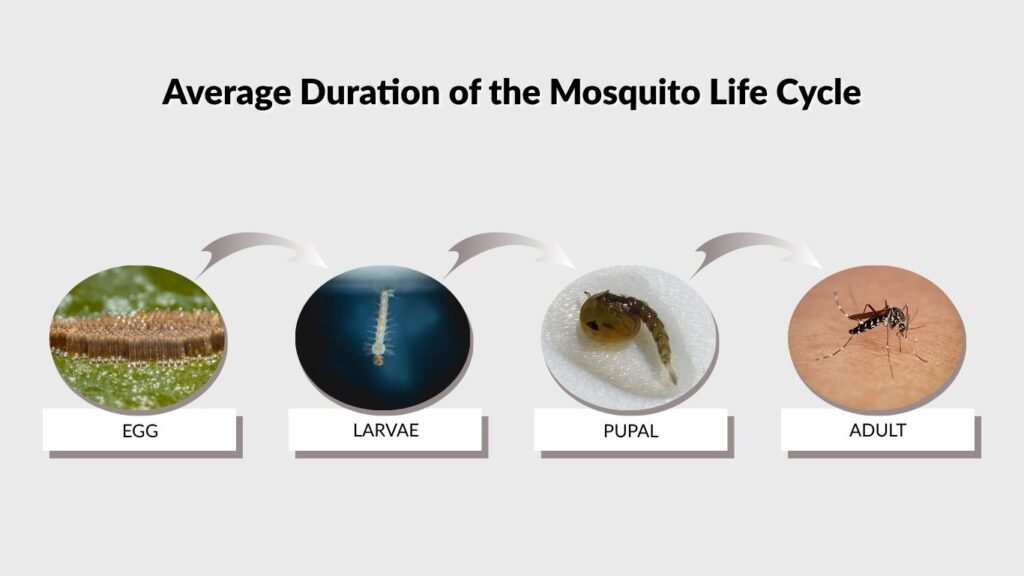
The average mosquito life cycle consists of four stages: egg, larva, pupa, and adult. The first three stages are closely associated with water, which explains why standing water is so important to mosquito reproduction.
1. Egg Stage
Female mosquitoes lay eggs either directly on water or in damp areas that are likely to become flooded.
Depending on the species and environmental conditions, eggs may hatch within a few days. Some mosquito eggs can remain dormant for much longer when conditions are dry.
2. Larval Stage
Mosquito larvae live in water and are sometimes called “wigglers.” They feed on microorganisms and organic material while growing rapidly.
During this stage, they molt several times before becoming pupae.
The larval period commonly lasts:
- Around 4–14 days
- Longer in cool temperatures
- Shorter under warm, favorable conditions
Larval development also depends heavily on nutrition and water quality.
3. Pupal Stage
Mosquito pupae remain aquatic but do not feed. This is a transitional period during which the insect develops into an adult.
The pupal stage often lasts approximately 1–4 days.
Once development is complete, the adult mosquito emerges from the water’s surface and eventually flies away.
4. Adult Stage
Adult mosquitoes begin looking for food and mates shortly after emerging.
Both males and females can obtain energy from plant sugars such as nectar. Female mosquitoes of many species also take blood meals because blood provides proteins required for egg production.
The adult portion of the mosquito’s life commonly lasts from several days to a few weeks.
How Long Do Female Mosquitoes Live?
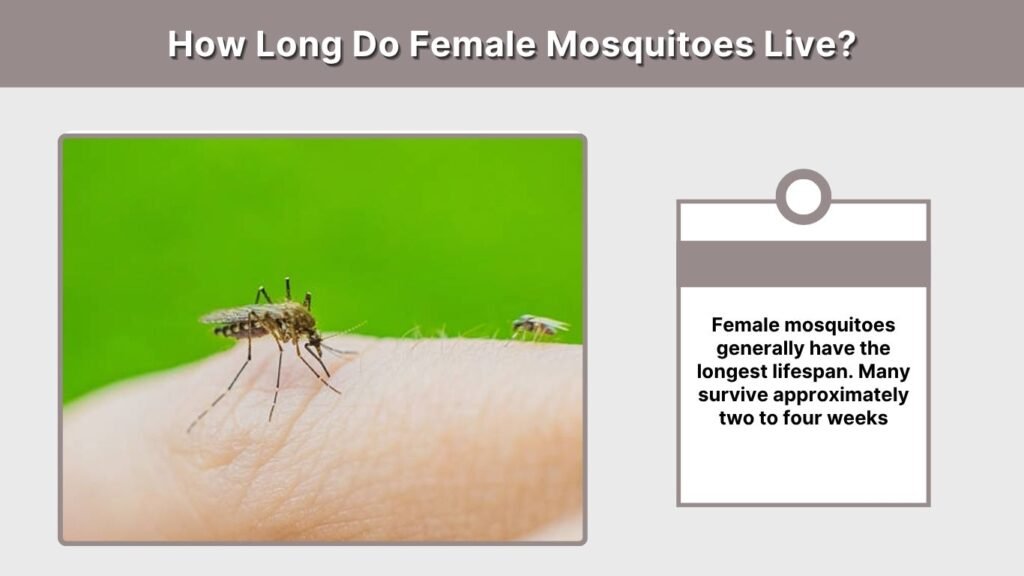
Female mosquitoes generally have the longest lifespan. Many survive approximately two to four weeks, although some can live longer.
Their survival is important to mosquito populations because females are responsible for laying eggs.
Female Mosquito Reproductive Cycle
A typical female mosquito may:
- Emerge as an adult.
- Mate with a male.
- Feed on plant sugars.
- Seek a blood meal if required by the species.
- Develop eggs.
- Find suitable water or damp habitat.
- Lay eggs.
- Repeat the cycle.
The number of reproductive cycles completed depends on how long the mosquito survives.
Why Female Mosquitoes Usually Live Longer
Natural selection favors female survival because producing multiple batches of eggs increases reproductive success.
However, females also face considerable risks while searching for hosts and breeding areas, including predators, environmental conditions, and human mosquito-control measures.
How Long Do Male Mosquitoes Live?
Male mosquitoes commonly survive only about a week, although some may live somewhat longer.
Unlike females of many species, male mosquitoes do not feed on blood. They primarily consume nectar and other plant sugars.
Their shorter lifespan is associated with their reproductive role.
What Male Mosquitoes Do During Their Short Life
Male mosquitoes mainly spend their adult lives:
- Feeding on nectar
- Searching for females
- Forming mating swarms in some species
- Mating
- Avoiding predators and environmental hazards
After mating, their biological contribution to the next generation is essentially complete.
Average Life of a Dengue Mosquito
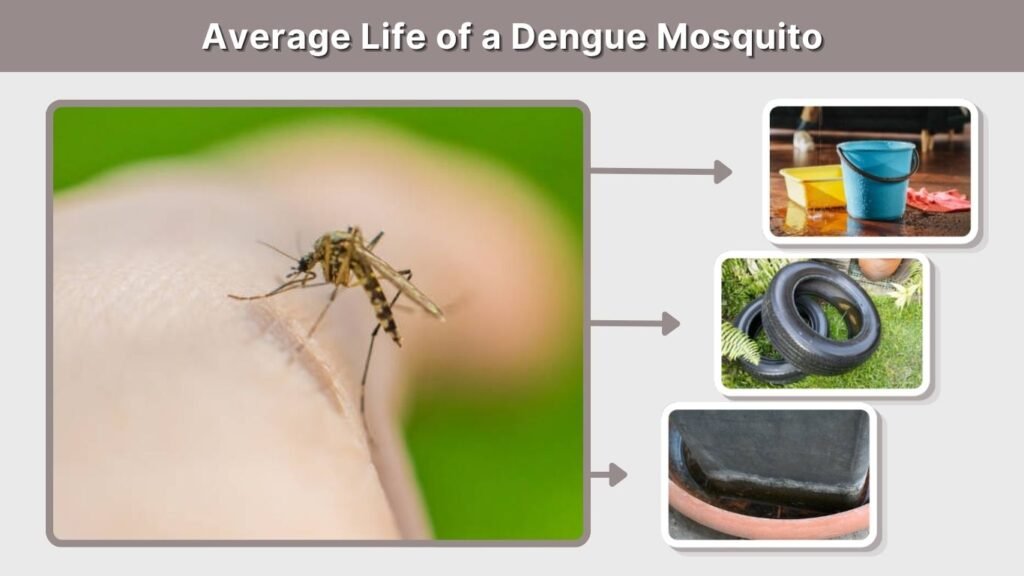
The mosquito most strongly associated with dengue transmission is Aedes aegypti, although other Aedes mosquitoes can also transmit dengue viruses.
Adult Aedes aegypti mosquitoes often survive for a few weeks, with females generally living longer than males.
Why Female Dengue Mosquito Lifespan Matters
Dengue transmission depends heavily on female mosquitoes because only females take blood meals.
A female must first bite an infected person and acquire the virus. The virus then requires time to develop inside the mosquito before it can potentially be transmitted during a later bite.
For this reason, mosquitoes that survive longer can have more opportunities to spread mosquito-borne pathogens.
Where Aedes Mosquitoes Develop
Common breeding locations include:
- Buckets
- Flowerpot saucers
- Discarded containers
- Tires
- Water tanks
- Clogged gutters
- Small outdoor containers
- Other areas that hold stagnant water
Removing these breeding sites can interrupt the mosquito life cycle before adults emerge.
What Affects Average Mosquito Life Expectancy?
Several environmental and biological factors determine how long an individual mosquito survives.
Temperature
Mosquitoes generally develop faster in warm weather. However, excessively high temperatures can increase dehydration and mortality.
Cold temperatures slow development and activity.
Some mosquito species survive winter as eggs, larvae, or dormant adult females.
Water Availability
Water is essential for mosquito reproduction and immature development.
Areas containing stagnant water often allow mosquito populations to increase quickly because they provide locations for eggs, larvae, and pupae.
Food Availability
Adult mosquitoes need carbohydrates for energy, usually obtained from plant nectar and other sugar sources.
Female mosquitoes may additionally require blood meals for successful egg development.
Predators
Mosquitoes are eaten by numerous animals, including:
- Fish
- Dragonfly larvae
- Aquatic insects
- Spiders
- Birds
- Bats
- Frogs
- Other insect predators
Predation can substantially shorten the lifespan of wild mosquitoes.
Human Control
Mosquito control can also reduce survival through insecticides, traps, screens, repellents, habitat removal, and elimination of breeding water.
Can Mosquitoes Live Longer Indoors?
Mosquitoes that enter buildings may sometimes survive longer because indoor environments provide protection from harsh weather and certain predators.
However, indoor survival depends on access to water, sugar sources, hosts, temperature, and humidity.
A mosquito trapped in a dry room without access to food or water may die relatively quickly.
Female mosquitoes that repeatedly gain access to hosts may survive long enough to produce multiple batches of eggs.
How to Shorten the Mosquito Life Cycle Around Your Home
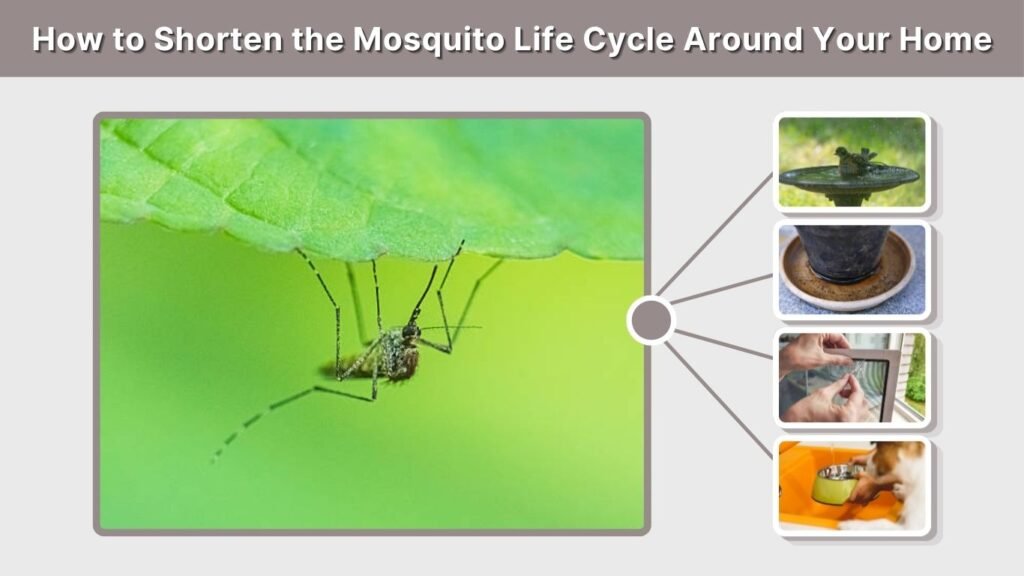
Because much of the mosquito life cycle occurs in water, eliminating breeding sites is one of the most practical ways to reduce local mosquito populations.
Useful Prevention Steps
- Empty standing water at least once a week.
- Clean birdbaths regularly
- Remove water from flowerpot trays.
- Keep gutters clear.
- Cover rain barrels and water-storage containers.
- Dispose of containers that collect rainwater.
- Repair damaged window and door screens.
- Keep pools properly maintained.
- Check outdoor toys and garden equipment for trapped water.
- Change pet water regularly.
Interrupting development during the egg or larval stage prevents mosquitoes from becoming biting adults.a
FAQs
What is the average life expectancy of a mosquito?
Many adult mosquitoes live between one and four weeks. Male mosquitoes usually live for a shorter period, while females commonly survive longer.
What is the average life of a mosquito in days?
Male mosquitoes commonly live around 5–10 days, while females may survive approximately 14–30 days or longer, depending on species and environmental conditions.
How long does the complete mosquito life cycle take?
In warm and favorable conditions, development from egg to adult can sometimes occur in approximately 7–14 days. Cooler conditions may significantly increase development time.
What is the average life of a dengue mosquito?
Adult Aedes aegypti, one of the principal dengue mosquitoes, generally survives for several weeks. Female mosquitoes tend to live longer than males and are responsible for dengue transmission.
Can a mosquito live for several months?
Most active adult mosquitoes do not live for several months. However, females of certain species can survive for months while overwintering or remaining dormant under favorable protected conditions.