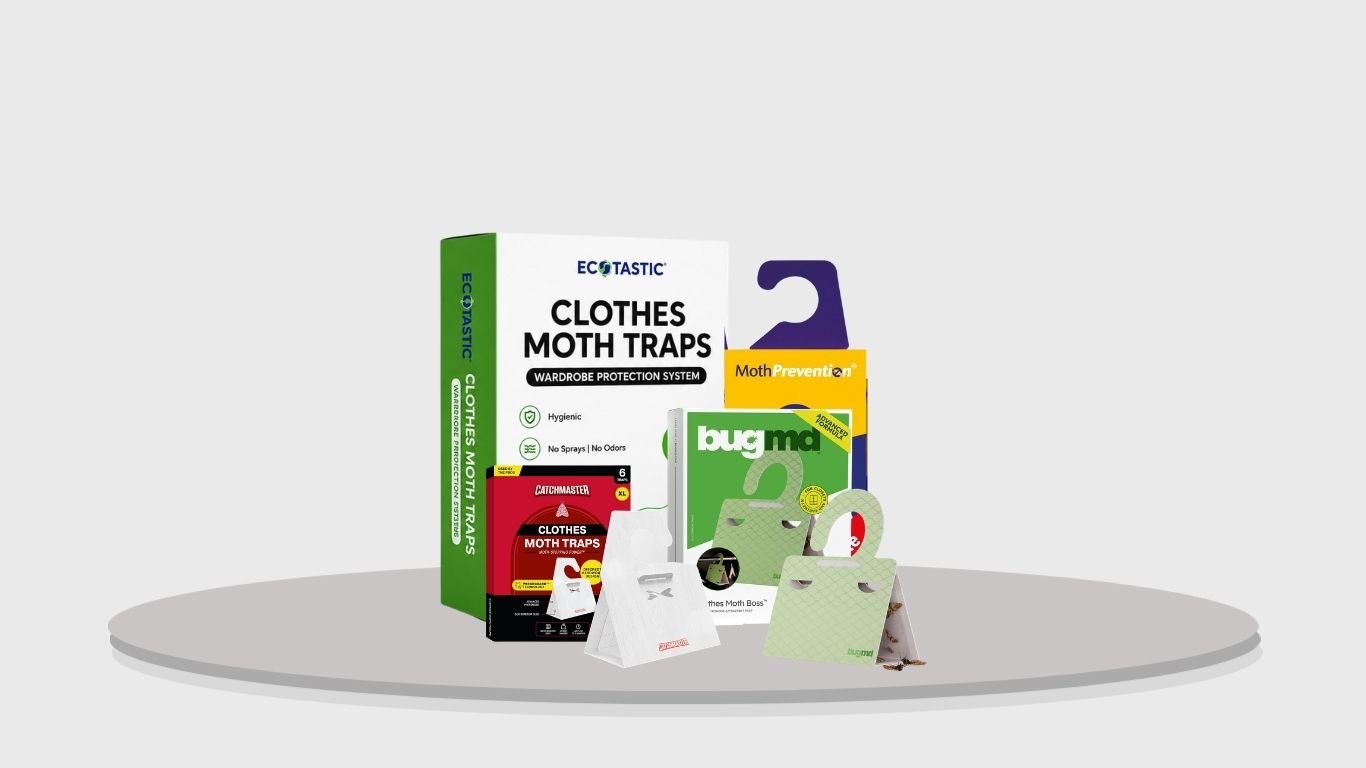
Sticky moth traps offer a simple and mess-free way to monitor and reduce moth activity around closets, wardrobes, cupboards, and pantry spaces. Many traps use pheromone attractants combined with strong adhesive surfaces to capture adult moths before they continue breeding. They are especially useful for clothes moths and pantry moths when placed in the correct problem areas. In this guide, we review 7 of the best sticky moth traps based on attraction strength, adhesive quality, ease of setup, coverage, longevity, and suitability for different indoor locations.
1. Moth Traps for Clothes – Insecticide-Free Moth Prevention
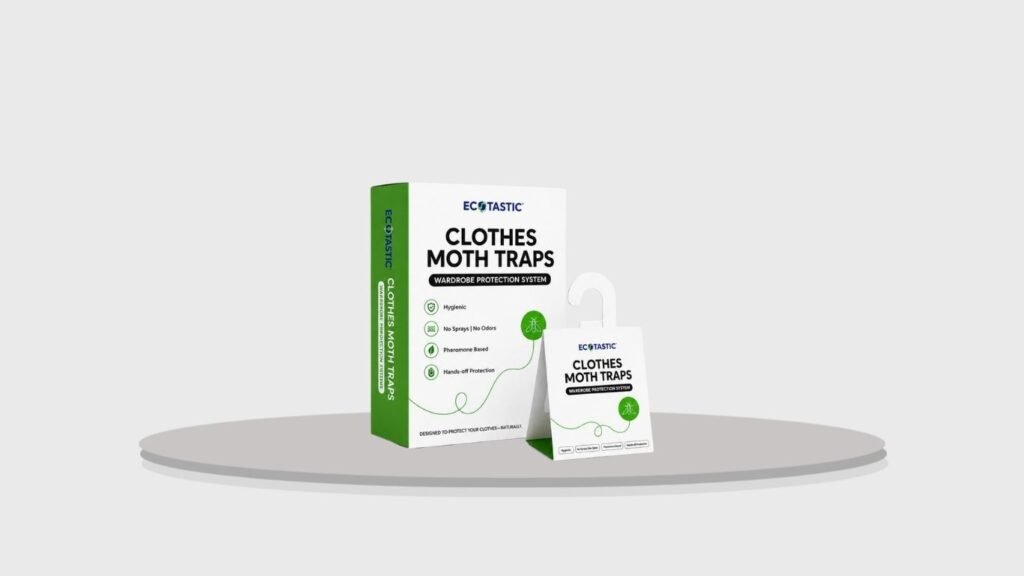
These sticky moth traps provide a straightforward way to monitor and reduce adult clothes moth activity inside closets, wardrobes, and clothing storage areas. Their adhesive trapping surface captures moths after attraction, helping homeowners identify whether moth activity is present. The insecticide-free design also makes them convenient for routine monitoring in areas where clothing and fabrics are stored.
Key Features
- Sticky adhesive trapping surface
- Designed for clothes moth monitoring
- Insecticide-free trapping approach
- Suitable for closets and wardrobes
- Simple setup and placement
- Disposable design for easy replacement
- Useful for detecting early moth activity
Why It’s Best For
This option is particularly useful for people who notice small moths around wool sweaters, coats, rugs, blankets, or other natural-fiber materials. Clothes moth infestations can be difficult to notice because larvae often remain hidden inside dark storage spaces.
Placing sticky traps inside closets provides an easy way to monitor adult moth activity without spraying insecticides directly around clothing. They can also help determine whether cleaning and preventive measures are reducing the moth population over time.
Performance & Durability
Performance depends strongly on correct placement. Traps should generally be positioned in quiet, dark areas where clothes moths are most likely to travel.
The sticky surface needs to remain clean and uncovered to capture moths efficiently. Dust, lint, and excessive handling can reduce adhesive performance. Replacement should be based on the manufacturer’s instructions or sooner if the trap becomes full or contaminated.
Pros & Cons and Overall Verdict
Pros
- Easy to install
- No spraying required
- Good for monitoring closets
- Convenient disposable design
- Helps identify adult moth activity
Cons
- Does not directly eliminate larvae
- Multiple traps may be needed in large storage areas
Overall Verdict: A practical first-choice sticky trap for homeowners who want simple, insecticide-free clothes moth monitoring inside closets and wardrobes.
2. Cimorowin Clothing Moth Traps with Pheromones
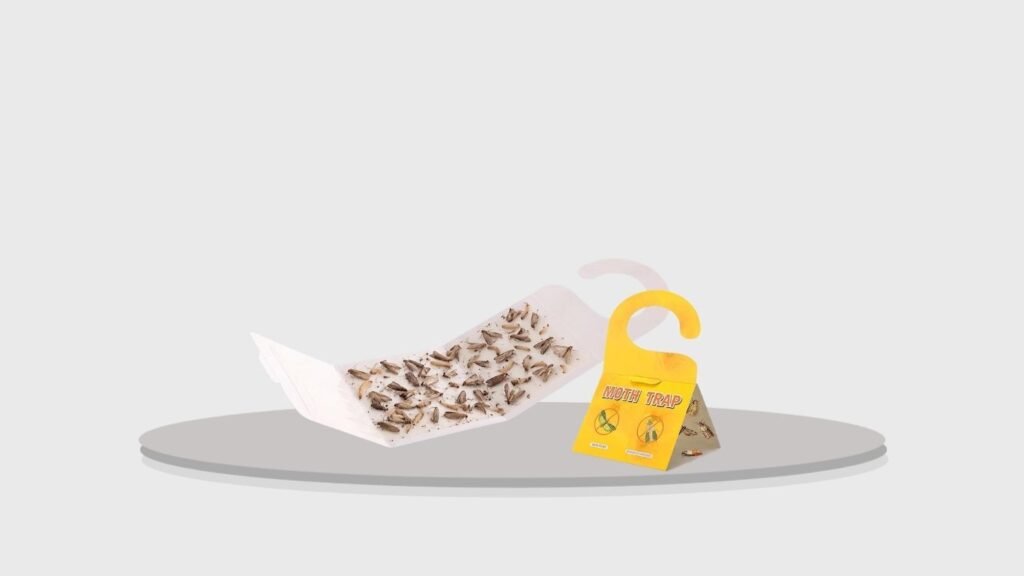
Cimorowin Clothing Moth Traps combine a sticky capture surface with pheromone attraction designed to draw adult moths toward the trap. Their compact format makes them suitable for wardrobes, closets, cabinets, and other enclosed storage spaces. They can be particularly helpful when monitoring valuable garments or seasonal clothing that may remain undisturbed for extended periods.
Key Features
- Pheromone-based moth attraction
- Strong sticky trapping surface
- Designed for clothing moths
- Suitable for wardrobes and closets
- Compact indoor design
- Easy placement around stored fabrics
- Useful for ongoing moth monitoring
Why It’s Best For
These traps are best for people who specifically want pheromone-based monitoring inside clothing storage spaces. Pheromone traps are designed to attract particular adult moths, making them useful for detecting activity that might otherwise remain unnoticed.
They can be placed near wool clothing, blankets, carpets, or other vulnerable natural fibers. Their unobtrusive design allows them to remain in closets without taking up much storage space.
Performance & Durability
The trap’s effectiveness depends on the pheromone attractant remaining active and the adhesive surface remaining exposed. Correct placement away from strong airflow can help moths locate the trap more easily.
For continuous monitoring, traps need periodic replacement. Once adhesive surfaces collect substantial dust or insects, their ability to hold additional moths can decrease. Using several traps in separate closets may also provide better monitoring across larger homes.
Pros & Cons and Overall Verdict
Pros
- Pheromone attraction
- Compact closet-friendly design
- No complicated setup
- Helps monitor hidden moth activity
- Useful around delicate garments
Cons
- Primarily targets adult moths
- Requires periodic replacement
- Correct moth species identification matters
Overall Verdict: Cimorowin traps are a convenient choice for targeted clothes moth monitoring, particularly in wardrobes containing wool and other vulnerable fabrics.
3. Clothes Moth Trap Replacement Sticky Strips
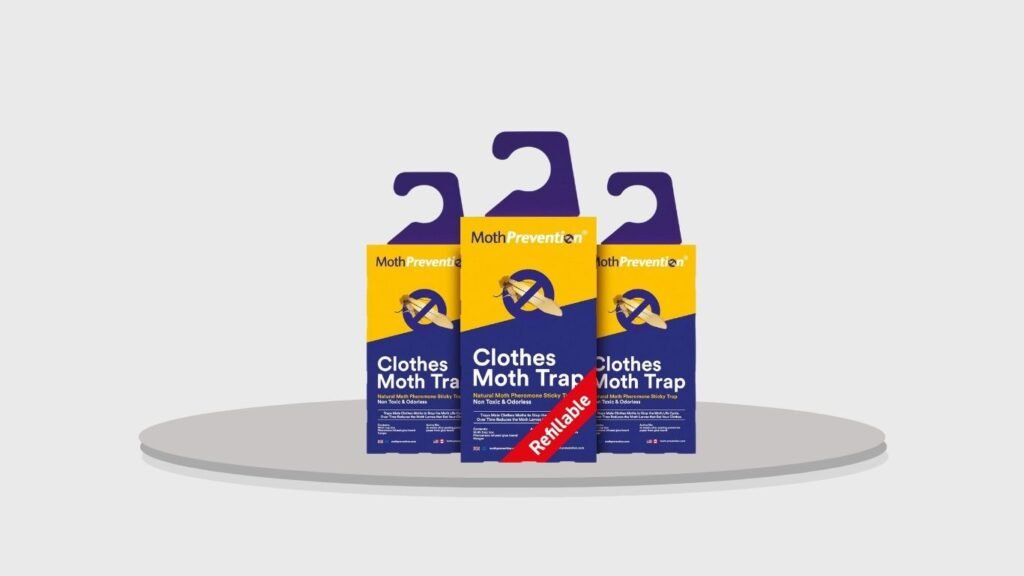
These clothes moth replacement strips are designed for users who already have a compatible moth-trapping system and want to refresh the adhesive portion without replacing the entire setup. The sticky strips provide a convenient way to maintain ongoing moth monitoring inside closets, wardrobes, and storage spaces while reducing unnecessary replacement of reusable trap components.
Key Features
- Replacement adhesive strips
- Designed for clothes moth traps
- Sticky surface captures adult moths
- Convenient for ongoing monitoring
- Suitable for closets and wardrobes
- Helps extend use of compatible trap systems
- Easy to replace when surfaces become full
Why It’s Best For
This product is best for households already using a compatible moth trap system. Instead of purchasing complete traps each time the adhesive surface becomes full, replacement strips can make maintenance more convenient.
They are particularly useful during extended moth-control programs where traps need to remain active for weeks or months. Regular replacement also allows users to monitor changes in moth activity and determine whether other control measures are working.
Performance & Durability
Fresh adhesive strips generally provide better capture performance than old surfaces covered with dust, lint, or insects. Replacing strips promptly when necessary helps keep the monitoring system effective.
Users should avoid touching the adhesive unnecessarily because oils and debris from hands can reduce usable sticky area. Storage conditions before use also matter; replacement strips should remain protected until they are ready to be installed.
Pros & Cons and Overall Verdict
Pros
- Convenient replacement option
- Helps maintain existing traps
- Easy to install
- Useful for long-term monitoring
- Reduces need to replace reusable components
Cons
- Requires a compatible trap system
- Not necessarily a complete standalone trap
- Adhesive eventually becomes saturated
Overall Verdict: An economical and practical solution for users who already own compatible clothes moth traps and need fresh adhesive surfaces for continued monitoring.
4. Upgraded Sticky Clothes & Pantry Moth Pheromone Traps
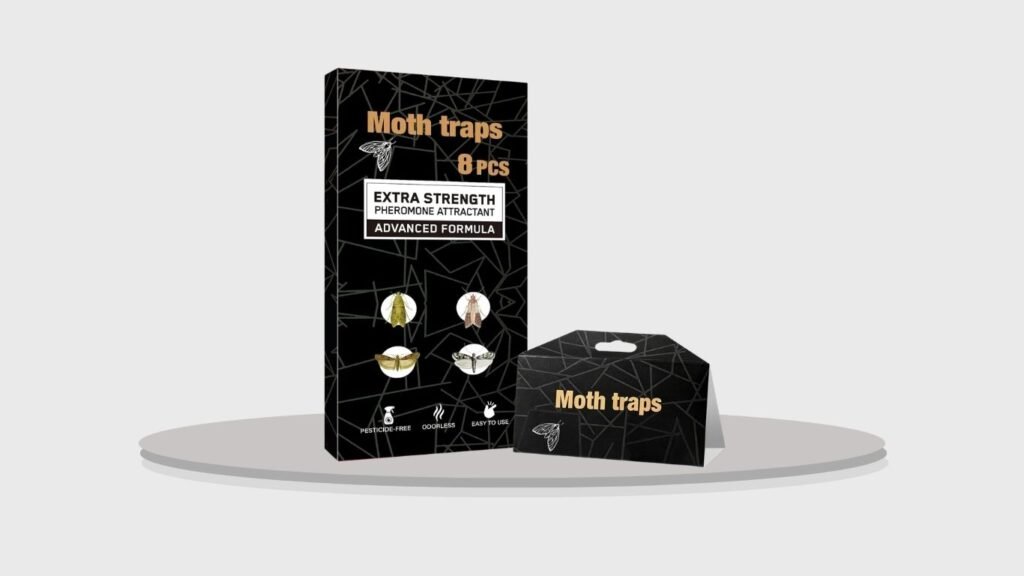
These upgraded sticky moth traps are designed for broader indoor moth monitoring, with the product marketed toward clothes and pantry moth concerns. The combination of pheromone attraction and adhesive capture can make them useful for households experiencing moth activity in more than one type of storage area, including wardrobes, cupboards, and food-storage spaces.
Key Features
- Sticky pheromone trap design
- Intended for clothes and pantry moth monitoring
- Suitable for multiple indoor areas
- Easy fold-and-place setup
- Adhesive capture surface
- Useful in cupboards and wardrobes
- Disposable after use
Why It’s Best For
This option is best for households where the exact source of moth activity is uncertain. Some moths originate from stored fabrics, while pantry moths usually develop in dry food products.
Using traps in different areas can help determine where adult moths are most active. This can guide further inspection of clothing, flour, cereal, grains, nuts, pet food, or other potential infestation sources.
Performance & Durability
Pheromone traps perform best when positioned close to suspected moth activity. Pantry traps should generally be placed near storage areas rather than directly against frequently cleaned surfaces, while clothes moth traps benefit from darker, quieter wardrobe locations.
Sticky surfaces remain useful until they become dusty, filled with insects, or reach the recommended replacement interval. Regular checks help users see whether captures are increasing or decreasing.
Pros & Cons and Overall Verdict
Pros
- Broad indoor monitoring potential
- Pheromone attraction
- Strong sticky trapping method
- Easy installation
- Useful for diagnosing moth problems
Cons
- Different moth species may respond to different attractants
- Does not eliminate larvae or eggs
- Requires source removal for full control
Overall Verdict: A versatile monitoring option for homes experiencing moth activity around both storage areas and food cupboards.
5. MaxGuard Extra Strength Pheromone Moth Traps
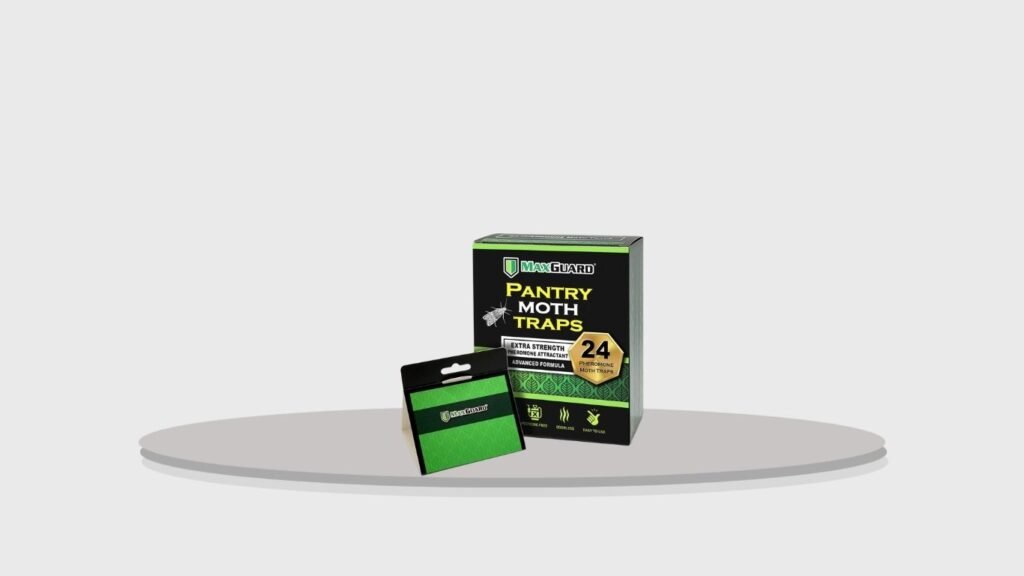
MaxGuard Extra Strength Pheromone Moth Traps are designed to attract and capture adult moths using a combination of pheromone lure technology and a sticky adhesive surface. They are particularly convenient for cupboards, pantries, food-storage areas, and similar locations where pantry moths may appear. The non-spray approach allows users to monitor moth activity without applying aerosol products around stored goods.
Key Features
- Pheromone moth attractant
- Sticky adhesive capture surface
- Designed for cupboard and pantry areas
- Non-spray moth control method
- Simple setup
- Disposable trap design
- Useful for monitoring adult moth populations
Why It’s Best For
These traps are best suited for pantry moth problems. Pantry moths commonly infest dry foods such as flour, cereal, rice, nuts, seeds, dried fruit, and pet food. Adult moth captures can alert homeowners that a food source needs to be located and removed.
The trap can also be helpful after an infested package has been discarded, allowing users to monitor whether adult moth activity continues.
Performance & Durability
Placement near suspected pantry moth activity is important. Traps can be positioned in or around cupboards while avoiding locations where the adhesive might become contaminated with cooking grease or heavy dust.
A pheromone trap should be considered a monitoring and population-reduction tool rather than the only treatment. Cleaning shelves and inspecting stored food remain necessary for long-term control.
Pros & Cons and Overall Verdict
Pros
- Strong pantry-focused design
- Pheromone attractant
- No spraying required
- Easy to monitor captures
- Convenient for cupboards
Cons
- Cannot eliminate larvae inside food packages
- Infested foods still need removal
- Replacement is required periodically
Overall Verdict: MaxGuard is a strong option for monitoring pantry moths and is especially useful when combined with thorough cupboard cleaning and food inspection.
6. Clothes Moth Traps with Pheromone Attractor for Wardrobes
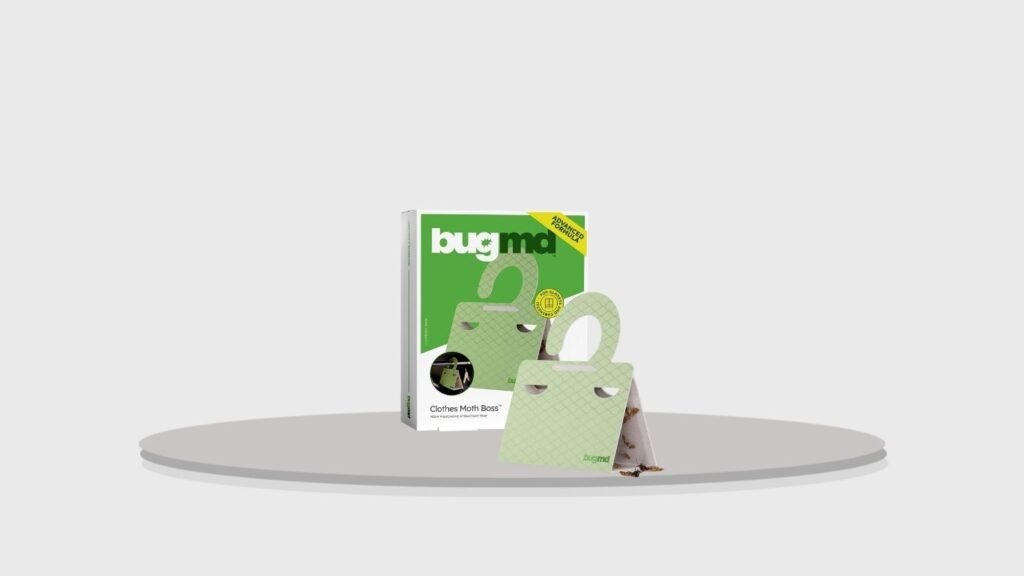
These pheromone clothes moth traps are designed specifically for wardrobes, closets, cabinets, and similar fabric-storage spaces. They attract adult clothes moths toward a sticky adhesive surface, helping users detect and reduce moth activity around valuable garments. Their compact design makes them suitable for maintaining continuous monitoring without interfering with normal closet organization.
Key Features
- Pheromone attractor for clothes moths
- Sticky adhesive capture area
- Suitable for cabinets and wardrobes
- Compact design
- Easy indoor placement
- Useful around wool and natural fibers
- Designed for continuous monitoring
Why It’s Best For
This option is especially useful for protecting clothing stored for long periods. Seasonal coats, wool sweaters, scarves, blankets, and formal garments may remain untouched for months, providing ideal conditions for clothes moth larvae.
Keeping traps inside wardrobes gives users an early warning of adult moth activity. This makes it easier to inspect vulnerable fabrics before significant damage develops.
Performance & Durability
For effective monitoring, traps should be placed in areas with limited disturbance and airflow. Dark closet corners or shelves close to vulnerable garments can be useful locations.
The adhesive should be checked periodically. A trap covered with insects, dust, or fabric fibers should be replaced because reduced sticky surface area can lower capture efficiency.
It is also important to remember that pheromone traps primarily target adult moths. Washing, dry cleaning, vacuuming, and inspecting stored fabrics are necessary if larvae or eggs are present.
Pros & Cons and Overall Verdict
Pros
- Designed for clothes moths
- Pheromone-based attraction
- Compact wardrobe placement
- Simple to use
- Helpful for protecting stored garments
Cons
- Does not kill larvae hidden in fabrics
- Needs regular inspection
- Multiple closets may require separate traps
Overall Verdict: A well-suited monitoring solution for wardrobes containing wool, cashmere, fur, or other materials vulnerable to clothes moth damage.
7. Catchmaster PheroGuard Sticky Moth Traps
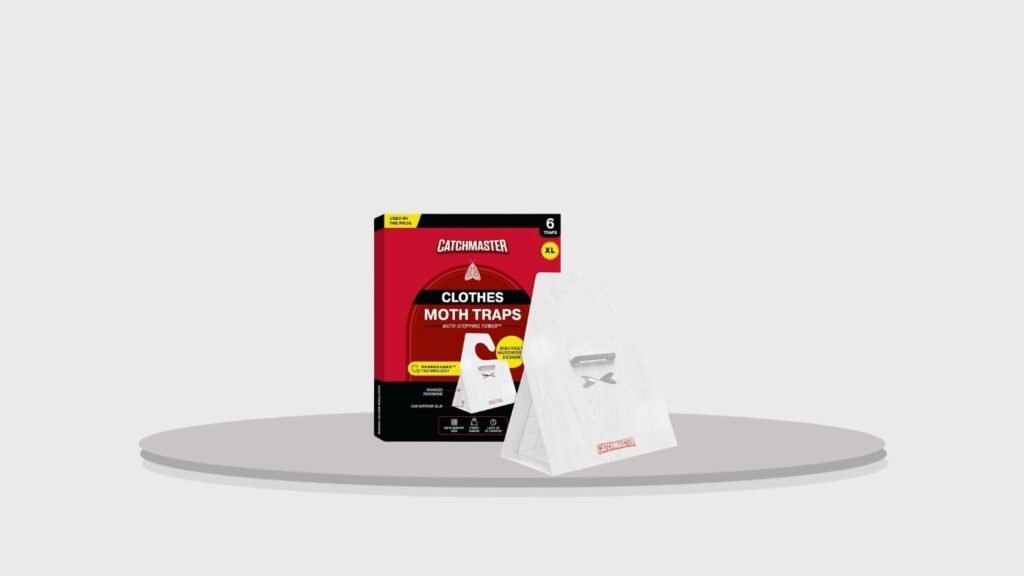
Catchmaster PheroGuard Sticky Moth Traps combine an established sticky-trap format with pheromone-based attraction technology. Their patterned design and adhesive surface provide a convenient method for monitoring moth activity in suitable indoor storage locations. Catchmaster is widely associated with glue-based pest-monitoring products, making this option appealing for users who prefer a recognizable pest-control brand.
Key Features
- PheroGuard pheromone attraction technology
- Strong adhesive trapping surface
- Patterned trap design
- Suitable for indoor moth monitoring
- Simple setup and disposal
- No aerosol spraying required
- Useful for identifying continued moth activity
Why It’s Best For
This trap is a good fit for homeowners who prioritize dependable adhesive performance and easy monitoring. Captured moths remain visible on the sticky surface, allowing users to quickly determine whether activity is increasing or decreasing.
It can also be useful after cleaning an infested storage area. Continued captures indicate that further inspection may be necessary, while declining captures can suggest that control efforts are working.
Performance & Durability
The adhesive surface is central to overall performance. Keeping the trap away from excessive dust, moisture, and direct contact with stored items helps preserve its trapping ability.
Pheromone effectiveness also decreases over time, so traps should be replaced according to label directions rather than left indefinitely. Checking them regularly makes it easier to monitor moth populations and respond before infestations become severe.
For stronger overall control, sticky traps should be combined with source removal, vacuuming, proper food storage, or fabric cleaning depending on the moth species involved.
Pros & Cons and Overall Verdict
Pros
- Pheromone-based attraction
- Reliable sticky-trap concept
- Simple monitoring
- Recognizable pest-control brand
- Easy disposal
Cons
- Primarily targets adult moths
- Requires periodic replacement
- Does not address eggs or larvae directly
Overall Verdict: Catchmaster PheroGuard is a solid choice for homeowners who want an easy-to-monitor sticky pheromone trap from an established pest-control brand.
FAQs
1. Do sticky moth traps really work?
Yes. Sticky moth traps can effectively capture adult moths, especially when they use pheromone attractants. They are most useful for monitoring moth activity and reducing the number of breeding adults. However, they do not eliminate eggs or larvae, so cleaning, food inspection, or fabric treatment may still be necessary.
2. Where should I place sticky moth traps?
For clothes moths, place traps inside closets, wardrobes, cabinets, or near stored wool and natural-fiber fabrics. For pantry moths, position traps near cupboards, shelves, and dry-food storage areas. Avoid placing them where dust, moisture, or strong airflow may reduce their effectiveness.
3. How long do sticky moth traps last?
The lifespan depends on the product and environment. Many pheromone traps remain effective for several weeks, but they should be replaced sooner if the adhesive becomes covered with moths, dust, or debris. Always follow the manufacturer’s replacement instructions for best results.
4. Are sticky moth traps safe to use around clothes and food?
Most sticky moth traps are designed to work without sprays or loose insecticides, making them convenient for closets and pantry areas. Still, traps should not directly touch food or delicate fabrics. Always follow the product label and placement instructions.
5. Can sticky moth traps get rid of a moth infestation completely?
Not usually by themselves. Sticky traps mainly capture adult moths and help monitor the infestation. For complete control, you should also remove infested food, clean cupboards, wash or dry-clean affected fabrics, vacuum storage areas, and store vulnerable items in sealed containers.