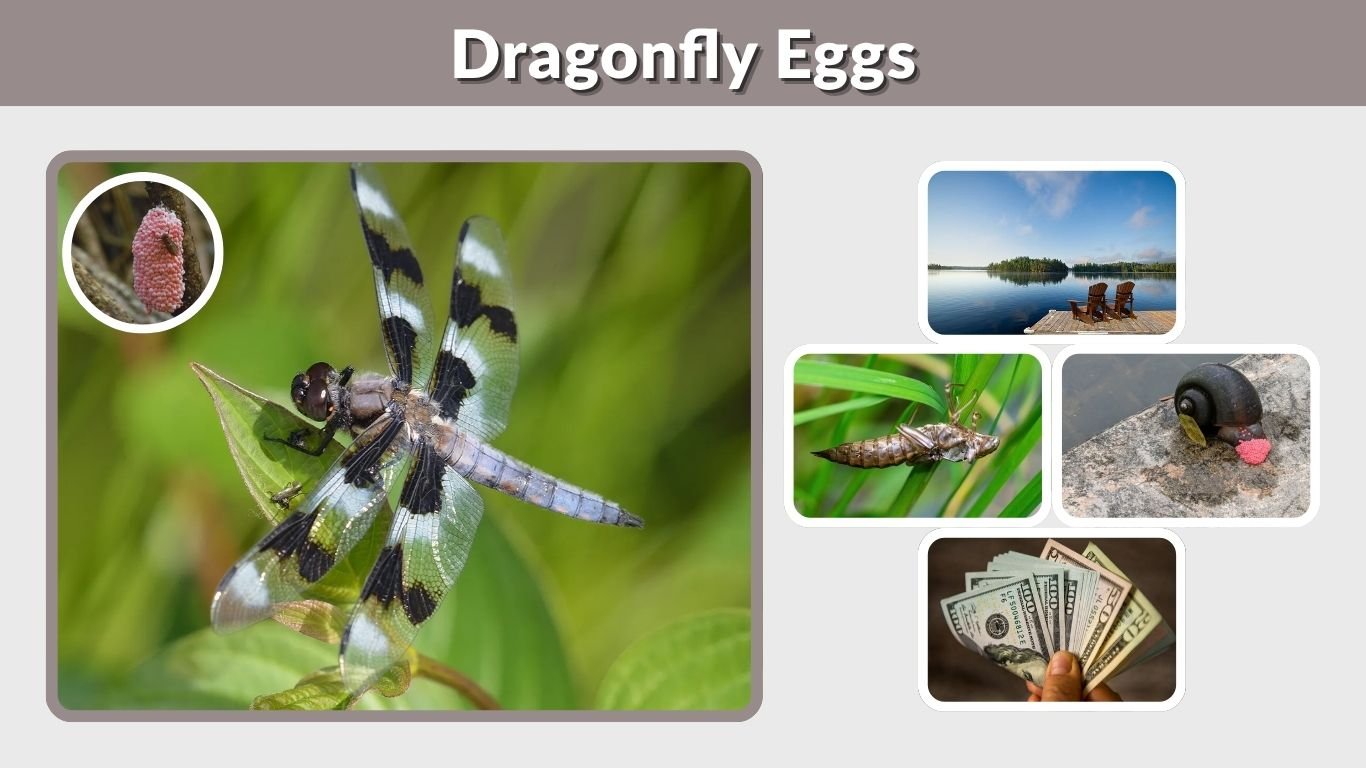
Dragonfly eggs are the starting point of one of the most fascinating insect life cycles found around ponds, lakes, streams, marshes, and other freshwater habitats. Female dragonflies usually place their eggs directly in water, on aquatic plants, or in moist vegetation near the water’s edge. The eggs are extremely small and can be difficult to notice without close inspection. Depending on the species and environmental conditions, they may hatch within days or remain dormant much longer before producing aquatic dragonfly nymphs.
What Do Dragonfly Eggs Look Like?
Dragonfly eggs vary in shape, size, and color because thousands of dragonfly species exist worldwide. Most are tiny enough to be overlooked easily in a pond or aquarium. Some species release their eggs directly into water, while others carefully insert them into aquatic plants or soft plant tissue using specialized structures at the end of the abdomen.
Dragonfly Egg Identification
Common characteristics include:
- Extremely small size
- Round, oval, or elongated shape
- Pale yellow, cream, brown, or translucent coloration
- Often less than 1 mm across
- Usually difficult to see without magnification
- Frequently attached to plants or hidden underwater
- May darken as the embryo develops
- Often surrounded by moisture or aquatic vegetation
Egg appearance alone usually cannot identify the exact dragonfly species.
What Color Are Dragonfly Eggs?
Fresh dragonfly eggs may appear pale yellow, cream, white, translucent, or light brown. Color can change during development, particularly as the embryo matures.
Some online searches mention pink or red dragonfly eggs, but brightly colored clusters above water are often eggs from other animals, especially apple snails. Dragonfly eggs are generally much smaller and less conspicuous.
Where Do Dragonflies Lay Their Eggs?
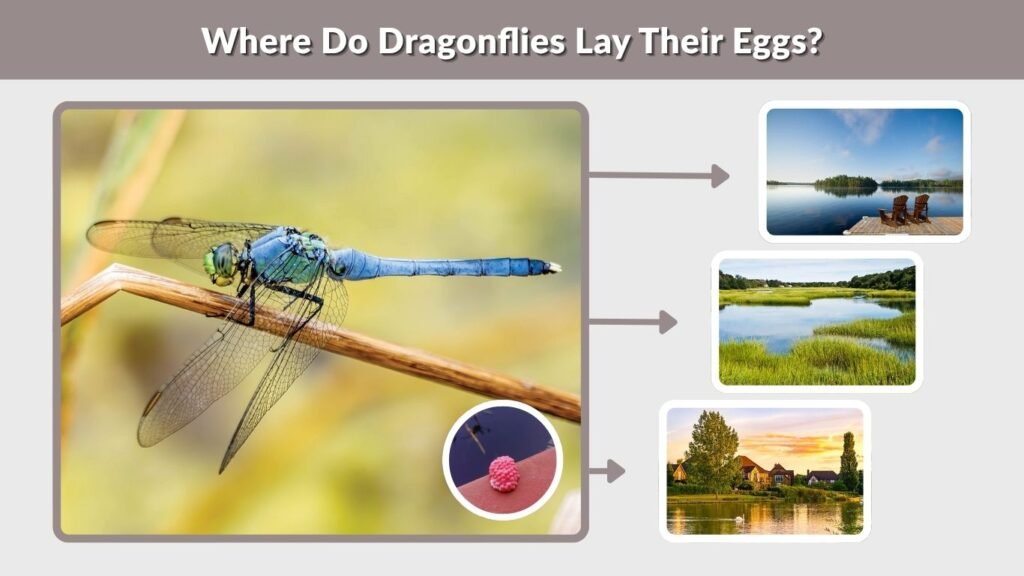
Almost all dragonfly reproduction is closely connected with freshwater. Females select locations where newly hatched nymphs can immediately enter an aquatic environment and find shelter and prey. Different species prefer different water conditions, ranging from quiet ponds to flowing streams. Egg-laying behavior is therefore one of the most variable parts of dragonfly biology.
Common Egg-Laying Locations
Dragonfly eggs may be found:
- Directly in pond water
- In lakes
- In marshes
- Along slow-moving streams
- Among aquatic plants
- Inside submerged stems
- On floating vegetation
- In mud near the waterline
- In wet moss or plant tissue
- In temporary pools
Species adapted to seasonal wetlands may lay eggs in locations that periodically dry out.
Dragonfly Eggs in a Pond
A pond containing aquatic vegetation is excellent dragonfly habitat. Females may fly over the surface and dip the end of their abdomen into the water repeatedly while releasing eggs.
Other species land on vegetation and insert eggs into stems or leaves.
Once the eggs hatch, the young nymphs live underwater and begin hunting tiny aquatic organisms.
Dragonfly Eggs in Water
Water protects developing eggs from drying and places the newly hatched nymph close to the habitat it needs. However, oxygen levels, temperature, water quality, predators, and seasonal conditions all influence survival. Some eggs hatch relatively quickly, while others enter delayed development that allows them to survive unfavorable periods.
What Do Dragonfly Eggs Look Like in Water?
In water, individual eggs may look like tiny pale or brown dots. They can be extremely difficult to distinguish from sediment, algae, plant debris, or the eggs of other aquatic organisms.
Eggs inserted into plant material can be almost impossible to see because the female places them inside stems or leaves rather than leaving them exposed.
Do Dragonfly Eggs Need Water?
Most dragonfly species ultimately need aquatic conditions for successful development because the next stage—the nymph—is aquatic.
However, not every egg must remain submerged continuously. Some species place eggs in damp vegetation, mud, or areas that later become flooded.
Their reproductive strategy is adapted to the seasonal water cycle of their particular habitat.
How Long Do Dragonfly Eggs Take to Hatch?
There is no single hatching time for all dragonflies. Temperature, species, moisture, oxygen, and season can all affect development. Under favorable warm conditions, some eggs hatch fairly quickly. Others remain dormant for months, particularly when winter, drought, or another unfavorable season occurs soon after egg laying.
Dragonfly Egg Hatching
Possible development patterns include:
- Hatching within about one to several weeks
- Delayed hatching during cold weather
- Dormancy through winter
- Waiting for seasonal flooding
- Development slowing in cool water
- Faster development in favorable warm conditions
After hatching, a tiny aquatic nymph emerges and immediately begins the much longer juvenile phase of the dragonfly life cycle.
Do Dragonfly Eggs Survive Dry Conditions?
Some species have eggs adapted to temporary wetlands and can tolerate periods when water levels fall. These eggs remain dormant until suitable moisture returns.
Other species depend more strongly on permanent water and are less tolerant of drying.
The ability to survive drought therefore depends largely on the particular dragonfly species and its natural habitat.
Dragonfly Egg to Nymph Life Cycle
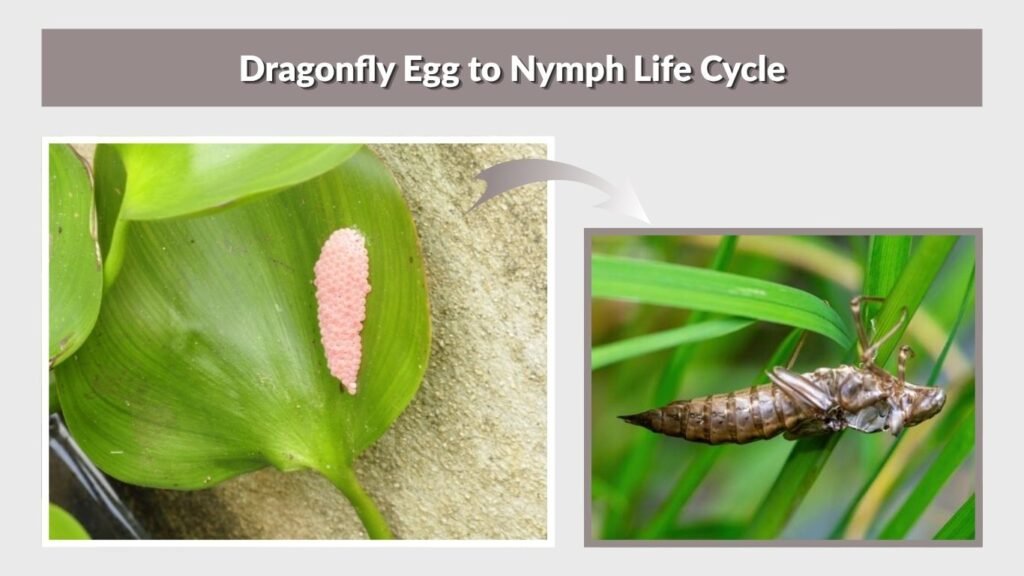
Dragonflies undergo incomplete metamorphosis, which means there is no caterpillar or pupal stage. The life cycle consists of egg, aquatic nymph, and winged adult. The nymph stage is usually much longer than the egg or adult stage and may last from several months to several years.
From Egg to Nymph
The basic development process is:
- A female lays eggs near or in freshwater.
- Embryos develop inside the eggs.
- Tiny nymphs hatch.
- Nymphs begin hunting underwater.
- They molt repeatedly while growing.
- Mature nymphs eventually climb above water.
- The adult dragonfly emerges from the final nymphal skin.
Dragonfly nymphs are active predators rather than passive larvae.
What Happens After Hatching?
Newly hatched nymphs are very small but already adapted to aquatic life.
They hide among plants, sediment, and underwater debris while hunting tiny organisms. As they grow, larger nymphs may catch mosquito larvae, aquatic insects, tadpoles, and other small prey.
This predatory stage is why healthy dragonfly populations can contribute to the balance of pond ecosystems.
Dragonfly Eggs in Swimming Pools
Dragonflies sometimes mistake swimming pools for natural ponds because the shiny water surface provides similar visual cues. Females may briefly dip their abdomens into the pool and release eggs, particularly when suitable natural wetlands are nearby.
What Happens to Eggs in a Pool?
Most swimming pools are poor environments for dragonfly development because they may contain:
- Chlorine or other pool chemicals
- Limited aquatic vegetation
- Filtration systems
- Frequent cleaning
- Few natural hiding places
- Unstable food supplies
Even if eggs hatch, nymph survival is generally much lower than in a healthy natural pond.
Are Dragonfly Eggs Harmful in Pools?
No. Dragonfly eggs are not dangerous to people, and dragonfly nymphs do not parasitize humans.
If eggs or nymphs appear in a pool, normal filtration and pool maintenance are generally enough to remove them. There is no need for specialized pest treatment solely because a dragonfly has laid eggs there.
Why Do Dragonflies Lay Eggs on Cars?
Dragonflies sometimes approach shiny cars, especially dark or reflective surfaces, because polarized reflections can resemble the appearance of water. A female may mistakenly treat the vehicle as a potential breeding site.
Dragonfly Eggs on a Car
If a dragonfly deposits eggs on a vehicle, the eggs usually cannot develop successfully because a car does not provide an aquatic habitat for the resulting nymphs.
Gently washing the surface with water and normal car-cleaning methods is usually sufficient.
Repeated dragonfly activity around a vehicle may happen when it is parked close to wetlands or when highly reflective paint creates strong water-like visual cues.
Dragonfly Eggs vs. Apple Snail Eggs
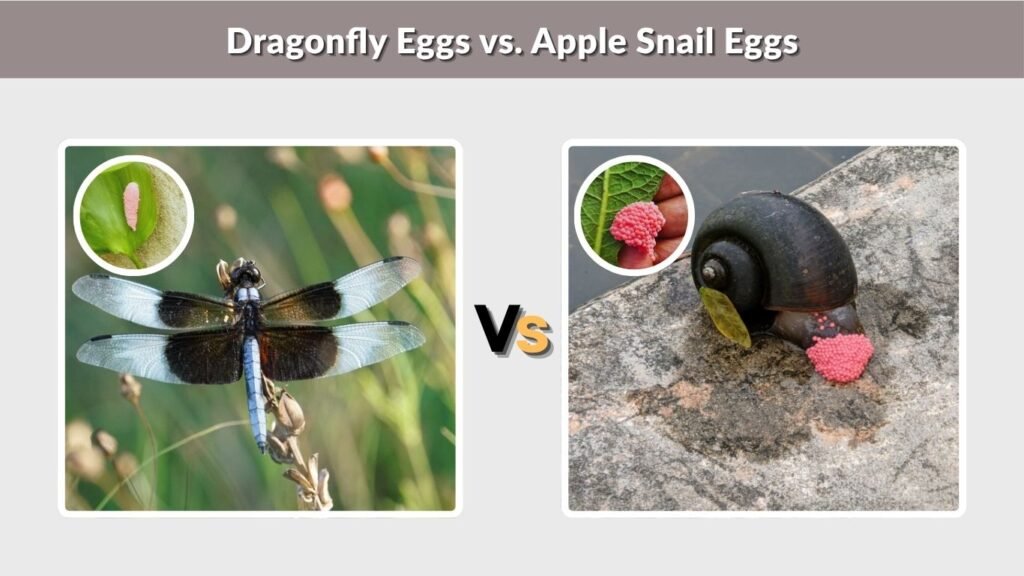
Pink egg clusters found around ponds are frequently misidentified as dragonfly eggs. Apple snails can lay conspicuous pink, reddish, or orange clusters above the waterline, creating a very different appearance from typical dragonfly eggs.
Main Differences
Dragonfly eggs:
- Usually extremely small
- Often pale or inconspicuous
- May be underwater
- May be inserted into plants
- Usually not visible as a large pink cluster
Apple snail eggs:
- Often bright pink or reddish
- Form obvious clustered masses
- Commonly placed above the waterline
- Individual eggs are larger and easier to see
- Have a bead-like appearance
Large bright-pink clusters are therefore much more likely to belong to snails than dragonflies.
Can You Buy Dragonfly Eggs?

Dragonfly eggs are sometimes advertised online, but purchasing eggs is generally less practical than creating habitat that naturally attracts breeding adults. Transporting delicate aquatic insects also raises concerns about survival, disease, invasive species, and local wildlife regulations.
Better Ways to Attract Dragonflies
Instead of purchasing eggs, consider:
- Creating a wildlife pond
- Adding native aquatic plants
- Providing shallow and deeper water areas
- Avoiding unnecessary pesticides
- Adding emergent vegetation
- Leaving some natural pond edges
- Maintaining clean, oxygenated water
- Avoiding introducing non-native dragonfly species
Adult dragonflies may discover a suitable pond naturally and begin laying eggs there.
Interesting Facts About Dragonfly Eggs
Although adults receive most of the attention, the egg stage determines where an entire new dragonfly generation begins. Female dragonflies have evolved several different egg-laying strategies, allowing species to reproduce in habitats ranging from permanent lakes to wetlands that disappear seasonally.
Dragonfly Egg Facts
- Dragonfly eggs are usually extremely small.
- Females may lay hundreds of eggs.
- Some species drop eggs directly into water.
- Others insert eggs into aquatic plants.
- Eggs can hatch within weeks under suitable conditions.
- Some remain dormant for months.
- The newly hatched stage is called a nymph or naiad.
- Dragonfly nymphs live underwater.
- Dragonflies have no pupal stage.
- The aquatic juvenile stage can last much longer than adulthood.
FAQs
What do dragonfly eggs look like?
Dragonfly eggs are usually tiny, oval or round, and pale yellow, cream, brown, or translucent. Many are less than a millimeter across and difficult to see without magnification.
How long do dragonfly eggs take to hatch?
Some may hatch within a few weeks under favorable conditions, while others remain dormant for months because of winter, drought, or seasonal environmental conditions.
Do dragonflies lay eggs in water?
Yes. Many species release eggs directly into water, while others insert them into aquatic vegetation, mud, or damp plant tissue near freshwater.
Can dragonflies lay eggs in swimming pools?
Yes. A female may mistake a swimming pool for a natural pond and deposit eggs. Pools generally provide poor conditions for successful nymph development.
Can you buy dragonfly eggs for a pond?
They may occasionally be advertised, but creating suitable natural habitat is generally a better option. A healthy pond with native aquatic plants can attract local dragonflies naturally without introducing potentially inappropriate species.