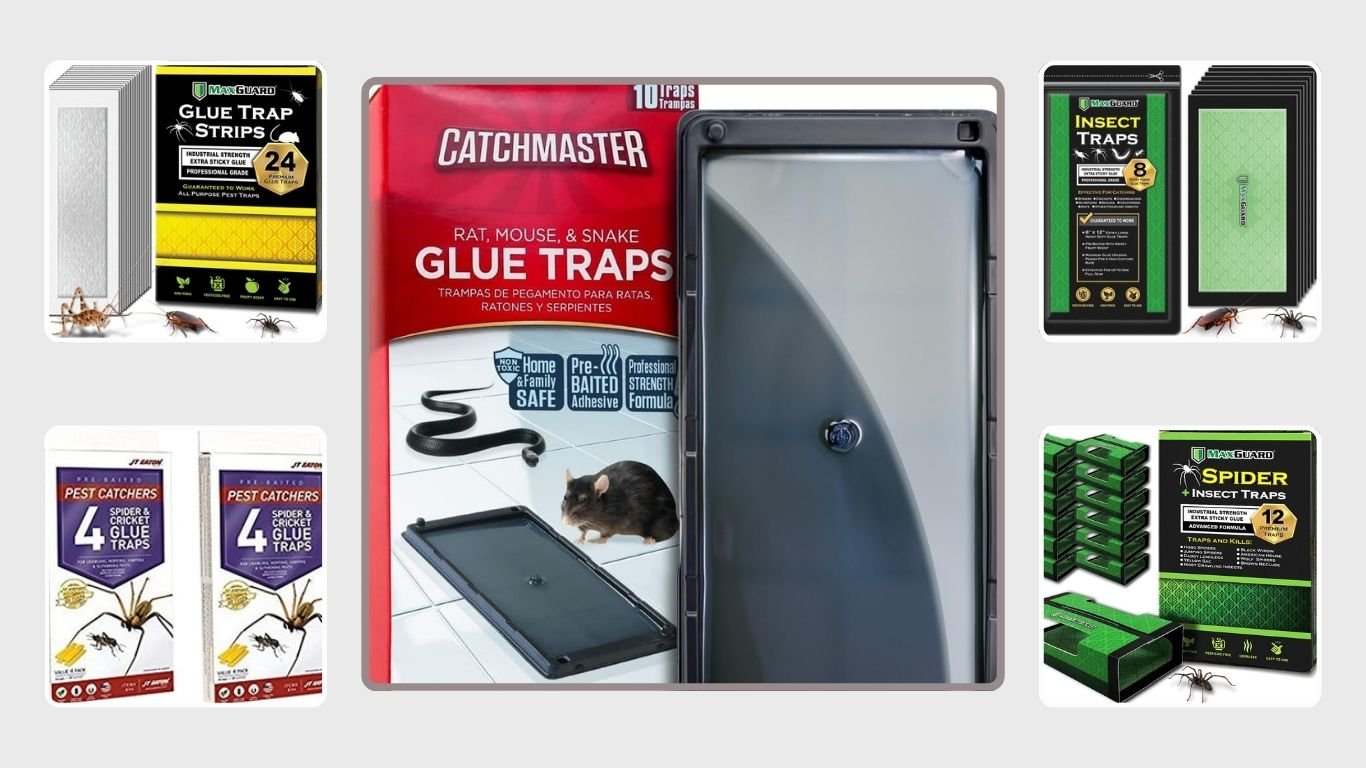
Spider sticky traps offer a simple, chemical-free way to monitor and capture spiders and other crawling pests inside the home. They are especially useful along walls, behind furniture, in basements, garages, closets, and other areas where spiders frequently travel. The best spider sticky traps combine strong adhesive, easy placement, low-profile designs, and enough coverage for multiple rooms. In this guide, we review 10 of the best spider sticky traps for indoor use, including options for brown recluse spiders, crickets, roaches, scorpions, and other crawling insects.
1. 10-Pack Spider, Roach & Cricket Sticky Traps
The 10-Pack Spider, Roach & Cricket Sticky Traps provides a simple way to monitor and capture spiders and other crawling pests without sprays or complicated equipment. The multi-pack format makes it easy to place traps in several problem areas at once, including basements, garages, closets, kitchens, storage rooms, and along walls. Because the traps work passively, they can remain in place and continue catching pests that cross the adhesive surface.
Key Features
- 10-pack sticky trap set
- Designed for spiders and crawling insects
- Also suitable for roaches, cockroaches, and crickets
- Strong adhesive trapping surface
- No spraying or electronic equipment required
- Compact design for discreet placement
- Suitable for basements, garages, closets, and storage areas
- Useful for both trapping and monitoring pest activity
Why It’s Best For Whole-Home Spider Monitoring
The biggest advantage of this 10-pack is the ability to cover several locations simultaneously. Spiders often travel along walls, baseboards, behind furniture, and through quiet storage areas, so relying on one trap may provide limited coverage. Multiple traps can be positioned along suspected travel routes to determine where activity is strongest.
This approach is especially useful when homeowners want to monitor spider populations before deciding whether additional pest-control measures are necessary.
Performance & Durability
Sticky traps depend primarily on adhesive strength and correct placement. Positioning them flat against walls, behind appliances, beneath furniture, or near dark corners can increase the likelihood that wandering spiders cross the glue surface.
Because they contain no mechanical parts, there is little maintenance beyond checking them periodically. Dust, moisture, and heavy debris can gradually reduce adhesive performance, so replacing dirty traps helps maintain effectiveness.
Pros, Cons & Overall Verdict
The strongest benefits are the 10-trap quantity, easy setup, chemical-free trapping method, and ability to catch several types of crawling pests. They are also useful for identifying areas with higher spider activity.
The main limitation is that sticky traps only catch pests that physically cross them and do not eliminate hidden breeding or entry sources.
Overall, the 10-Pack Spider, Roach & Cricket Sticky Traps is a practical option for homeowners who want affordable, passive spider monitoring and control across multiple indoor problem areas.
2. Spider, Roach & Cricket Glue Traps
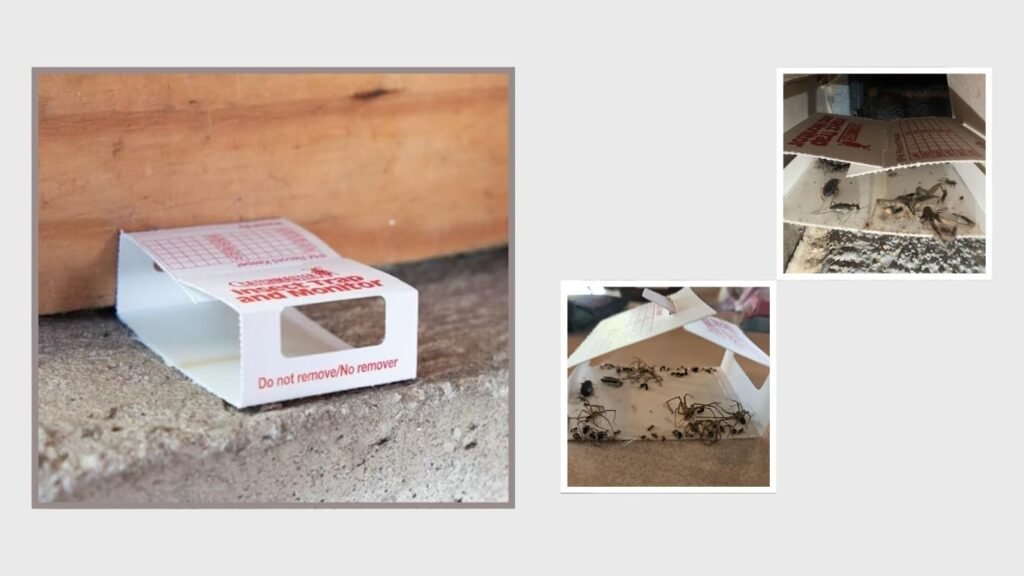
The Spider, Roach & Cricket Glue Traps provide a straightforward way to monitor and capture crawling pests inside homes, garages, basements, and storage areas. Their flat adhesive design makes them easy to position along walls, underneath furniture, behind appliances, and near dark corners where spiders frequently travel. Because they work without sprays or powered devices, these traps are especially practical for homeowners who prefer passive pest monitoring.
Key Features
- Strong adhesive trapping surface
- Designed for spiders, roaches, and crickets
- Compact design for discreet placement
- Suitable for basements, garages, and closets
- No batteries or electricity required
- Helps monitor pest activity
- Easy to place along walls and corners
Why It’s Best For Multi-Pest Monitoring
These traps are especially useful when homeowners are dealing with more than spiders alone. Roaches, crickets, and other crawling pests often use many of the same sheltered pathways. Positioning several glue boards in strategic areas provides a clearer picture of which pests are active and where they are entering.
Performance & Durability
The adhesive works continuously as long as the surface remains clean and dry. Placement is important, so traps positioned flush against walls or near known pest pathways generally perform better than those placed in open floor areas. Dust and moisture can gradually reduce stickiness, making occasional replacement necessary.
Pros, Cons & Overall Verdict
The main advantages are simple setup, versatility, and continuous passive trapping. The traps can also help identify where spider or insect activity is concentrated. Their main limitation is that they only affect pests that physically cross the adhesive.
Overall, the Spider, Roach & Cricket Glue Traps are a practical choice for homeowners who want simple, low-maintenance monitoring across several common indoor pest categories.
3. MaxGuard Non-Toxic Spider & Crawling Insect Glue Traps
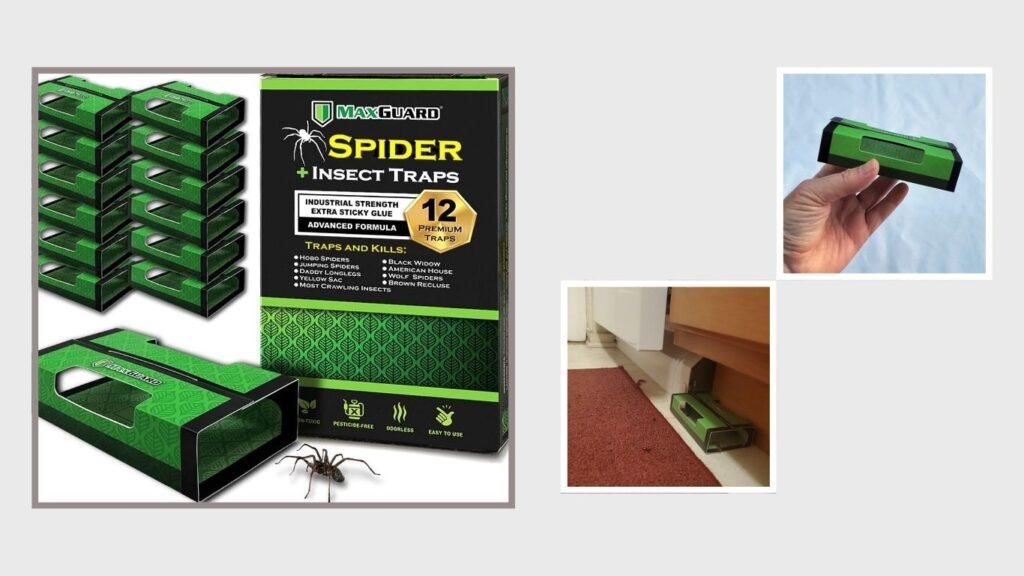
The MaxGuard Non-Toxic Spider & Crawling Insect Glue Traps are designed for indoor monitoring and capture without relying on traditional pesticide sprays. They are particularly useful around basements, closets, garages, storage rooms, and other quiet areas where spiders and crawling insects commonly move. Their low-profile design makes placement discreet while still providing an effective adhesive surface for passing pests.
Key Features
- Non-toxic glue-based trapping method
- Suitable for spiders and crawling insects
- Useful for brown recluse monitoring
- Compact indoor design
- No pesticide spray required
- Strong adhesive surface
- Suitable for multiple rooms
Why It’s Best For Chemical-Free Spider Monitoring
MaxGuard is particularly suitable for homeowners who want to track spider activity without applying insecticides throughout living spaces. The traps can be placed near walls, closets, storage boxes, and other areas where wandering spiders may pass.
They can also help determine whether suspicious spider activity is isolated or occurring regularly in one part of the home.
Performance & Durability
The adhesive surface provides continuous passive trapping while it remains clean. Dry, low-traffic areas generally help the glue retain performance longer.
Placing traps near baseboards and behind furniture increases the chance that spiders encounter them naturally rather than requiring bait or active attraction.
Pros, Cons & Overall Verdict
The biggest strengths are the non-toxic trapping method, simple placement, and usefulness for monitoring spider activity. The primary drawback is that traps do not repel spiders or stop additional individuals from entering the home.
Overall, MaxGuard Non-Toxic Spider & Crawling Insect Glue Traps are well suited to homeowners looking for a simple monitoring tool that works continuously without traditional pesticide application.
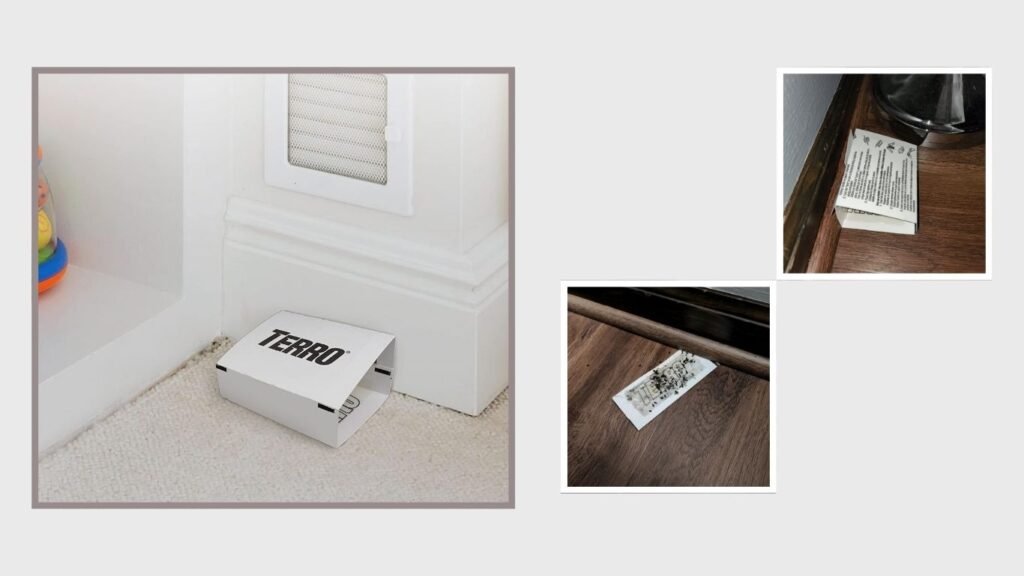
4. TERRO Spider Traps
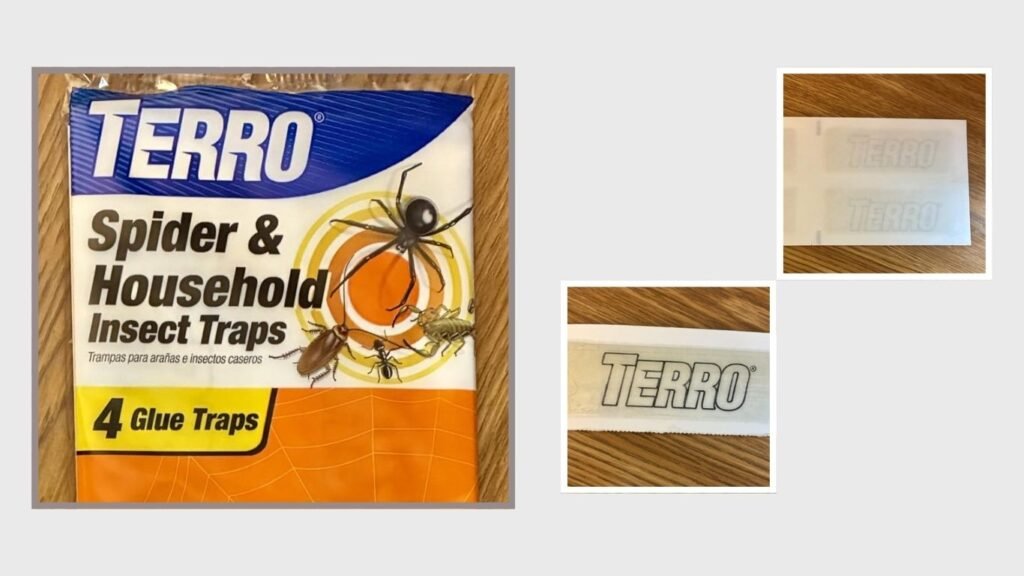
The TERRO Spider Traps are designed specifically for indoor spider control and monitoring. Their compact glue-board construction allows them to be placed along baseboards, behind furniture, beneath appliances, and in other locations where spiders are likely to travel. TERRO’s familiar pest-control format makes these traps convenient for homeowners who want a straightforward product that requires almost no setup.
Key Features
- Designed specifically for spiders
- Strong adhesive trapping surface
- Compact and discreet design
- Suitable for indoor use
- Easy placement along spider travel routes
- No electricity required
- Useful for monitoring spider activity
Why It’s Best For Dedicated Spider Control
Unlike broader crawling-insect traps, TERRO Spider Traps are designed with spider control as the primary purpose. This makes them especially useful for households where spiders are the main concern rather than a general insect infestation.
They work particularly well in dark, quiet areas such as closets, basements, garages, and behind furniture where wandering spiders are more likely to cross the adhesive.
Performance & Durability
The traps remain active continuously while the glue surface is exposed and clean. Strategic placement has more impact on results than simply using large numbers of traps.
Dusty or damp environments may reduce adhesive effectiveness, so periodic inspection and replacement can help maintain performance.
Pros, Cons & Overall Verdict
The main strengths are specialized spider targeting, compact size, easy setup, and passive operation. They are also useful for checking whether spider activity is increasing or decreasing.
The limitation is that glue traps only capture spiders that cross them and do not address entry points.
Overall, TERRO Spider Traps are a strong choice for homeowners who want a recognizable, dedicated spider-monitoring solution for common indoor problem areas.
5. Qualirey Spider & Brown Recluse Sticky Traps
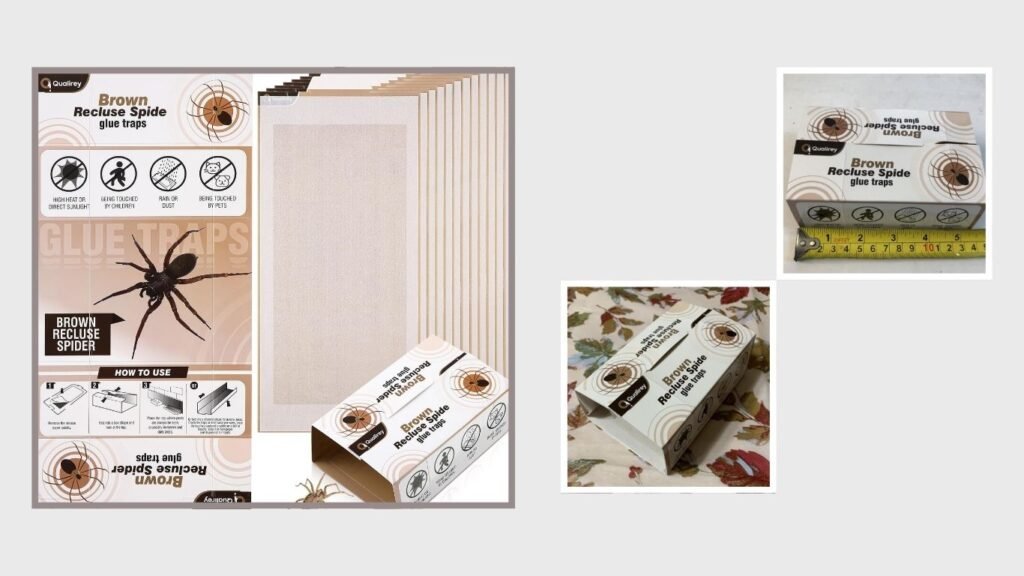
The Qualirey Spider & Brown Recluse Sticky Traps are designed for monitoring spiders in locations where species such as brown recluses may be a concern. Their adhesive format allows them to work continuously without spraying chemicals into living areas. The traps can be positioned along walls, inside closets, beneath furniture, and around storage areas where reclusive spiders are more likely to travel.
Key Features
- Designed for spiders and crawling pests
- Suitable for brown recluse monitoring
- Strong adhesive surface
- Compact indoor design
- No powered components required
- Easy placement near walls and corners
- Useful for multiple rooms
Why It’s Best For Brown Recluse Monitoring
Brown recluse spiders generally prefer quiet, undisturbed locations, making passive sticky traps particularly useful for monitoring their movement.
Placing traps inside closets, storage areas, basements, and behind boxes can help reveal whether spiders are regularly traveling through those spaces. Captured specimens may also make identification easier than relying solely on suspected bites or brief sightings.
Performance & Durability
The glue remains effective while it stays dry and relatively free from dust. Quiet indoor environments are therefore ideal.
Using several traps across suspected travel routes can provide better monitoring information than concentrating every trap in one location.
Pros, Cons & Overall Verdict
The strongest advantages are targeted spider monitoring, easy placement, and passive operation. The main limitation is that sticky traps cannot confirm a species until a spider is actually captured and identified.
Overall, the Qualirey Spider & Brown Recluse Sticky Traps are most useful for homeowners who want to monitor quiet indoor locations where reclusive spiders may be active.
6. Eaton Spider & Cricket Glue Traps
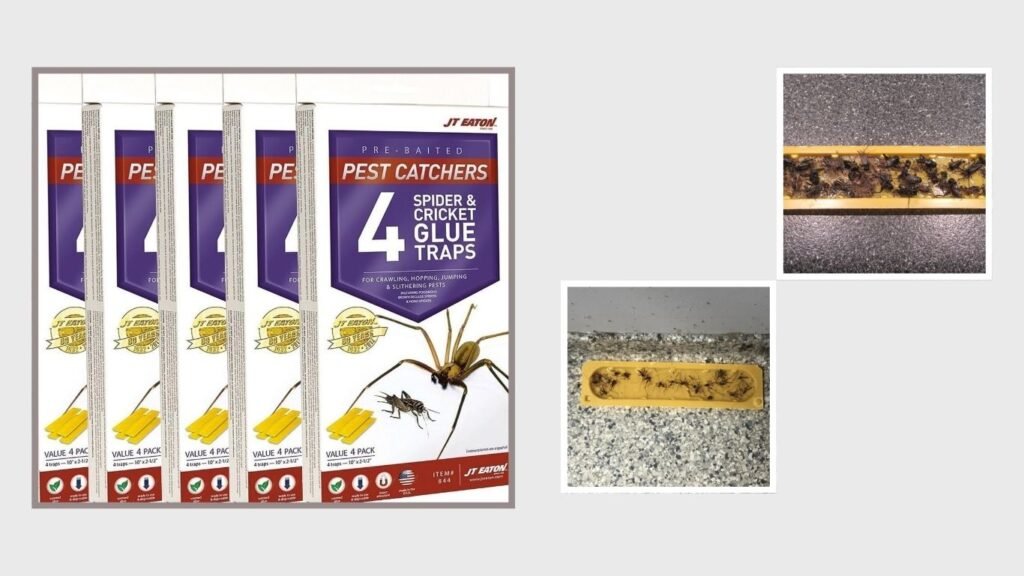
The Eaton Spider & Cricket Glue Traps provide a simple indoor trapping system for spiders, crickets, and other crawling pests. Their compact white design is suitable for placement in garages, basements, storage areas, closets, utility rooms, and other low-traffic locations. Because they operate entirely through adhesive capture, they require no batteries, electricity, or active spraying.
Key Features
- Glue-based spider and cricket traps
- Suitable for crawling pest monitoring
- Compact white design
- Strong adhesive surface
- Easy indoor placement
- No electricity or batteries required
- Useful in garages and basements
Why It’s Best For Basements and Garages
Basements and garages often provide spiders with dark hiding areas and abundant insect prey. These Eaton traps can be positioned along baseboards, behind storage boxes, or near corners where spiders and crickets naturally travel.
Using the same trap for both spiders and their potential prey can also help reveal broader pest activity in the area.
Performance & Durability
The adhesive surface works continuously without requiring user interaction. Performance is strongest in dry areas where dust does not quickly accumulate on the glue.
Checking the traps periodically can help determine whether they should be replaced or moved to a location with higher pest traffic.
Pros, Cons & Overall Verdict
The primary advantages are simplicity, multi-pest capability, and convenient placement. Their discreet design also makes them easy to use in storage areas without taking up much space.
The main disadvantage is that damp or dusty conditions can reduce adhesive performance.
Overall, Eaton Spider & Cricket Glue Traps are a practical option for basements, garages, and utility areas where both spiders and crawling insects need monitoring.
7. Eaton Spider Catchers with Attractant
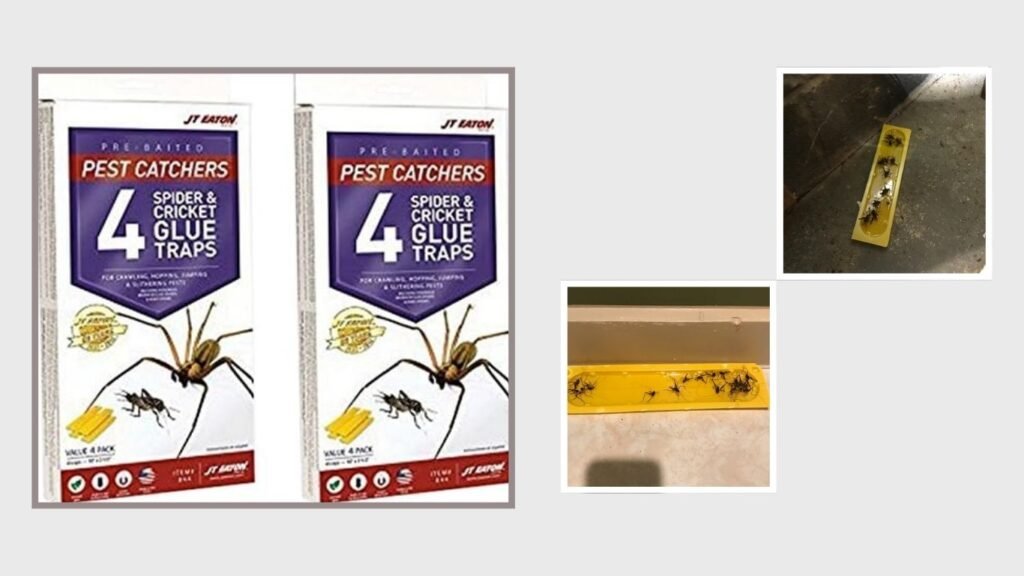
The Eaton Spider Catchers with Attractant add an attractant component to the traditional sticky-trap design. This makes them particularly interesting for homeowners who want more than a passive glue board placed along a wall. They are designed for indoor use and can be positioned in closets, basements, garages, storage spaces, and other areas where spider activity has been noticed.
Key Features
- Sticky spider catcher design
- Includes attractant
- Suitable for indoor spider monitoring
- Strong adhesive trapping surface
- Compact placement format
- Useful around closets and storage areas
- No electricity required
Why It’s Best For Attractant-Assisted Trapping
Standard glue traps depend entirely on a spider accidentally crossing the adhesive. The added attractant in this Eaton model is intended to improve the likelihood that spiders approach the trap.
This can be particularly helpful in areas where spider activity has been noticed but their exact travel routes are difficult to identify.
Performance & Durability
The adhesive provides continuous capture potential, while the attractant adds another element to the trapping strategy. For best performance, traps should still be placed near walls, corners, and other natural spider pathways.
Dry, protected locations help preserve both adhesive performance and overall trap condition.
Pros, Cons & Overall Verdict
The biggest advantage is the attractant-assisted design, which distinguishes this model from basic glue boards. It also remains easy to install and monitor.
The primary limitation is that no attractant guarantees every nearby spider will enter the trap.
Overall, Eaton Spider Catchers with Attractant are best suited to homeowners who want a more targeted sticky-trap design for indoor spider monitoring.
8. Non-Toxic Pre-Baited Spider & Crawling Insect Sticky Traps
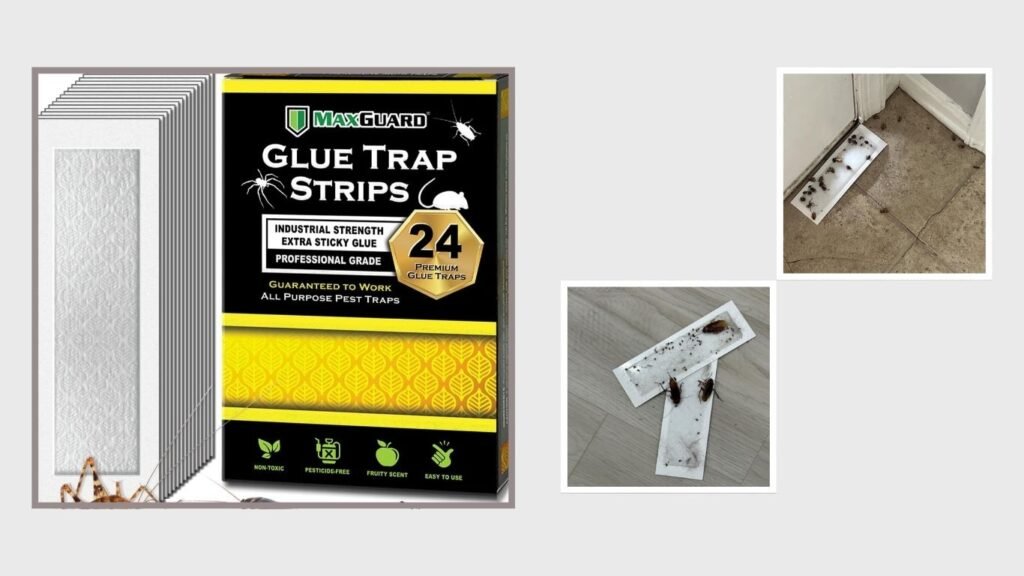
The Non-Toxic Pre-Baited Spider & Crawling Insect Sticky Traps combine a pesticide-free adhesive surface with pre-baited attraction for a wider range of crawling pests. They are suitable for spiders, cockroaches, centipedes, and other insects that travel along floors and walls. Their compact format makes them convenient for kitchens, garages, basements, closets, and storage areas.
Key Features
- Non-toxic adhesive trapping method
- Pre-baited design
- Suitable for spiders and crawling insects
- Targets cockroaches and centipedes as well
- Compact indoor format
- No sprays or electricity required
- Useful for pest monitoring
Why It’s Best For Broad Crawling Pest Control
These traps are particularly useful in homes where spider sightings occur alongside roaches, centipedes, or other crawling insects. One product can therefore provide information about several pest categories at the same time.
The pre-baited design may also improve usefulness in areas where pests are active but their exact pathways are unclear.
Performance & Durability
Performance depends on keeping the adhesive clean and positioning traps near active pest zones. Along walls, under cabinets, and behind appliances are typically more productive locations than open floor spaces.
Once the adhesive becomes covered with insects, dust, or debris, replacement helps maintain trapping efficiency.
Pros, Cons & Overall Verdict
The strongest benefits are the non-toxic design, pre-baited format, and ability to capture several types of crawling pests. The main limitation is that sticky traps provide localized control rather than solving the source of a larger infestation.
Overall, the Non-Toxic Pre-Baited Spider & Crawling Insect Sticky Traps are a versatile option for homeowners who want chemical-free monitoring across multiple indoor pest categories.
9. Non-Toxic Pre-Baited Spider & Scorpion Sticky Traps
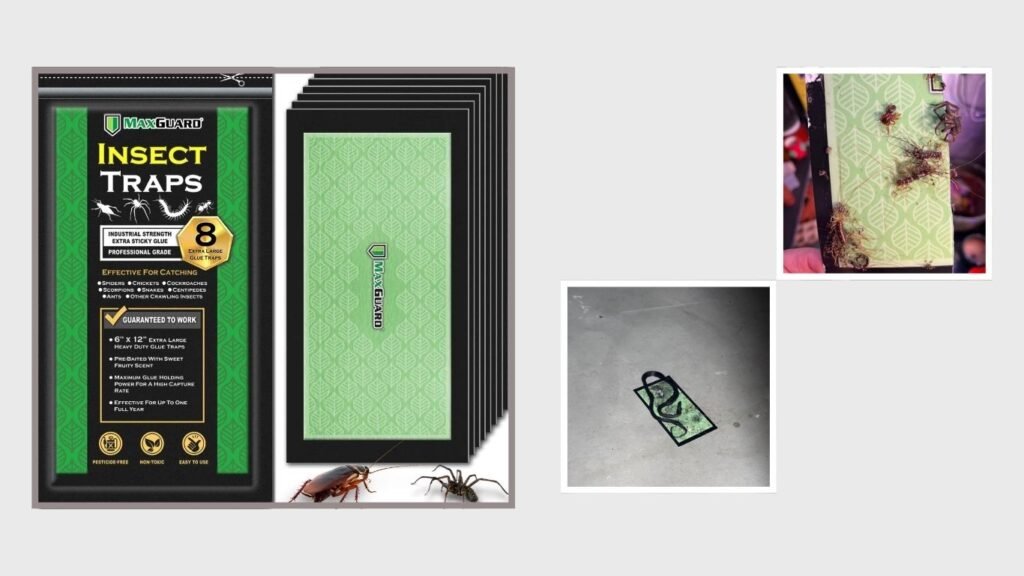
The Non-Toxic Pre-Baited Spider & Scorpion Sticky Traps are designed for homes where spiders, scorpions, cockroaches, centipedes, and similar crawling pests may enter. Their pre-baited adhesive design offers continuous passive trapping without relying on traditional pesticide sprays. These traps are particularly useful in garages, basements, storage rooms, utility areas, and homes located in regions where scorpions are also a concern.
Key Features
- Non-toxic sticky trapping system
- Pre-baited design
- Suitable for spiders and scorpions
- Also targets roaches and centipedes
- Strong adhesive surface
- Compact indoor placement
- Useful for monitoring multiple pests
Why It’s Best For Spider and Scorpion Monitoring
The ability to target both spiders and scorpions makes these traps particularly useful in warmer or drier regions where both pests may enter homes.
Placing traps along garage walls, storage areas, and near entry points can help identify which crawling pests are active without requiring continuous spraying.
Performance & Durability
The adhesive works continuously in dry indoor locations. Placing the traps flush against walls or in narrow travel routes increases the chance that wandering pests cross them.
Regular inspection is important because large insects, dust, and debris can gradually reduce usable adhesive space.
Pros, Cons & Overall Verdict
The biggest benefits are broad crawling-pest coverage, non-toxic trapping, and pre-baited construction. The main disadvantage is that individual glue boards cover a limited area and may require several units for larger spaces.
Overall, the Non-Toxic Pre-Baited Spider & Scorpion Sticky Traps are an excellent choice for homeowners who want to monitor spiders alongside scorpions and other crawling pests.
10. Catchmaster Large Sticky Glue Traps
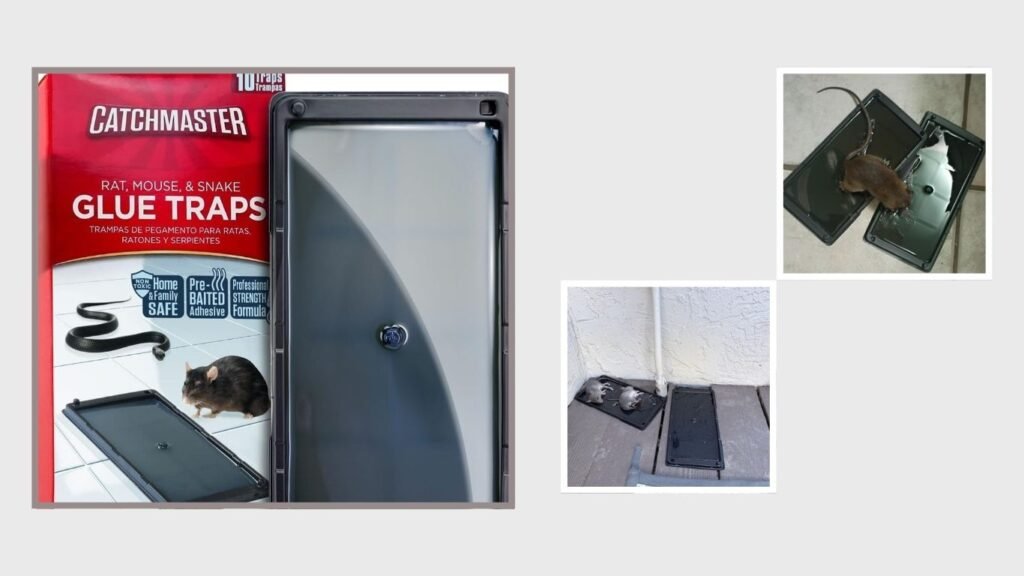
The Catchmaster Large Sticky Glue Traps offer a larger adhesive surface than many compact spider-specific traps, making them useful in areas with heavier crawling-pest traffic. Although commonly marketed for broader pest control, the large glue surface can also capture spiders, roaches, crickets, and other insects that cross it. Their size makes them particularly suitable for garages, basements, warehouses, storage rooms, and other larger indoor spaces.
Key Features
- Large adhesive trapping surface
- Suitable for spiders and crawling pests
- Strong sticky glue design
- Useful for garages and storage areas
- Provides broader floor coverage
- No electricity or batteries required
- Suitable for passive pest monitoring
Why It’s Best For Larger Problem Areas
Small glue traps work well in narrow corners, but larger spaces can benefit from greater adhesive coverage. Catchmaster’s larger sticky boards provide more surface area for pests to encounter.
They can be placed along garage walls, behind storage equipment, near utility areas, or in other locations where multiple crawling pests are active.
Performance & Durability
The larger glue surface allows each trap to capture more pests before adhesive space becomes limited. Performance remains strongest in clean, dry environments.
Because these boards may expose more adhesive than compact enclosed traps, placement should be chosen carefully to avoid accidental contact with pets, children, or household items.
Pros, Cons & Overall Verdict
The biggest advantages are the generous adhesive area, versatility, and ability to monitor heavier pest activity. They are particularly useful in garages, basements, and storage environments.
The main drawback is that their larger exposed surface requires more careful placement.
Overall, Catchmaster Large Sticky Glue Traps are best suited to homeowners who want broad adhesive coverage for spiders and other crawling pests in larger indoor problem areas.
FAQs
Do sticky traps really work for spiders?
Yes. Sticky traps can capture spiders that travel across the adhesive surface, especially when placed along walls, baseboards, behind furniture, and in dark corners. They are also useful for monitoring where spider activity is highest.
Where should I place spider sticky traps?
Place them in areas where spiders are likely to travel, such as basements, garages, closets, storage rooms, behind appliances, under furniture, and along walls. Avoid placing them in the middle of open rooms where spiders are less likely to cross.
Are spider sticky traps safe to use indoors?
Most glue traps do not rely on insecticide sprays, making them convenient for indoor monitoring. However, exposed adhesive can stick to pets, children, or household items, so traps should be positioned in protected, low-traffic areas.
How often should spider glue traps be replaced?
Replace a trap when it becomes covered with insects, dust, hair, or debris, or when the adhesive is no longer sticky. Clean, dry locations usually allow traps to remain effective longer.
Can sticky traps get rid of a spider infestation?
Sticky traps can reduce and monitor spider activity, but they may not eliminate the source of a larger problem. For better control, also seal entry points, reduce clutter, remove webs, and address insects that spiders may be feeding on.