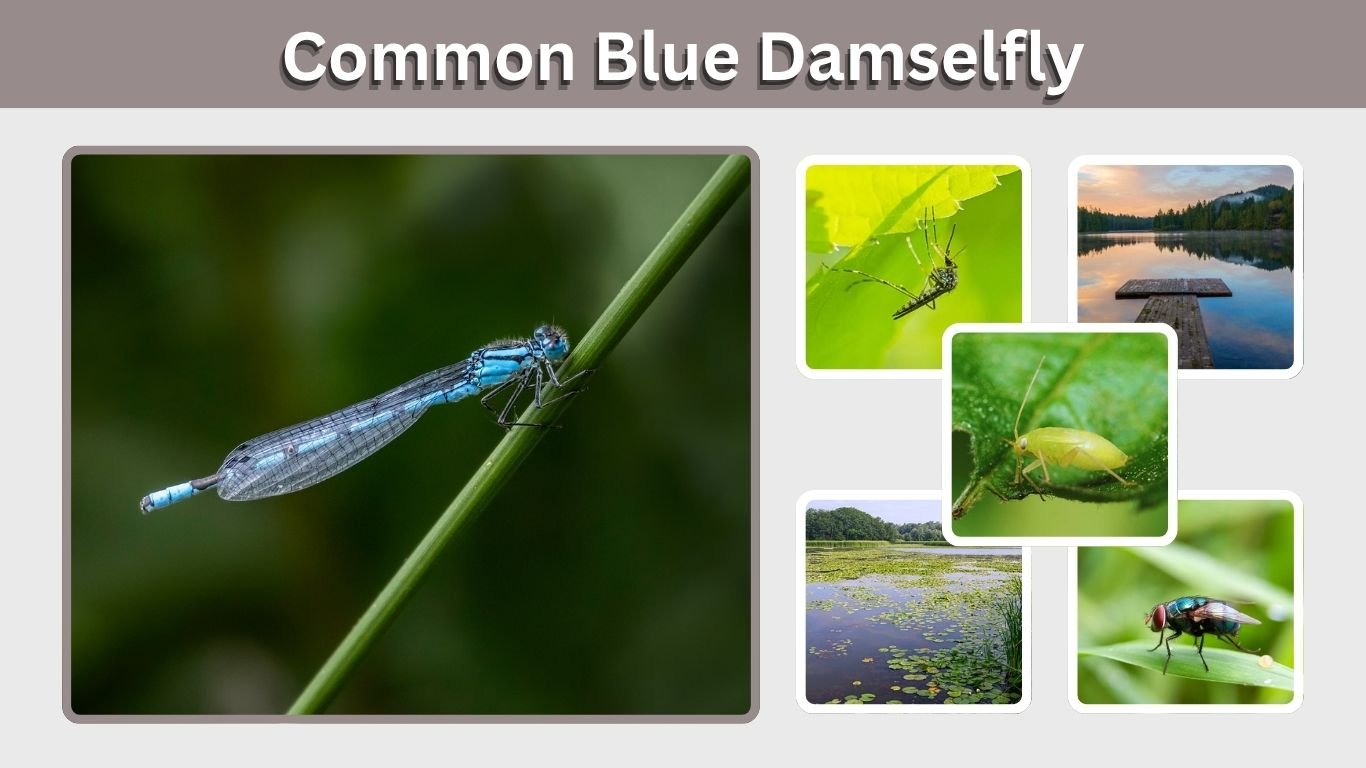
The Common Blue Damselfly (Enallagma cyathigerum) is one of Britain’s most widespread and familiar damselflies. Mature males are bright blue with bold black markings, while females may be blue, green, or brownish with darker abdominal patterns. These slender insects are frequently seen around lakes, ponds, canals, reservoirs, and slow-moving water, where adults hunt tiny flying insects and aquatic nymphs develop beneath the surface. This guide covers Common Blue Damselfly identification, habitat, diet, life cycle, females, larvae, lifespan, mating, and differences from the similar Azure Damselfly.
What Is a Common Blue Damselfly?
The Common Blue Damselfly belongs to the family Coenagrionidae, a large group of small, slender damselflies often called bluets. Despite its delicate appearance, it is an effective predator. It is especially abundant around larger bodies of freshwater and can often be seen flying farther over open water than many other blue damselflies.
Scientific Classification
- Common name: Common Blue Damselfly
- Scientific name: Enallagma cyathigerum
- Family: Coenagrionidae
- Order: Odonata
- Suborder: Zygoptera
- Length: About 32 mm
- Lifestyle: Predatory freshwater insect
Common Blue Damselfly Identification
Adult Common Blues are slender, with separated eyes and transparent wings that are normally held together over the abdomen when resting. Males are predominantly blue and black, while females show considerably more color variation.
One of the best identification clues is the relatively broad pale-blue antehumeral stripes running along the thorax.
Male vs Female Common Blue Damselfly
Males and females can look surprisingly different. A mature male fits the classic image of a blue damselfly, whereas females occur in several color forms. Looking closely at abdominal markings is therefore useful when identifying them.
Male Common Blue Damselfly
- Bright blue and black body
- Broad blue stripes on the thorax
- Blue eyes
- Black markings along abdominal segments
- Distinctive mushroom- or button-shaped marking on abdominal segment 2
- Slender blue abdomen with dark rings
The mushroom-shaped mark immediately behind the thorax is one of the most valuable features for distinguishing males from other similar blue damselflies.
Female Common Blue Damselfly
Female Common Blues are generally darker and may be blue, dull green, olive, or brownish. They have extensive black markings along the abdomen and a characteristic thistle-shaped mark on the second abdominal segment.
Their variable coloring means a female may look quite unlike the bright-blue male even though both belong to the same species.
Common Blue Damselfly Habitat
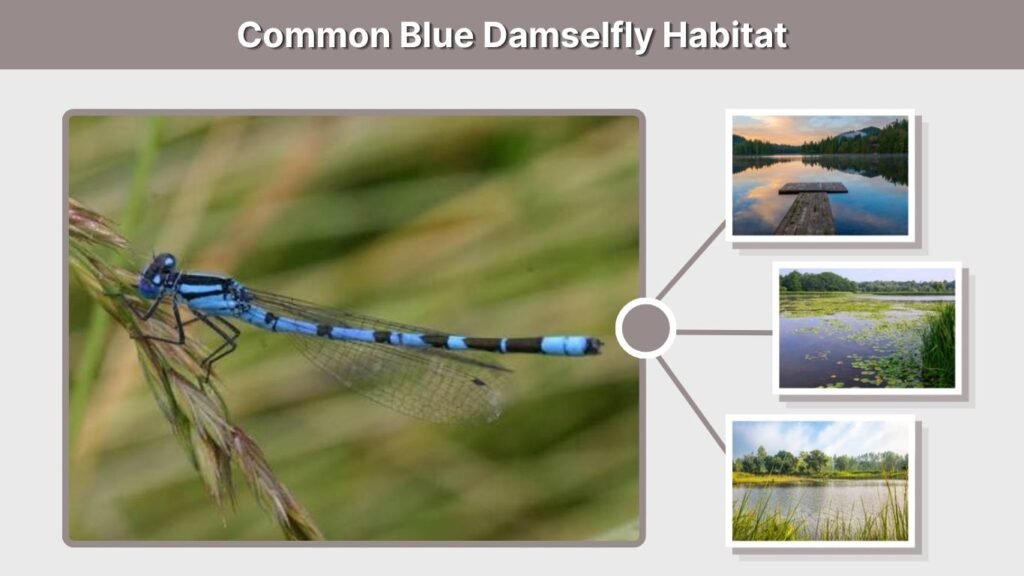
Common Blue Damselflies can use many freshwater habitats, but they are particularly associated with larger standing waters. They often venture farther across open water than closely related species, making them conspicuous along reservoirs, large ponds, canals, and lakes during warm summer weather.
Where Do Common Blue Damselflies Live?
- Lakes
- Reservoirs
- Large ponds
- Canals
- Gravel pits
- Marshes
- Slow-flowing rivers
- Wetland margins
- Vegetated freshwater pools
Aquatic and emergent vegetation provides resting sites for adults and habitat for developing nymphs. Females also rely on vegetation when depositing their eggs.
Common Blue Damselfly in Britain
The species is widespread throughout Britain and is regarded as one of the country’s commonest damselflies. Large lakes can support particularly high numbers, and adults may form conspicuous gatherings around suitable water.
What Do Common Blue Damselflies Eat?
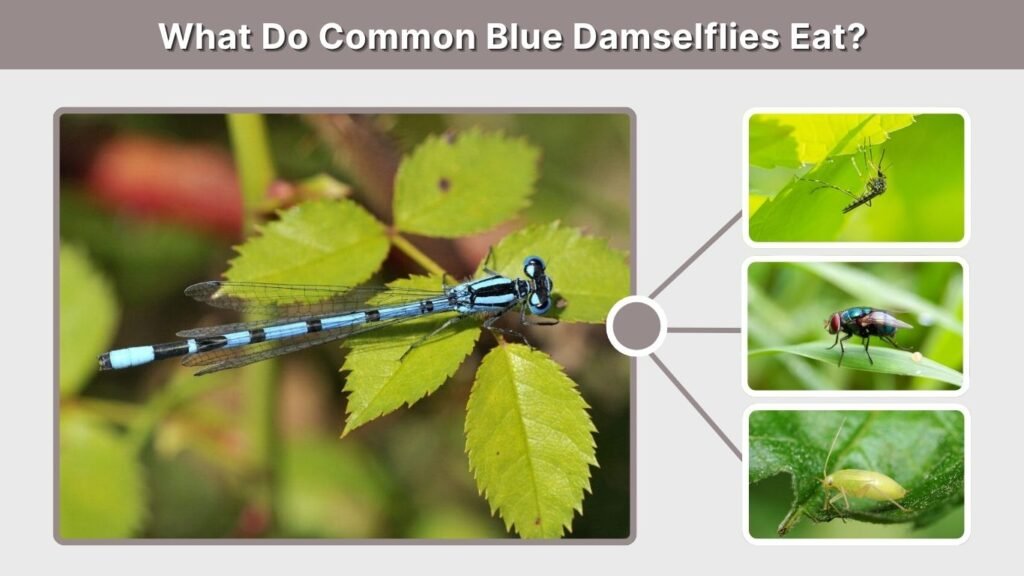
Common Blue Damselflies are predators during both their aquatic and adult stages. Adults catch small flying insects, while their underwater nymphs prey upon small aquatic animals. They therefore contribute to freshwater food webs both above and beneath the water surface.
Adult Diet
- Midges
- Mosquitoes
- Small flies
- Tiny moths
- Aphids
- Other small flying insects
Adult damselflies catch prey using their legs and jaws. They frequently hunt above vegetation or close to water, where clouds of small insects provide abundant food.
Common Blue Damselfly Nymph Diet
The nymph is an underwater predator. It attacks animals small enough to overpower, including aquatic insect larvae and other tiny invertebrates.
Like other damselfly larvae, it possesses an extendable lower jaw that can shoot forward rapidly to seize prey.
Common Blue Damselfly Life Cycle
The Common Blue undergoes incomplete metamorphosis. Unlike butterflies and moths, it has no pupal stage. Its development progresses from egg to aquatic nymph and then directly to the winged adult. The underwater stage occupies much more of its life than the brief adult period.
Eggs and Mating
Male and female damselflies mate in a characteristic wheel-shaped position. The male grasps the female behind the head with appendages at the end of his abdomen, while the female curves her abdomen forward.
Common Blue females insert their eggs into aquatic vegetation and may submerge completely while laying them. Males can hover near submerged females and may assist them when they return to the surface.
Common Blue Damselfly Nymph
After hatching, the young damselfly lives underwater as a nymph. Its slender body ends in three leaf-like structures called caudal lamellae, which help with respiration and movement.
Common Blue larvae can be identified by characteristics including three faint horizontal bands on their caudal lamellae and the absence of spotting on the back of the head.
Emergence
When development is complete, the mature nymph climbs out of the water onto vegetation. Its skin splits and the adult gradually pulls itself free.
The newly emerged damselfly expands and hardens its wings before flying away. The empty nymphal skin left attached to vegetation is called an exuvia.
How Long Do Common Blue Damselflies Live?
Most of a damselfly’s lifespan is spent underwater as a nymph. Once it becomes a winged adult, its remaining lifespan is relatively short.
Adult Lifespan
Adult dragonflies and damselflies typically live for only a few weeks. The British Dragonfly Society notes that adult Odonata commonly survive around one or two weeks, although favorable conditions can allow some individuals to live six to eight weeks.
During this brief adult period, the damselfly must feed, mature, find a mate, and reproduce.
Common Blue vs Azure Damselfly
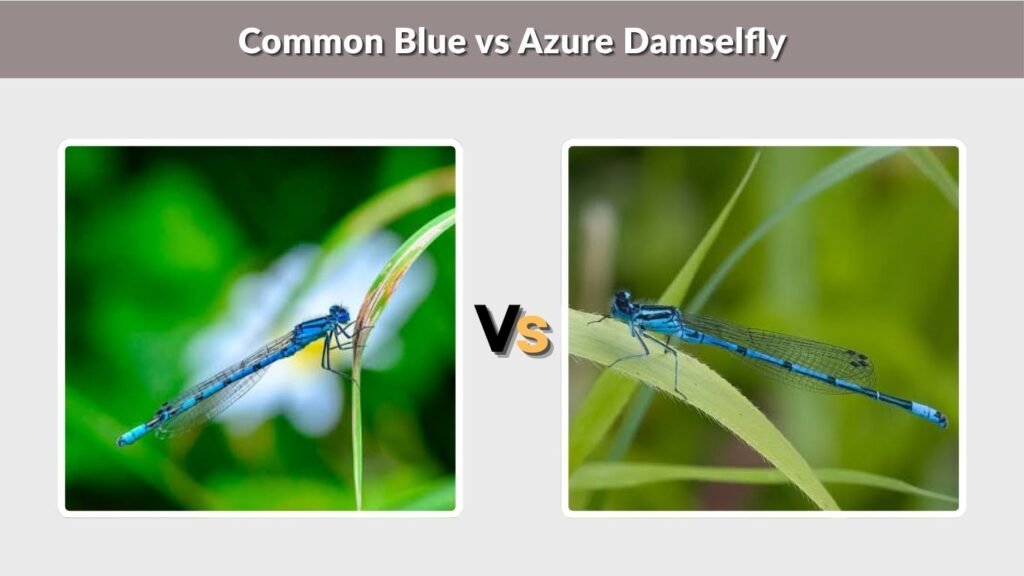
The Azure Damselfly (Coenagrion puella) is one of the species most frequently confused with the Common Blue. Both males have blue-and-black bodies and are commonly seen around British freshwater.
Key Identification Differences
| Feature | Common Blue | Azure Damselfly |
| Scientific name | Enallagma cyathigerum | Coenagrion puella |
| Length | About 32 mm | About 33 mm |
| Male segment 2 mark | Mushroom/button shape | U-shaped |
| Thorax stripes | Broad | Relatively narrow |
| Typical habitat | Often larger waters | Often smaller ponds/streams |
| Open-water behavior | Frequently flies over open water | More often near margins |
The male’s second abdominal segment is particularly useful: Common Blues normally show a mushroom-shaped mark, whereas Azure males have a characteristic U-shaped marking.
Is the Common Blue Damselfly Found in North America?
Older references sometimes applied Enallagma cyathigerum to very similar bluets in North America. Modern taxonomy treats those New World populations differently.
Common Blue vs Northern Bluet
The 2024 North American Odonata checklist specifically removes Enallagma cyathigerum from North America and restricts it to Eurasia. The similar North American species is now recognized as the Northern Bluet, Enallagma annexum.
Therefore, reports of a “Common Blue Damselfly” in Washington, Oregon, or elsewhere in North America may come from older taxonomy and should not automatically be identified as true E. cyathigerum.
Are Common Blue Damselflies Dangerous?
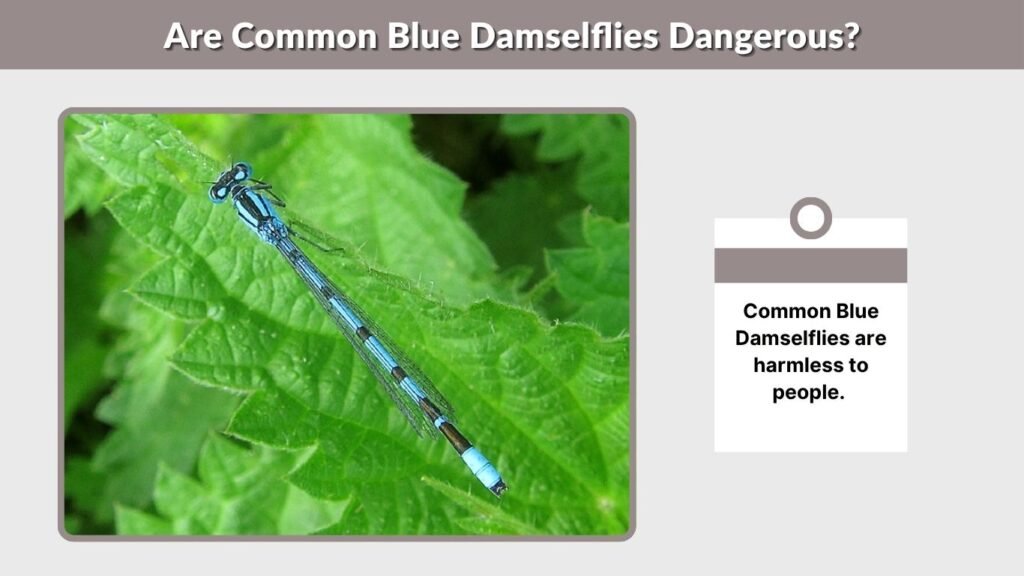
Common Blue Damselflies are harmless to people. They have no stinger and do not attack humans. Their mouthparts are designed for capturing tiny insect prey rather than defending themselves against people.
Their presence around ponds and wetlands is generally beneficial because adults consume many small flying insects while nymphs form an important part of aquatic ecosystems.
Interesting Common Blue Damselfly Facts
- It is one of Britain’s most widespread damselflies.
- Its scientific name is Enallagma cyathigerum.
- Males have a distinctive mushroom-shaped marking.
- Females can be blue, green, olive, or brownish.
- Adults measure about 32 mm long.
- They frequently fly over open water.
- Females can submerge while laying eggs.
- Nymphs live underwater and are predators.
- Adults prey mainly on small flying insects.
- North American populations once called E. cyathigerum are now classified separately.
FAQs
1. What is the scientific name of the Common Blue Damselfly?
Its scientific name is Enallagma cyathigerum. It belongs to the family Coenagrionidae and order Odonata.
2. How do you identify a male Common Blue Damselfly?
Look for a bright blue-and-black body, broad blue thoracic stripes, and especially the mushroom- or button-shaped black marking on the second abdominal segment.
3. What do Common Blue Damselflies eat?
Adults hunt small flying insects such as midges, mosquitoes, and flies. Their aquatic nymphs prey on small freshwater invertebrates.
4. Where do Common Blue Damselflies live?
They occur around many freshwater habitats but are particularly abundant around lakes, reservoirs, larger ponds, canals, and other sizeable bodies of standing water.
5. What is the difference between an Azure and Common Blue Damselfly?
Male Common Blues have a mushroom-shaped marking on abdominal segment 2 and broad thoracic stripes. Male Azure Damselflies usually have a U-shaped marking on segment 2 and narrower thoracic stripes.