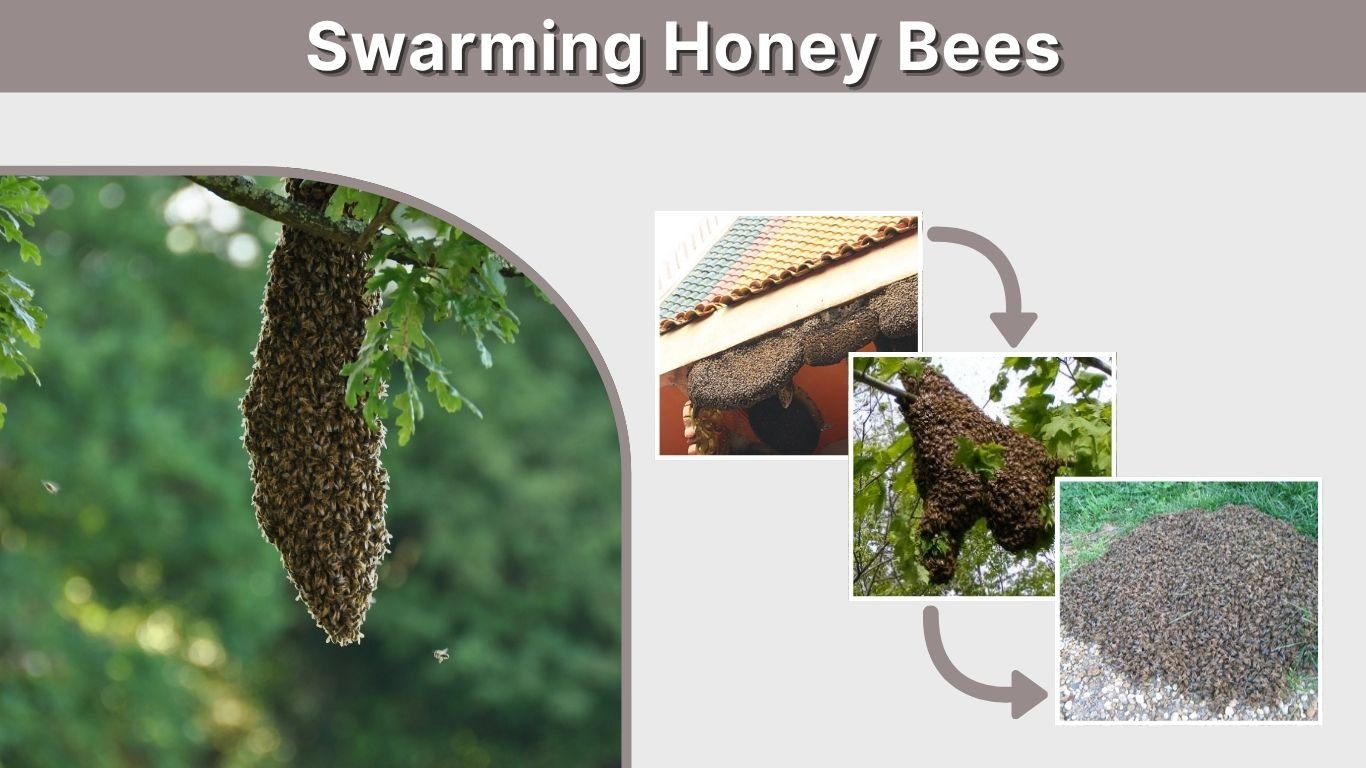
Swarming honey bees can look alarming, but it is usually a natural method of colony reproduction. Thousands of workers leave their original hive with the old queen and temporarily gather on a tree, wall, fence, or other surface while scout bees search for a permanent home. Resting swarms are normally less defensive than established colonies, but they should never be touched or disturbed. Understanding the difference between a temporary swarm, ordinary foraging activity, and a colony nesting inside a structure helps determine the safest response.
What Is Swarming in Honey Bees?
Swarming occurs when one established colony divides into two colonies. The original queen departs with a large group of workers, while the remaining bees raise or accept a new queen. This process normally happens when the colony is strong enough to reproduce.
How Swarming Happens
The swarming process generally follows these stages:
- The colony becomes crowded and begins raising new queens.
- Workers reduce the old queen’s feeding so she becomes light enough to fly.
- The old queen leaves with many workers.
- The bees form a temporary cluster nearby.
- Scout bees search for a suitable nesting cavity.
- The swarm flies together to its selected home.
- A new queen eventually takes control of the original colony.
The workers do not carry the queen. She flies with them, although she may land on the ground or another low surface if she is tired, injured, clipped, or unable to fly well.
Why Do Honey Bees Swarm?
Common triggers include:
- Rapid spring population growth
- Congestion inside the brood nest
- Insufficient empty comb
- An aging queen
- Strong nectar and pollen availability
- Poor queen-pheromone distribution
- Warm seasonal weather
- Genetic tendency to swarm
Swarming is not automatically a sign of bad beekeeping. Even healthy, well-managed colonies may attempt it when conditions favor reproduction.
How to Identify a Honey Bee Swarm
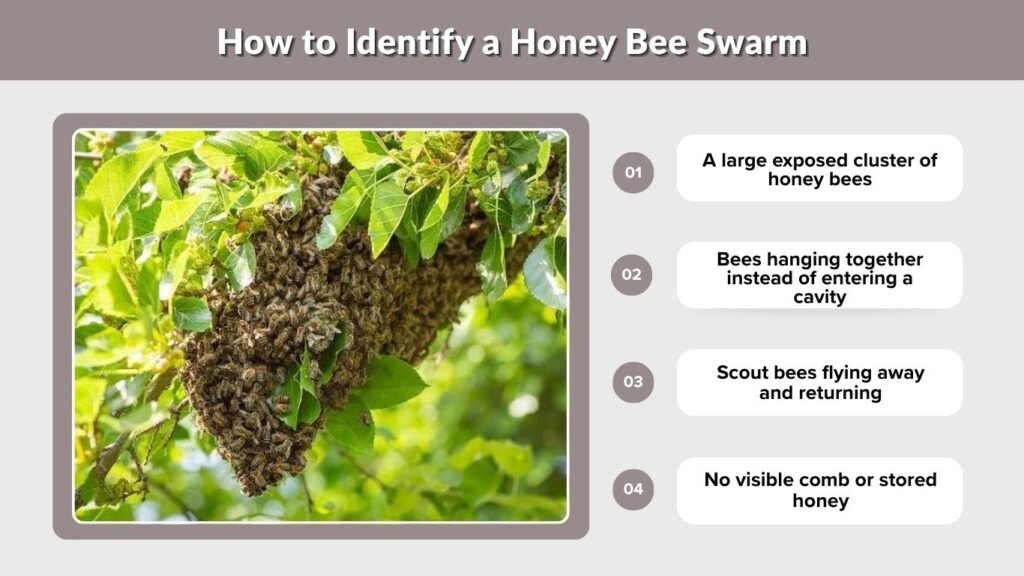
A resting swarm usually resembles a dense beard, ball, or teardrop containing thousands of bees. It may hang from a tree branch, shrub, fence, mailbox, vehicle, roof edge, or porch. The queen is normally protected somewhere inside the cluster.
Signs of a Temporary Swarm
- A large exposed cluster of honey bees
- Bees hanging together instead of entering a cavity
- Scout bees flying away and returning
- No visible comb or stored honey
- A cluster that appeared suddenly
- Bees remaining for several hours or a few days
The bees may periodically vibrate, crawl, or fly around the cluster. Once scouts agree on a new nest site, the entire group may disappear within minutes.
University of Minnesota Extension notes that resting swarms may remain from about an hour to several days and can usually be left alone if they are not creating an immediate safety risk.
Swarm vs Established Colony
A swarm is temporary and has no exposed comb. An established colony repeatedly sends workers through one entrance and may contain wax comb, brood, pollen, and honey.
If bees have been entering a wall, chimney, roof, tree cavity, or utility box for several days, they may already be establishing a nest. Removing only the adult bees may leave honey and comb behind, attracting pests and causing structural damage.
Are Swarming Honey Bees Dangerous?
Resting swarms are often relatively calm because they have no exposed brood or stored honey to defend. However, they remain capable of stinging, and their behavior can change if they are shaken, sprayed, trapped, or struck.
What to Do Around a Swarm
- Remain at a safe distance.
- Keep children and pets away.
- Close nearby windows and doors.
- Avoid mowing or using power equipment nearby.
- Do not strike the branch or object.
- Do not spray the bees with water or pesticides.
- Contact an experienced beekeeper or licensed remover.
- Warn the remover if the bees behave unusually defensively.
People with severe bee-sting allergies should avoid the entire area. If bees begin attacking, cover the face, run quickly into a building or vehicle, and do not jump into water. Call emergency services if anyone develops breathing difficulty, facial swelling, dizziness, or other signs of a serious allergic reaction.
Honey Bees Swarming Around a House
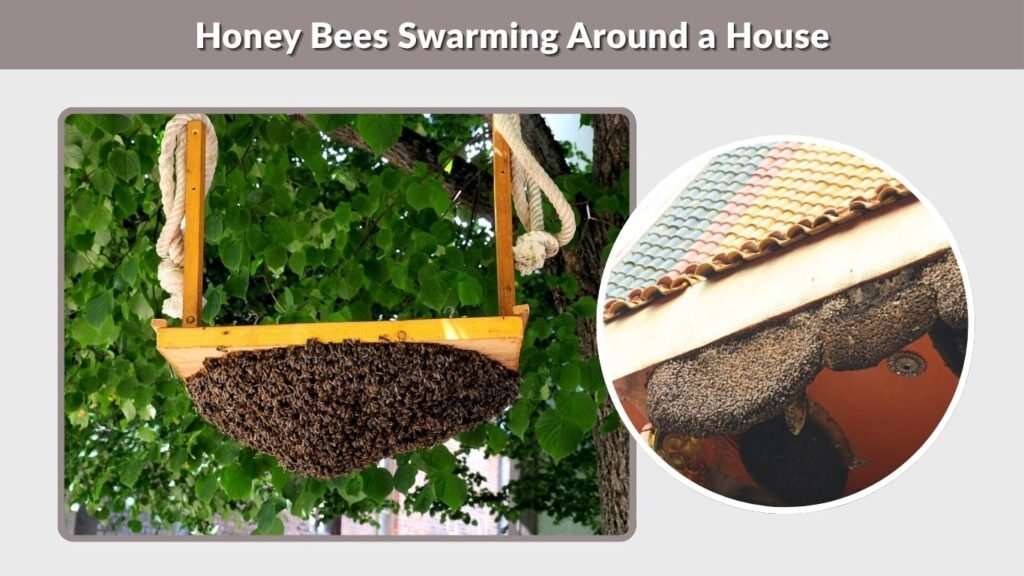
Bees flying around a house may be part of a relocating swarm, scouts inspecting possible nest sites, or workers from an established colony. Observing their movement from a safe distance can help determine which situation is occurring.
Swarm on a Wall or Roof
A compact cluster on an exposed surface will often move away once scout bees find a cavity. Contact a local swarm collector if it is low enough to reach safely or located near a busy doorway, school, pathway, or play area.
Do not seal nearby openings while bees are actively entering them. Trapped bees may move farther into the building or find their way indoors.
Bees Entering a Wall
Regular traffic through a crack, vent, soffit, chimney, or roof opening suggests an established colony rather than a temporary swarm. Professional removal should include:
- Removing the adult bees
- Locating and removing the comb
- Cleaning spilled honey
- Repairing the cavity
- Sealing entry points after removal
Leaving wax and honey inside a wall can attract ants, cockroaches, rodents, wax moths, and new bee colonies. Texas A&M advises against allowing colonies to remain inside walls or chimneys because established bees defend their nest and accumulated comb can damage the structure.
Honey Bees Swarming a Tree or the Ground
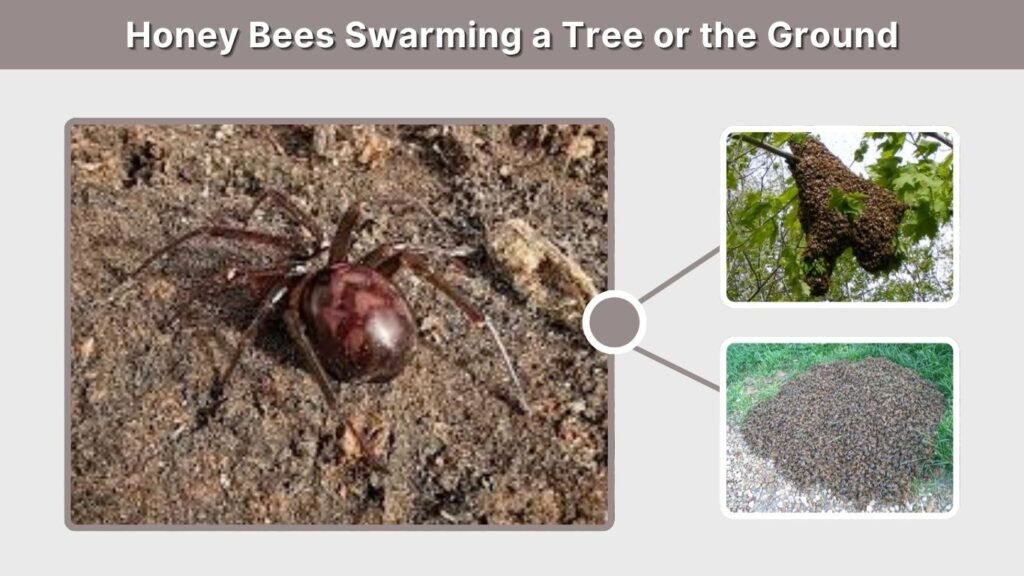
A tree branch is one of the most common resting locations. If the cluster is high, isolated, and not threatening anyone, the safest response may be to leave it alone until it departs.
Swarm on a Tree
Avoid cutting the branch, shaking it, climbing a ladder, or attempting to collect the bees without protective clothing and experience. A beekeeper may place the swarm inside a hive box if it is accessible.
Honey is not a reliable or safe lure for capturing a swarm. It may encourage robbing, attract ants or wasps, and possibly spread disease if it came from an unknown colony.
Swarm on the Ground
A ground cluster may form because:
- The queen landed there.
- The queen cannot fly properly.
- Rain or wind forced the bees down.
- The swarm became exhausted.
- The colony settled temporarily on a low object.
- The bees were exposed to pesticides.
Keep people and animals away and contact a beekeeper. Do not cover the cluster, flood it, or attempt to scoop it up without proper equipment.
Bees Around Pools and Hummingbird Feeders
Large numbers of bees visiting a pool or feeder are usually foragers, not a true swarm. Bees recruit other workers to dependable water and sugar sources, making their numbers increase rapidly.
Honey Bees Around a Pool
Bees need water to cool their hive, dilute stored honey, and feed developing larvae. During dry or hot weather, a swimming pool may become their preferred source.
Helpful steps include:
- Covering the pool when it is not being used
- Repairing leaks and wet irrigation areas
- Removing standing water near walkways
- Providing a safer water station with floating landing material
- Keeping the alternative source continuously available
- Cleaning sugary drinks and food from the pool deck
Once bees memorize a water location, moving them can be difficult. Establish an alternative source before the hottest or driest season whenever possible.
Bees on a Hummingbird Feeder
Use a red, leak-resistant saucer feeder with bee guards. Clean spilled syrup and repair leaking ports. Avoid yellow decorations around feeding holes because they may attract insects.
If activity remains intense, temporarily remove the feeder, clean it, and place it in a different location. Never add insecticide, oil, or repellent to the sugar solution.
Signs That a Managed Hive May Swarm
Beekeepers should begin checking for swarm preparation before the main spring nectar flow. Once a colony has committed to swarming, simply adding an empty honey super may not reverse the process.
Warning Signs
- Numerous occupied queen cups
- Queen cells containing eggs or larvae
- Capped swarm cells along lower comb edges
- A crowded brood nest
- Nectar being stored in brood cells
- Reduced queen laying
- Rapid worker and drone population growth
- Limited empty comb
- Bees clustering heavily near the entrance
Bearding outside the hive does not always mean a swarm is imminent. Bees frequently beard during hot weather to reduce congestion and improve ventilation.
How to Prevent Honey Bees From Swarming
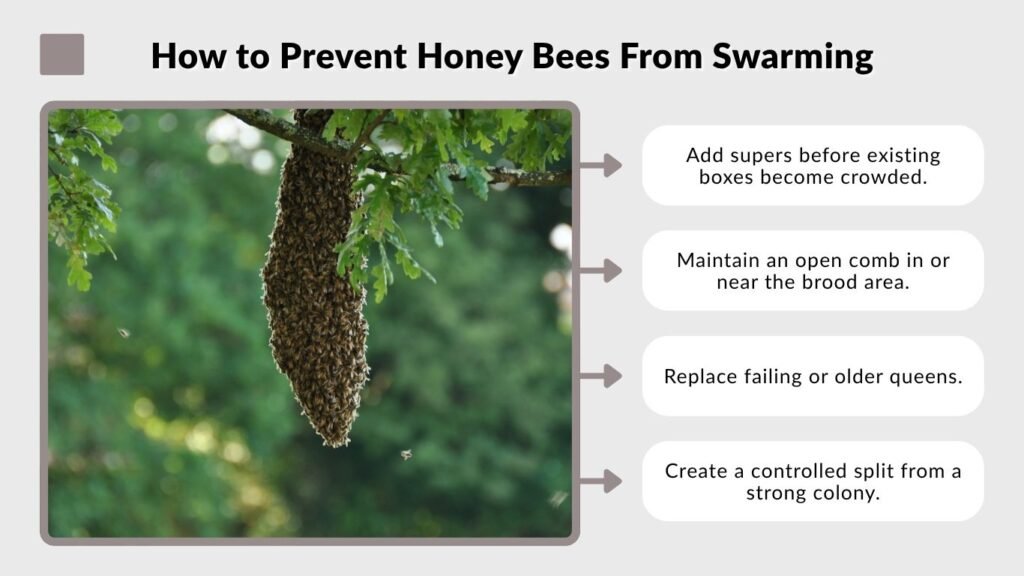
Swarm management works best before capped queen cells appear. The goal is to provide room and alter the colony conditions that encourage reproductive division.
Swarm-Prevention Methods
- Add supers before existing boxes become crowded.
- Maintain an open comb in or near the brood area.
- Replace failing or older queens.
- Create a controlled split from a strong colony.
- Move capped broods to weaker colonies when appropriate.
- Use locally suitable low-swarming stock.
- Inspect colonies regularly during swarm season.
- Correct poor ventilation and severe congestion.
- Use an artificial-swarm method when queen cells appear.
Destroying queen cells alone may only delay swarming. Colonies can rebuild them, and missing one mature cell may result in a swarm. Artificial swarming separates the queen and flying bees from much of the brood, recreating the conditions produced by a natural swarm while keeping the bees in managed equipment.
Swarming Seasons and Unusual Swarms
Most swarming occurs during spring or early summer when flowers are abundant and colonies grow rapidly. Timing changes with latitude, weather, rainfall, and local nectar flows.
In warm areas such as Southeast Texas, swarm activity may begin during late winter or early spring and continue during later nectar flows. Fall swarms are possible but may have difficulty gathering enough food before winter. A colony abandoning its nest because of starvation, pests, heat, or disturbance is called absconding rather than reproductive swarming.
FAQs
Do swarming honey bees sting?
Yes, but resting swarms are generally less defensive than established colonies. They may sting if disturbed, sprayed, shaken, or trapped.
How long will a bee swarm stay in a tree?
A swarm may remain for an hour, a day, or several days while scouts search for a suitable nesting cavity.
Can you stop bees after they begin swarming?
A beekeeper generally cannot order them back into the original hive. However, an accessible cluster may be captured and installed in another hive.
Should you kill a honey bee swarm?
Usually not. If it poses no immediate danger, leave it alone or contact a beekeeper for relocation. Aggressive or inaccessible bees may require a licensed professional.
Why do honey bees keep swarming from the same hive?
Repeated swarms can occur when a strong colony produces multiple virgin queens and secondary swarms. Persistent crowding, high-swarming genetics, and ineffective prevention may also contribute.