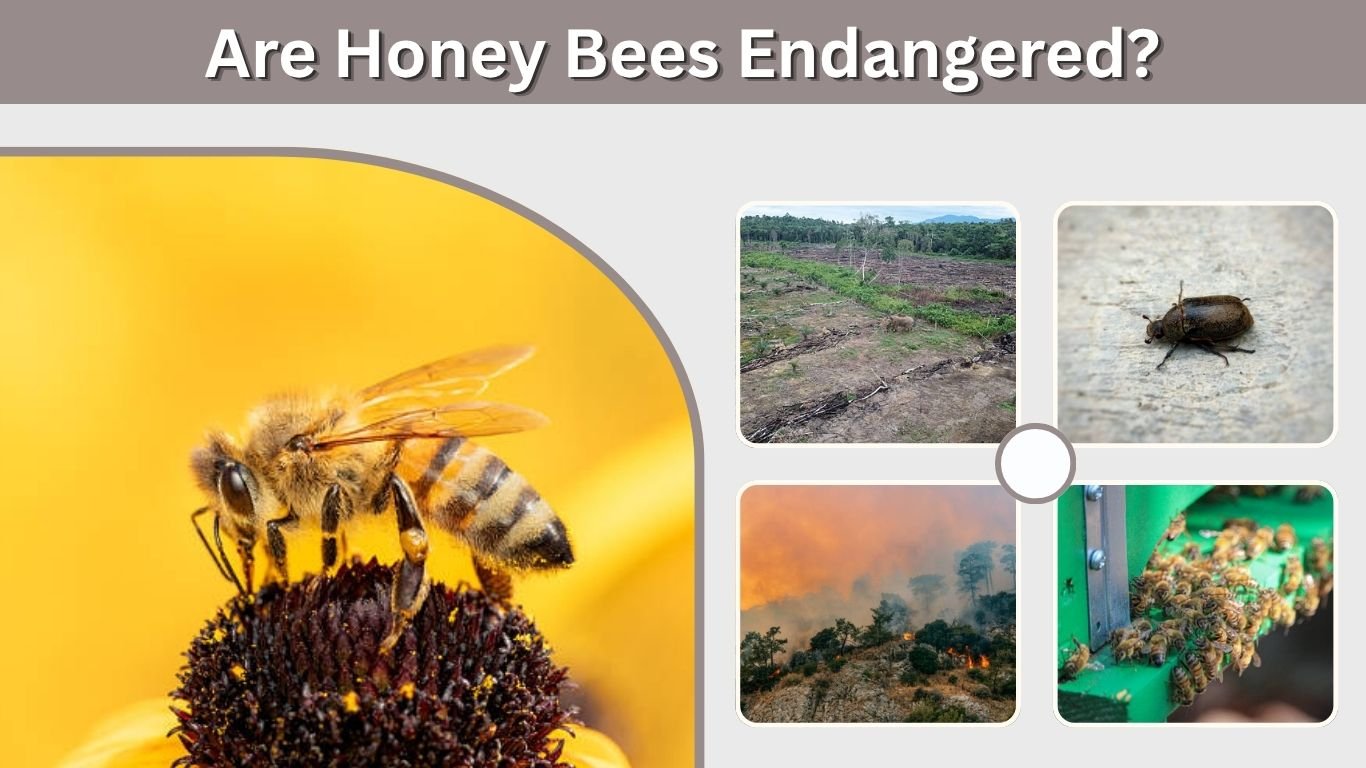
Honey bees face serious health problems, but the familiar managed western honey bee is not globally classified as endangered. Millions of colonies are maintained by beekeepers for honey production and crop pollination. However, high colony losses caused by mites, viruses, poor nutrition, pesticides, and extreme weather remain economically and environmentally important. There is also a crucial exception: wild western honey bee populations in parts of Europe are now regionally classified as Endangered. Therefore, the answer depends on whether someone means managed colonies, wild populations, or other bee species.
Are Honey Bees Endangered in 2026?
The short answer is that managed western honey bees are not endangered as a worldwide species. They are widely bred, transported, and maintained by commercial and hobby beekeepers. Their global status should not be confused with the declining health of individual colonies or the extinction risk faced by many wild bee species.
Current Status at a Glance
| Honey bee group | Current situation |
| Managed western honey bees | Not globally endangered |
| Global Apis mellifera assessment | Data Deficient, not classified in a threatened category |
| Wild western honey bees in the EU | Regionally classified as Endangered |
| Honey bees in the United States | Not federally listed as endangered |
| Africanized honey bees | Not endangered |
| Some bumblebees and solitary bees | Threatened or endangered |
“Data Deficient” does not mean a species is safe or endangered. It means scientists lack sufficient information to assign a reliable global extinction-risk category, particularly when managed and genuinely wild populations are difficult to separate.
Are Honey Bees on the Endangered Species List?
The western honey bee, Apis mellifera, is not listed as endangered under the United States Endangered Species Act. It was introduced from Europe and is now managed extensively as an agricultural pollinator.
Several native American bee species do have federal protection. For example, the rusty patched bumblebee was listed as Endangered in 2017. Franklin’s bumblebee and several Hawaiian yellow-faced bees are also federally protected. These are distinct species, not honey bees.
Managed vs Wild Honey Bees
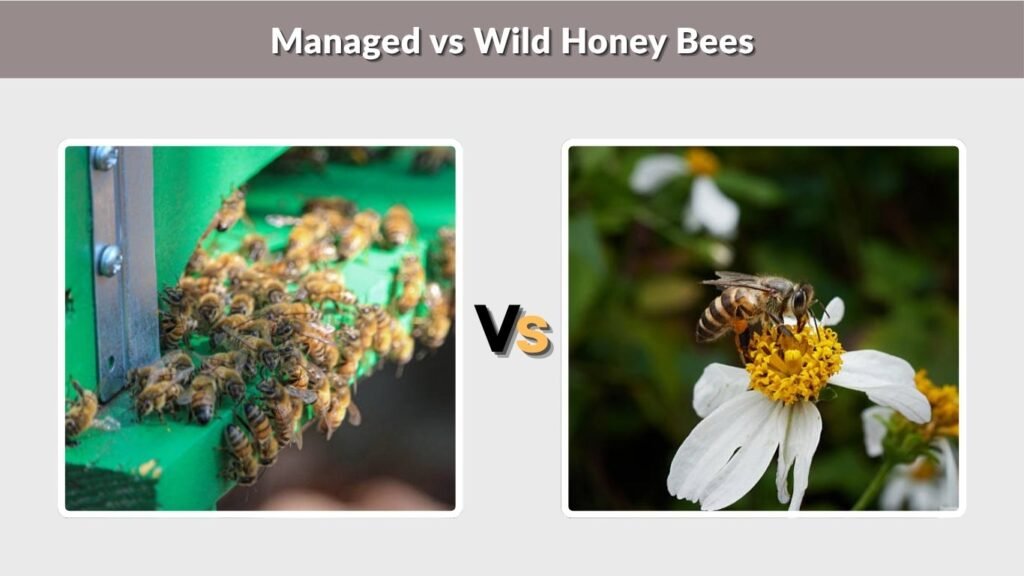
Much of the confusion comes from treating every honey bee colony as part of one identical population. Managed colonies function partly like agricultural livestock, while self-sustaining wild colonies are components of natural ecosystems. The two groups face overlapping problems but have different conservation meanings.
Managed Honey Bees
Beekeepers can replace lost colonies by:
- Dividing strong colonies
- Purchasing packaged bees
- Introducing new queens
- Capturing swarms
- Combining weak colonies
- Breeding replacement queens
This management can keep the total number of commercial hives relatively stable even when many individual colonies die each year. It does not mean colony mortality is unimportant. Replacing bees costs money, reduces honey production, interrupts pollination services, and may conceal continuing health problems.
Wild Honey Bees in Europe
A significant update occurred in 2025 when wild western honey bee populations in the European Union were assessed as Endangered on the regional European Red List. These are unmanaged colonies living and reproducing independently in tree cavities and other natural nesting sites.
The status applies to wild populations in that region, not every domesticated hive or the species everywhere in the world. The broader European assessment found that at least 172 of 1,928 assessed wild bee species faced extinction risk.
Wild colonies can be threatened by parasites, diseases transmitted from managed hives, habitat loss, limited nesting cavities, pesticide exposure, and genetic mixing with commercially bred honey bee lines.
Why Are Honey Bee Colonies Declining?
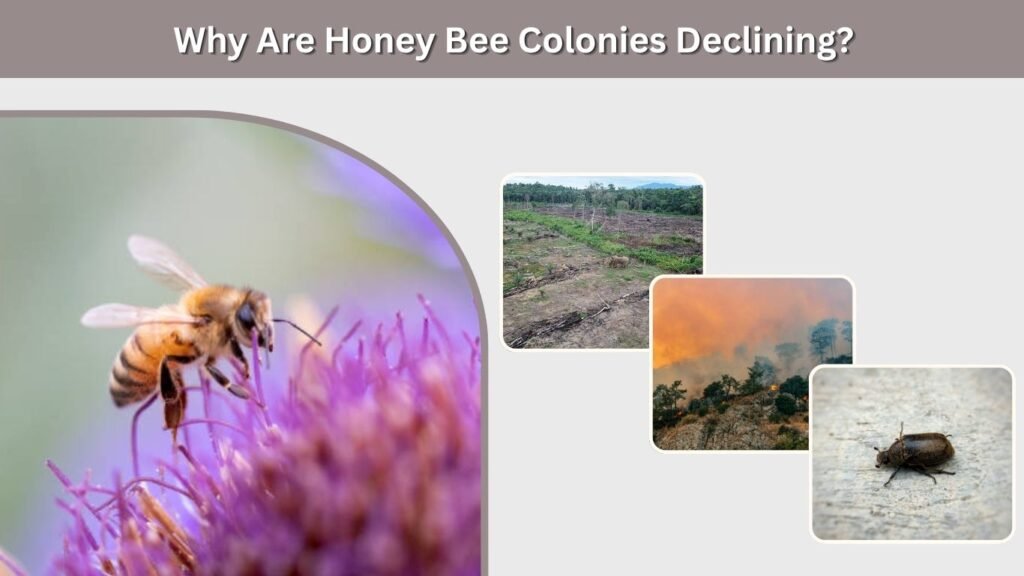
No single factor explains every colony loss. Honey bee health is affected by several interacting pressures. A colony weakened by poor nutrition, for example, may become less capable of surviving mites, viruses, pesticides, or extreme weather.
Varroa Mites and Viruses
The parasitic mite Varroa destructor is one of the greatest threats to managed western honey bees. These mites feed on developing and adult bees while transmitting damaging viruses.
Heavy infestations can cause:
- Deformed or shortened wings
- Weakened immune function
- Reduced worker lifespan
- Poor brood development
- Failure of winter colonies
- Complete colony collapse
Mites can develop resistance to treatments when the same products are repeatedly or incorrectly used. Beekeepers must monitor mite levels rather than assuming that one treatment has worked.
In early 2025, American commercial beekeepers reported losing more than 60% of colonies in some operations since the previous summer. USDA investigations connected these severe losses with high virus levels and miticide-resistant Varroa mites.
Habitat Loss and Poor Nutrition
Honey bees need diverse sources of nectar and pollen throughout the growing season. Landscapes containing only one flowering crop may provide abundant food briefly, followed by long periods with little forage.
Problems arise when flower-rich meadows, hedgerows, woodlands, and roadside habitats are removed. Poor nutrition can weaken developing bees, reduce colony growth, and increase vulnerability to disease.
Pesticide Exposure
Insecticides can kill bees directly when they contact contaminated plants or spray droplets. Lower exposures may interfere with movement, learning, navigation, feeding, or normal development.
Fungicides and herbicides can also contribute indirectly. Herbicides reduce flowering plants, while some chemical mixtures may have effects that are difficult to predict from testing one product at a time.
Pesticide risk depends on:
- The chemical and dose
- Application method
- Time of application
- Whether plants are flowering
- Weather conditions
- Duration of exposure
- Interaction with other stressors
Climate and Extreme Weather
Drought, wildfires, floods, heat waves, unusual rainfall, and changing seasonal temperatures can reduce flowers or disrupt the timing between bee activity and plant blooming.
Warm winter periods may cause colonies to consume stored honey more quickly. Sudden cold weather can then prevent them from reaching remaining food inside the hive. Severe storms may also limit foraging for extended periods.
Other Diseases and Pests
Honey bees may also be affected by:
- Nosema infections
- American foulbrood
- European foulbrood
- Small hive beetles
- Wax moths
- Tracheal mites
- Invasive hornets in some regions
- Poor queen health
- Exposure during migratory pollination
These pressures often interact rather than acting independently.
Does Colony Loss Mean Honey Bees Are Going Extinct?
A dead colony is a serious loss, but it does not automatically indicate that the entire species is approaching extinction. Conservation status considers wild population size, geographic range, decline rate, fragmentation, and the probability of disappearance.
Colony Loss vs Species Extinction
A honey bee colony acts as a reproductive unit. When one colony dies, a beekeeper may divide another colony and install a new queen to replace it. This can maintain hive numbers despite high annual mortality.
However, continual replacement is expensive and may not be sustainable if disease, resistant parasites, or poor forage worsen. High mortality also signals that agricultural pollination systems may be vulnerable, even when the species remains abundant.
The most accurate statement is:
Managed honey bees are not globally endangered, but they experience serious and sometimes unsustainable colony losses. Certain wild honey bee populations are regionally endangered.
Are Bumblebees Endangered or Just Honey Bees?
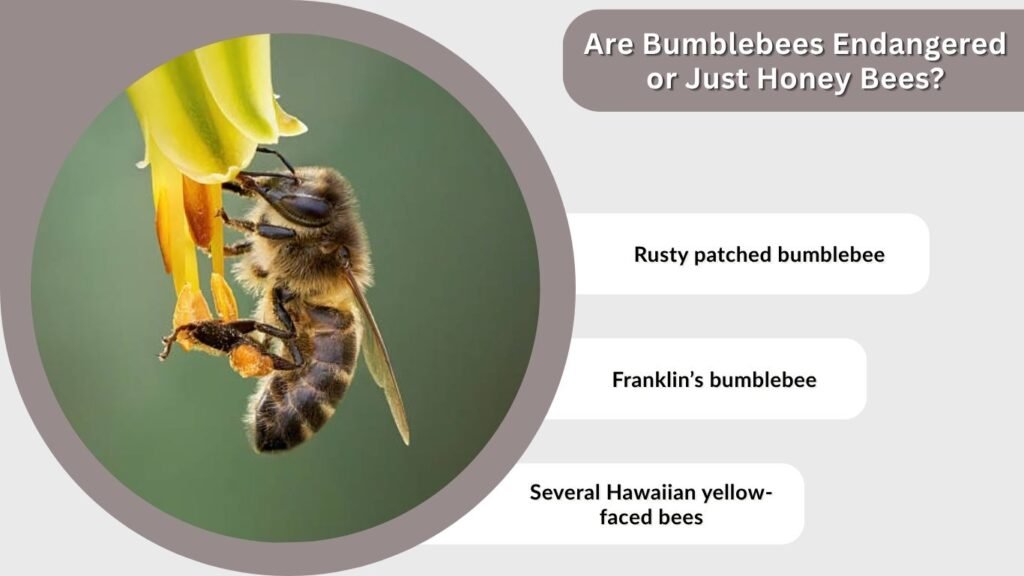
Some bumblebee species face a greater extinction risk than managed honey bees. Bumblebees cannot be replaced on a large scale through ordinary commercial hive management, and many species require specific climates, nesting sites, and seasonal flowers.
Endangered Native Bees
Examples of federally endangered American bees include:
- Rusty patched bumblebee
- Franklin’s bumblebee
- Several Hawaiian yellow-faced bees
Other native species have experienced major declines but may not yet have endangered status. Different countries and states maintain their own protected-species lists, so legal status varies by location.
Protecting only honey bees does not protect all pollinators. Solitary bees, bumblebees, flies, butterflies, moths, beetles, birds, and bats also perform important pollination.
Are Africanized Honey Bees Endangered?
Africanized honey bees are not endangered. They developed through mixing between African and European honey bee lineages and have spread across parts of South, Central, and North America.
They are highly adaptable and can establish wild colonies in warm regions. Their defensive behavior may create public-safety concerns, but they are not considered at risk of extinction.
How Can People Help Bees?
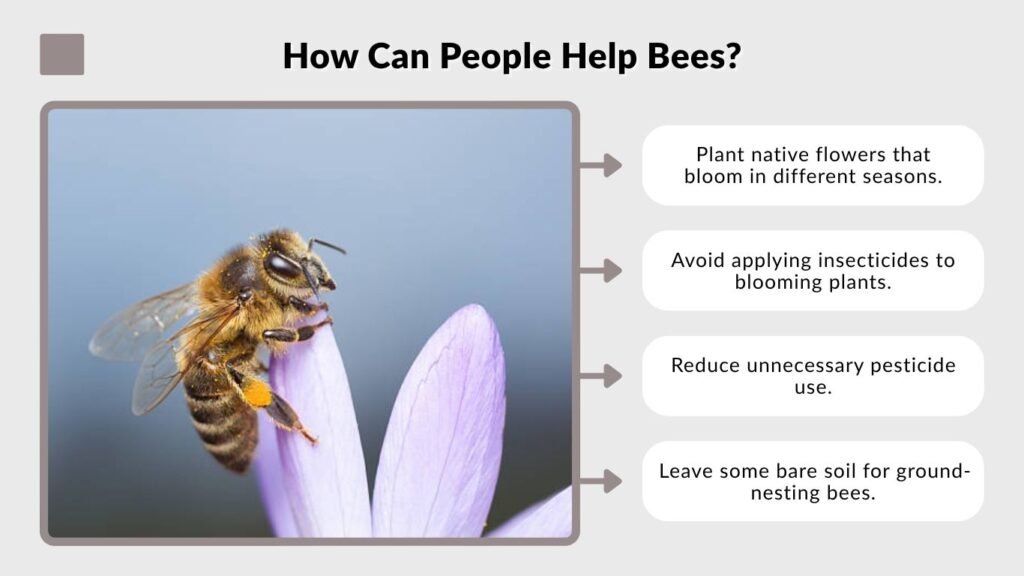
Effective pollinator conservation should support diverse native species rather than concentrating exclusively on honey bee hives. In some habitats, adding too many managed colonies can increase competition for limited flowers.
Helpful Actions
- Plant native flowers that bloom in different seasons.
- Avoid applying insecticides to blooming plants.
- Reduce unnecessary pesticide use.
- Leave some bare soil for ground-nesting bees.
- Preserve hollow stems and dead wood where safe.
- Allow part of a garden to remain less heavily managed.
- Support habitat restoration and responsible farming.
- Purchase honey from responsible local beekeepers.
- Report suspected invasive pests to local authorities.
Installing a honey bee hive is not always a conservation activity. Responsible beekeeping requires disease control, adequate forage, swarm management, and consideration of nearby wild pollinators.
FAQs
Are honey bees endangered in the United States?
No. Western honey bees are not federally listed as endangered in the United States. However, managed colonies experience substantial losses from mites, viruses, weather, and other pressures.
Are European honey bees endangered?
Managed European honey bees are not endangered globally. However, wild Apis mellifera populations in the European Union were regionally assessed as Endangered in 2025.
Are honey bees becoming extinct?
There is no evidence that managed western honey bees are approaching worldwide extinction. Nevertheless, local wild populations and genetically distinct native lineages can decline or disappear.
Why do people say honey bees are endangered?
People often confuse high annual colony losses with species-level extinction risk. Media campaigns may also use “save the bees” without distinguishing honey bees from threatened native bee species.
Are honey bees still in danger?
Yes, in the sense that colonies face serious health threats. Varroa mites, viruses, poor nutrition, pesticides, habitat changes, and extreme weather can cause severe losses even though managed honey bees are not globally endangered.