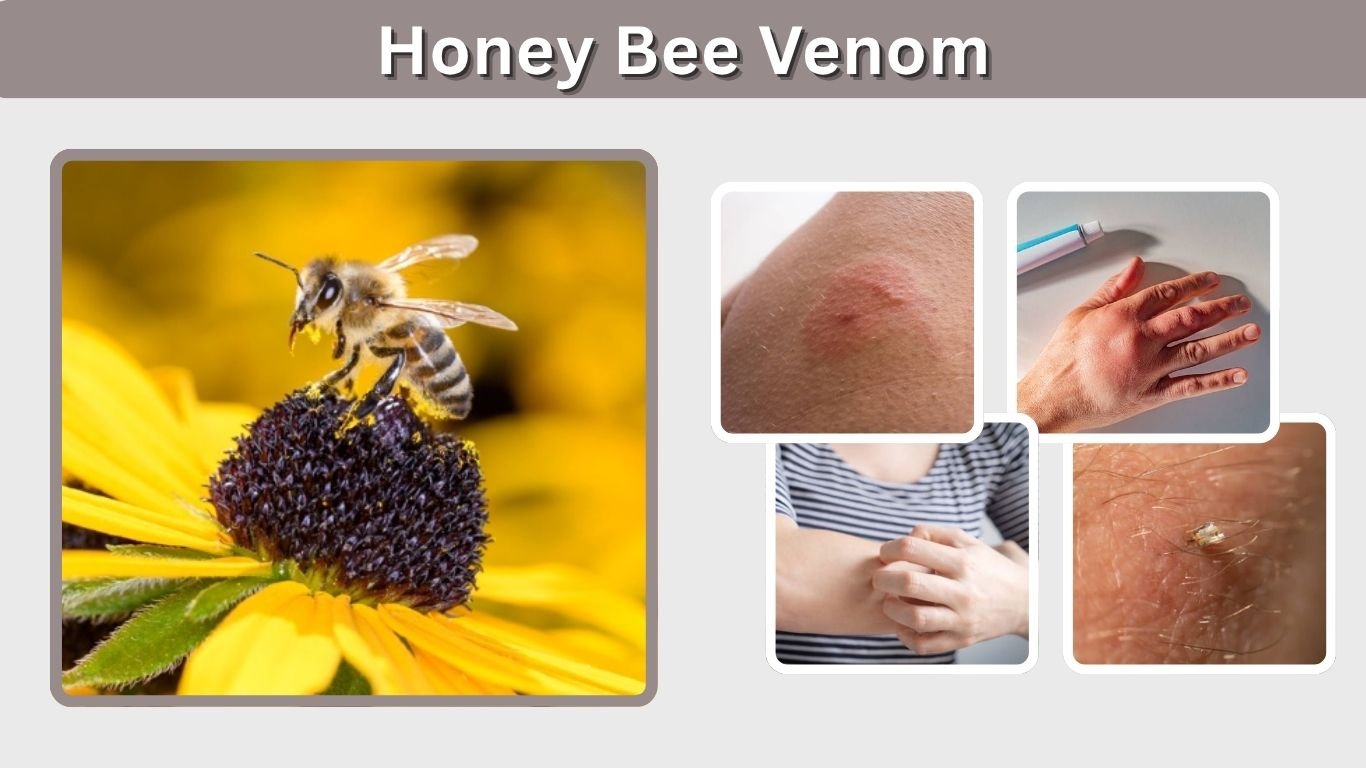
Honey bee venom is the defensive fluid delivered through a female bee’s stinger. It contains biologically active substances that produce pain and inflammation but also interest medical researchers. Venom immunotherapy is an established treatment for severe sting allergies, while proposed uses for cancer, arthritis, and skincare remain experimental or insufficiently proven. Although laboratory findings involving breast cancer cells have attracted attention, they do not show that bee stings or venom products cure cancer. Understanding this distinction is essential before considering any bee venom treatment.
What Is Honey Bee Venom?
Honey bee venom, medically called apitoxin, is produced in the venom glands of female honey bees. Worker bees use it to defend their colony, while queens may use their stingers against rival queens. Male honey bees, known as drones, do not possess stingers and cannot inject venom.
Honey Bee Venom Composition
Venom is a complex mixture containing:
- Melittin: A membrane-disrupting peptide responsible for much of the pain and inflammation.
- Phospholipase A2: A major allergen that can trigger immune reactions.
- Apamin: A small peptide that affects certain nerve-cell channels.
- Hyaluronidase: An enzyme that helps venom spread through tissue.
- Histamine and related compounds: Substances contributing to itching, redness, and swelling.
Melittin represents a large portion of dried honey bee venom and is responsible for many of its laboratory-observed effects.
How a Honey Bee Sting Works
A worker honey bee’s barbed stinger can remain embedded in human skin. The attached venom sac may continue pumping venom briefly, so the stinger should be removed promptly by scraping or pulling it out without delaying over the method.
Most people experience temporary pain, redness, itching, and localized swelling. Severe systemic reactions occur when the immune system responds to venom proteins throughout the body.
Is Bee Venom Naturally Found in Honey?
Despite the similar terminology, honey and bee venom are separate substances. Honey is produced from nectar or other plant secretions processed by bees. Venom is made in specialized glands connected to the stinger and is not a normal ingredient in honey.
Does Regular Honey Contain Bee Venom?
Commercial honey does not ordinarily contain meaningful honey bee venom. Consequently, having a diagnosed bee-sting allergy does not automatically mean someone will react to honey. People may still experience separate reactions to pollen, bee-derived proteins, or other materials occasionally present in honey, however. The American Academy of Allergy, Asthma & Immunology distinguishes venom allergy from reactions associated with eating honey.
Honey With Added Bee Venom
Products advertised as “bee venom honey” or “Manuka honey with bee venom” have venom intentionally added during manufacturing. They are fundamentally different from ordinary honey.
Claims surrounding these products may include improved immunity, reduced inflammation, or pain relief. Reliable human evidence supporting such broad benefits is limited. They should not be swallowed, applied, or used as treatment by anyone with a known or suspected venom allergy without medical guidance.
Medical Uses and Proposed Benefits
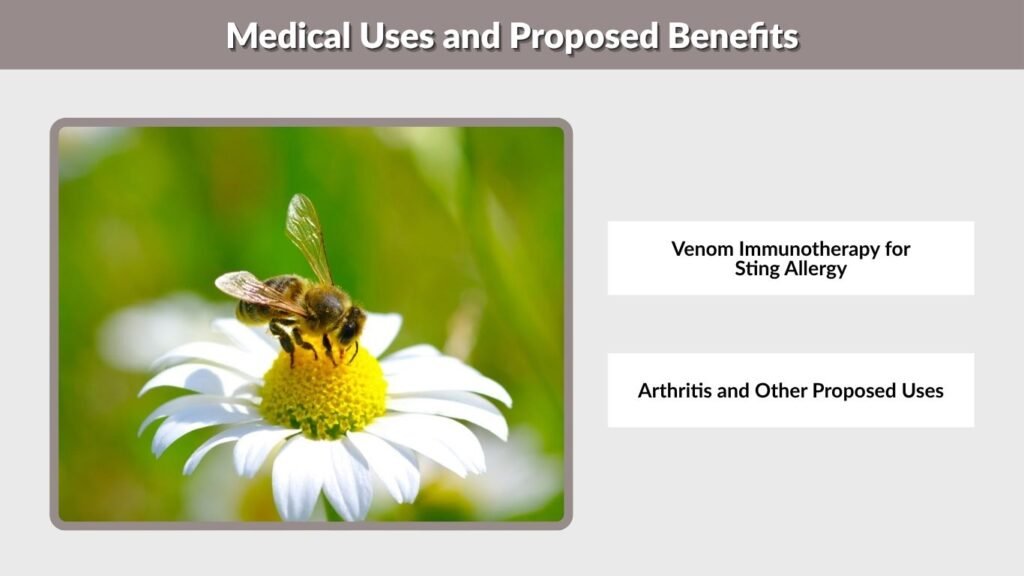
Honey bee venom has biologically active properties, but activity in a laboratory does not automatically translate into a safe treatment. The purpose, formulation, dose, and method of administration determine both its possible effects and its risks.
Venom Immunotherapy for Sting Allergy
Venom immunotherapy is the best-established medical use of honey bee venom. An allergist administers standardized, gradually increasing doses to a person with a confirmed systemic sting allergy. This trains the immune system to respond less severely to future stings.
Important facts include:
- Treatment is performed in a medical setting.
- Patients are monitored because injections can cause allergic reactions.
- Therapy commonly continues for several years.
- It substantially reduces, but does not eliminate, the risk of another systemic reaction.
- It is not the same as receiving live bee stings or unregulated venom injections.
Honey bee venom immunotherapy is somewhat less protective than therapy for certain wasp venoms, so individual risk and treatment duration should be discussed with an allergist.
Arthritis and Other Proposed Uses
Bee venom acupuncture and injections have been promoted for arthritis, nerve pain, and inflammatory conditions. Some small studies report possible effects, but evidence is inconsistent and treatment methods are not standardized.
A systematic review of bee venom therapy found that adverse events were common and could include anaphylaxis. Live-sting therapy, home injections, and unregulated venom supplements should therefore not be treated as harmless natural remedies.
Honey Bee Venom and Breast Cancer Research
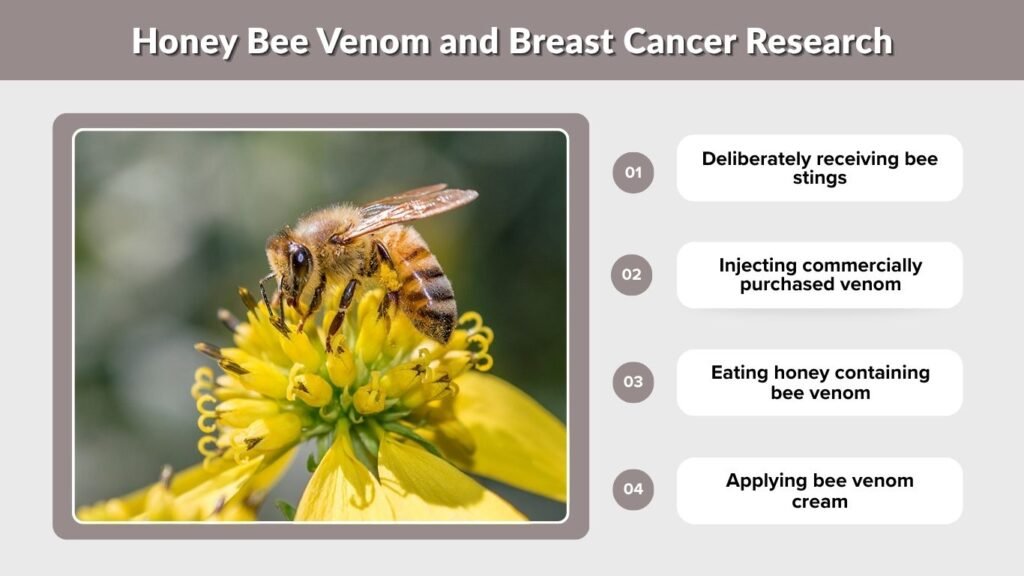
Interest in honey bee venom and cancer largely comes from laboratory research involving melittin. These experiments may help scientists design future drug-delivery systems, but they are an early stage of research rather than evidence for a currently effective cancer therapy.
What the Breast Cancer Study Found
A 2020 study reported that honey bee venom and melittin damaged triple-negative and HER2-enriched breast cancer cells grown in laboratory conditions. Melittin also interfered with EGFR and HER2 signaling. When combined with docetaxel, it improved tumor suppression in a mouse model.
These results were obtained in cells and animals—not in human breast cancer patients. The original study in npj Precision Oncology did not establish bee venom as a safe or effective human cancer treatment.
Does Honey Bee Venom Kill Cancer?
Honey bee venom can destroy certain cancer cells under controlled laboratory conditions, but it can also damage healthy cell membranes. Researchers would need to establish safe targeting, dosage, delivery, toxicity, and clinical effectiveness before melittin could become a conventional cancer therapy.
There is currently no reliable evidence that any of the following cures breast cancer or another cancer:
- Deliberately receiving bee stings
- Injecting commercially purchased venom
- Eating honey containing bee venom
- Applying bee venom cream
- Taking a bee venom supplement
Anyone receiving cancer treatment should discuss experimental options with an oncologist and should not replace surgery, radiation, chemotherapy, immunotherapy, or prescribed medication with bee venom.
Bee Venom Creams and Skincare
Bee venom appears in some facial creams, serums, masks, cleansers, and moisturizers. Advertising may describe it as a natural alternative to cosmetic injections or claim that controlled irritation encourages collagen production. Strong clinical evidence supporting lasting anti-aging benefits is lacking.
Safety Considerations for Skincare
Topical application does not guarantee safety because sensitized individuals may react to very small amounts. Consumers should consider the following precautions:
- Avoid venom cosmetics if you have a known bee-sting or venom allergy.
- Do not apply them to broken, inflamed, or recently treated skin.
- Stop using the product if significant itching, hives, or swelling develops.
- Seek medical guidance during pregnancy or breastfeeding because safety data are limited.
- Remember that patch testing cannot rule out every serious allergic reaction.
- Select products with transparent ingredients and traceable manufacturing details.
A tingling sensation does not prove that a product is authentic or effective. Likewise, positive reviews and before-and-after photographs cannot substitute for controlled clinical research.
Side Effects and Emergency Warning Signs
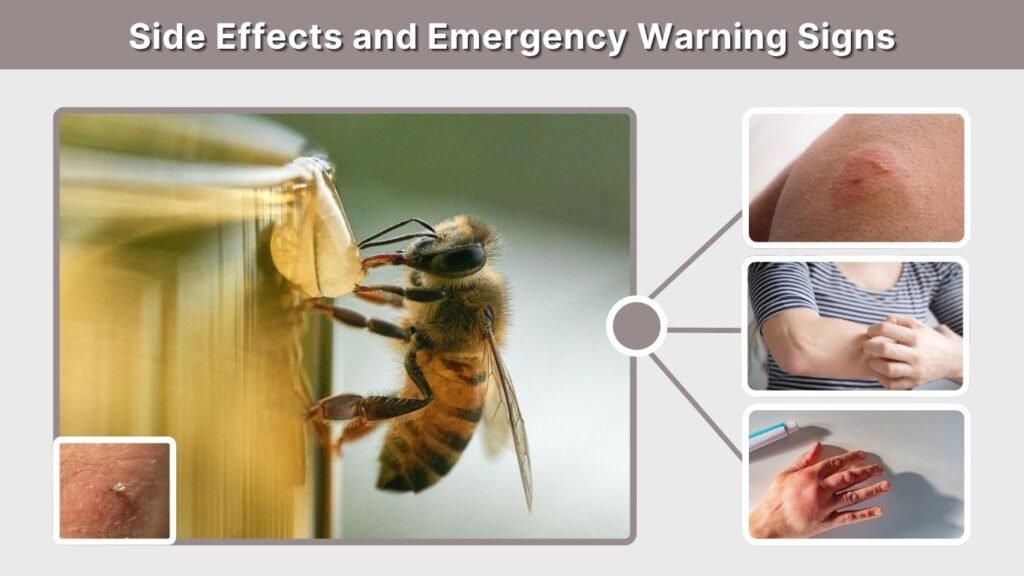
The response to honey bee venom ranges from mild local irritation to life-threatening anaphylaxis. Previous mild stings do not guarantee that every future reaction will remain mild.
Common and Severe Reactions
Typical localized symptoms include:
- Immediate burning or sharp pain
- Redness and warmth
- Itching
- Swelling around the sting
- Tenderness lasting several hours or days
Emergency warning signs include breathing difficulty, throat or tongue swelling, widespread hives, faintness, confusion, repetitive vomiting, or a sudden drop in blood pressure. Use prescribed epinephrine immediately and contact emergency services when anaphylaxis is suspected. Antihistamines cannot replace epinephrine.
How Long Does Venom Stay in the Body?
There is no single clinically useful clearance time for honey bee venom. Its components begin being broken down after injection, but symptoms can outlast the venom itself. A local reaction may remain for several days, while a large local reaction can worsen during the first 24–48 hours.
Anaphylaxis generally begins rapidly but can sometimes be delayed or return after apparent improvement. Treatment decisions should therefore be based on symptoms, not an assumed time when the venom has “left the system.”
FAQs
Honey bee venom raises understandable questions because it appears in allergy treatment, experimental research, and commercial products. These answers separate its established role from claims that remain unproven.
Do honey bees have venom?
Yes. Female worker bees and queens produce venom and can sting. Male drones do not have stingers.
Is there bee venom in ordinary honey?
No. Venom is not a normal component of honey. Products labeled as honey with bee venom have generally been specially formulated with added venom.
Can honey bee venom cure breast cancer?
No human evidence shows that it cures breast cancer. Research involving breast cancer cells and mice is promising for future investigation but does not establish a patient treatment.
Is venom immunotherapy the same as bee venom therapy?
No. Venom immunotherapy is a standardized allergy treatment administered by trained clinicians. “Bee venom therapy” may describe unregulated injections, acupuncture, creams, or deliberate stings that have not demonstrated the same safety and effectiveness.
Is honey bee venom dangerous?
It can be. Most stings produce localized symptoms, but venom can trigger severe allergic reactions and anaphylaxis. Concentrated products, injections, and multiple stings may create additional risks and should never be used without qualified medical supervision.