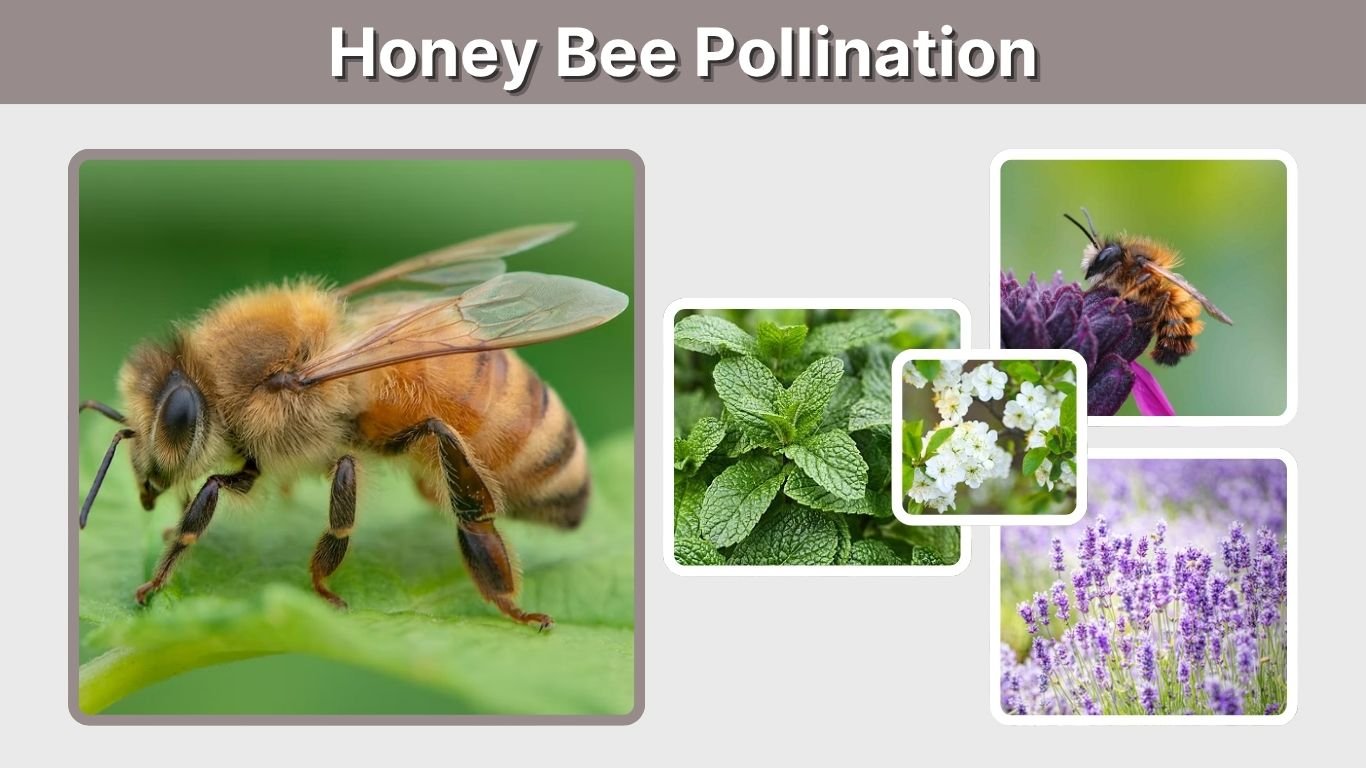
Honey bee pollination occurs when worker bees transfer pollen between flowers while collecting nectar and pollen for their colony. This movement allows many flowering plants to produce seeds, fruits, nuts, and vegetables. Honey bees are valuable agricultural pollinators because each managed colony contains thousands of foragers that can be moved to crops during bloom. However, they are not the only pollinators or always the most efficient. Bumblebees, mason bees, leafcutter bees, flies, butterflies, beetles, birds, and other animals also perform essential pollination.
How Do Honey Bees Pollinate Flowers?
Honey bees do not deliberately pollinate plants. Pollination happens as a consequence of their search for food. A worker enters a flower for nectar or pollen, and loose pollen grains stick to the branched hairs covering her body. Some grains are later deposited on the receptive female structure of another flower.
The Honey Bee Pollination Process
- A worker detects flowers through color, scent, and previous experience.
- She lands on a flower and reaches for nectar or pollen.
- Pollen from the anthers attaches to her hairs.
- She brushes some pollen into baskets on her hind legs.
- Loose grains remain on her head, body, and legs.
- She visits another flower of the same plant species.
- Pollen contacts the flower’s stigma.
- Fertilization follows, allowing fruit or seeds to develop.
Pollen packed tightly inside a bee’s pollen baskets is less available for pollination. The loose grains carried across her body are more likely to reach a stigma.
Cross-Pollination and Flower Constancy
Honey bees commonly visit one flower species repeatedly during a foraging trip. This behavior, called floral constancy, makes pollen transfer more efficient because pollen from an apple blossom is likely to reach another apple blossom rather than an unrelated flower.
Honey bee pollination can be described as melittophily, meaning pollination by bees. It is also a form of entomophily, or insect pollination. When pollen moves between compatible plants, the process is cross-pollination.
What Crops Do Honey Bees Pollinate?
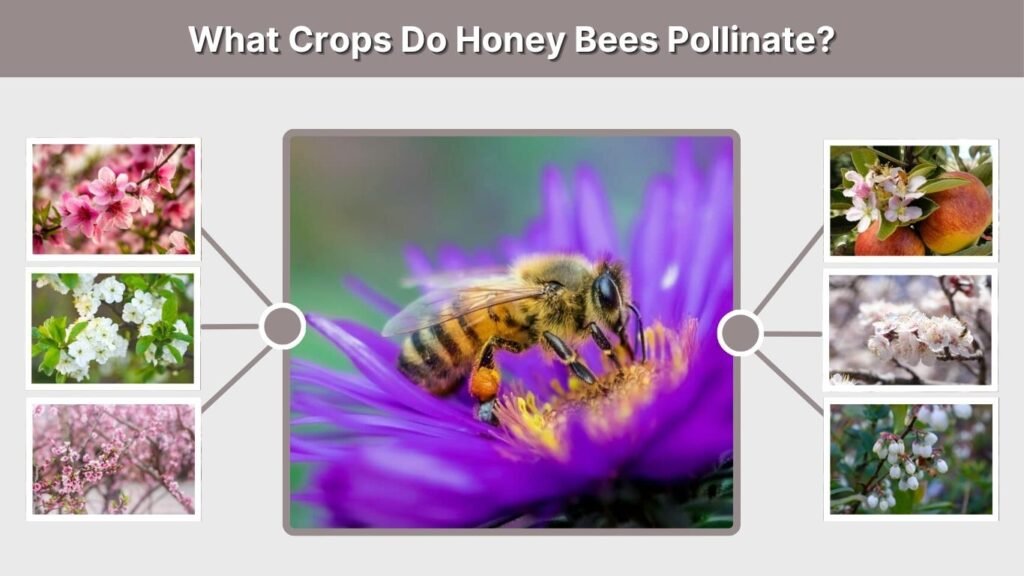
Honey bees visit a broad range of agricultural crops. Some plants require insect visits to produce a commercial harvest, while others are self-fertile but develop larger, more evenly shaped fruit after adequate pollination. The importance of honey bees depends on the crop, variety, climate, field size, and availability of wild pollinators.
Major Honey Bee-Pollinated Crops
- Almonds
- Apples
- Apricots
- Avocados
- Blueberries
- Blackberries
- Canola
- Cherries
- Cranberries
- Cucumbers
- Kiwifruit
- Melons
- Peaches
- Pears
- Plums
- Pumpkins
- Raspberries
- Squash
- Strawberries
- Sunflowers
- Watermelons
Honey bees also pollinate seed crops, including vegetables and forage plants grown specifically for seed production.
Pollination Needs of Common Crops
| Crop | Honey bee contribution |
| Apples | Important for transferring pollen between compatible varieties |
| Almonds | Commercial production depends heavily on managed bee colonies |
| Blueberries | Honey bees contribute, but bumblebees are often more efficient |
| Cucumbers | Bees move pollen between male and female flowers |
| Pumpkins and squash | Multiple visits help produce full, well-shaped fruit |
| Strawberries | Bee visits improve fruit size and shape |
| Sunflowers | Visits can improve seed set in many varieties |
| Watermelons | Numerous visits are needed for successful fruit development |
| Alfalfa | Honey bees contribute but often avoid triggering the flower |
| Soybeans | Usually self-pollinating, though bee visits may improve some yields |
The value of a crop visit should be measured by successful pollen transfer, not simply by the number of bees seen on flowers.
What Crops Do Honey Bees Not Pollinate Well?
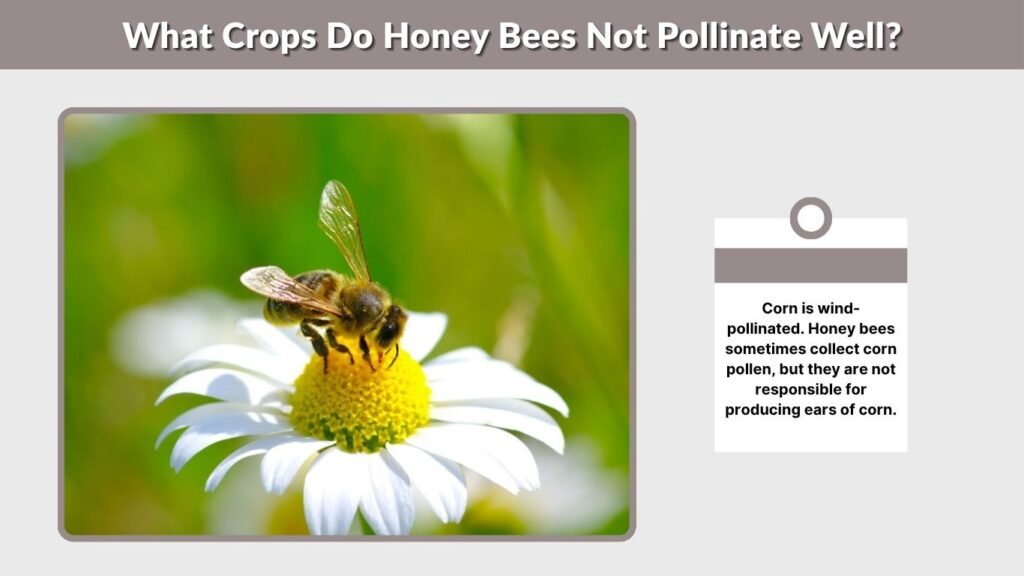
Not every flowering crop needs honey bees. Some plants rely primarily on wind, while others self-pollinate before bees arrive. Honey bees may still collect pollen from these plants without making a meaningful contribution to the harvested product.
Corn, Tomatoes and Other Crops
Corn is wind-pollinated. Honey bees sometimes collect corn pollen, but they are not responsible for producing ears of corn.
Tomatoes are generally self-fertile and release pollen effectively when their flowers vibrate. Bumblebees perform buzz pollination by rapidly vibrating their flight muscles. Honey bees cannot buzz-pollinate and are therefore relatively ineffective on tomato flowers.
Sweet peppers and many soybean varieties can self-pollinate, although insect visits may improve production under some conditions. Potatoes may attract bees when flowering, but pollination is not needed to produce the underground tubers people harvest.
Alfalfa Pollination
Honey bees can pollinate alfalfa, but each flower has a mechanism that strikes or “trips” a visiting bee. Workers may learn to collect nectar from the side and avoid triggering it.
Alfalfa leafcutter bees are usually more efficient pollinators because they readily trip the flowers while collecting pollen. Honey bees can still contribute when colonies are strong and conditions encourage flower contact.
Why Are Honey Bees Good Pollinators?
Honey bees are particularly useful to farmers because they form large perennial colonies. A beekeeper can transport hundreds of colonies into an orchard or field shortly before flowering and remove them afterward. Few other pollinating insects can be managed and moved on such a large scale.
Advantages of Honey Bee Pollination
- Thousands of workers forage from each colony.
- Colonies can be transported between crops.
- Workers visit many different plant species.
- Floral constancy supports efficient pollen transfer.
- Colonies can be inspected for strength before placement.
- Beekeepers can adjust hive numbers to field size.
- Bees communicate productive flower locations through dances.
- Colonies remain active across several crop seasons.
Managed honey bee pollination adds at least billions of dollars in value to agriculture through increased yield and improved crop quality.
Limitations of Honey Bees
Honey bees become less active during cold, wet, or windy weather. Their flower-handling behavior is also unsuitable for certain plants. They cannot perform buzz pollination, and they sometimes seek more attractive flowers outside the target crop.
A large number of hives does not guarantee good pollination if colonies are weak, flowers lack compatible pollen, pesticide exposure occurs, or weather prevents foraging.
Honey Bees Versus Native Pollinators
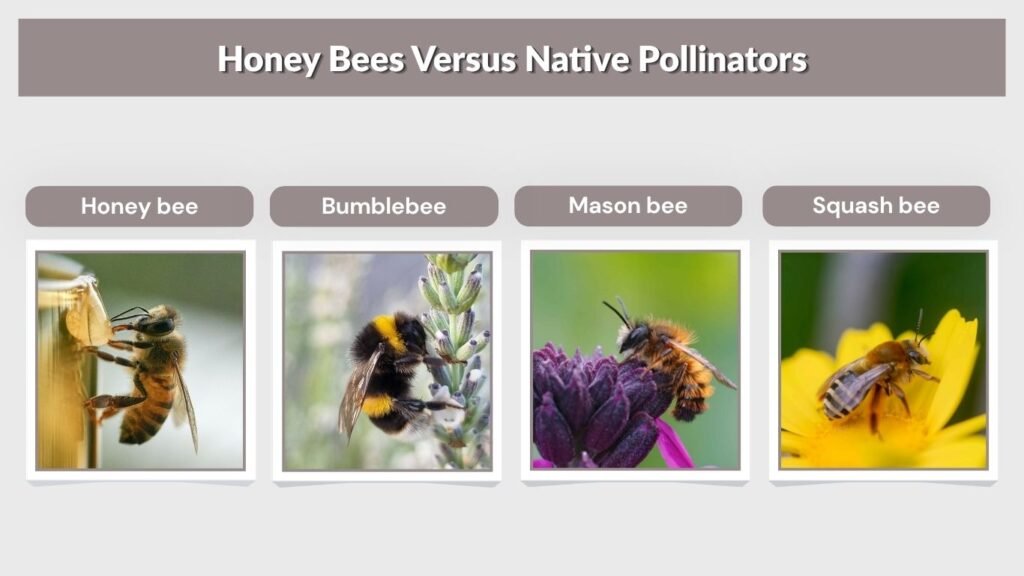
Honey bees are important, but they are one part of a much larger pollinator community. More than 20,000 bee species exist worldwide, and most are wild rather than managed. In North America, native bees, flies, beetles, butterflies, moths, and other animals pollinated native plants before western honey bees were introduced.
Comparing Pollinating Bees
| Pollinator | Particular strengths |
| Honey bee | Large movable colonies and broad crop use |
| Bumblebee | Buzz pollination and activity in cooler weather |
| Mason bee | Highly effective on orchard blossoms |
| Alfalfa leafcutter bee | Efficient alfalfa seed pollination |
| Squash bee | Specialization on pumpkins, squash, and gourds |
| Mining bee | Early-season activity around fruit blossoms |
Bumblebees are particularly valuable for tomatoes and blueberries because they release pollen through vibration. Mason bees can carry large quantities of loose pollen across their abdomens, making them highly effective orchard pollinators.
Do Honey Bees Harm Native Pollinators?
Honey bees do not normally hunt or deliberately kill other bees. However, dense concentrations of managed or feral colonies can compete with wild pollinators for nectar and pollen. They may also contribute to pathogen movement between flower visitors.
The ecological effect varies by habitat, season, colony density, and available flowers. Protecting diverse native plants and nesting habitats supports both honey bees and wild pollinators.
How Important Is Honey Bee Pollination?
Pollination statistics are often misunderstood. The familiar “one in three bites” statement refers broadly to animal pollinators, not honey bees alone. The FAO reports that animal pollinators contribute to approximately 35% of global crop production by volume and enhance 87 of 115 major food crops.
Food and Agricultural Value
Pollinator-dependent crops provide many fruits, vegetables, nuts, seeds, oils, beverages, and spices. Staple grains such as wheat, rice, and corn mainly use wind or self-pollination, so humans would not lose all food without bees.
However, diets would become less diverse and many nutrient-rich foods would become scarcer or more expensive. In the United States, USDA estimates that managed honey bee pollination adds at least $18 billion to agricultural value annually.
Ecological Importance
Honey bees also visit wildflowers, shrubs, and trees. Their activity can support seed and fruit production, although native plants frequently depend on locally evolved pollinators.
Pollination maintains plant reproduction, wildlife food supplies, habitat regeneration, and genetic diversity. Healthy ecosystems therefore require a broad community of pollinating species rather than dependence on a single managed bee.
Honey Bee Pollination Services
Commercial beekeepers rent colonies to growers during crop bloom. Colonies may travel long distances during the agricultural season, moving between almonds, orchard fruits, berries, cucurbits, seed crops, and other flowering fields.
What a Pollination Contract Covers
- Number and strength of colonies
- Hive delivery and removal dates
- Placement throughout the crop
- Pollination fee and payment schedule
- Colony inspection procedures
- Access for beekeepers
- Water availability
- Pesticide communication
- Liability for damaged or lost colonies
- Responsibilities during poor weather
A broker may connect growers with beekeepers when large numbers of colonies are needed. Both parties should agree on measurable colony-strength standards rather than counting hive boxes alone.
Protecting Colonies During Pollination
Growers should avoid applying bee-toxic pesticides while crops or nearby weeds are flowering. When treatment is essential, they should follow the product label, notify beekeepers, choose less hazardous options, and apply when bees are not actively foraging.
Hive placement should provide morning sunlight, dry ground, safe vehicle access, clean water, and reasonable protection from spraying or flooding.
How to Attract Honey Bees for Pollination
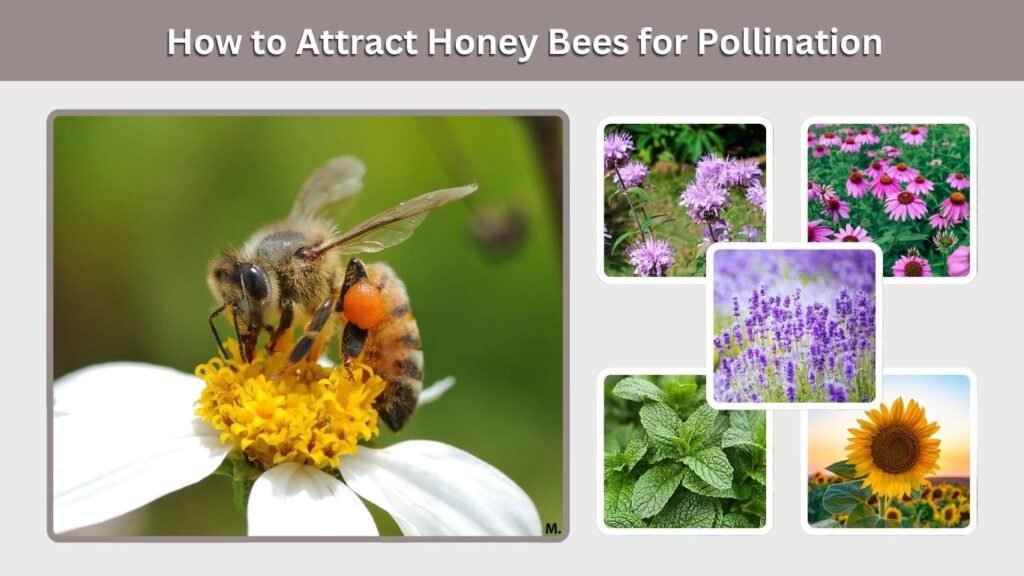
Gardens and small farms can attract bees by providing abundant flowers throughout the growing season. A combination of trees, shrubs, herbs, annuals, and perennials prevents food shortages between major bloom periods.
Helpful Pollinator Plants
- Asters
- Bee balm
- Borage
- Clover
- Coneflowers
- Lavender
- Mint
- Native fruit trees
- Rosemary
- Sunflowers
- Thyme
- Willow
Choose locally appropriate plants and avoid invasive species. Groups of the same flower are easier for bees to locate and forage efficiently.
Creating a Safer Habitat
Reduce unnecessary pesticide use, allow some herbs to flower, and provide shallow water with stones for safe landing. Native bees also need bare soil, hollow stems, dead wood, and undisturbed areas for nesting.
Installing a honey bee hive is not always necessary. Supporting wild bees can provide excellent pollination while improving the diversity and resilience of the local ecosystem.
FAQs
Honey bee pollination is valuable because managed colonies can deliver thousands of foragers to a flowering crop. Nevertheless, crop biology and local pollinator diversity determine how useful they will be. These answers address common questions about their contribution and limitations.
Do Honey Bees Pollinate Flowers?
Yes. Pollen sticks to their hairs while they gather food and is transferred to other flowers during later visits.
Are Honey Bees the Only Bees That Pollinate?
No. Bumblebees, mason bees, leafcutter bees, mining bees, squash bees, and thousands of other bee species also pollinate plants.
Do Honey Bees Pollinate Corn?
Not significantly. Corn relies on wind to transfer pollen. Bees may collect its pollen without contributing meaningfully to corn production.
Are Honey Bees the Best Pollinators?
They are excellent general-purpose managed pollinators, but other bees outperform them on particular crops. Bumblebees are better at buzz pollination, while leafcutter bees are more efficient on alfalfa.
How Do Bees Pollinate and Make Honey?
Pollination occurs as bees transfer pollen between flowers. Honey production is a separate process in which workers collect nectar, add enzymes, reduce its moisture, and store it in wax comb.