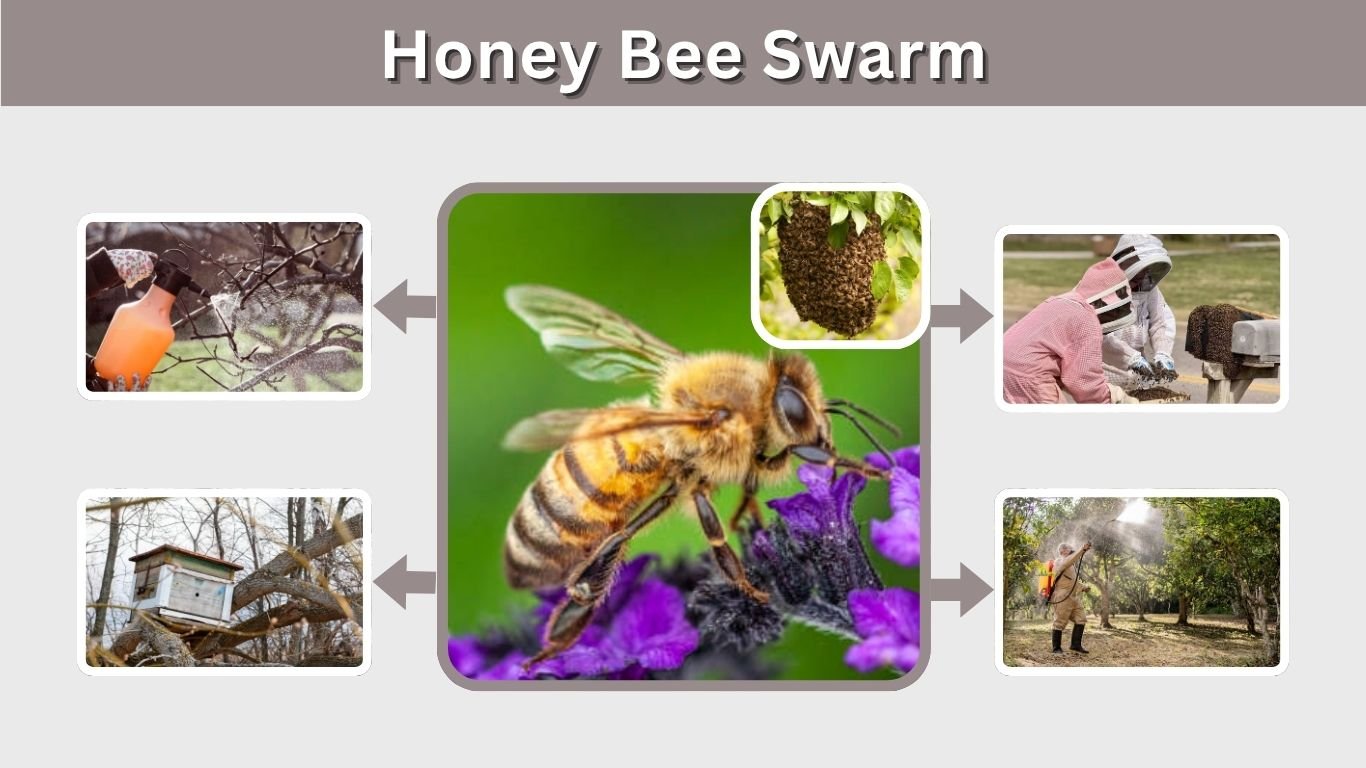
A honey bee swarm can look alarming when thousands of bees suddenly gather on a tree, fence, wall, or other structure. However, swarming is a natural way for a honey bee colony to reproduce and establish a new home. Swarming bees are often less defensive than bees protecting an established hive, but they should still be treated carefully. This guide explains why honey bees swarm, how to identify a swarm, what swarm cells mean, when swarming occurs, and how to handle or remove a swarm safely.
What Is a Honey Bee Swarm?
A honey bee swarm forms when a large portion of an established colony leaves its hive with a queen to establish another colony. Thousands of worker bees may travel together before settling temporarily on a nearby object. While the cluster rests, scout bees explore the surrounding area and search for a suitable cavity where the new colony can permanently establish itself.
Why Do Honey Bees Swarm?
Swarming is primarily a natural form of colony reproduction. When a successful hive becomes crowded, the existing queen may leave with a large group of workers.
Before departing, workers begin preparing new queens inside special queen cells. The old queen and accompanying workers then leave their original hive.
Swarming is most likely when colonies are strong, resources are abundant, and brood production has increased significantly. Congestion inside the hive can contribute, although several biological and environmental factors influence the decision to swarm.
What Does a Honey Bee Swarm Look Like?
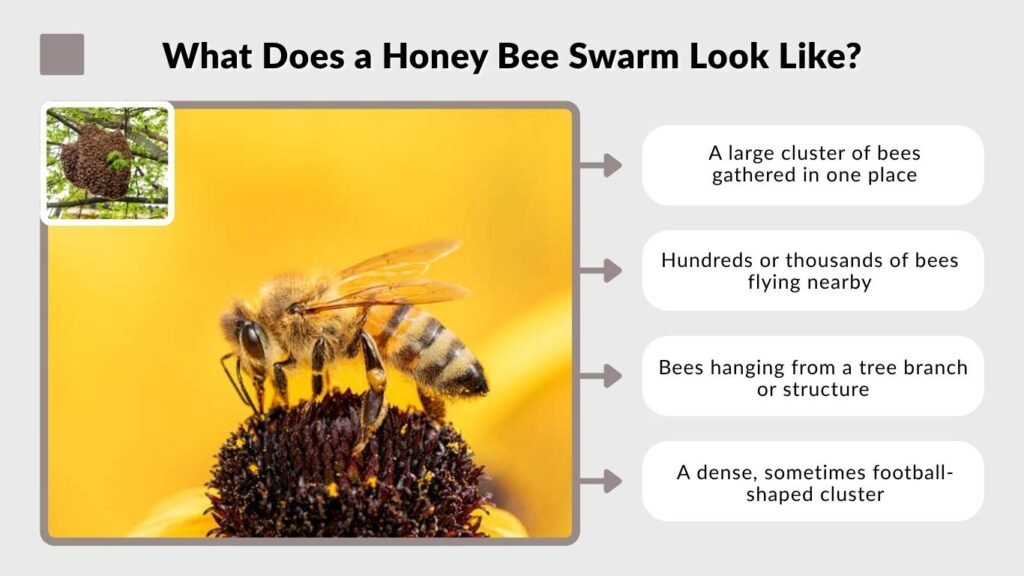
A swarm often appears as a dense ball or hanging mass containing hundreds or thousands of bees. The cluster may be attached to a tree branch, fence post, shrub, building, vehicle, or other surface. Individual bees may fly around the cluster while most remain grouped closely around the queen. Swarms can vary considerably in size.
Signs of a Honey Bee Swarm
Common characteristics include:
- A large cluster of bees gathered in one place
- Hundreds or thousands of bees flying nearby
- Bees hanging from a tree branch or structure
- A dense, sometimes football-shaped cluster
- No visible permanent honeycomb
- Scout bees flying away and returning
- Activity appearing suddenly within a short period
A temporary swarm should not be confused with an established hive containing wax comb, brood, pollen, and honey.
Why Are Honey Bees Swarming Around My House?
Honey bees may gather near a house because the swarm has temporarily stopped nearby or because scout bees are investigating potential nesting cavities. Trees, roof openings, wall gaps, chimneys, sheds, and other protected spaces can attract scouts. A swarm resting outside does not automatically mean the bees intend to establish a hive inside your home.
Temporary Swarm vs Established Colony
A temporary swarm often forms a visible cluster and may disappear without intervention once scouts locate a new nesting site.
An established colony behaves differently. Bees repeatedly travel through one specific opening throughout the day, and the activity may continue for weeks or months.
If bees are regularly entering a wall, roof, soffit, or chimney, they may already be building comb inside the structure.
What Should You Do With a Honey Bee Swarm?
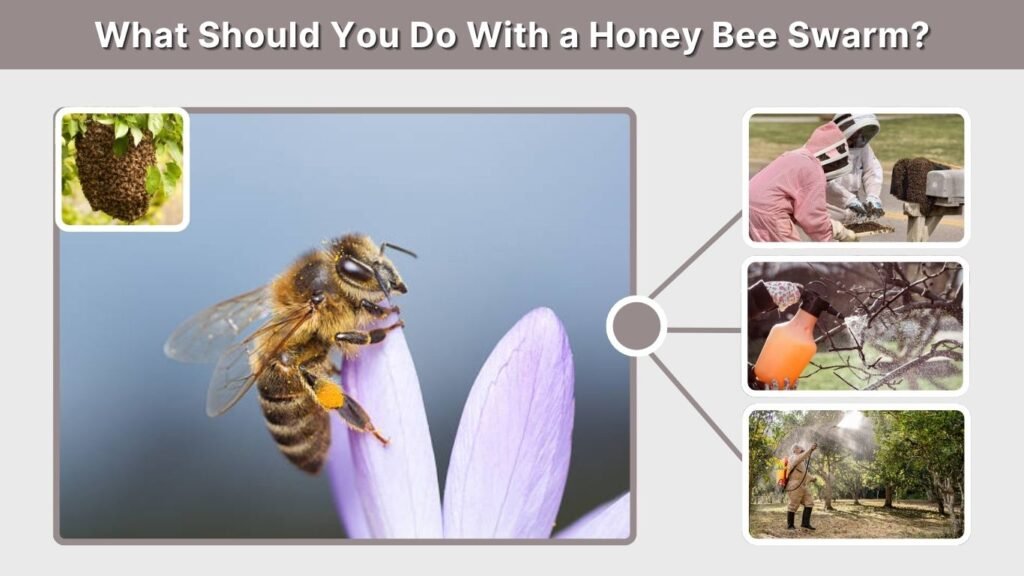
If a honey bee swarm appears on your property, avoid disturbing it unnecessarily. Swarming bees usually have no brood or stored honey to defend, so they may be relatively calm. However, individual bees can still sting, especially when crushed, trapped, or aggressively disturbed. Keeping people and pets away is the safest approach until the swarm leaves or is professionally collected.
Safe Steps Around a Swarm
If you discover a swarm:
- Keep children and pets indoors or at a safe distance
- Do not spray the bees with water
- Avoid pesticide sprays
- Do not shake or hit the cluster
- Stay away if you have a severe bee-sting allergy
- Photograph it from a safe distance if identification is needed
- Contact an experienced beekeeper if removal is necessary
Do not attempt to grab or scoop up a swarm unless you have proper beekeeping training and protective equipment.
Honey Bee Swarm Removal
Honey bee swarm removal is usually simpler than removing an established hive because a temporary swarm has not yet built a substantial comb. Beekeepers can often collect accessible swarms and transfer them into managed hives. Removal becomes more complicated once the colony enters a wall or another structure and starts constructing wax comb.
Professional Swarm Removal
A beekeeper may place a hive box beneath or close to the swarm and encourage the bees to enter.
Successfully collecting the queen is particularly important. Once she is inside the new container, other workers often follow her.
An easily accessible swarm hanging from a low tree branch may be straightforward for an experienced beekeeper to collect. Swarms high in trees, near electrical equipment, inside chimneys, or in dangerous locations require additional precautions.
Some local beekeepers collect accessible swarms at little or no charge because they can add the colony to their apiary.
How to Catch a Honey Bee Swarm
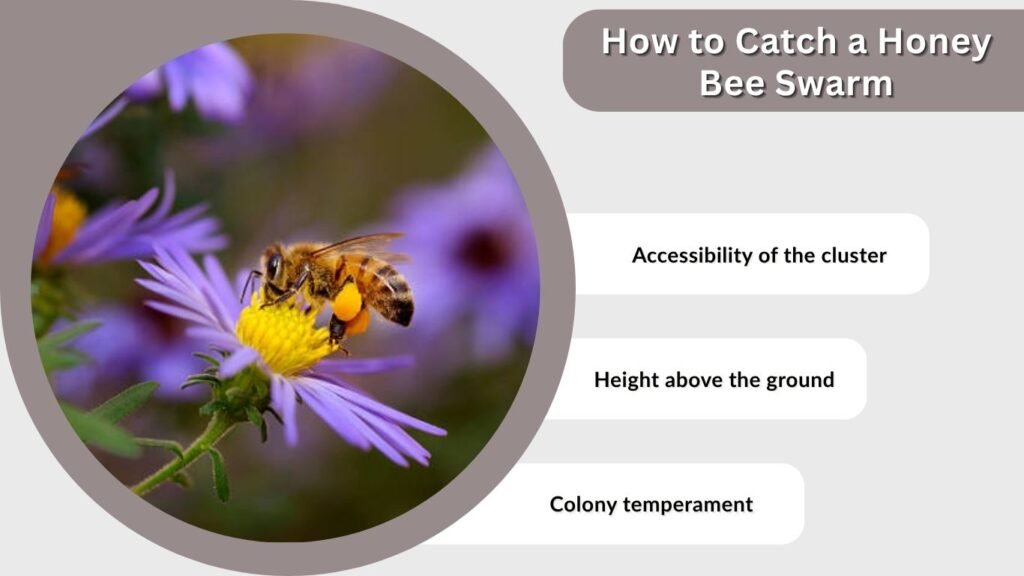
Experienced beekeepers sometimes capture swarms to establish new colonies. Timing matters because a temporary cluster may leave as soon as scout bees select a suitable nesting cavity. Capturing a swarm generally involves placing the bees into an appropriate hive box while making sure the queen enters with them.
Basic Swarm-Capture Considerations
Beekeepers generally consider:
- Accessibility of the cluster
- Height above the ground
- Colony temperament
- Availability of protective equipment
- Weather conditions
- Whether the queen can be collected
- Location of nearby people and animals
Swarm collection should not be attempted from unstable ladders, power lines, roofs, or other hazardous locations.
If the bees behave unusually defensively, professional assistance is the safer option.
What Are Honey Bee Swarm Cells?
Honey bee swarm cells are special queen cells produced when a colony is preparing to swarm. They are larger than normal worker brood cells and have an elongated, peanut-like appearance. Beekeepers often find them along the lower edges of brood frames, although their exact location can vary.
Signs a Colony May Be Preparing to Swarm
Possible indicators include:
- Multiple developing queen cells
- Crowded brood frames
- Large adult bee population
- Reduced space for the queen to lay eggs
- Increasing congestion around brood areas
- Queen cells containing larvae and royal jelly
- Reduced queen egg laying shortly before departure
The presence of a single unusual queen cell does not always prove that swarming will occur. Colonies also build queen cells when replacing an old or failing queen.
Honey Bee Swarm Traps
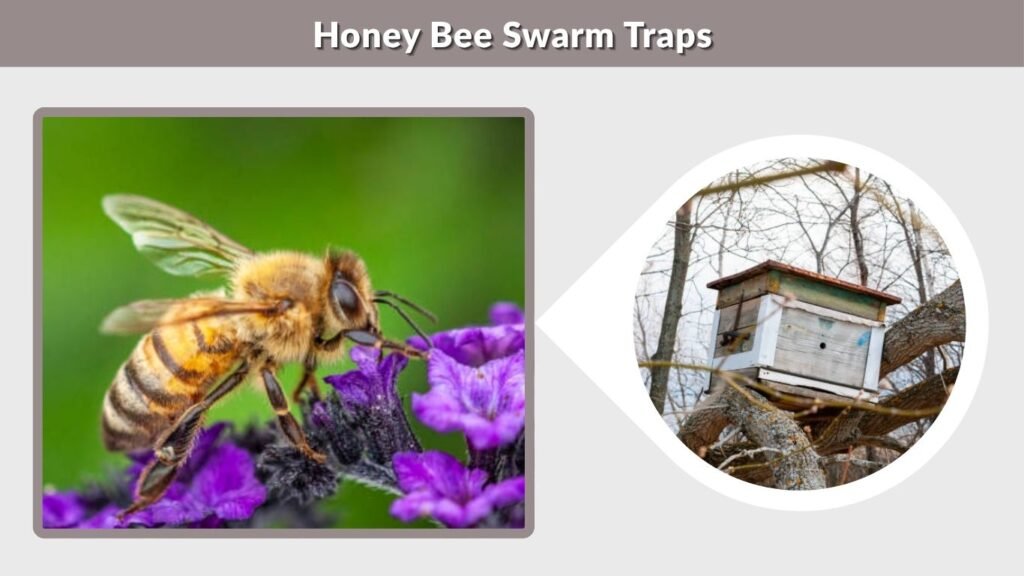
A swarm trap, sometimes called a bait hive, is an empty box designed to attract honey bee scouts searching for a new nesting cavity. Beekeepers use traps to capture feral swarms before the bees enter unwanted locations such as house walls. Successful traps imitate some of the characteristics bees naturally seek in nesting cavities.
Swarm Trap Placement and Attractants
Useful considerations include:
- A dry, weather-protected box
- An entrance large enough for bees but not excessive
- Previous beeswax or propolis odors
- Placement near areas where swarms are likely to travel
- Secure mounting
- Regular inspection during swarm season
Commercial swarm lures are also available. Many contain scents that imitate attractive hive odors.
Lemongrass oil is sometimes used by experienced beekeepers because some of its aromatic components resemble honey bee orientation pheromones. Only a small amount is generally needed because excessive odor may discourage bees rather than attract them.
When Is Honey Bee Swarm Season?
Swarming most commonly occurs during periods when colonies are rapidly expanding and flowering plants provide abundant nectar and pollen. In many temperate regions, this means spring through early summer. Timing varies by climate, local flowering patterns, weather, and colony strength. In warm climates, swarm activity may begin earlier or continue for a longer portion of the year.
How Long Does a Honey Bee Swarm Stay?
A temporary swarm may remain in one location for a few hours, a day, or sometimes several days.
Scout bees continually search for possible nesting cavities while the main group remains clustered around the queen.
Once scouts reach agreement on a suitable location, the entire swarm can suddenly take flight and disappear.
If a swarm has remained in the same structure for an extended period and bees are bringing pollen inside, the colony may have already established a permanent nest.
How to Prevent Honey Bee Swarming
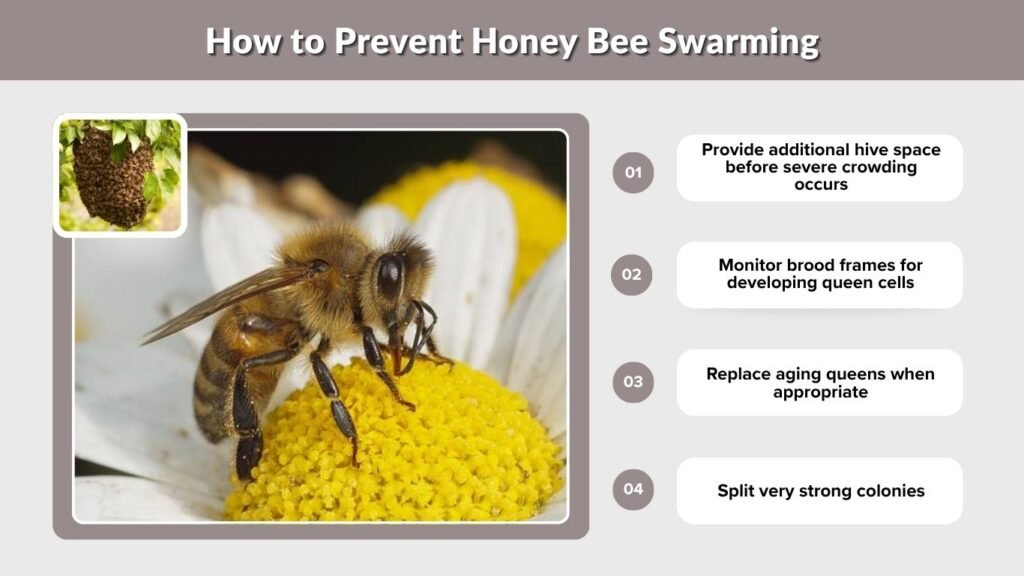
For beekeepers, swarm prevention focuses on managing colony congestion and recognizing preparations early. Swarming cannot always be prevented because it is a deeply rooted reproductive behavior. However, good hive management can reduce the likelihood of losing a large portion of a managed colony.
Common Swarm Prevention Methods
Beekeepers may:
- Provide additional hive space before severe crowding occurs
- Monitor brood frames for developing queen cells
- Replace aging queens when appropriate
- Split very strong colonies
- Maintain adequate room for brood expansion
- Improve hive ventilation where necessary
- Inspect colonies regularly during swarm season
Simply destroying queen cells may not permanently stop swarm preparation if the underlying conditions remain unchanged.
Are Honey Bee Swarms Dangerous?
Most swarms are not actively looking for humans to attack. Because the bees have temporarily left their hive, they do not have brood or stored honey at the clustering location to defend.
Nevertheless, swarming bees are capable of stinging.
People should avoid intentionally disturbing the cluster, particularly those with known severe allergies to bee venom.
Unusually defensive colonies or bees suspected to be Africanized honey bees should be handled by trained professionals. Large numbers of defensive bees can present a serious hazard.
FAQs
Why do honey bees form a swarm?
Honey bees swarm mainly to reproduce at the colony level. Part of an established colony leaves with a queen and searches for a new nesting site while the original colony raises another queen.
How long will a honey bee swarm stay in one place?
A swarm may remain for only a few hours or stay for several days while scout bees search for a permanent nesting cavity.
Should I remove a honey bee swarm?
If the swarm is in a safe location, it may leave naturally. If it threatens people or is likely to enter a building, contact a beekeeper or professional honey bee removal service.
Can you catch a honey bee swarm?
Yes. Experienced beekeepers frequently capture swarms and establish them in hive boxes. Untrained people should avoid attempting collection, especially from dangerous or difficult locations.
Are honey bee swarms aggressive?
Swarming honey bees are often less defensive than bees protecting an established hive, but they can still sting when threatened or disturbed. Maintaining a safe distance remains important.