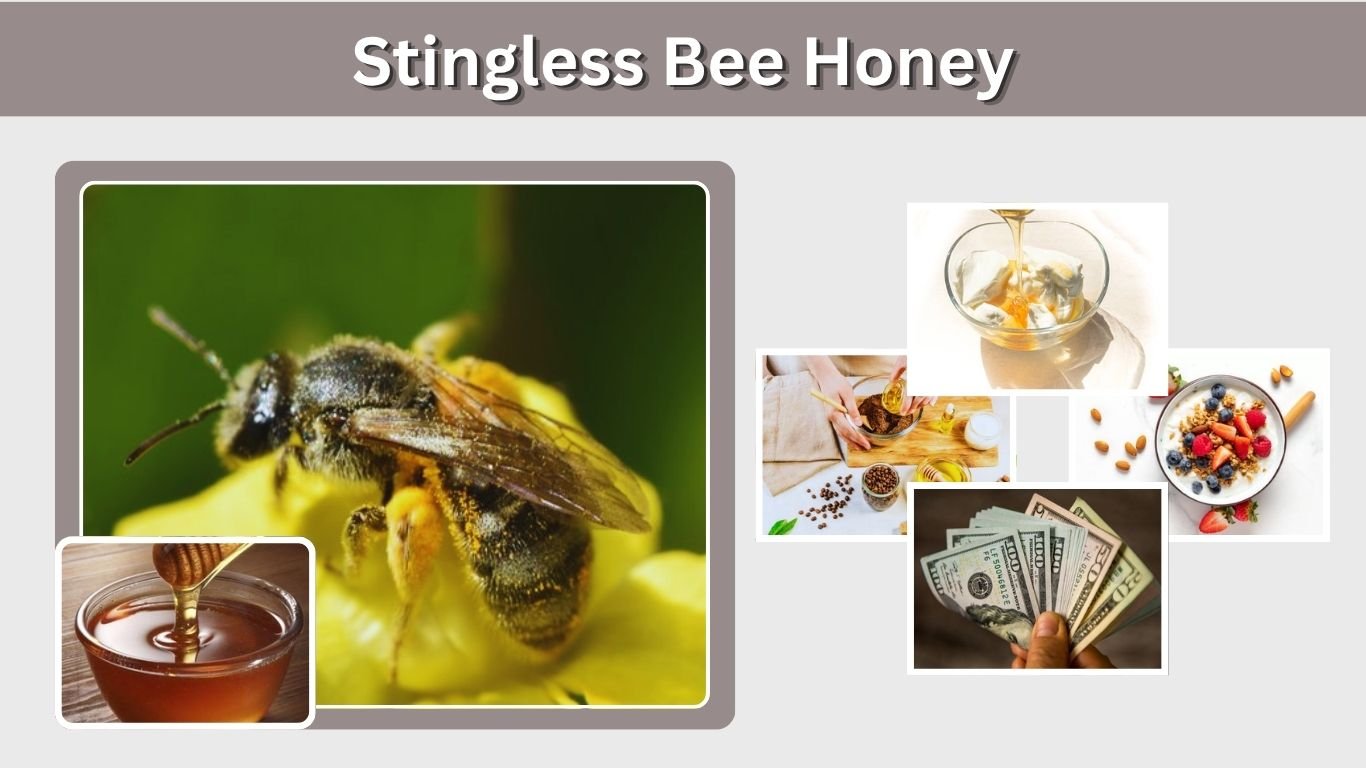
Stingless bee honey is a distinctive type of honey produced by tropical and subtropical stingless bees. Unlike the thick, intensely sweet honey commonly produced by Apis honey bees, stingless bee honey is usually thinner, more acidic, and pleasantly sweet-and-sour. It is often called pot honey because stingless bees store it in small wax-and-resin pots inside their nests. Interest in this honey has grown because of its unique flavor, traditional uses, antioxidant compounds, and unusual sugar profile, although many claimed medical benefits still require stronger human research.
What Is Stingless Bee Honey?
Stingless bee honey is made from flower nectar collected by social bees belonging mainly to the tribe Meliponini. These bees are found in warm regions of Australia, Southeast Asia, Central and South America, Africa, and other tropical areas. Popular honey-producing groups include Melipona, Tetragonula, Trigona, and related genera.
Main Characteristics of Stingless Bee Honey
Typical features include:
- Thin or runny consistency
- Sweet-and-sour flavor
- Noticeable natural acidity
- Higher moisture than many traditional honeys
- Stored inside small wax-resin pots
- Produced in relatively small quantities
- Aroma influenced strongly by local flowers
- Color ranging from light amber to very dark brown
- Composition varying between bee species and regions
Its higher moisture content means correct harvesting and storage are particularly important because poorly handled honey can ferment more easily than conventional honey.
Do Stingless Bees Really Make Honey?
Yes. Stingless bees collect nectar from flowers and transform it into honey just as other honey-producing bees do.
However, their hive structure is different. Honey bees generally store honey in hexagonal wax comb, while stingless bees commonly build rounded storage pots made from a mixture of wax and plant resins.
These pots contain either honey or pollen and are normally located around the brood area.
Stingless Bee Honey Benefits
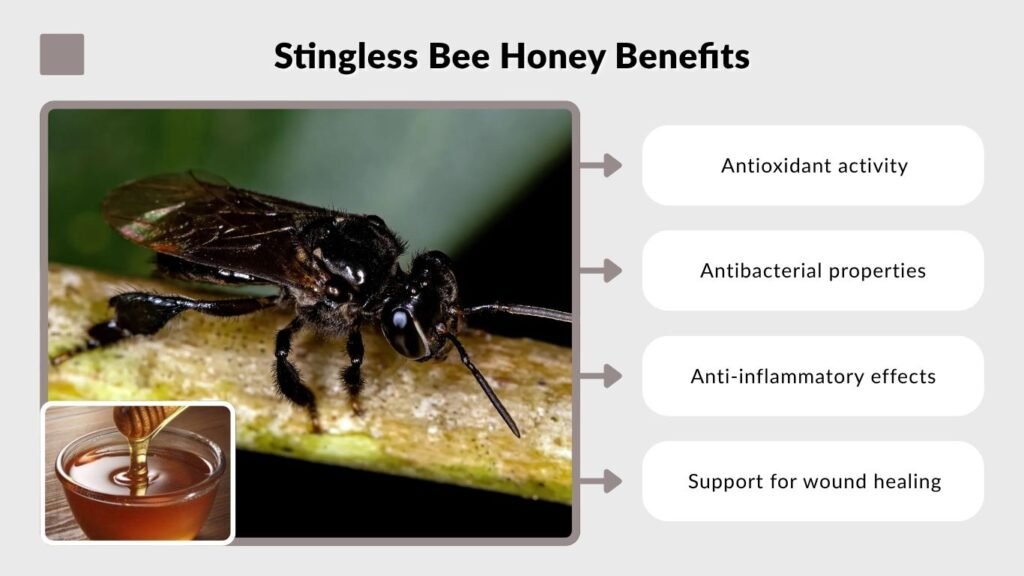
Stingless bee honey contains carbohydrates, organic acids, minerals, enzymes, and plant-derived compounds. Its exact composition depends on the bee species, surrounding vegetation, climate, and processing method.
Research has investigated its antioxidant and antimicrobial properties, but it should still be treated primarily as a food rather than as a proven medicine.
Potential Health Benefits
Research has explored possible:
- Antioxidant activity
- Antibacterial properties
- Anti-inflammatory effects
- Support for wound healing
- Protection from oxidative stress
- Effects on blood lipids
- Effects related to glucose metabolism
- Contribution of plant-derived phenolic compounds
These findings are interesting, but much of the evidence comes from laboratory, animal, or relatively small human studies.
Stingless bee honey should therefore not replace prescribed medication or professional medical treatment.
Is Stingless Bee Honey Good for You?
It can be part of a balanced diet when consumed in moderate amounts.
Like other honey, it provides quickly available carbohydrates and small amounts of various bioactive compounds. However, it is also a concentrated source of sugar.
A spoonful may add flavor to food or drinks, but consuming large quantities simply because honey is considered “natural” can significantly increase overall sugar intake.
Stingless Bee Honey vs Normal Honey
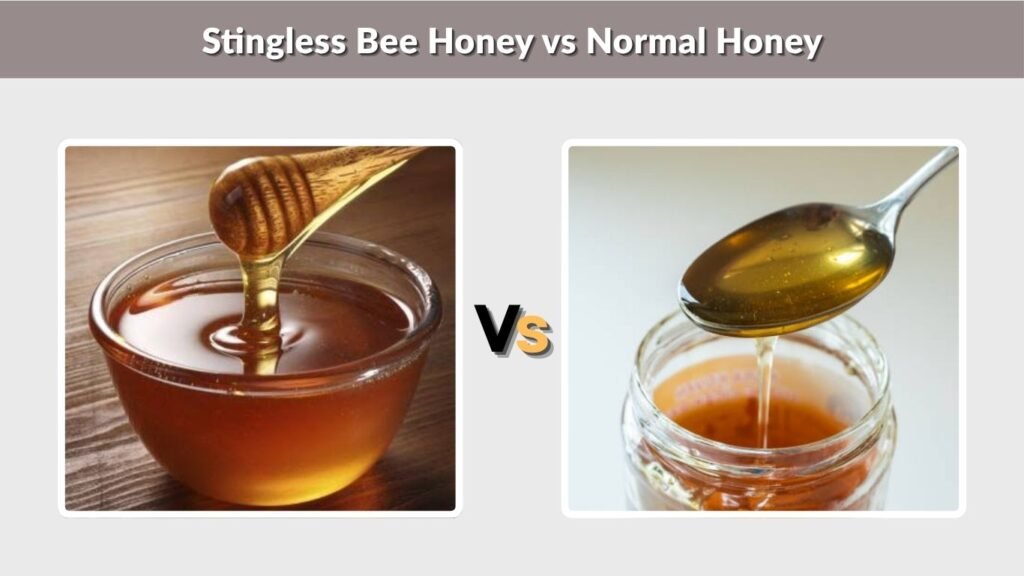
Stingless bee honey and conventional honeybee honey are both made from nectar, yet their flavor, texture, chemistry, storage structure, and production volumes can differ significantly.
Main Differences
- Texture: Stingless bee honey is generally thinner.
- Taste: It tends to be more tangy or acidic.
- Moisture: Usually higher than ordinary honey.
- Storage: Stingless bees use small honey pots instead of typical honeycomb.
- Production: Colonies generally produce much less harvestable honey.
- Price: Genuine products can therefore be relatively expensive.
- Sugar composition: Certain stingless bee honeys may contain notable amounts of unusual sugars such as trehalulose.
- Shelf stability: High moisture can make improper storage more problematic.
Neither type of honey is automatically superior in every nutritional respect.
Stingless Bee Honey vs Manuka Honey
Manuka honey is mainly associated with nectar collected from Leptospermum plants, particularly in New Zealand and Australia. It is well known for compounds associated with antibacterial activity.
Stingless bee honey, in contrast, is defined mainly by the bees producing it rather than a single plant source.
Both honeys have attracted scientific interest, but their chemical profiles are different. Claims that one is always healthier or more medicinal than the other are overly simplistic.
What Does Stingless Bee Honey Taste Like?
One of the biggest differences noticed by first-time users is the taste.
Stingless bee honey often combines sweetness with noticeable tartness. Some varieties may also taste fruity, floral, citrus-like, fermented, earthy, or slightly resinous.
What Influences the Flavor?
Taste depends on:
- Bee species
- Flower species visited
- Region
- Season
- Rainfall
- Honey maturity
- Natural acidity
- Storage conditions
- Fermentation level
- Resin used inside the nest
For example, Malaysian stingless bee honey may taste different from Australian, Honduran, Mayan, or Peruvian honey because the bees forage on completely different vegetation.
How to Consume Stingless Bee Honey
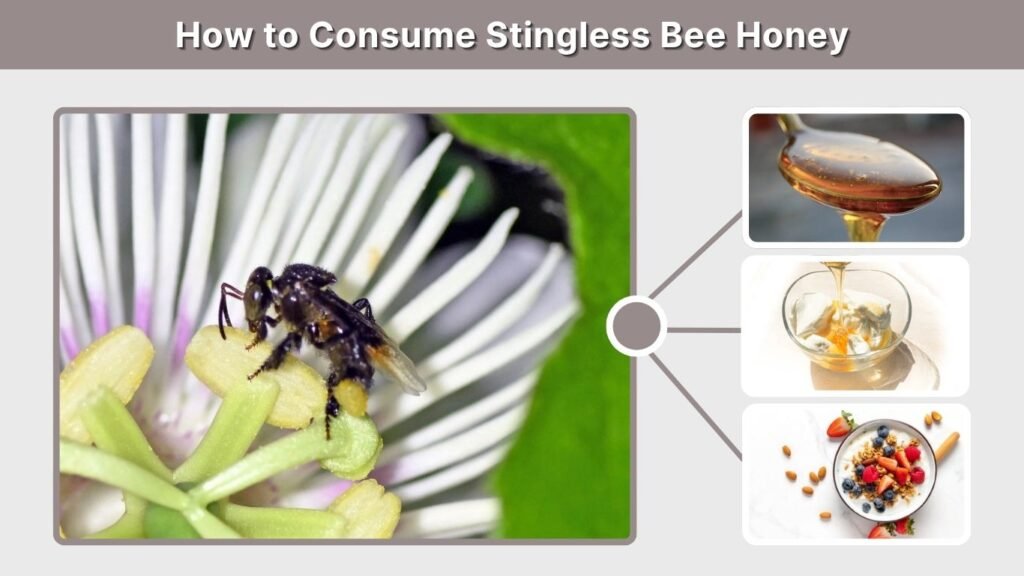
Stingless bee honey can generally be used much like other edible honey. Because its flavor is often stronger and more acidic, smaller quantities may be enough to noticeably change the taste of food.
Common Ways to Use It
You can use it:
- Directly by the spoonful
- Mixed into yogurt
- Drizzled over fruit
- Added to oatmeal
- Mixed into smoothies
- Added to warm tea
- Used in salad dressings
- Served with bread
- Added to desserts
- Used as a natural sweetener
Avoid adding expensive raw honey to extremely hot foods if your main reason for using it is to preserve heat-sensitive compounds.
How Much Should You Consume?
There is no universal medically established daily amount specifically for stingless bee honey.
Because it remains a source of added sugar, moderate portions are sensible. One or two teaspoons may be enough for flavor in many foods.
People who need to restrict sugar intake should consider honey within their overall carbohydrate and calorie intake.
Is Stingless Bee Honey Good for Diabetics?
People with diabetes should not assume that stingless bee honey is a free or unlimited sweetener.
Some varieties contain trehalulose and other sugars that have attracted research interest because they may behave differently from ordinary sucrose or glucose. However, stingless bee honey still contains carbohydrates capable of affecting blood sugar.
Important Points for Diabetes
People managing diabetes should remember:
- Honey contains sugar.
- Portion size matters.
- Blood glucose responses vary between individuals.
- It should not replace diabetes medication.
- “Natural” does not mean carbohydrate-free.
- Regular glucose monitoring may be necessary when changing diet.
Anyone with diabetes considering frequent medicinal use should discuss it with a qualified healthcare professional.
Stingless Bee Honey for Eyes
Stingless bee honey has a long history of traditional use in some cultures, including use around the eyes. This has also led to the sale of products marketed as stingless bee honey eye drops.
However, edible honey and sterile medical eye preparations are not the same thing.
Can You Put Stingless Bee Honey in Your Eyes?
Raw or food-grade stingless bee honey should not be placed directly into the eyes.
Natural honey is not necessarily sterile and may contain microorganisms or particles that are unsuitable for direct eye exposure. Putting contaminated material into the eye could cause irritation or potentially serious infection.
Only products specifically manufactured and approved for ophthalmic use should be considered for the eyes.
Does Stingless Bee Honey Treat Cataracts?
There is not strong clinical evidence showing that ordinary stingless bee honey can cure cataracts.
Cataracts involve clouding of the natural lens inside the eye and are usually managed through professional eye evaluation and, when necessary, surgery.
Honey should not be used as a substitute for an ophthalmologist’s diagnosis or treatment.
Stingless Bee Honey for Skin
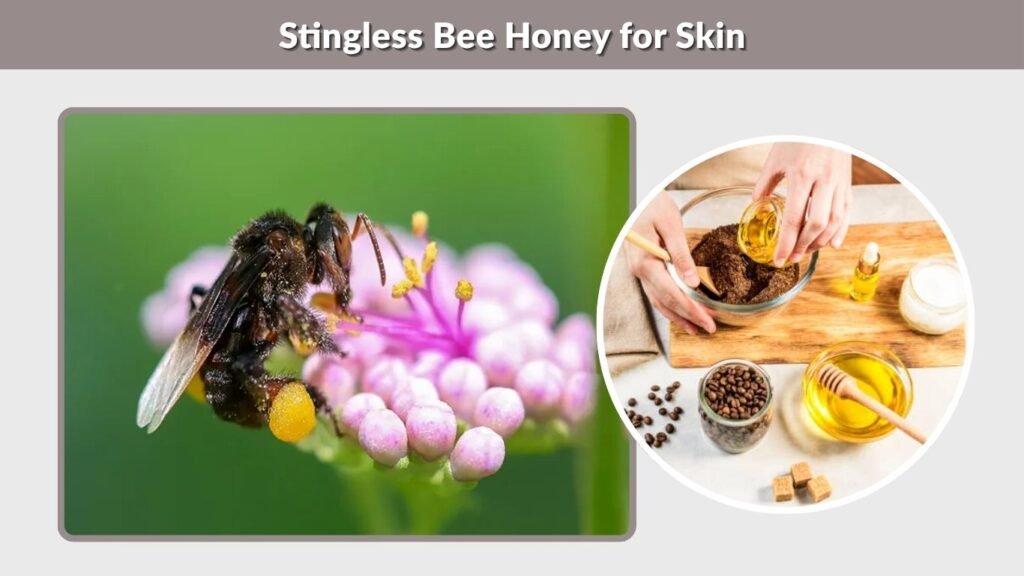
Honey has long been studied for skin and wound applications because of its moisture-retaining properties and antimicrobial characteristics.
However, cosmetic use at home is not equivalent to using sterile medical-grade honey for wound treatment.
Possible Skin Uses
Stingless bee honey is sometimes used in:
- Homemade face masks
- Moisturizing products
- Soaps
- Cosmetic creams
- Research into wound dressings
People with sensitive skin should test a small area first and stop using it if irritation develops.
Open, infected, surgical, or serious wounds require appropriate medical care rather than ordinary food-grade honey.
Stingless Bee Honey Side Effects
Most healthy adults can consume honey in normal food amounts, but stingless bee honey is not suitable for everyone.
Possible Risks and Side Effects
Potential concerns include:
- Allergic reactions
- Increased blood sugar
- Excess calorie intake
- Digestive discomfort after large amounts
- Fermentation if improperly stored
- Contamination from poor harvesting
- Interactions with special dietary requirements
- Unsafe use as homemade eye drops
People allergic to bee products, pollen, or certain plant substances should be particularly cautious.
Can Babies Have Stingless Bee Honey?
Honey should not be given to infants under 12 months old.
This recommendation applies to stingless bee honey as well as regular honey because honey may contain bacterial spores capable of causing infant botulism.
Cooking or mixing ordinary honey into food does not make it an appropriate food for babies younger than one year.
Buying and Storing Stingless Bee Honey
Genuine stingless bee honey can be more expensive than regular honey because each colony produces relatively small quantities.
Quality varies widely, so purchasing from a transparent and reputable producer is important.
What to Look for When Buying
Consider:
- Clearly identified producer
- Country or region of origin
- Bee species when available
- Harvesting date
- Proper sealed packaging
- Storage instructions
- No unexplained additives
- Traceable production information
Be cautious of products marketed with claims that they can cure serious illnesses.
For storage, follow the producer’s instructions. High-moisture stingless bee honey may require different storage practices from conventional honey.
FAQs
1. What is stingless bee honey?
It is honey made by stingless bees, mainly members of the Meliponini group. They store their honey in small wax-resin pots rather than ordinary honeybee comb.
2. What does stingless bee honey taste like?
It usually tastes sweet, tangy, and mildly acidic. Depending on its floral source, it may also have fruity, floral, citrus, or resin-like flavors.
3. Is stingless bee honey better than regular honey?
Not necessarily. The two have different moisture levels, flavors, sugars, and bioactive compounds. Which is preferable depends on taste, intended use, and individual dietary needs.
4. Can stingless bee honey be used as eye drops?
Raw or food-grade honey should not be put directly into the eyes. It is not a sterile ophthalmic product and may create a risk of irritation or infection.
5. Does stingless bee honey expire?
Honey can remain usable for a long time when properly handled, but stingless bee honey’s higher moisture content makes fermentation more likely. Follow storage instructions and discard products showing unusual gas buildup, contamination, mold, or other signs of spoilage.