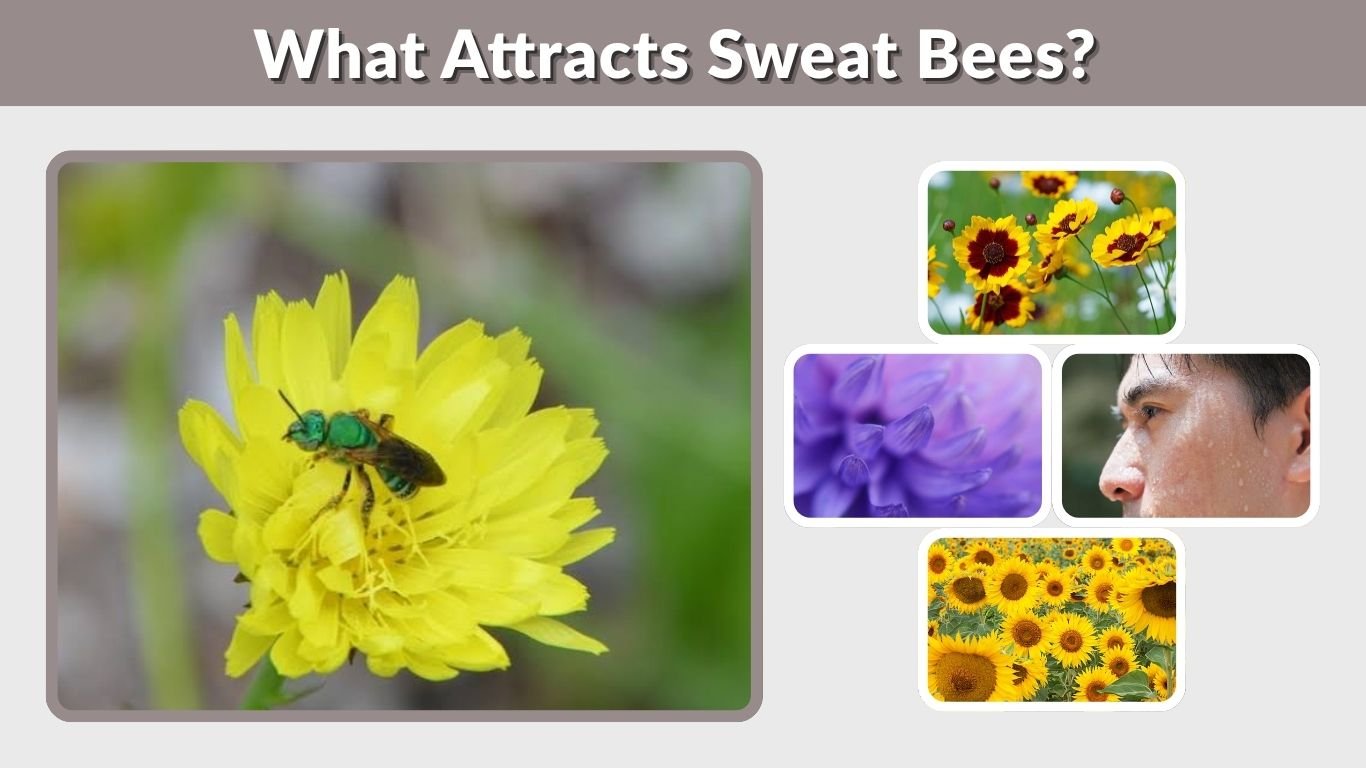
Sweat bees are attracted to human perspiration, flowers, moisture, and mineral-rich water. Their unusual interest in people comes mainly from the salts found in sweat, especially sodium, which can be difficult for bees to obtain from flowers alone. You may notice them landing on your arms, legs, or face during hot weather or hovering around swimming pools and damp areas. Despite this behavior, sweat bees are generally harmless pollinators and are not trying to attack you when they come close.
What Attracts Sweat Bees?
Sweat bees belong to the family Halictidae, a large group of mostly small native bees. While nectar and pollen provide most of their food, some species actively seek additional minerals and moisture. This explains why sweat bees may gather around people, gardens, pools, muddy soil, and other damp places during warm weather.
Main Things That Attract Sweat Bees
Sweat bees are commonly attracted to:
- Human perspiration
- Salt and minerals
- Flower nectar
- Pollen
- Moist soil
- Pool water
- Puddles and damp surfaces
- Brightly colored flowers
- Sunny nesting areas
The attraction to sweat is unusual but completely natural. Bees are obtaining nutrients rather than attempting to sting.
Why Are Sweat Bees Attracted to Sweat?
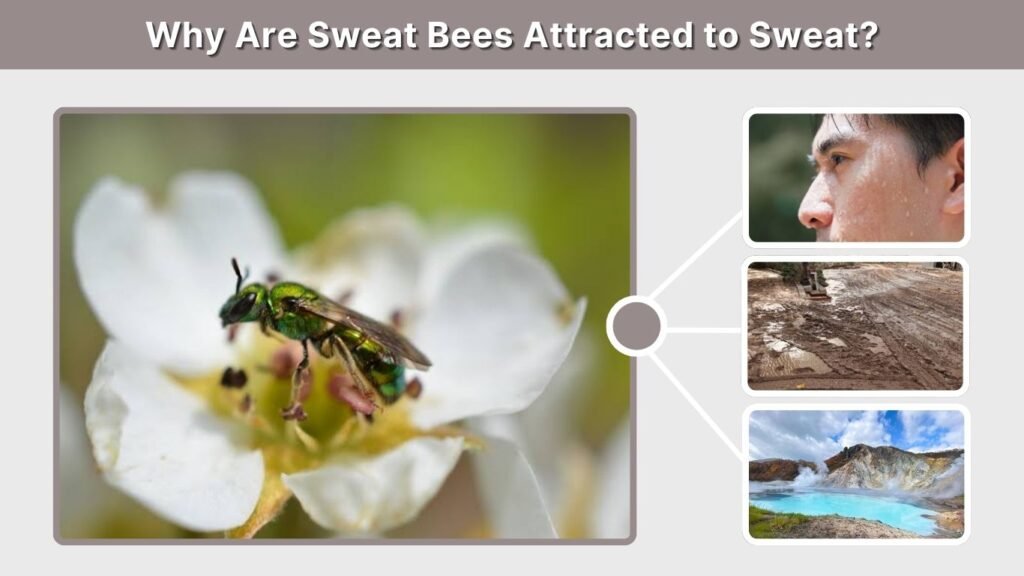
Human sweat contains water along with sodium, potassium, and other dissolved minerals. Certain sweat bees seek these nutrients because flower nectar may not provide enough of them.
A bee landing on sweaty skin may gently lick the moisture with its mouthparts.
Salt Is the Main Attraction
Sodium is especially valuable because insects need it for important biological functions.
Sweat bees can obtain sodium from several sources, including:
- Human sweat
- Animal perspiration
- Damp soil
- Mud
- Mineral-rich water
- Salty surfaces
During hot weather, perspiring people can become easy sources of both moisture and salt.
Are All Bees Attracted to Sweat?
No. The behavior is especially associated with certain members of the sweat bee family.
Honey bees may occasionally investigate salty water or other mineral sources, but they are not normally as strongly associated with human perspiration as sweat bees.
Why Are Sweat Bees Attracted to Me?
If sweat bees seem to follow you more than other people, the most likely explanation is that you are producing more sweat or have more salt remaining on your skin.
Heat, exercise, clothing, body chemistry, and outdoor activity can all influence how attractive you become.
Reasons They May Follow You
You may attract more sweat bees if you:
- Are sweating heavily
- Exercise outdoors
- Spend time outside in hot weather
- Have salty perspiration
- Recently worked in the garden
- Wear floral or sweet fragrances
- Spend time close to bee nesting areas
- Stand near flowering plants
They usually do not recognize or specifically prefer individual people. They are responding to moisture, minerals, smells, and nearby resources.
Do Sweat Bees Want to Sting You?
Usually, no.
A sweat bee landing on your arm is more likely interested in perspiration than defense.
Female sweat bees can sting, but they generally do so only when squeezed, trapped against the skin, or handled. Swatting at one may increase the likelihood of being stung.
What Plants Attract Sweat Bees?
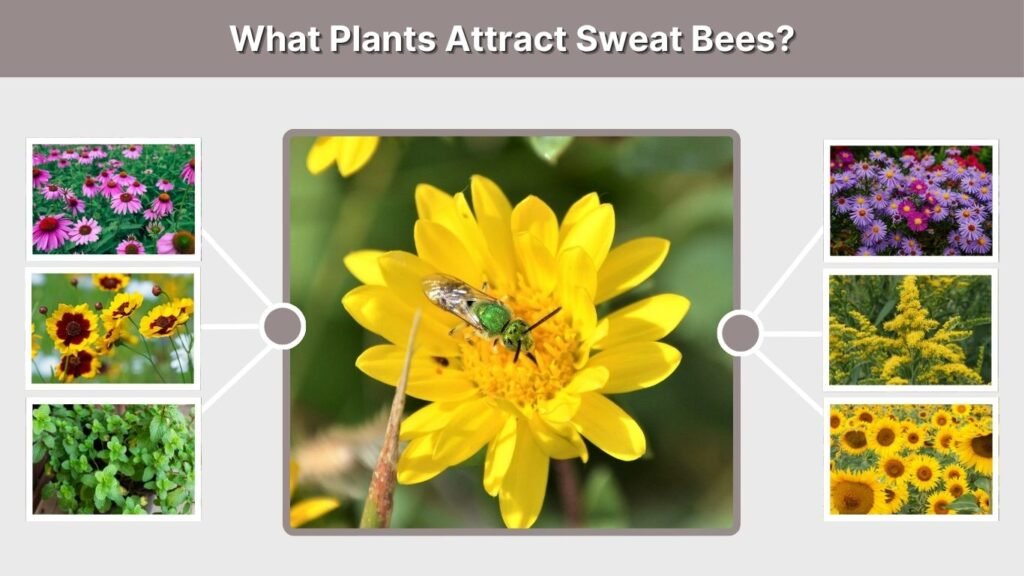
Flowers are the primary reason sweat bees visit gardens. Adults feed on nectar, while females collect pollen to provide food for their developing larvae.
A garden with many small, open flowers can become especially attractive.
Plants That May Attract Sweat Bees
Useful flowering plants include:
- Asters
- Goldenrod
- Sunflowers
- Coneflowers
- Black-eyed Susans
- Coreopsis
- Mint
- Salvia
- Lavender
- Marigolds
- Fruit blossoms
- Native wildflowers
Planting several species that bloom at different times can provide food from spring through fall.
Why Small Flowers Work Well
Many sweat bees are much smaller than honey bees or bumblebees.
Shallow, open flowers allow them to reach nectar and pollen easily. Composite flowers such as asters and sunflowers provide many tiny florets in one convenient location.
Why Are Sweat Bees Attracted to Pools?
Swimming pools can attract sweat bees because they provide a reliable source of water and dissolved minerals.
During hot, dry weather, pools may be among the easiest water sources for insects to locate.
What Attracts Them to Pool Water?
Pool areas can provide:
- Water
- Dissolved salts
- Minerals
- Moist concrete
- Puddles around the edge
- Sweaty swimmers
- Nearby flowers
Saltwater pools may be particularly interesting to mineral-seeking insects, although bees can visit conventional swimming pools as well.
Why Do Sweat Bees Approach You While Swimming?
The bee may be responding to a combination of pool moisture and minerals on your skin.
You might also continue producing perspiration even while sitting near or moving around the pool.
If one lands on you, gently moving away or allowing it to leave is usually better than hitting it.
Are Sweat Bees Attracted to Bright Colors?
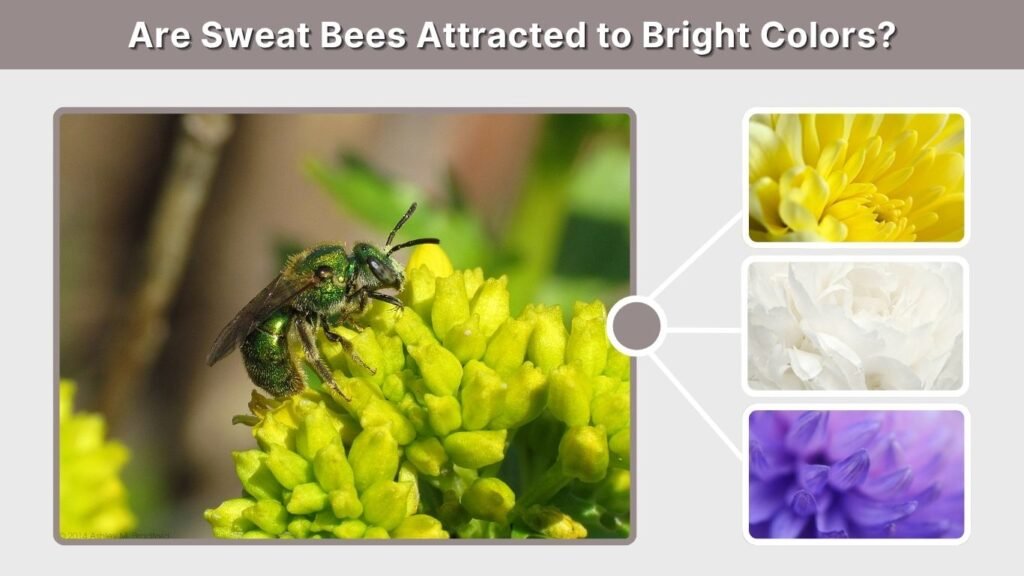
Like many pollinating insects, sweat bees use visual cues to locate flowers.
Bright floral colors can therefore attract their attention, but color is usually only one part of the attraction.
Colors and Floral Signals
Sweat bees may investigate:
- Yellow
- White
- Blue
- Purple
- Violet
- Greenish flowers
Flower shape, scent, ultraviolet patterns, and nectar availability also help determine which plants receive the most visits.
Bright clothing may occasionally attract curious insects, but perspiration and nearby flowers are usually more important reasons sweat bees approach people.
What Attracts Sweat Bees to Your House?
Sweat bees generally have little reason to live inside a house. When they appear around homes, suitable flowers, moisture, or nesting soil outside is normally the explanation.
Some species may also investigate cracks or wood cavities.
Common Attractions Around Homes
Properties may attract sweat bees because of:
- Flower gardens
- Bare soil
- Vegetable gardens
- Swimming pools
- Leaking faucets
- Pet water bowls
- Birdbaths
- Damp soil
- Decaying wood
- Sunny areas suitable for nesting
Seeing several sweat bees outside does not necessarily mean there is a nest inside your house.
What Attracts Sweat Bees to Nest in a Yard?
Many sweat bees build underground nests.
They often choose areas that receive plenty of sun and contain exposed or sparsely vegetated soil.
Attractive Nesting Conditions
Sweat bees may favor:
- Bare soil
- Sandy ground
- Well-drained soil
- Thin lawns
- Garden edges
- Areas between paving stones
- Soil beside walkways
- South-facing slopes
Several females may nest close together, giving the impression of a large colony even when each bee maintains its own nest.
Keeping dense vegetation or mulch over unwanted nesting areas may make those locations less attractive after current nesting activity has ended.
How to Attract Sweat Bees to Your Garden
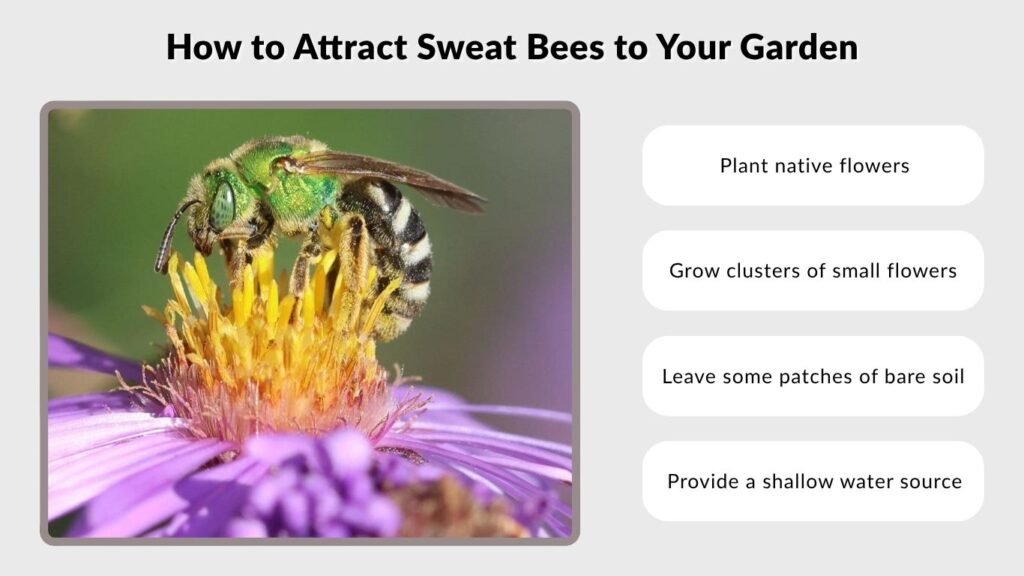
Sweat bees are valuable pollinators, so gardeners may deliberately encourage them.
Creating a bee-friendly habitat does not require purchasing special attractants.
Ways to Attract Sweat Bees
You can:
- Plant native flowers
- Provide blooms throughout the growing season
- Grow clusters of small flowers
- Leave some patches of bare soil
- Provide a shallow water source
- Avoid unnecessary insecticides
- Leave dead wood where safe
- Grow a mixture of flower colors and shapes
Native plants are especially useful because local bee species have evolved alongside them.
How to Keep Sweat Bees Away From You
If sweat bees become annoying while you are outdoors, reducing sweat and strong scents can make you less attractive.
There is usually no reason to kill them.
Simple Ways to Reduce Attraction
Try these methods:
- Shower after heavy exercise
- Dry sweat from exposed skin
- Wear lightweight clothing that covers skin
- Avoid strongly scented lotions outdoors
- Move away from flowering areas
- Keep poolside spills and puddles cleaned up
- Use a fan around patios or seating areas
- Avoid swatting bees that land on you
Sweat bees are small and lightweight, so moving air from a fan can make it difficult for them to hover around a patio.
Are Sweat Bees Beneficial?
Despite sometimes becoming annoying around sweaty people, sweat bees are highly beneficial.
Many native plants and crops depend partly on small native bees for pollination.
They visit flowers that larger bees may overlook and help maintain plant diversity in gardens, farms, and natural habitats.
Rather than eliminating them, it is usually better to reduce whatever is attracting them to areas where people gather.
FAQs
1. What attracts sweat bees the most?
Human sweat, especially its salt content, is a major attraction. Sweat bees are also strongly attracted to nectar, pollen, water, damp soil, and suitable nesting areas.
2. Why are sweat bees attracted to humans?
They may land on people to obtain moisture and minerals, particularly sodium, from perspiration. They are generally not approaching humans because they want to sting.
3. Are sweat bees attracted to swimming pools?
Yes. Pools provide water and dissolved minerals, while swimmers provide additional sweat and salt that can attract these bees.
4. What plants attract sweat bees?
Asters, sunflowers, goldenrod, coneflowers, mint, salvia, coreopsis, and many native wildflowers are attractive because they provide easily accessible nectar and pollen.
5. How can I stop sweat bees from landing on me?
Keep your skin dry, cover exposed areas, avoid strong floral fragrances, move away from flowering plants, and use a fan when sitting outdoors. Avoid swatting them because females may sting when trapped against the skin.