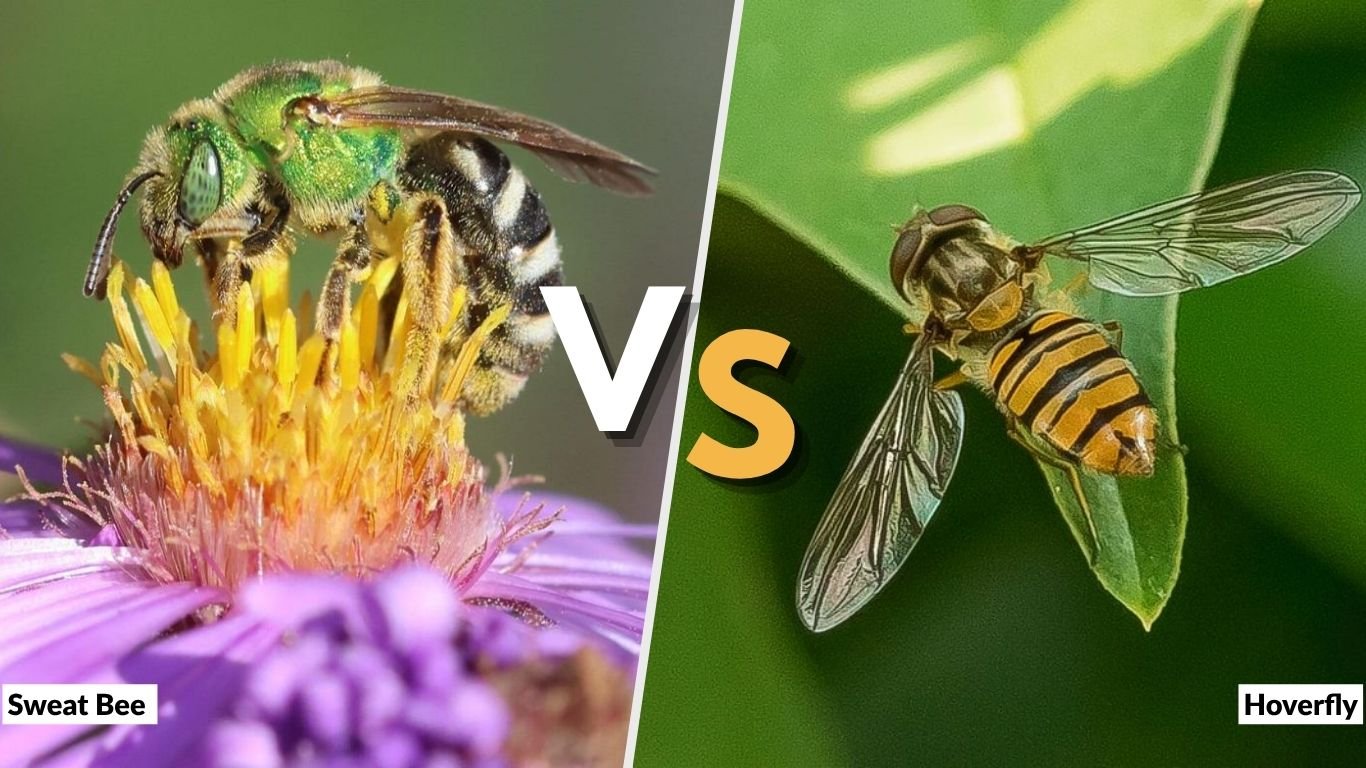
A sweat bee and a hoverfly can look surprisingly similar, especially when both are visiting flowers. Sweat bees are true bees in the family Halictidae, while hoverflies are flies in the family Syrphidae. The easiest differences involve their wings, antennae, body shape, and behavior. Sweat bees have two pairs of wings and longer antennae, while hoverflies have only one functional pair of wings and short antennae. Hoverflies cannot sting, but female sweat bees can sting if trapped or handled.
Sweat Bee vs Hoverfly: Quick Comparison
Both insects are beneficial pollinators, but they belong to completely different insect groups. Sweat bees are closely related to other bees and wasps, while hoverflies are true flies. Looking carefully at their wings, eyes, antennae, and flight style usually makes identification much easier.
| Feature | Sweat Bee | Hoverfly |
| Insect group | Bee | Fly |
| Family | Halictidae | Syrphidae |
| Wings | Two pairs | One pair |
| Antennae | Relatively long | Short |
| Eyes | Smaller, separated | Often very large |
| Body | Usually hairy | Often smoother |
| Sting | Females can sting | Cannot sting |
| Flight | Bee-like flight | Can hover in place |
| Pollen carrying | Often visible on hairs | Usually less obvious |
| Attraction to sweat | Common in some species | Not typical |
What Is a Sweat Bee?
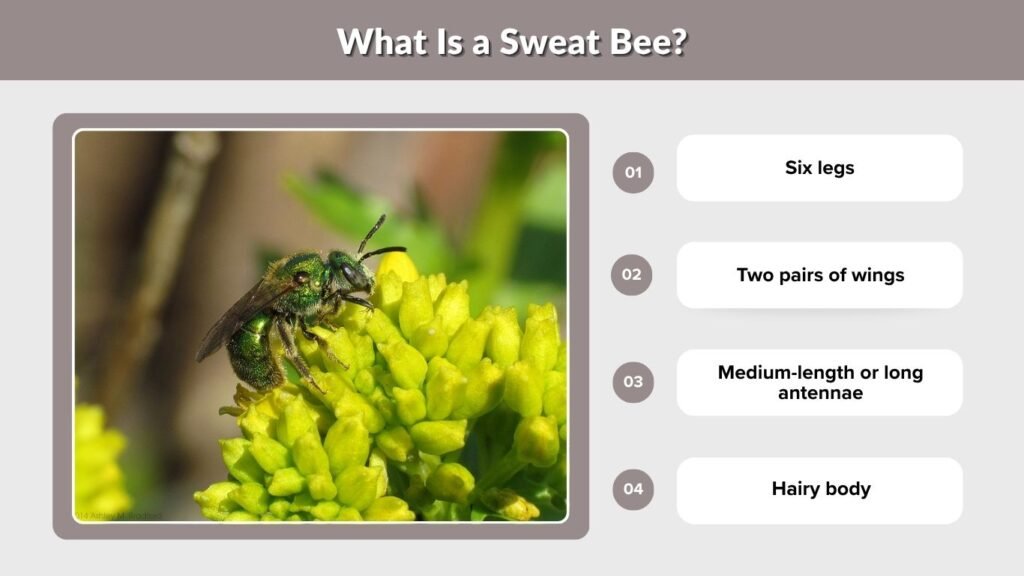
Sweat bees are small to medium-sized bees belonging to the family Halictidae. They may be black, brown, metallic green, blue, or bronze. Their common name comes from the behavior of some species that land on people to obtain salts from perspiration.
Sweat Bee Identification
Typical sweat bee characteristics include:
- Six legs
- Two pairs of wings
- Medium-length or long antennae
- Hairy body
- Metallic green or dark coloration in many species
- Pollen-carrying hairs on females
- Narrow bee-like body
- Moderate to fast flight
Metallic green sweat bees are particularly distinctive, although striped species may be mistaken for hoverflies.
Sweat Bee Behavior
Sweat bees spend much of their time collecting nectar and pollen from flowers. Some land on sweaty skin during hot weather because perspiration provides moisture and minerals.
Most are gentle and do not actively attack humans.
What Is a Hoverfly?
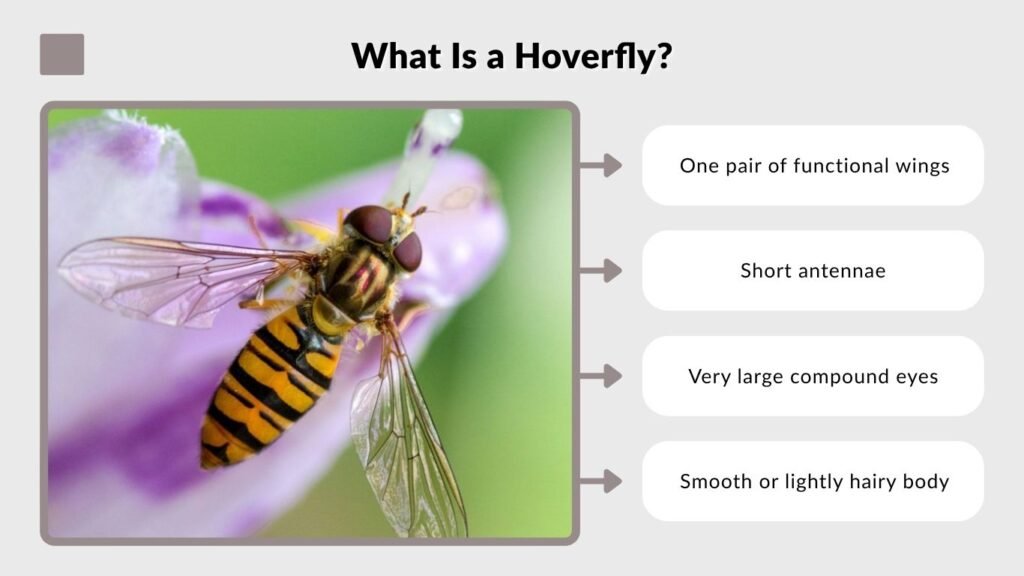
Hoverflies are true flies belonging to the family Syrphidae. Many species have evolved yellow-and-black markings that resemble bees or wasps, helping discourage predators.
Unlike bees, hoverflies have only one functional pair of wings.
Hoverfly Identification
Common characteristics include:
- One pair of functional wings
- Short antennae
- Very large compound eyes
- Smooth or lightly hairy body
- Yellow, black, orange, or brown markings
- Ability to hover almost motionless
- Quick sideways movements
- No stinger
Their ability to remain suspended in the air is one of the strongest behavioral clues.
Hoverfly Behavior
Hoverflies frequently hover above flowers before landing to feed on nectar and pollen.
They can suddenly move sideways, forward, or backward and then return to almost the same location.
This flight behavior makes them noticeably different from many bees.
Sweat Bee vs Hoverfly Appearance
At first glance, striped hoverflies and some sweat bees can appear almost identical. Both are relatively small insects commonly seen around gardens and flowers.
Closer inspection reveals several reliable differences.
Wings
The wings are one of the best identification features.
Sweat bees have four wings, arranged as two pairs. During flight, the front and rear wings function together and can be difficult to distinguish.
Hoverflies have only two functional wings. Behind them are tiny balancing structures called halteres.
Antennae
Sweat bees have clearly visible, relatively long antennae.
Hoverflies have much shorter antennae, often appearing as small projections from the front of the head.
This difference can be particularly useful when examining a resting insect.
Eyes
Hoverflies usually have very large compound eyes that dominate much of the head.
A sweat bee’s eyes are noticeably smaller and leave more visible space around the head.
Male hoverflies in some species have eyes that meet or nearly meet at the top.
Sweat Bee vs Hoverfly Size
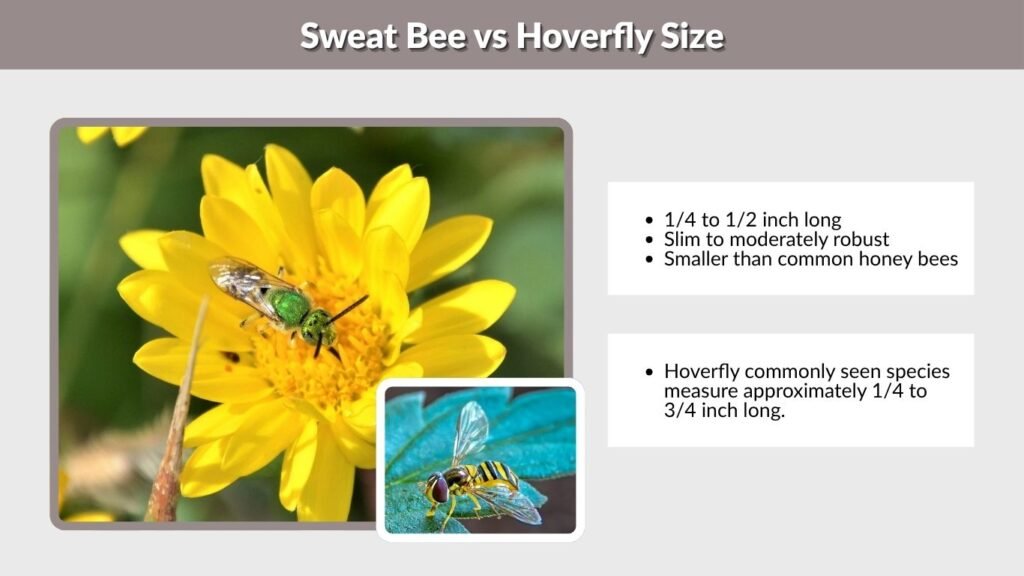
Size alone is not a reliable identification method because both groups include very small and relatively large species.
However, many common sweat bees and hoverflies fall within a similar general size range.
Typical Sweat Bee Size
Many sweat bees are approximately:
- 1/4 to 1/2 inch long
- Slim to moderately robust
- Smaller than common honey bees
Some species are extremely tiny and can easily be overlooked.
Typical Hoverfly Size
Hoverflies vary considerably.
Many commonly seen species measure approximately 1/4 to 3/4 inch long. Some closely resemble tiny bees, while larger species imitate honey bees, bumblebees, or wasps.
Sweat Bee vs Hoverfly Sting and Bite
One major difference involves their ability to sting.
Female sweat bees possess stingers, while hoverflies have no stinger at all.
Do Sweat Bees Sting?
Female sweat bees can sting, but they are generally reluctant to do so.
A sting is most likely when a bee is:
- Trapped against the skin
- Squeezed
- Caught inside clothing
- Stepped on
- Deliberately handled
Most sweat bee stings cause brief pain, redness, itching, or mild swelling.
Do Hoverflies Sting or Bite?
Hoverflies do not sting.
They do not have a stinger and are harmless to people. Their bee-like colors are primarily defensive mimicry.
Hoverflies also do not normally bite humans.
If a yellow-and-black insect repeatedly hovers close to you without landing or behaving aggressively, it may simply be a curious hoverfly.
Sweat Bee vs Hoverfly Flight Behavior
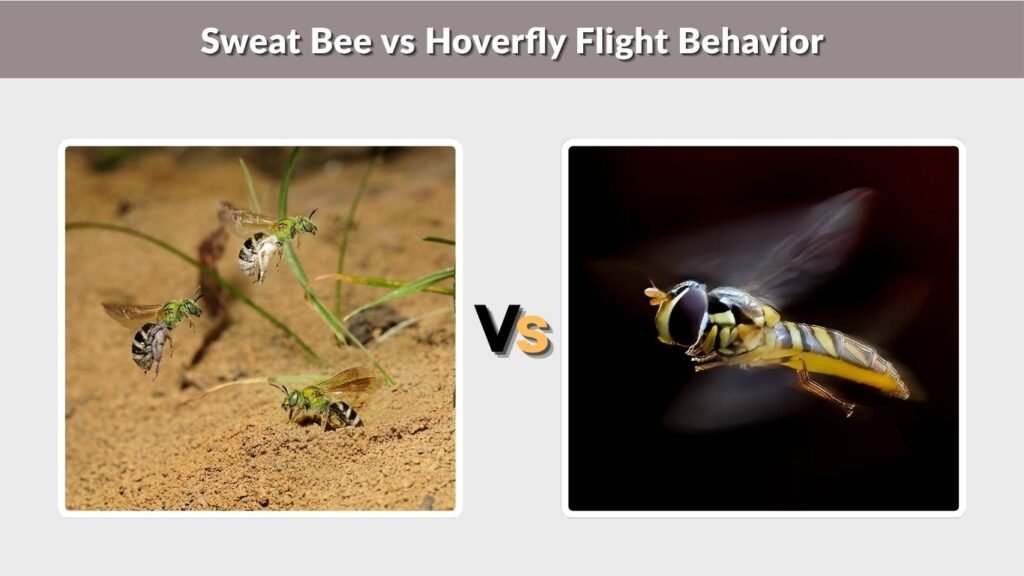
Watching the insect fly can sometimes identify it faster than examining its body.
Hoverflies are exceptionally skilled aerial fliers, while sweat bees tend to move more like typical bees.
How Hoverflies Fly
Hoverflies can:
- Hover almost motionless
- Fly sideways
- Make sudden turns
- Move backward
- Stay suspended above flowers
- Return repeatedly to the same position
Their controlled hovering gives the family its common name.
How Sweat Bees Fly
Sweat bees usually fly directly between flowers, nesting areas, and other resources.
They can maneuver quickly but do not usually demonstrate the prolonged, stationary hovering characteristic of hoverflies.
Sweat Bee vs Hoverfly Around Flowers
Both insects are commonly found around flowering plants because adults feed on nectar or pollen.
They are therefore often confused in gardens.
Sweat Bees on Flowers
Female sweat bees deliberately collect pollen to provision their nests.
Pollen may accumulate on specialized hairs on their legs or underside, making them look dusty or yellow.
They may repeatedly visit many flowers before returning to a nest.
Hoverflies on Flowers
Adult hoverflies also consume nectar and pollen.
However, they do not collect large pollen loads to feed offspring in the same way bees do.
Many hoverflies spend significant time hovering close to flower patches before landing.
Sweat Bee vs Hoverfly Nesting
Their nesting and reproductive behavior is very different.
Sweat bees build nests, while hoverflies do not construct bee-like nests.
Sweat Bee Nests
Many sweat bees create underground nests in:
- Bare soil
- Gardens
- Lawns
- Sandy banks
- Fields
- Path edges
Some species use wood or cavities instead.
Females create brood cells and provide pollen and nectar for their young.
Where Hoverflies Reproduce
Hoverfly females lay eggs in places suitable for their larvae.
Depending on the species, larvae may live among aphid colonies, in decaying organic material, in water, or in plant tissue.
Predatory hoverfly larvae are especially beneficial because many consume aphids and other soft-bodied pests.
Are Sweat Bees or Hoverflies Beneficial?
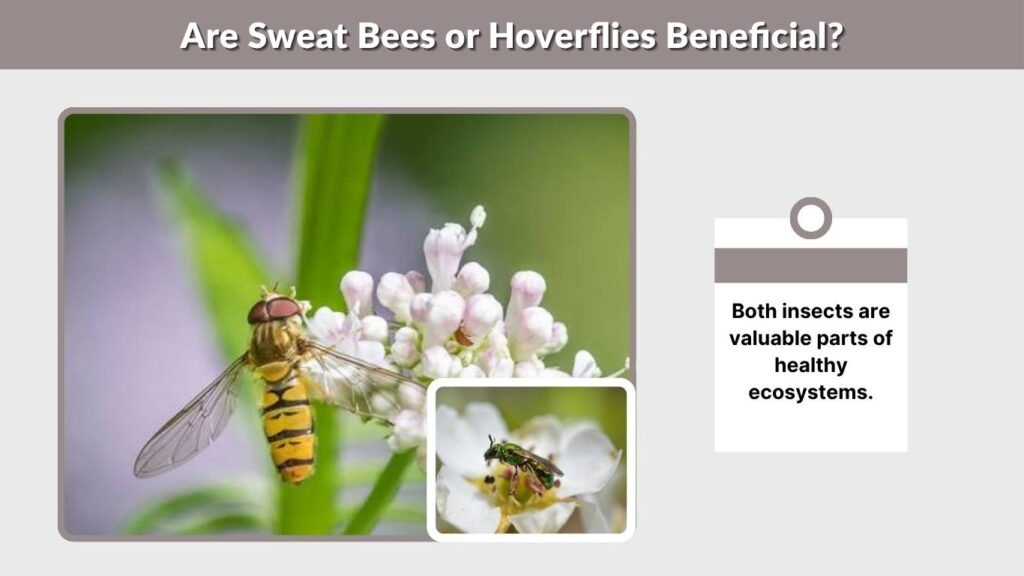
Both insects are valuable parts of healthy ecosystems.
Sweat bees are important native pollinators, while hoverflies contribute both pollination and natural pest control.
Benefits of Sweat Bees
Sweat bees:
- Pollinate wildflowers
- Visit vegetable blossoms
- Support fruit production
- Increase native plant reproduction
- Maintain pollinator diversity
Benefits of Hoverflies
Hoverflies:
- Pollinate many flowers
- Visit crops and garden plants
- Provide food for wildlife
- Help maintain biodiversity
- Produce larvae that often eat aphids
For gardeners, having both insects present is generally a positive sign.
How to Tell a Sweat Bee From a Hoverfly Quickly
If you only have a few seconds to identify the insect, focus on its flight and head.
A hoverfly often stops in midair and has short antennae with extremely large eyes. A sweat bee typically flies directly between flowers and has longer antennae.
Quick Identification Checklist
Look for these clues:
- Four wings: Sweat bee
- Two wings: Hoverfly
- Longer antennae: Sweat bee
- Very short antennae: Hoverfly
- Large fly-like eyes: Hoverfly
- Pollen-covered legs or body: Usually sweat bee
- Hovering motionless: Usually hoverfly
- Metallic green body: Often a sweat bee
- Able to sting: Female sweat bee
- Completely stingless: Hoverfly
FAQs
1. What is the main difference between a sweat bee and a hoverfly?
A sweat bee is a true bee with two pairs of wings and relatively long antennae. A hoverfly is a true fly with only one functional pair of wings and short antennae.
2. Can hoverflies sting like sweat bees?
No. Hoverflies do not have stingers and cannot sting. Female sweat bees can sting when trapped or threatened.
3. Why do hoverflies look like bees?
Many hoverflies imitate the yellow-and-black coloration of bees and wasps. This form of mimicry can make predators hesitate to attack them.
4. Do sweat bees and hoverflies both pollinate flowers?
Yes. Both are important pollinators. Sweat bees collect pollen for their young, while adult hoverflies visit flowers mainly for nectar and pollen as food.
5. How can I identify a hoverfly quickly?
Watch its flight. If the insect can remain almost motionless in midair and has very short antennae and large eyes, it is likely a hoverfly rather than a sweat bee.