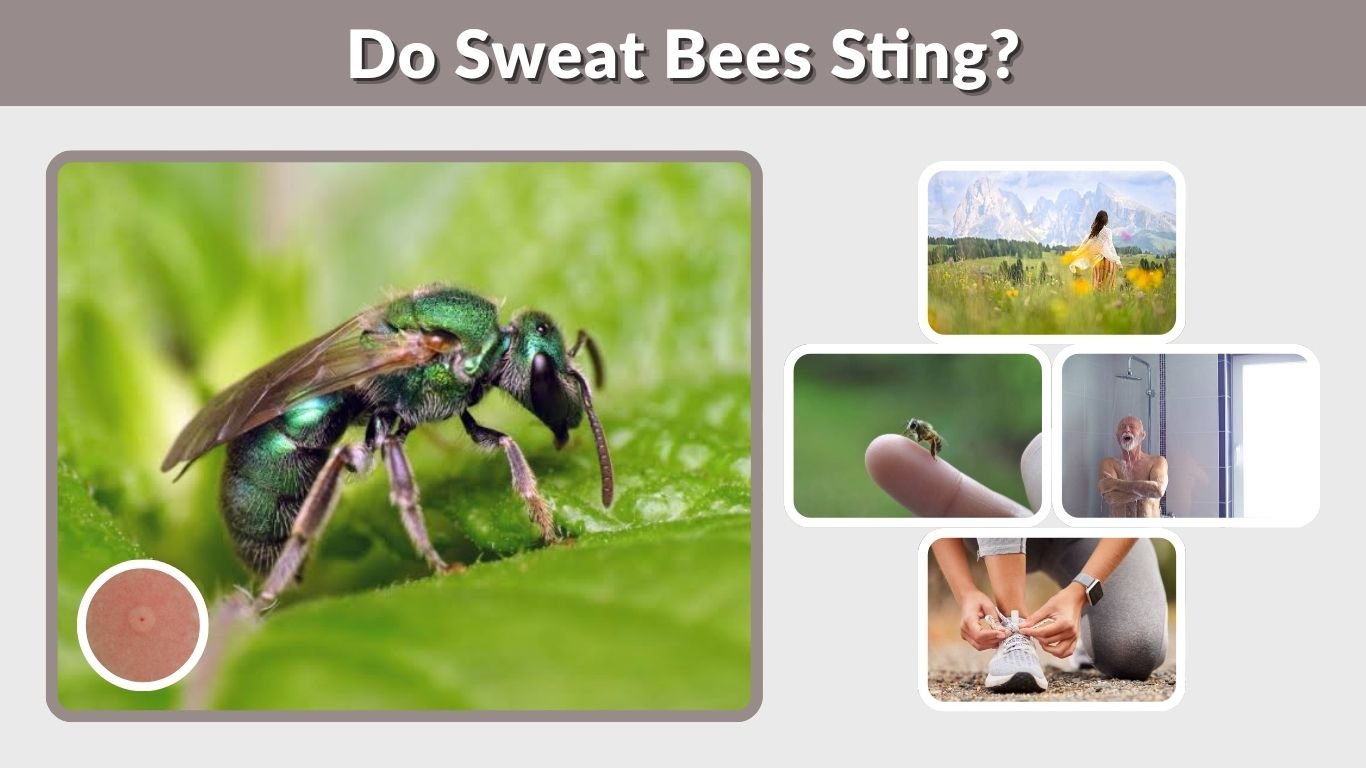
Yes, sweat bees can sting humans, but they usually do so only when trapped, pressed against the skin, or otherwise threatened. These small bees are attracted to perspiration because sweat provides moisture and salts, which is why they may land directly on people during hot weather. Most sweat bee stings cause relatively mild, short-lived pain compared with more defensive stinging insects. Female sweat bees can sting, while males cannot. Understanding their behavior can help you avoid unnecessary stings while allowing these valuable native pollinators to remain around your garden.
Do Sweat Bees Sting Humans?
Sweat bees belong to the family Halictidae, a diverse group of mostly small native bees. Many species are attracted to human perspiration because of its salt content. Simply landing on your arm does not necessarily mean a bee is preparing to sting. Most are relatively nonaggressive and sting primarily when they feel physically threatened.
When Do Sweat Bees Sting?
A female sweat bee is most likely to sting when:
- It becomes trapped between your skin and clothing.
- You slap or squeeze it while it is drinking sweat.
- It is accidentally pressed against your body.
- You grab or handle it.
- Its nesting area is severely disturbed.
- It feels unable to escape.
UF/IFAS specifically notes that female pure gold-green sweat bees may sting if startled or threatened while licking perspiration from a person.
Why Are Sweat Bees Attracted to People?
Their name comes from their attraction to perspiration. Human sweat contains water and dissolved salts, including sodium, and some sweat bees land on exposed skin to obtain these resources.
This behavior is particularly noticeable during hot outdoor activities when people are perspiring heavily.
A bee that lands and begins licking your skin is generally feeding rather than trying to attack you.
Do Sweat Bees Sting or Bite?
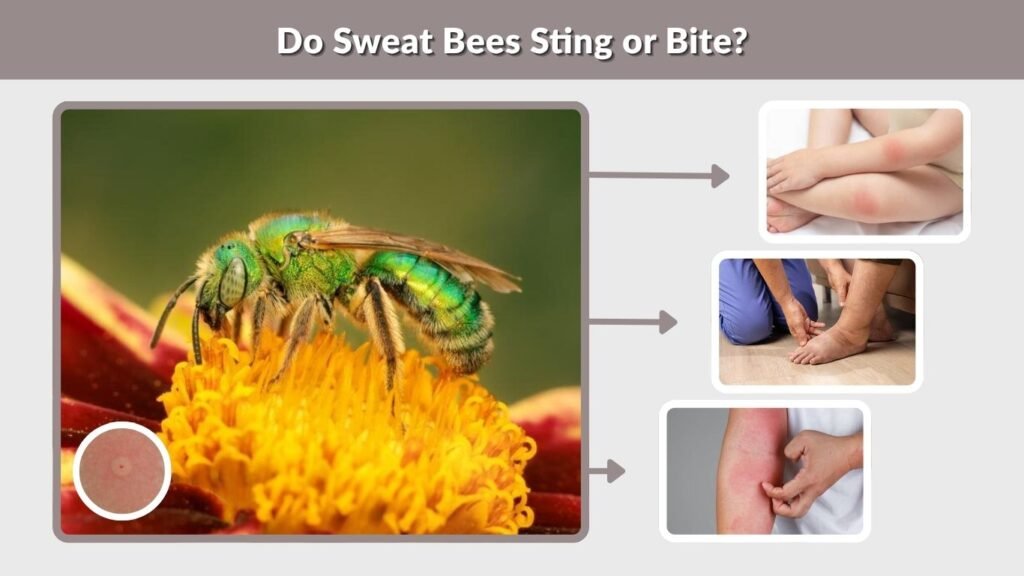
Sweat bees sting rather than bite people as their main defense. Like other stinging bees, females possess a modified egg-laying structure that functions as a stinger. Their mouthparts are used primarily for feeding and working with plant materials rather than attacking humans. Male bees lack functional stingers.
How Does a Sweat Bee Sting?
When threatened, a female can use the stinger at the end of her abdomen to puncture the skin and deliver venom.
A typical sting may produce:
- Sudden sharp pain
- Burning or stinging sensation
- A small red spot
- Mild swelling
- Tenderness
- Itching
Penn State Extension describes sweat bee stings as generally mild, while native bee guidance also emphasizes that many native bees are much less inclined to sting than highly defensive social species.
How Painful Is a Sweat Bee Sting?
For most people, a sweat bee sting is relatively mild. The first sensation may feel like a quick pinprick or burning jab, followed by temporary redness, tenderness, or itching around the sting site. Individual sensitivity varies, however, so one person may barely notice a sting while another develops more substantial local swelling.
Typical Reaction
Common localized symptoms include:
- Mild pain
- Redness
- Small-area swelling
- Itching
- Warmth
- Tenderness
Most uncomplicated insect stings can be managed at home and improve without medical treatment.
Large local reactions can occasionally cause more extensive swelling, but widespread symptoms such as breathing difficulty require much more urgent attention.
Do Green Sweat Bees Sting?
Yes. The brightly colored metallic green bees commonly called green sweat bees are members of the sweat bee family, and females can sting.
Green sweat bees are often among the easiest Halictidae to notice because their bodies can appear brilliant green, blue-green, coppery, or metallic.
Are Green Sweat Bees Aggressive?
Generally, no. They are usually interested in flowers, nesting, or obtaining salts rather than attacking humans.
UF/IFAS reports that female Augochlora pura, a metallic green sweat bee, can lick perspiration from people and may sting if startled or threatened during the process.
If one lands on you, gently brushing it away is safer than crushing it against your skin.
Do Male Sweat Bees Sting?
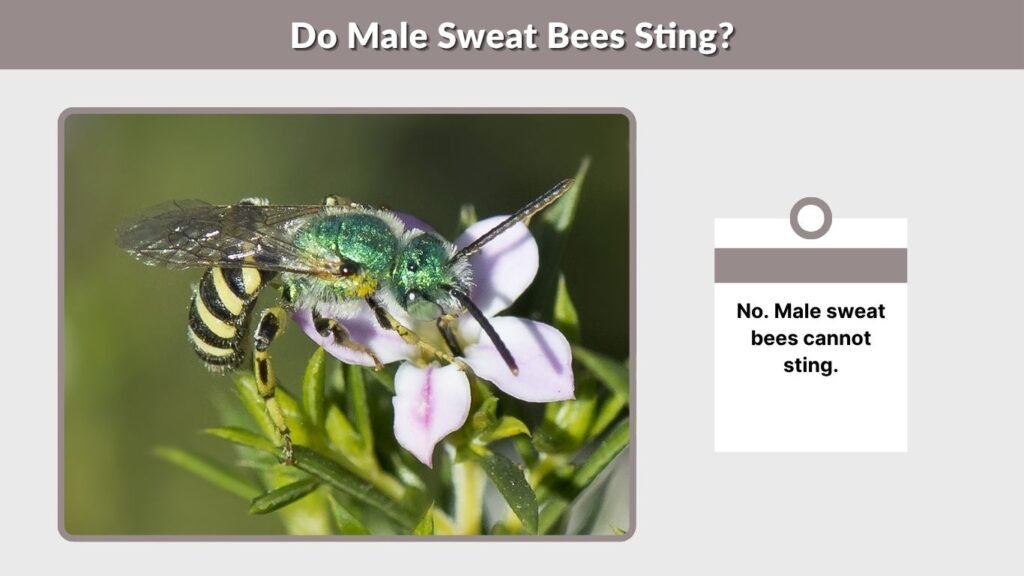
No. Male sweat bees cannot sting.
A bee’s stinger evolved from the ovipositor, an egg-laying structure found only in females. Consequently, male bees lack this defensive equipment. UF/IFAS specifically states that males of the green sweat bee Augochlora pura cannot sting.
What About Small or Baby Sweat Bees?
Size does not determine whether a sweat bee can sting.
Many adult species are naturally tiny. A very small bee may therefore still be a mature female capable of stinging.
Immature bees do not normally fly around and land on humans. The tiny sweat bees you see visiting flowers or perspiration are adults rather than “baby bees.”
Do Sweat Bees Die After They Sting?
Sweat bees should not be confused with worker honey bees. Honey bees have strongly barbed stingers that can become lodged in human skin, tearing the stinging apparatus from the bee as it flies away. That injury causes the worker honey bee to die.
Can Sweat Bees Sting More Than Once?
Sweat bees do not have the same one-sting-and-die mechanism associated with worker honey bees. A sweat bee sting therefore should not be assumed to kill the bee.
Other bee species with stingers that can be withdrawn are capable of repeated stinging; the distinctive fatal stinging mechanism is specifically associated with the barbed worker honey bee stinger.
Even so, repeated attacks from sweat bees are uncommon because most are not highly defensive toward humans.
Why Do Sweat Bees Sting You?
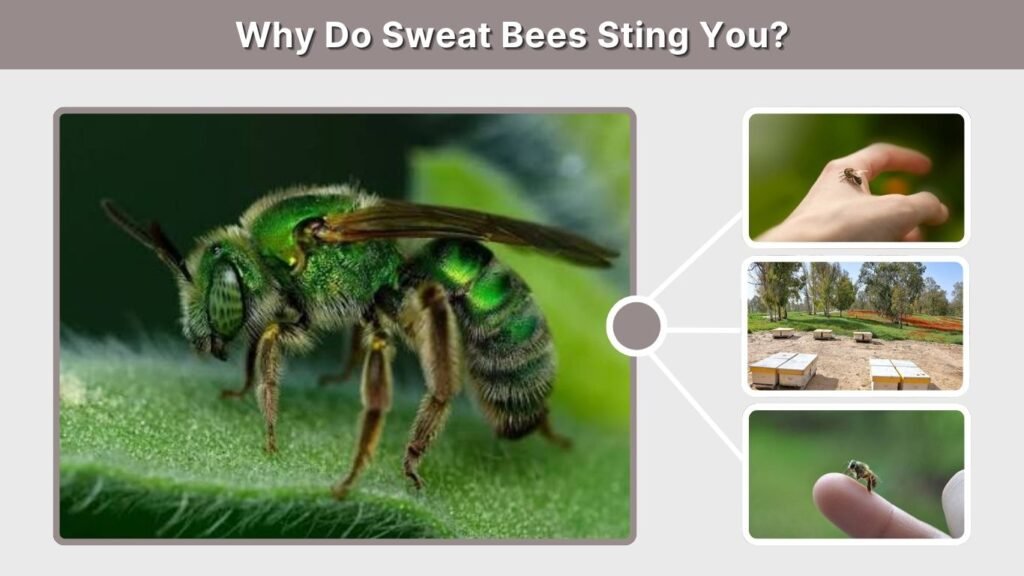
A sweat bee normally has little reason to sting a person. Problems arise because its attraction to perspiration brings it into unusually close physical contact with human skin.
If you suddenly slap the insect, bend your arm over it, or trap it beneath clothing, the bee may perceive an immediate threat.
Common Sting Triggers
Stings are more likely when you:
- Slap at a bee on your skin.
- Rub it accidentally.
- Trap one underneath clothing.
- Walk or work around nesting areas.
- Try to catch it with your fingers.
- Press it between yourself and another surface.
Their attraction to sweat should therefore not be mistaken for aggression. UF/IFAS notes that sweat bees rarely sting even though they are capable of doing so.
What to Do After a Sweat Bee Sting
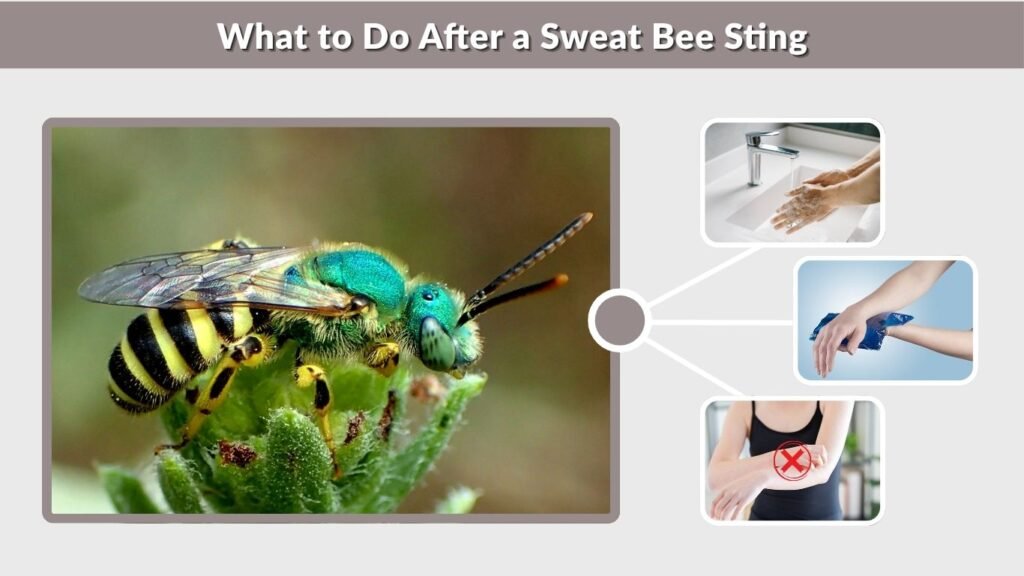
Most minor stings need only basic first aid. The main goals are keeping the area clean and reducing pain, itching, and swelling.
Sweat Bee Sting Treatment
For a mild reaction:
- Move away from the area so you are not stung again.
- Wash the skin with soap and water.
- Apply a cold pack wrapped in cloth for short intervals.
- Avoid scratching the affected area.
- Monitor the sting for increasing redness, swelling, or pain.
MedlinePlus recommends wrapped ice for insect stings and monitoring afterward for increasing redness, swelling, pain, or other signs of infection.
Unlike a worker honey bee sting, you would not normally expect a detached sweat bee stinger to remain embedded in the skin.
Can a Sweat Bee Sting Be Dangerous?
For most people, a sweat bee sting causes only a local reaction. However, any bee or insect sting has the potential to cause a serious allergic reaction in a susceptible individual.
A severe allergic reaction known as anaphylaxis requires immediate emergency treatment.
Seek Emergency Help for These Symptoms
Get emergency medical assistance if a sting is followed by:
- Difficulty breathing
- Swelling of the tongue or throat
- Trouble swallowing
- Chest tightness
- Widespread hives or rash
- Dizziness or fainting
- Signs of shock
- Rapidly worsening systemic symptoms
If someone has prescribed emergency epinephrine for insect-sting allergy, it should be used according to their medical plan, followed by emergency medical care.
How to Avoid Sweat Bee Stings
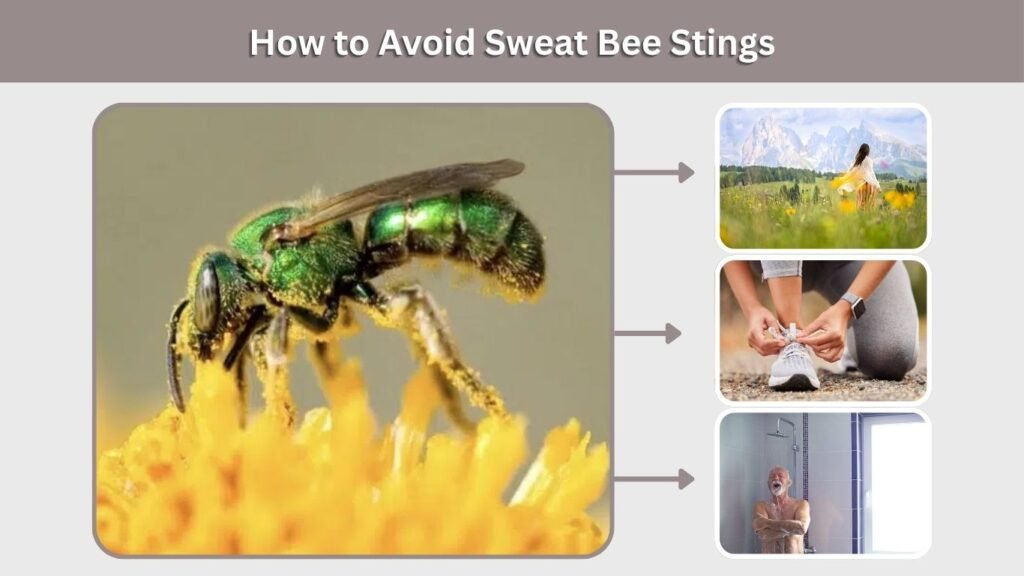
Because sweat bees are beneficial pollinators and usually nonaggressive, killing them is rarely necessary. Changing how you react when one lands on you is often enough to prevent a sting.
Prevention Tips
- Avoid slapping bees that land on your skin.
- Gently brush or blow them away.
- Wear lightweight clothing when working outdoors.
- Cover more skin if large numbers are present.
- Shower after heavy outdoor exercise when practical.
- Avoid disturbing ground nests.
- Wear shoes when walking around areas where bees nest.
- Stay calm when a sweat bee lands on you.
Sweat bees contribute to pollination of flowers and other plants, so peaceful coexistence is usually preferable to control measures.
FAQs
1. Do sweat bees sting people?
Yes. Female sweat bees can sting people, particularly if they are squeezed, trapped, or startled. They are generally not aggressive and rarely sting without being threatened.
2. Does a sweat bee sting hurt?
Yes, but the sting is usually relatively mild. It may cause brief sharp pain followed by redness, itching, tenderness, or minor swelling.
3. Do sweat bees die after they sting you?
They should not be assumed to die after stinging the way worker honey bees do. Honey bees have a specialized barbed stinger that may remain embedded in human skin and fatally injure the worker as it pulls away.
4. Do male sweat bees sting?
No. Male sweat bees cannot sting because males lack the female-derived stinging structure.
5. Why do sweat bees keep landing on me?
They may be attracted to perspiration because it provides moisture and salts. They are generally trying to collect these resources rather than preparing to sting you.