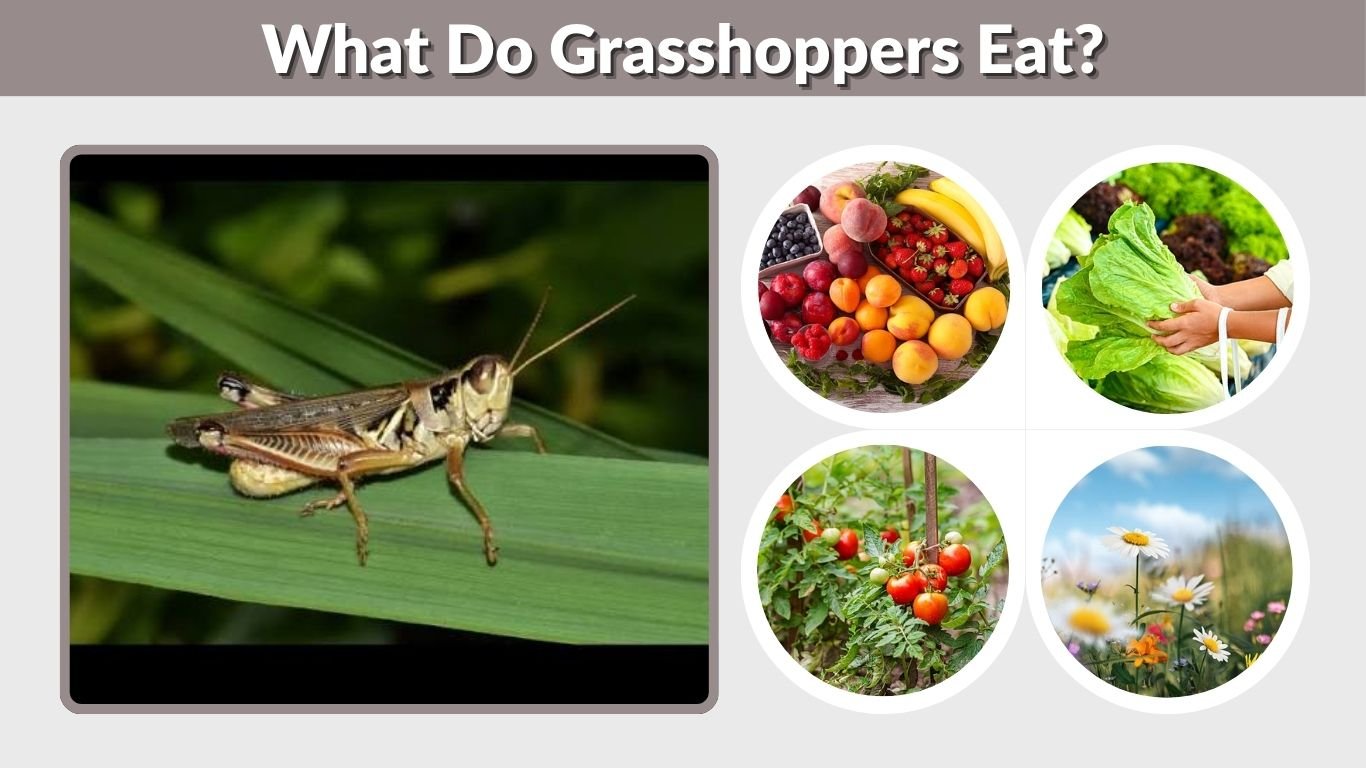
What do grasshoppers eat? Most grasshoppers are primarily herbivores that feed on grasses, leaves, crops, weeds, flowers, and other plant material. Their exact diet varies with species, habitat, season, and food availability. Some grasshoppers strongly prefer grasses, while others readily consume broadleaf plants or agricultural crops. They may also occasionally eat dead insects or other animal material when plant food is scarce. Here are 10 common foods grasshoppers eat in the wild and in captivity.
What Do Grasshoppers Eat in the Wild?
Wild grasshoppers have access to a wide variety of plants, making their diet much more diverse than simply grass. Most species use strong chewing mouthparts to cut through leaves, stems, and other vegetation. Because they are opportunistic feeders, grasshoppers often eat whatever suitable plants are abundant in their habitat.
10 Common Foods Grasshoppers Eat
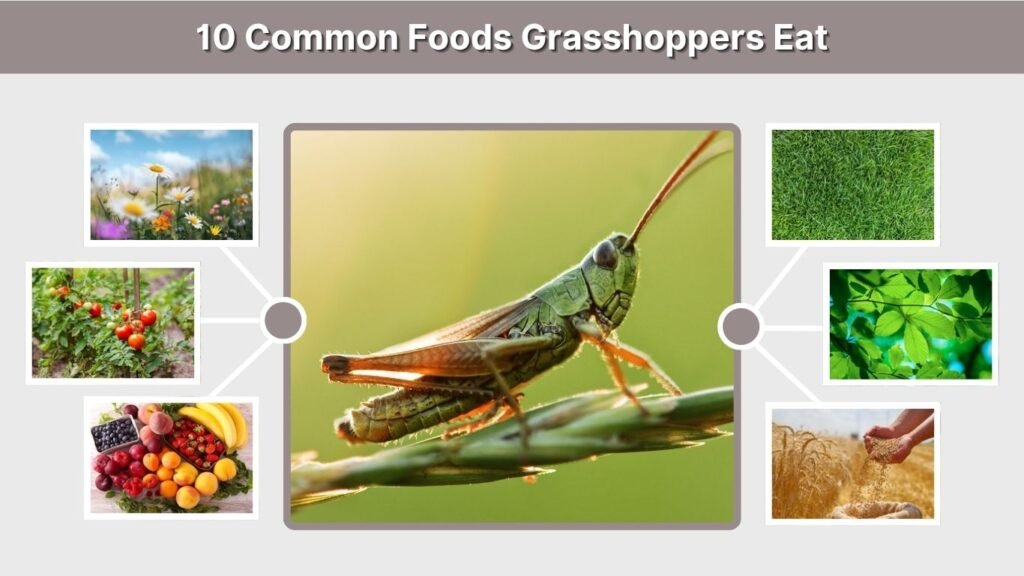
Grasshoppers have powerful chewing mouthparts designed for cutting and grinding plant material. Although hundreds of grasshopper species have different preferences, grasses and leafy vegetation make up a large part of the typical grasshopper diet. They may also eat crops, flowers, seeds, and vegetables, especially when large populations compete for available food.
1. Grass
Grass is one of the most important foods for many grasshopper species. They commonly eat the tender blades and other soft parts of grasses growing in fields, meadows, gardens, and roadsides.
Many species are considered grass-feeders because their digestive systems are well suited to fibrous vegetation. Young, fresh grass is often easier to chew and contains more moisture than old, dry material. This answers the common question, do grasshoppers eat grass? Yes, and for many species, it is a major part of their natural diet.
2. Leaves
Grasshoppers readily eat leaves from many different plants. They use their strong mandibles to bite sections from leaf edges and gradually consume the softer plant tissue.
They may feed on leaves from shrubs, herbs, garden plants, and young trees. Their feeding often produces irregular holes or ragged edges. When grasshopper populations become large, repeated leaf feeding can remove substantial amounts of foliage and weaken affected plants.
3. Wheat
Wheat and other cereal crops provide suitable food for many grasshoppers. Both young nymphs and adults may chew the leaves, stems, and other accessible plant tissues.
Agricultural areas containing large amounts of a single crop can provide grasshoppers with an abundant food supply. Severe infestations may therefore cause economic damage when many individuals feed in the same field.
4. Corn
Grasshoppers can eat corn leaves and other tender parts of corn plants. They frequently begin feeding along leaf edges, leaving characteristic irregular damage.
Young plants may be particularly vulnerable because losing significant leaf tissue can interfere with growth. Grasshoppers living near fields can move between natural vegetation and crops depending on which food source is most abundant.
5. Weeds
Wild weeds are an important part of what grasshoppers eat in the wild. Dandelions, plantains, and many other broadleaf weeds can provide food and shelter.
A diverse patch of weeds may support several species because different grasshoppers have different feeding preferences. Some select only a few plant types, while more generalist species consume many kinds of vegetation.
6. Clover and Alfalfa
Legumes such as clover and alfalfa are another food source for grasshoppers. Their tender foliage can be attractive to species that consume broadleaf plants rather than feeding exclusively on grasses.
These plants are common in pastures, fields, and roadsides, bringing grasshoppers close to livestock and agricultural environments. Heavy feeding may leave holes in leaves or remove sections entirely.
7. Flowers
Some grasshoppers feed on flower petals, buds, and other soft floral tissues. Flowers are generally easier to chew than tough stems and can provide both nutrients and moisture.
Gardeners may occasionally notice grasshoppers resting on flowers or chewing holes into petals. However, whether flowers are regularly eaten depends heavily on the grasshopper species and the other vegetation available nearby.
8. Vegetable Plants
Grasshoppers can feed on a variety of garden vegetables, particularly their leaves. Lettuce, cabbage, peas, beans, spinach, and carrot tops may all attract hungry grasshoppers.
They usually target tender green tissue rather than underground vegetables themselves. This feeding can become troublesome in vegetable gardens because several grasshoppers repeatedly feeding on seedlings or young plants may cause noticeable damage.
9. Seeds and Grains
Certain grasshoppers will consume seeds and grains, particularly when they are accessible and relatively soft. Grains from cereal plants may become part of their diet alongside stems and leaves.
Seeds are generally not the primary food for every grasshopper species. Most still rely heavily on living vegetation, but opportunistic individuals may take advantage of grain and seed material when it is available.
10. Fruit
Grasshoppers occasionally eat soft or overripe fruit, particularly in captivity or when other foods are limited. Apples, berries, grapes, and similar fruits may be sampled because they contain moisture and sugars.
Fruit is not usually the foundation of a wild grasshopper’s diet. Grasses and other leafy plants remain more representative foods. Too much sugary fruit is therefore not an ideal substitute for suitable vegetation when keeping grasshoppers temporarily.
What Do Grasshoppers Eat in the Wild?
Wild grasshoppers primarily eat whatever suitable vegetation grows within their habitat. A grassland species may consume mostly grasses, whereas species living around woodland edges, gardens, or agricultural land can encounter a much broader selection of plants.
Their wild diet may include grasses, leaves, weeds, flowers, cereal crops, legumes, and occasionally seeds or fruit. Some species are highly selective feeders, while others consume dozens of plant species.
Food preferences can also change as plants mature or environmental conditions become dry. When preferred plants disappear, grasshoppers may switch to less desirable vegetation.
What Do Grasshoppers Eat in Captivity?
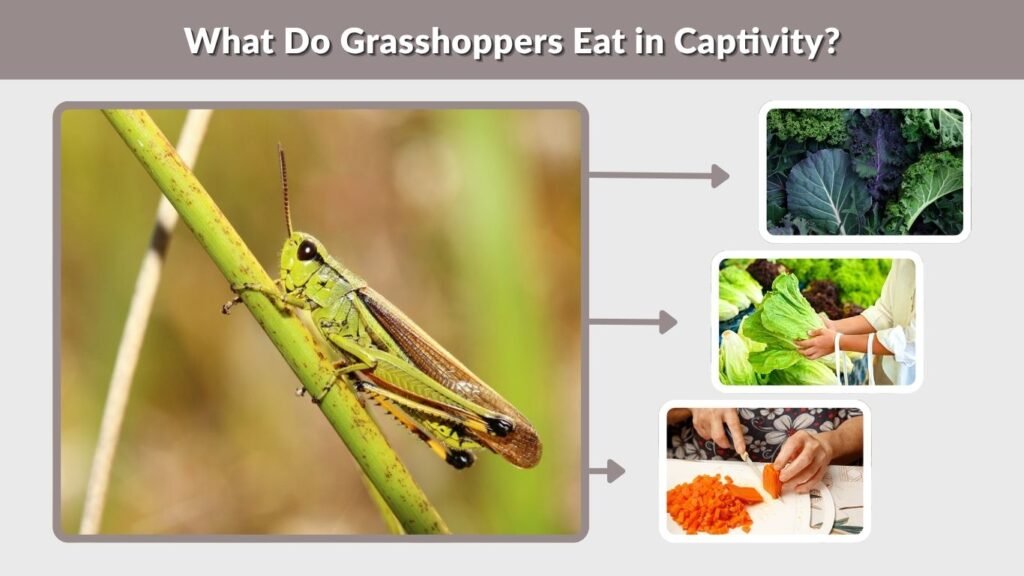
Grasshoppers kept temporarily in captivity should receive fresh vegetation similar to what they naturally consume. Providing several plant types can be better than relying on only one unfamiliar food.
Suitable Captive Foods
Common options include:
- Fresh untreated grass
- Leafy greens
- Clover
- Dandelion leaves
- Lettuce
- Cabbage leaves
- Small pieces of carrot
- Other pesticide-free vegetation
Avoid collecting plants from areas recently treated with insecticides, herbicides, or other chemicals. Fresh food should also be replaced regularly before it becomes moldy or badly wilted.
What Do Baby Grasshoppers Eat?
Baby grasshoppers, called nymphs, generally eat many of the same plants as adults. Soon after hatching, they begin chewing tender plant material around them.
Young nymphs commonly prefer softer grasses and leaves because their bodies and mouthparts are smaller. As they grow through repeated molts, they can consume progressively larger quantities of vegetation.
Nymphs do not pass through a caterpillar-like larval stage. Instead, they resemble smaller, wingless versions of adults and gradually develop mature features as they grow.
What Do Grasshoppers Eat and Drink?
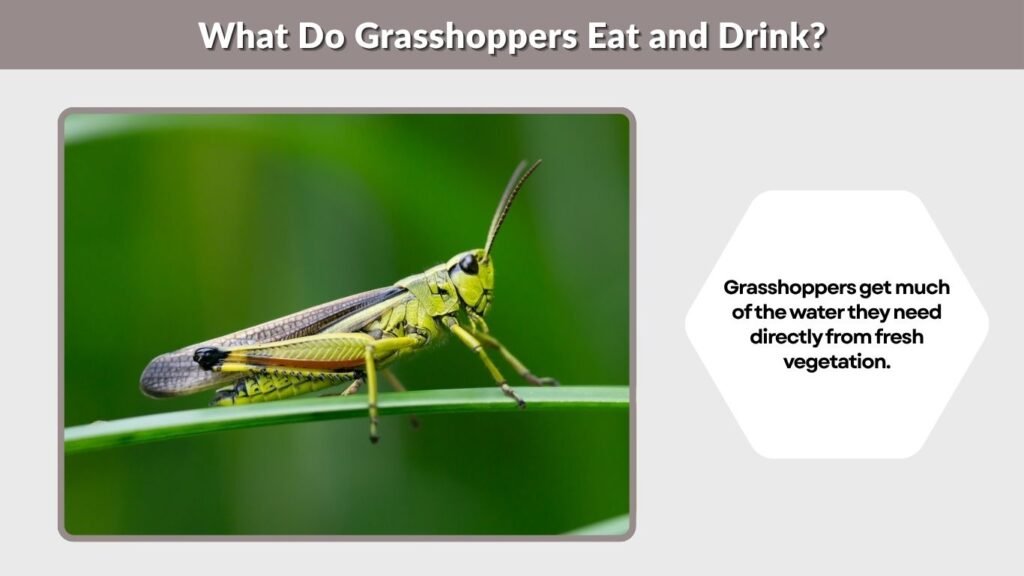
Grasshoppers get much of the water they need directly from fresh vegetation. Moist grass, leaves, and other plant tissues contain water that helps maintain hydration.
They may also drink droplets of water or moisture present on plants. In captivity, keeping fresh vegetation available can provide both food and moisture. Grasshoppers should not be placed in containers with deep open water because small individuals can become trapped or drown.
Do Grasshoppers Eat Other Insects?
Most grasshoppers are predominantly plant eaters, but their diet is not always entirely vegetarian. Some species may occasionally consume dead insects, animal remains, or even other grasshoppers.
This behavior is more likely when nutrients or normal plant foods are limited. Cannibalism can also occur when grasshoppers are crowded together and competing for food. Nevertheless, grasses and other vegetation remain the primary diet for most familiar grasshopper species.
FAQs
What food do grasshoppers eat most?
Many grasshoppers eat grasses most frequently, although preferences vary among species. Leaves, weeds, cereal crops, legumes, flowers, and other plant material can also form important parts of their diet.
Do grasshoppers eat grass?
Yes. Grass is one of the primary foods of many grasshopper species. They use strong chewing mouthparts to cut pieces from grass blades and other plant tissues.
Do grasshoppers eat vegetables?
Yes. Grasshoppers may eat the leaves of lettuce, cabbage, beans, peas, spinach, carrots, and other vegetable plants. Large populations can sometimes become significant garden pests.
Do grasshoppers eat meat?
Grasshoppers are primarily herbivorous, but some may occasionally consume dead insects or other animal material. Cannibalism can also occur under crowded conditions or when normal food becomes scarce.
What eats grasshoppers?
Grasshoppers are eaten by many predators, including birds, spiders, frogs, lizards, rodents, predatory insects, and other small animals. Their importance as prey makes them an important part of many terrestrial food webs.