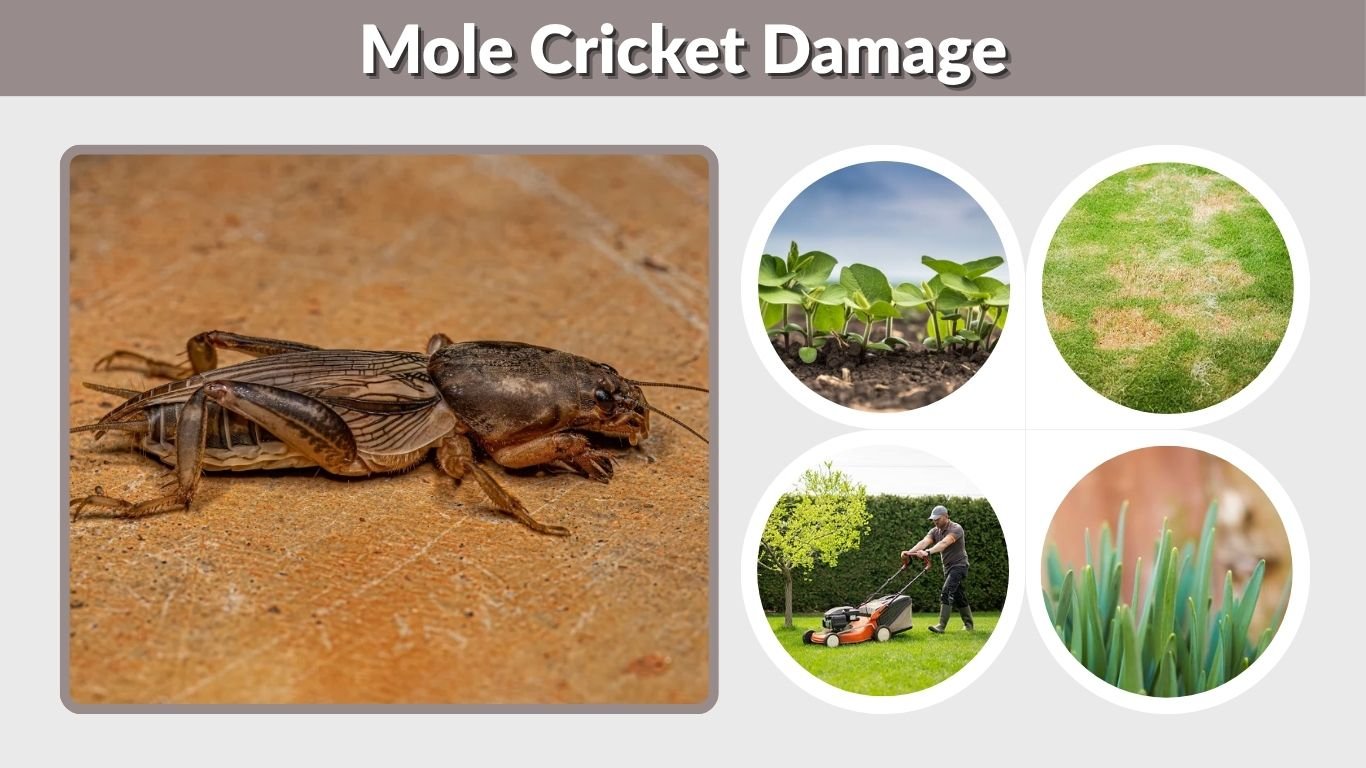
Mole cricket damage can leave lawns looking thin, brown, uneven, or loosely rooted even when the grass receives adequate water. These underground insects damage turf by feeding on roots and shoots and by tunneling through the upper soil layer. Bermuda grass, zoysia, St. Augustine grass, centipede grass, and other warm-season lawns may all be affected. Recognizing the early signs of mole cricket activity can help you confirm the problem, treat active insects, and repair damaged turf before larger bare areas develop.
What Does Mole Cricket Damage Look Like?
Mole cricket damage often begins subtly, making it easy to confuse with drought, disease, poor irrigation, or other lawn pests. The most useful clues are irregular thinning combined with disturbed soil and shallow tunnels. Grass may initially turn yellow before becoming brown, and heavily affected turf can feel unusually loose because roots have been damaged or separated from surrounding soil.
Signs of Mole Cricket Damage
Common signs include:
- Irregular yellow or brown patches
- Thin or dying grass
- Raised lines or ridges in the soil
- Small shallow tunnels
- Loose turf that lifts easily
- Damaged or shortened grass roots
- Soft, disturbed soil
- Bare areas that gradually increase in size
- Birds or animals digging repeatedly in the same area
- Fresh damage appearing during warm weather
One isolated brown patch does not automatically mean mole crickets are responsible. Look for several signs occurring together.
What Do Mole Cricket Tunnels Look Like?
Mole cricket tunnels usually form close to the soil surface. They can create narrow raised ridges, loose soil, or slightly swollen lines running through turf.
Unlike tunnels made by mammalian moles, these passages are small and may be difficult to notice in thick grass. Pulling apart the turf around actively damaged areas can sometimes expose the narrow underground channels.
How Do Mole Crickets Damage Lawns?
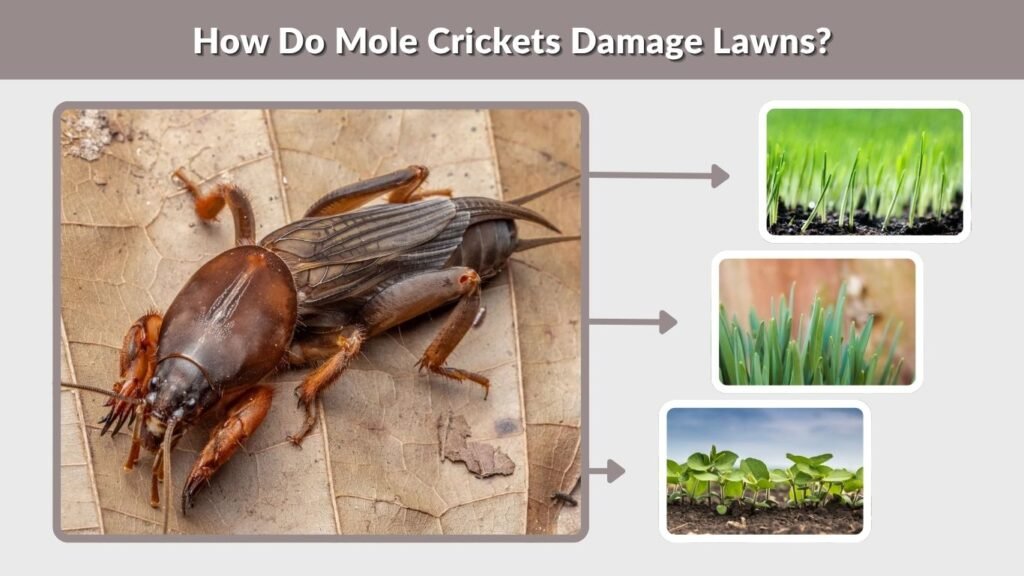
Mole crickets spend most of their lives below ground, where their enlarged shovel-like front legs allow them to move quickly through soil. Damage results from two activities: direct feeding and tunneling. Plant-feeding species can chew roots and shoots, while even more predatory species may harm turf simply by disturbing the soil around grass roots as they burrow.
Root and Grass Feeding
Plant-feeding mole crickets may attack:
- Grass roots
- Tender shoots
- Underground stems
- Young seedlings
- Newly established turf
- Other soft plant tissues
When enough root tissue is removed, grass has difficulty absorbing moisture and nutrients. The result may resemble drought stress even when the lawn is being watered normally.
Tunneling Damage
Tunneling can be just as damaging as direct feeding.
As mole crickets move beneath the surface, they separate roots from moist soil and create air spaces around them. These disturbed roots can dry quickly, causing turf to wilt or turn brown.
Repeated tunneling may also loosen the lawn enough that sections can be pulled upward with little resistance.
Mole Cricket Damage to Different Grass Types
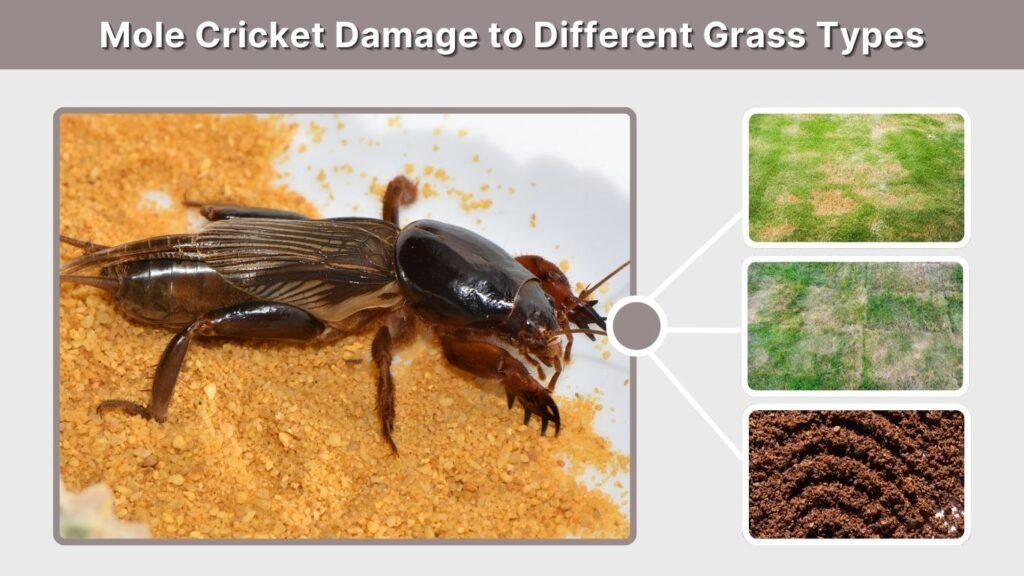
Mole crickets can affect several common warm-season turfgrasses, although the degree of damage varies with the mole cricket species, grass variety, soil conditions, and infestation size. Lawns already stressed by drought, improper mowing, poor drainage, or other pests often show more severe symptoms because weakened grass has less ability to recover from root disturbance.
Mole Cricket Damage in Bermuda Grass
Bermuda grass can develop:
- Irregular brown patches
- Thin areas
- Loose soil
- Shallow tunnels
- Reduced root growth
- Dead sections during severe infestations
Bermuda grass can recover rapidly when growing conditions are favorable, but continual mole cricket activity may prevent damaged areas from filling back in.
Mole Cricket Damage in Zoysia Grass
Mole cricket damage in zoysia may first appear as localized thinning or yellowing.
Because zoysia normally forms dense turf, suddenly loose or thinning sections deserve inspection. Look underneath affected grass for disturbed soil and shallow tunnels.
Severe root damage can produce brown patches that expand as insects continue moving through the lawn.
Mole Cricket Damage in St. Augustine Grass
St. Augustine grass can also suffer from mole cricket feeding and tunneling.
The symptoms may resemble chinch bug damage, drought stress, or disease, making proper diagnosis important. Inspect roots and soil before applying treatment.
If the turf pulls up easily and underground tunnels are present, mole crickets may be contributing to the problem.
Mole Cricket Damage in Centipede Grass
Centipede grass may become yellow, thin, and weak when roots are repeatedly disturbed.
Mole crickets can tunnel underneath the turf and damage its root system, eventually producing irregular dead patches. Because centipede grass can also decline from nutrient problems and environmental stress, finding active insects is important before deciding on treatment.
How to Confirm Mole Cricket Damage
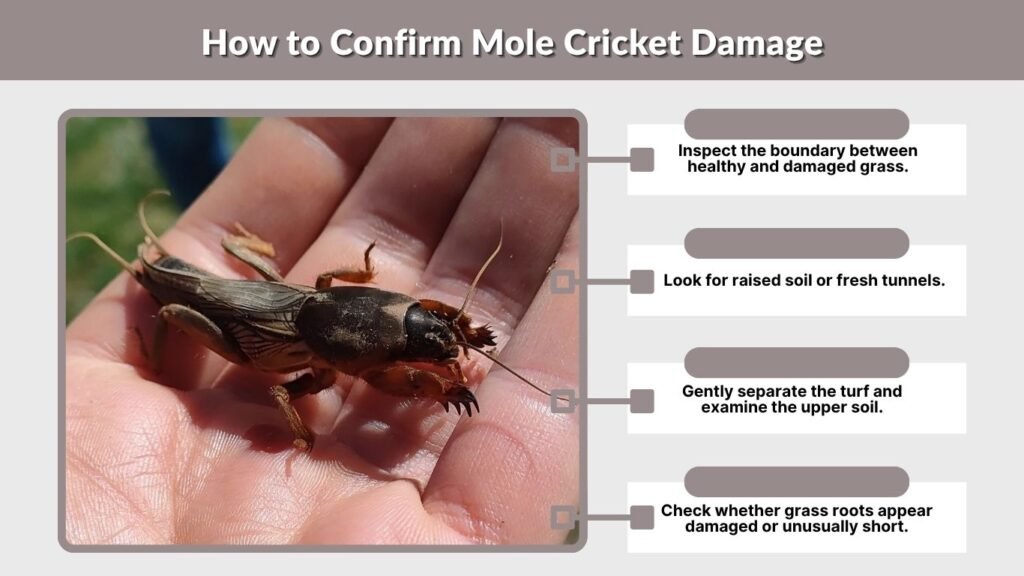
Visual symptoms can provide clues, but confirmation is important because several lawn problems create nearly identical brown patches. Checking the soil for live insects or fresh tunnels can prevent unnecessary treatments. Focus on the outer edges of damaged areas, where mole crickets may still be actively feeding and tunneling rather than in the center of completely dead turf.
Check for Active Mole Crickets
Try these steps:
- Inspect the boundary between healthy and damaged grass.
- Look for raised soil or fresh tunnels.
- Gently separate the turf and examine the upper soil.
- Check whether grass roots appear damaged or unusually short.
- Look for large brown insects with broad digging front legs.
- Test more than one damaged section before making a diagnosis.
Mole crickets are often active at night, so evening inspections can sometimes reveal additional activity.
Use a Soap Flush Test
A simple soap flush can encourage hidden mole crickets to move to the surface.
Mix a small amount of mild liquid dish soap into water and pour it evenly over a limited test section of suspicious turf. Watch the area for several minutes.
If mole crickets emerge, you have strong evidence that active insects are present. Avoid repeatedly applying concentrated soap solutions because excessive detergent can harm grass.
Florida Mole Cricket Damage
Mole cricket damage is particularly familiar in Florida because warm conditions allow these insects to remain active for long periods. Several invasive mole cricket species can damage residential lawns, golf courses, pastures, and other turf areas. Problems may become especially noticeable when young crickets grow larger and their feeding and tunneling increase.
Signs in Florida Lawns
Florida homeowners should watch for:
- Fresh surface tunnels
- Expanding brown turf
- Loose grass
- Reduced root systems
- Areas that resemble drought stress
- Increased animal digging
- Damage that returns seasonally
Tawny mole crickets are especially associated with plant feeding, while southern mole crickets consume more animal prey but can still damage turf through tunneling.
How to Repair Mole Cricket Damage
Repair should begin after the active infestation has been brought under control. Replacing grass while mole crickets are still feeding and tunneling may result in repeated damage. Once activity declines, encourage surviving turf to recover and replace grass only where the root system has been too severely damaged.
Repairing Damaged Turf
Follow these basic steps:
- Confirm and control active mole crickets first.
- Remove completely dead grass.
- Level severely disturbed soil.
- Restore proper soil contact around surviving roots.
- Water according to the needs of your grass type.
- Avoid overwatering.
- Fertilize only when appropriate for the turf and season.
- Replace large bare areas with seed, plugs, or sod as suitable.
- Continue monitoring for fresh tunnels.
Healthy surrounding turf may gradually spread into smaller damaged areas without complete replacement.
How to Prevent More Mole Cricket Lawn Damage
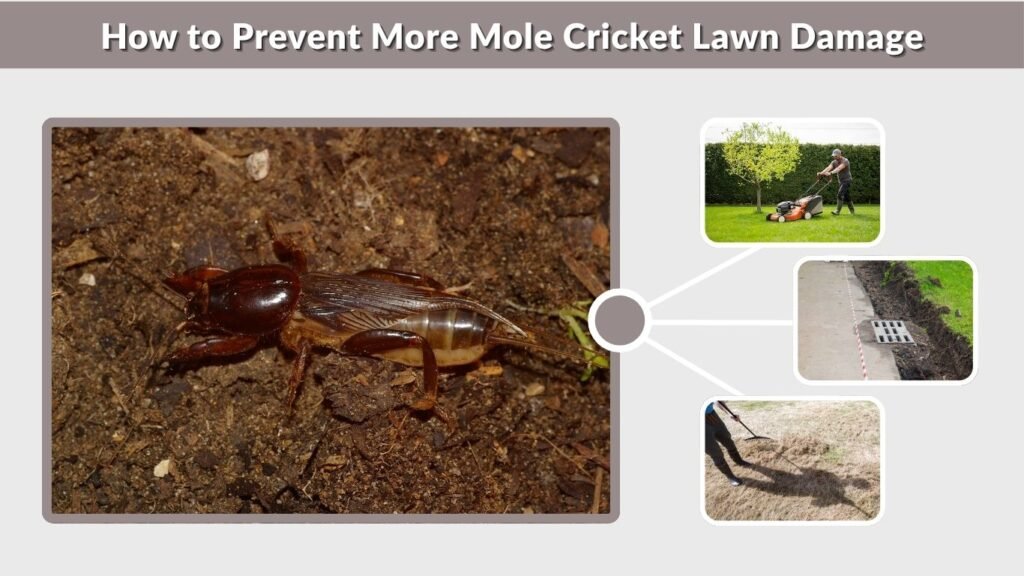
Long-term prevention depends on early detection and maintaining strong turf. Mole crickets can move between properties, so eliminating every insect permanently may not be realistic. However, regular monitoring allows new activity to be found while damage is still small and easier to manage.
Reduce Future Damage
Keep your lawn less vulnerable by:
- Maintaining the correct mowing height
- Avoiding excessive irrigation
- Correcting drainage problems
- Preventing excessive thatch buildup
- Keeping turf properly fertilized
- Inspecting previously damaged areas regularly
- Checking for young mole crickets before severe damage appears
- Treating only confirmed infestations
A healthy root system gives grass a better chance of tolerating limited tunneling and recovering quickly.
FAQs
Mole cricket damage often raises questions because it can closely resemble other common turf problems. Looking beyond grass color and checking the condition of the roots and soil makes accurate identification much easier.
Do mole crickets damage lawns?
Yes. Mole crickets damage lawns through root and shoot feeding as well as underground tunneling. Their tunnels loosen soil around grass roots, while plant-feeding species may directly consume root tissue. Heavy infestations can create thinning, brown patches, and areas of dead turf.
What does early mole cricket damage look like?
Early damage may appear as small yellowing or thinning patches combined with subtle raised soil lines. Grass may feel slightly loose before it becomes completely brown. Fresh tunnels around the edges of affected areas are an important clue that mole crickets are active.
Can mole crickets damage Bermuda grass?
Yes. Bermuda grass can be damaged by mole cricket feeding and tunneling. Symptoms include irregular brown patches, root injury, loose turf, and shallow tunnels. Healthy Bermuda grass may recover after the insects are controlled, particularly during active growth.
Do mole crickets damage zoysia grass?
Mole crickets can damage zoysia by disturbing and feeding around its root system. Affected areas may become thin, yellow, loose, or brown. Because zoysia can also suffer from several diseases and other pests, confirm mole cricket activity before applying treatment.
Will grass grow back after mole cricket damage?
Grass can recover when enough healthy roots and living turf remain. Mild damage may fill in naturally once mole cricket activity stops. Severely damaged or completely dead areas may require soil repair followed by reseeding, plugging, or installing new sod.