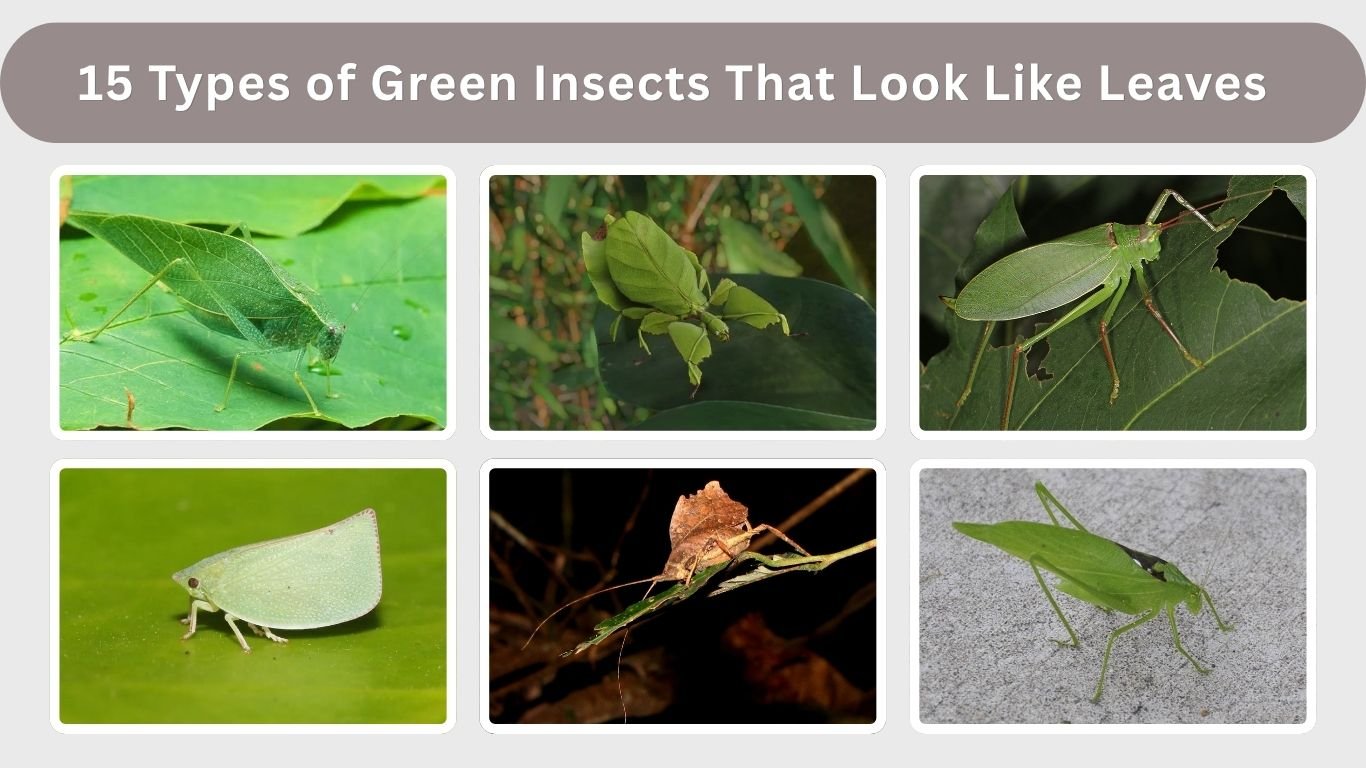
A green insect that looks like a leaf can be surprisingly difficult to spot because its body, wings, and coloration blend naturally with surrounding foliage. Some species have realistic leaf veins, flattened bodies, irregular edges, or even brown markings that resemble damaged leaves. From giant leaf insects and katydids to planthoppers, leafhoppers, and mantises, many insects rely on this camouflage for protection. This guide covers 15 green leaf-like insects, including their identification features, habitat, behavior, diet, and life cycle.
1. Giant Leaf Insect
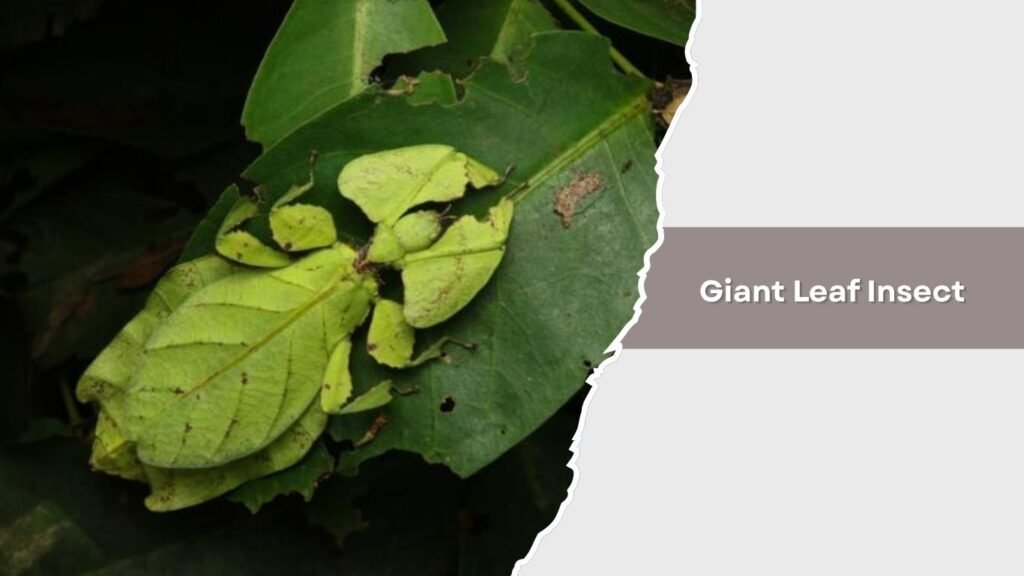
The Giant Leaf Insect is one of the most convincing examples of leaf mimicry in the insect world. Its broad, flattened body, bright green coloration, and leaf-shaped wings allow it to blend almost perfectly with surrounding foliage. Females are especially large and strongly resemble fresh green leaves, while males are smaller and more slender. This remarkable camouflage helps protect the insect from birds and other predators.
Identification
- Scientific name: Pulchriphyllium giganteum
- Color: Usually bright to yellowish green
- Body shape: Broad, flat, and strongly leaf-like
- Wings: Veined to resemble the surface of a real leaf
- Female size: Can reach around 4 inches or more
- Male size: Smaller and more slender than females
- Legs: Flattened with leaf-like expansions
- Camouflage: May show brownish edges or spots that resemble damaged leaves
Habitat and Distribution
Giant Leaf Insects are native to tropical regions of Southeast Asia, particularly areas with warm temperatures, high humidity, and dense vegetation. They spend most of their lives among trees and shrubs where their leaf-like bodies provide effective camouflage. During the daytime, they often remain relatively still among foliage, making them extremely difficult to notice even when they are close by.
Behavior and Diet
These insects are herbivores that feed primarily on leaves. They use chewing mouthparts to consume foliage from suitable host plants. Giant Leaf Insects are generally slow-moving and rely more on camouflage than speed for protection. When disturbed, they may gently sway their bodies from side to side, mimicking a leaf moving in the breeze and making their disguise even more convincing.
Life Cycle and Reproduction
The Giant Leaf Insect develops through incomplete metamorphosis, progressing from egg to nymph and finally adult. Females drop eggs onto the ground, where they may remain for several months before hatching. Newly emerged nymphs look quite different from adults and may initially have darker coloration. As they grow through repeated molts, they gradually become broader, greener, and increasingly leaf-like until reaching maturity.
2. Malaysian Leaf Insect
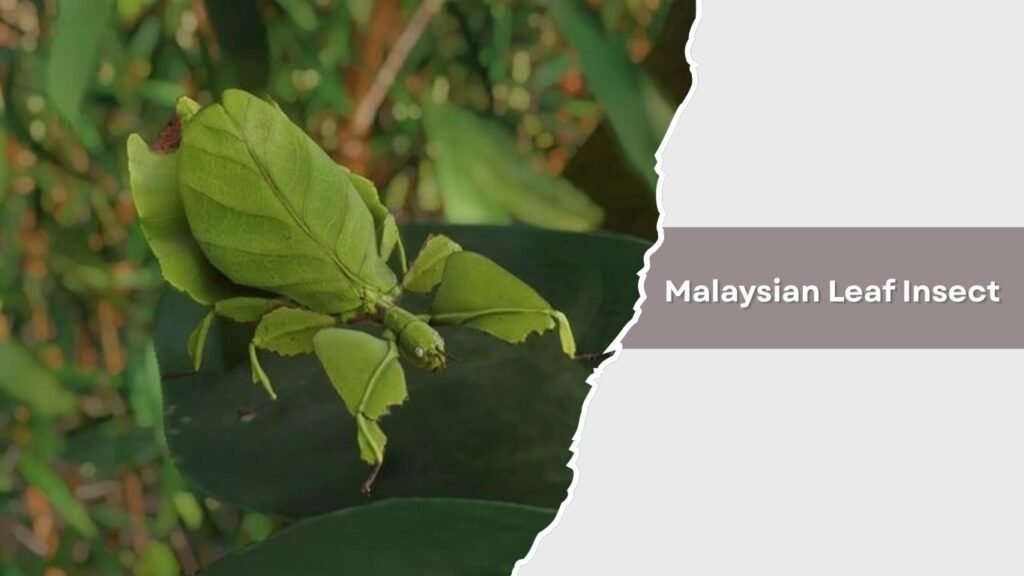
The Malaysian Leaf Insect is a remarkable green insect that looks almost exactly like a living leaf. Its broad body, leaf-veined wings, flattened legs, and irregular edges help it disappear among tropical foliage. Females are typically larger and wider than males, making their leaf mimicry especially convincing. This insect relies heavily on camouflage to avoid predators rather than trying to escape through speed.
Identification
- Color: Usually bright green to yellow-green
- Body: Broad, flat, and leaf-shaped
- Wings: Veined like a natural green leaf
- Legs: Flattened with leaf-like extensions
- Females: Larger and broader-bodied
- Males: Smaller, narrower, and better developed for flight
- Markings: Some individuals have brown patches resembling damaged foliage
- Movement: Often gently sways like a leaf in the wind
Habitat and Distribution
Malaysian Leaf Insects inhabit warm, humid tropical forests of Southeast Asia. They spend much of their time among shrubs and trees where thick vegetation provides both food and protection. Their green coloration is particularly effective among fresh leaves. During daylight hours, they may remain almost completely motionless, making them surprisingly difficult to detect.
Behavior and Diet
These insects are herbivorous and spend much of their time eating suitable foliage. They usually feed at night when they can move through vegetation with less risk from visual predators. Rather than running when threatened, they often freeze or sway gently, strengthening the illusion that they are simply another leaf attached to a branch.
Life Cycle and Reproduction
Females produce eggs that fall to the forest floor and resemble small seeds or pieces of plant material. After an incubation period, young nymphs hatch and climb into vegetation. The nymphs molt repeatedly as they grow. Their coloration and leaf-like appearance become increasingly developed with each stage until they reach adulthood.
3. Philippine Leaf Insect
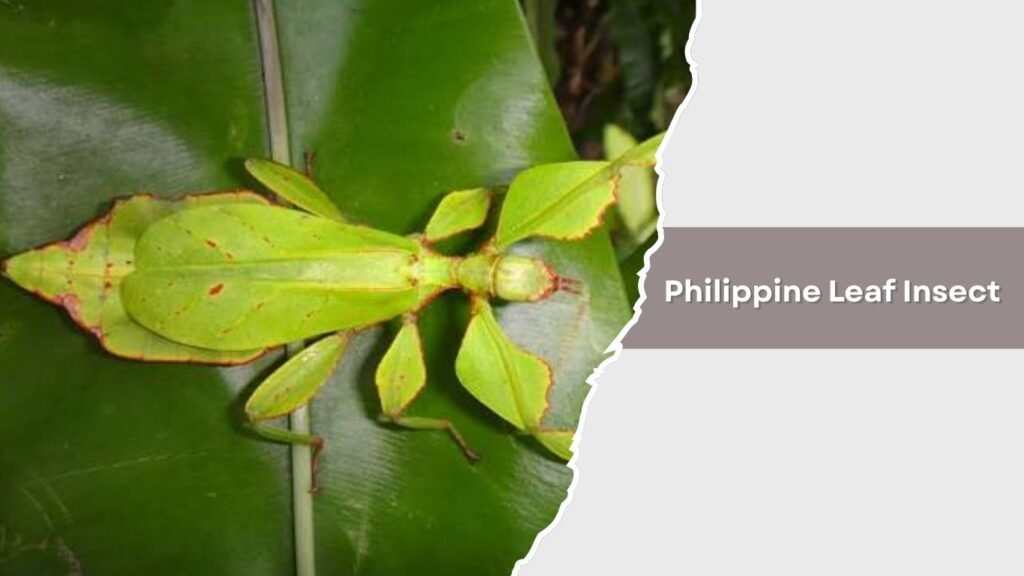
The Philippine Leaf Insect is a striking example of an insect that looks like a green leaf. Its body is extremely flattened, with wide leaf-like wings and legs that blend naturally into surrounding vegetation. Females have particularly broad bodies, while males are slimmer and more capable of flight. Their extraordinary camouflage makes them popular examples of defensive mimicry in insects.
Identification
- Scientific name: Commonly known as Phyllium philippinicum
- Color: Usually vivid green
- Body: Broad and strongly flattened
- Wings: Leaf-shaped with visible vein-like patterns
- Legs: Have flattened leafy expansions
- Females: Broad, heavy, and highly leaf-like
- Males: Slender with longer functional wings
- Camouflage: May include brown edges or markings similar to damaged leaves
Habitat and Distribution
As its common name suggests, the Philippine Leaf Insect is associated with the Philippines and tropical environments where dense vegetation provides excellent camouflage. Warm temperatures and relatively high humidity suit its lifestyle. These insects generally remain among foliage rather than spending much time on the ground.
Behavior and Diet
Philippine Leaf Insects are peaceful plant eaters. Their main defense is remaining unnoticed. If vegetation moves in the wind, an insect may sway its body gently to copy that movement. They eat leaves using chewing mouthparts and are usually more active after dark, when they move around plants to feed.
Life Cycle and Reproduction
The life cycle consists of egg, nymph, and adult stages. Females release eggs that fall to the ground and can easily be mistaken for seeds. Newly hatched nymphs are smaller and often more active than adults. Through successive molts, their bodies expand and develop the broad, leafy shape characteristic of mature insects.
4. Javan Leaf Insect
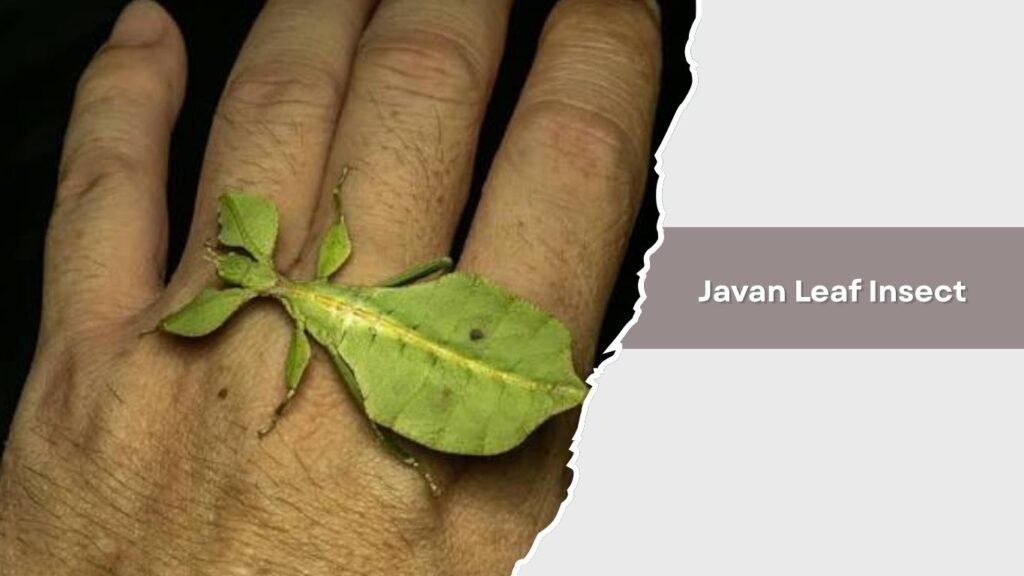
The Javan Leaf Insect is another tropical leaf-mimicking insect whose shape and coloration allow it to blend into green foliage. Its body resembles a leaf from almost every angle, including the flattened abdomen, vein-like wing markings, and enlarged sections on the legs. This form of camouflage helps protect it from birds, reptiles, and other predators searching through vegetation.
Identification
- Color: Usually green with occasional brownish markings
- Body shape: Wide, flat, and leaf-like
- Abdomen: Expanded to imitate a leaf blade
- Wings: Green with vein-like patterns
- Legs: Flattened with leaf-shaped lobes
- Females: Generally larger and broader
- Males: Usually thinner and more mobile
- Defense: Relies mainly on camouflage and stillness
Habitat and Distribution
Javan Leaf Insects are associated with tropical vegetation in Indonesia, including Java and surrounding areas depending on the species being referred to. They favor humid environments containing plenty of leafy host plants. Their coloration makes them difficult to distinguish from living leaves, especially when sunlight creates mixed patterns of light and shadow.
Behavior and Diet
These insects spend much of their lives resting and feeding among vegetation. Their plant-based diet consists of suitable leaves, which they chew from the edges. When disturbed, they often remain motionless rather than immediately fleeing. Slow walking and gentle rocking movements can further imitate foliage being moved by a breeze.
Life Cycle and Reproduction
Females produce seed-like eggs that drop beneath the host plant. After development is complete, the nymphs hatch and climb toward fresh vegetation. Young leaf insects molt multiple times as their bodies increase in size. With each molt, their wings, flattened legs, and distinctive leaf-shaped abdomen become more developed.
5. Walking Leaf Insect
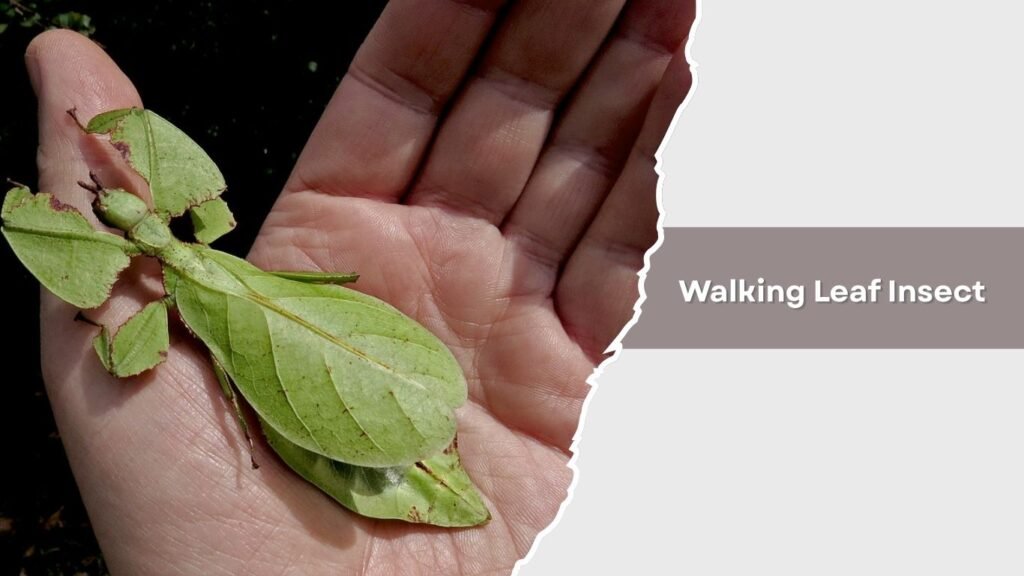
The term Walking Leaf Insect is commonly used for members of the leaf insect family because their bodies closely resemble living leaves that appear to walk when they move. These unusual insects have green, flattened bodies with leaf-like wings and legs. Their resemblance can be so convincing that even predators may overlook them while searching directly through vegetation.
Identification
- Color: Bright, pale, or yellowish green
- Body: Extremely flat and leaf-shaped
- Wings: Broad with realistic vein patterns
- Legs: Often have flattened leaf-like lobes
- Edges: May resemble torn or damaged leaves
- Females: Usually wider and heavier
- Males: Commonly slimmer and more capable of flight
- Movement: Slow with a characteristic swaying motion
Habitat and Distribution
Walking leaf insects occur mainly in tropical and subtropical parts of Asia and nearby regions. They inhabit forests, shrubs, and other environments where dense foliage provides food and concealment. Because their survival depends heavily on camouflage, they usually remain directly among leaves rather than exposing themselves in open spaces.
Behavior and Diet
Walking leaf insects are herbivores that feed on foliage. During the day, many remain still to avoid attracting attention. When they move, they may rock gently from side to side, copying the movement of vegetation. Their body color, shape, and behavior work together to create one of the most convincing examples of camouflage among insects.
Life Cycle and Reproduction
Walking leaf insects develop through incomplete metamorphosis. Females lay or drop eggs that often resemble plant seeds. Nymphs hatch without going through a pupal stage and gradually develop adult features through repeated molts. Young nymphs may initially be brownish or reddish before changing toward green as they settle among foliage.
6. Greater Angle-Wing Katydid
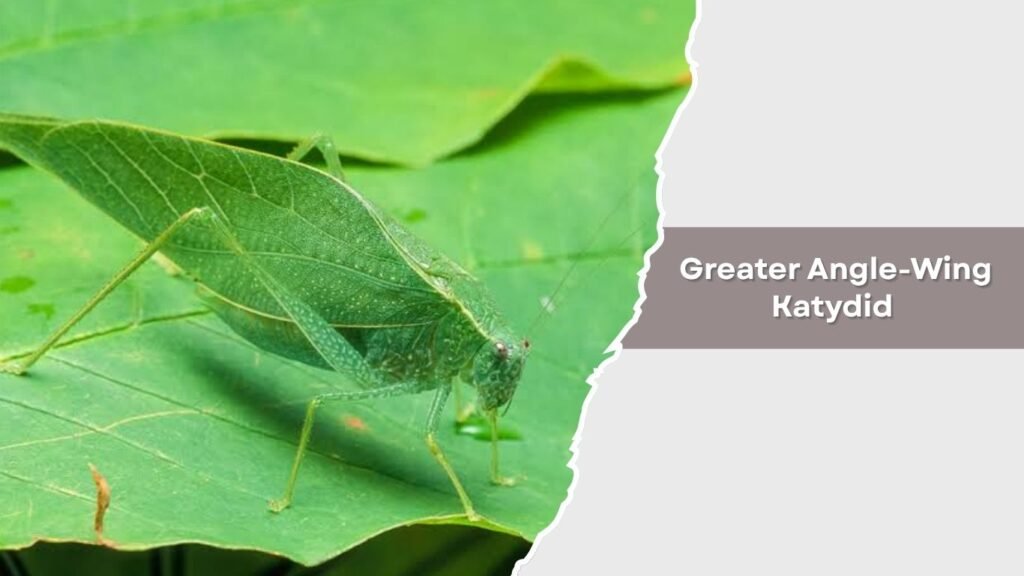
The Greater Angle-Wing Katydid (Microcentrum rhombifolium) is a large green insect that looks remarkably like a leaf. Its broad wings have visible vein patterns that closely resemble leaf veins, allowing it to blend into trees and shrubs. This camouflage makes the insect difficult to notice during the day. It is most active at night, when males produce repeated calls to attract females.
Identification
- Scientific name: Microcentrum rhombifolium
- Color: Bright to yellowish green
- Body: Slender with broad leaf-shaped wings
- Wings: Strongly veined like a natural leaf
- Antennae: Extremely long and thin
- Legs: Long, especially the hind legs
- Size: Usually around 2 inches long
- Camouflage: Resembles a fresh green leaf when resting
Habitat and Distribution
Greater Angle-Wing Katydids are commonly found in trees, shrubs, gardens, woodland edges, and other areas with dense vegetation. They occur across much of the eastern and central United States. During daylight hours, they usually remain hidden among foliage, where their green color and leaf-like wings provide excellent protection from predators.
Behavior and Diet
These katydids are mainly nocturnal and become more active after sunset. They feed primarily on leaves and other plant material, although some katydids may occasionally consume small insects. Their long hind legs allow them to jump quickly when threatened, while their wings also enable adults to fly between plants.
Life Cycle and Reproduction
Females lay eggs on twigs, leaves, or other plant surfaces. The eggs hatch into small wingless nymphs that resemble miniature adults. Nymphs pass through several molts as they grow, gradually developing larger wing pads. Once mature, adults reproduce and begin another generation without passing through a pupal stage.
7. Common True Katydid
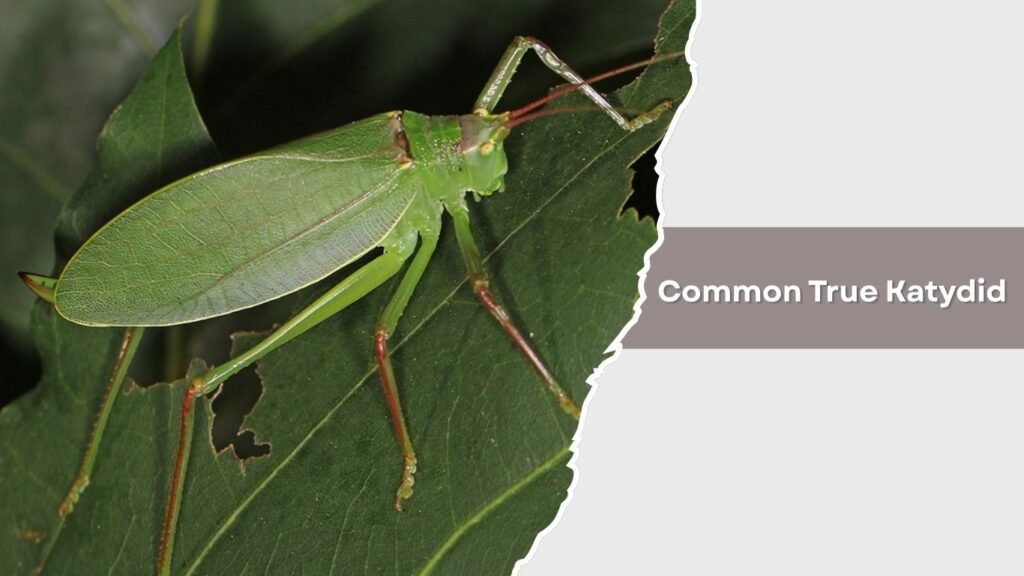
The Common True Katydid (Pterophylla camellifolia) is a large green insect with wings shaped and textured much like leaves. Its broad body and green coloration help it remain hidden high in trees. This species is also famous for the loud nighttime calls produced by males, which can sometimes be heard from considerable distances during warm summer evenings.
Identification
- Scientific name: Pterophylla camellifolia
- Color: Green
- Wings: Broad, rounded, and leaf-like
- Wing texture: Strongly veined
- Body: Thick and somewhat flattened
- Antennae: Very long
- Hind legs: Powerful and adapted for jumping
- Sound: Loud repetitive nighttime call
Habitat and Distribution
Common True Katydids usually live in deciduous forests, wooded neighborhoods, parks, and areas containing mature trees. They spend much of their time high in the canopy, which means people may hear them more often than they actually see them. Their range covers much of eastern North America.
Behavior and Diet
These katydids are mainly active at night. They feed on leaves from trees and shrubs and move slowly through foliage while searching for suitable food. Males call repeatedly to attract females. Their green leaf-like wings provide camouflage during the day, when they often remain motionless among vegetation.
Life Cycle and Reproduction
The life cycle begins when females place eggs on suitable plant material. Eggs may remain dormant through unfavorable seasons before hatching. Young nymphs resemble wingless versions of adults and feed on vegetation while growing. After several molts, they develop full wings and become reproductive adults.
8. Oblong-Winged Katydid
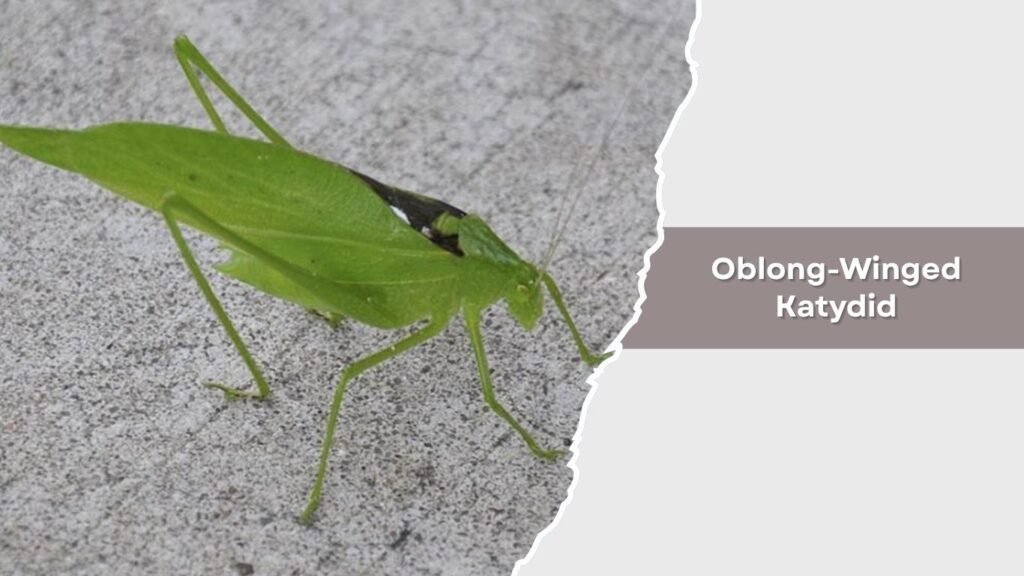
The Oblong-Winged Katydid (Amblycorypha oblongifolia) is a bright green insect with broad, elongated wings that strongly resemble leaves. Its body shape and coloration allow it to disappear almost completely when resting among foliage. Although green is the most common color, some individuals can occasionally appear pink or other unusual shades because of natural color variations.
Identification
- Scientific name: Amblycorypha oblongifolia
- Color: Usually bright green
- Wings: Broad, oval, and leaf-shaped
- Wing veins: Clearly visible
- Antennae: Long and thread-like
- Hind legs: Large and powerful
- Body shape: Rounded with elongated wings
- Size: Medium to large katydid
Habitat and Distribution
Oblong-Winged Katydids inhabit meadows, gardens, forest edges, shrubs, and areas containing tall vegetation. They occur widely across eastern North America. Their bright green color is particularly effective among fresh summer foliage, where they can remain almost invisible unless they move.
Behavior and Diet
This species mainly feeds on leaves, flowers, and other plant material. It is usually more active after dark, when males produce characteristic calls to locate females. During the day, individuals often remain still and rely on camouflage. Their powerful hind legs allow them to jump suddenly if a predator approaches.
Life Cycle and Reproduction
Females deposit eggs on or within plant material. The eggs eventually hatch into small nymphs that lack adult wings. These nymphs feed and molt several times, increasing in size with each stage. Adults develop fully formed wings and reproduce during the warmer months before the next generation begins.
9. Bush Katydid
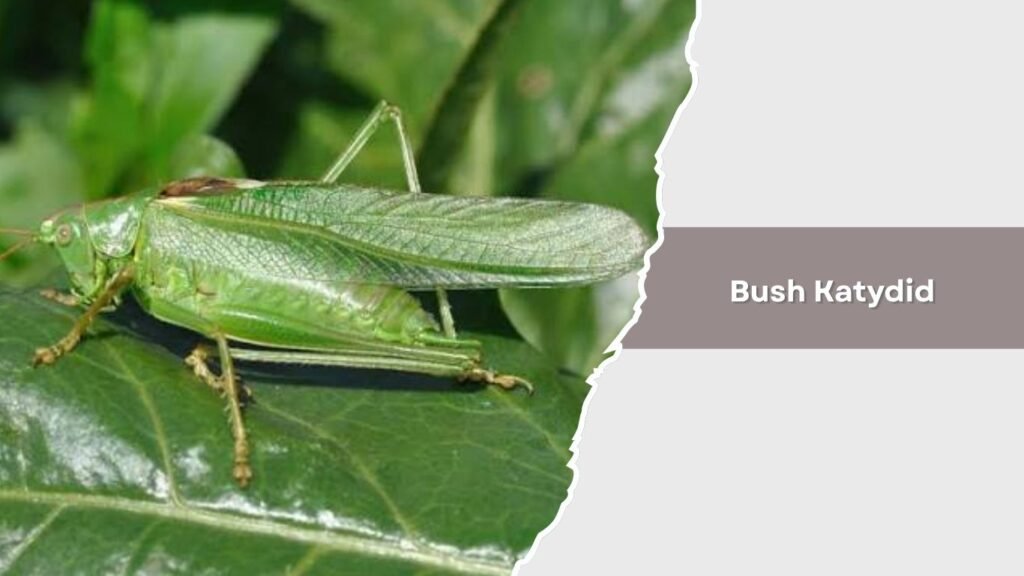
Bush Katydids include several small to medium-sized katydid species that often have bright green bodies and leaf-like wings. Their coloration and wing patterns make them easy to mistake for pieces of foliage. They commonly live in shrubs, gardens, meadows, and woodland vegetation where they can hide among leaves while feeding and avoiding predators.
Identification
- Color: Usually bright or pale green
- Body: Small to medium-sized
- Wings: Leaf-shaped and often veined
- Antennae: Very long and slender
- Hind legs: Adapted for powerful jumps
- Eyes: Small and prominent
- Camouflage: Blends closely with leaves
- Activity: Mostly nocturnal
Habitat and Distribution
Bush Katydids are commonly found in shrubs, grasses, flower gardens, forest edges, and other areas with thick vegetation. Different species occur throughout North America and many other parts of the world. They often remain low in vegetation compared with some larger katydids that prefer tree canopies.
Behavior and Diet
Most Bush Katydids are herbivorous and feed on leaves, flowers, seeds, or soft plant tissues. They spend daylight hours concealed among foliage and become more active at night. Males often produce calls by rubbing parts of their wings together, a behavior known as stridulation.
Life Cycle and Reproduction
Bush Katydids develop through egg, nymph, and adult stages. Females lay eggs on plants or insert them into plant tissues. After hatching, nymphs begin feeding immediately. They molt repeatedly while growing, and their wings become more developed until they reach adulthood.
10. Leaf-Mimic Katydid
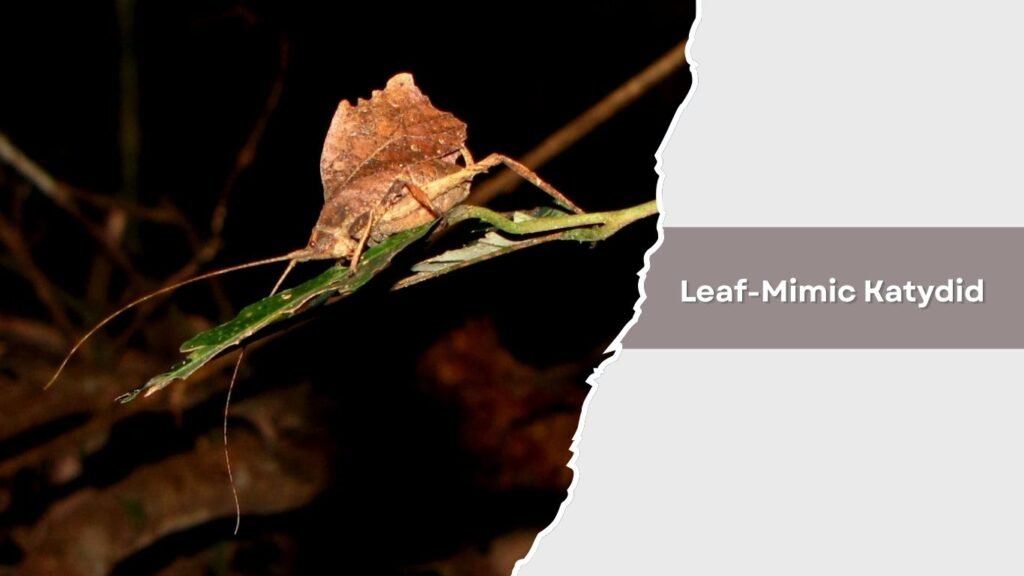
A Leaf-Mimic Katydid is a katydid whose body and wings closely imitate the appearance of a real leaf. Different species show impressive adaptations such as leaf veins, irregular edges, spots resembling fungal damage, and color patterns that mimic aging foliage. Some resemble fresh green leaves, while others look like partially damaged or dried leaves.
Identification
- Color: Green, yellow-green, or occasionally brown
- Wings: Broad and strongly leaf-shaped
- Patterns: May resemble veins, spots, or leaf damage
- Body: Flattened or hidden beneath the wings
- Antennae: Very long
- Legs: Long and adapted for jumping
- Size: Varies considerably by species
- Camouflage: Extremely strong leaf resemblance
Habitat and Distribution
Leaf-Mimic Katydids occur mainly in areas with abundant vegetation, including tropical forests, temperate woodlands, gardens, and shrublands. Different species are distributed across the Americas, Asia, Africa, and other regions. Their survival depends heavily on remaining concealed among foliage where their unusual body shape offers protection.
Behavior and Diet
Most Leaf-Mimic Katydids feed on plant material and become active mainly after dark. During the daytime, they often remain motionless with their wings closed over the body, creating an almost perfect leaf shape. If threatened, they may jump, fly away, or simply remain still and trust their camouflage.
Life Cycle and Reproduction
Females lay eggs on plants, in stems, or in other protected locations depending on the species. Nymphs hatch as small wingless insects and gradually develop adult features through repeated molts. As the wings expand and mature, the leaf-like patterns become increasingly convincing, helping adults remain hidden while feeding and reproducing.
11. Green Planthopper
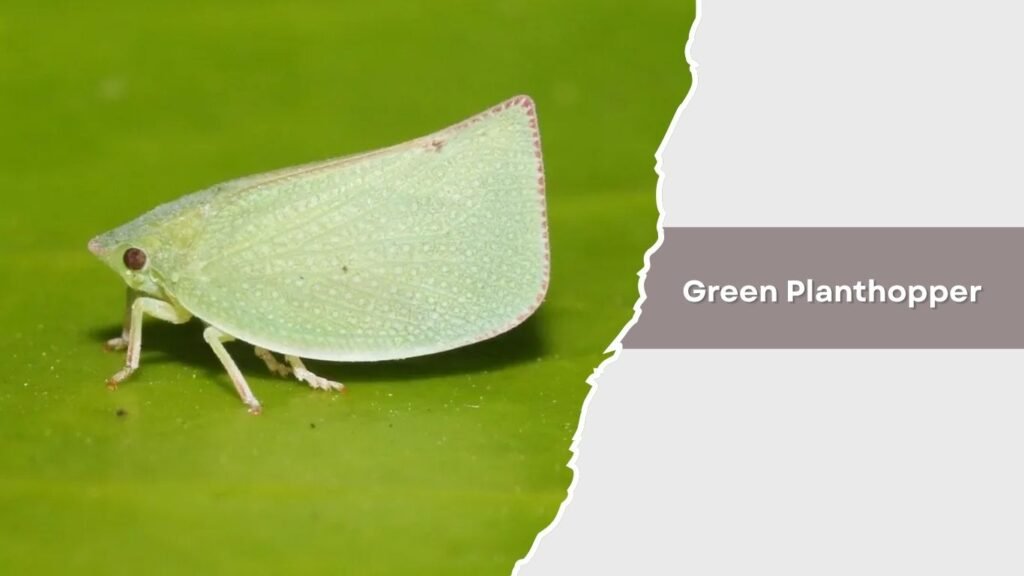
The Green Planthopper is a small sap-feeding insect that often blends into leaves because of its bright green body and wing shape. Several planthopper species can appear green, so the name may refer to different insects rather than one exact species. Their compact bodies and leaf-like wings help them remain hidden on stems and foliage, especially when they stay motionless.
Identification
- Color: Bright green, lime green, or yellow-green
- Body: Small and compact
- Wings: Often broad and leaf-like
- Legs: Adapted for powerful jumping
- Size: Usually small, often under 1 inch
- Mouthparts: Piercing-sucking
- Movement: Jumps suddenly when disturbed
- Camouflage: Blends closely with green leaves
Habitat and Distribution
Green Planthoppers can occur in gardens, grasslands, forests, agricultural fields, and areas with abundant shrubs or herbaceous plants. Different species are found in many parts of the world. They usually remain directly on their host plants, where foliage provides both food and protection from predators.
Behavior and Diet
These insects feed by inserting specialized mouthparts into plant tissue and extracting fluids. Most are not aggressive and rely on jumping or flying to escape danger. Some species may produce honeydew while feeding, which can leave sticky deposits on leaves and occasionally encourage sooty mold growth.
Life Cycle and Reproduction
Green Planthoppers develop through incomplete metamorphosis. Females lay eggs in or near plant tissues, and the young hatch as wingless nymphs. Nymphs feed on plants and molt several times while growing. Their wings gradually develop until they reach adulthood and become capable of reproduction.
12. Green Leafhopper
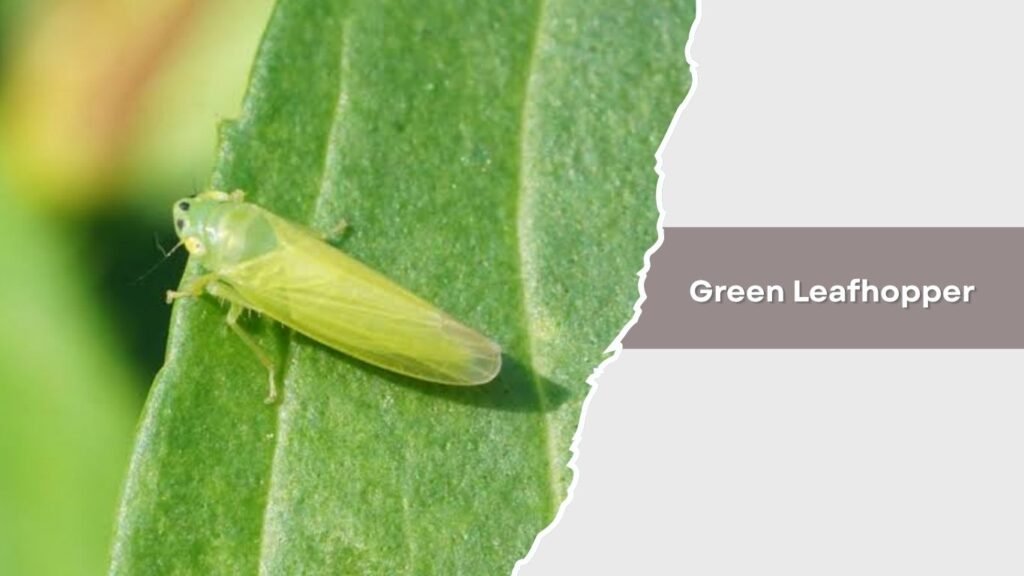
The Green Leafhopper is a tiny green insect that can easily be mistaken for part of a leaf. Leafhoppers usually have narrow, wedge-shaped bodies and are excellent jumpers. Their green coloration provides useful camouflage on grasses, crops, vegetables, and ornamental plants. Some species are harmless in small numbers, while others may become agricultural pests when populations grow.
Identification
- Family: Cicadellidae
- Color: Green to yellow-green
- Body shape: Small and wedge-shaped
- Wings: Held roof-like over the body
- Hind legs: Powerful and adapted for jumping
- Mouthparts: Piercing-sucking
- Size: Usually only a few millimeters long
- Movement: Quickly jumps or flies when disturbed
Habitat and Distribution
Green Leafhoppers live in meadows, gardens, crop fields, grasslands, woodland edges, and many other vegetated habitats. They are often found on the undersides of leaves or among grasses. Different green species occur across North America, Europe, Asia, Australia, and other regions.
Behavior and Diet
Leafhoppers feed on plant fluids by piercing leaves and stems. They are quick and difficult to catch because they can jump suddenly from vegetation. Heavy feeding may cause yellow spots, curling, or weakened growth. Certain species are also capable of transmitting plant diseases while moving between host plants.
Life Cycle and Reproduction
Females usually deposit eggs inside plant tissue. The eggs hatch into small wingless nymphs that resemble miniature adults. Nymphs feed and molt through several stages before developing functional wings. Because there is no pupal stage, young leafhoppers gradually take on the appearance of adults.
13. Buffalo Treehopper
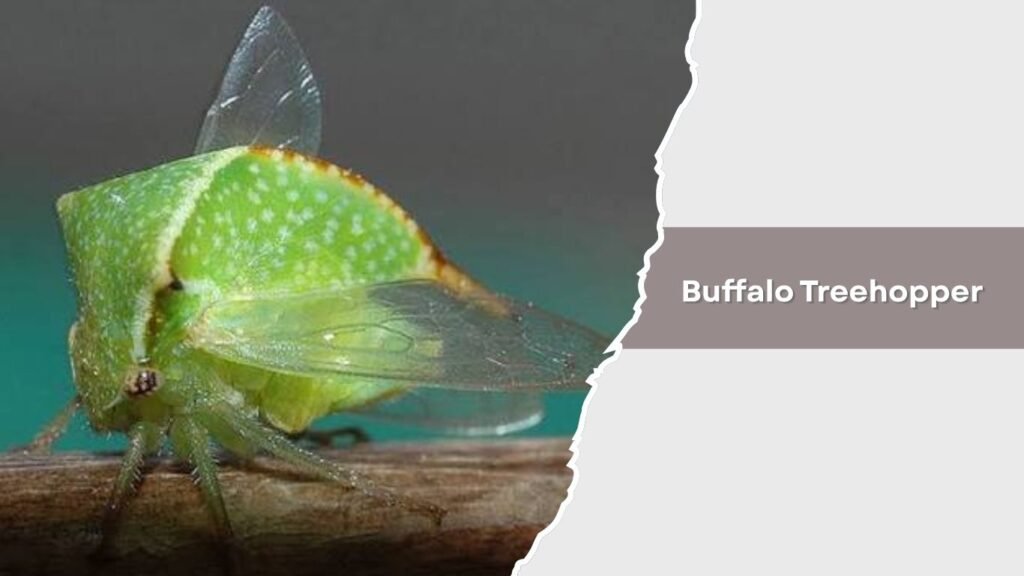
The Buffalo Treehopper is a small green insect with a distinctive triangular body that can resemble a thorn, leaf bud, or piece of plant tissue. Its enlarged pronotum gives the insect a raised, hump-like appearance reminiscent of a buffalo. This natural camouflage helps it remain unnoticed while resting on stems, shrubs, and garden plants.
Identification
- Color: Usually bright or yellowish green
- Body shape: Triangular and hump-backed
- Pronotum: Enlarged with pointed extensions
- Size: Small, usually less than 1/2 inch
- Wings: Fold along the sides of the body
- Legs: Adapted for jumping
- Mouthparts: Piercing-sucking
- Appearance: Often resembles a thorn or leaf bud
Habitat and Distribution
Buffalo Treehoppers can be found on shrubs, fruit trees, vines, garden plants, and other vegetation. They occur widely across North America and have also become established in some other regions. Adults often rest along stems where their unusual shape helps them blend with plant growth.
Behavior and Diet
These treehoppers feed by sucking sap from stems and other plant tissues. Adults are generally quiet while resting but can jump or fly rapidly when disturbed. Females may create small cuts in twigs while laying eggs, and heavy populations can sometimes damage young plants or fruit trees.
Life Cycle and Reproduction
Females insert eggs into small slits made in woody or tender plant stems. The eggs hatch into spiny-looking nymphs that feed on grasses and other vegetation. As the nymphs grow, they molt several times before developing the enlarged pronotum and wings characteristic of adult Buffalo Treehoppers.
14. Leaf-Mimic Praying Mantis
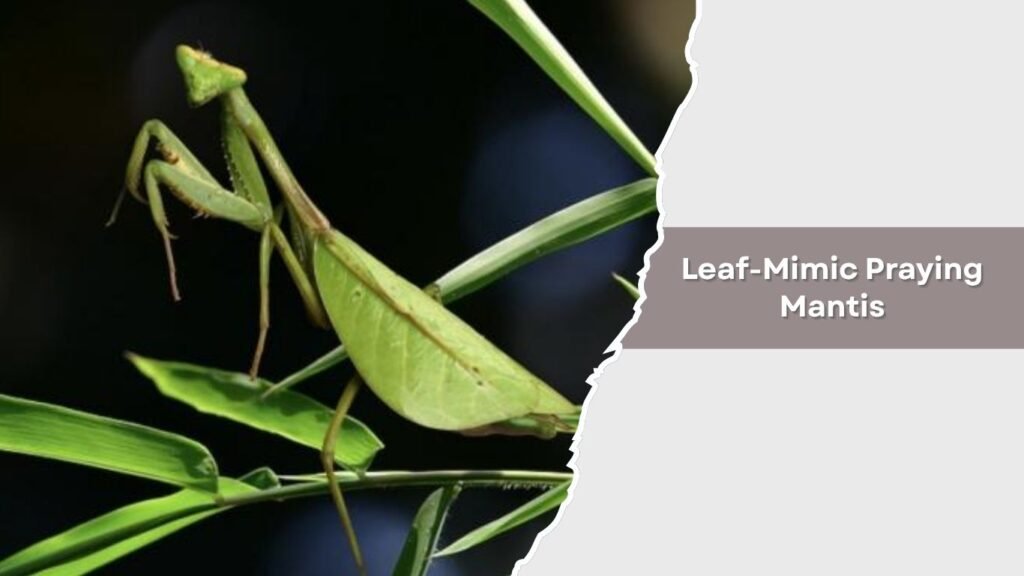
A Leaf-Mimic Praying Mantis uses body shape, coloration, and posture to resemble foliage rather than looking like a typical smooth-bodied mantis. Several mantis species have evolved leaf-like features, including flattened bodies, green or brown coloration, and expansions along their legs or abdomen. Their disguise allows them to hide from predators while also remaining nearly invisible to insect prey.
Identification
- Color: Green, brown, yellow-green, or mottled
- Body: Flattened or irregularly shaped
- Legs: May have leaf-like expansions
- Head: Triangular and highly mobile
- Front legs: Raptorial and adapted for catching prey
- Eyes: Large and prominent
- Camouflage: Mimics fresh or damaged foliage
- Posture: Often remains motionless for long periods
Habitat and Distribution
Leaf-Mimic Mantises are most strongly associated with tropical and subtropical forests, although leaf-like mantis species occur in several parts of the world. They typically live among shrubs, tree foliage, and dense vegetation where their camouflage is most effective.
Behavior and Diet
Unlike true leaf insects, Leaf-Mimic Mantises are predators rather than plant eaters. They wait motionlessly until an insect comes within striking distance, then rapidly seize it with their powerful front legs. Their prey may include flies, moths, crickets, grasshoppers, and other small insects.
Life Cycle and Reproduction
Female mantises place their eggs inside a protective foamy case called an ootheca. Young nymphs hatch looking like tiny wingless adults and immediately begin hunting. They grow through repeated molts until reaching maturity. As they develop, their leaf-like camouflage becomes more pronounced.
15. Dead-Leaf Mantis
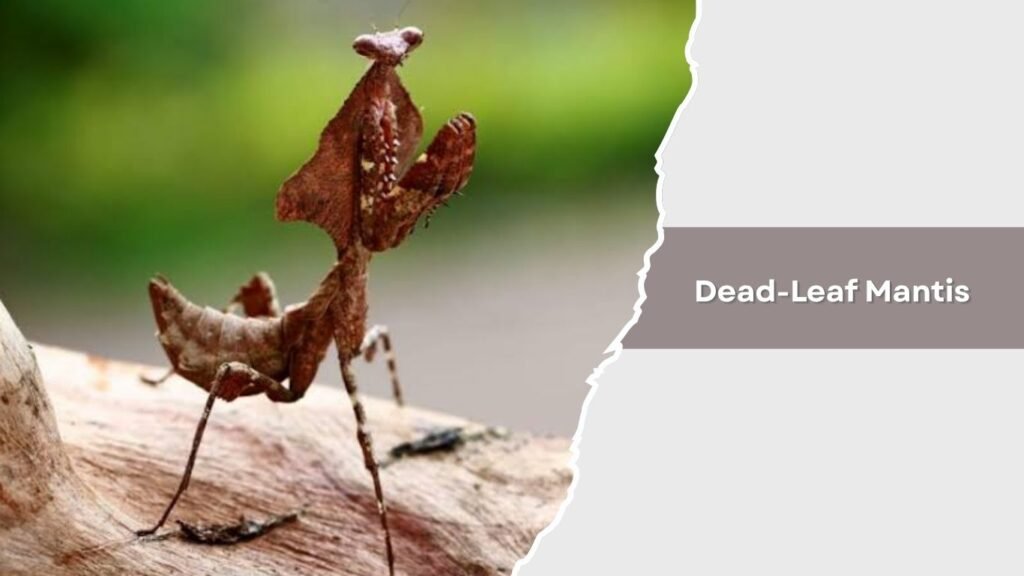
The Dead-Leaf Mantis is one of the most impressive leaf-mimicking insects. Instead of resembling a fresh green leaf, it often imitates dried or decaying foliage. Its brown, gray, yellowish, or mottled body may include curled edges, irregular projections, and vein-like markings. This makes the mantis almost disappear among fallen leaves and dead vegetation.
Identification
- Color: Brown, gray, tan, yellowish, or mottled
- Body shape: Flattened and leaf-like
- Thorax: Often broad or irregular
- Wings: Resemble dried leaves
- Legs: May contain leaf-shaped lobes
- Head: Triangular
- Front legs: Strong and adapted for capturing prey
- Camouflage: Resembles dead, damaged, or curled foliage
Habitat and Distribution
Dead-Leaf Mantises are especially associated with tropical forests of Asia, including regions where dense leaf litter and vegetation provide excellent camouflage. They may rest on branches, shrubs, or among dried leaves. Their irregular coloring allows them to remain hidden even when predators are nearby.
Behavior and Diet
Dead-Leaf Mantises are ambush predators. They remain nearly motionless and wait for prey such as flies, moths, crickets, and other insects to approach. When threatened, some individuals may flatten themselves, sway, or drop among dead leaves, making their camouflage even more effective.
Life Cycle and Reproduction
Females produce oothecae containing multiple eggs and attach them to branches, vegetation, or other protected surfaces. The nymphs hatch as miniature mantises and begin hunting small insects almost immediately. They molt repeatedly as they grow, gradually developing larger wings and the distinctive dead-leaf appearance of mature adults.
FAQs
What Is the Green Insect That Looks Like a Leaf?
A green insect that looks like a leaf may be a true leaf insect, katydid, planthopper, leafhopper, treehopper, or leaf-mimic mantis. True leaf insects are especially convincing because their flattened bodies, legs, and wings closely resemble real leaves.
Why Do Some Insects Look Like Green Leaves?
Many insects use leaf-like camouflage to avoid predators. Their green coloration, flattened bodies, vein-like wing patterns, and slow movements help them blend into surrounding foliage. Some species even sway like leaves moving in the wind, making their camouflage more effective.
What Is a Large Green Insect That Looks Like a Leaf?
A large green insect with leaf-like wings is often a giant leaf insect or a large katydid. Greater Angle-Wing Katydids and Common True Katydids are good examples. Giant leaf insects are broader and flatter, while katydids usually have very long antennae and powerful hind legs.
Do Green Leaf-Like Insects Bite?
Most leaf-mimicking insects do not normally bite humans. Leaf insects, planthoppers, leafhoppers, and katydids are generally harmless when left alone. Leaf-mimic mantises are predators with strong front legs, but they also do not normally attack people and usually rely on camouflage or escape.
Can Green Leaf-Like Insects Fly?
Many can fly, but flight ability varies by species and sex. Male leaf insects often fly better than females, while adult katydids, planthoppers, leafhoppers, and mantises may also have functional wings. Some heavy-bodied female leaf insects have limited flight ability despite having wings.