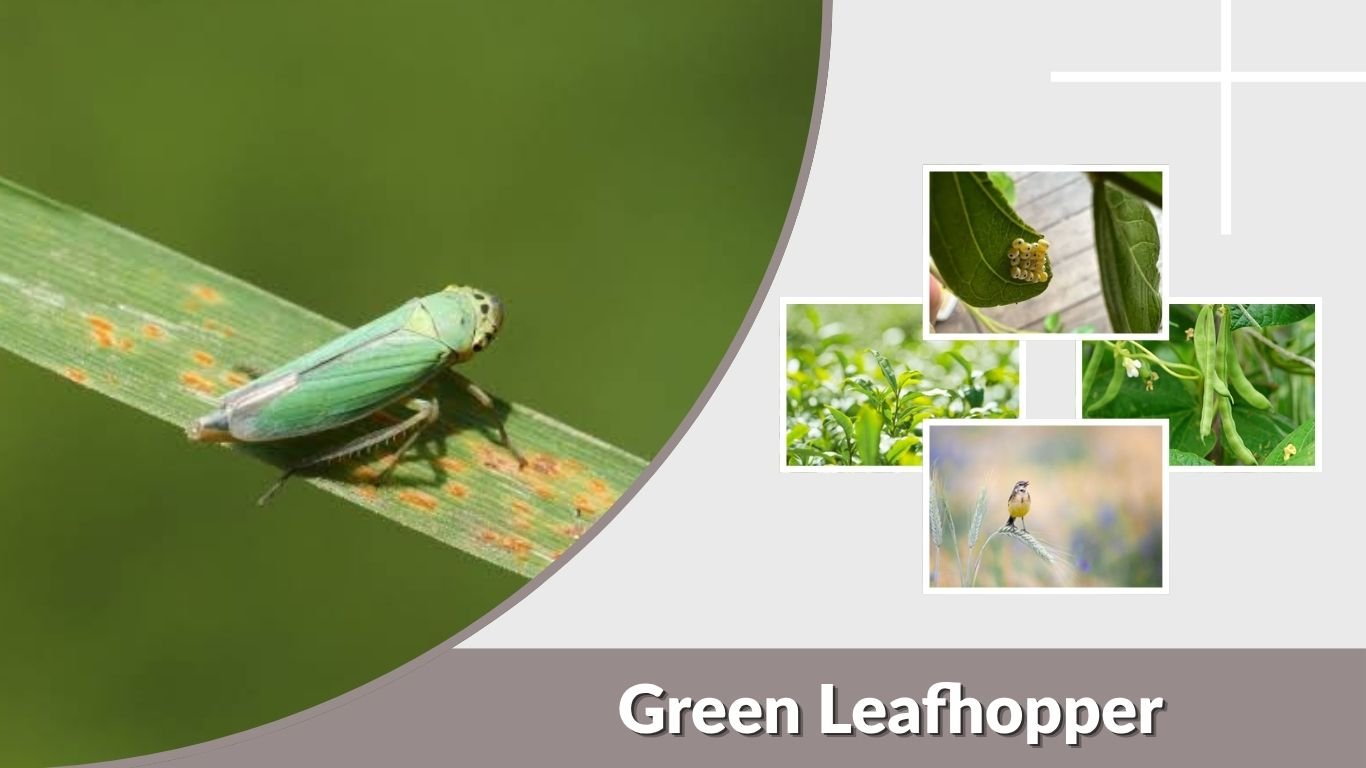
The green leafhopper is a small, active plant-feeding insect commonly found on grasses, vegetables, ornamental plants, and agricultural crops. Most are green or yellow-green and quickly jump or fly away when disturbed. Leafhoppers use piercing-sucking mouthparts to remove plant fluids, and heavy populations can cause spotting, yellowing, curling, or reduced plant growth. Some species, particularly rice green leafhoppers, are important crop pests because they can also transmit plant diseases. This guide covers green leafhopper identification, nymphs, eggs, life cycle, damage, bites, and control.
What Is a Green Leafhopper?
Green leafhopper is a broad common name used for numerous green-colored leafhoppers rather than a single species. These insects belong to the family Cicadellidae in the order Hemiptera. They are closely associated with plants and are known for their ability to jump rapidly using powerful hind legs when threatened.
Green Leafhopper Classification
A general classification includes:
- Order: Hemiptera
- Family: Cicadellidae
- Common group: Leafhoppers
- Color: Usually green, yellow-green, or lime green
- Diet: Plant sap and other plant fluids
- Mouthparts: Piercing-sucking
Because many species can appear green, the exact scientific name depends on which green leafhopper is being identified.
Green Leafhopper Identification
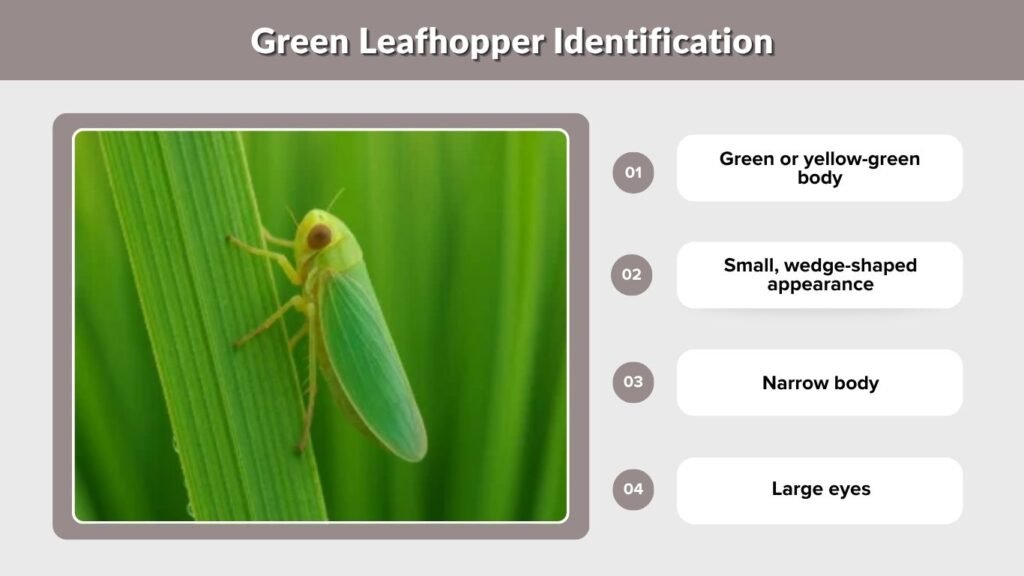
Green leafhoppers are usually tiny, narrow-bodied insects with wings held roof-like over their backs. Their streamlined shape allows them to move quickly through vegetation.
They can easily be overlooked until a plant is disturbed and several tiny insects suddenly jump or fly away.
What Does a Green Leafhopper Look Like?
Common identification features include:
- Green or yellow-green body
- Small, wedge-shaped appearance
- Narrow body
- Large eyes
- Short antennae
- Powerful jumping hind legs
- Wings folded over the back
- Piercing-sucking mouthparts
- Quick jumping or sideways movement
Many adults measure only a few millimeters long, although size varies between species.
Tiny Green Leafhopper
A tiny green leafhopper may look like a miniature green wedge sitting on a leaf.
When approached, it often jumps suddenly rather than crawling away slowly. This behavior can help separate leafhoppers from aphids, which typically move more slowly and often gather in dense colonies.
Green Leafhopper Nymph
A green leafhopper nymph is an immature leafhopper. Nymphs resemble small wingless versions of adults but undergo several developmental changes before reaching maturity.
They remain active and can jump surprisingly well despite lacking fully developed wings.
What Do Green Leafhopper Nymphs Look Like?
Typical characteristics include:
- Very small size
- Green, cream, or pale coloration
- No fully developed wings
- Long hind legs
- Flattened or wedge-shaped body
- Rapid sideways or forward movement
Nymphs often remain on the underside of leaves, where they feed while receiving some protection from predators and weather.
Green Leafhopper Eggs
Female leafhoppers usually place their eggs inside or against plant tissues rather than leaving them openly exposed.
This makes the eggs much harder to notice than the insects themselves.
Where Are Green Leafhopper Eggs Laid?
Depending on the species, females may lay eggs in:
- Leaf tissue
- Leaf veins
- Stems
- Leaf sheaths
- Tender plant growth
The eggs eventually hatch into tiny nymphs that begin feeding shortly afterward.
Because the eggs can be hidden within plants, gardeners may notice nymphs before realizing eggs were present.
Green Leafhopper Life Cycle
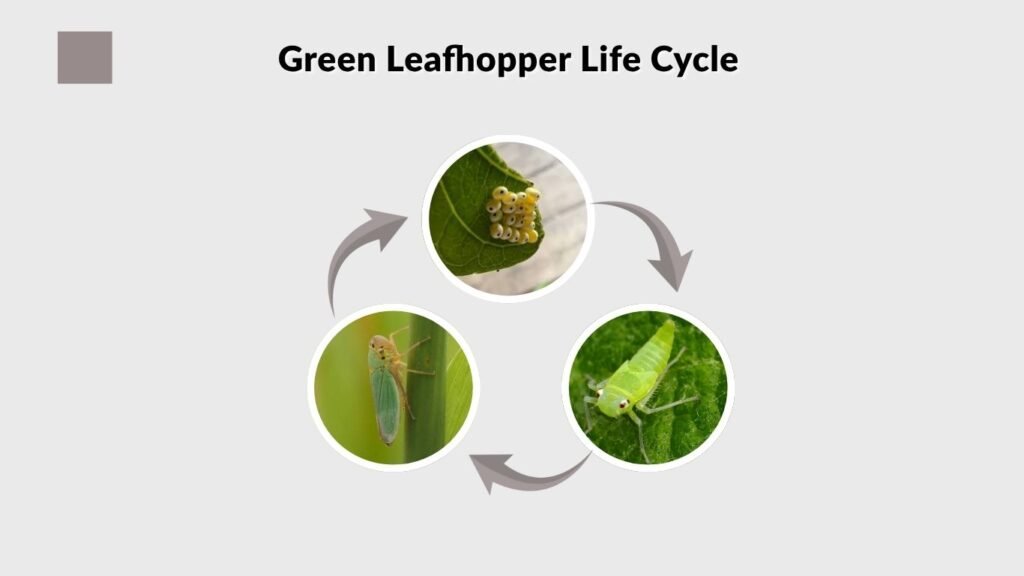
Green leafhoppers undergo incomplete metamorphosis. There is no caterpillar or pupal stage.
Instead, a leafhopper progresses directly from egg to nymph and then adult.
Life Cycle Stages
The basic stages are:
- Egg – Deposited in or on plant tissue.
- Nymph – Hatches and begins feeding.
- Several nymphal stages – The insect molts repeatedly as it grows.
- Adult – Develops wings, mates, and produces another generation.
Warm temperatures can speed development, allowing some species to produce several generations during a growing season.
What Do Green Leafhoppers Eat?
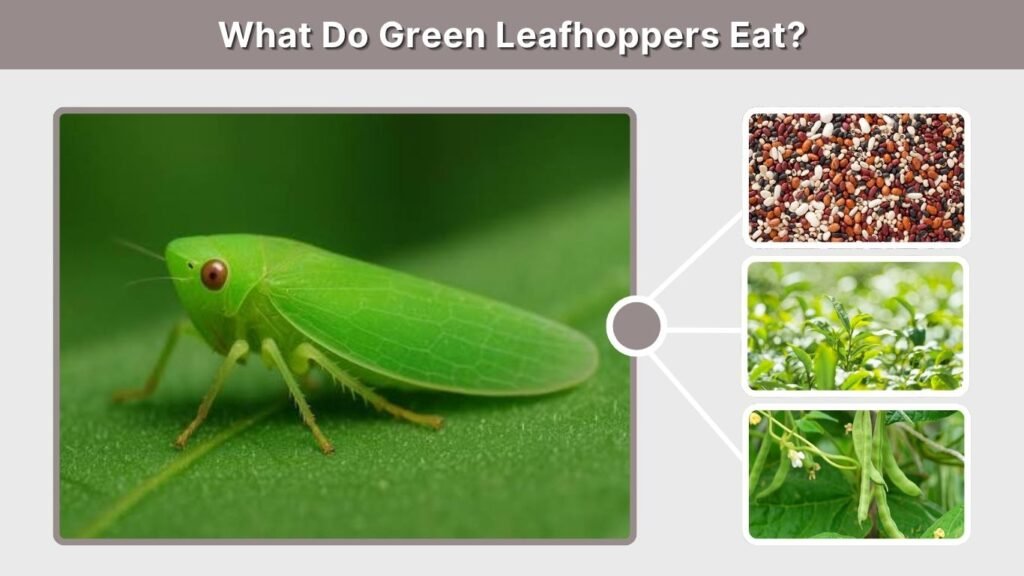
Green leafhoppers are plant feeders. Their piercing-sucking mouthparts penetrate plant tissue and allow them to remove fluids.
Different species prefer different host plants, so green leafhoppers may appear on crops, grasses, weeds, vegetables, flowers, or trees.
Common Host Plants
Green leafhoppers may be associated with:
- Rice
- Grasses
- Beans
- Vegetables
- Tea plants
- Parsley
- Ornamental flowers
- Shrubs
- Fruit plants
- Weeds
Some species specialize in particular plants, while others have much broader diets.
Green Leafhopper Damage
A few leafhoppers on a healthy plant may cause little noticeable damage. Problems become more serious when populations become large or when a species is capable of spreading plant pathogens.
Both adults and nymphs can contribute to plant injury.
Signs of Green Leafhopper Damage
Possible symptoms include:
- White or pale speckles on leaves
- Yellowing
- Browning along leaf edges
- Curling leaves
- Reduced plant vigor
- Stunted growth
- Dry or scorched-looking foliage
- Premature leaf drop
Repeated feeding removes plant fluids and damages individual cells.
Can Green Leafhoppers Spread Plant Diseases?
Yes. Certain leafhopper species can transmit plant pathogens while feeding.
This is especially important in agricultural crops such as rice. In these situations, disease transmission may create greater economic damage than the direct removal of plant sap.
However, not every green leafhopper carries or spreads plant disease.
Rice Green Leafhopper
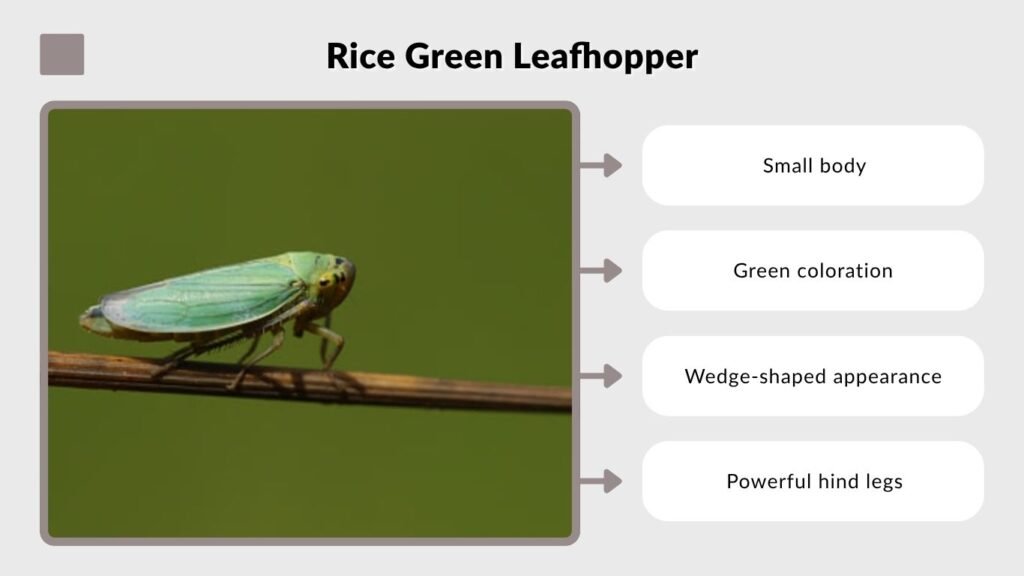
The term rice green leafhopper refers to leafhoppers closely associated with rice crops. One well-known species is Nephotettix virescens.
These insects are important agricultural pests in rice-growing regions because they feed on rice plants and can transmit particular rice diseases.
Rice Green Leafhopper Identification
Typical characteristics include:
- Small body
- Green coloration
- Wedge-shaped appearance
- Powerful hind legs
- Association with rice fields
Exact identification usually requires more than color because several related leafhoppers can occur in rice-growing areas.
Rice Green Leafhopper Damage
Rice green leafhopper activity may contribute to:
- Leaf discoloration
- Reduced plant vigor
- Poor development
- Sap loss
- Disease transmission
Large infestations can become particularly problematic in young or susceptible rice crops.
Tea Green Leafhopper
Tea plants can also be attacked by small leafhopper species commonly described as tea green leafhoppers.
They feed on tender shoots and developing leaves, potentially affecting leaf quality and plant growth when populations become high.
Damage to Tea Plants
Feeding may lead to:
- Browning of tender growth
- Distorted leaves
- Reduced shoot quality
- Slower development
- Damaged leaf margins
Regular monitoring is important because the insects are small and often difficult to notice until symptoms develop.
Red-Eyed Green Leafhopper
Some small green leafhoppers have contrasting reddish or red-toned eyes, giving rise to common descriptions such as red-eyed green leafhopper.
Because common names vary by region, color alone should not be used for precise species identification.
How to Identify One
Look for a combination of:
- Green body
- Reddish eyes
- Small wedge-shaped form
- Jumping behavior
- Wings held along the body
- Association with vegetation
A photograph, geographic location, and host plant provide much more useful identification clues than color alone.
Do Green Leafhoppers Bite?
Green leafhoppers are equipped with piercing mouthparts, but these are adapted primarily for feeding on plants.
They are not blood-feeding insects and do not normally seek humans or pets as a food source.
Can a Tiny Green Leafhopper Bite Humans?
Occasional accidental probing of human skin may happen with some plant-feeding true bugs, but leafhoppers are not considered significant biting pests.
If one lands on you, it will usually jump or fly away.
Green leafhoppers:
- Do not feed on blood
- Do not sting
- Are not venomous
- Do not normally attack people
- Are mainly concerns for plants
Tiny Green Leafhopper in the House
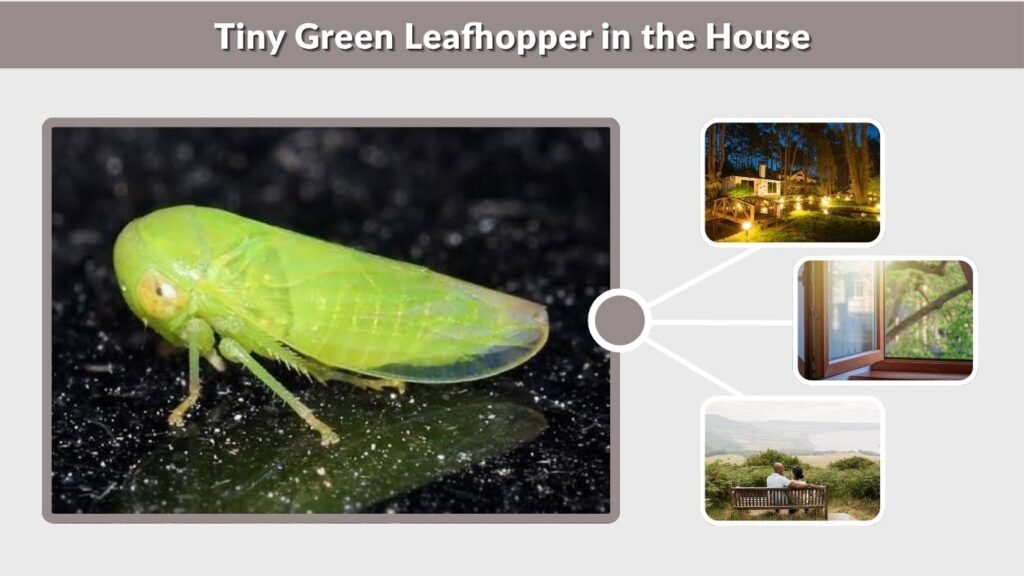
Finding a green leafhopper indoors usually does not mean you have an indoor infestation.
Leafhoppers naturally live around vegetation and may accidentally enter through windows, doors, screens, or on houseplants.
Why Are Green Leafhoppers Indoors?
Common reasons include:
- Attraction to lights
- Open windows
- Nearby vegetation
- Potted plants brought indoors
- Accidental entry through doors
They generally cannot establish permanent populations indoors unless suitable living plants are available.
Simply remove individual insects and check houseplants if they continue appearing.
How to Get Rid of Green Leafhoppers
Control should focus on reducing populations without unnecessarily harming beneficial insects.
Small populations often do not require aggressive treatment.
Green Leafhopper Control
Useful methods include:
- Inspect leaf undersides: Look for nymphs and feeding damage.
- Remove weeds: Weeds may provide alternative host plants.
- Use water sprays: A strong stream can knock insects from garden plants.
- Remove badly damaged growth: This can reduce heavily infested plant material.
- Use insecticidal soap: It may help control exposed nymphs when applied correctly.
- Encourage natural enemies: Spiders and predatory insects can reduce leafhopper numbers.
- Use protective covers: Fine mesh may help protect vulnerable young plants.
- Monitor regularly: Early detection makes infestations easier to manage.
Insecticide for Green Leafhoppers
Severe agricultural infestations may sometimes require an insecticide labeled for both the crop and target leafhopper.
Treatment should be based on actual pest pressure rather than simply seeing a few insects. Excessive insecticide use may kill beneficial predators and sometimes make pest problems harder to manage over time.
Natural Enemies of Green Leafhoppers
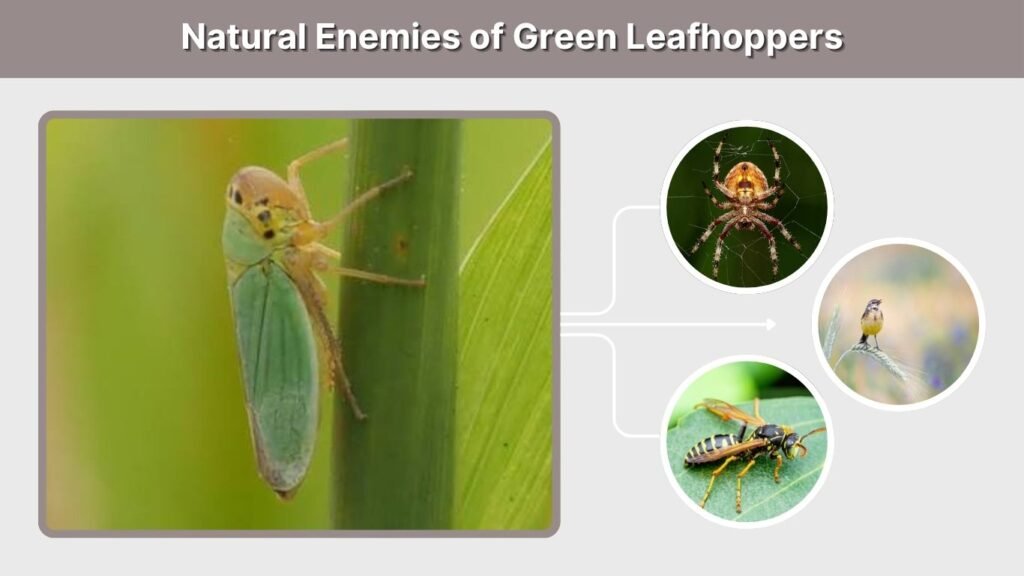
Leafhoppers form part of the natural food web and have numerous predators and parasitoids.
Maintaining a diverse garden can encourage these beneficial organisms.
Common Natural Enemies
Green leafhoppers may be eaten by:
- Spiders
- Lady beetles
- Predatory bugs
- Lacewing larvae
- Predatory flies
- Small birds
- Parasitoid wasps
Reducing unnecessary broad-spectrum pesticide use helps preserve these natural controls.
Green Leafhopper Facts
Green leafhoppers are tiny insects, but their jumping ability and plant-feeding behavior make them remarkably successful.
Quick Facts
- They belong to the family Cicadellidae.
- Many different species can be green.
- Both adults and nymphs feed on plants.
- They have piercing-sucking mouthparts.
- They can jump rapidly when disturbed.
- Nymphs do not have fully developed wings.
- Some species are important rice pests.
- Certain leafhoppers transmit plant diseases.
- They are not normally dangerous to humans.
- Heavy infestations can weaken plants.
FAQs
Are Green Leafhoppers Harmful?
Green leafhoppers are primarily harmful to plants. Large populations can cause yellowing, spotting, curling, and reduced plant growth. Certain species can also transmit plant diseases. They are generally not dangerous to humans or pets.
Do Green Leafhoppers Bite Humans?
Green leafhoppers do not normally bite humans. Their piercing-sucking mouthparts are adapted for feeding on plant tissue rather than blood. Accidental skin probing may occasionally be reported, but these insects are not considered meaningful biting pests.
How Do You Get Rid of Green Leafhoppers?
Regularly inspect plants, control weeds, knock insects off with water, remove heavily infested plant material, and encourage natural predators. Insecticidal soap may help against exposed nymphs. Serious crop infestations may require a properly labeled insecticide.
What Is a Rice Green Leafhopper?
A rice green leafhopper is a small leafhopper associated with rice plants. Species such as Nephotettix virescens can feed directly on rice and may also transmit important plant diseases, making them significant agricultural pests in some rice-growing regions.
Why Are Tiny Green Leafhoppers in My House?
Tiny green leafhoppers usually enter homes accidentally through doors, windows, or on plants. Outdoor lights can also attract them. They do not normally infest houses and usually disappear once removed unless suitable living plants are present indoors.