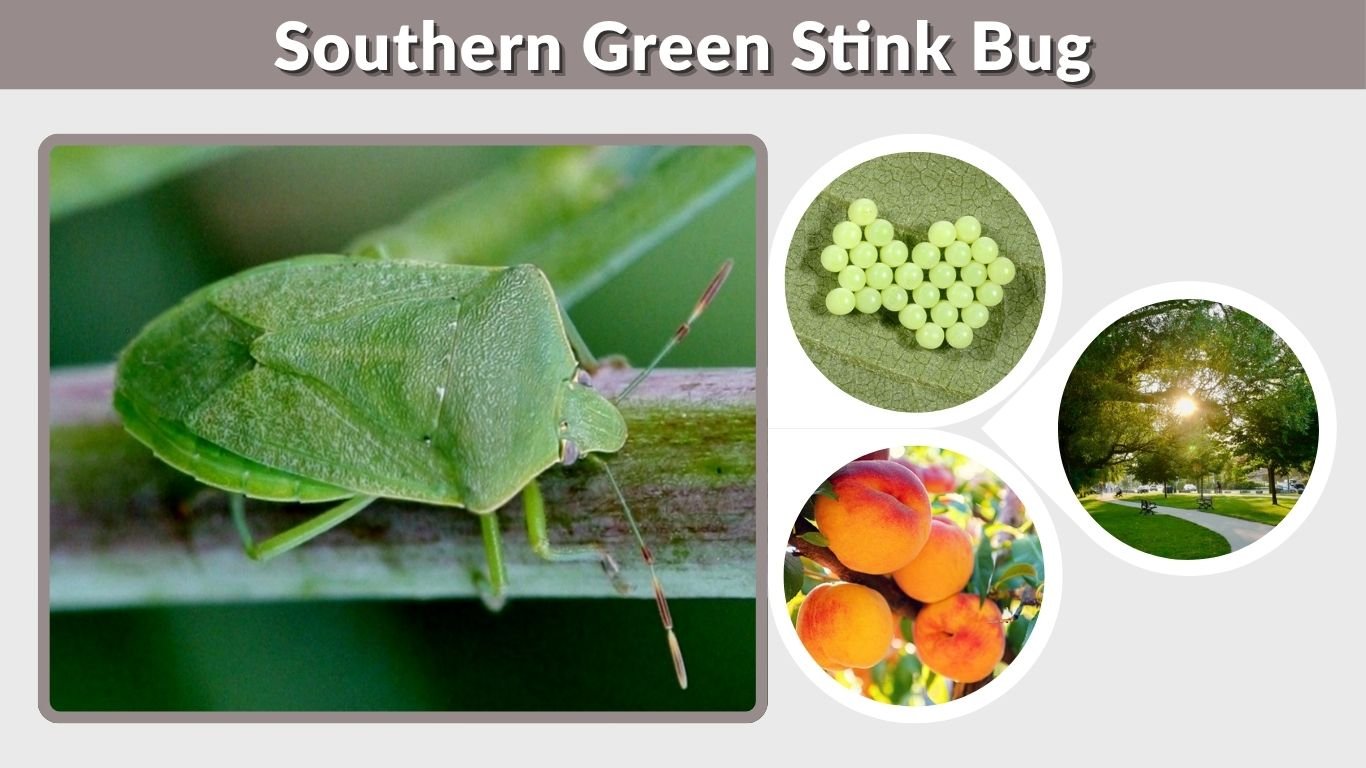
The southern green stink bug is a common agricultural pest known for its bright green color, shield-shaped body, and unpleasant defensive odor. Scientifically called Nezara viridula, this insect feeds on many fruits, vegetables, grains, and ornamental plants. Adults and nymphs can damage crops by piercing plant tissue and sucking out juices. Southern green stink bugs are especially troublesome on tomatoes, beans, soybeans, peppers, and fruit crops. This guide covers identification, eggs, nymphs, diet, habitat, life cycle, bite risk, and effective control methods.
What Is a Southern Green Stink Bug?
The southern green stink bug is a plant-feeding insect in the family Pentatomidae. It is widely distributed in warm and temperate regions and can become an important crop pest when populations increase. Like other stink bugs, it has piercing-sucking mouthparts and releases a strong odor when disturbed, handled, or threatened.
Southern Green Stink Bug Scientific Name
The scientific name of the southern green stink bug is Nezara viridula.
Its basic classification includes:
- Order: Hemiptera
- Family: Pentatomidae
- Genus: Nezara
- Species: Nezara viridula
- Common name: Southern green stink bug
It is a true bug and not a beetle, even though its hard-looking body can sometimes cause confusion.
Southern Green Stink Bug Identification
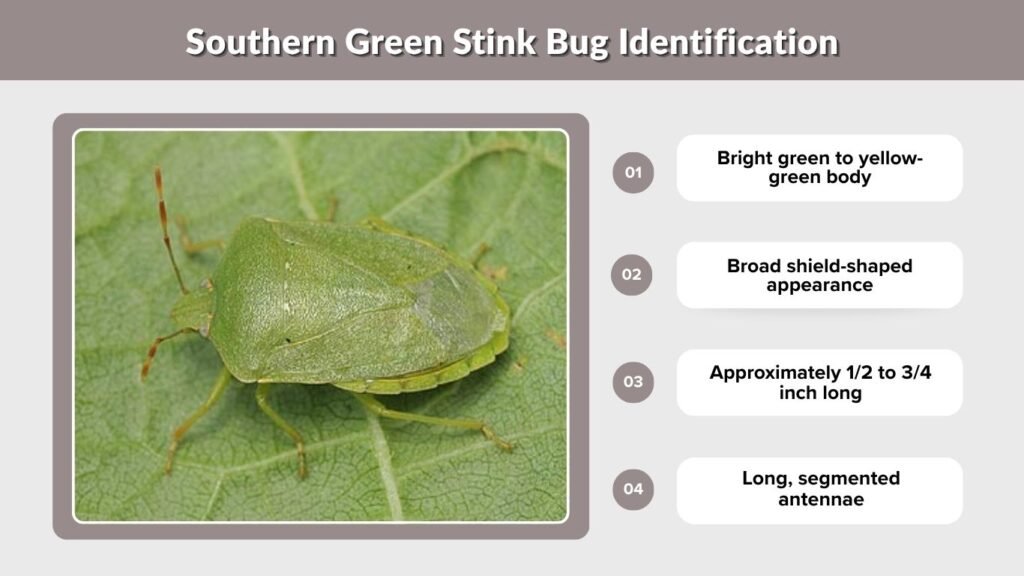
Adult southern green stink bugs are generally easy to recognize because of their broad, shield-shaped bodies and mostly green coloration. Their appearance can vary slightly depending on age, season, and geographic location.
Adults are often found resting or feeding directly on leaves, fruits, pods, and stems.
What Does a Southern Green Stink Bug Look Like?
Key identification features include:
- Bright green to yellow-green body
- Broad shield-shaped appearance
- Approximately 1/2 to 3/4 inch long
- Small pale dots along parts of the body margin
- Long, segmented antennae
- Piercing-sucking mouthparts
- Broad triangular plate on the back
- Strong odor when disturbed
Some adults may become slightly darker or browner during cooler periods.
How Big Is a Southern Green Stink Bug?
Adult southern green stink bugs are typically around 12 to 17 mm long, although size can vary.
Females and males look fairly similar from above. Nymphs are much smaller and change dramatically in appearance as they progress through several growth stages.
Southern Green Stink Bug Eggs
Southern green stink bug eggs are usually laid in organized clusters on the underside of leaves. The eggs are small, barrel-shaped, and tightly packed together.
A single cluster may contain dozens of eggs, making them fairly noticeable once you know what to look for.
What Do Southern Green Stink Bug Eggs Look Like?
Typical egg characteristics include:
- Barrel-shaped appearance
- Pale yellow, cream, or light green color
- Laid in neat clusters
- Usually attached to leaf undersides
- Darker coloration developing before hatching
Egg masses should be removed early when found in gardens because destroying them can prevent dozens of young nymphs from beginning to feed.
Southern Green Stink Bug Nymph
After hatching, southern green stink bugs develop through several immature stages called instars.
Nymphs do not initially resemble the uniformly green adults. Early stages can be dark, colorful, or patterned, which sometimes causes them to be mistaken for completely different insects.
Southern Green Stink Bug Instars
The insect generally passes through five nymphal instars before becoming an adult.
Young nymphs may appear black or dark brown with bright markings. As they mature, increasing amounts of green appear across their bodies.
Second-instar nymphs may remain together near the egg mass for a short period before spreading onto nearby plants.
Are Southern Green Stink Bug Nymphs Harmful to Plants?
Yes. Nymphs use piercing mouthparts to remove sap and plant fluids.
Older nymphs can cause significant damage because they feed more heavily and move between fruits, pods, stems, and other plant structures.
Southern Green Stink Bug Life Cycle
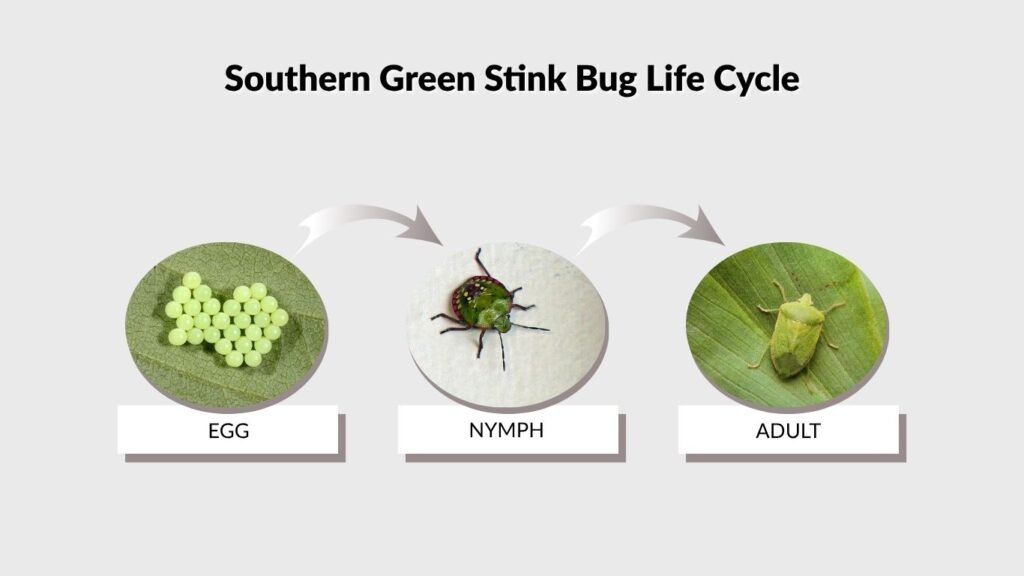
The southern green stink bug develops through incomplete metamorphosis. Unlike moths and beetles, it does not have a caterpillar or pupal stage.
Instead, the insect progresses from egg to nymph and then directly into an adult.
Three Main Life Cycle Stages
The life cycle includes:
- Egg – Females deposit groups of eggs on plant foliage.
- Nymph – Young stink bugs hatch and progress through five instars.
- Adult – Mature insects mate, feed, and produce another generation.
Development occurs fastest during warm weather when food is abundant.
Southern Green Stink Bug Lifespan
The exact lifespan varies with temperature, food availability, climate, and season.
Development from egg to adult may take several weeks during favorable warm conditions. Adults can survive for weeks or months, and populations may produce multiple generations each year in warm regions.
What Do Southern Green Stink Bugs Eat?
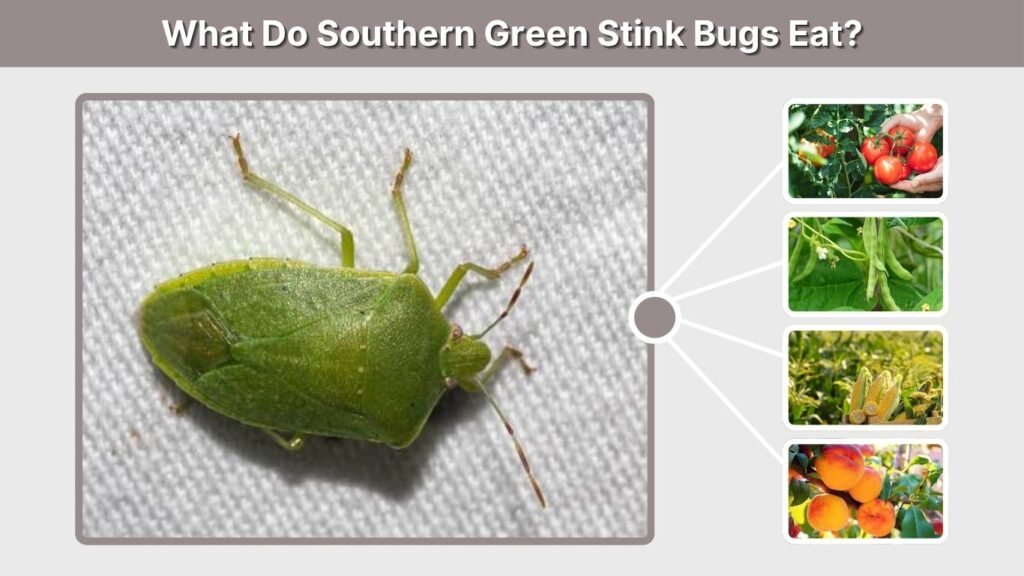
Southern green stink bugs are polyphagous, meaning they can feed on many different plant species.
They are especially attracted to developing fruits, seeds, pods, and tender plant tissue because these provide easy access to nutritious fluids.
Common Food Sources
Southern green stink bugs may feed on:
- Tomatoes
- Beans
- Soybeans
- Peppers
- Corn
- Cotton
- Peanuts
- Peaches
- Citrus
- Okra
- Squash
- Various weeds
Both cultivated crops and wild plants can support populations.
Southern Green Stink Bug on Tomatoes
Tomatoes are one of the plants that southern green stink bugs may attack.
They insert their piercing mouthparts into developing or ripe fruits and remove plant fluids. Feeding injuries can reduce both appearance and quality.
What Damage Do They Cause to Tomatoes?
Possible signs include:
- Pale or yellow feeding spots
- Whitish areas beneath the skin
- Hard or corky tissue
- Uneven fruit development
- Discoloration
- Reduced fruit quality
Several stink bug species can cause similar symptoms, so finding the insects themselves helps confirm the problem.
Southern Green Stink Bug Habitat and Range
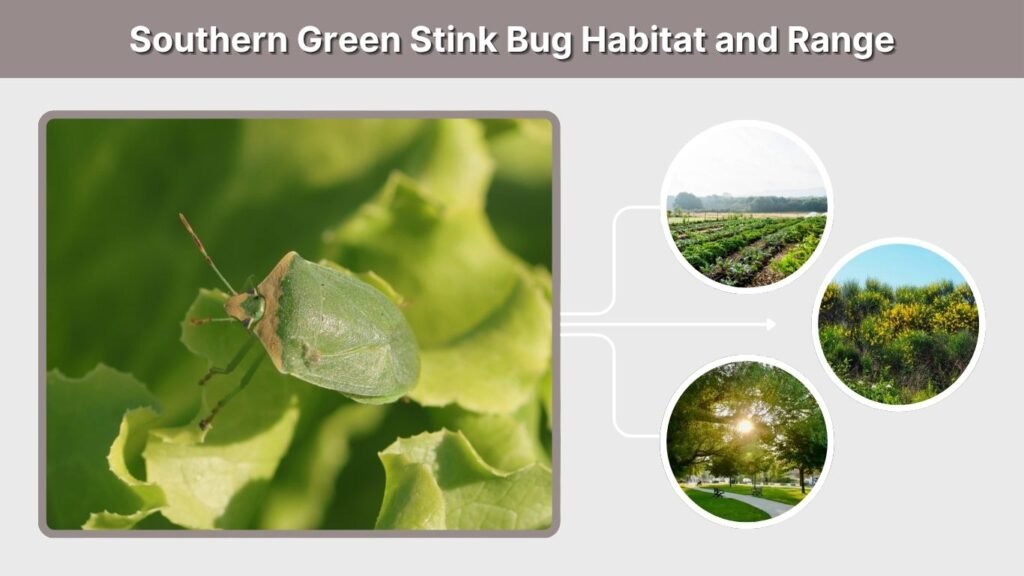
Southern green stink bugs prefer warm areas containing abundant vegetation and host plants.
They occur in agricultural fields, home gardens, orchards, weedy areas, and landscaped environments.
Where Do Southern Green Stink Bugs Live?
They may be found in:
- Vegetable gardens
- Crop fields
- Orchards
- Vineyards
- Shrublands
- Weedy field margins
- Parks
- Residential landscapes
The species occurs across many tropical, subtropical, and warm temperate regions around the world, including parts of North America, Australia, and other regions.
Southern Green Stink Bug vs. Green Stink Bug
The southern green stink bug can be confused with other green stink bug species because several have similarly shaped bodies.
Close examination of markings, body shape, and coloration is often necessary.
Main Differences
| Feature | Southern Green Stink Bug | Green Stink Bug |
| Scientific name | Nezara viridula | Chinavia hilaris |
| Overall color | Bright green | Green |
| Body shape | Shield-shaped | Shield-shaped |
| Typical markings | Small pale markings | Often yellowish or reddish body edges |
| Diet | Many crops | Many crops and plants |
Geographic location can also help with identification.
Are Southern Green Stink Bugs Poisonous?
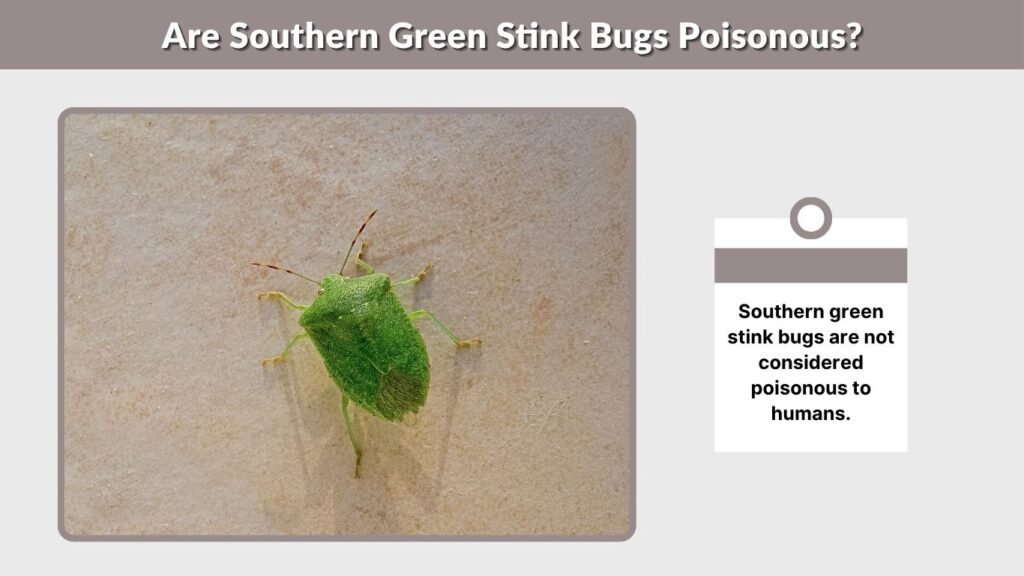
Southern green stink bugs are not considered poisonous to humans.
Their defensive odor may be unpleasant, but simply being near or touching one normally does not result in poisoning.
Do Southern Green Stink Bugs Bite?
Southern green stink bugs are plant feeders rather than blood-feeding insects.
They do not normally seek out humans to bite. Their mouthparts are designed to pierce plant tissue.
Rare accidental probing may occur if an insect is trapped against the skin, but these bugs are not considered an important biting threat.
Why Do Southern Green Stink Bugs Smell?
Like other stink bugs, they possess scent glands that release defensive chemicals when threatened.
The odor helps discourage predators and may remain on hands or surfaces after the insect is crushed.
For this reason, avoid squashing them indoors.
How to Get Rid of Southern Green Stink Bugs
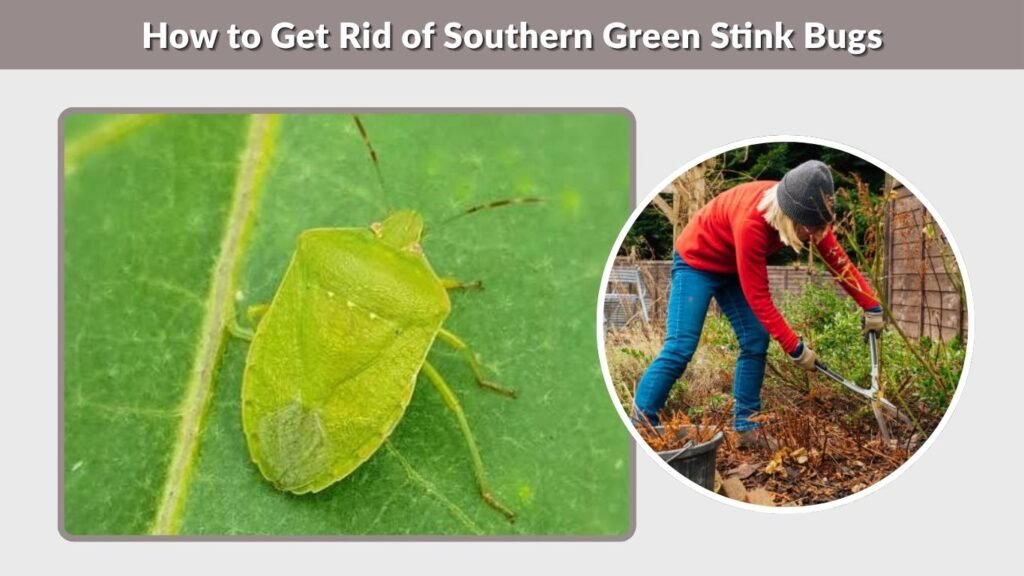
Control is most effective when infestations are detected early.
Egg masses and young nymphs are easier to manage than a large population of mobile adults.
Southern Green Stink Bug Control Methods
Useful approaches include:
- Hand-pick adults: Drop them into a container of soapy water.
- Remove egg masses: Inspect leaf undersides and destroy eggs.
- Control weeds: Remove nearby plants that may act as alternate hosts.
- Use row covers: Protect young plants before flowering.
- Maintain garden cleanliness: Remove heavily damaged fruits and plant debris.
- Encourage beneficial insects: Natural enemies can help reduce eggs and nymphs.
- Monitor regularly: Check developing fruits and pods during warm weather.
Small garden infestations are often manageable without heavy pesticide use.
Southern Green Stink Bug Organic Control
Organic management should focus on prevention and frequent inspection.
Hand removal, egg destruction, exclusion netting, and encouraging natural predators can substantially reduce populations.
Insecticidal soap or other appropriately labeled garden products may help against exposed young nymphs, but effectiveness may be lower against mature adults.
Why Are There So Many Southern Green Stink Bugs?
Large populations usually result from favorable weather, abundant food, and successful reproduction.
Warm temperatures can accelerate development, while extensive areas of suitable crops provide continuous feeding opportunities.
Factors That Increase Populations
Common factors include:
- Warm weather
- Mild winters
- Large crop areas
- Abundant weeds
- Multiple generations per year
- Few natural enemies
- Continuous availability of host plants
Regular monitoring is particularly important when several favorable conditions occur at the same time.
Interesting Southern Green Stink Bug Facts
Southern green stink bugs are more complex than their reputation as garden pests suggests.
Quick Facts
- Their scientific name is Nezara viridula.
- Adults are usually bright green.
- They have piercing-sucking mouthparts.
- Females lay eggs in clusters.
- Nymphs pass through five instars.
- They feed on many different crops.
- Tomatoes can be damaged by feeding.
- They produce a strong defensive smell.
- Adults are not considered poisonous.
- Early control helps prevent large infestations.
FAQs
Are Southern Green Stink Bugs Dangerous?
Southern green stink bugs are mainly dangerous to plants rather than people. They can damage vegetables, fruits, grains, and other crops by piercing tissues and removing plant fluids. They are not considered poisonous and do not normally bite humans.
What Do Southern Green Stink Bugs Eat?
Southern green stink bugs eat fluids from many plants, including tomatoes, beans, soybeans, peppers, cotton, corn, peanuts, and various fruits. They prefer developing seeds, pods, fruits, and tender plant tissue.
How Do You Identify a Southern Green Stink Bug?
Adults are broad, shield-shaped insects that are usually bright green and approximately 12 to 17 mm long. They may have small pale markings along the body. Nymphs look very different and may initially appear dark with colorful spots.
How Do You Get Rid of Southern Green Stink Bugs?
Remove adults by hand, destroy egg clusters, control nearby weeds, protect susceptible crops with suitable barriers, and inspect plants regularly. Early management is particularly effective because young nymphs are easier to control than mature adults.
Are Southern Green Stink Bugs Bad for Tomatoes?
Yes. Southern green stink bugs may feed on tomato fruits by piercing them and sucking out plant fluids. Damage may appear as pale spots, hard tissue, discoloration, or uneven ripening, especially when several stink bugs feed on the same fruit.