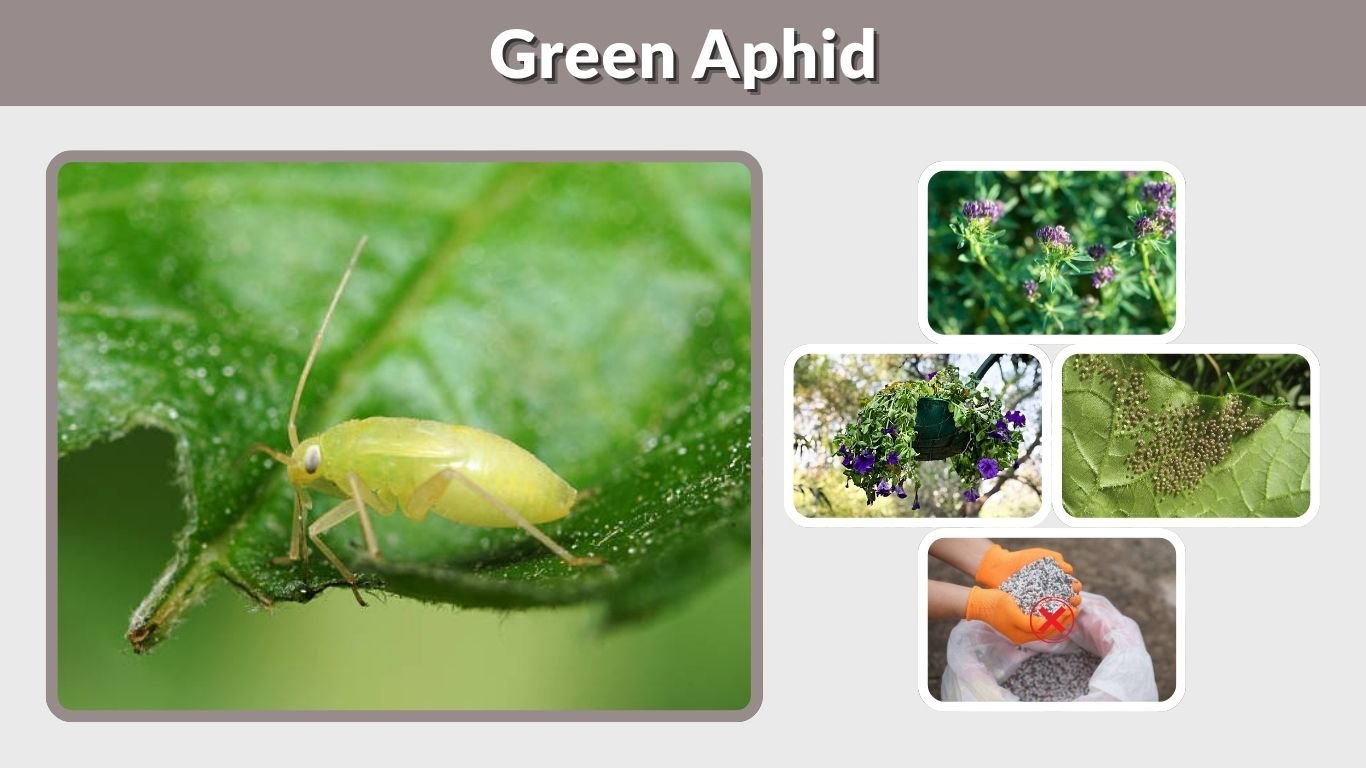
A green aphid is a tiny, soft-bodied sap-feeding insect commonly found on vegetables, flowers, fruit trees, shrubs, and agricultural crops. These insects may be pale green, lime green, yellow-green, blue-green, or even slightly translucent. They often gather in dense colonies on new shoots and underneath leaves.
Although individual aphids are tiny, a large green aphid infestation can weaken plants, curl leaves, stunt new growth, and spread plant diseases. Common types include the green peach aphid, green apple aphid, pea aphid, and green spruce aphid. Fortunately, aphids can often be controlled using water, natural predators, insecticidal soap, horticultural oils, and good garden management.
What Is a Green Aphid?
The term green aphid does not refer to one single species. It is a general description for numerous aphid species that have green coloration.
Aphids belong to the family Aphididae within the order Hemiptera. Rather than chewing leaves, they insert slender mouthparts into plant tissues and drink sap.
Different green aphids attack different host plants, although some species can feed on hundreds of plant species.
Green Aphid Identification
A typical green aphid has:
- Tiny pear-shaped body
- Usually 1–4 mm long
- Pale, bright, lime, yellow-green, or blue-green coloration
- Six thin legs
- Two antennae
- Soft body
- Two small tube-like structures called cornicles near the rear
- Wingless or winged adult forms
- Tendency to gather in colonies
- Preference for young leaves, stems, buds, and shoots
The two cornicles at the rear of the body are especially useful for distinguishing aphids from many other tiny green insects.
What Do Green Aphids Look Like?
Most green aphids are extremely small and can initially resemble tiny green dots on a plant.
When viewed closely, they usually have a rounded or pear-shaped abdomen, narrow head, long legs, and visible antennae.
Their exact appearance depends on species.
Tiny Lime Green Aphids
Tiny lime-green bugs clustered underneath leaves are frequently aphids.
Young aphids, known as nymphs, look similar to adults but are smaller. Large colonies can contain many different sizes because several generations may be present simultaneously.
Bright Green Aphids
Some aphid species can appear intensely green, especially when feeding on fresh plant growth.
Color alone cannot reliably identify the species because diet, developmental stage, environment, and genetics can influence body coloration.
Blue-Green Aphids
Aphids described as blue-green often have a green body covered with a subtle bluish or powdery coating.
Several aphid species can develop this appearance, so host plant and body structure should also be considered during identification.
Green Peach Aphid
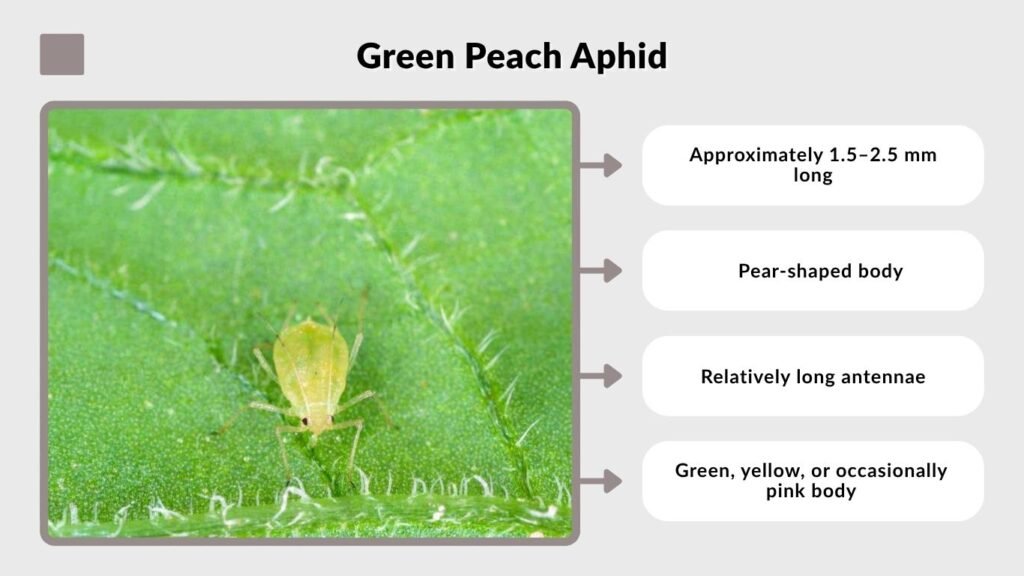
The green peach aphid is one of the most economically important aphids.
Its scientific name is Myzus persicae.
Despite its name, it doesn’t feed exclusively on peach trees. It can use an enormous variety of plants as hosts, including vegetables, ornamentals, weeds, and agricultural crops.
Green Peach Aphid Identification
Green peach aphids are small and soft-bodied. Their color may range from pale green and yellow-green to pinkish or reddish depending on conditions.
Common identification characteristics include:
- Approximately 1.5–2.5 mm long
- Pear-shaped body
- Relatively long antennae
- Long cornicles
- Green, yellow, or occasionally pink body
- Wingless and winged forms
- Colonies on young leaves and stems
Winged adults usually have a darker head and thorax than wingless individuals.
Green Peach Aphid Life Cycle
The green peach aphid has a complex lifecycle.
Under favorable conditions, females can reproduce without mating and give birth to live nymphs. This reproductive strategy allows populations to increase incredibly quickly.
The basic warm-season cycle is:
Adult female → Live nymphs → Growing nymphs → Adult females
In suitable climates or protected environments such as greenhouses, reproduction may continue for long periods.
In colder areas, some populations use peach and related trees as primary hosts where eggs can overwinter.
Green Peach Aphid Damage
Heavy feeding removes plant sap and can cause:
- Leaf curling
- Yellowing
- Distorted shoots
- Reduced plant vigor
- Stunted seedlings
- Lower crop quality
- Sticky honeydew
- Sooty mold
An even greater concern is disease transmission.
Green peach aphids can transmit numerous plant viruses while moving from one plant to another. Because virus transmission can occur quickly, controlling large populations after symptoms appear may not completely prevent disease spread.
Green Apple Aphid
The green apple aphid is another common species associated mainly with apple and related trees.
Its scientific name is Aphis pomi.
The insects usually congregate on succulent young shoots and undersides of leaves.
Green Apple Aphid Identification
Green apple aphids are typically bright green with darker appendages.
They are commonly found on:
- Apple trees
- Crabapple
- Hawthorn
- Pear and related plants in some situations
Colonies are especially noticeable during periods of vigorous new growth.
Green Apple Aphid Damage
Feeding can cause leaves to curl or become distorted.
Large infestations produce substantial amounts of honeydew, which can coat leaves and fruit. Black sooty mold may subsequently grow on the sticky surface.
Established mature trees can often tolerate moderate populations, while young trees and nursery plants may suffer more noticeable growth reduction.
Green Pea Aphid
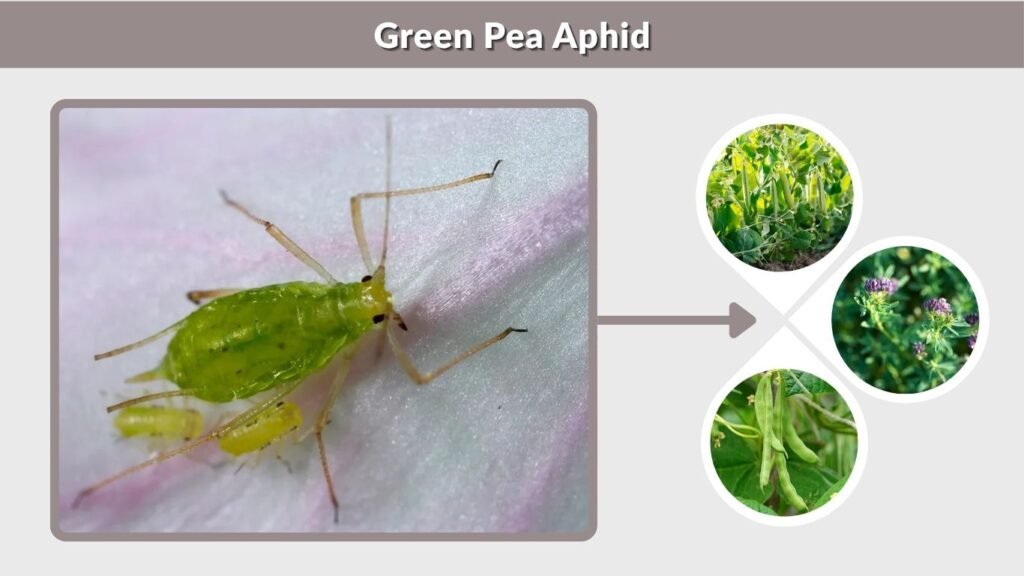
The pea aphid, Acyrthosiphon pisum, is commonly pale or bright green, although other color forms occur.
It feeds primarily on legumes.
Typical host plants include:
- Peas
- Alfalfa
- Clover
- Lentils
- Beans
- Other legumes
Pea aphids can weaken plants through sap feeding and may also spread plant viruses.
Their relatively long legs and elongated bodies can make them appear larger than some other common aphids.
Green Spruce Aphid
The green spruce aphid, Elatobium abietinum, feeds on spruce trees.
Unlike aphids that primarily attack soft new shoots, green spruce aphids can feed on older needles.
Green Spruce Aphid Damage
Symptoms may include:
- Yellowing needles
- Brown needles
- Premature needle drop
- Thinning foliage
- Reduced tree appearance
Damage can become especially noticeable following mild weather that allows populations to remain active.
The severity varies depending on climate, tree health, spruce species, and aphid abundance.
Green Spruce Gall Aphids
A green spruce gall aphid usually refers to adelgids associated with spruce rather than a typical aphid.
These tiny sap-feeding relatives can stimulate unusual growths called galls.
The galls may resemble small cones or pineapples developing around shoots.
Although their appearance can be alarming, the level of long-term harm depends on the species, size of the infestation, and overall condition of the tree.
Green Giant and Large Aphids
Not all aphids are extremely tiny.
Some species are noticeably larger and may be described as giant green aphids or large green aphid-looking bugs.
Green Giant Bark Aphids
Large aphids associated with tree bark may belong to groups quite different from the tiny aphids found on vegetables.
Large body size does not automatically mean the insect is dangerous.
Aphids remain plant feeders regardless of size.
If a big green aphid-looking insect has powerful jumping legs or very long antennae, however, it could be another type of insect entirely.
Green Aphid With Wings
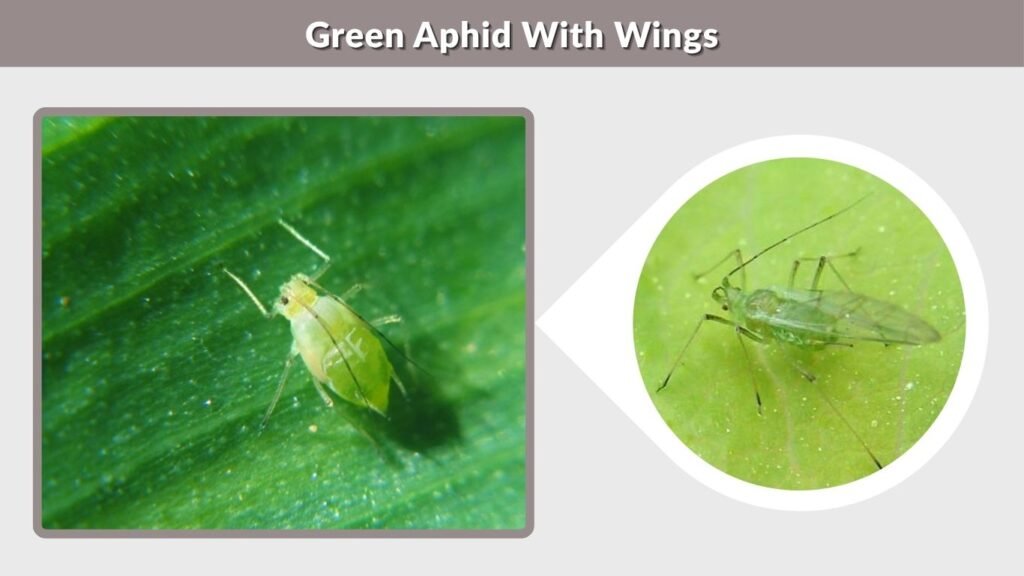
People are often surprised to discover that aphids can fly.
Both winged green aphids and wingless aphids may occur within the same species.
Why Do Aphids Grow Wings?
When conditions become crowded or a plant becomes less suitable, some developing aphids become winged adults.
These winged individuals can:
- Leave overcrowded colonies
- Search for fresh plants
- Spread to nearby gardens
- Establish new populations
- Migrate between seasonal host plants
This ability helps explain why an aphid problem can suddenly appear on plants that previously looked clean.
Green Aphid Eggs
Not all aphid species use eggs in the same way.
During warm conditions, many aphids reproduce by giving birth directly to live young rather than laying eggs.
In species that experience colder winters, sexual reproduction may occur later in the season and females produce overwintering eggs.
What Do Green Aphid Eggs Look Like?
Aphid eggs are generally:
- Extremely small
- Oval
- Often dark rather than green
- Attached to bark, stems, buds, or other plant surfaces
Because of their tiny size, aphid eggs can be difficult to locate without close inspection.
Green Aphid Life Cycle
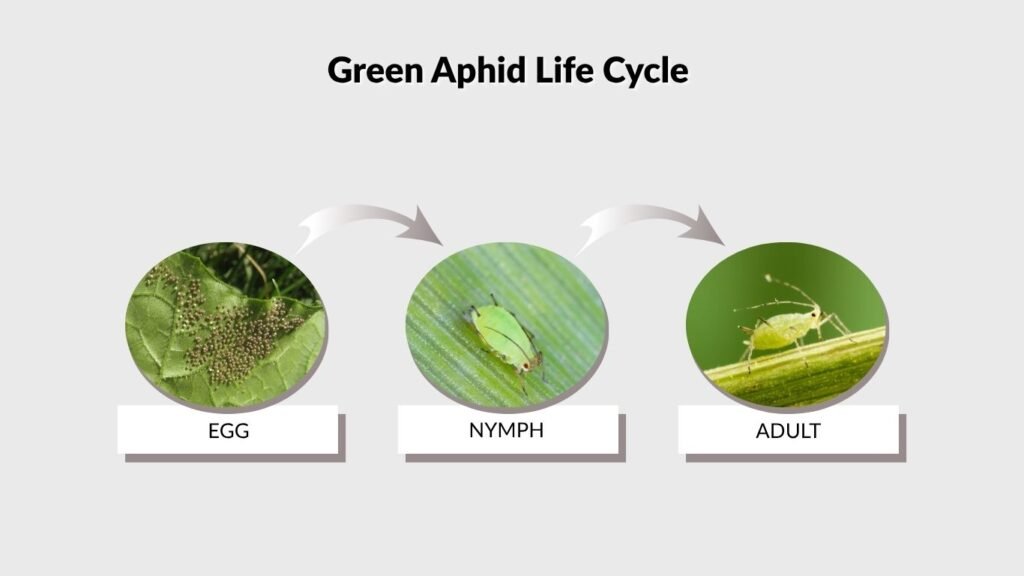
Aphids have one of the fastest reproductive systems among common garden pests.
The lifecycle usually includes:
Egg or live birth → Nymph → Adult
Nymph Stage
Aphid nymphs resemble small versions of adults.
They pass through several developmental stages, shedding their outer skin as they grow.
The white discarded skins often remain stuck around aphid colonies and can be mistaken for dead insects.
Adult Stage
Adult females can produce numerous offspring in a short period under favorable temperatures.
Many generations can therefore develop during a single growing season.
This is why a few unnoticed aphids can seemingly turn into hundreds within a relatively short period.
Green Aphid Reproduction
Aphid reproduction is particularly unusual.
During favorable seasons, many species reproduce through parthenogenesis, meaning females produce offspring without mating.
The offspring are often female and can themselves begin reproducing soon after maturity.
This creates an extremely efficient population-growth system.
Later in the year, depending on species and climate, males and sexual females may appear. These individuals mate and produce eggs capable of surviving unfavorable weather.
Signs of a Green Aphid Infestation
Aphids commonly hide underneath leaves and around tender new growth.
Look for the following warning signs:
- Clusters of tiny green insects
- Curled leaves
- Distorted new growth
- Sticky leaves
- Shiny honeydew
- Black sooty mold
- White shed skins
- Yellowing foliage
- Weak or stunted shoots
- Ants repeatedly climbing plants
Ant activity can be an important clue because many ants feed on aphid honeydew and may protect colonies from predators.
Green Aphids on Roses
Roses commonly attract aphids because their tender shoots and developing flower buds provide abundant sap.
Green aphids usually gather around:
- Rose buds
- New stems
- Young leaves
- Flower stalks
Small numbers can often be tolerated, but heavy infestations may distort buds and weaken fresh growth.
How to Control Green Aphids on Roses
Start with the least disruptive methods.
A strong stream of water can knock aphids from stems and leaves. Most displaced aphids struggle to return to the original feeding location.
For persistent colonies, insecticidal soap or suitable horticultural oil can provide additional control.
Protecting natural predators is also valuable.
Do Green Aphids Bite Humans?
Green aphids are not human-biting pests.
Their mouthparts are specialized for piercing plant tissue and extracting sap.
An aphid may occasionally probe skin if it lands on a person, but it is not trying to feed on blood and does not present the same bite risk as mosquitoes, fleas, or bed bugs.
Aphids don’t sting and aren’t venomous.
How Do Green Aphids Damage Plants?
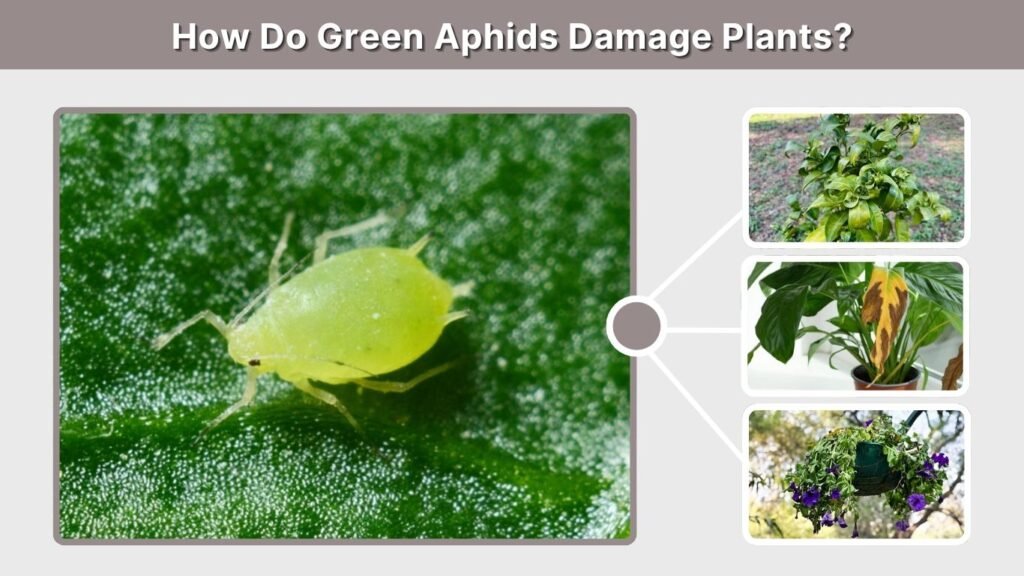
Aphids insert their feeding mouthparts into plant tissues and remove nutrient-rich fluids.
Heavy feeding can interfere with normal plant development.
Direct Damage
Direct symptoms include:
- Curling leaves
- Yellow leaves
- Wilting
- Distorted growth
- Stunted plants
- Reduced flower production
Honeydew and Sooty Mold
Aphids excrete a sugary substance known as honeydew.
Honeydew coats foliage, stems, and objects beneath infested plants.
Dark fungi called sooty molds can grow on this sticky layer, leaving leaves with a blackened appearance.
Plant Virus Transmission
Certain aphid species are important vectors of plant viruses.
Green peach aphids are especially significant because they can transmit viruses among numerous crops.
This makes prevention and early detection particularly important in vegetable gardens and agricultural settings.
How to Get Rid of Green Aphids
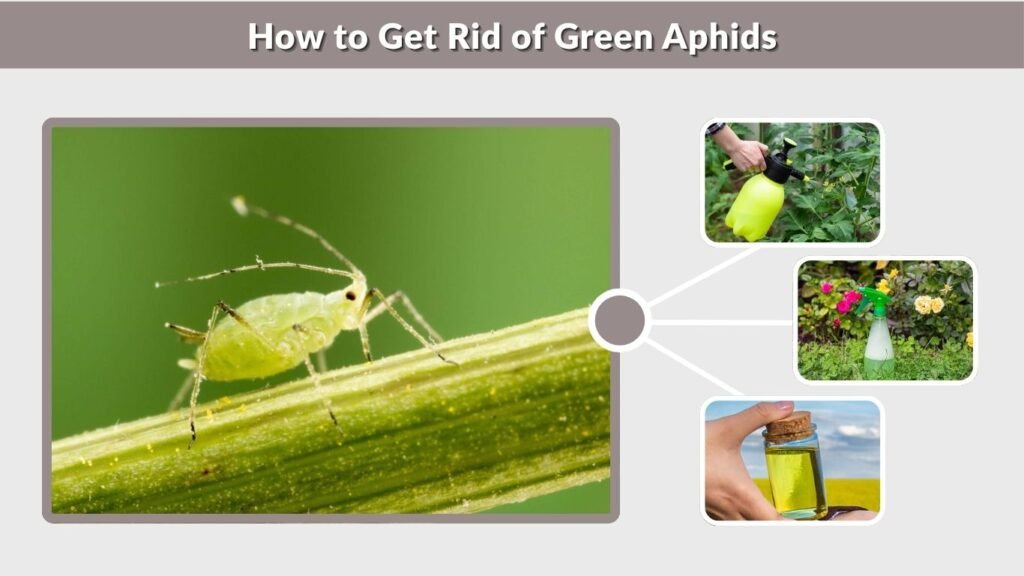
Green aphid control works best when several techniques are combined rather than relying on one treatment.
1. Spray Them With Water
For light infestations, spray affected plants with a firm stream of water.
Concentrate on:
- Leaf undersides
- Growing tips
- Buds
- Young stems
Repeat as necessary.
2. Remove Heavily Infested Growth
Badly curled or heavily colonized shoots can sometimes be pruned away.
Dispose of the removed material rather than leaving it underneath the plant.
Avoid excessive pruning that could stress the plant further.
3. Use Insecticidal Soap
Insecticidal soap can kill aphids through direct contact.
Coverage is essential because the product has little effect on insects it doesn’t reach.
Spray leaf undersides and dense colonies carefully according to the product directions.
4. Horticultural Oil
Horticultural oils can suppress aphids and, depending on timing, overwintering eggs.
Apply only according to label instructions and avoid treating plants under unsuitable weather conditions.
Green Lacewings for Aphid Control
Green lacewings are among the most useful natural enemies of aphids.
Adult lacewings are delicate green insects with transparent wings, while their larvae are active predators.
Green Lacewing Larvae vs Aphids
Lacewing larvae attack aphids using curved jaws.
They may also eat:
- Mites
- Whiteflies
- Small caterpillars
- Mealybugs
- Insect eggs
- Other small soft-bodied pests
Because of their appetite, lacewing larvae are sometimes nicknamed “aphid lions.”
Encouraging natural lacewing populations can provide long-term biological control in gardens.
Aphidius colemani and Green Peach Aphids
Aphidius colemani is a tiny parasitoid wasp widely used against certain aphid pests.
It is particularly effective against species including:
- Green peach aphid
- Melon aphid
The female wasp lays an egg inside an aphid.
The developing parasitoid eventually kills the aphid and converts its body into a swollen, hardened “mummy.” A new adult wasp later emerges.
These parasitoids are especially useful in greenhouse and controlled growing environments.
Biological Control of Green Aphids
Several beneficial organisms naturally attack aphids.
Important aphid predators and parasitoids include:
- Green lacewing larvae
- Lady beetles
- Hoverfly larvae
- Parasitic wasps
- Predatory bugs
- Some spiders
Avoiding unnecessary broad-spectrum insecticides helps preserve these natural enemies.
In many gardens, predator populations eventually reduce moderate aphid outbreaks without intensive intervention.
Cultural Control of Green Peach Aphids
Cultural control means changing growing practices to make conditions less favorable for pests.
Useful strategies include:
- Remove heavily infested weeds.
- Inspect new plants before introducing them.
- Avoid excessive nitrogen fertilizer.
- Control weeds that act as alternate hosts.
- Remove infected plants when serious viruses are present.
- Use protective barriers when appropriate.
- Monitor young plants regularly.
Excessive nitrogen can promote lush tender growth that aphids strongly prefer.
Chemical Control of Green Peach Aphids
Chemical insecticides may sometimes be necessary for severe infestations, especially in commercial production.
However, repeated or inappropriate insecticide use can create several problems.
Green peach aphids are particularly known for developing resistance to multiple insecticide groups.
Broad-spectrum treatments can also kill lacewings, lady beetles, parasitoid wasps, and other beneficial insects.
For home gardens, lower-impact approaches such as insecticidal soaps, horticultural oils, physical removal, and biological control are usually preferable before stronger insecticides are considered.
Always use any pesticide strictly according to its labeled directions and the crop or plant being treated.
Green Apple Aphid Control
Light populations on mature apple trees often do not require aggressive treatment.
For larger infestations:
- Encourage natural predators.
- Avoid excessive fertilizer.
- Spray accessible colonies with water.
- Remove badly infested shoots when practical.
- Consider labeled horticultural oils or insecticidal soaps.
Young trees deserve closer monitoring because heavy aphid feeding can interfere with developing shoots.
Green Spruce Aphid Control
Green spruce aphid management depends on infestation severity.
Healthy mature trees may recover after moderate feeding, while repeated heavy attacks can cause significant needle loss.
Monitor trees for yellowing or dropping needles and check branches closely for aphids.
Preserving beneficial predators and maintaining good tree health can help reduce long-term problems.
Treatment decisions should consider tree size, infestation level, and whether significant damage is actually occurring.
How to Prevent Green Aphid Infestations
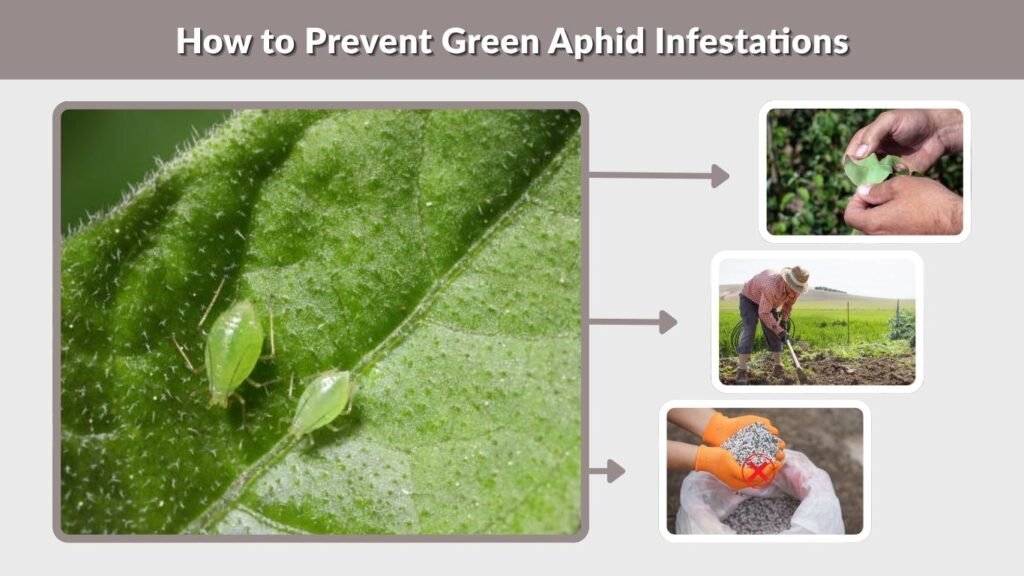
Prevention can reduce the need for pesticides.
Useful practices include:
- Check plants weekly.
- Inspect leaf undersides.
- Examine new plants before adding them to the garden.
- Remove weeds around crops.
- Avoid overfertilizing.
- Encourage beneficial insects.
- Maintain healthy watering practices.
- Remove badly infested plant material early.
- Watch for ants protecting aphid colonies.
Early infestations are much easier to control than large colonies.
Green Aphids vs Green Lacewings
A green lacewing is beneficial, while a green aphid is usually considered a plant pest.
| Feature | Green Aphid | Green Lacewing |
|---|---|---|
| Size | Very small | Much larger |
| Body | Pear-shaped | Slender |
| Wings | Some adults | Large transparent wings |
| Antennae | Moderate | Long and thin |
| Diet | Plant sap | Adults vary; larvae prey on pests |
| Garden role | Usually pest | Beneficial predator |
Avoid confusing the two, because killing lacewings can actually make aphid problems worse.
FAQs
What is the scientific name of a green aphid?
There is no single scientific name for all green aphids. Many species can be green. Important examples include the green peach aphid (Myzus persicae), green apple aphid (Aphis pomi), pea aphid (Acyrthosiphon pisum), and green spruce aphid (Elatobium abietinum).
Are green aphids harmful?
Green aphids are not normally harmful to people, but heavy infestations can damage plants. They remove plant sap, distort leaves, produce sticky honeydew, encourage sooty mold, and some species can transmit serious plant viruses.
What kills green aphids naturally?
Natural aphid control includes spraying colonies with water and encouraging predators such as lady beetles, green lacewing larvae, hoverfly larvae, and parasitoid wasps. Insecticidal soap and horticultural oil can also provide lower-impact control when used correctly.
Why are green aphids suddenly covering my plant?
Aphids reproduce extremely quickly. During favorable conditions, females can produce live female offspring without mating, allowing a tiny initial population to become a large colony rapidly. Winged aphids can also fly in and establish new colonies.
Do green aphids have wings?
Some do. Many aphid colonies contain mostly wingless individuals, but winged adults may develop when plants become overcrowded, food quality declines, or the insects need to move to new hosts. These winged aphids help infestations spread between plants.