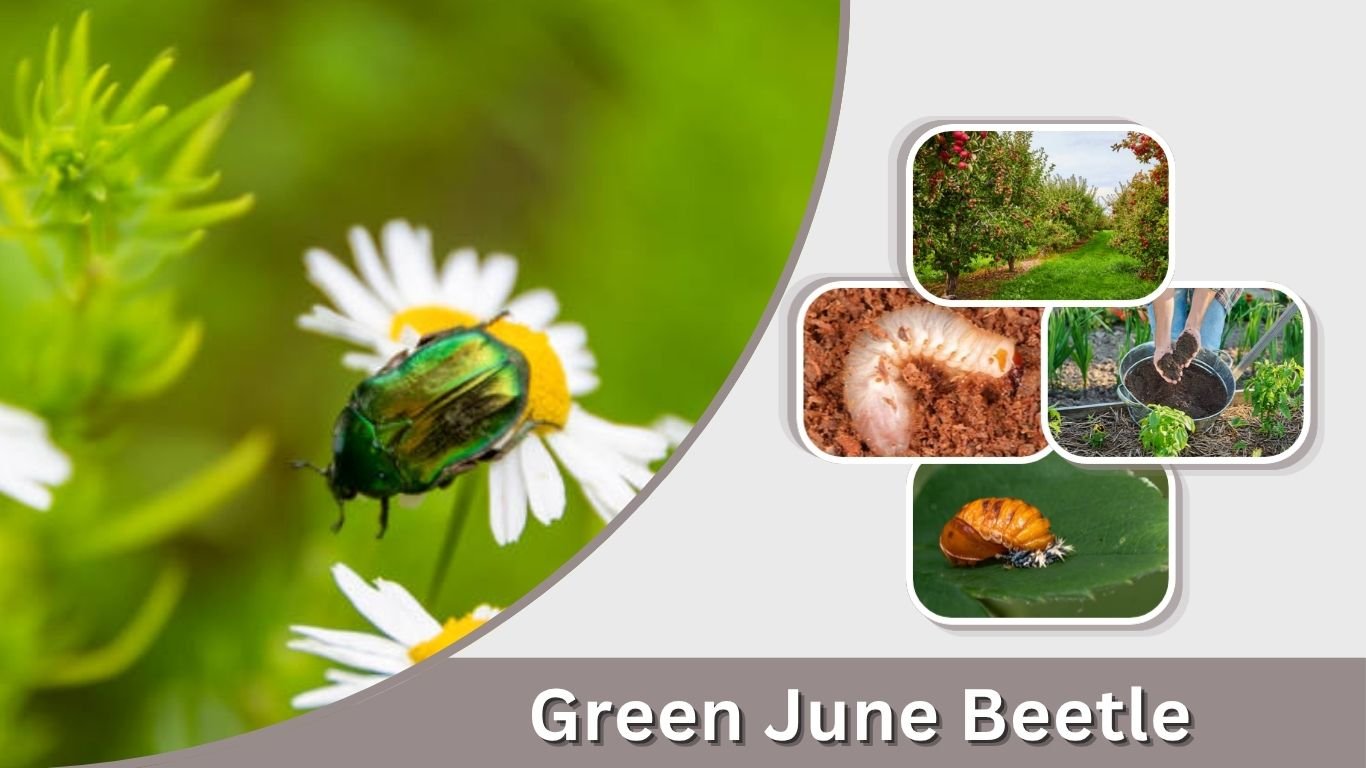
The green June beetle is a large, shiny beetle commonly noticed flying over lawns, gardens, and fruit trees during warm summer months. Its metallic green body makes it easy to recognize, although it is sometimes confused with figeater beetles and Japanese beetles. Adults may feed on ripe or damaged fruit, while green June beetle grubs live in soil rich in organic matter and can occasionally damage lawns. Despite their intimidating size and loud flight, these beetles are generally harmless to people. Understanding their appearance, life cycle, diet, and behavior makes it much easier to determine whether control is actually necessary.
What Is a Green June Beetle?
The green June beetle, scientifically known as Cotinis nitida, is a scarab beetle belonging to the family Scarabaeidae. It is native to North America and is particularly common throughout the eastern and southern United States.
Adults become especially noticeable during summer because they frequently fly during daylight hours, often close to the ground.
Green June Beetle Characteristics
The easiest characteristics to recognize include:
- Scientific name: Cotinis nitida
- Family: Scarabaeidae
- Color: Metallic green to olive green
- Body shape: Broad, oval, and robust
- Size: Usually around 0.6–1 inch long
- Underside: Often shiny metallic green or bronze
- Wings: Strong wings hidden beneath hardened wing covers
- Activity: Primarily active during warm daylight hours
- Flight: Fast, noisy, and sometimes erratic
Their shiny appearance is one reason people occasionally call them emerald green June beetles.
What Does a Green June Beetle Look Like?
Adult green June beetles have broad bodies with green wing covers bordered by tan, yellowish, or brownish coloration. Depending on lighting, their bodies may appear emerald green, olive, bronze, or slightly golden.
Their underside can be particularly bright and metallic.
When flying, adults produce a noticeable buzzing sound. They may appear clumsy because they frequently fly low over lawns and occasionally bump into objects or people.
Green June Beetle Size
Green June beetles are considerably larger than many common garden beetles. Most adults measure approximately 5/8 to 1 inch long.
Their large size frequently causes them to be mistaken for potentially dangerous insects, especially when they fly rapidly toward people.
However, their size is not an indication that they are aggressive.
Green June Beetle Habitat and Range

Green June beetles are most commonly associated with areas containing moist soil and abundant decaying organic material.
They can occur around:
- Lawns
- Pastures
- Gardens
- Orchards
- Compost piles
- Mulched areas
- Agricultural fields
- Forest edges
They are especially common throughout the eastern United States and can be encountered in states such as Texas, Florida, North Carolina, Virginia, Maryland, Ohio, Missouri, Indiana, Illinois, and surrounding regions.
Reports of green June beetles in western states can sometimes involve similar-looking species, particularly figeater beetles.
Green June Beetle Life Cycle
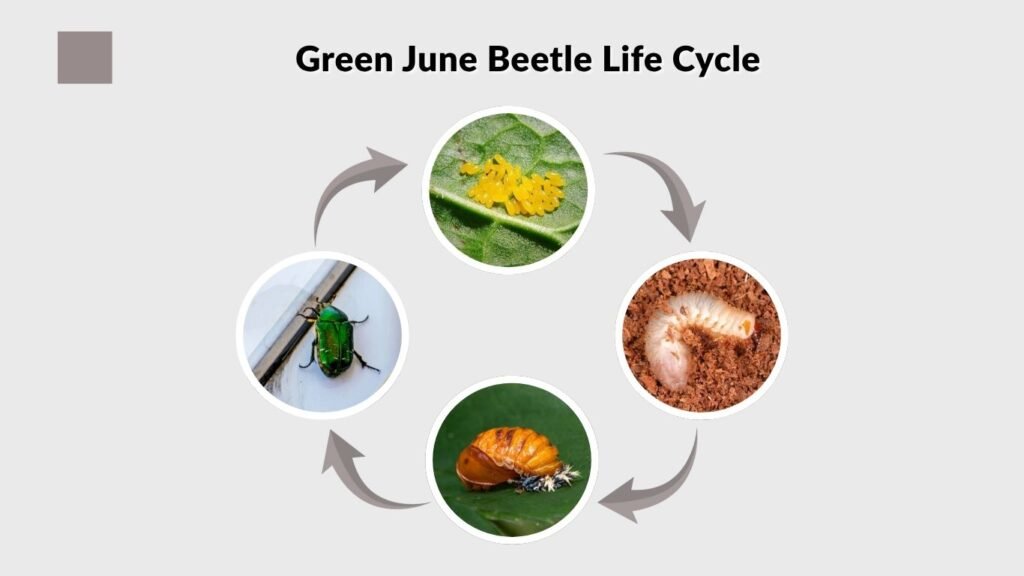
The green June beetle undergoes complete metamorphosis, passing through four developmental stages: egg, larva, pupa, and adult.
Most populations complete approximately one generation each year.
1. Egg Stage
Female beetles usually lay eggs in moist soil containing plenty of organic material.
Eggs hatch after a relatively short period during warm weather.
2. Green June Beetle Larvae
After hatching, the larvae begin feeding on decaying vegetation and organic matter in the soil.
Green June beetle larvae are creamy white grubs with brownish heads.
Unlike many other scarab beetle grubs, green June beetle larvae are famous for sometimes crawling on their backs. They use stiff hairs on their bodies to help move across the ground.
3. Pupal Stage
After completing their larval development, mature grubs create chambers in the soil.
Inside these protected chambers, they transform into pupae before developing into adult beetles.
4. Adult Green June Beetle
Adults generally emerge during late spring or summer, with activity often becoming particularly noticeable around June, July, and August.
Adults mate, feed, and eventually produce another generation of eggs.
Green June Beetle Grub Identification
Green June beetle grubs are among the most distinctive stages of this insect.
What Does a Green June Beetle Grub Look Like?
A mature grub typically has:
- Creamy-white body
- Brown head
- Thick, curved appearance
- Several pairs of small legs near the head
- Short stiff hairs along its body
- Large size compared with many lawn grubs
When disturbed, the larva may crawl across the surface while lying on its back.
This unusual movement is a particularly useful identification feature.
Green June Beetle Grub Role in the Ecosystem
Green June beetle grubs are not automatically harmful.
They consume decaying plant material and other organic matter, helping break down dead vegetation and return nutrients to the soil.
Problems generally arise only when unusually large populations develop beneath lawns or cultivated areas.
What Do Green June Beetles Eat?

Diet differs considerably between adults and larvae.
Adult Green June Beetle Diet
Adults are strongly attracted to soft, ripe, overripe, or damaged fruits.
Foods may include:
- Peaches
- Grapes
- Apples
- Pears
- Plums
- Berries
- Figs
- Corn
- Tree sap
They often take advantage of fruit that has already been damaged by birds, insects, disease, or physical injury.
Large numbers can occasionally damage ripening fruit crops.
What Do Green June Beetle Grubs Eat?
Larvae mainly consume:
- Decaying grass
- Decomposing leaves
- Organic material
- Manure
- Dead roots and vegetation
They generally behave more like decomposers than aggressive root feeders.
Are Green June Beetles Harmful to Plants?
Green June beetles can cause plant damage, but the severity depends heavily on population size.
Adult beetles may feed on ripe fruit, particularly when fruit has already been damaged.
The larvae can also disturb soil underneath turf.
Green June Beetle Damage in Lawns
Heavy grub populations may cause:
- Loose soil
- Thinning grass
- Raised patches of turf
- Small soil mounds
- Irregular lawn surfaces
- Damage associated with animals digging for grubs
The grubs’ tunneling activity can separate grass roots from surrounding soil, reducing the ability of turf to obtain moisture.
Healthy lawns with relatively small grub populations may experience little noticeable damage.
Are Green June Beetles Dangerous?
Green June beetles may look intimidating when they fly toward people, but they are generally considered harmless.
They are not venomous or poisonous and do not actively attack humans.
Do Green June Beetles Bite?
Green June beetles are not known for biting people.
They possess mouthparts designed primarily for feeding on plant material and fruit rather than attacking humans.
A beetle being handled roughly might scratch or pinch slightly, but serious injury is highly unlikely.
Are Green June Beetles Blind?
Green June beetles are not blind.
Their awkward-looking flight sometimes creates this impression. Adults may fly close to people, buildings, vehicles, and other objects while searching for food or mates.
They do have functional compound eyes.
Green June Beetle Male vs Female
Male and female green June beetles look extremely similar, making sex determination difficult without close examination.
Females are responsible for burrowing into suitable soil and depositing eggs.
Males are often actively searching for females during the breeding season.
Body size alone is generally not a dependable way for homeowners to distinguish males from females.
Why Are Green June Beetles Flying Around My Yard?
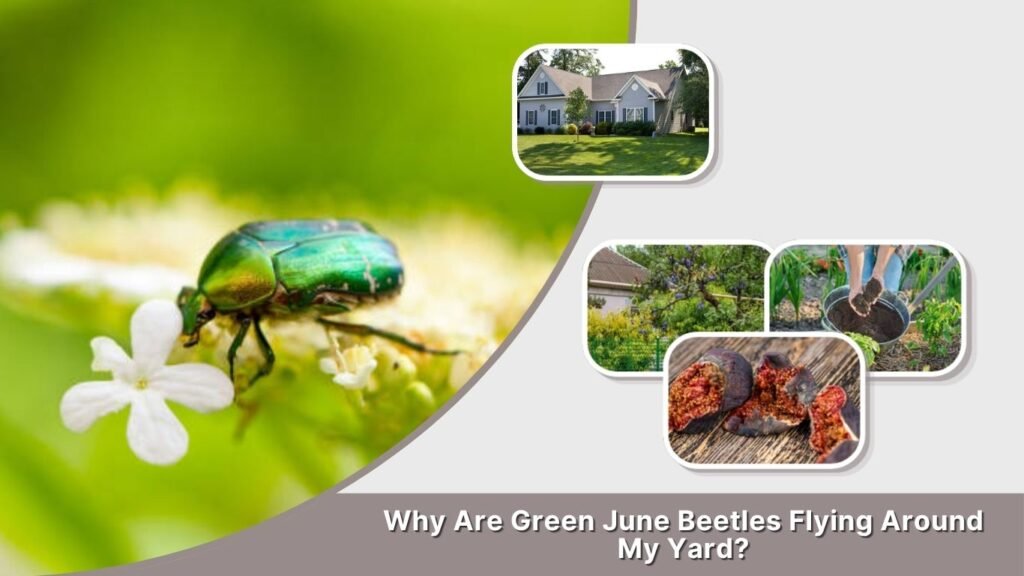
Large numbers of flying green June beetles usually indicate favorable breeding habitat nearby.
Adults may be attracted to:
- Fruit trees
- Compost
- Moist lawns
- Organic-rich soil
- Manure
- Overripe fruit
Warm, sunny summer days often produce the greatest adult activity.
Seeing several beetles does not necessarily mean the lawn has a damaging infestation.
Green June Beetle Predators
Green June beetles and their larvae provide food for numerous animals.
Natural predators may include birds, small mammals, predatory insects, and parasitic wasps.
Animals such as skunks and raccoons may dig into turf searching for large grubs. Unfortunately, their feeding activity can sometimes cause more visible lawn damage than the beetles themselves.
Green June Beetle vs Japanese Beetle
Although both insects may appear metallic green, they are relatively easy to distinguish.
| Feature | Green June Beetle | Japanese Beetle |
|---|---|---|
| Size | Large, up to about 1 inch | Much smaller |
| Color | Mostly metallic green | Green body with copper wing covers |
| White hair spots | Absent | Visible along abdomen |
| Adult feeding | Primarily fruit | Leaves, flowers, and fruit |
| Flight | Loud and noticeable | Less dramatic |
| Lawn damage | Usually from tunneling | Grubs commonly feed on roots |
Japanese beetles typically cause more noticeable skeletonization of plant leaves.
Green June Beetle vs Figeater Beetle
Green June beetles and figeater beetles can look remarkably similar.
Figeater beetles are especially common in the southwestern United States, including parts of California and Arizona, while green June beetles are more strongly associated with eastern regions.
Both are large metallic green scarab beetles and both may feed on ripe fruit.
Location is therefore an important clue when distinguishing them.
How to Get Rid of Green June Beetles
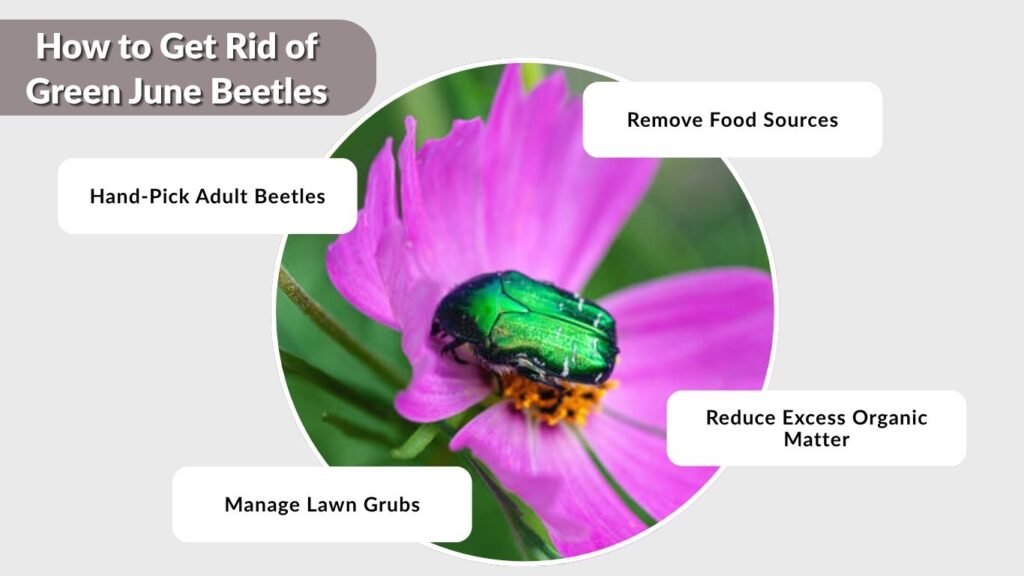
A few beetles normally do not justify treatment. Control becomes more important when adults are damaging fruit or large grub populations are affecting turf.
Remove Food Sources
Collect ripe and fallen fruit regularly.
Do not allow damaged peaches, grapes, plums, figs, or other fruit to accumulate beneath trees.
Fermenting fruit can attract large numbers of adult beetles.
Reduce Excess Organic Matter
Heavy accumulations of decomposing organic material can provide attractive habitat for developing larvae.
Proper lawn maintenance and sensible compost management can reduce breeding opportunities around sensitive areas.
Hand-Pick Adult Beetles
When only a small number are present on fruit trees or garden plants, adults can often be removed manually and placed into a container of soapy water.
Morning may be especially convenient because beetles can be less active during cooler temperatures.
Manage Lawn Grubs
Before treating a lawn, confirm that green June beetle grubs are actually present and numerous enough to cause damage.
Healthy turf can tolerate some grubs.
Appropriate biological or labeled lawn treatments may be considered when populations become severe.
Green June Beetle Traps
Traps may capture adult beetles, but they should be used cautiously.
An attractant positioned too close to valuable fruit trees or gardens could potentially draw additional beetles toward the area.
Removing food sources and managing breeding habitat are often more practical first steps.
Are Green June Beetles Good or Bad?
Green June beetles are neither entirely beneficial nor entirely harmful.
Their larvae contribute to decomposition by consuming dead organic material, making them part of natural nutrient cycling.
Adults and large grub populations can become pests when they damage fruit or turf.
Therefore, control should generally be based on actual damage rather than simply seeing beetles around the yard.
Interesting Green June Beetle Facts
- Green June beetles are scarab beetles.
- Their scientific name is Cotinis nitida.
- Adults often fly during daylight.
- Their metallic bodies can appear green, gold, or bronze.
- Larvae can crawl on their backs.
- Adults are strongly attracted to ripe fruit.
- Their loud, erratic flight makes them appear more threatening than they really are.
- Green June beetles are generally harmless to humans.
- The species typically completes one life cycle each year.
- Small populations can contribute to decomposition and nutrient recycling.
FAQs
Are green June beetles poisonous?
No. Green June beetles are not considered poisonous or venomous. Their metallic appearance and large size may make them intimidating, but they do not possess venom and generally present little danger to people or pets.
How long do green June beetles live?
The entire life cycle usually takes about a year, although the adult stage represents only part of that period. Most of the insect’s development occurs underground as eggs, larvae, and pupae before adults emerge during warmer months.
Why are there so many green June beetles in my yard?
A yard with moist soil, abundant organic material, fruit trees, compost, or favorable breeding conditions may support green June beetles. Large numbers of adults can also emerge within a relatively short period during warm summer weather.
Do green June beetle grubs damage lawns?
They can, particularly when populations become unusually high. Their tunneling may loosen soil around grass roots and produce uneven turf. Small populations, however, often cause little damage and may primarily consume decomposing organic material.
Are green June beetles invasive?
The green June beetle, Cotinis nitida, is native to North America rather than an introduced invasive species. It can become a local agricultural or lawn pest when populations are high, but its presence alone does not mean an invasive-species problem.