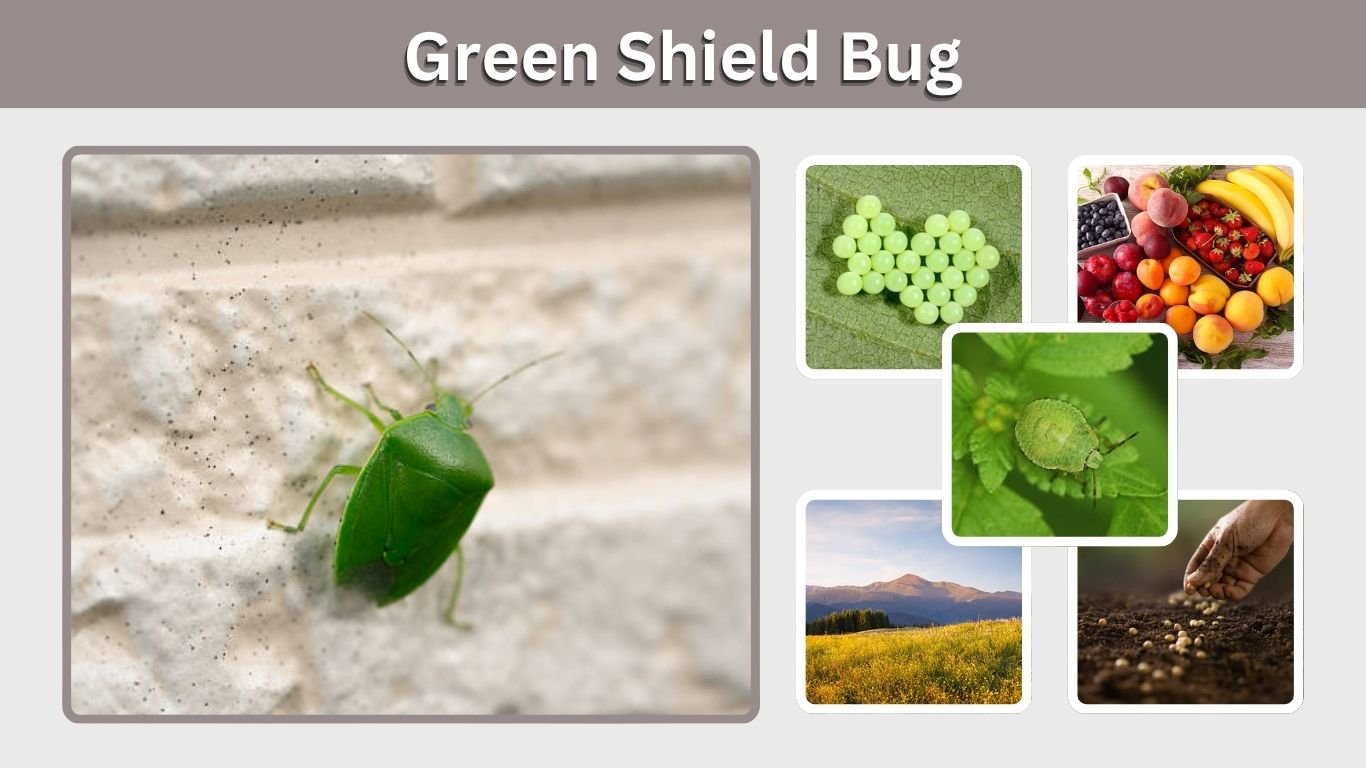
The green shield bug is a distinctive insect recognized by its broad, shield-shaped body and bright green color. It is commonly found on garden plants, shrubs, hedges, and other vegetation. In the UK, the name usually refers to the common green shield bug, Palomena prasina. Although these insects may look unusual, they are generally harmless to people and rarely cause serious damage to garden plants.
Green shield bugs are closely related to stink bugs and can release an unpleasant odor when disturbed. Their life cycle, nymph appearance, diet, habitat, and behavior can help you identify them correctly.
What Is a Green Shield Bug?
Green shield bugs belong to the family Pentatomidae, a group of true bugs known for their characteristic shield-shaped bodies.
The common green shield bug is scientifically known as Palomena prasina. It is widespread across Britain and other parts of Europe.
Unlike beetles, shield bugs have specialized piercing-sucking mouthparts. They use these mouthparts to puncture plant tissue and feed on fluids.
| Feature | Green Shield Bug |
|---|---|
| Scientific name | Palomena prasina |
| Family | Pentatomidae |
| Order | Hemiptera |
| Body shape | Shield-shaped |
| Adult color | Bright green |
| Diet | Plant fluids |
| Development | Egg → Nymph → Adult |
| Harmful to humans | No |
Green Shield Bug Identification
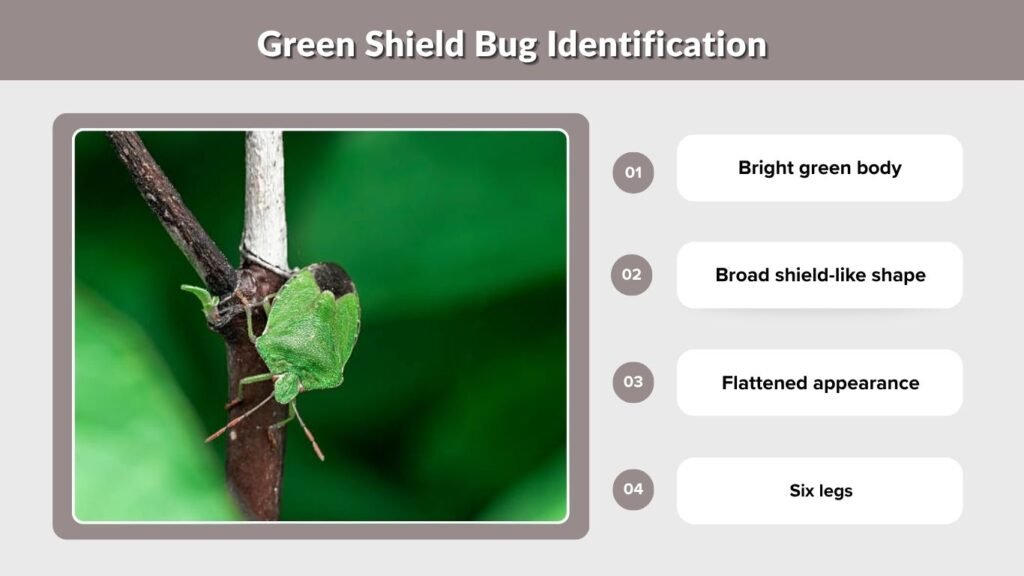
Adult green shield bugs are fairly easy to identify because of their distinctive body shape.
What Does a Green Shield Bug Look Like?
Common identification features include:
- Bright green body
- Broad shield-like shape
- Flattened appearance
- Six legs
- Long segmented antennae
- Fully developed wings in adults
- Darker area near the rear of the body
- Around 10–14 mm long
During spring and summer, adults are usually vivid green. However, their color may change during colder months.
Some adults become brownish or bronze-green before overwintering, which can make them look like a different species.
Green and Brown Shield Bug
Finding a green and brown shield bug does not always mean you have discovered another species.
Common green shield bugs can naturally become darker as temperatures fall. Their bodies may change from bright green to olive, bronze, or brown.
Other shield bug species can also have combinations of brown, green, black, yellow, or red, so markings should be considered along with color.
Green Shield Bug Nymph
Young shield bugs are called nymphs, not larvae.
Green shield bugs undergo incomplete metamorphosis. This means they do not have a caterpillar-like larval stage or a pupa.
What Does a Green Shield Bug Nymph Look Like?
A green shield bug nymph usually has:
- Small rounded body
- Green coloration
- Black markings
- Short or undeveloped wing pads
- No fully developed wings
- More noticeable patterns than adults
Early-stage nymphs can look very different from adult shield bugs.
As they grow, nymphs molt several times. Their bodies gradually become larger, flatter, and more shield-shaped.
A small green and black shield bug found on a plant may therefore be an immature nymph rather than a separate insect.
Green Shield Bug Eggs
Female green shield bugs lay groups of small eggs on vegetation.
Eggs are usually placed where newly hatched nymphs will have easy access to food.
Green Shield Bug Egg Identification
Green shield bug eggs are typically:
- Very small
- Barrel-shaped
- Pale green or cream
- Arranged in groups
- Attached to plant leaves
- Commonly found underneath foliage
The eggs may become darker as the young insects develop inside.
Once they hatch, small nymphs often remain relatively close together before spreading across surrounding vegetation.
Green Shield Bug Life Cycle
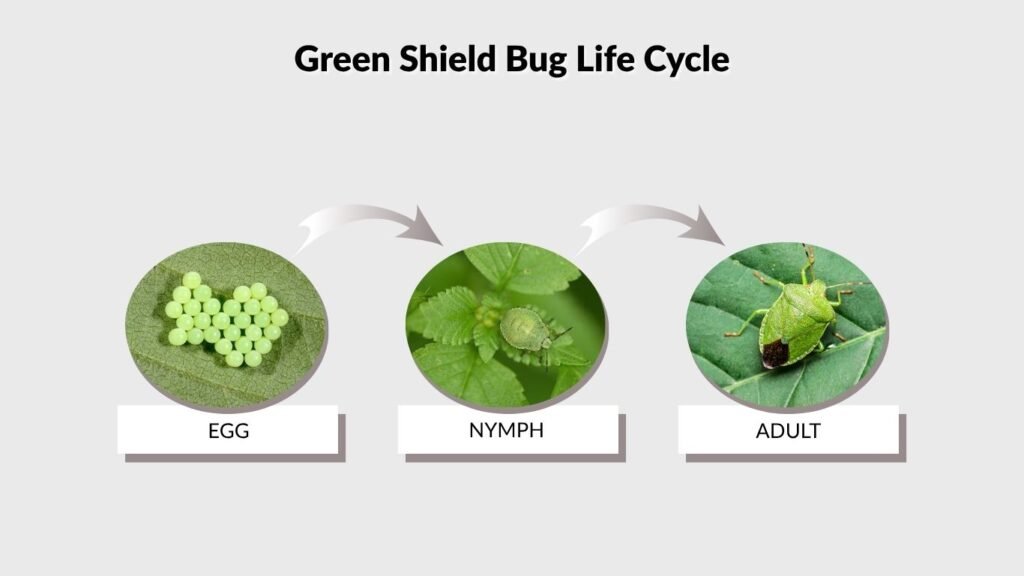
The green shield bug life cycle consists of three main stages:
Egg → Nymph → Adult
Egg Stage
Adult females deposit groups of eggs on suitable plants during warmer weather.
The eggs develop until young nymphs emerge.
Nymph Stage
Nymphs feed on plants and pass through several developmental stages called instars.
Each stage ends when the nymph molts and grows larger.
Adult Stage
After the final molt, the insect becomes a fully winged adult.
Adults reproduce when conditions are favorable. In cooler climates, they may spend winter hidden in protected locations before becoming active again in spring.
What Do Green Shield Bugs Eat?
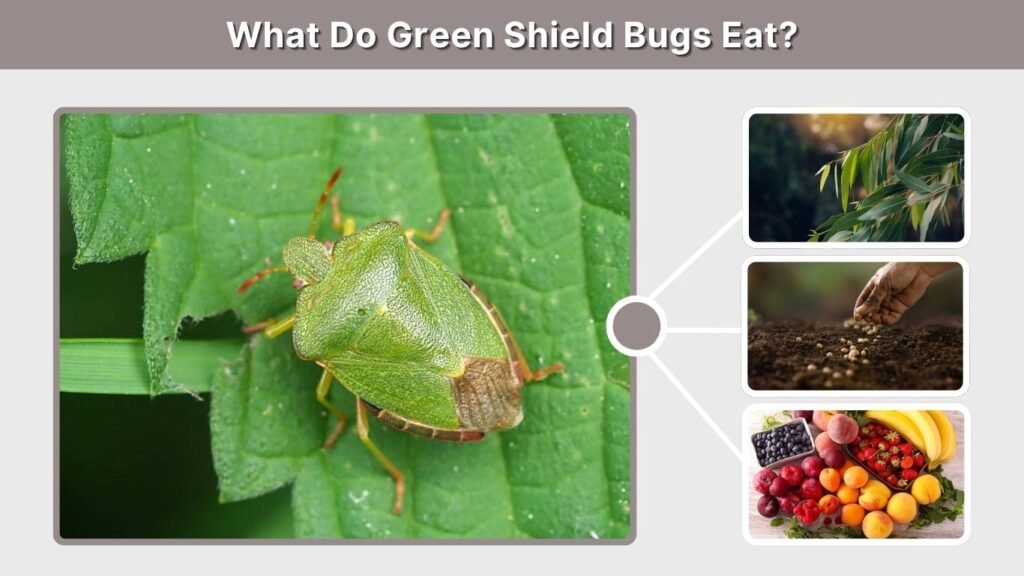
Green shield bugs primarily feed on plant fluids.
They do not chew holes in leaves. Instead, their mouthparts pierce plant tissue and withdraw liquid.
Green Shield Bug Diet
Their food may include:
- Leaves
- Stems
- Seeds
- Fruits
- Shrubs
- Trees
- Weeds
- Herbaceous plants
The common green shield bug generally causes little noticeable damage in home gardens.
However, some related species can damage crops when present in large numbers.
Green Shield Bug Habitat
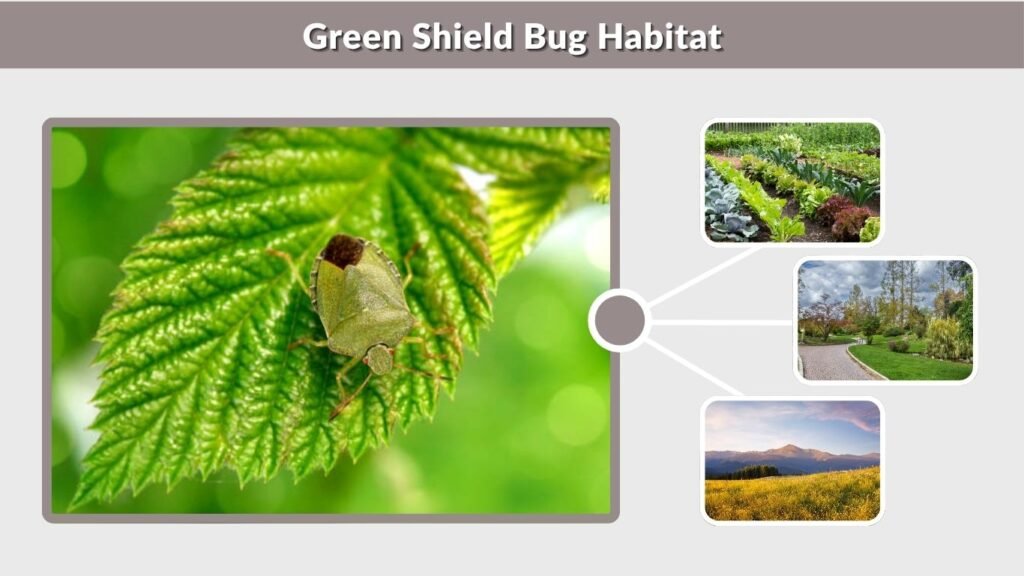
Green shield bugs prefer areas with plenty of vegetation.
Common habitats include:
- Gardens
- Hedgerows
- Parks
- Meadows
- Woodland edges
- Shrubs
- Fields
- Flower beds
Adults are often seen resting on leaves during sunny weather.
Green Shield Bug in the UK
The common green shield bug is widespread in the UK.
It is frequently encountered in gardens, especially during warm months when adults and nymphs are actively feeding.
Another species, the southern green shield bug, has also become established in some southern areas.
Southern Green Shield Bug
The southern green shield bug is scientifically known as Nezara viridula.
Although it resembles the common green shield bug, it is a separate species and can be a more important agricultural pest.
| Feature | Common Green Shield Bug | Southern Green Shield Bug |
|---|---|---|
| Scientific name | Palomena prasina | Nezara viridula |
| Adult color | Green | Usually bright green |
| Garden damage | Usually minor | Can damage crops |
| Diet | Plant fluids | Fruits, seeds, vegetables |
| UK presence | Widespread | More common in warmer areas |
Southern green shield bugs may damage beans, tomatoes, fruits, and other crops by feeding on developing plant tissues.
Green Shield Bug vs. Stink Bug
The terms shield bug and stink bug are closely related.
Many insects in the family Pentatomidae are called stink bugs because they can release a strong defensive odor.
“Shield bug” is commonly used in the UK, while “stink bug” is frequently used in North America.
Therefore, green shield bugs and green stink bugs belong to the same general insect group, although the exact species may differ.
Do Green Shield Bugs Bite?
Green shield bugs do not normally bite humans.
Their mouthparts are primarily adapted for feeding on plants rather than human blood.
They also do not have stingers.
If one lands on your skin, it is usually best to gently move it away rather than squeeze or crush it.
Are Green Shield Bugs Poisonous?
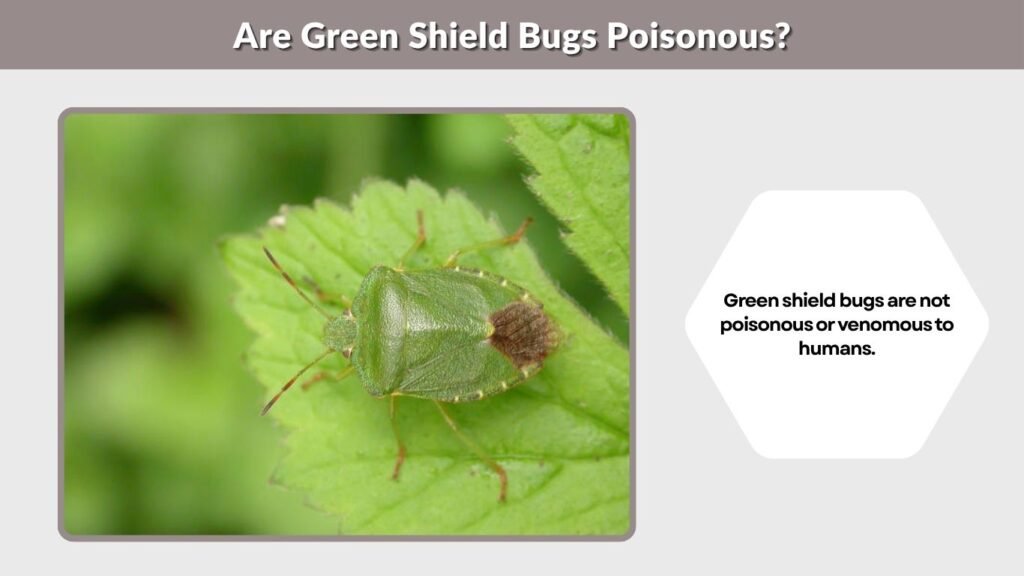
Green shield bugs are not poisonous or venomous to humans.
Their defensive odor may be unpleasant, but it does not mean the insect is dangerous.
They pose very little risk to people or pets under normal circumstances.
Why Do Green Shield Bugs Smell?
Green shield bugs can release defensive chemicals when they feel threatened.
The smell helps discourage predators.
They are more likely to produce an odor when they are:
- Grabbed
- Trapped
- Injured
- Squeezed
- Crushed
Avoid crushing shield bugs indoors because the smell can linger.
Are Green Shield Bugs Good or Bad?
The common green shield bug is generally neither a serious pest nor a major threat to garden plants.
A few individuals usually do not require control.
Southern green shield bugs can be more problematic because larger populations may damage fruits, seeds, and vegetables.
Possible feeding damage includes:
- Small puncture marks
- Discolored areas
- Deformed fruits
- Damaged seeds
- Reduced crop quality
Correct identification is therefore important before deciding whether treatment is necessary.
Green Shield Bug in the House
Green shield bugs occasionally enter homes while searching for protected places, particularly when temperatures begin dropping.
One or two bugs indoors usually do not indicate an infestation.
They normally do not damage:
- Furniture
- Clothing
- Carpets
- Wood
- Stored food
Capture the insect gently and release it outdoors.
How to Get Rid of Green Shield Bugs
Common green shield bugs usually do not need to be eliminated.
If their numbers become excessive, several simple methods can help.
Remove Bugs by Hand
Wear gloves and gently pick shield bugs from plants.
Avoid crushing them because they may release their defensive smell.
Remove Egg Clusters
Check underneath leaves for groups of eggs.
Removing egg masses can prevent many nymphs from developing.
Reduce Weeds
Dense weeds can provide feeding and shelter areas for some shield bugs.
Keeping garden borders maintained may help reduce populations.
Use Protective Netting
Fine garden netting can help prevent pest species from reaching vulnerable fruits and vegetables.
Avoid Unnecessary Pesticides
Broad-spectrum insecticides can also harm beneficial insects.
Control should usually be considered only when significant plant damage is occurring.
Green Shield Bug in Grounded
The Green Shield Bug in Grounded is a fictional enemy inspired by real stink and shield bugs.
Unlike the harmless real insect, the Grounded version is dangerous and uses powerful gas attacks.
Players usually encounter Green Shield Bugs in advanced Upper Yard areas.
Where to Find Green Shield Bugs in Grounded
Players commonly search around areas such as:
- Brawny Boy Bin
- Wheelbarrow
- Shed surroundings
- Upper Yard locations
Green Shield Bugs can be difficult opponents, so preparation for their gas attacks is important.
Green Shield Bug Parts in Grounded
Green Shield Bug Parts are crafting materials obtained after defeating and harvesting Green Shield Bugs.
Players looking for these parts should prepare suitable equipment, locate a Green Shield Bug spawn area, defeat the insect, and collect the dropped materials.
FAQs
Are green shield bugs harmful?
Common green shield bugs are generally harmless to humans and cause little serious garden damage. They do not normally bite or sting. However, related species such as southern green shield bugs can damage fruits and vegetables when populations become high.
What is the scientific name of the green shield bug?
The common green shield bug is Palomena prasina. The southern green shield bug is a separate species called Nezara viridula. Both belong to the family Pentatomidae.
What does a green shield bug nymph look like?
A nymph is smaller and rounder than an adult. It may be green with black markings and lacks fully developed wings. Its appearance becomes increasingly similar to an adult as it grows and molts.
Why is there a green shield bug in my house?
Green shield bugs sometimes enter buildings while looking for sheltered places during cooler weather. They normally do not breed indoors or damage household materials.
Are green shield bugs good or bad for gardens?
Common green shield bugs usually cause little noticeable damage and rarely need control. Southern green shield bugs can be more damaging because they may feed on fruits, vegetables, and developing seeds.