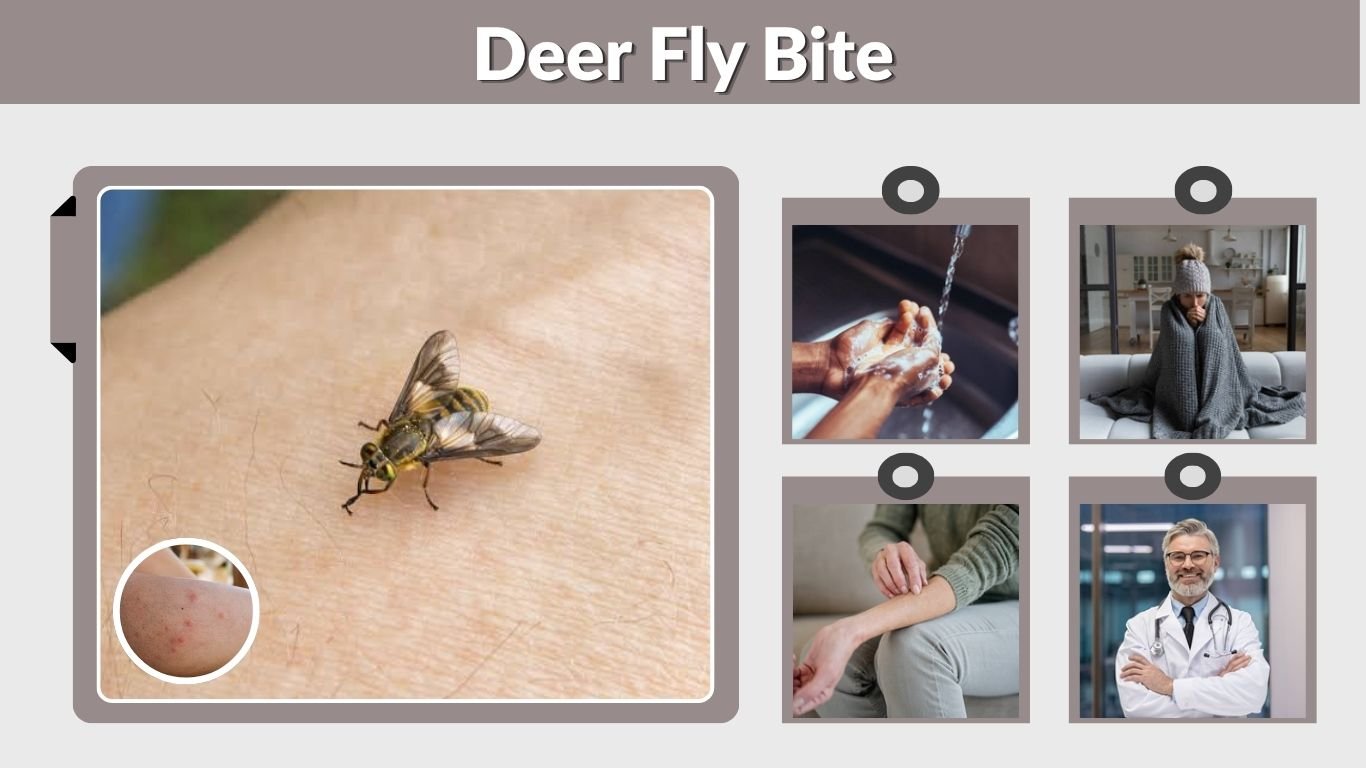
A deer fly bite can be surprisingly painful for such a small insect. Deer flies do not sting; instead, females use sharp, cutting mouthparts to slice the skin and feed on blood. This often causes immediate pain, redness, swelling, and itching. Most deer fly bites heal without complications, but some people can develop strong allergic reactions or secondary infections. Knowing what a deer fly bite looks like, how long symptoms last, and how to treat it can help reduce discomfort and prevent problems.
What Does a Deer Fly Bite Look Like?
A deer fly bite usually appears as a small, red, raised area on the skin. Because the fly cuts rather than cleanly pierces the skin, the bite may initially bleed slightly.
Common signs include:
- A red bump or welt
- Mild bleeding at the bite site
- Swelling around the area
- Itching or burning
- Tenderness or soreness
- A small scab after the bite begins healing
Some bites develop a larger swollen area, especially in people who react strongly to insect bites.
The appearance can resemble bites from horse flies, mosquitoes, or other biting insects, so seeing the insect itself often makes identification easier.
Why Do Deer Fly Bites Hurt So Much?
Deer fly bites hurt because their feeding method is relatively traumatic compared with mosquitoes.
Rather than inserting a thin feeding tube, the female deer fly uses blade-like mouthparts to cut through the skin. Blood then pools at the surface, allowing the fly to drink it.
Their saliva also contains substances that help keep the blood flowing while they feed. This combination of skin damage and saliva can produce sharp pain, burning, redness, and inflammation.
People often notice the bite immediately, which is one reason deer flies are easier to detect than mosquitoes.
Do Deer Flies Bite Humans?
Yes. Female deer flies readily bite humans as well as deer, livestock, horses, dogs, and other mammals.
They are particularly attracted to:
- Movement
- Body heat
- Carbon dioxide from breathing
- Dark-colored objects
- Large moving animals or people
Deer flies commonly target exposed areas such as the head, neck, shoulders, arms, and legs.
Males do not bite. They primarily feed on nectar and plant sugars.
Deer Fly Bite Symptoms
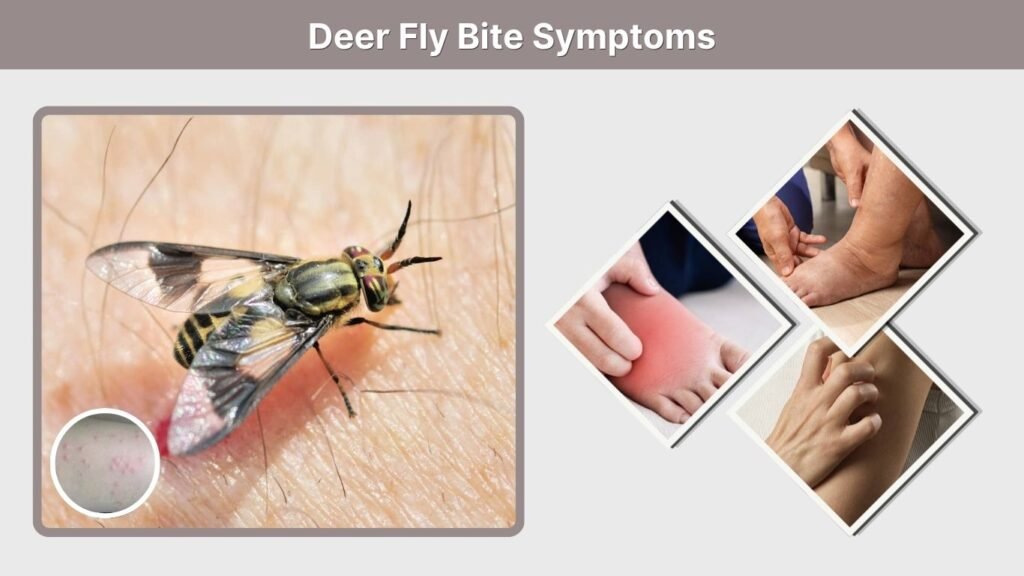
Most deer fly bite symptoms remain localized around the bite.
Common Symptoms
Typical symptoms include redness, swelling, soreness, itching, burning, and a raised welt. These symptoms may begin almost immediately after the fly bites.
The bite can remain uncomfortable for several hours and may stay itchy for a few days.
Deer Fly Bite Swelling
Swelling is common because the body reacts to both tissue injury and compounds in the fly’s saliva.
A small amount of swelling is usually normal. Some individuals may experience a much larger area of swelling around the bite, especially if they are sensitive to insect bites.
Deer Fly Bite Blister or Bruise
Occasionally, a deer fly bite can develop a small blister or bruised-looking area.
Bruising can occur because the fly damages tiny blood vessels while cutting the skin. Blisters are less common but may appear after a strong local reaction.
Avoid popping blisters, since doing so can increase the risk of infection.
How to Treat a Deer Fly Bite
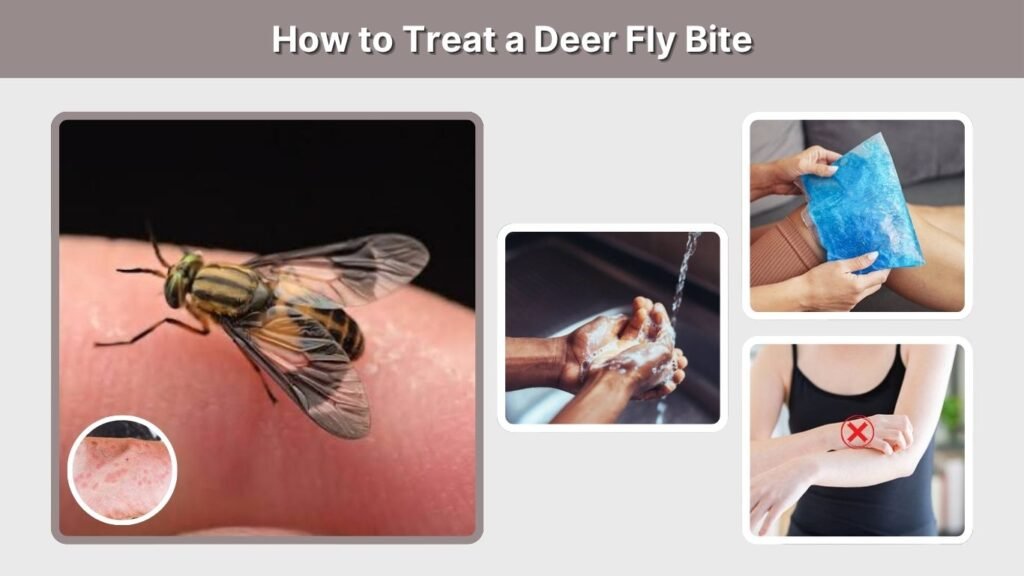
Most deer fly bites can be treated at home with simple first aid.
1. Wash the Bite
Clean the area with soap and water as soon as possible.
Because deer flies create a small open wound, keeping the skin clean helps reduce the chance of bacteria entering the bite.
2. Apply a Cold Compress
Place a cold compress or ice pack wrapped in cloth over the bite for about 10–15 minutes at a time.
Cold can help reduce:
- Swelling
- Pain
- Redness
- Itching
Do not place ice directly against bare skin.
3. Reduce Itching
An over-the-counter anti-itch product such as hydrocortisone cream may help with mild itching and inflammation.
An oral antihistamine may also help some people who develop significant itching or swelling, provided the medication is appropriate for them.
4. Avoid Scratching
Scratching can break the skin further and introduce bacteria.
If itching is severe, using a cold compress or appropriate anti-itch treatment is safer than repeatedly scratching the bite.
5. Keep the Area Clean
Continue cleaning the bite gently until the skin closes.
Covering it with a clean bandage can be useful if the bite is rubbing against clothing or has been scratched open.
Home Remedies for Deer Fly Bites
Some simple home measures may provide temporary relief.
A cold wet cloth can soothe burning and swelling. Elevating a bitten arm or leg may also help reduce significant localized swelling.
Some people use a paste made from baking soda and water for itching, although evidence for home remedies is limited compared with standard anti-itch medications.
Avoid placing harsh chemicals, bleach, alcohol, or irritating substances directly on the bite.
How Long Do Deer Fly Bites Last?
Mild deer fly bites often begin improving within a few hours to a couple of days.
Itching, redness, or a small bump may persist for several days. Larger local reactions can take longer to disappear.
Healing time depends on factors such as:
- Individual sensitivity
- Location of the bite
- Amount of swelling
- Whether the area was scratched
- Development of infection
If symptoms continue worsening rather than gradually improving, medical evaluation may be appropriate.
Allergic Reaction to a Deer Fly Bite
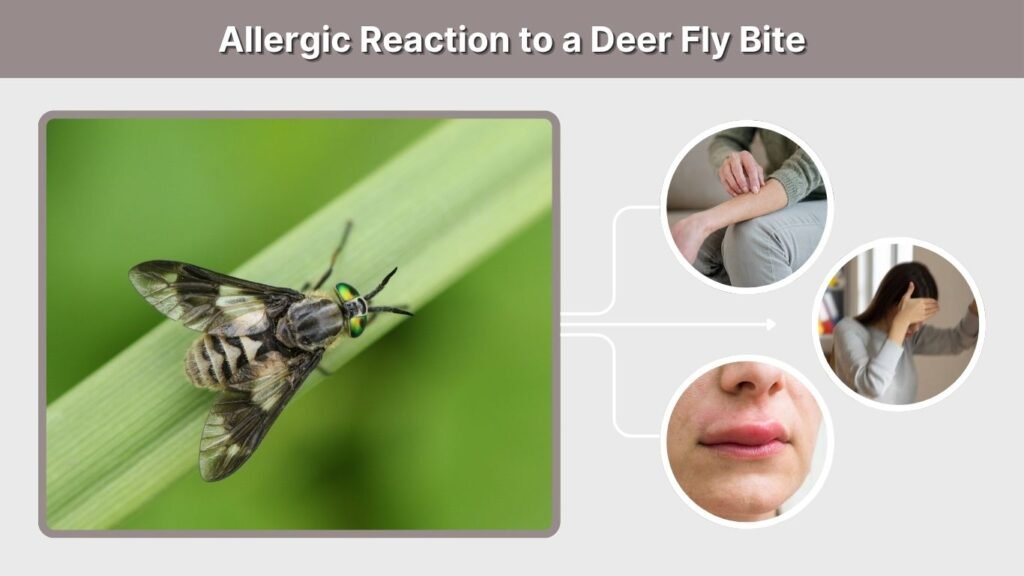
Some people experience an exaggerated immune reaction after a deer fly bite.
A larger-than-normal swollen area does not always mean a dangerous allergy, but certain symptoms require immediate attention.
Signs of a Strong Local Reaction
A strong local reaction may include:
- Significant swelling around the bite
- Intense redness
- Severe itching
- Warmth around the area
- Swelling that lasts several days
Signs of a Severe Allergic Reaction
Emergency symptoms can include:
- Difficulty breathing
- Swelling of the lips, tongue, or throat
- Widespread hives
- Dizziness
- Fainting
- Rapid worsening of symptoms
These symptoms can indicate anaphylaxis and require emergency medical care.
Can a Deer Fly Bite Become Infected?
Yes. Any insect bite that breaks the skin can potentially become infected.
The risk increases when a person repeatedly scratches the bite or when dirt and bacteria enter the wound.
Possible signs of infection include:
- Increasing redness
- Increasing warmth
- Growing swelling
- Pus or drainage
- Worsening pain
- Red streaks spreading away from the bite
- Fever
Seek medical advice if these symptoms develop.
Cellulitis, a bacterial skin infection, can occasionally occur after insect bites and usually requires medical treatment.
Are Deer Fly Bites Dangerous?
Most deer fly bites are painful and irritating but are not dangerous.
The main concerns are allergic reactions, secondary bacterial infections, and, in certain geographic settings, transmission of infectious organisms.
Deer flies can mechanically spread some pathogens between animals, and some species have been associated with transmission of tularemia in parts of North America.
However, most people bitten by a deer fly will not develop an infectious disease.
Can Deer Fly Bites Make You Sick?
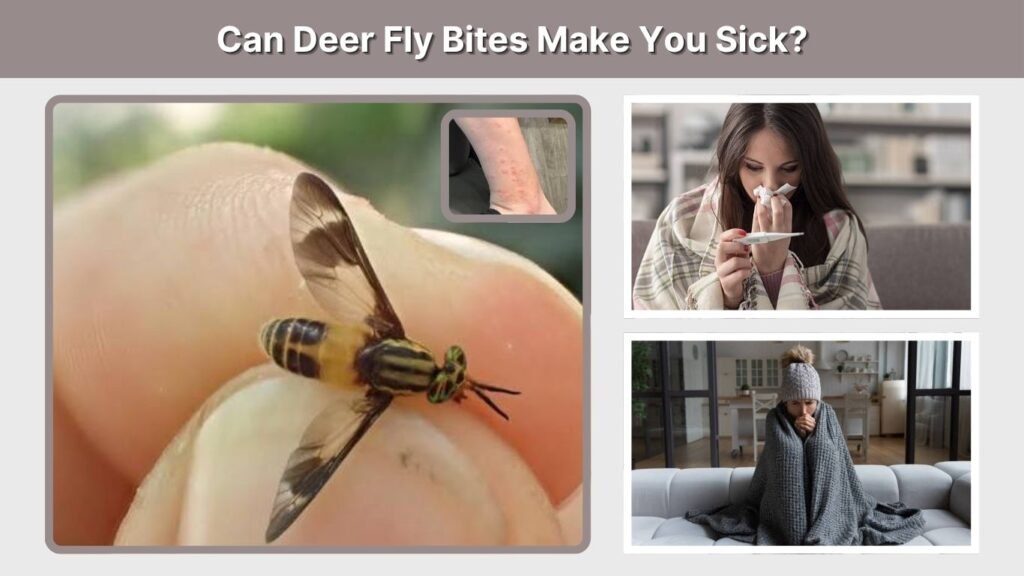
In most cases, no.
A typical bite causes only a local reaction around the skin. Feeling generally unwell after a bite is less common and can have several possible causes.
Seek medical attention if a deer fly bite is followed by symptoms such as:
- Fever
- Chills
- Severe fatigue
- Enlarged lymph nodes
- A worsening skin ulcer
- Persistent unexplained illness
These symptoms do not prove that the fly transmitted an infection, but they justify medical evaluation.
Deer Fly Bite vs Horse Fly Bite
Deer flies and horse flies belong to the same family, Tabanidae, and their bites are very similar.
| Feature | Deer Fly Bite | Horse Fly Bite |
|---|---|---|
| Fly size | Usually smaller | Usually larger |
| Pain | Sharp and painful | Often very painful |
| Skin damage | Cutting mouthparts | Cutting mouthparts |
| Swelling | Common | Common |
| Itching | Common | Common |
| Bleeding | Possible | Possible |
Both female deer flies and female horse flies feed on blood.
A horse fly’s larger mouthparts may sometimes create a more noticeable wound, but bite appearance alone is not always enough to identify which insect caused it.
Deer Fly Bites on Dogs
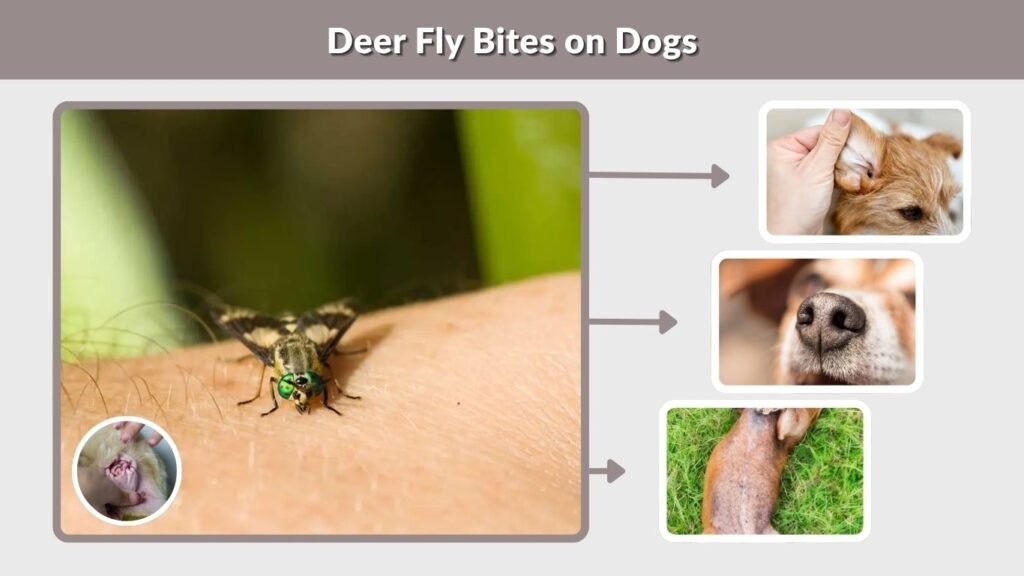
Dogs can also be bitten by deer flies, particularly around exposed areas with thinner fur.
Common bite locations include:
- Ears
- Nose
- Belly
- Legs
- Around the eyes
A dog may scratch or lick the area excessively afterward.
Mild bites can often be monitored, but veterinary care may be necessary if the dog develops major swelling, persistent bleeding, signs of infection, difficulty breathing, or unusual behavior.
Do not give human medications to a dog unless a veterinarian specifically recommends them.
Deer Fly Bites on Horses
Horses are common targets because deer flies are strongly attracted to large, moving mammals.
Repeated bites may cause:
- Skin irritation
- Small bleeding spots
- Restlessness
- Tail swishing
- Stomping
- Reduced grazing
- Attempts to escape flies
Fly sheets, masks, screened shelters, and appropriate animal-safe repellents can help reduce exposure.
Can Deer Flies Bite Through Clothes?
Deer flies generally prefer exposed skin, but thin or tight clothing may not always provide complete protection.
Loose, tightly woven clothing provides a better physical barrier.
When deer flies are abundant, wearing long sleeves, long pants, socks, and a hat can significantly reduce available biting areas.
How to Prevent Deer Fly Bites
Avoiding deer fly bites can be difficult when populations are high, but several measures can help.
Wear light-colored clothing because deer flies are often attracted to dark moving objects. Cover exposed skin with long sleeves and pants whenever practical.
Use an appropriate insect repellent according to the product label. Staying away from marshes, wetlands, wooded streams, and similar habitats during peak activity may also reduce encounters.
Deer flies are usually active during daylight, especially on warm summer days.
When Should You See a Doctor?
Most bites can be managed at home, but seek medical care when symptoms appear unusual or severe.
Contact a healthcare professional if:
- Swelling continues increasing
- Redness spreads significantly
- The bite becomes increasingly painful
- Pus develops
- You develop fever or other systemic symptoms
- The wound is not healing
- You experience a severe allergic reaction
Difficulty breathing or swelling involving the mouth or throat should be treated as an emergency.
FAQs
Do deer fly bites itch?
Yes. Deer fly bites commonly itch after the initial pain subsides. Itching occurs because the body’s immune system reacts to substances introduced during feeding. Cold compresses and appropriate anti-itch products can help reduce discomfort.
Why do deer flies bite?
Female deer flies bite because they need nutrients from blood to support egg development. Males do not require blood and instead feed mainly on nectar and other plant sugars.
What is the best treatment for a deer fly bite?
Wash the bite with soap and water, apply a cold compress, avoid scratching, and use an appropriate anti-itch treatment if necessary. Watch for signs of infection or a severe allergic reaction.
Are deer fly bites painful?
Yes. Deer fly bites are often immediately painful because the fly cuts the skin with sharp mouthparts rather than inserting a narrow feeding tube like a mosquito.
What does a deer fly bite look like?
A deer fly bite typically appears as a red, swollen, itchy bump or welt. There may also be a small amount of bleeding, tenderness, bruising, or a tiny scab where the skin was cut.