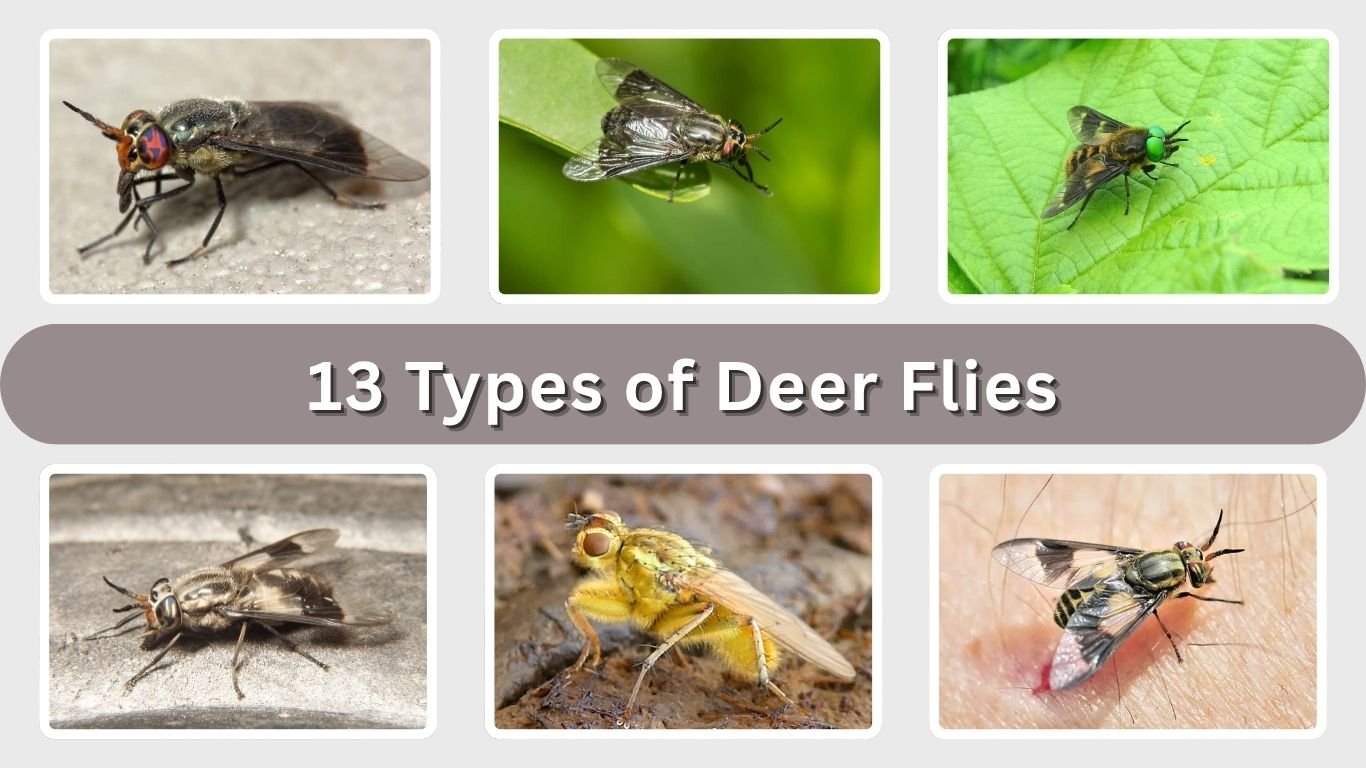
Deer flies are small but aggressive biting flies commonly found near wetlands, forests, ponds, streams, and marshy areas. Most belong to the genus Chrysops and are known for their patterned wings, colorful eyes, and painful bites. While males mainly feed on nectar, females require blood to support egg development. In this guide, you’ll discover 13 types of deer flies, including their appearance, habitat, behavior, and whether their bites are dangerous.
1. Yellow Deer Fly
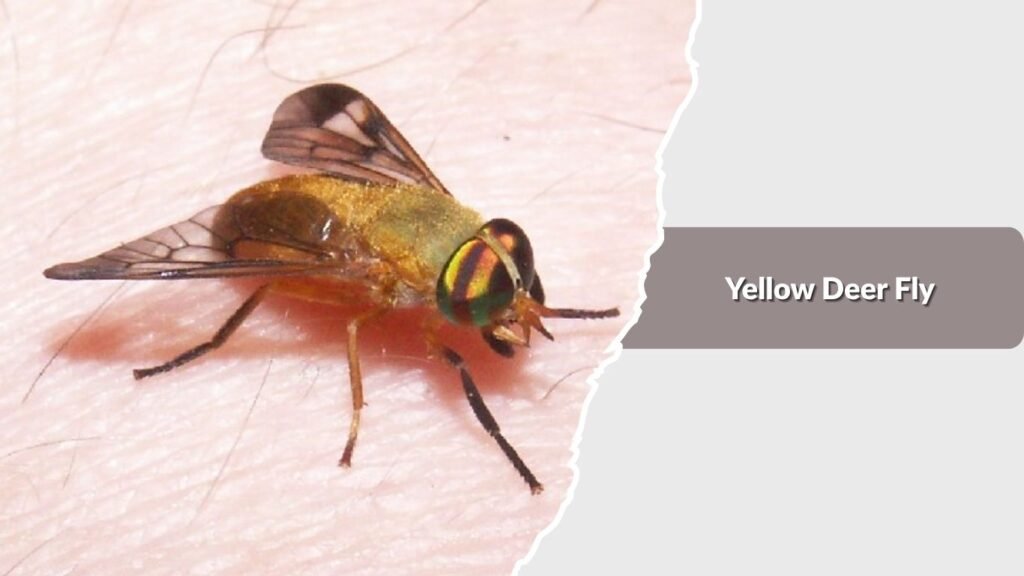
The Yellow Deer Fly is a common name used for yellowish or golden-colored deer flies in the genus Chrysops. These biting flies are usually encountered around wetlands, wooded areas, ponds, streams, and other moist habitats. Females are persistent blood feeders and may bite humans, deer, livestock, and other mammals.
Identification
- Yellow to golden-brown body
- Large, brightly colored or patterned eyes
- Clear or partly dark-patterned wings
- Usually around 6–10 mm long
- Short, sturdy body with strong wings
Habitat and Distribution
Yellow deer flies are most noticeable in warm, humid environments where suitable breeding sites are available. Their larvae typically develop in wet soil, marshy ground, or areas close to freshwater. Adults are especially active during warm daylight hours.
Bite and Behavior
Female yellow deer flies require blood to support egg development. Their mouthparts cut the skin rather than simply piercing it, which can make the bite immediately painful. Males do not bite and primarily consume nectar and other plant sugars.
Are Yellow Deer Flies Dangerous?
For most people, a bite causes temporary pain, redness, itching, and swelling. Repeated bites can be particularly irritating outdoors. Avoiding wet, wooded areas during peak activity and wearing long clothing can reduce exposure.
2. Striped Deer Fly
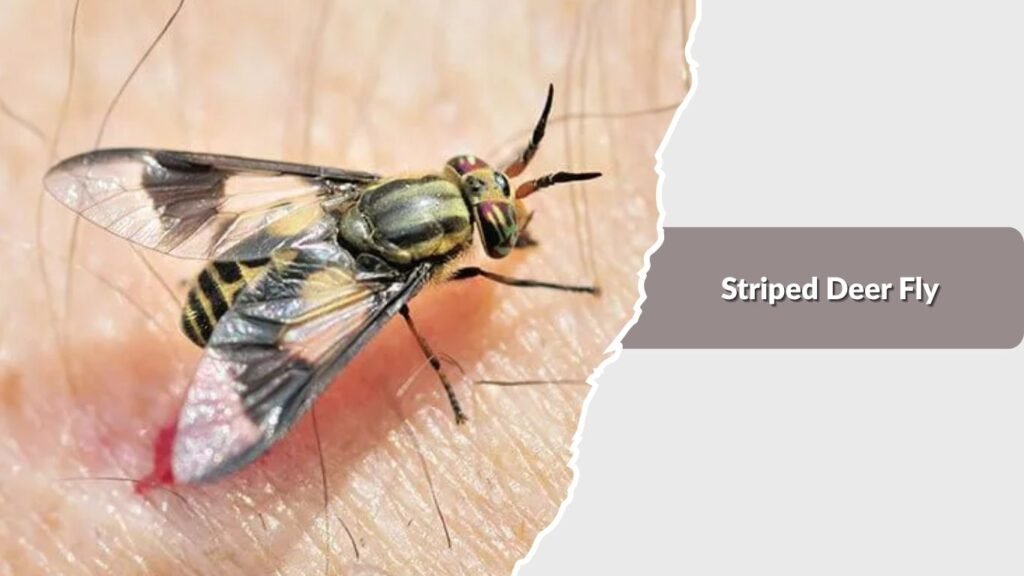
The Striped Deer Fly commonly refers to Chrysops vittatus, a recognizable North American deer fly distinguished by dark longitudinal markings on its abdomen. It is often found around wetlands and wooded environments and can become a persistent nuisance to people and animals.
Identification
- Yellowish or brownish body
- Distinct dark stripes on the abdomen
- Patterned wings
- Large, colorful compound eyes
- Typically less than ½ inch long
Habitat and Distribution
Striped deer flies occur primarily in eastern and central portions of North America. They favor marshes, swamps, wet meadows, pond edges, and wooded areas where their immature stages can develop in moist substrates.
Bite and Behavior
Female striped deer flies actively search for mammals and are attracted by movement, body heat, and carbon dioxide. They can repeatedly circle a person before landing. Their cutting mouthparts produce a small wound from which they consume blood.
Are Striped Deer Flies Dangerous?
Their bites are painful but generally cause only localized irritation. Redness, itching, and swelling can remain after the fly leaves. People who spend time around wetlands during summer are particularly likely to encounter them.
3. Black Deer Fly
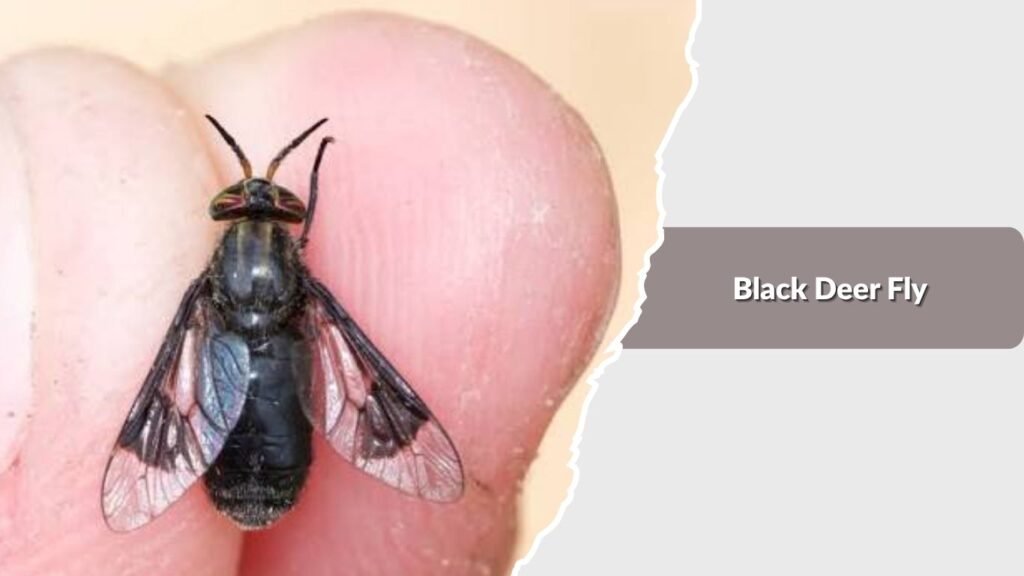
The Black Deer Fly is a general common name applied to several dark-colored Chrysops species. These flies may appear almost completely black or dark brown and are easily confused with other small biting flies when seen quickly.
Identification
- Predominantly black or dark-brown body
- Large compound eyes
- Dark markings across the wings
- Compact, sturdy appearance
- Usually smaller than typical horse flies
Habitat and Distribution
Black deer flies are associated with moist environments, including forest edges, wetlands, marshes, and areas surrounding streams and ponds. Depending on the species, they can occur across various regions of North America.
Bite and Behavior
Like other deer flies, only females take blood meals. They are strong daytime fliers and frequently target the head, neck, shoulders, and other exposed areas. Males feed on nectar and therefore pose no biting problem.
Are Black Deer Flies Dangerous?
A black deer fly bite can be surprisingly painful for such a small insect. The affected area may become red, swollen, or itchy. Severe reactions are uncommon, although sensitive individuals can experience greater swelling.
4. Golden Deer Fly
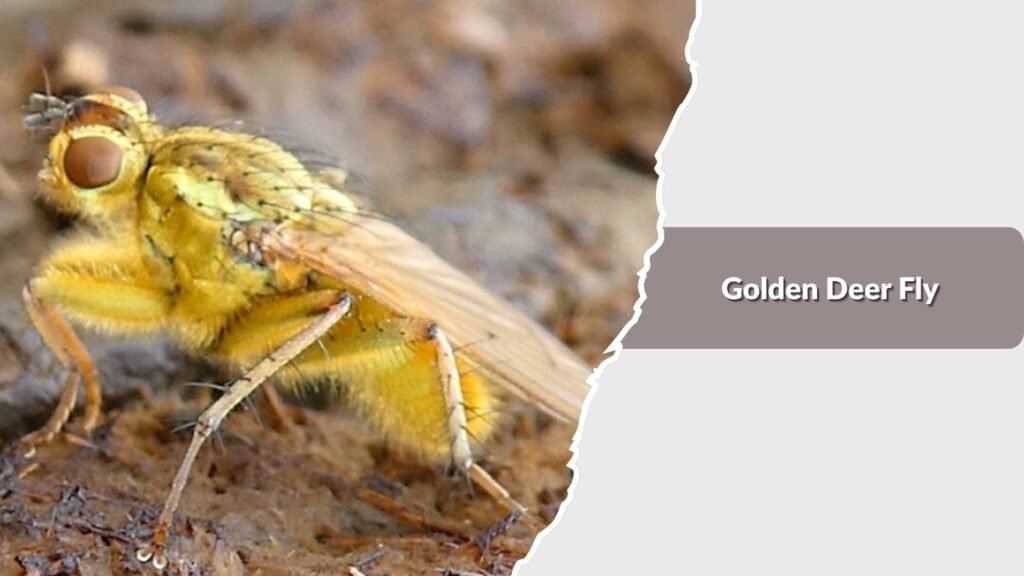
The Golden Deer Fly describes deer flies with noticeable golden-yellow or yellow-brown coloration. These attractive-looking flies belong to the family Tabanidae, the same family containing horse flies, but females can deliver an unpleasant bite.
Identification
- Golden-yellow to yellow-brown coloration
- Large, often colorful eyes
- Dark patterns or patches on the wings
- Short antennae
- Compact fly-like body
Habitat and Distribution
Golden-colored deer flies generally prefer areas with plenty of moisture. Wet forests, marshes, lake margins, streams, and swampy environments provide suitable conditions for their immature stages.
Bite and Behavior
Females use blade-like mouthparts to cut the skin and consume the resulting blood. They can follow moving people or animals and may repeatedly attempt to land after being disturbed. Their strongest activity generally occurs during daylight in warmer months.
Are Golden Deer Flies Dangerous?
The main concern is their painful bite. A small swollen bump, itching, and redness can develop around the wound. Protective clothing and limiting exposed skin are useful when entering areas with large deer fly populations.
5. Saltmarsh Deer Fly
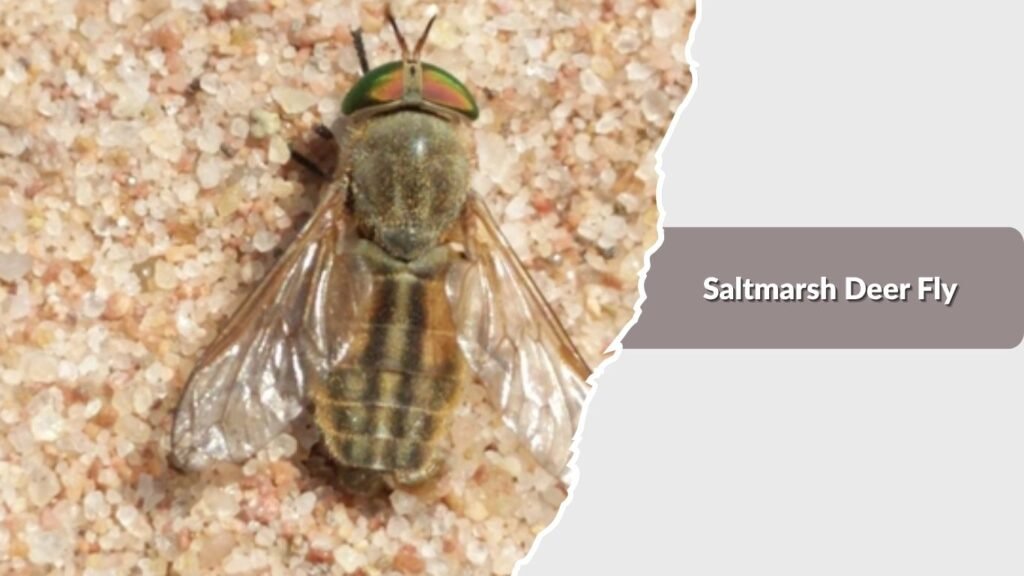
The Saltmarsh Deer Fly is associated with coastal marshes and other wet, often brackish environments. One species commonly connected with salt-marsh habitats is Chrysops flavidus. Adults can occur in large numbers during warm weather near suitable coastal breeding areas.
Identification
- Yellowish to brown body
- Noticeably patterned wings
- Large compound eyes
- Relatively small compared with horse flies
- Stout body and powerful flight
Habitat and Distribution
As its name suggests, this deer fly is strongly associated with salt marshes, coastal wetlands, and nearby vegetation. Larvae develop in moist substrates, while adults may travel beyond their breeding areas searching for food and hosts.
Bite and Behavior
Female saltmarsh deer flies bite mammals to obtain blood for egg production. Humans visiting coastal wetlands can become convenient targets. The flies are active during daylight and may repeatedly approach exposed skin.
Are Saltmarsh Deer Flies Dangerous?
Their bites can cause immediate sharp pain followed by itching and swelling. Large populations can make outdoor activities uncomfortable, particularly around marshes during peak season. Long sleeves and other physical barriers can help reduce bites.
6. Coastal Deer Fly
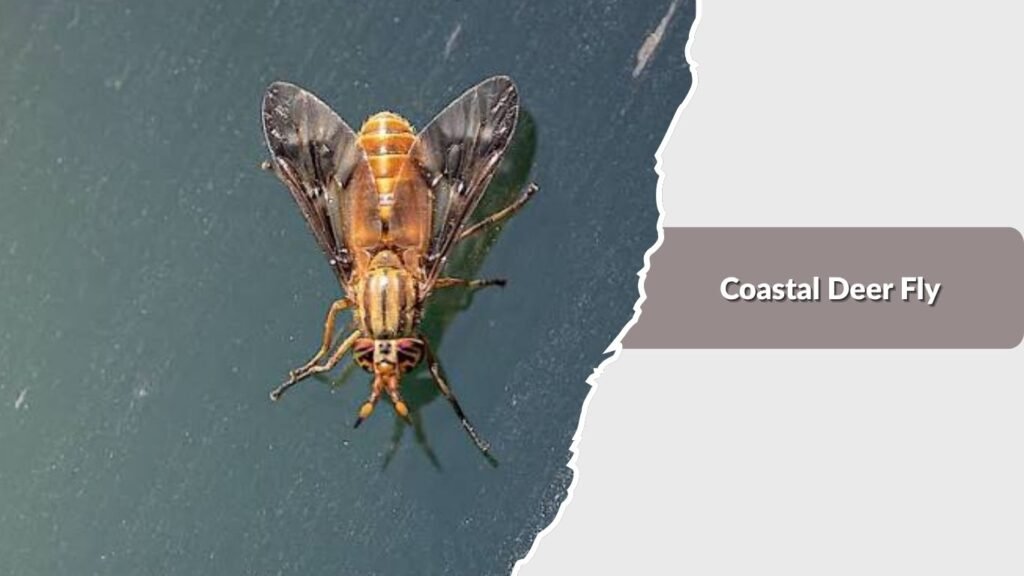
The Coastal Deer Fly is a descriptive name for deer flies occurring around coastal wetlands, marshes, estuaries, and nearby wooded habitats. Several Chrysops species can inhabit coastal environments where moist soil provides suitable larval habitat.
Identification
- Small to medium-sized biting fly
- Yellow, brown, or dark body depending on species
- Large and often patterned eyes
- Wings frequently marked with dark bands
- Strong, fast flight
Habitat and Distribution
Coastal deer flies thrive where water and moist organic soil are abundant. Salt marshes, tidal wetlands, coastal forests, and estuary margins can all provide suitable habitats. Adults may also move into nearby recreational or residential areas.
Bite and Behavior
Females are persistent daytime blood feeders. They detect mammals using visual movement, carbon dioxide, and other cues. Once a suitable host is located, the fly cuts the skin and feeds on blood.
Are Coastal Deer Flies Dangerous?
Coastal deer fly bites are usually more painful than dangerous. They can leave a red, itchy, swollen area that remains noticeable for several days. Heavy deer fly activity can be particularly troublesome for hikers, anglers, campers, and people working near coastal wetlands.
7. Woodland Deer Fly
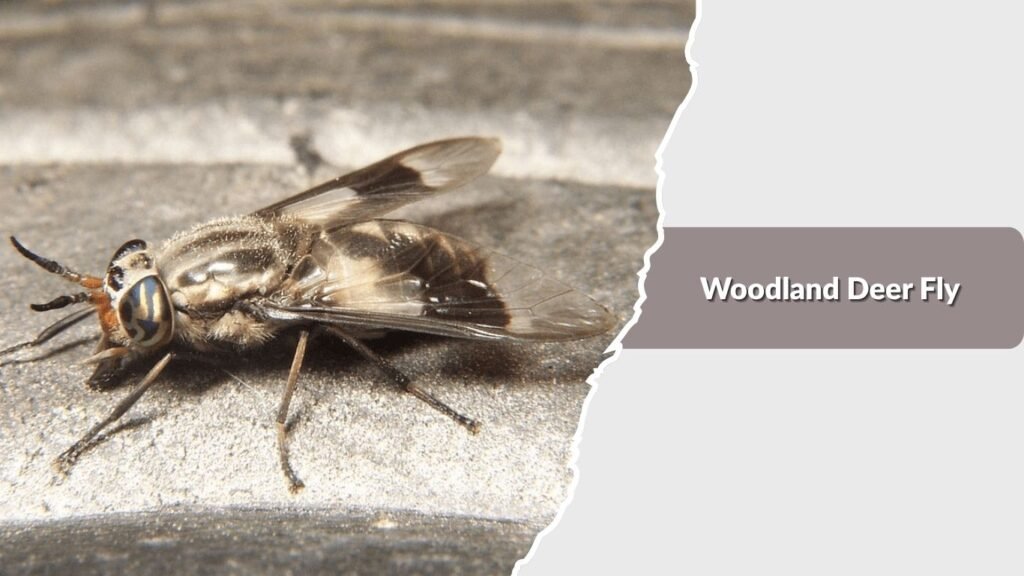
The Woodland Deer Fly is a general name for deer flies commonly encountered in forests, shaded trails, and wooded wetlands. These small but persistent biting flies are particularly noticeable during warm weather. They often fly around a person’s head before landing on exposed skin, making them an irritating companion for hikers and outdoor workers.
Identification
- Small, compact body
- Usually yellowish-brown to dark brown
- Large, colorful compound eyes
- Dark bands or patches on the wings
- Strong and agile flier
Habitat and Distribution
Woodland deer flies favor forests with nearby moisture. They are commonly encountered around woodland streams, ponds, swampy areas, wet trails, and forest edges. Their larvae develop in moist soil, mud, and other damp environments.
Bite and Behavior
Female woodland deer flies feed on blood, while males mainly consume nectar and plant sugars. Females are attracted to movement, warmth, and carbon dioxide. They frequently target exposed areas around the head, neck, arms, and shoulders.
Are Woodland Deer Flies Dangerous?
Woodland deer fly bites are painful because the female cuts the skin to obtain blood. The bite may leave redness, itching, tenderness, or localized swelling. Most reactions are temporary, but avoiding exposed skin can make woodland activities more comfortable.
8. Twin-Lobed Deer Fly
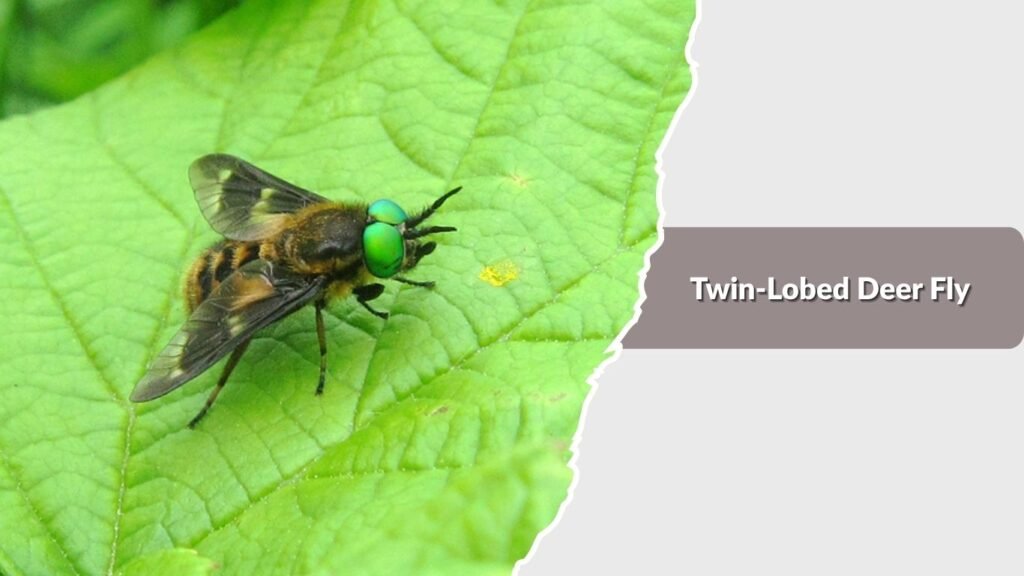
The Twin-Lobed Deer Fly is a name associated with certain Chrysops deer flies that have distinctive body or wing markings. Like other members of the deer fly group, it is a daytime-active insect whose females may aggressively seek mammals for blood meals.
Identification
- Compact deer fly body
- Yellowish, brown, or darker coloration
- Large and prominent compound eyes
- Distinctive dark wing patterns
- Short antennae and strong legs
Habitat and Distribution
Twin-lobed deer flies are generally associated with moist habitats. Wet forests, marshes, streams, pond margins, and swampy areas provide favorable environments for deer fly development. Adults may travel away from these habitats when searching for hosts.
Bite and Behavior
Female deer flies use sharp mouthparts to cut the skin and consume blood. They may circle a host several times before landing and can return quickly after being disturbed. Males do not take blood meals.
Are Twin-Lobed Deer Flies Dangerous?
Their bites can produce immediate pain followed by itching, redness, and swelling. Most bites resolve without serious problems. However, scratching the bite can further irritate the skin, so keeping the affected area clean is important.
9. Splayed Deer Fly
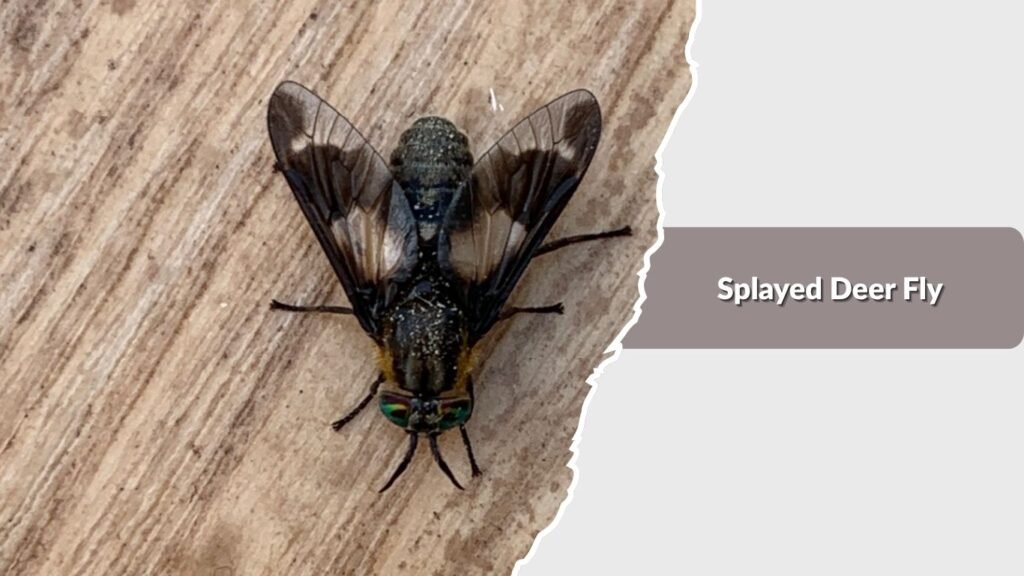
The Splayed Deer Fly commonly refers to Chrysops divaricatus, a North American member of the deer fly group. Like its relatives, it has patterned wings and conspicuous eyes. Females are blood feeders and can become bothersome when people enter areas where adults are active.
Identification
- Relatively small fly
- Dark markings on otherwise clear wings
- Large compound eyes
- Brownish to dark body coloration
- Compact and sturdy appearance
Habitat and Distribution
Splayed deer flies are associated with moist and vegetated habitats in North America. They can occur around wetlands, wooded areas, marshes, and other locations where damp substrates support larval development.
Bite and Behavior
Females seek mammals when they need a blood meal for egg production. They are active during daylight and rely heavily on visual cues to locate potential hosts. Movement can therefore attract their attention.
Are Splayed Deer Flies Dangerous?
A bite can feel sharp and may leave a noticeable red bump. Mild swelling and itching are common afterward. The fly is primarily considered an outdoor biting nuisance, although deer flies as a group can occasionally play a role in transmitting pathogens among animals.
10. American Deer Fly
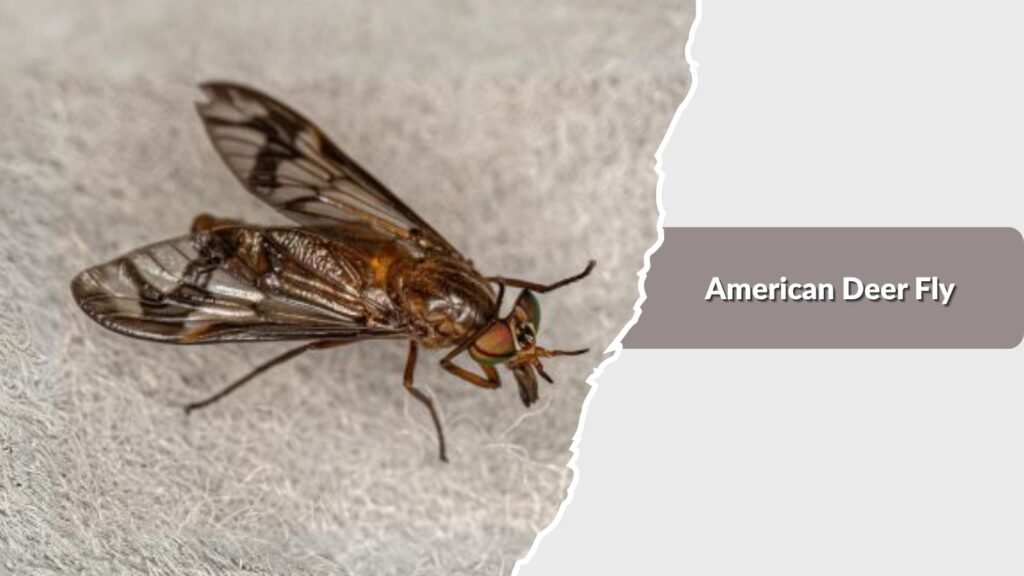
The American Deer Fly is a broad descriptive name sometimes used for members of the genus Chrysops occurring throughout North America. Numerous deer fly species inhabit the United States and Canada, with different species adapted to forests, marshes, wetlands, and other moist environments.
Identification
- Usually about 6–12 mm long
- Yellow, brown, or black coloration
- Large and often brightly patterned eyes
- Dark bands or patches across the wings
- Smaller than many horse flies
Habitat and Distribution
Deer flies are widespread across North America. They are particularly abundant near freshwater wetlands, marshes, ponds, streams, and damp forests. Different species become active at different times from spring through summer.
Bite and Behavior
Only female American deer flies bite. They obtain blood to help develop their eggs, while males survive primarily on nectar and other plant-based sugars. Females are fast and persistent and often concentrate their attention around a person’s head and upper body.
Are American Deer Flies Dangerous?
Most bites result in temporary pain, redness, and swelling rather than serious complications. Because the mouthparts physically cut the skin, the initial bite can be noticeably painful. Keeping the wound clean and avoiding scratching helps reduce additional irritation.
11. Common Deer Fly
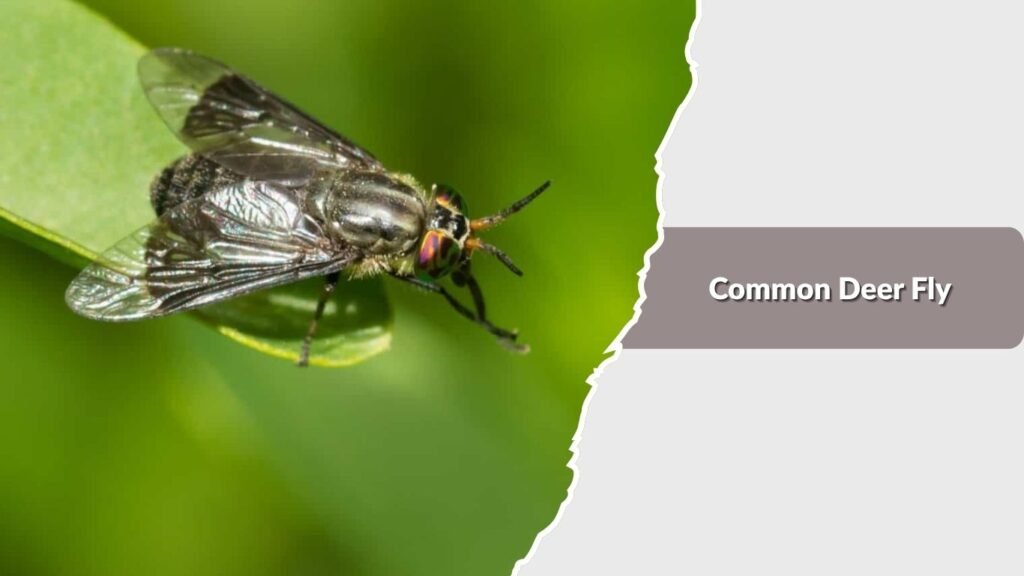
The Common Deer Fly is a general name for familiar Chrysops species encountered around wetlands, forests, farms, and recreational areas. Deer flies are relatives of horse flies but are generally smaller and often have more conspicuously patterned wings.
Identification
- Small to medium size
- Yellowish, brown, or black body
- Large, often colorful eyes
- Wings with noticeable dark markings
- Short and compact build
Habitat and Distribution
Common deer flies favor environments containing both vegetation and moisture. Marshes, pond edges, riversides, wooded wetlands, and damp fields can support their populations. Adults are most noticeable during warmer parts of the year.
Bite and Behavior
Females actively pursue mammals for blood. They may follow walkers, runners, livestock, or wildlife and often repeatedly return after being brushed away. Males are harmless nectar feeders and do not possess the same blood-feeding behavior.
Are Common Deer Flies Dangerous?
Their bites can be painful and frequently produce itching, redness, or a raised bump. Reactions vary between individuals. Serious problems are uncommon, but unusually severe swelling or symptoms of an allergic reaction require appropriate medical attention.
12. Eastern Deer Fly
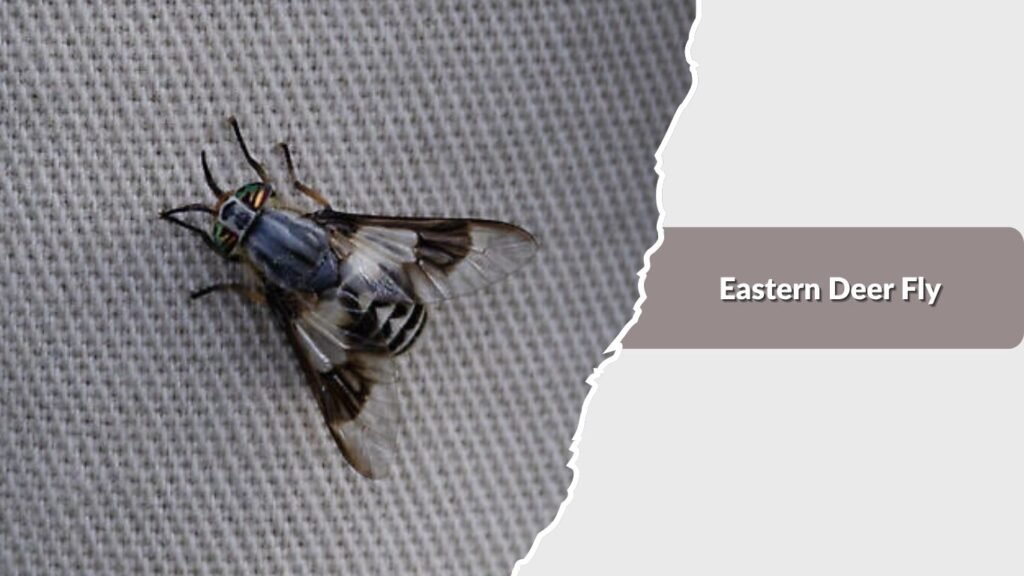
The Eastern Deer Fly is a descriptive name for Chrysops species occurring across eastern portions of North America. Eastern forests and wetlands support numerous deer fly species, and adults can become particularly noticeable during humid spring and summer weather.
Identification
- Approximately 6–12 mm long depending on species
- Yellowish-brown or darker body
- Prominent compound eyes
- Darkly patterned or banded wings
- Strong, maneuverable flight
Habitat and Distribution
Eastern deer flies occur in many moist habitats throughout eastern North America. Forest streams, swamps, marshes, lake margins, wet meadows, and wooded wetlands provide favorable breeding environments.
Bite and Behavior
Females are active during daylight and may aggressively pursue people and animals. Their attraction to movement explains why hikers and other active people can receive considerable attention. After landing, the female cuts the skin and consumes the blood that pools at the surface.
Are Eastern Deer Flies Dangerous?
The bite usually causes a sharp sensation followed by localized redness and swelling. Itching may continue after the initial pain disappears. Wearing light-colored long sleeves, pants, and a hat can help reduce exposed areas when deer flies are abundant.
13. Spotted Deer Fly
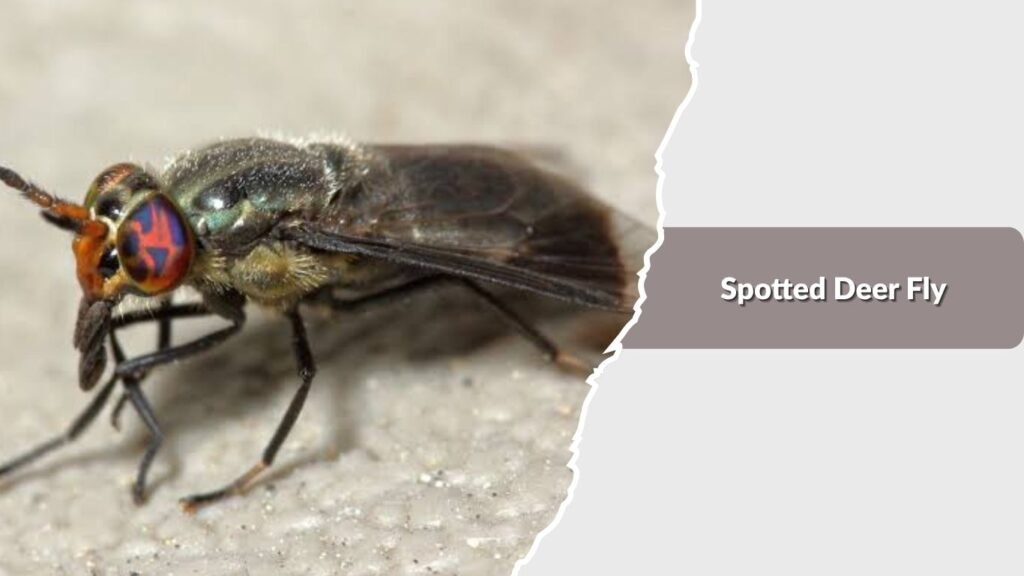
The Spotted Deer Fly is a descriptive common name for deer flies displaying noticeable spots, patches, or other contrasting markings. Patterned wings are one of the easiest features for distinguishing many Chrysops deer flies from ordinary house flies and similar non-biting insects.
Identification
- Distinctive dark wing spots or patches
- Large, colorful compound eyes
- Yellowish, brown, or black body
- Compact shape
- Strong wings and rapid flight
Habitat and Distribution
Spotted deer flies are generally associated with moist environments where their larvae can develop. Marshes, wet meadows, pond margins, streams, forests, and swampy areas are typical deer fly habitats.
Bite and Behavior
Female spotted deer flies seek blood from deer, livestock, humans, and other mammals. They are visual hunters and readily notice moving objects. Their rapid flight and tendency to return after being disturbed can make them difficult to avoid.
Are Spotted Deer Flies Dangerous?
A spotted deer fly bite can be immediately painful and may cause a red, itchy, swollen bump. Most symptoms gradually disappear without treatment. The greatest problem is usually their persistent biting behavior, especially when large numbers of adults are active near wetlands.